Last updated: September 7, 2026
Quick Answer
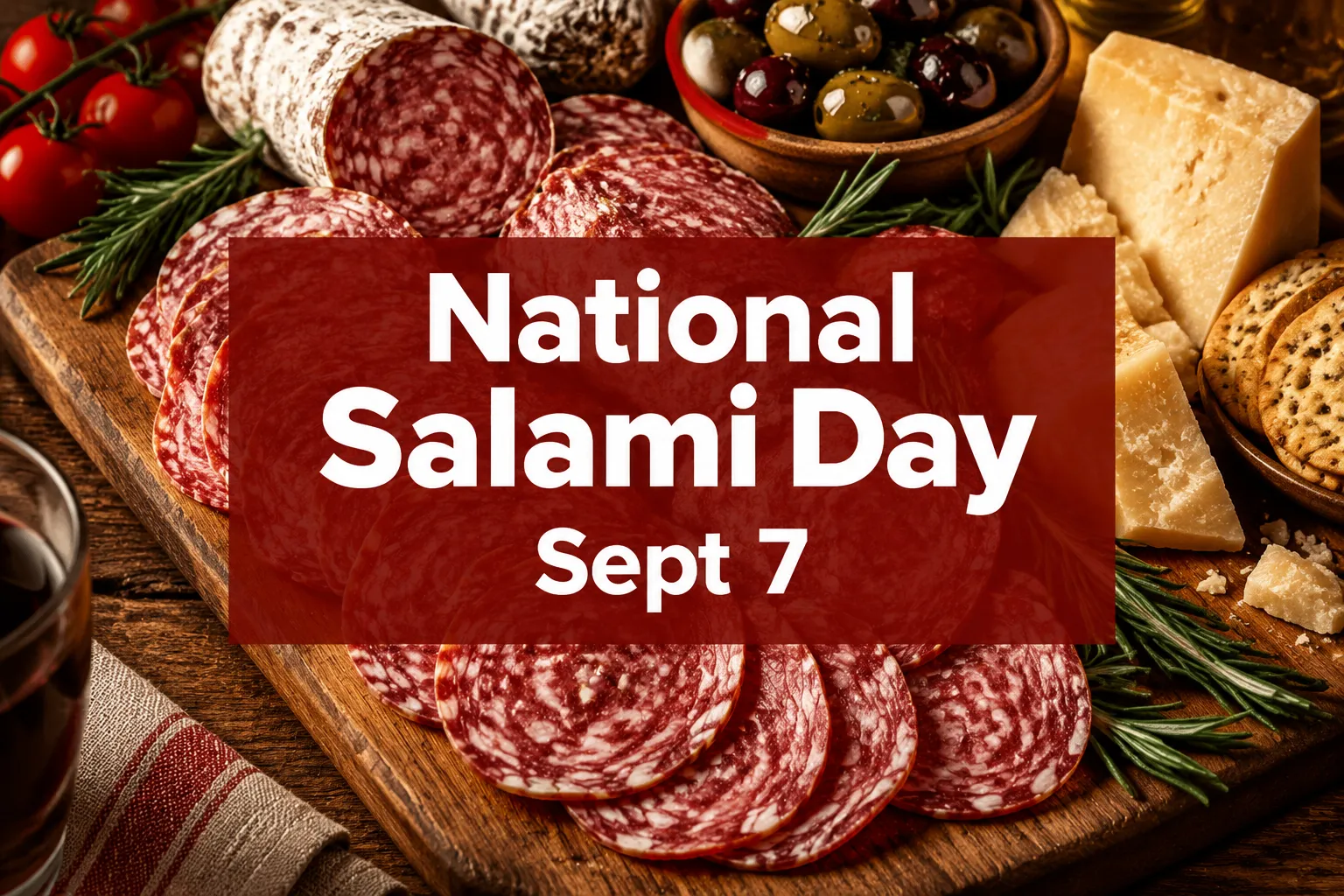
September 7 National Salami Day is an annual food observance in the United States dedicated to celebrating salami, one of the world’s oldest and most beloved cured meats. Observed every year on September 7, the day encourages food lovers to explore different salami varieties, build charcuterie boards, and share the experience with others. No federal proclamation backs it, but it has grown steadily in recognition among food communities, specialty retailers, and charcuterie enthusiasts since its founding. [1][5]
Key Takeaways
- September 7 is National Salami Day, observed annually in the United States
- The day was created by the Salami Appreciation Society and is tracked by salamiday.com
- Salami is a cured sausage with roots in ancient Italian and European meat-preservation traditions
- Dozens of salami varieties exist, including Genoa, Milano, Soppressata, and pepperoni
- The best ways to celebrate include building a charcuterie board, visiting a local deli, or trying a new variety
- Salami pairs well with aged cheeses, olives, crusty bread, and dry red wines
- Salami is calorie-dense and high in sodium, so moderation is recommended for health-conscious eaters
- Plant-based salami alternatives are widely available for vegetarians and vegans
- Retailers and specialty food shops sometimes run promotions on or around September 7
- The holiday is recognized internationally on food calendar platforms in Germany, Russia, and beyond [2][3][7]
What Is National Salami Day?
National Salami Day is an unofficial food holiday that celebrates salami as a culinary tradition, a cultural artifact, and a delicious everyday food. It falls on September 7 each year and is observed primarily in the United States, though international food calendar platforms in Germany and Russia also list it. [3][7]
The day is not backed by a government proclamation or a major food industry body. Instead, it originated through grassroots food culture and has been maintained by the Salami Appreciation Society, with salamiday.com serving as the most cited reference point for the observance. [4][9]
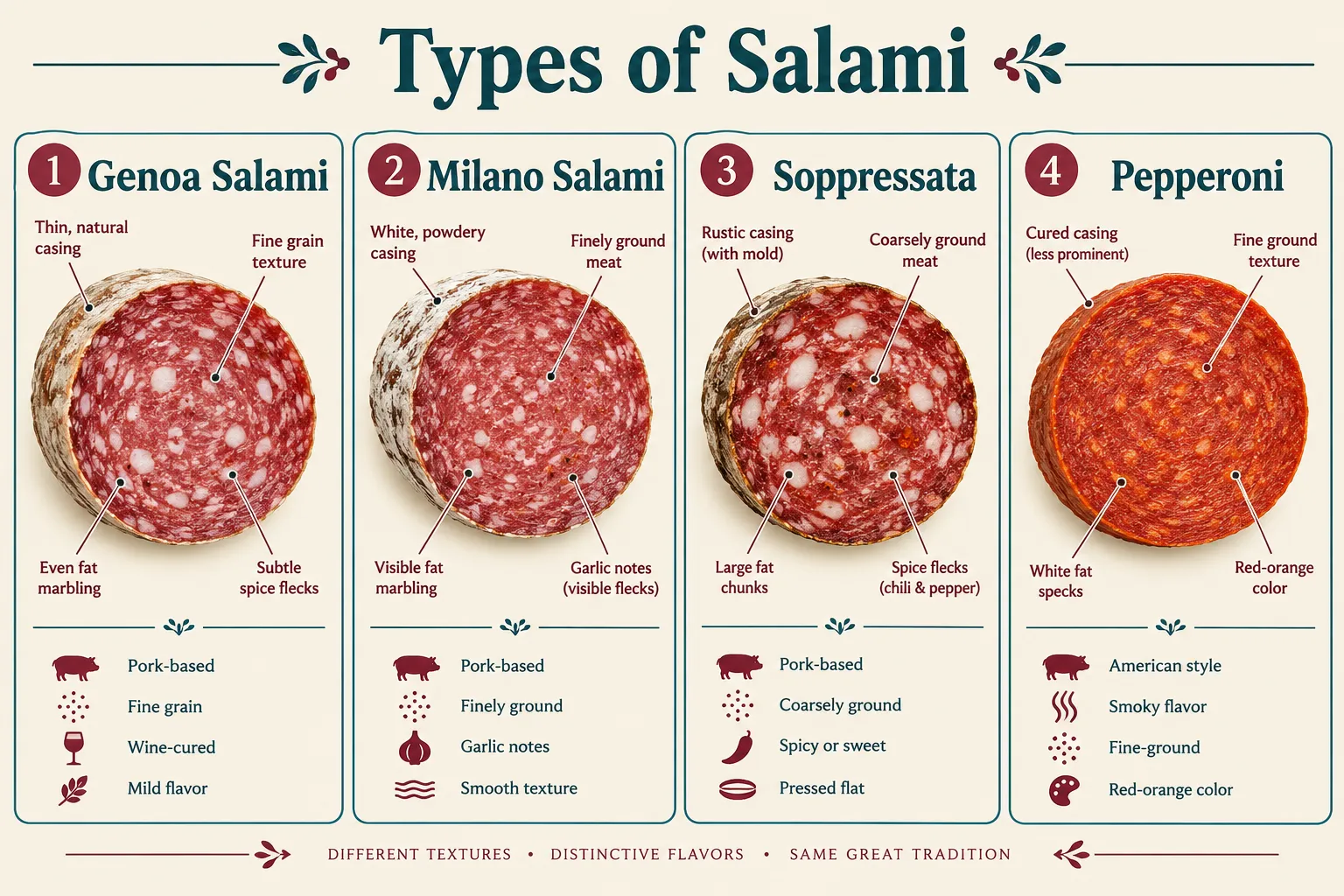
Salami itself is a type of cured sausage made from fermented and air-dried meat, most commonly pork. It has been a staple of European cuisine for centuries, prized for its long shelf life, bold flavor, and versatility. [10]
When Is National Salami Day Celebrated?
National Salami Day is celebrated on September 7 every year without exception. The date does not shift based on the day of the week, making it easy to plan around. In 2026, September 7 falls on a Monday, giving food lovers a reason to kick off the week with a charcuterie board or a trip to a local deli. [5][6]
The holiday appears consistently on major food and fun-holiday calendars, including those maintained by National Today, Time and Date, and Days Pedia. [1][2][5]
Why Is September 7 National Salami Day? The History Behind the Date
The exact reasoning for choosing September 7 as the date for National Salami Day is not formally documented in any public record. This is common for many unofficial food holidays in the United States, where founding organizations often select dates without publishing detailed rationale. [4][6]
What is documented is that the Salami Appreciation Society established the observance and registered salamiday.com as its home base. The society’s goal was straightforward: give salami the cultural recognition it deserves as one of the most historically significant preserved foods in human history. [9]
Salami’s broader history stretches back thousands of years. Ancient Romans and pre-Roman Mediterranean cultures preserved pork with salt to extend its shelf life, a practice that evolved into the cured sausage traditions of Italy, Hungary, Germany, and beyond. The word “salami” is the plural of the Italian “salame,” derived from the Latin root for salt. [10]
Key milestones in salami’s history:
- Ancient Rome: Salted and preserved pork products were a dietary staple for soldiers and laborers
- Medieval Italy: Regional curing traditions developed distinct styles by geography and climate
- 19th century: Italian immigrants brought salami-making traditions to the United States
- 20th century: Industrial production made salami widely accessible in American supermarkets
- Present day: Artisan and craft salami production has surged alongside the charcuterie board trend
How to Celebrate September 7 National Salami Day
Celebrating September 7 National Salami Day does not require elaborate planning. The most popular approaches center on tasting, sharing, and learning more about salami’s varieties and origins.
Practical ways to celebrate:
- Build a charcuterie board: Arrange two or three salami varieties alongside aged cheeses, olives, cornichons, mustard, and crackers. Pair with a dry Italian red wine such as Chianti or Barbera d’Asti.
- Visit a local Italian deli or specialty market: Ask the counter staff to recommend a salami you have never tried. Many delis will offer a sample.
- Host a salami tasting: Set out four to six varieties with small labels and let guests compare flavor, texture, and spice levels.
- Cook with salami: Use it as a pizza topping, fold it into a frittata, or layer it in a pressed sandwich with provolone and roasted peppers.
- Share on social media: Use the hashtag #NationalSalamiDay to connect with other enthusiasts and find restaurant or retailer deals.
- Learn the craft: Watch a documentary or read about traditional Italian salumeria techniques to deepen appreciation for the food.
If you enjoy celebrating national food days throughout the year, September 7 fits naturally into a calendar of culinary observances. For another savory pairing idea, National French Bread Day offers the perfect companion for any charcuterie spread.
Different Types of Salami Explained
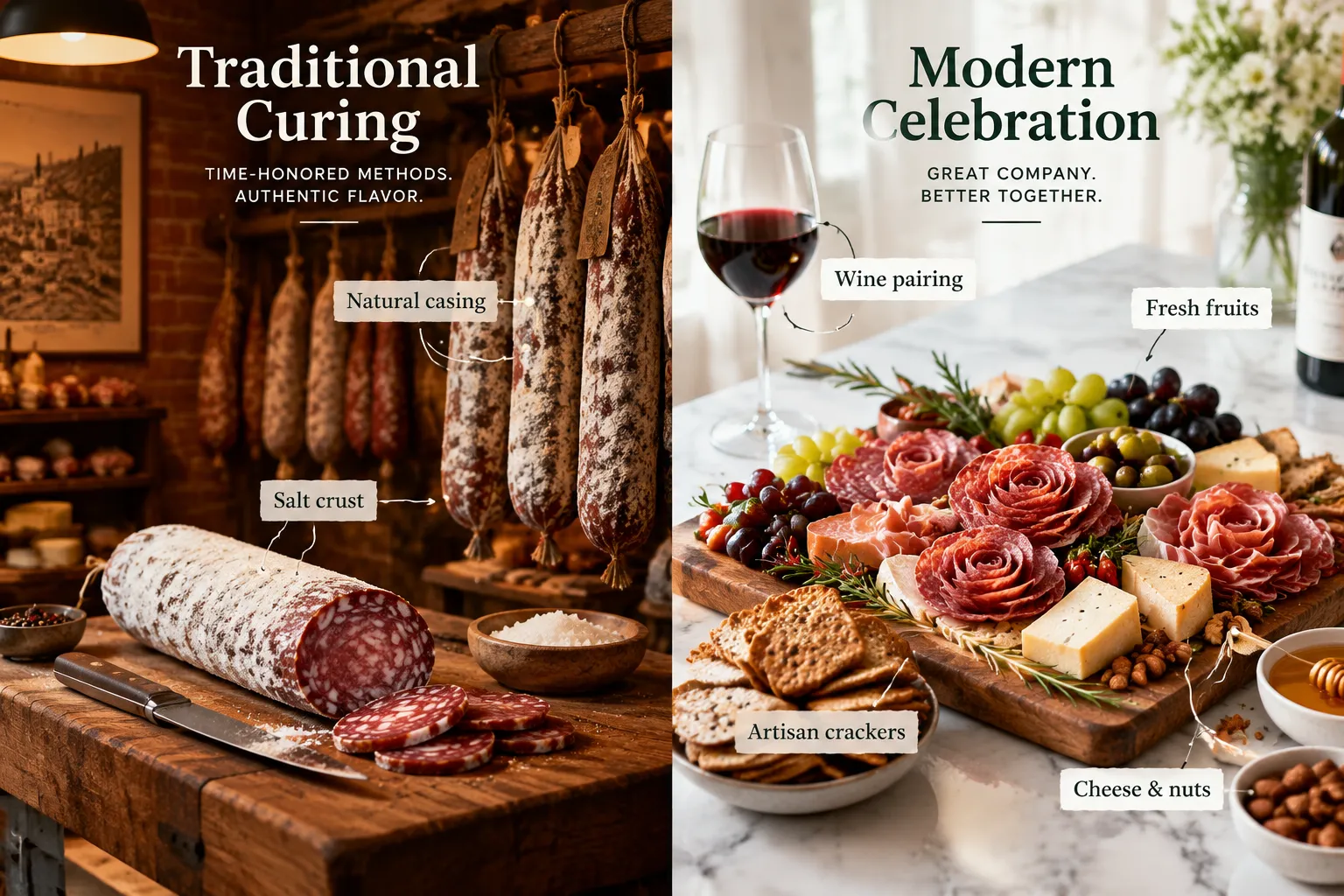
Salami is not a single product. Dozens of regional varieties exist, each with a distinct flavor profile, texture, and production method. [10]
| Variety | Origin | Key Characteristics |
|---|---|---|
| Genoa | Genoa, Italy | Pork-based, fine grain, mild, wine-cured |
| Milano | Milan, Italy | Finely ground, smooth, garlic notes |
| Soppressata | Southern Italy | Coarsely ground, pressed flat, spicy or sweet |
| Pepperoni | United States | Fine-ground pork and beef, smoky, paprika-forward |
| Felino | Emilia-Romagna, Italy | Soft texture, sweet, lightly spiced |
| Hungarian salami | Hungary | Cold-smoked, paprika-seasoned, firm |
| Finocchiona | Tuscany, Italy | Fennel seed-forward, soft, slightly tangy |
Choosing a variety: Start with Genoa if you prefer mild flavors. Choose Soppressata for a bolder, spicier experience. Pepperoni is the most familiar American option and works well cooked on pizza. Finocchiona pairs exceptionally well with fresh fruit and honey on a cheese board.
How Is Salami Made?
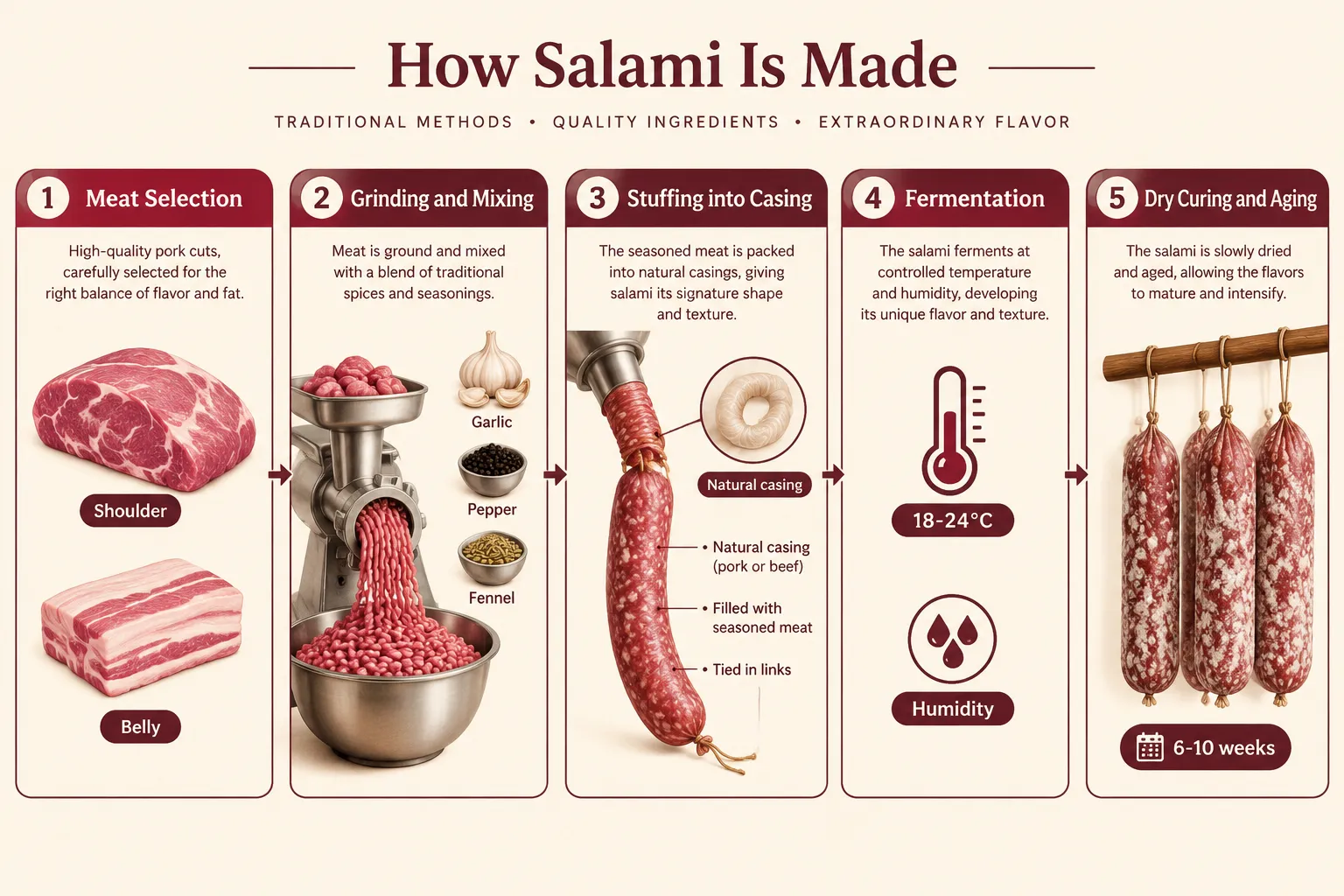
Salami is made through a multi-step process of grinding, seasoning, fermenting, and dry-curing meat. The process typically takes several weeks to months, depending on the variety and size of the sausage. [10]
The core steps are:
- Meat selection and grinding: Pork shoulder, belly, or a pork-beef blend is ground to the desired coarseness.
- Mixing with seasonings: Salt, garlic, black pepper, wine, and variety-specific spices are combined with the meat.
- Stuffing into casings: The mixture is packed into natural or synthetic casings and tied at intervals.
- Fermentation: The sausage is held at controlled temperature and humidity (roughly 18-24°C) for several days to develop acidity and flavor.
- Dry curing and aging: The salami hangs in a cool, ventilated space for weeks to months. Moisture evaporates, flavors concentrate, and the characteristic firm texture develops.
The white coating on the outside of many salamis is a natural mold (Penicillium species) that is intentionally cultivated. It protects the sausage during curing and contributes to flavor complexity. [10]
Salami vs. Prosciutto vs. Other Cured Meats
Salami and prosciutto are both Italian cured meats, but they are fundamentally different products. Salami is a ground and seasoned sausage that is fermented and dried. Prosciutto is a whole cured ham, sliced paper-thin, with a delicate, sweet flavor and no fermentation step.
Quick comparison:
- Salami: Ground meat, spiced, fermented, aged weeks to months, bold and tangy flavor, firm texture
- Prosciutto: Whole pork leg, salt-cured only, aged 12-36 months, sweet and silky, no fermentation
- Chorizo: Spanish or Mexican cured sausage, heavily paprika-seasoned, can be fresh or cured
- Bresaola: Cured beef, no grinding, lean, mild, typically served raw and thinly sliced
- Mortadella: Italian cooked sausage with fat cubes and pistachios, not fermented or dried
Choose salami if you want bold, tangy flavor and a firm, sliceable texture for boards or sandwiches. Choose prosciutto if you want something more delicate and sweet, ideal for wrapping around melon or topping fresh pasta.
Best Salami Brands to Try on National Salami Day
Several brands consistently earn strong reviews from charcuterie enthusiasts and specialty food retailers. These are widely available across the United States in grocery stores, specialty delis, and online.
- Creminelli Fine Meats: Utah-based artisan producer known for Genoa, Sopressata, and Finocchiona varieties
- Olli Salumeria: Virginia-based, uses traditional Italian methods and heritage pork
- Fra’Mani: California producer founded by chef Paul Bertolli, known for authentic Italian-style salami
- Boar’s Head: Widely available in deli counters nationwide, consistent quality for everyday use
- Volpi Foods: St. Louis-based, family-owned since 1902, broad variety selection
- Columbus Craft Meats: National brand with strong retail presence, good entry-level option
Tip: For the best experience on September 7 National Salami Day, seek out a local Italian deli or specialty butcher. Freshly sliced salami from the counter is almost always superior to pre-packaged options.
Salami Food Pairing Ideas
Salami’s bold, savory, and slightly tangy flavor profile pairs well with ingredients that balance or complement its richness. The right pairing elevates both the salami and the accompaniment.
Classic pairings:
- Aged cheeses: Parmigiano-Reggiano, Pecorino, aged Manchego
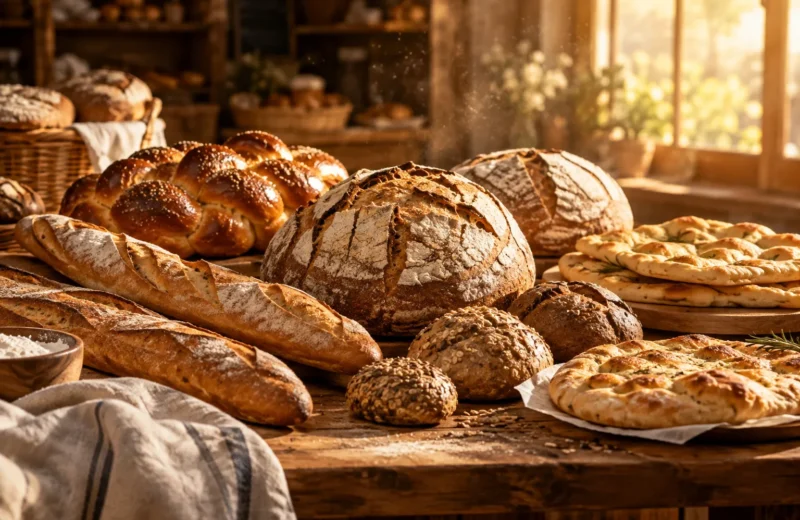
- Bread: crusty sourdough, focaccia, or National French Bread Day-worthy baguette
- Condiments: whole-grain mustard, fig jam, honey, or pickled peppers
- Olives: Castelvetrano (mild, buttery) or Kalamata (briny, bold)
- Wine: Barbera d’Asti, Chianti Classico, or a dry Lambrusco
- Beer: Amber ale, pilsner, or a malty lager
For a complete board: Combine two salami varieties with one soft cheese (such as brie), one hard cheese (such as aged cheddar), a small bowl of olives, cornichons, and a handful of crackers. Add a drizzle of honey for contrast. For cheese board inspiration, see How To Celebrate National Cheddar Day for pairing ideas that translate directly to a salami board.
Is Salami Healthy to Eat?
Salami is a nutrient-dense food but also high in calories, saturated fat, and sodium. It is best enjoyed in moderation as part of a balanced diet rather than as a daily staple.
Nutritional profile (approximate, per 1 oz / 28g serving of Genoa salami):
- Calories: 100-120
- Protein: 6-7g
- Fat: 8-10g (3-4g saturated)
- Sodium: 480-530mg
- Carbohydrates: less than 1g
Who should be cautious:
- People managing high blood pressure or cardiovascular conditions (due to sodium content)
- Those monitoring saturated fat intake
- Individuals with sensitivities to nitrates or nitrites, which are used as preservatives in most commercial salami
Moderate consumption note: A few slices on a charcuterie board a few times per week is unlikely to pose health concerns for most healthy adults. The key is portion awareness, since salami is easy to overeat when served as part of a grazing spread.
Can Vegetarians Eat Salami? Plant-Based Alternatives
Traditional salami contains pork or a pork-beef blend and is not suitable for vegetarians or vegans. However, plant-based salami alternatives have improved significantly and are now widely available. [10]
Options for non-meat eaters:
- Tofurky Pepperoni Slices: Widely available, soy-based, smoky flavor, works well on pizza
- Field Roast Vegetarian Grain Meat: Artisan-style, available in several flavors including smoked apple sage
- Yves Veggie Pepperoni: Budget-friendly, available in most major grocery chains
- Homemade seitan salami: Seitan (wheat gluten) can be seasoned with smoked paprika, garlic, fennel, and black pepper to replicate salami’s flavor profile
Plant-based salamis work well on charcuterie boards alongside vegan cheeses, olives, and crackers. The texture differs from cured meat, but the flavor can be surprisingly close, especially when smoked paprika and fennel are used generously.
Where to Buy Quality Salami and National Salami Day Events and Deals
Quality salami is available through several channels, and September 7 National Salami Day sometimes prompts retailers and restaurants to run limited promotions.
Where to buy:
- Italian delis and specialty markets: Best for freshly sliced, authentic varieties; staff can recommend options
- Whole Foods Market and specialty grocery chains: Carry artisan brands like Creminelli and Olli
- Online retailers: Goldbelly, Murray’s Cheese, and igourmet.com ship nationally and offer curated salami selections
- Warehouse clubs (Costco, Sam’s Club): Carry large-format options at lower per-ounce cost, suitable for parties
- Local butcher shops: Some offer house-made or locally sourced cured meats
Finding deals on September 7: No single national promotion is guaranteed each year, but checking the following sources around September 7 is worthwhile:
- Restaurant and deli social media accounts (Instagram, Facebook)
- Email newsletters from specialty food retailers
- The hashtag #NationalSalamiDay on social platforms
- Local Italian restaurant specials or charcuterie board features
For those who enjoy tracking food holidays year-round, resources like national food days calendars make it easy to plan ahead. Similarly, observances like National Hamburger Day and January 21 National New England Clam Chowder Day follow the same grassroots food-holiday format and attract similar retailer engagement.
FAQ
What day is National Salami Day? National Salami Day is September 7 every year. The date does not change based on the day of the week.
Who created National Salami Day? The Salami Appreciation Society is credited with founding the holiday. The official reference site is salamiday.com.
Is National Salami Day a federal holiday? No. It is an unofficial food observance with no government proclamation. It is not a public holiday and does not affect business hours or school schedules.
What is the difference between salami and pepperoni? Pepperoni is an American-style salami made from finely ground pork and beef, heavily seasoned with smoked paprika and cayenne. Traditional Italian salami varieties use coarser grinds and different spice profiles. Pepperoni is technically a subset of salami.
How long does salami last once opened? Sliced salami stored in an airtight container in the refrigerator typically lasts three to five days. Whole, uncut salami can last several weeks refrigerated or up to six weeks in a cool, dry place, depending on the variety and casing.
Can salami be eaten without cooking? Yes. Cured salami is a ready-to-eat product. It does not require cooking and is typically served at room temperature for best flavor.
Is salami gluten-free? Most traditional salami is naturally gluten-free, but some commercial brands add fillers or flavorings that contain gluten. Always check the label if gluten sensitivity is a concern.
What wine pairs best with salami? Dry Italian reds such as Barbera d’Asti, Chianti Classico, and Lambrusco are classic pairings. The acidity in these wines cuts through the fat in salami and complements its savory, tangy notes.
Is salami the same as summer sausage? No. Summer sausage is a semi-dry American cured sausage with a milder flavor and softer texture. Salami is fermented and more intensely flavored. They are related but distinct products.
Does National Salami Day have events? There are no nationally organized events. Celebrations are typically informal: home charcuterie boards, deli visits, or restaurant specials. Checking local Italian restaurants and specialty food shops around September 7 is the best way to find deals.
Conclusion
September 7 National Salami Day is a straightforward but genuinely worthwhile food observance. It offers a reason to slow down, explore a centuries-old culinary tradition, and share a well-assembled charcuterie board with people who appreciate good food.
Actionable next steps for 2026:
- Mark September 7 on your calendar now and plan a simple charcuterie board for the evening.
- Visit a local Italian deli before the day and ask for a recommendation on a variety you have never tried.
- Follow specialty food retailers and Italian restaurants on social media to catch any September 7 promotions.
- If you cook, try incorporating salami into a recipe rather than just serving it sliced, such as a salami and roasted pepper flatbread or a salami-studded frittata.
- Explore related food holidays throughout the year using a national food days calendar to keep the culinary curiosity going.
Salami has survived millennia because it delivers on every practical and sensory level: long shelf life, bold flavor, and remarkable versatility. September 7 is simply the one day a year the food gets its due recognition.
References
[1] National Salami Day – https://nationaltoday.com/national-salami-day/ [2] dayspedia – https://dayspedia.com/us/calendar/holiday/805/ [3] Tag Der Salami – https://www.kuriose-feiertage.de/tag-der-salami/ [4] National Salami Day – https://www.nationaldaystoday.com/national-salami-day/ [5] Salami Day – https://www.timeanddate.com/holidays/fun/salami-day [6] National Salami Day – https://www.thereisadayforthat.com/holidays/usa/national-salami-day [7] calend.ru – https://www.calend.ru/holidays/0/0/3041/ [8] anydayguide – https://anydayguide.com/calendar/3328 [9] National Salami Day – https://angiegensler.com/national-salami-day/ [10] Salami – https://en.wikipedia.org/wiki/Salami