Basic Steps on How to Become a Good Cook: A Practical Guide for Home Kitchens
- 13 Min Read
Last updated: October 17, 2026
Quick Answer
The basic steps on how to become a good cook are: learn a handful of core techniques, practice knife skills and seasoning consistently, start with simple repeatable recipes, and build a routine of planning meals ahead. Most home cooks notice real improvement within three to six months of regular practice, and genuine confidence develops over one to two years of consistent cooking. No formal training is required, though structured instruction can speed up the learning curve.
Key Takeaways
- Technique matters more than recipe count. Mastering heat control, seasoning, and knife work transfers to hundreds of dishes [6].
- Expect measurable progress within three to six months of cooking several times a week [1].
- Culinary school teaches discipline and speed, but home cooks can learn the same fundamentals through deliberate practice [10].
- Mise en place (prepping and organizing ingredients before cooking) prevents most beginner kitchen disasters [3].
- Salt, acid, fat, and tasting as you go are the four levers that separate flat food from balanced food [4].
- Expensive equipment is not required; a sharp knife, a sturdy pan, and a reliable thermometer cover most needs [2].
- Cooking talent is largely learned through repetition, not an inborn gift [7].
- A structured weekly practice plan beats cooking random recipes with no theme or goal [5].
What Are the Fundamental Cooking Techniques Everyone Should Learn
The fundamental techniques every beginner needs are sautéing, roasting, braising, boiling, and basic sauce-making. These five methods appear in the vast majority of everyday recipes, so mastering them does more for your cooking than memorizing dozens of individual dishes [6].
Start by learning how heat behaves in each method:
- Sautéing: high, dry heat in a small amount of fat for quick-cooking vegetables and proteins.
- Roasting: dry oven heat that caramelizes surfaces, ideal for vegetables, poultry, and large cuts of meat.
- Braising: low, moist heat over time, used for tougher cuts that need to break down slowly, similar to the technique behind slow-cooked baby back ribs.
- Boiling and simmering: essential for grains, pasta, and stocks.
- Sauce-making: reductions, pan sauces, and emulsions that turn plain proteins into finished plates, a skill covered in depth in resources like the sauce-focused recipe collection.
Choose sautéing and roasting first if your goal is weeknight efficiency. Choose braising first if you cook mostly on weekends and want deeper flavor with less hands-on attention.
How Long Does It Take to Become a Good Cook
Most people see noticeable improvement within three to six months of cooking three or more times a week, and reach solid independent competence within one to two years [1]. The exact timeline depends on how often you cook, how deliberately you practice, and whether you review and correct mistakes.
A rough progression looks like this:
| Stage | Approximate Timeframe | What You Can Do |
|---|---|---|
| Beginner | 0-3 months | Follow recipes closely, understand basic knife cuts and heat levels |
| Developing | 3-12 months | Adjust seasoning by taste, substitute ingredients confidently |
| Competent | 1-2 years | Cook without a recipe for familiar dishes, plan full meals |
| Skilled | 2+ years | Improvise across cuisines, troubleshoot failed dishes mid-cook |
Common mistake: measuring progress by the number of recipes tried rather than by skill repetition. Cooking the same roast chicken five times teaches more than cooking five different chicken recipes once each [4].
What’s the Difference Between Cooking Skills and Culinary School Training
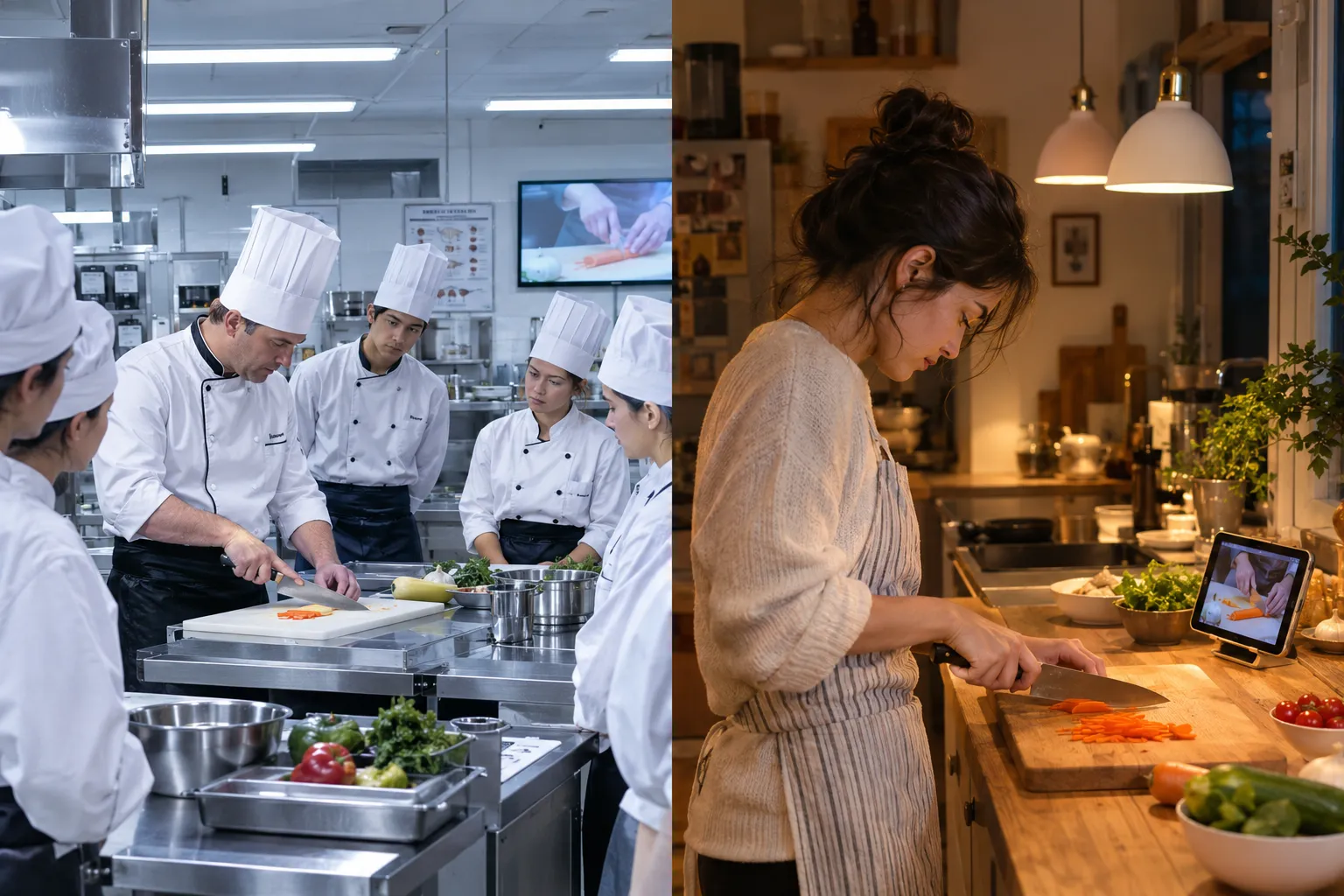
Culinary school compresses years of technique, speed, and discipline into a structured curriculum with direct feedback from instructors, while self-taught cooking skills develop more slowly but can reach the same level of competence over time [10]. Formal training is not a requirement for becoming a good cook at home.
Here is how the two paths compare for a home cook weighing options:
| Factor | Culinary School | Self-Taught at Home |
|---|---|---|
| Speed of skill-building | Fast, structured, graded | Slower, self-paced |
| Cost | High (tuition, uniforms, tools) | Low to moderate |
| Feedback | Immediate, from chef instructors | Delayed, from trial and error |
| Flexibility | Fixed schedule | Fully flexible |
| Best for | Career cooks, restaurant ambitions | Home cooks, hobbyists |
Choose culinary school if you want professional kitchen speed, plating discipline, and a credential for employment. Choose self-teaching if your goal is confident, flavorful home cooking without a career change. Many of the habits taught in professional kitchens, like mise en place and station organization, transfer directly to a home kitchen without ever enrolling in a class [6][10].
Best Way to Practice Cooking Skills at Home
The best way to practice is to follow a structured plan that targets one skill at a time, rather than cooking whatever recipe looks appealing that day [5]. Random recipe-hopping teaches isolated steps; a plan builds compounding skill.
A simple four-week structure works well:
- Week 1: Knife cuts and heat control using basic vegetables and eggs.
- Week 2: One-pot meals and simmering, building on stocks and braises.
- Week 3: Roasting and pan sauces, practicing doneness and seasoning.
- Week 4: Combine everything into a full multi-component meal.
Repeat the same core dish several times within a week, adjusting one variable each time (salt level, cook time, cut size). This mirrors how professional kitchens drill technique before introducing variation [6].
Common Cooking Mistakes Beginners Make
The most common beginner mistakes are under-seasoning food, overcrowding the pan, skipping mise en place, and not tasting as they cook [3][8]. Each of these is easy to fix once identified.
- Under-seasoning: Salt should be added in layers throughout cooking, not only at the end.
- Overcrowding the pan: Too much food at once traps steam and prevents browning; cook in batches instead.
- Skipping prep: Reading the full recipe and prepping ingredients first (mise en place) prevents burnt garlic and missed steps [3].
- Not tasting: Good cooks taste food at every stage and adjust salt, acid, or fat before plating [4].
Edge case: if you are cooking for someone with sodium restrictions, build flavor with acid (citrus, vinegar) and aromatics instead of salt, rather than skipping seasoning entirely.
Do You Need Expensive Equipment to Become a Good Cook
No. A sharp chef’s knife, one sturdy skillet, a reliable pot, and an instant-read thermometer cover the vast majority of home cooking needs [2]. Expensive cookware sets and gadgets rarely accelerate skill-building; technique does that.
Minimum equipment list for a beginner:
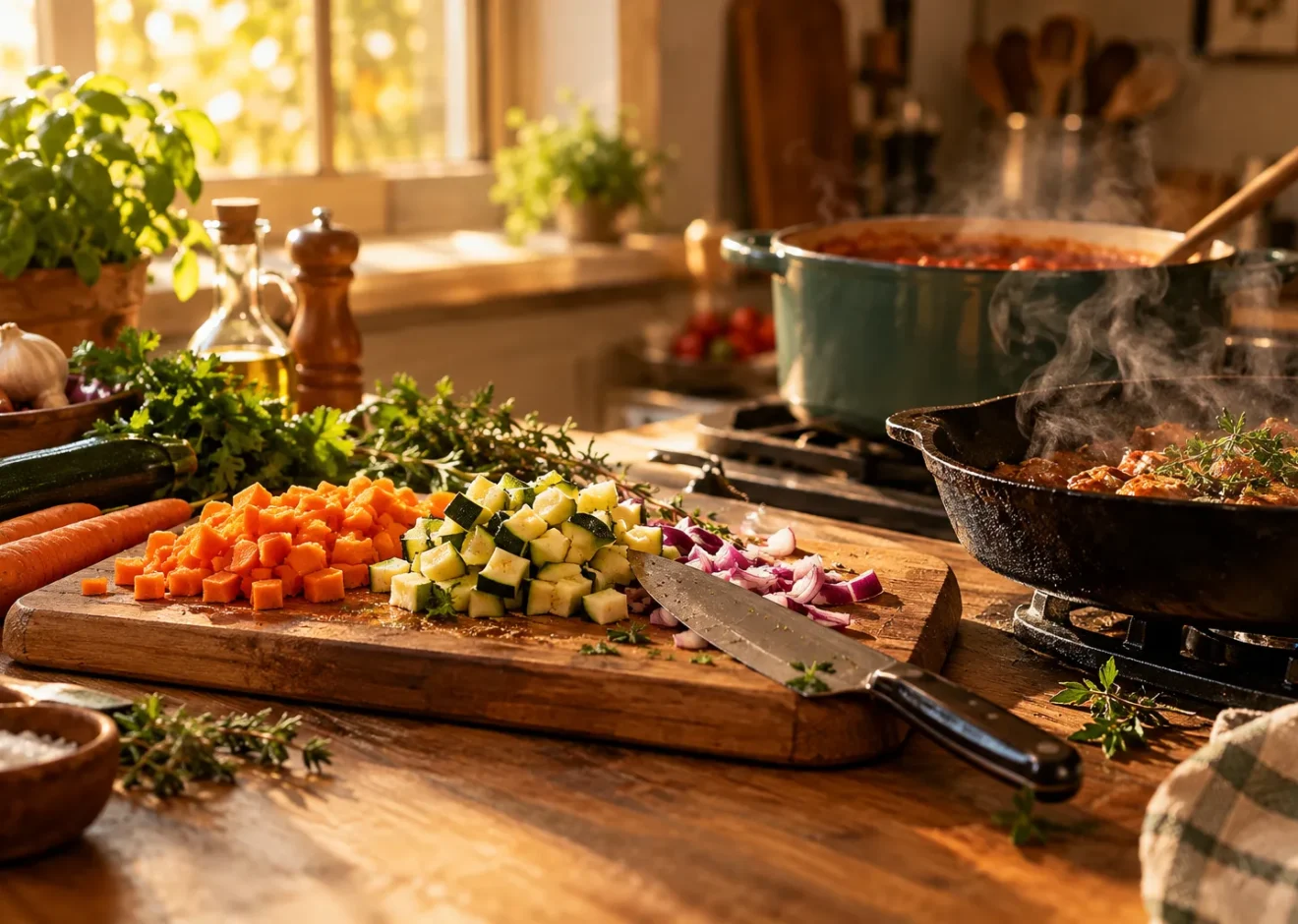
- 8-inch chef’s knife, kept sharp
- One heavy-bottomed skillet (cast iron or stainless steel)
- One medium saucepan or Dutch oven
- Digital instant-read thermometer
- A reliable cutting board
Choose a single good knife over a full block set. A dull cheap knife is more dangerous and less precise than one quality blade you maintain yourself.
How to Improve Knife Skills and Food Prep
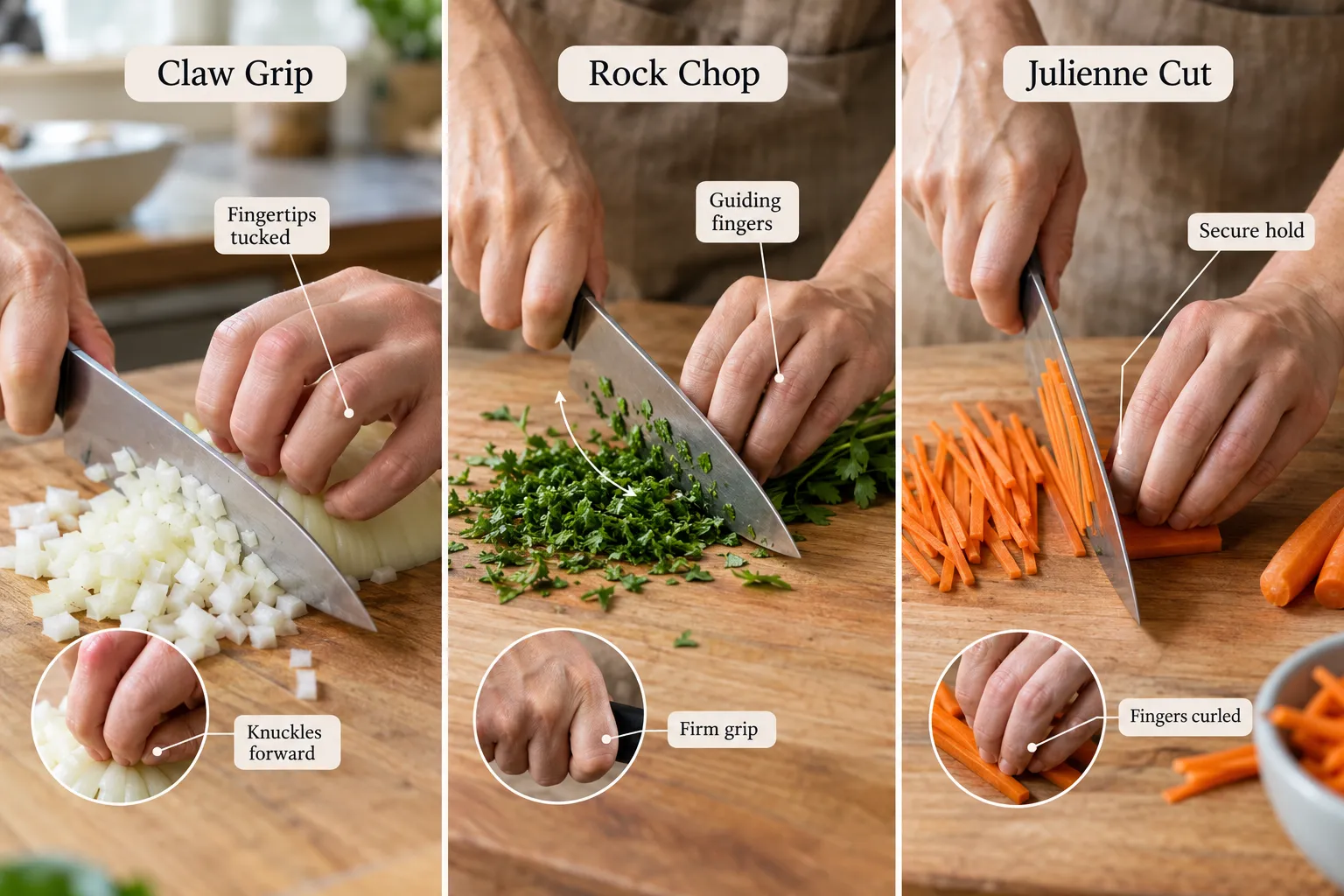
Knife skills improve fastest through repetition of a few standard cuts, not through watching tutorials alone [6]. Dicing an onion fifty times teaches more than watching fifty videos about dicing onions.
Practical steps to build knife skills:
- Learn the claw grip to protect fingertips before anything else.
- Practice the rock-chop motion on herbs and soft vegetables daily for two weeks.
- Move to harder vegetables (carrots, potatoes) once soft-vegetable cuts are even.
- Time yourself occasionally, but prioritize evenness over speed early on.
Even cuts matter because they cook at the same rate, which prevents some pieces from burning while others stay raw. This single habit improves dish consistency more than almost any other beginner skill [6].
What Recipes Should Beginners Start With
Beginners should start with simple, forgiving, one-pot or single-technique dishes such as scrambled eggs, roasted vegetables, simple pasta, and basic stews [1][9]. These dishes build core skills without requiring precise timing across multiple components.
Good starter categories include:
- Eggs: cheap, fast feedback on heat control, explored further in the eggs-focused recipe collection.
- Potatoes: forgiving, versatile, and useful for practicing roasting and boiling, as shown in the potato recipe collection.
- One-pot meals: fewer dishes, fewer timing mistakes, and lower pressure, a point chef Mary Berry has emphasized when discussing easy one-pot cooking for home cooks [9].
- Simple proteins: a basic seared steak builds doneness awareness, as detailed in the steak cookbook guide.
Choose one-pot meals first if kitchen cleanup time or stress is a barrier to cooking regularly.
Is Cooking Talent Something You’re Born With or Can You Learn It
Cooking skill is overwhelmingly learned through repetition, feedback, and correction, not an inborn talent [7]. What separates a good cook from an average one is not natural ability but the habit of tasting constantly, adjusting seasoning in real time, and learning from failed dishes instead of avoiding them [4][7].
Average cooks follow recipes exactly and stop adjusting once something looks finished. Good cooks taste at every stage, recognize when a dish needs more acid or salt, and treat a failed dish as information rather than a reason to quit [4]. Curiosity and willingness to experiment, even when a dish does not work, are consistently cited by chefs as the real differentiator [4][7].
How to Develop a Palate and Taste Food Better
Developing a palate means tasting food deliberately and identifying which of the four core levers, salt, acid, fat, or sweetness, is missing or out of balance [4]. This is a trainable skill, not a fixed trait.
Practical exercises:
- Taste a dish before and after adding a small amount of salt, and note the difference out loud.
- Compare the same vegetable roasted plain versus with acid (lemon or vinegar) added at the end.
- Try dishes from cuisines like Mexican cooking, where chili, lime, and salt are balanced deliberately, such as in the Mexican recipe collection, to train your palate on contrast.
- Keep a short tasting note after each meal you cook: what was missing, what you would change.
Common mistake: tasting only at the very end of cooking. By then, it is often too late to fix balance without starting a sauce or seasoning over.
Best Cooking Books or Resources for Learning Basics
The most useful resources for beginners combine written technique explanations with repeatable recipes rather than aspirational, restaurant-style dishes [1][5]. Online instruction and video tutorials help with visual steps like knife cuts, but results are mixed when used without hands-on repetition [5].
A balanced resource mix includes:
- A foundational technique-focused cookbook for reference
- A curated recipe collection organized by ingredient, such as a vegan recipe cookbook for plant-based basics
- Short video tutorials for physical skills like knife grip and flipping technique
- A notebook or app for tracking what worked and what did not
Choose video resources for physical, visual skills (knife work, folding dough) and written resources for technique explanations (why a braise needs low heat, why resting meat matters).
Should I Take Cooking Classes or Teach Myself
Take a class if you want structured feedback and accountability; teach yourself if you are self-motivated and want flexibility on cost and schedule [5][10]. Neither path is objectively better, and many home cooks blend both successfully.
A short, in-person knife skills class paired with self-directed recipe practice at home is a common and effective combination. Online classes work well for theory and demonstration but should be paired with actual repeated practice, since results from online instruction alone are inconsistent [5].
How to Meal Plan and Cook Efficiently
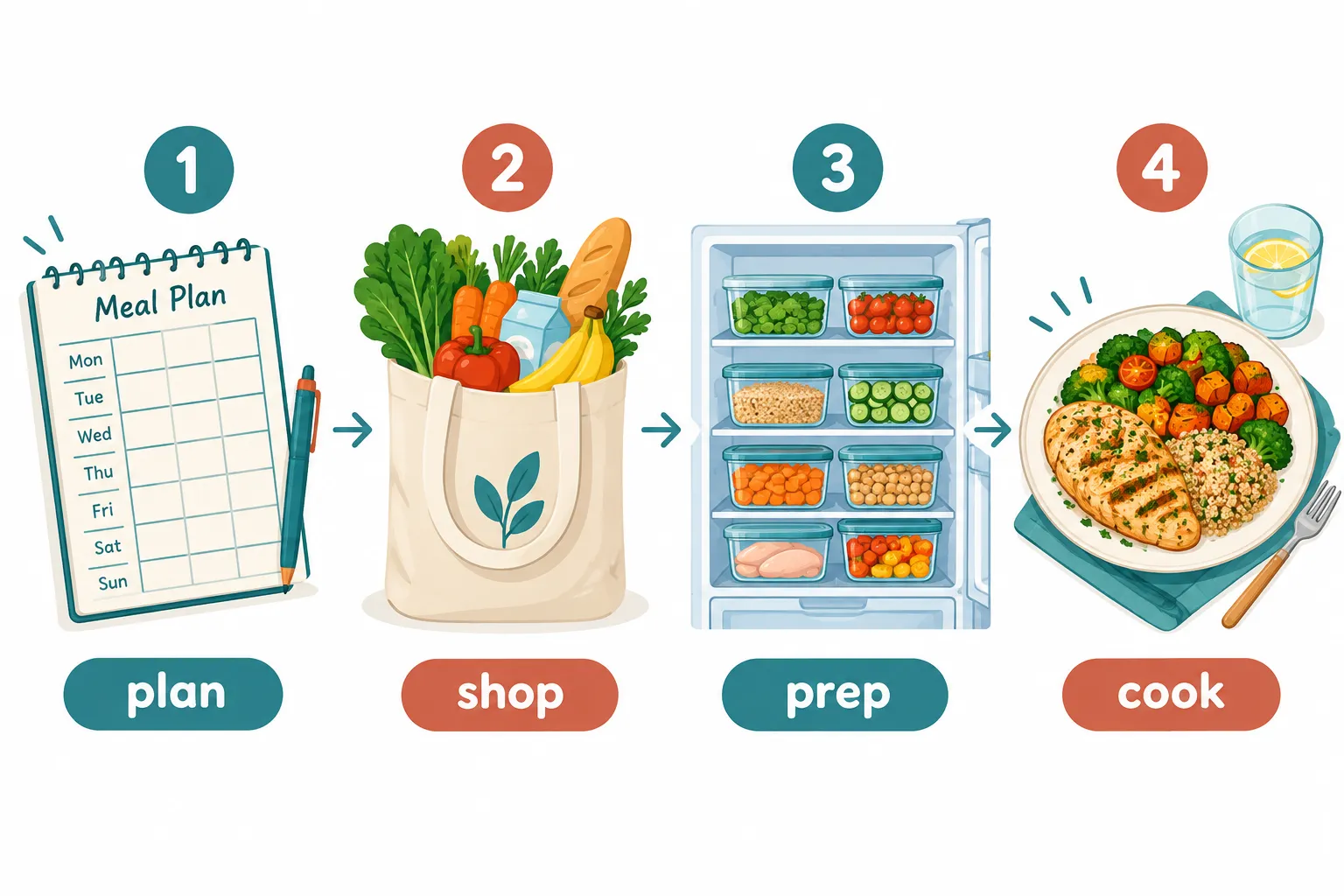
Efficient home cooking starts with planning meals for the week before shopping, then prepping ingredients in batches rather than cooking from scratch every single night [1][3]. This single habit reduces both food waste and weeknight stress.
A practical weekly system:
- Pick four to five meals that share overlapping ingredients (one protein, two vegetables, one starch base).
- Shop once with a list organized by store section.
- Prep vegetables and proteins in one block of time, usually on a weekend.
- Cook in batches where possible, such as a base sauce used across two different meals, similar to the flexibility found in the sauce recipe collection.
Edge case: if your schedule is unpredictable, plan three fixed meals and leave two nights flexible for leftovers or simple one-pot dishes instead of locking in a rigid seven-day plan.
Conclusion
Becoming a good cook comes down to a short list of repeatable habits: learn core techniques instead of chasing recipes, practice knife skills until cuts are even without thinking about them, season in layers and taste constantly, and plan meals ahead so cooking fits into a normal week instead of fighting against it. None of this requires culinary school, expensive equipment, or natural talent. It requires consistent, deliberate repetition over months, not years, before real confidence sets in.
Start this week with one change: pick a single dish, such as roasted vegetables or a simple braise, and cook it three times, adjusting seasoning and timing slightly each time. That one habit, repeated, does more for your kitchen confidence than any amount of recipe collecting.
FAQs
Do I need to go to culinary school to become a good home cook? No. Culinary school speeds up professional-level skills, but home cooks can reach strong competence through deliberate practice, structured technique learning, and consistent repetition [10].
How often should a beginner cook to improve quickly? Cooking three or more times a week produces noticeable improvement within three to six months, based on consistent practice of core techniques rather than random recipes [1].
What is the single most important beginner cooking skill? Seasoning and tasting as you cook, since salt, acid, and fat balance determine whether a dish tastes finished or flat, regardless of technique [4].
Is it normal to fail at recipes when starting out? Yes. Failed dishes are a normal and useful part of learning to cook, and chefs consistently point to curiosity and willingness to experiment as a bigger factor in skill growth than avoiding mistakes [4][7].
Can I become a good cook without buying special equipment? Yes. A sharp knife, one sturdy pan, a basic pot, and a thermometer cover almost all beginner and intermediate cooking needs [2].
What should I cook first as a complete beginner? Simple, forgiving dishes like scrambled eggs, roasted vegetables, or a one-pot stew, since they teach heat control and timing without requiring multiple components to finish at once [1][9].
References
[1] How To Cook For Beginners – https://kitchensprep.com/how-to-cook-for-beginners/ [2] Tips To Consider As A Beginner In The Kitchen – https://www.foodandhome.co.za/lifestyle/tips-to-consider-as-a-beginner-in-the-kitchen [3] How To Start Cooking Beginners Guide – https://shop.ttkprestige.com/blog/post/tips-and-tricks/how-to-start-cooking-beginners-guide [4] 26 Tiny Ways To Be A Better Cook In 2026 – https://www.salon.com/2025/12/20/26-tiny-ways-to-be-a-better-cook-in-2026/ [5] Learn To Cook – https://www.classpop.com/magazine/learn-to-cook [6] Culinary School Skills Use At Home – https://parkcityculinaryinstitute.com/blog/culinary-school-skills-use-at-home/ [7] Essential Tips To Improve Your Cooking Skills – https://www.escoffier.edu/blog/culinary-arts/essential-tips-to-improve-your-cooking-skills/ [8] Most Important Beginner Cooking Rule According Reddit – https://www.tastingtable.com/2231637/most-important-beginner-cooking-rule-according-reddit/ [9] 1594368 Mary Berry On Mastering The Easy One Pot Meal – https://www.rte.ie/lifestyle/food/2026/1007/1594368-mary-berry-on-mastering-the-easy-one-pot-meal/ [10] 5 Lessons From Culinary Arts That Can Be Used Daily As A Home Cook – https://northbridge.edu/en/publications/5-lessons-from-culinary-arts-that-can-be-used-daily-as-a-home-cook/