
Last updated: November 20, 2026
Quick Answer
November 20 National Peanut Butter Fudge Day is an unofficial annual food observance celebrated in the United States every November 20. It was established by the National Peanut Board to honor peanut butter fudge, a soft, creamy confection made from peanut butter, sugar, butter, and binding ingredients like marshmallow creme. The day is not a public holiday but serves as a lighthearted prompt to bake, share, or buy peanut butter fudge as the holiday season begins.
Key Takeaways
- November 20 National Peanut Butter Fudge Day is observed annually on November 20 in the United States and has been recognized since at least 2004.
- The National Peanut Board is credited as the founding organization behind the observance.
- It is an unofficial food holiday, not a public or federal holiday.
- Over 75% of American households keep peanut butter at home, making this confection widely accessible to celebrate.
- Classic peanut butter fudge requires no baking and can be made in under 30 minutes.
- Peanut butter fudge differs from chocolate fudge primarily in its fat source and flavor base, though both rely on sugar crystallization for texture.
- Homemade fudge stored properly lasts up to two weeks at room temperature or up to three months in the freezer.
- People with peanut allergies can substitute sunflower seed butter or almond butter for a comparable confection.
- Vegan versions of peanut butter fudge are achievable using coconut oil and plant-based condensed milk.
- Grainy fudge is usually caused by premature sugar crystallization and can often be prevented with careful temperature control.
What Is National Peanut Butter Fudge Day?
National Peanut Butter Fudge Day is an unofficial U.S. food observance dedicated to celebrating peanut butter fudge as a dessert and confection. It is listed on major national day calendars as a lighthearted, non-governmental holiday [1][2][3].
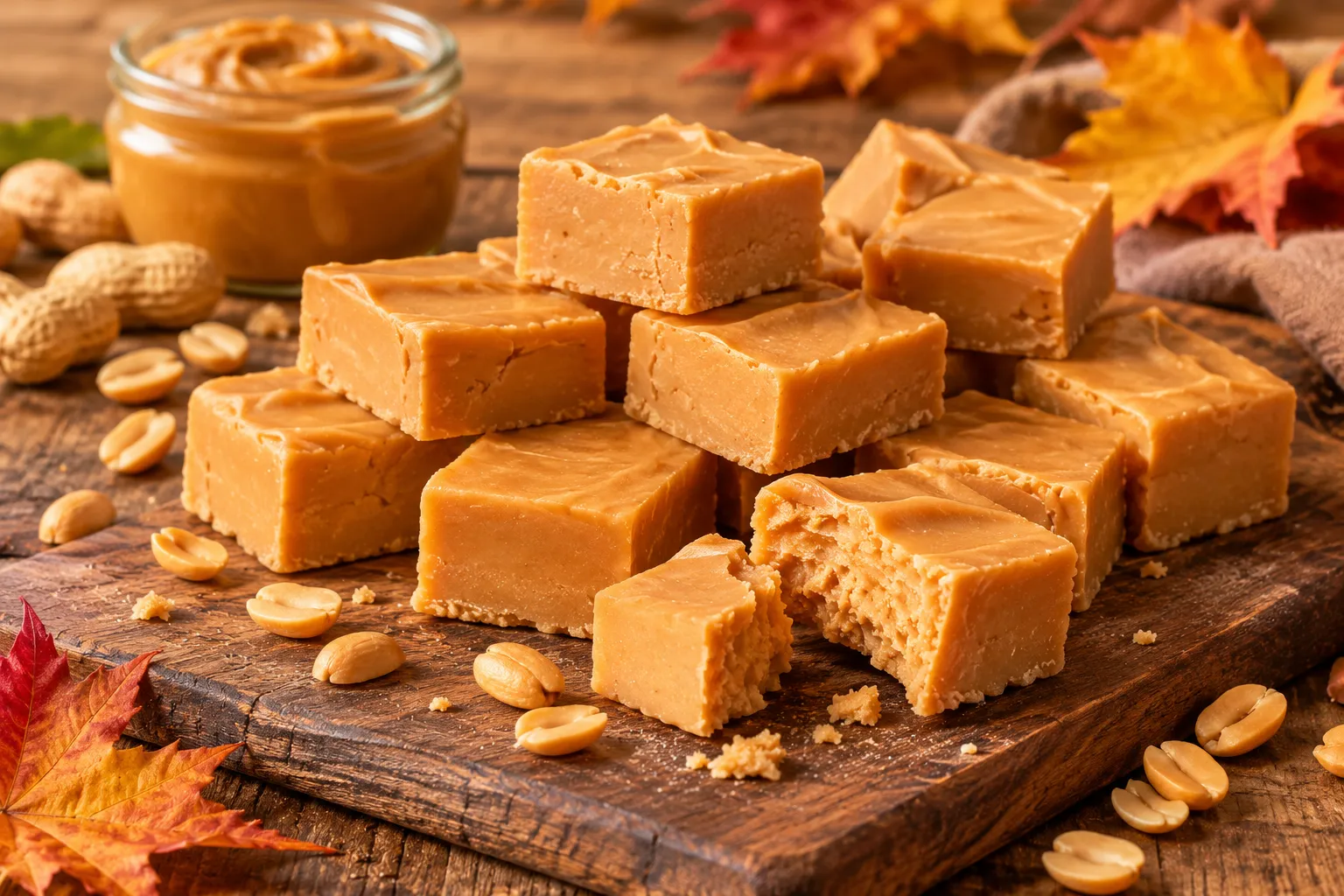
Peanut butter fudge itself is a soft candy made by combining peanut butter with sugar, butter, and a binding agent such as marshmallow creme or sweetened condensed milk. The result is a dense, creamy square that sits firmer than a spread but softer than hard candy. It’s particularly popular in the American South and Midwest, where fudge-making is a long-standing home cooking tradition.
The day falls on November 20 each year, landing just before Thanksgiving and the broader holiday dessert season, which makes it a natural fit for home bakers looking to test seasonal recipes.
Why Is November 20 Peanut Butter Fudge Day?
November 20 was designated as National Peanut Butter Fudge Day by the National Peanut Board, the industry organization representing U.S. peanut farmers and processors [2]. The observance has been tracked on holiday calendars since at least 2004, giving it over two decades of continuous recognition [3].
The timing in late November is strategic. As holiday cooking ramps up across American households, November 20 offers a focused moment to celebrate peanut-based confections before the broader dessert season takes over. The National Peanut Board’s involvement reflects the peanut industry’s longstanding effort to promote peanut products through culturally resonant food events [2].
It is worth noting that the day is not tied to any legislation, formal proclamation, or federal recognition. It coexists on November 20 calendars alongside globally recognized observances like World Children’s Day but remains U.S.-centric in its focus [4][5].
How to Make Homemade Peanut Butter Fudge: Best Easy Recipe
Classic peanut butter fudge requires no candy thermometer for most recipes and can be ready to cut in under two hours, including setting time. The most reliable method uses marshmallow creme as a stabilizer, which helps prevent the grainy texture that plagues many first-time fudge makers.
Standard stovetop method (makes approximately 48 pieces):
- Line a 9×13-inch pan with parchment paper and lightly grease it.
- Combine 3 cups granulated sugar, 3/4 cup butter, and 2/3 cup evaporated milk in a heavy saucepan over medium heat.
- Bring to a full rolling boil, stirring constantly, and cook for exactly 5 minutes.
- Remove from heat and stir in 1 jar (7 oz) marshmallow creme, 1.5 cups creamy peanut butter, and 1 teaspoon vanilla extract.
- Pour immediately into the prepared pan and spread evenly.
- Allow to cool at room temperature for at least 2 hours before cutting.
Key tips for success:
- Use a heavy-bottomed pan to prevent hot spots and scorching.
- Stir constantly during the boiling stage; stopping causes uneven sugar crystallization.
- Do not scrape the sides of the pan into the finished fudge; crystallized sugar clinging to the sides causes graininess.
- Smooth, natural peanut butter produces a slightly oilier texture; commercial creamy peanut butter (like standard national brands) gives more consistent results.
For a deeper fudge resource, the 268 Fudge Cookbook is a solid reference covering dozens of fudge variations beyond the classic recipe.
No-Bake Peanut Butter Fudge: How to Make It
No-bake peanut butter fudge skips the stovetop entirely and uses powdered sugar and peanut butter as its base. It sets through chilling rather than sugar crystallization, making it faster and more forgiving for beginners.
Simple no-bake version:
- Melt 1/2 cup butter in a microwave-safe bowl.
- Stir in 1 cup creamy peanut butter until smooth.
- Gradually mix in 2 cups sifted powdered sugar until a stiff dough forms.
- Press evenly into a parchment-lined 8×8-inch pan.
- Refrigerate for at least 1 hour before cutting into squares.
This version has a denser, slightly firmer texture than stovetop fudge. It is particularly useful when time is short or when cooking with children on November 20 National Peanut Butter Fudge Day.
Peanut Butter Fudge vs. Chocolate Fudge: Key Differences
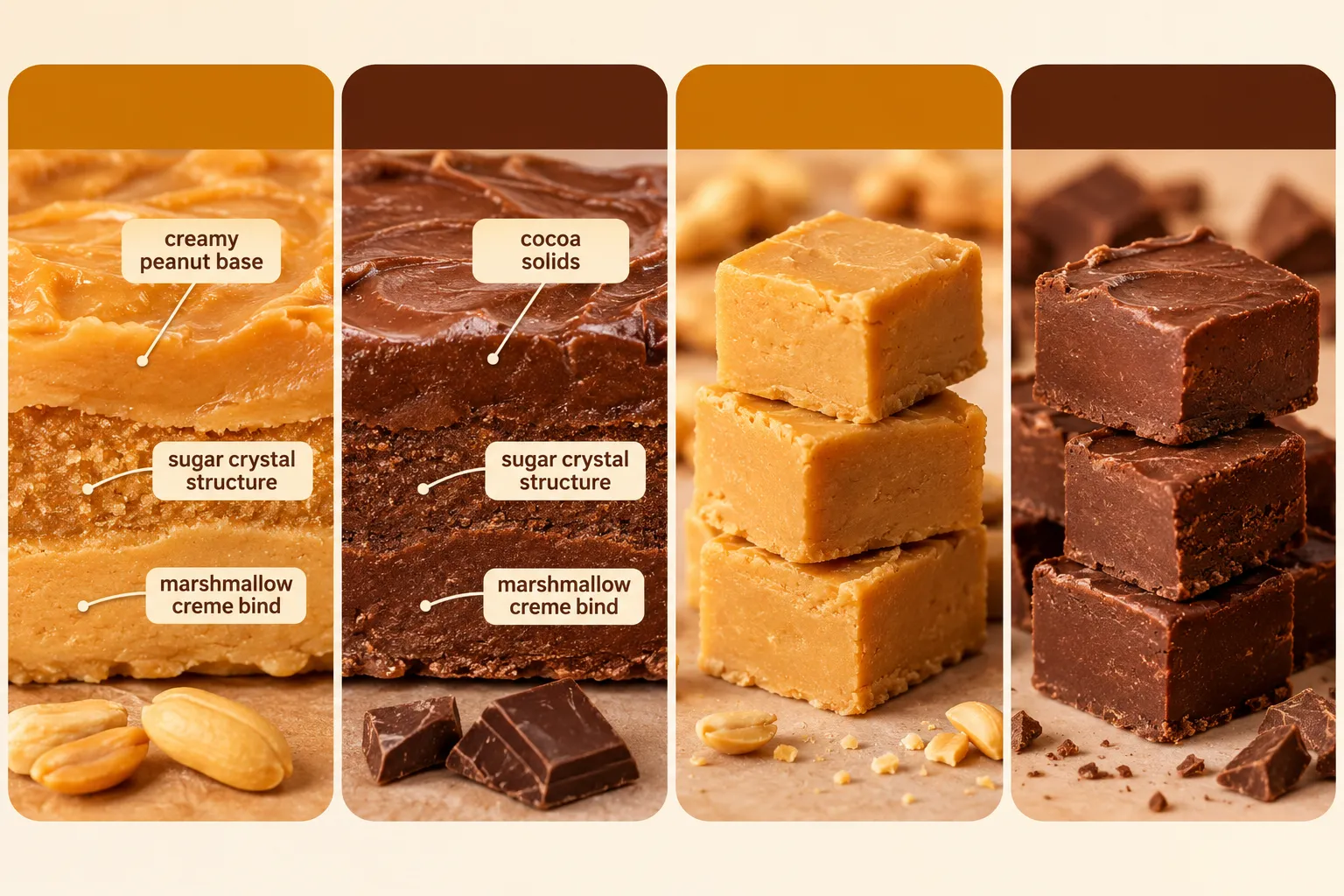
Peanut butter fudge and chocolate fudge share the same sugar-and-fat base but differ in flavor, texture, and common ingredients. Peanut butter fudge uses peanut butter as its primary fat and flavor source, while chocolate fudge relies on cocoa solids or melted chocolate combined with butter.
| Feature | Peanut Butter Fudge | Chocolate Fudge |
|---|---|---|
| Primary flavor | Peanut butter | Cocoa / chocolate |
| Main fat source | Peanut butter + butter | Butter + chocolate |
| Texture | Creamy, slightly dense | Smooth, can be firmer |
| Binding agent | Marshmallow creme or condensed milk | Condensed milk or cream |
| Allergen concern | Tree nut/peanut allergy risk | Dairy; lower allergen risk |
| Calorie range (per oz) | Approx. 130-150 kcal | Approx. 115-135 kcal |
Calorie estimates above are approximate and vary by recipe and portion size.
Chocolate fudge tends to have a slightly lower calorie count per piece when made without added nut butters, but both are high-sugar, energy-dense treats best enjoyed in small portions. If you enjoy exploring other nut-based confections, National Almond Buttercrunch Day covers a related nutty candy tradition worth exploring.
How Many Calories Are in Peanut Butter Fudge?
A typical one-ounce piece of peanut butter fudge contains approximately 130 to 150 calories, depending on the recipe. This estimate holds for standard recipes using sugar, butter, peanut butter, and marshmallow creme; recipes using sweetened condensed milk may run slightly higher.
For context, a standard pan yields around 48 small squares at roughly 1 ounce each. The calorie count comes primarily from sugar (simple carbohydrates) and fat from the butter and peanut butter. Peanut butter also contributes a small amount of protein, roughly 1 to 2 grams per square, which is negligible in a candy context.
How to Fix Grainy Peanut Butter Fudge
Grainy fudge is caused by premature or uneven sugar crystallization during the cooking or cooling process. Fixing it once it has set is difficult, but preventing it is straightforward with consistent technique.
Common causes and fixes:
- Stirring after boiling stops: Once you remove the pan from heat, stir in add-ins quickly and pour immediately. Prolonged stirring after the temperature drops encourages rapid crystallization.
- Scraping pan sides: Sugar crystals on the sides of the pan act as seeds for grainy texture. Leave side residue in the pan.
- Undercooking the sugar mixture: The mixture must reach a full rolling boil and maintain it for the specified time (typically 4-5 minutes). Undercooked fudge often results in a grainy, crumbly set.
- Humidity: High humidity slows setting and can interfere with sugar structure. Fudge-making on a dry day produces more consistent results.
If a batch does turn out grainy, it can sometimes be salvaged: return it to the saucepan with 1-2 tablespoons of cream, reheat slowly until smooth, then pour and allow to reset.
Vegan Peanut Butter Fudge Recipe
Vegan peanut butter fudge is achievable without dairy butter or dairy-based condensed milk. The simplest approach substitutes coconut oil for butter and uses sweetened condensed coconut milk, which is now widely available in most grocery stores.
Basic vegan version:
- 1 cup natural peanut butter
- 1/3 cup coconut oil (refined, for neutral flavor)
- 1/2 cup maple syrup or agave
- 1 teaspoon vanilla extract
- Pinch of salt
Combine all ingredients over low heat, stirring until smooth. Pour into a lined pan and freeze for 1-2 hours. Slice and serve cold, as this version softens faster at room temperature than dairy-based fudge.
This version is also lower in refined sugar, though the total fat content from coconut oil is comparable to traditional recipes. Store in the freezer between servings.
Can You Freeze Peanut Butter Fudge and How Long Does It Last?
Yes, peanut butter fudge freezes well and can be stored frozen for up to three months without significant quality loss. At room temperature in an airtight container, homemade peanut butter fudge lasts approximately 1 to 2 weeks. Refrigerated, it extends to about 3 to 4 weeks.
Storage guidelines:
- Room temperature: Up to 2 weeks in an airtight container, layers separated by wax paper.
- Refrigerator: Up to 4 weeks; bring to room temperature before serving for best texture.
- Freezer: Up to 3 months; wrap individual pieces in plastic wrap, then place in a freezer bag to prevent freezer burn.
To thaw frozen fudge, transfer it to the refrigerator overnight or leave it at room temperature for 1-2 hours. Avoid microwaving, which causes uneven softening and can alter the sugar structure.
Is Peanut Butter Fudge Safe for Nut Allergies, and What Are the Alternatives?
Peanut butter fudge is not safe for people with peanut allergies, as peanut butter is its defining ingredient. Cross-contamination is also a concern when making it in a shared kitchen. For individuals with peanut allergies, several nut-free and tree-nut-free alternatives exist.
Peanut butter fudge alternatives:
- Sunflower seed butter fudge: Sunflower seed butter substitutes 1:1 for peanut butter in most recipes. It has a slightly earthier flavor but produces a nearly identical texture. It is peanut-free and tree-nut-free.
- Soy nut butter fudge: Similar substitution ratio; available in most health food stores.
- Cookie butter fudge: Uses speculoos or Biscoff spread as the base. Not nut-free but peanut-free, and very popular with younger audiences.
- Tahini fudge: Made from sesame paste; allergen profile differs from peanuts and tree nuts, though sesame is itself a recognized allergen in many jurisdictions.
Always check labels when buying pre-made alternatives, as many commercial nut-butter products are processed on shared equipment with peanuts.
Where to Buy Peanut Butter Fudge Online and In Stores
Pre-made peanut butter fudge is available from specialty candy retailers, fudge shops, and online marketplaces. For November 20 National Peanut Butter Fudge Day, some fudge shops run limited promotions or gift sets tied to the date [1][3].
Where to look:
- Specialty fudge retailers: Brands like Murdick’s (Mackinac Island-style), The Fudge Factory, and similar regional producers ship nationally and often carry peanut butter varieties year-round.
- Online marketplaces: Etsy hosts numerous small-batch confectioners who sell homemade-style peanut butter fudge; Amazon carries boxed and packaged fudge from established candy brands.
- Local candy shops and farmers markets: Many carry rotating fudge flavors; calling ahead on or near November 20 may reveal holiday specials.
- Grocery stores: Some national chains stock fudge in their bakery or candy sections, though selection varies by region.
When ordering online, check shipping lead times, as fudge can soften or dry out in transit without proper packaging.
How to Celebrate November 20 National Peanut Butter Fudge Day
Celebrating November 20 National Peanut Butter Fudge Day does not require elaborate planning. The most common approaches are making a batch at home, sharing fudge with coworkers or neighbors, or hosting an informal bake-off [1][2][4].
Practical ways to observe the day:
- Bake a batch of classic or no-bake peanut butter fudge and package pieces in small boxes as early holiday gifts.
- Host a fudge-tasting with friends, comparing traditional peanut butter fudge against chocolate fudge or seasonal variations like pumpkin spice peanut butter fudge.
- Share the recipe on social media with the hashtag #NationalPeanutButterFudgeDay to connect with others observing the day.
- Order from a local fudge shop or candy maker to support small food businesses.
- Pair peanut butter fudge with complementary treats; for contrast, National Hazelnut Cake Day and National Ice Cream Cake Day offer inspiration for building a fuller dessert spread.
FAQ
Q: When is National Peanut Butter Fudge Day? National Peanut Butter Fudge Day is observed every year on November 20. In 2026, it falls on a Friday.
Q: Who created National Peanut Butter Fudge Day? The National Peanut Board established the observance. It has been recognized annually since at least 2004.
Q: Is National Peanut Butter Fudge Day a public holiday? No. It is an unofficial food observance, not a public or federal holiday. Schools, banks, and government offices remain open.
Q: What is peanut butter fudge made of? Classic peanut butter fudge is made from sugar, butter, evaporated milk or condensed milk, marshmallow creme, creamy peanut butter, and vanilla extract.
Q: How long does it take to make peanut butter fudge? Active preparation takes about 20-30 minutes. The fudge then needs 2 hours to set at room temperature before it can be cut and served.
Q: Can you make peanut butter fudge without a candy thermometer? Yes. The most common recipes use a timed boil method (5 minutes at a full rolling boil) rather than temperature measurement, making a thermometer optional.
Q: Why did my peanut butter fudge turn out soft and not set? The sugar mixture likely did not reach a full boil or was not cooked long enough. Humidity can also interfere with setting. Refrigerating the fudge for 1-2 hours can help firm it up.
Q: Does peanut butter fudge contain gluten? Standard recipes do not include gluten-containing ingredients. However, cross-contamination is possible depending on the brand of peanut butter or other packaged ingredients used.
Q: Can children help make peanut butter fudge? Older children can help with measuring and mixing, but the boiling sugar stage requires adult supervision, as molten sugar reaches extremely high temperatures and can cause serious burns.
Q: What pairs well with peanut butter fudge? Peanut butter fudge pairs well with black coffee, cold milk, or vanilla ice cream. It also complements chocolate-based desserts and fruit preserves; see National Jam Day for pairing inspiration.
Conclusion
November 20 National Peanut Butter Fudge Day is a simple, accessible food holiday with a clear origin, a broad audience, and an easy barrier to entry: almost anyone with a saucepan and a jar of peanut butter can participate. The day falls at the start of the holiday cooking season, making it a practical warm-up for more elaborate seasonal baking.
Actionable next steps for November 20:
- Choose a recipe: classic stovetop, no-bake, or vegan, depending on your dietary needs and available time.
- Gather ingredients in advance; the full stovetop recipe requires fewer than 10 items, most of which are pantry staples.
- Double the batch if gifting, since homemade peanut butter fudge keeps well for two weeks at room temperature and up to three months frozen.
- If allergies are a concern in your household or workplace, opt for sunflower seed butter as a direct 1:1 substitute.
- Share the results, whether in person or online, using the day’s dedicated hashtag to connect with the broader community of home confectioners.
Peanut butter fudge rewards careful technique more than exotic ingredients. Get the boil time right, avoid scraping the pan sides, and the result is a reliably smooth, crowd-pleasing confection that suits the season perfectly.
References
- National Peanut Butter Fudge Day. punchbowl.com.
- National Peanut Butter Fudge Day. nationaltoday.com.
- National Peanut Butter Fudge Day. checkiday.com.
- Nov. daysoftheyear.com.