Last updated: April 8, 2026
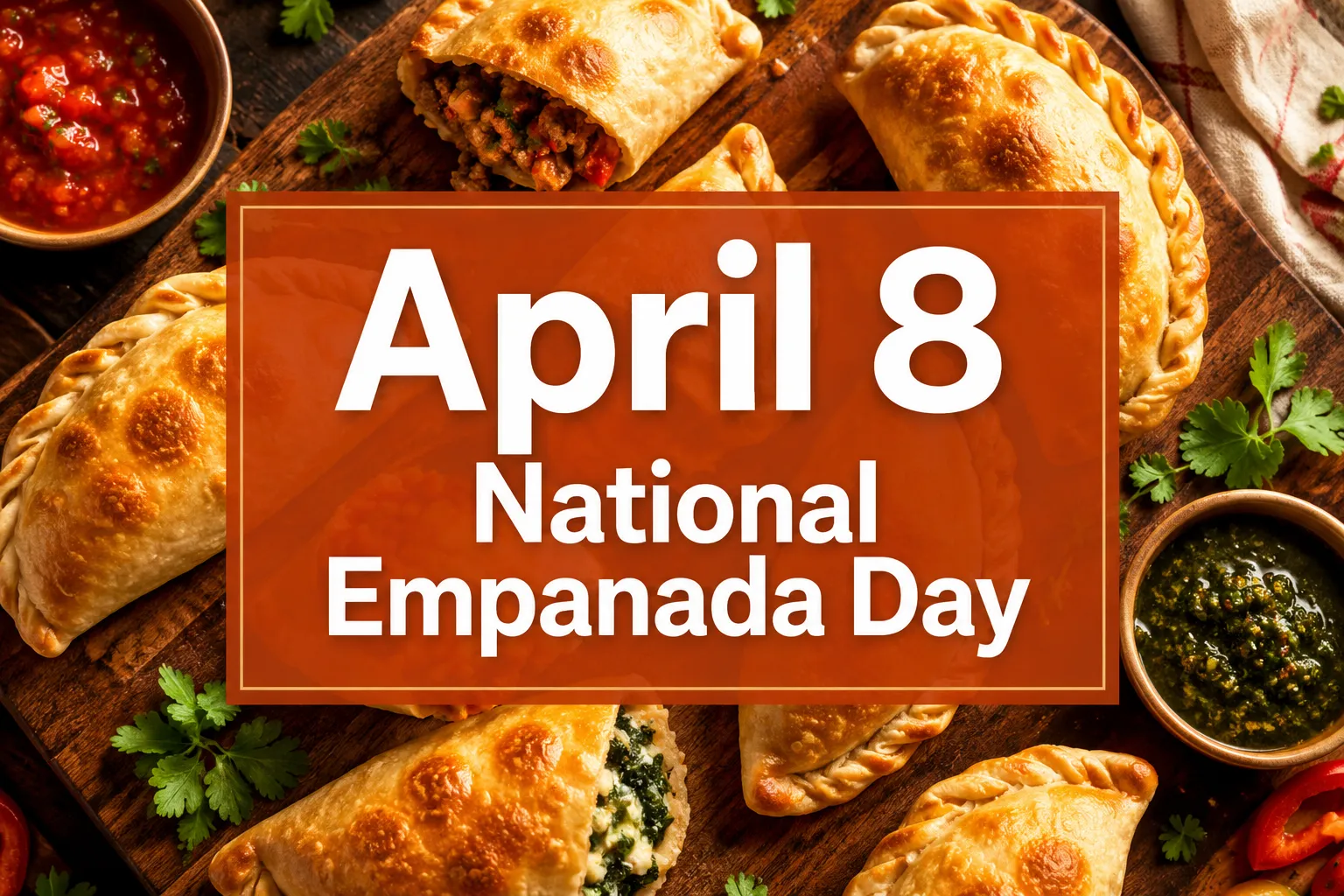
Quick Answer: April 8 National Empanada Day is an annual food holiday celebrated in the United States on April 8 to honor the empanada, a stuffed pastry with roots spanning Latin America, Spain, and the Philippines. On this day, food lovers make empanadas at home, visit local restaurants, and share recipes online. The holiday has no single official governing body but is widely recognized by food media, restaurants, and culinary communities across the country.
Key Takeaways
- April 8 is National Empanada Day in the United States, celebrated annually.
- Empanadas originated in Spain and Portugal and spread globally through colonization, with distinct regional versions across Latin America, Asia, and Europe.
- The word “empanada” comes from the Spanish verb empanar, meaning to wrap or coat in bread.
- Common fillings include seasoned beef, chicken, cheese, black beans, and sweet options like guava.
- Empanadas can be baked or fried, and both methods produce different textures and flavor profiles.
- Homemade empanadas freeze well for up to three months when stored properly.
- Restaurants, bakeries, and food trucks across the U.S. often offer deals and specials on April 8.
- The holiday is primarily observed in the U.S., though empanada-specific celebrations also occur in Argentina, Colombia, and the Philippines.
- Common beginner mistakes include overfilling the dough and skipping the egg wash before baking.
What Is National Empanada Day?
National Empanada Day is a food observance dedicated to celebrating one of the world’s most versatile stuffed pastries. An empanada is a folded dough pocket filled with savory or sweet ingredients, sealed at the edges, and either baked or fried until golden.
The holiday gives home cooks, professional chefs, and food enthusiasts a shared reason to make, eat, and talk about empanadas. It sits alongside dozens of other food-focused observances, similar in spirit to National Croissant Day on January 30 or National Pie Day on January 23, as a way to spotlight a beloved food with deep cultural history.
What makes an empanada distinct from other pastries:
- The dough is folded over the filling (not layered like a pie)
- Edges are crimped or folded in a decorative pattern called repulgue
- They are individual-sized, designed to be hand-held
- Fillings are enclosed completely, unlike an open-faced tart
When Is National Empanada Day Celebrated?
National Empanada Day is celebrated every year on April 8 in the United States. The date does not shift or follow a floating calendar, it is fixed to April 8 regardless of the day of the week.
In 2026, April 8 falls on a Wednesday, making it a midweek occasion well-suited for lunch specials at restaurants or a quick weeknight cooking project at home.
Why April 8? The History of National Empanada Day
The precise origin of April 8 as National Empanada Day is not tied to a single documented founding event or a congressional proclamation. Like many U.S. food holidays, it grew organically through food bloggers, culinary media, and restaurant promotions that coalesced around a shared date. The earliest traceable references to April 8 as the empanada’s dedicated day appear in food media from the early 2010s.
What is well-documented is the empanada’s own history, which stretches back centuries:
- Spain and Portugal (1500s): The first written recipe for empanada appears in a 1520 Catalan cookbook, Llibre del Coch by Ruperto de Nola. Spanish and Portuguese colonizers brought the concept to the Americas.
- Latin America (1600s, 1800s): Regional variations developed rapidly. Argentina, Colombia, Chile, and Mexico each developed distinct doughs, fillings, and cooking methods.
- Philippines: Spanish colonization introduced the empanada to the Philippines, where it evolved into a thinner, crispier version often filled with green papaya and longganisa sausage.
- United States: Large Latin American immigrant communities, particularly from Argentina, Colombia, and Puerto Rico, brought empanadas into the American food mainstream during the 20th century.
The holiday, in essence, honors this centuries-long journey from a Spanish court kitchen to a global street food staple.
Traditional Empanada Fillings Around the World
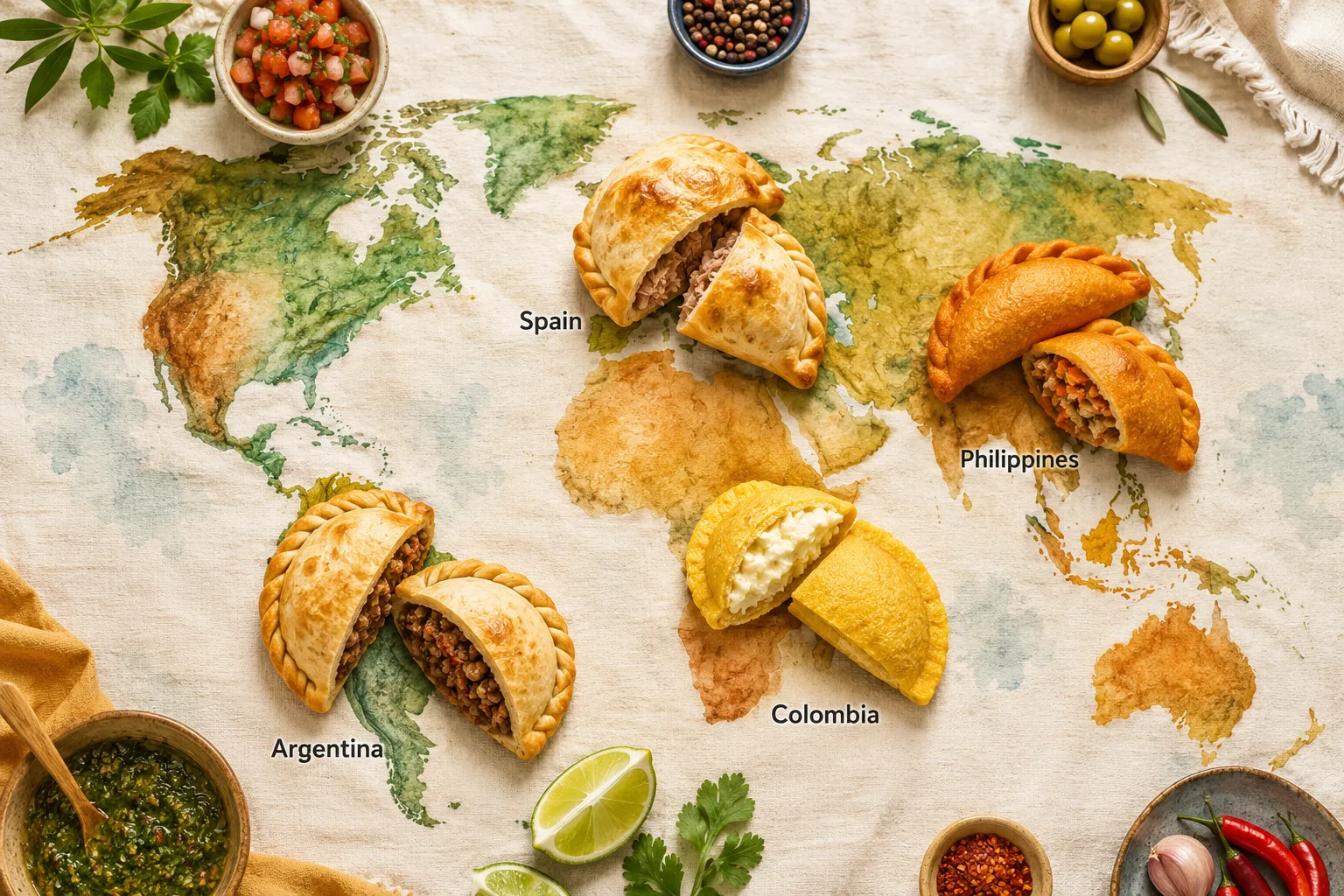
Empanada fillings vary dramatically by country and region. The dough is almost a blank canvas, what goes inside defines the cultural identity of each version.
| Country / Region | Typical Filling | Baked or Fried |
|---|---|---|
| Argentina | Spiced beef, hard-boiled egg, olives | Baked or fried |
| Colombia | Potato, rice, chicken, or beef | Fried |
| Chile | Pino (beef, onion, egg, olive) | Baked |
| Philippines | Green papaya, longganisa, egg | Fried |
| Spain | Tuna, tomato, peppers | Baked |
| Puerto Rico | Seasoned pork or chicken | Fried |
| Cuba | Guava and cream cheese (sweet) | Baked |
Sweet empanadas are less common but worth noting. Cuban guava-and-cheese empanadas and Mexican dessert versions filled with cajeta (caramel) or fruit preserves are popular at bakeries and during holidays.
How to Make Empanadas at Home
Making empanadas at home is straightforward. The process has three stages: making the dough, preparing the filling, and assembling and cooking. Beginners can also use store-bought pie dough or empanada discs (sold frozen at most Latin grocery stores) to skip the dough step entirely.
Basic empanada dough (makes approximately 12 discs):
- Mix 3 cups all-purpose flour with 1 teaspoon salt.
- Cut in 1/2 cup cold butter or lard until the mixture resembles coarse crumbs.
- Add 1 egg and 1/2 cup cold water; mix until a smooth dough forms.
- Wrap in plastic and refrigerate for 30 minutes.
- Roll out to 1/8-inch thickness and cut into 5-inch circles.
Classic beef filling (picadillo style):
- Brown 1 lb ground beef with diced onion, garlic, cumin, paprika, and salt.
- Add 1/4 cup green olives and 2 diced hard-boiled eggs.
- Cool completely before filling the dough.
Assembly steps:
- Place 2 tablespoons of filling in the center of each dough circle.
- Fold the dough over and press edges firmly to seal.
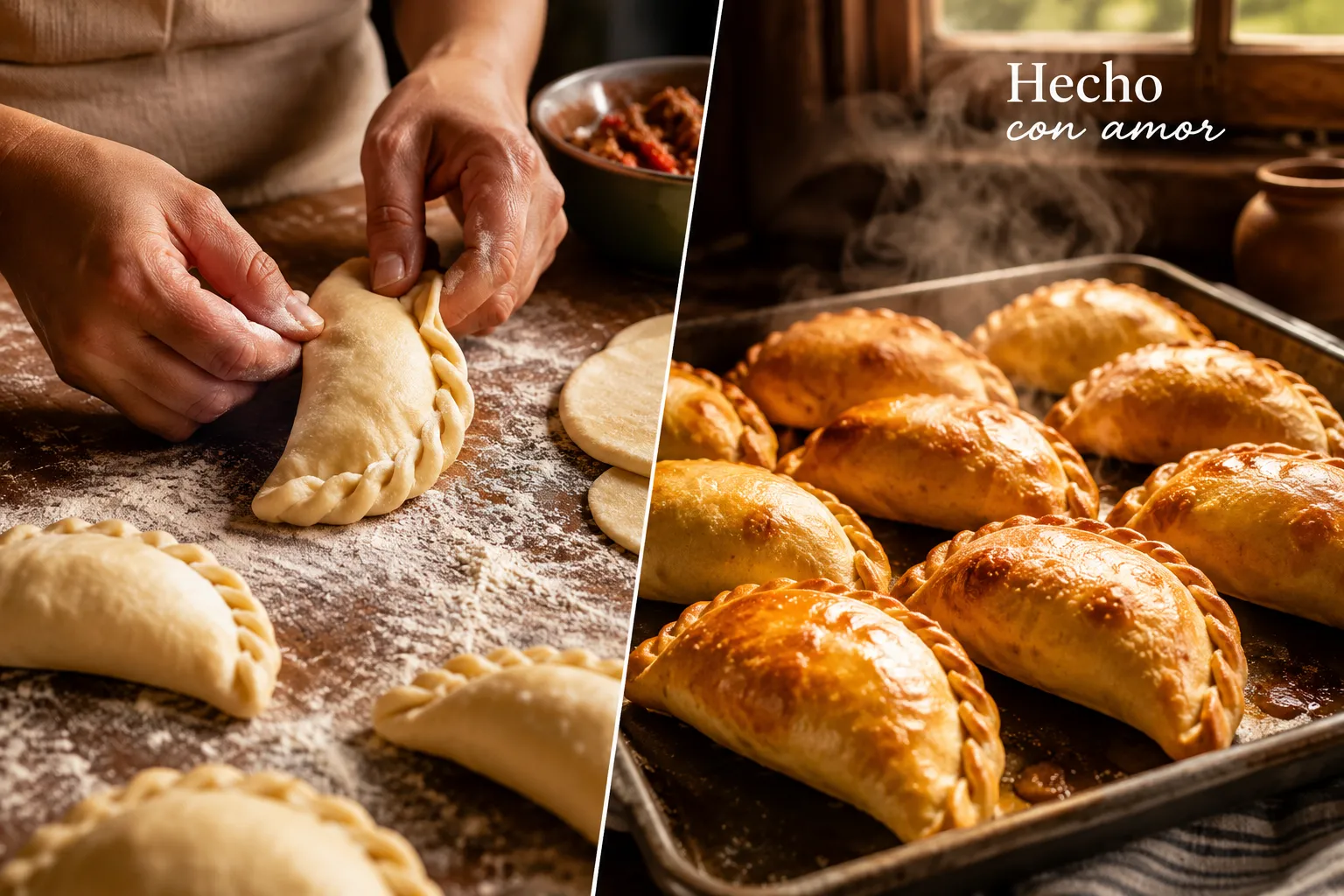
- Crimp edges with a fork or use the traditional repulgue fold.
- Brush with egg wash (1 egg beaten with 1 tablespoon water).
- Bake at 400°F (200°C) for 20-25 minutes until golden, or fry in oil at 350°F for 3-4 minutes per side.
Common Mistakes When Making Empanadas
Even experienced cooks run into problems with empanadas. These are the most frequent errors and how to avoid them.
Overfilling the dough. More than 2 tablespoons of filling causes the edges to split during cooking. Less is more, a well-sealed empanada holds together better and cooks more evenly.
Using warm filling. Hot or warm filling creates steam inside the dough, making it soggy. Always cool the filling completely before assembling.
Skipping the egg wash. Without an egg wash, baked empanadas turn pale and matte instead of golden and glossy. Apply it right before they go into the oven.
Sealing edges poorly. Press firmly and crimp tightly. A loose seal lets filling leak out during cooking, which burns on the pan and ruins the texture.
Rolling dough too thick. Thick dough (more than 1/4 inch) stays doughy in the center. Aim for 1/8 inch for the best balance of structure and texture.
Can You Freeze Empanadas?
Yes, empanadas freeze exceptionally well. This makes them one of the most practical foods to batch-cook for meal prep or to prepare ahead of April 8 National Empanada Day celebrations.
How to freeze empanadas correctly:
- Unbaked empanadas: Assemble fully, place on a parchment-lined baking sheet, and freeze until solid (about 2 hours). Transfer to a zip-lock freezer bag. Cook from frozen at 400°F for 25-30 minutes. Best within 3 months.
- Baked empanadas: Cool completely, then freeze in a single layer before bagging. Reheat in a 350°F oven for 10-12 minutes. Best within 2 months.
- Fried empanadas: Freeze after frying and cooling. Reheat in an air fryer at 375°F for 5-6 minutes for best texture.
Do not freeze: Empanadas with raw egg or high-moisture fillings (like fresh tomato) do not freeze well, the texture becomes watery after thawing.
Empanada vs. Other Pastries: Key Differences
Empanadas are often compared to similar stuffed pastries from other cultures. They share a concept but differ in dough, shape, cooking method, and cultural context.
| Pastry | Origin | Dough Type | Typical Cooking | Key Difference |
|---|---|---|---|---|
| Empanada | Spain/Latin America | Flour-based, flaky | Baked or fried | Crimped half-moon shape |
| Pierogi | Poland | Egg-enriched dough | Boiled then pan-fried | Softer, thicker dough |
| Samosa | India | Unleavened flour | Deep-fried | Triangular, spiced filling |
| Pasty | England | Shortcrust pastry | Baked | D-shaped, larger size |
| Calzone | Italy | Yeasted pizza dough | Baked | Bread-like texture |
The empanada’s defining characteristics are its flaky, non-yeasted dough and the repulgue crimp. Unlike a calzone (which uses pizza dough) or a pierogi (boiled in water), empanadas are designed to be portable, hand-held snacks that work hot or at room temperature.
For fans of stuffed and wrapped foods, the National Tempura Day guide explores another beloved fried food tradition worth reading alongside this one.
How to Celebrate April 8 National Empanada Day
April 8 National Empanada Day is best celebrated by eating, making, or sharing empanadas. There is no single official way to observe it, which makes the holiday flexible and fun.
At home:
- Host an empanada-making party where guests choose their own fillings.
- Set up a “build your own empanada” bar with dough discs and a range of fillings.
- Try a regional style you have never made before, Filipino, Chilean, or Cuban versions all offer distinct experiences.
At restaurants:
- Search for Latin American restaurants, bakeries, and food trucks in your area that offer April 8 specials.
- Many empanada-focused chains and local spots post deals on social media in the days leading up to April 8.
Online:
- Share photos of homemade empanadas using hashtags like #NationalEmpanaday or #EmpanaDay.
- Post a recipe video or a regional variation guide to food communities.
With kids:
- Empanada-making is a great kitchen activity for children. Rolling dough and crimping edges builds fine motor skills and introduces world food culture in a hands-on way.
Where to Buy Empanadas on National Empanada Day
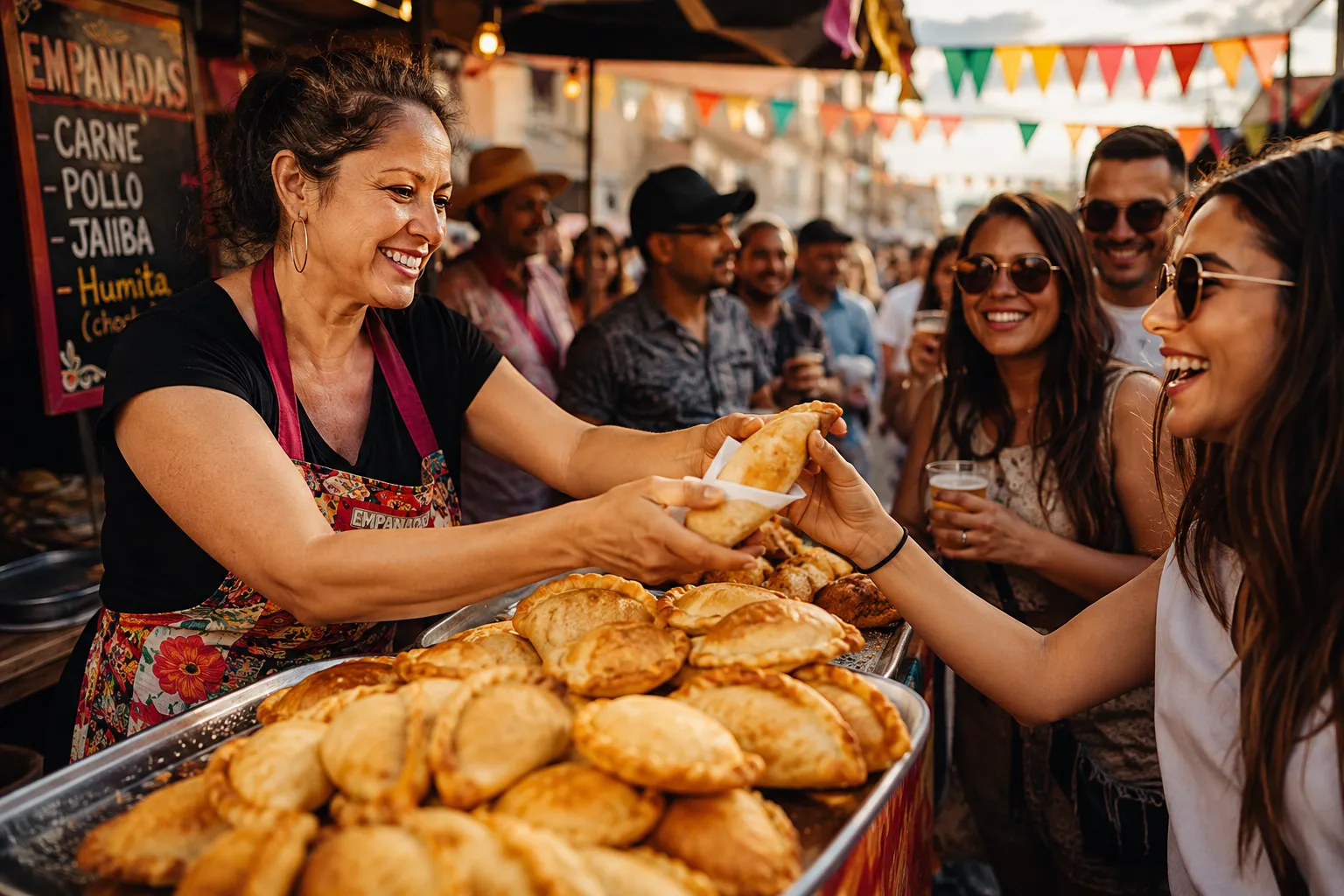
Finding empanadas on April 8 is easier than most people expect. Options range from dedicated empanada shops to mainstream grocery stores.
Where to look:
- Latin American bakeries and restaurants: The most authentic option. Argentinian, Colombian, and Puerto Rican restaurants typically carry multiple varieties.
- Food trucks: Empanada food trucks have grown significantly in U.S. cities since 2015. Search “empanada truck near me” on Google Maps or Yelp on April 8.
- Grocery stores: Many large supermarkets stock frozen empanada discs (Goya brand is widely available) and pre-made frozen empanadas in the international foods aisle.
- Online delivery apps: DoorDash, Uber Eats, and Grubhub allow filtering by cuisine type. Searching “empanadas” on April 8 often surfaces restaurants running holiday promotions.
Tip: Call ahead to local Latin restaurants before April 8. Some run limited-time flavors or discounts specifically for the holiday, but these sell out early.
What Countries Celebrate Empanada Day?
National Empanada Day on April 8 is primarily a United States food holiday. However, several countries have their own empanada-related celebrations that are worth knowing.
- Argentina: Argentina celebrates its own Día Nacional de la Empanada (National Empanada Day) on September 26, which coincides with the Salta Empanada Festival, one of the largest empanada events in the world.
- Colombia: Regional empanada festivals occur throughout the year, particularly in Cali and Bogotá, though no single national date is fixed.
- Philippines: The empanada is celebrated as part of broader regional food festivals, most notably the Ilocos Empanada Festival.
- Spain: Galicia holds the Festa da Empanada in Bandeira each August, celebrating the large-format Galician empanada (a flat, pie-like version rather than individual pockets).
The April 8 date is specific to the U.S. observance. Travelers visiting Argentina in September, or Galicia in August, will find the most elaborate empanada celebrations outside the United States.
FAQ: April 8 National Empanada Day
What day is National Empanada Day? National Empanada Day is April 8 every year in the United States. The date is fixed and does not change based on the calendar year.
Who created National Empanada Day? There is no single verified founder. The holiday developed organically through food media and restaurant promotions in the early 2010s and became widely recognized over time.
Is National Empanada Day an official U.S. holiday? No. It is an informal food observance, not a federal or state holiday. It has no legal standing but is widely acknowledged by restaurants, food media, and culinary communities.
What is the difference between a baked and a fried empanada? Baked empanadas have a flakier, drier crust and lower fat content. Fried empanadas have a crispier, more golden exterior and a richer flavor. Both are traditional, the choice depends on regional custom and personal preference.
Can empanadas be made gluten-free? Yes. Substitute a blend of rice flour and tapioca starch for all-purpose flour in a 2:1 ratio. The dough will be slightly less pliable but workable. Many Latin grocery stores also sell gluten-free empanada disc brands.
How long do empanadas last in the refrigerator? Cooked empanadas keep well in an airtight container in the refrigerator for up to 4 days. Reheat in an oven or air fryer rather than a microwave to preserve the crust texture.
What is the best dipping sauce for empanadas? Chimichurri (Argentine herb sauce), aji amarillo (Peruvian yellow chili sauce), and sour cream are the most popular. Salsa verde and guacamole also pair well with chicken or vegetable fillings.
Are empanadas healthy? It depends on the filling and cooking method. Baked empanadas with vegetable or lean protein fillings are a reasonable meal. Fried versions with cheese-heavy fillings are higher in calories and fat. Portion size and ingredients determine the nutritional profile.
What is the repulgue? The repulgue is the decorative crimped or folded edge that seals an empanada. In Argentina, different repulgue patterns traditionally indicate different fillings, making it easy to identify what is inside without cutting them open.
Can I make empanadas the night before? Yes. Assemble and refrigerate unbaked empanadas on a parchment-lined tray, covered with plastic wrap, for up to 24 hours before baking. This is one of the best prep strategies for April 8 National Empanada Day gatherings.
Conclusion
April 8 National Empanada Day is more than a social media food holiday, it is a genuine opportunity to connect with a centuries-old culinary tradition that spans continents and cultures. Whether the goal is to make a classic Argentine beef empanada from scratch, explore a Filipino version for the first time, or simply pick up a dozen from a local bakery, April 8 offers a clear and enjoyable reason to do it.
Actionable next steps for April 8:
- Choose one regional style to make at home and gather ingredients before April 8.
- Prepare and freeze a batch of unbaked empanadas the week before for a stress-free celebration.
- Search local Latin restaurants and food trucks now to find April 8 specials before they sell out.
- Invite friends or family to a filling-choice party, it is one of the most accessible group cooking formats for mixed skill levels.
- Share the experience online to help grow awareness of this food tradition.
For more food holiday inspiration, explore National Pie Day on January 23 and National Pizza Day on February 9, two other beloved pastry and dough-based celebrations worth marking on the calendar. If you enjoy exploring stuffed and wrapped foods from around the world, the National Tempura Day guide is also worth a read.
References
- de Nola, Ruperto. Llibre del Coch. 1520. (First documented empanada recipe in Catalan culinary literature.)
- Laudan, Rachel. Cuisine and Empire: Cooking in World History. University of California Press, 2013.
- Pilcher, Jeffrey M. Planet Taco: A Global History of Mexican Food. Oxford University Press, 2012.
- National Day Calendar. “National Empanada Day, April 8.” NationalDayCalendar.com. (Accessed 2024.)
- Argentine Ministry of Tourism. “Día Nacional de la Empanada.” Argentina.gob.ar. (Accessed 2024.)