Last updated: April 11, 2026
Quick Answer
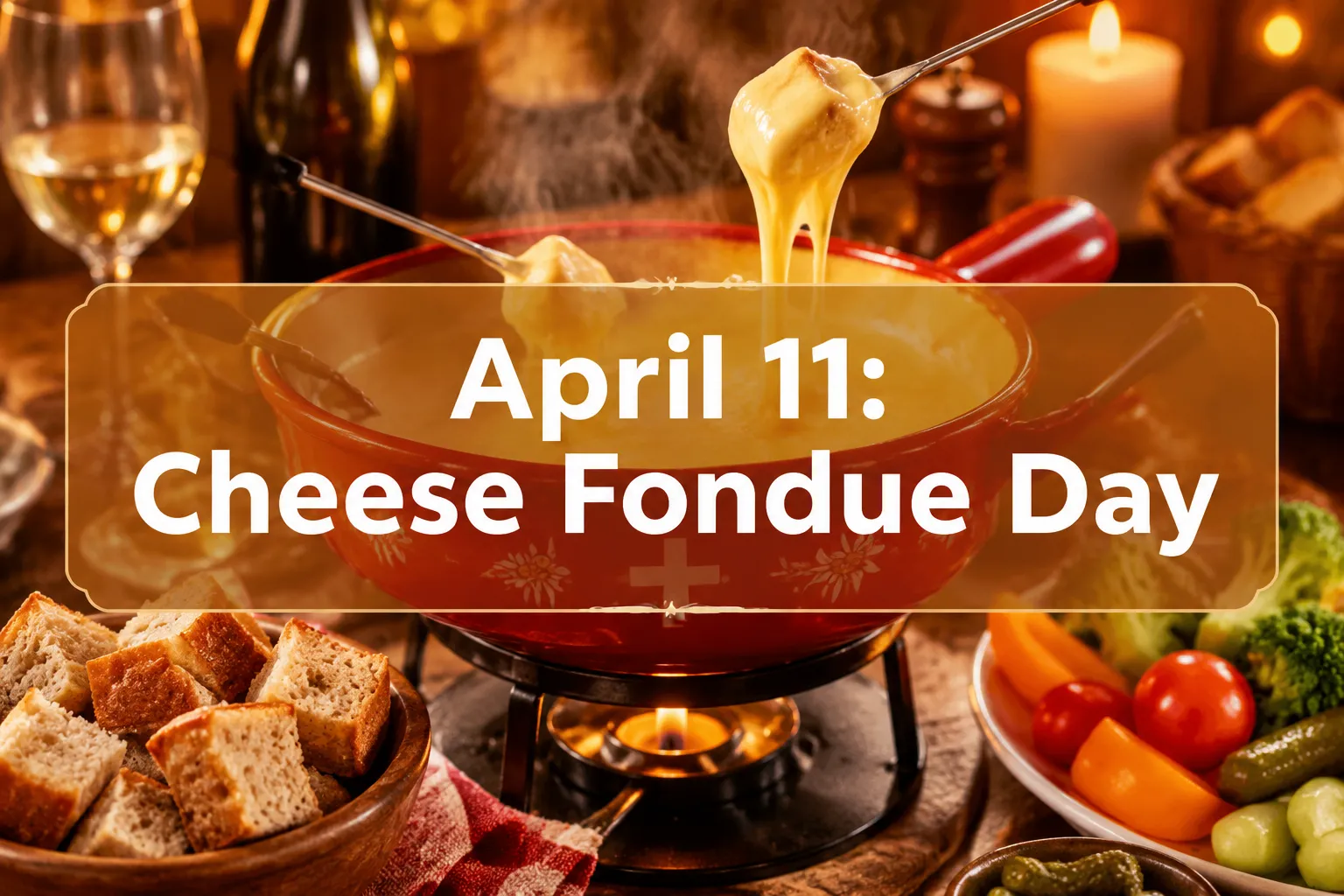
April 11 National Cheese Fondue Day is an unofficial annual food holiday in the United States that celebrates cheese fondue, the Swiss tradition of dipping bread, vegetables, and other foods into a shared pot of melted cheese. The day falls on April 11 every year and is observed through home cooking, restaurant outings, and social gatherings built around the fondue pot. [1][9]
Key Takeaways
- April 11 National Cheese Fondue Day is an unofficial U.S. food holiday observed every year on April 11, in 2026, it falls on a Saturday.
- Cheese fondue originated in Switzerland and is considered a national dish there, traditionally made with Gruyère and Emmental cheeses melted with white wine.
- The best cheeses for fondue are those that melt smoothly: Gruyère, Emmental, Fontina, and Raclette are top choices.
- Cornstarch and acid (wine or lemon juice) are the two keys to preventing a broken, clumpy fondue.
- Classic dippers include crusty bread, steamed vegetables, apple slices, and cured meats, but the options are wide.
- No fondue pot? A small slow cooker, a heavy-bottomed saucepan, or a double boiler all work as substitutes.
- Dry white wines (Sauvignon Blanc, Pinot Gris) pair best with cheese fondue; Kirsch (cherry brandy) is the traditional Swiss accompaniment.
- A standard cheese fondue serving (roughly 3-4 oz of cheese per person) provides significant protein and calcium but is also high in saturated fat and sodium.
- Cheese fondue can be made ahead and gently reheated, though it requires careful stirring to restore its smooth texture.
- If you love cheese-focused food holidays, also check out the January 20 National Cheese Lover’s Day guide for more ways to celebrate.
What Is National Cheese Fondue Day?
National Cheese Fondue Day is an unofficial U.S. food holiday dedicated entirely to cheese fondue, not chocolate fondue, not broth fondue, but the classic melted-cheese version served in a communal pot. It encourages people to gather around a shared dish, dip bread and vegetables into warm cheese, and enjoy the social ritual that has made fondue a beloved tradition across cultures. [5][7]
The day sits in the “culinary observance” category alongside dozens of other food holidays on the U.S. calendar. It carries no federal or state recognition, no official proclamation, and no government backing. It is simply a fun, food-focused occasion that restaurants, home cooks, and food enthusiasts use as a reason to make or order cheese fondue. [4][5]
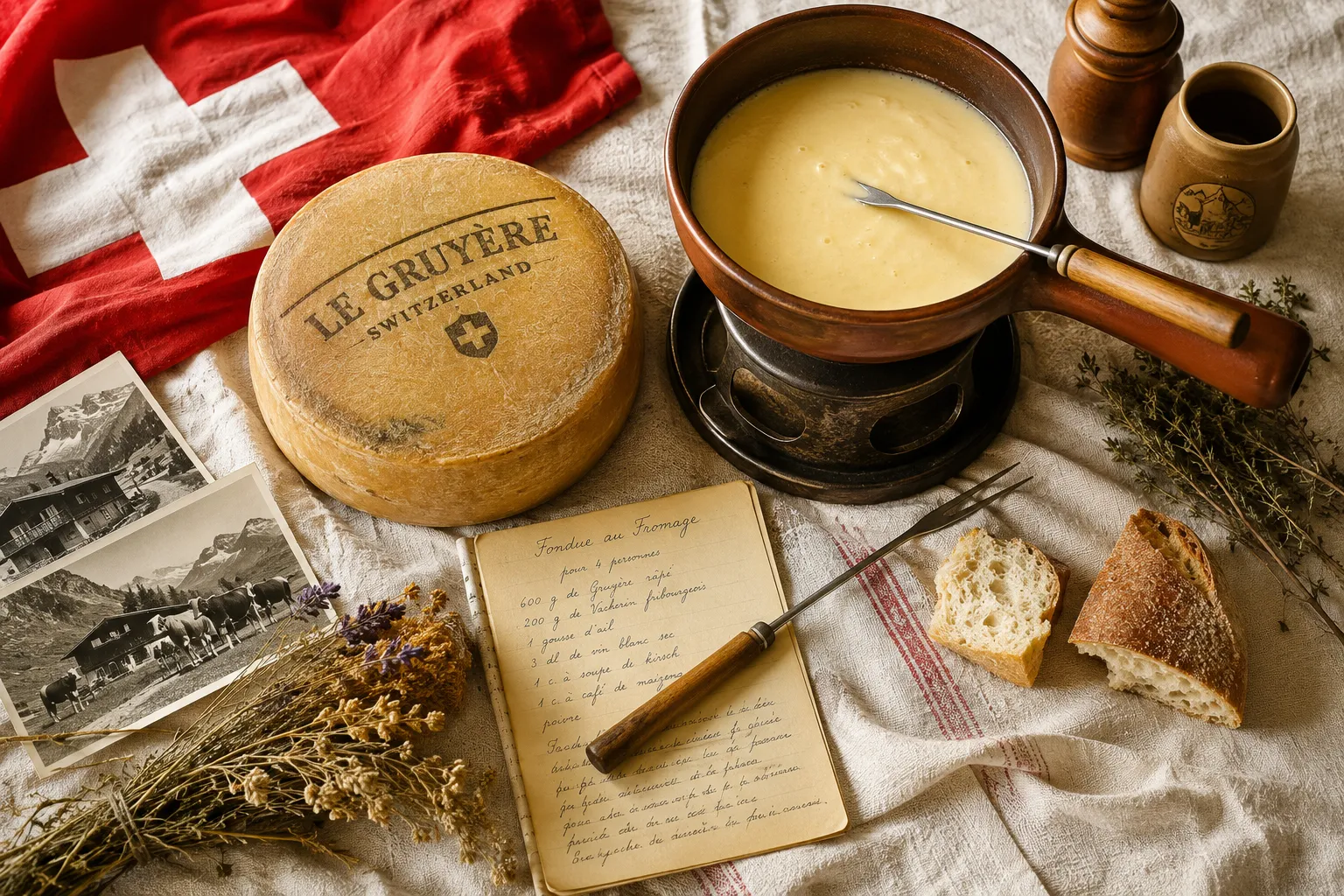
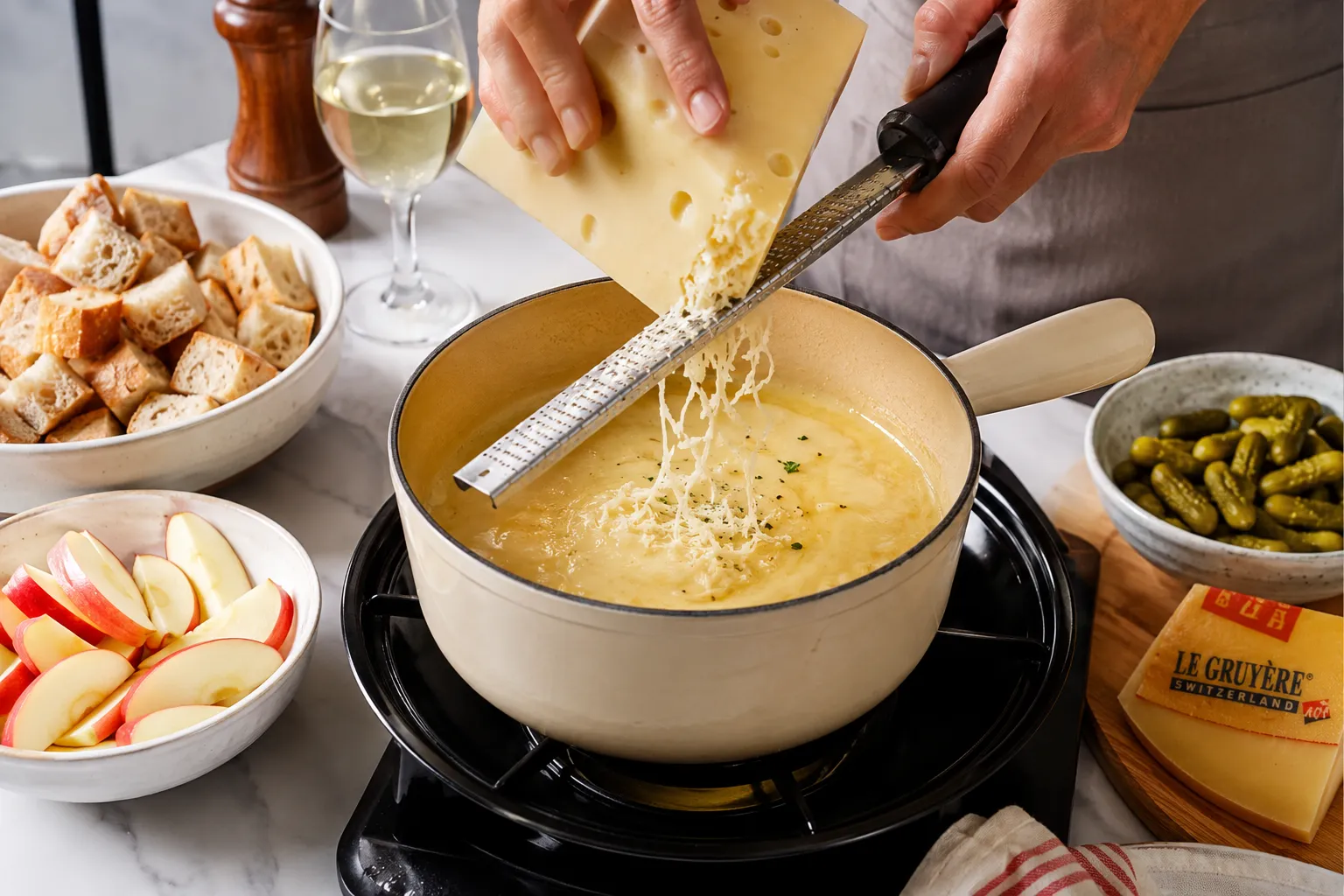
Cheese fondue itself is a dish of melted cheese, typically combined with wine and seasoning, served in a ceramic or cast-iron pot called a caquelon, kept warm over a small flame. Diners use long-handled forks to dip bite-sized pieces of bread or other foods directly into the pot. [10][9]
When Is National Cheese Fondue Day Celebrated?
National Cheese Fondue Day is always April 11. It is a fixed-date observance, meaning it does not shift to the nearest Monday or follow a “nth weekday of the month” formula. Every year, April 11 is the date. [1][3]
In 2026, April 11 falls on a Saturday, making it an ideal day for a leisurely fondue gathering. Looking ahead, it falls on a Sunday in 2027. [9][8]
Upcoming dates at a glance:
| Year | Date | Day |
|---|---|---|
| 2026 | April 11 | Saturday |
| 2027 | April 11 | Sunday |
| 2028 | April 11 | Tuesday |
| 2029 | April 11 | Wednesday |
| 2030 | April 11 | Thursday |
Why Is April 11 Cheese Fondue Day? The History Behind the Holiday
The exact origin of April 11 as the chosen date for National Cheese Fondue Day is not formally documented by any single founding organization. Like many U.S. food holidays, it likely emerged from food industry promotion or grassroots food culture enthusiasm rather than a legislative act. [4][5]
What is well-documented is the history of cheese fondue itself. The dish originated in Switzerland, where it is considered a national symbol. Swiss herders in the Alps are credited with developing fondue as a practical way to use aged cheese and stale bread during winter months when fresh food was scarce. [10][9]
The Swiss Cheese Union played a major role in promoting fondue internationally during the mid-20th century, including distributing fondue sets to Swiss embassies and featuring the dish at the 1964 New York World’s Fair. That campaign helped transform fondue from a regional Alpine staple into a global dinner-party trend. [10]
Fondue experienced a massive popularity surge in the United States during the 1960s and 1970s, then saw a revival in the 1990s and again in the 2010s as communal dining became fashionable. April 11 National Cheese Fondue Day rides that wave of renewed interest in the dish. [9][10]
If you enjoy exploring the history of food holidays, the February 5 National Chocolate Fondue Day guide covers the sweeter side of the fondue tradition.
Best Cheese for Fondue: What to Use and Why
The best cheeses for fondue melt smoothly, have good flavor, and hold an emulsified texture without turning grainy or stringy. Gruyère is the gold standard, used in virtually every classic Swiss recipe. Emmental adds a milder, nuttier note and is traditionally combined with Gruyère in a 50/50 blend.
Top cheese choices for fondue:
- Gruyère, rich, slightly nutty, melts beautifully; the backbone of classic Swiss fondue
- Emmental, mild and creamy, pairs perfectly with Gruyère
- Fontina, buttery and smooth, great for Italian-style variations
- Raclette, earthy and melty, excellent on its own or blended
- Comté, similar to Gruyère, slightly sweeter
- Gouda (young), accessible, mild, widely available
Avoid: Pre-shredded cheeses (they contain anti-caking agents that prevent smooth melting), very aged hard cheeses like Parmigiano-Reggiano on their own, and fresh cheeses like ricotta or mozzarella, which do not hold a stable melted texture.
Pro tip: Always grate cheese yourself from a block. Pre-shredded cheese is the single most common reason home fondue turns grainy.
For more cheese-focused inspiration, the January 20 National Cheese Lover’s Day guide covers a wide range of cheese types and pairings.
Easy Cheese Fondue Recipe
A classic Swiss cheese fondue requires just a few ingredients and about 20 minutes. The keys are low heat, constant stirring, and a small amount of cornstarch to keep the emulsion stable.
Ingredients (serves 4):
- 400g (14 oz) Gruyère, freshly grated
- 200g (7 oz) Emmental, freshly grated
- 1 clove garlic, halved
- 250ml (1 cup) dry white wine (Sauvignon Blanc or Swiss Chasselas)
- 1 tbsp cornstarch
- 1 tbsp Kirsch (optional but traditional)
- Pinch of nutmeg and white pepper
Steps:
- Rub the inside of a heavy-bottomed saucepan or fondue pot with the cut garlic clove, then discard.
- Pour in the wine and heat over medium until just simmering, do not boil.
- Toss the grated cheeses with cornstarch until evenly coated.
- Add the cheese to the wine in three batches, stirring in a figure-8 pattern after each addition until fully melted.
- Stir in the Kirsch, nutmeg, and pepper.
- Transfer to a fondue pot over a low flame to keep warm. Stir occasionally during serving.
Common mistake: Turning the heat too high. High heat causes the proteins in the cheese to seize and the fat to separate, leaving a greasy, lumpy mess. Keep the heat gentle throughout.
What Do You Dip in Cheese Fondue?
Bread is the classic dipper, but cheese fondue works with a wide range of foods. The rule of thumb: choose items that are firm enough to stay on the fork and have flavors that complement melted cheese.
Classic dippers:
- Crusty French bread or sourdough, cut into 1-inch cubes (leave some crust on each piece so it holds the fork)
- Steamed broccoli and cauliflower florets
- Baby potatoes, boiled and halved
- Cornichons (small pickles) and pickled onions
Less traditional but excellent:
- Apple or pear slices (the sweetness cuts through the richness)
- Cured meats: salami, prosciutto, kielbasa
- Mushrooms, lightly sautéed
- Pretzel bites
- Cherry tomatoes
- Shrimp, cooked
Avoid: Anything too wet or delicate, it will fall off the fork into the pot, and waterlogged dippers dilute the cheese.
Cheese Fondue vs. Chocolate Fondue: Key Differences
Cheese fondue and chocolate fondue share the same communal format but are entirely different dishes served in different contexts. Cheese fondue is a savory main course or appetizer; chocolate fondue is a dessert. [1]
| Feature | Cheese Fondue | Chocolate Fondue |
|---|---|---|
| Base | Melted cheese + wine | Melted chocolate + cream |
| Occasion | Dinner, main course | Dessert |
| Classic dippers | Bread, vegetables | Fruit, marshmallows, cake |
| Origin | Switzerland (Alps) | Popularized in the U.S. (1960s) |
| Holiday | April 11 | February 5 |
Both have dedicated national food holidays. If chocolate fondue is more your style, the February 5 National Chocolate Fondue Day guide has everything you need.
Fondue Pot Alternatives If You Don’t Have One
No fondue pot is needed to make cheese fondue at home. Several common kitchen items work just as well, especially for small gatherings.
Workable alternatives:
- Small slow cooker (Crock-Pot): Set to “warm” or “low.” Stir every 10-15 minutes. Works well for parties since it holds temperature hands-free.
- Heavy-bottomed saucepan on the stovetop: Make the fondue in the pan and serve directly from it over the lowest possible heat setting.
- Double boiler: Gentle, indirect heat prevents scorching. Ideal if you’re nervous about burning the cheese.
- Cast-iron skillet: Retains heat well; move it to a trivet at the table and it will stay warm for 15-20 minutes.
- Mini Dutch oven: Similar heat retention to cast iron, with a more attractive presentation.
What does not work well: Thin stainless steel pots (heat too unevenly), microwave (hard to control temperature), and standard ceramic bowls without a heat source underneath (the cheese sets too quickly).
Cheese Fondue Wine Pairing
Dry white wine is the classic pairing for cheese fondue, and it’s also an ingredient in most recipes, so the same bottle can serve double duty. The wine’s acidity cuts through the richness of the cheese and cleanses the palate between bites.
Best wine pairings:
- Sauvignon Blanc, crisp acidity, citrus notes, widely available
- Swiss Chasselas (Fendant), the traditional choice; light and mineral
- Pinot Gris (Alsatian style), slightly fuller body, works well with richer blends
- Dry Riesling, floral and acidic, a great contrast to Gruyère
Avoid: Full-bodied red wines (tannins clash with melted cheese), sweet wines (amplify richness rather than cutting it), and heavily oaked Chardonnay.
The Kirsch tradition: In Switzerland, it is customary to drink a small shot of Kirsch (cherry brandy) mid-meal, said to aid digestion. Some purists also sip herbal tea. Cold water and beer are generally discouraged in Swiss fondue etiquette, the cold liquid is believed to cause the cheese to solidify in the stomach.
Common Mistakes When Making Cheese Fondue
Most failed fondues come down to four fixable errors.
1. Using pre-shredded cheese. Anti-caking agents prevent smooth melting. Always grate from a block.
2. Heat too high. Cheese proteins seize above a gentle simmer. Keep the heat low and patient.
3. Skipping the cornstarch. Cornstarch stabilizes the emulsion between the fat and the water in the cheese. Without it, the fondue is prone to separating into a greasy pool with clumps.
4. Adding all the cheese at once. Add cheese in batches and stir thoroughly between each addition. Rushing this step causes uneven melting and lumps.
If your fondue breaks (separates): Add a teaspoon of lemon juice or white wine and stir vigorously over low heat. The acid helps re-emulsify the mixture. A small additional pinch of cornstarch dissolved in wine can also rescue a broken fondue.
Can You Make Cheese Fondue Ahead of Time?
Yes, cheese fondue can be made ahead of time, but it requires careful reheating. Fondue does not hold well at room temperature and should not be left out for more than two hours.
Make-ahead method:
- Prepare the fondue fully, then let it cool to room temperature.
- Transfer to an airtight container and refrigerate for up to 24 hours.
- To reheat, place in a saucepan over very low heat and add a splash of white wine (about 2 tablespoons).
- Stir constantly in a figure-8 motion until smooth and warmed through.
What to expect: Reheated fondue may be slightly thicker than fresh. Adding a small amount of wine during reheating restores the right consistency. Avoid microwaving, it heats unevenly and can cause the cheese to seize.
Is Cheese Fondue Healthy?
Cheese fondue is nutritious in some ways and indulgent in others. Whether it fits a healthy diet depends on portion size and what you dip into it.
Nutritional positives:
- High in protein (Gruyère and Emmental are protein-dense cheeses)
- Good source of calcium and phosphorus
- When paired with vegetables, it becomes a more balanced meal
Nutritional considerations:
- High in saturated fat and sodium
- Calorie-dense: a typical restaurant serving can exceed 500-700 calories before dippers are counted
- The wine and Kirsch add small amounts of alcohol
Practical guidance: Use vegetable dippers (broccoli, cauliflower, peppers) alongside bread to increase fiber and nutrients. Stick to a 3-4 oz cheese portion per person. Fondue is a social, occasional dish, it does not need to be an everyday food to be enjoyed.
How to Celebrate April 11 National Cheese Fondue Day
April 11 National Cheese Fondue Day can be celebrated in multiple ways, from a full home fondue dinner to a quick restaurant outing.
At home:
- Host a fondue night with friends or family using the recipe above
- Set up a dipper bar with bread, vegetables, fruit, and cured meats so guests can customize
- Pair with a bottle of Sauvignon Blanc or dry Riesling
- Make it a themed evening with Swiss music, a raclette side dish, or a chocolate fondue dessert course
At a restaurant:
- Search for Swiss, French, or fondue-specialty restaurants in your area that offer cheese fondue
- Call ahead on April 11, some restaurants run specials or promotions for the day
- Many upscale steakhouses and European-style bistros carry fondue as an appetizer year-round
On social media:
- Share photos of your fondue setup with the hashtag #NationalCheeseFondueDay
- Tag the restaurant if you dine out
For a broader food holiday experience: April 11 National Cheese Fondue Day pairs well with other food celebrations throughout the year. The February 9 National Pizza Day guide is another great resource for planning a food-focused social gathering.
Where to Eat Cheese Fondue on April 11
Finding cheese fondue at a restaurant on April 11 is straightforward in most mid-sized and large U.S. cities.
Where to look:
- Swiss and Alpine-themed restaurants (search “Swiss restaurant near me” or “fondue restaurant near me”)
- French bistros and brasseries often carry fondue Savoyarde
- Upscale steakhouses sometimes offer cheese fondue as a shareable appetizer
- Fondue-concept chains (The Melting Pot has locations across the U.S. and specializes in fondue dining)
Tips for April 11 specifically:
- Make a reservation in advance, fondue restaurants may be busier than usual on the holiday
- Ask if the restaurant is running any April 11 specials when you call
- If no fondue restaurant is nearby, many grocery stores stock fondue kits (pre-blended cheese, fondue pots) that make home preparation very simple

Frequently Asked Questions About April 11 National Cheese Fondue Day
What date is National Cheese Fondue Day? National Cheese Fondue Day is always April 11. It is a fixed annual date and does not change year to year. [1][3]
Is National Cheese Fondue Day an official public holiday? No. It is an unofficial food holiday with no federal or state recognition. Businesses do not close, and it carries no legal status. [4][5]
What is the difference between Swiss fondue and American fondue? Swiss fondue (fondue Neuchâteloise) uses Gruyère and Emmental with white wine and Kirsch. American versions often use a wider range of cheeses, may skip the Kirsch, and sometimes add ingredients like beer, cream cheese, or processed cheese for a milder flavor.
Can I make cheese fondue without alcohol? Yes. Replace the white wine with a mixture of low-sodium chicken or vegetable broth plus one tablespoon of lemon juice or apple cider vinegar. The acid is what matters for both flavor and emulsification.
How much cheese do I need per person? Plan for roughly 3-4 oz (85-115g) of cheese per person as part of a larger meal, or 5-6 oz (140-170g) if fondue is the main course.
What is Kirsch and do I have to use it? Kirsch is a clear cherry brandy traditional in Swiss fondue. It adds a subtle fruity depth and helps prevent the cheese from clumping. It can be omitted without ruining the dish, but a small splash of lemon juice should replace it to maintain the acid balance.
Why does my fondue get stringy? Stringiness usually means the heat is too high or the cheese was added too quickly. Lower the heat and stir more consistently in a figure-8 motion.
Can children eat cheese fondue? Yes, with modifications. Skip the Kirsch and use broth instead of wine in the recipe. The resulting fondue is alcohol-free and perfectly appropriate for kids.
What is the traditional Swiss name for cheese fondue? The classic Swiss version is called fondue Neuchâteloise, named after the canton of Neuchâtel. Other regional varieties include fondue Fribourgeoise (made with Vacherin Fribourgeois) and fondue Savoyarde from the French Alps.
How long does leftover cheese fondue keep? Refrigerated in an airtight container, leftover fondue keeps for up to 3 days. Reheat gently with a splash of white wine and constant stirring.
Conclusion
April 11 National Cheese Fondue Day is a straightforward occasion with a clear purpose: gather people around a warm pot of melted cheese and enjoy one of the most communal eating experiences in culinary history. The holiday requires no special equipment, no rare ingredients, and no formal planning, just good cheese, a heat source, and something worth dipping.
Actionable next steps for 2026:
- Mark April 11 on your calendar now and decide whether you’ll cook at home or dine out.
- If cooking at home, source a block of Gruyère and Emmental from a cheese counter (not pre-shredded) and pick up a dry white wine.
- Prepare dippers in advance: cube the bread, steam the vegetables, and slice any fruit the morning of.
- If you don’t own a fondue pot, a small slow cooker or heavy saucepan works perfectly.
- Share the experience, fondue is designed for groups, so invite at least two or three people to make it worthwhile.
For more food holiday ideas and recipes, explore the January 20 National Cheese Lover’s Day guide and the February 5 National Chocolate Fondue Day guide for a full year of cheese and fondue celebrations.
References
[1] National Cheese Fondue Day – https://nationaltoday.com/national-cheese-fondue-day/ [2] anydayguide – https://anydayguide.com/calendar/958 [3] National Cheese Fondue Day – https://www.calendarr.com/united-states/national-cheese-fondue-day/ [4] dayspedia – https://dayspedia.com/us/calendar/holiday/1214/ [5] National Cheese Fondue Day – https://www.holidaycalendar.io/holiday/national-cheese-fondue-day [6] National Cheese Fondue Day – https://www.naplesillustrated.com/national-cheese-fondue-day/ [7] National Cheese Fondue Day – https://www.nationaldayarchives.com/day/national-cheese-fondue-day/ [8] Tag Des Kaesefondue – https://www.kuriose-feiertage.de/tag-des-kaesefondue/ [9] National Cheese Fondue Day – https://holidaytoday.org/national-cheese-fondue-day/ [10] April 11 National Cheese Fondue Day – https://web-holidays.com/blog/2021/03/10/april-11-national-cheese-fondue-day