April 27 National Prime Rib Day: History, Recipes, and How to Celebrate in 2026
- 0
- 13 Min Read
Last updated: April 27, 2026
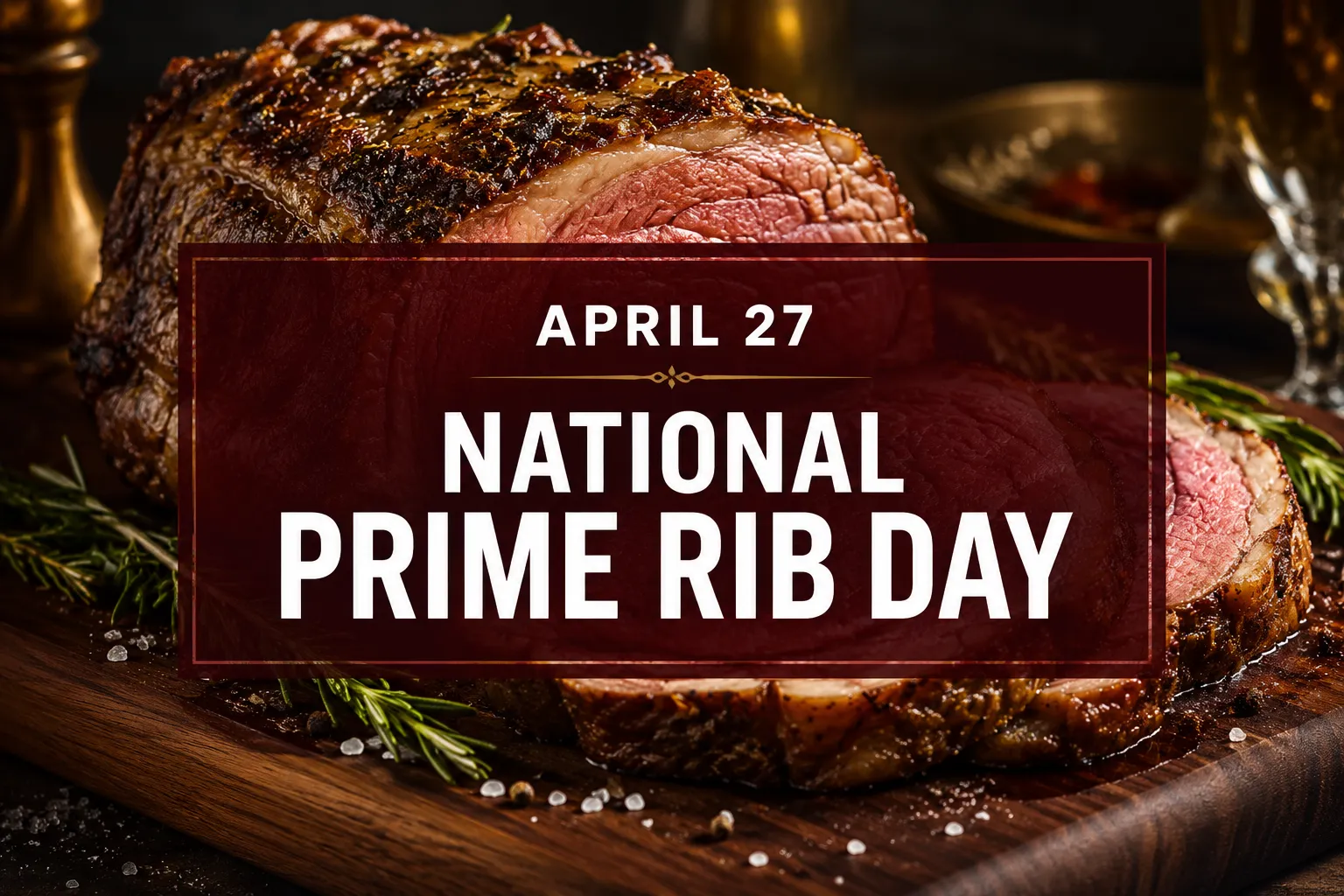
Quick Answer: April 27 National Prime Rib Day is an annual, unofficial food holiday celebrated in the United States on April 27 each year. It honors the prime rib roast, a bone-in cut from the beef rib section prized for its tenderness and rich flavor. In 2026, the observance falls on Monday, April 27, and is marked by restaurant specials, home cooking events, and social media celebrations.
Key Takeaways
- April 27 is National Prime Rib Day every year, with confirmed dates through at least 2030 [2][7]
- The holiday has no formal government recognition; its creator and exact origin remain unknown [14]
- Prime rib refers to a standing rib roast cooked whole, while ribeye is a steak cut from the same section
- The ideal internal temperature for medium-rare prime rib is 130-135°F (54-57°C)
- Restaurants, particularly steakhouses, use April 27 as a promotional opportunity for specials and prix-fixe menus
- A bone-in prime rib roast typically costs between $18 and $35 per pound at retail, depending on grade and region
- Classic side dishes include Yorkshire pudding, creamed horseradish, roasted vegetables, and au jus
- Home cooks can achieve excellent results using a low-and-slow oven method or a reverse sear technique
- Grilling expert Steven Raichlen highlighted rotisserie prime rib as a top method for celebrating the day [6]
- The day is part of a broader calendar of food holidays; see the full national food holidays calendar for more
What Is National Prime Rib Day?
National Prime Rib Day is an unofficial American food holiday dedicated to celebrating the prime rib roast, widely regarded as one of the most flavorful and tender beef cuts available [7]. The day encourages people to enjoy prime rib at a restaurant, cook one at home, or simply share their appreciation for the cut on social media.
The holiday has no formal government backing. Research into congressional records and presidential proclamations has turned up no documentation, and the person who created the observance remains unknown, though mentions of the day trace back to before 2000 [14]. Despite this, it has grown into a well-recognized food observance used by restaurants and food media as a marketing and culinary event [2][7].
What counts as prime rib? Prime rib is a standing rib roast taken from ribs 6 through 12 of the beef carcass. It is typically roasted bone-in, then carved tableside or in the kitchen. The term “prime” in everyday use refers to the cut and preparation style, not necessarily the USDA Prime grade, though higher grades produce a more marbled and flavorful result.
When Is National Prime Rib Day Celebrated?
National Prime Rib Day is celebrated annually on April 27, a fixed date that does not change year to year [2][4]. In 2026, April 27 falls on a Monday. Confirmed upcoming dates include:
| Year | Date | Day |
|---|---|---|
| 2026 | April 27 | Monday |
| 2027 | April 27 | Tuesday |
| 2028 | April 27 | Thursday |
| 2029 | April 27 | Friday |
| 2030 | April 27 | Saturday |
Because the date is fixed, restaurants and home cooks can plan well in advance. Food industry planning materials, including the US Foods 2026 food holiday calendar, list April 27 alongside other spring food observances as a promotional date [11]. Holiday calendars from National Today, HolidayCalendar.io, and Calendarr all confirm April 27 as the recognized date [2][4][7].
Why Is April 27 Prime Rib Day?
There is no documented reason why April 27 was chosen as the date for this food holiday [14]. The origin story is genuinely unknown. What is clear is that the date has been consistently recognized for decades, and food industry calendars now treat it as an established observance [1][2][5].
April timing may work in the holiday’s favor from a practical standpoint. Spring is a natural transition period for entertaining, and a slow-roasted prime rib bridges the gap between winter comfort food and spring celebration cooking. That said, this is speculative; no official source has confirmed the rationale behind the April 27 date.
Prime Rib vs. Ribeye: What Is the Difference?
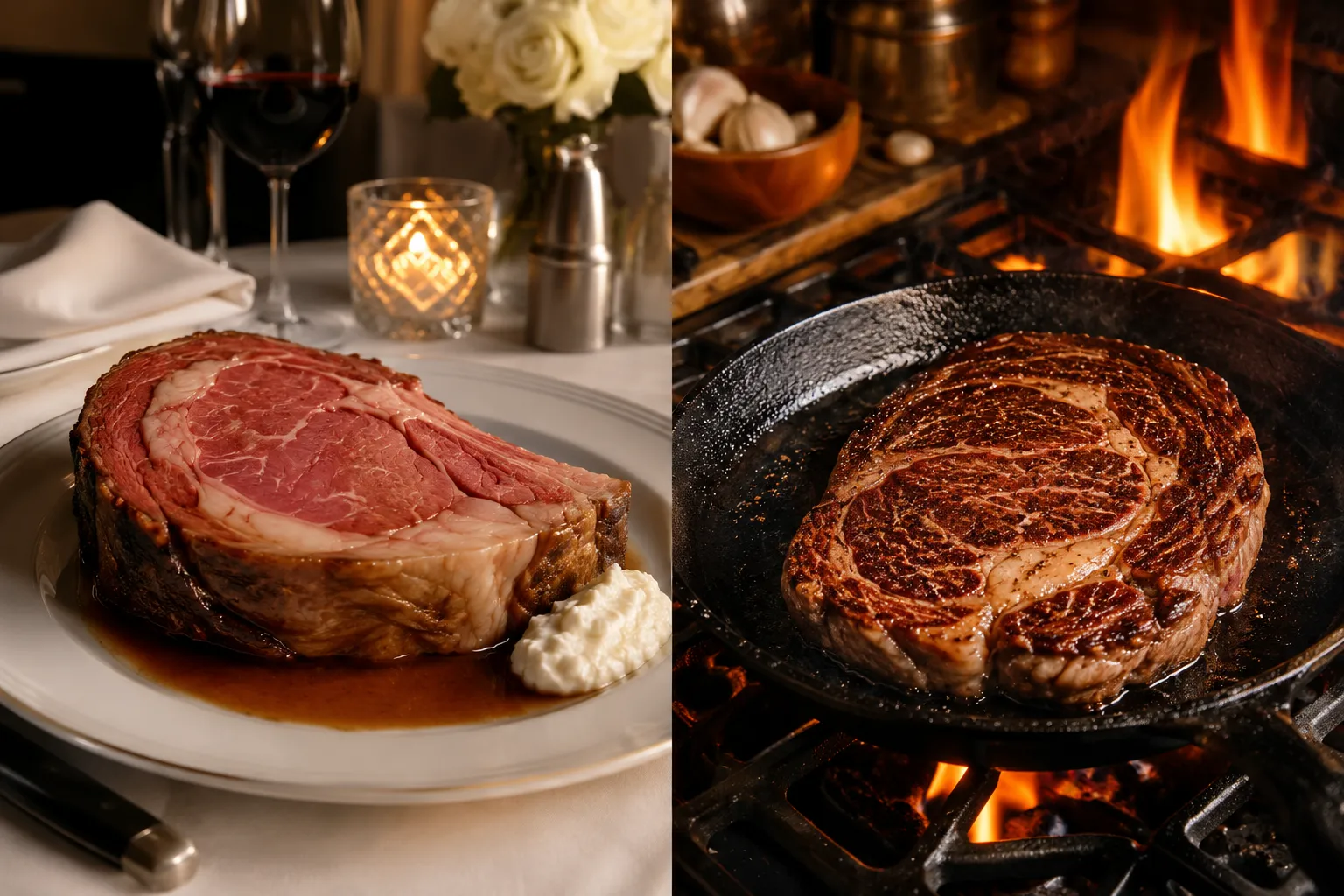
Prime rib and ribeye come from the same section of the cow (the rib primal), but they are prepared and served differently. Prime rib is roasted as a large, bone-in cut and sliced after cooking. A ribeye is a boneless steak cut from the same muscle and cooked individually, usually on a grill or in a skillet.
Key differences at a glance:
- Cut size: Prime rib is a multi-rib roast (often 2-7 ribs); ribeye is a single steak
- Bone: Prime rib is typically bone-in; ribeye is usually boneless
- Cooking method: Prime rib is slow-roasted; ribeye is grilled, pan-seared, or broiled
- Texture: Prime rib tends to be more tender due to the low-and-slow roast; ribeye has a firmer, steakhouse char
- Price per serving: Prime rib often costs less per serving when bought as a roast, but requires more prep time
Choose prime rib if you are feeding a group and want a dramatic centerpiece. Choose ribeye if you want a fast, individual steak with a good sear.
How to Cook Prime Rib at Home
A well-executed prime rib roast is achievable for home cooks. The two most reliable methods are the traditional low-and-slow roast and the reverse sear.
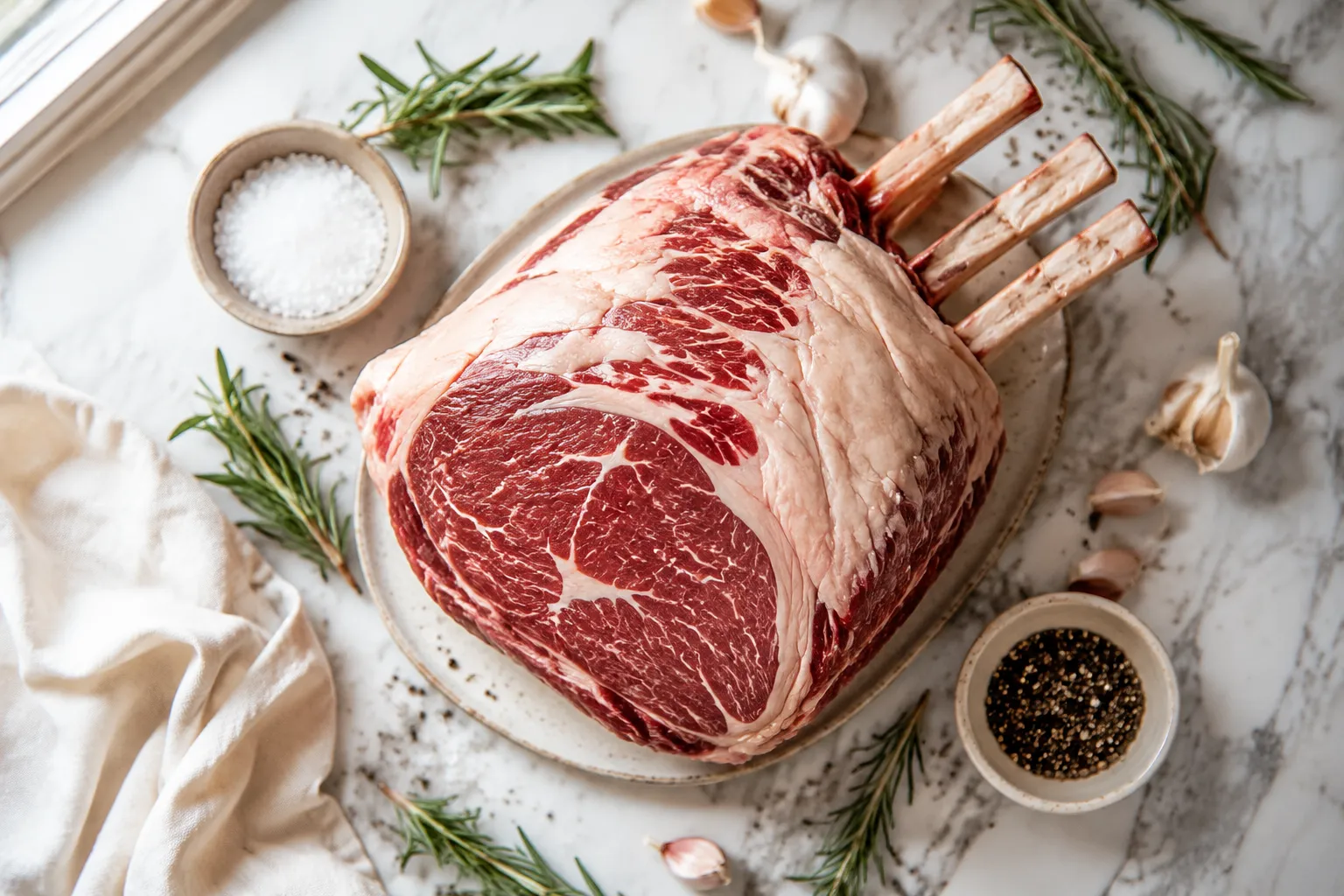
How to Season Prime Rib
Seasoning is straightforward but makes a significant difference. A simple, effective rub includes:
- 2 tablespoons kosher salt
- 1 tablespoon coarse black pepper
- 1 tablespoon garlic powder or minced fresh garlic
- 1 teaspoon dried rosemary or thyme
- 2 tablespoons olive oil or softened butter
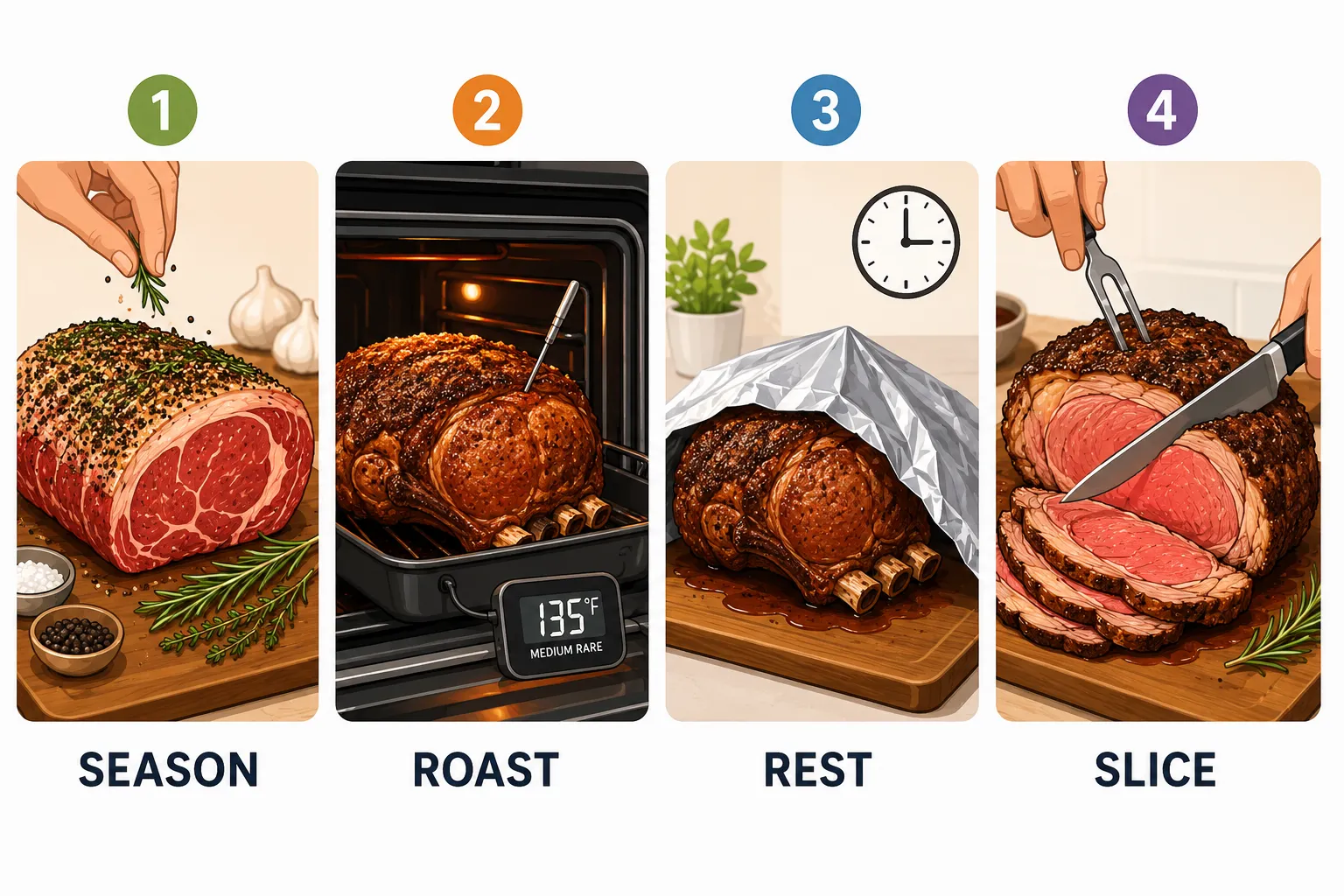
Apply the rub at least 24 hours before cooking and refrigerate the roast uncovered. This dry-brining step draws moisture to the surface and then reabsorbs it, improving flavor and crust formation.
Prime Rib Cooking Temperature and Time
Use these guidelines for a bone-in roast cooked at 250°F (121°C) after an initial 15-minute sear at 450°F (232°C):
| Doneness | Internal Temp (Pull) | Resting Temp |
|---|---|---|
| Rare | 120°F (49°C) | 125°F (52°C) |
| Medium-Rare | 128°F (53°C) | 130-135°F (54-57°C) |
| Medium | 135°F (57°C) | 140°F (60°C) |
| Well Done | 145°F (63°C) | 150°F (66°C) |
Time estimate: Plan roughly 15-20 minutes per pound at 250°F for medium-rare. A 6-pound roast takes approximately 90-120 minutes. Always use a meat thermometer; visual cues alone are unreliable.
Rest the roast for at least 20-30 minutes before carving. Resting allows juices to redistribute and prevents them from running out when sliced.
Grilling expert Steven Raichlen has highlighted rotisserie prime rib as an excellent alternative method for April 27 National Prime Rib Day celebrations, noting that the rotating spit bastes the meat continuously for even cooking [6].
Common Mistakes When Cooking Prime Rib
- Skipping the thermometer: Guessing doneness by time alone leads to overcooked or undercooked results
- Not resting the meat: Cutting too soon causes significant juice loss
- Cooking straight from the fridge: A cold roast cooks unevenly; bring it to room temperature for 1-2 hours before roasting
- Over-seasoning with wet marinades: Prime rib’s flavor comes from the beef itself; heavy marinades can mask it
- Buying too small a roast: One bone feeds roughly two people; plan accordingly
Where to Buy Prime Rib and How Much Does It Cost
Prime rib is available at most full-service grocery stores, warehouse clubs, and specialty butchers. For April 27 National Prime Rib Day, buying in advance is advisable since demand increases around the holiday.
Where to buy:
- Warehouse clubs (Costco, Sam’s Club): Often the best value for large roasts, typically USDA Choice grade
- Full-service grocery stores (Kroger, Safeway, Whole Foods): Wider grade selection including USDA Prime
- Local butchers: Best for custom trimming and sourcing USDA Prime or dry-aged cuts
- Online meat retailers: Options like Snake River Farms or Porter Road ship vacuum-sealed roasts directly
Cost estimates (2026, approximate retail):
- USDA Select or ungraded: $15-$20 per pound
- USDA Choice: $20-$28 per pound
- USDA Prime: $28-$40 per pound
- Dry-aged Prime: $45+ per pound
A 3-bone roast (approximately 6-7 pounds) serves 6-8 people and costs roughly $120-$200 for Choice grade at retail. Prices vary by region and retailer.
Best Restaurants for Prime Rib and April 27 Deals
Many steakhouses and upscale restaurants run promotions specifically for April 27 National Prime Rib Day. Perry’s Steakhouse & Grille in Franklin, Tennessee, for example, promoted its caramelized prime rib (pecan-wood fired, crusted and caramelized) as part of a National Prime Rib Day celebration at $59 per person [15]. Similar promotions appear at steakhouses and American-style restaurants nationwide.
How to find deals on April 27:
- Search “[your city] prime rib day specials” in the week before April 27
- Check restaurant social media pages and email lists for limited-time offers
- Call ahead to confirm availability, as prime rib is often a limited-quantity item
- Look for prix-fixe menus that include prime rib as the main course
Chains and concepts known for prime rib: Lawry’s The Prime Rib (multiple locations), The Capital Grille, Perry’s Steakhouse, and many independent steakhouses. Local American-style restaurants frequently add prime rib as a Friday or weekend special that they extend to April 27.
Prime Rib Side Dishes Ideas
Prime rib pairs best with sides that complement its richness without overpowering the beef. Classic and crowd-pleasing options include:
Traditional pairings:
- Yorkshire pudding (a classic British accompaniment)
- Au jus for dipping or drizzling
- Creamed horseradish or horseradish sauce
- Roasted garlic mashed potatoes
- Creamed spinach
Vegetable sides:
- Roasted asparagus with lemon butter (see the asparagus cookbook for preparation ideas)
- Glazed carrots
- Roasted Brussels sprouts with bacon
Bread and starch:
- Crusty dinner rolls or sourdough bread
- Twice-baked potatoes
- Scalloped potatoes au gratin
For a complete celebration meal, pair the roast with a bold red wine such as Cabernet Sauvignon, Bordeaux, or Malbec. The tannins in these wines cut through the fat and enhance the beef’s flavor.
Is Prime Rib Worth the Price?
For a special occasion or a food holiday like April 27 National Prime Rib Day, prime rib offers strong value relative to its impact. A single roast feeds 6-8 people at a per-person cost that is often lower than ordering individual steaks at a restaurant.
Prime rib is worth the investment if:
- You are feeding a group of 4 or more people
- You want a centerpiece dish with high visual and flavor impact
- You have 3-4 hours to dedicate to preparation and cooking
- You enjoy leftovers (cold prime rib sandwiches are a well-known secondary benefit)
It may not be the right choice if:
- You need a quick weeknight meal
- You are cooking for one or two people (a ribeye steak is more practical)
- You lack a reliable meat thermometer
The investment in a quality roast, combined with proper technique, consistently produces results that rival restaurant-quality prime rib at a fraction of the per-plate cost [8][9].
FAQ: April 27 National Prime Rib Day
Q: Is National Prime Rib Day a federal holiday? No. National Prime Rib Day is an unofficial food observance with no government recognition. No congressional record or presidential proclamation has been found to support it [14].
Q: What year did National Prime Rib Day start? The exact origin is unknown. Mentions of the observance trace back to before 2000, but no founding date or creator has been documented [14].
Q: Can I celebrate National Prime Rib Day at a restaurant? Yes. Many steakhouses and American restaurants run specials on April 27. Search for local deals in the days leading up to the holiday [1][15].
Q: What is the best internal temperature for prime rib? For medium-rare, pull the roast from the oven at 128°F (53°C) and let it rest to 130-135°F (54-57°C). Use a digital meat thermometer for accuracy.
Q: How many people does one prime rib roast serve? Plan on one bone per two people. A 3-bone roast (6-7 pounds) serves 6-8 guests comfortably.
Q: What is the difference between USDA Prime and prime rib? USDA Prime is a beef quality grade indicating high marbling. “Prime rib” is a cut and cooking style. A prime rib roast can be USDA Select, Choice, or Prime grade. USDA Prime grade produces the most flavorful result.
Q: How far in advance should I buy a prime rib roast? Order or purchase 3-5 days before cooking. This allows time for dry-brining and ensures availability, especially around April 27 when demand increases.
Q: What wine pairs best with prime rib? Bold red wines with firm tannins work best: Cabernet Sauvignon, Malbec, Bordeaux blends, or a California Zinfandel.
Q: Can prime rib be cooked on a grill? Yes. Rotisserie grilling is a popular method that produces even cooking and a well-developed crust. Grilling expert Steven Raichlen has specifically recommended rotisserie prime rib for National Prime Rib Day celebrations [6].
Q: How do I store leftover prime rib? Wrap slices tightly in foil or store in an airtight container. Refrigerate for up to 4 days. Reheat gently in a 250°F oven with a splash of beef broth to prevent drying out.
Q: Are there other food holidays in April worth celebrating? April has a full calendar of food observances. For more, browse the complete national food observances archive.
Q: What are some other national food days to look forward to? The food holiday calendar is packed year-round. From National Fish Taco Day on January 25 to National Pizza Day on February 9, there are dozens of opportunities to celebrate a favorite food.
Conclusion
April 27 National Prime Rib Day is one of the most satisfying food holidays on the calendar, centered on a cut that rewards patience and good technique. Whether the plan is to book a table at a local steakhouse, order a roast from a butcher, or attempt a full prime rib at home for the first time, the day offers a clear and enjoyable goal.
Actionable next steps for 2026:
- Book a restaurant now: Call ahead or check online for April 27 prime rib specials. Tables fill quickly at popular steakhouses on food holidays.
- Order your roast early: Contact a butcher or warehouse club at least 3-5 days before April 27 to reserve a bone-in rib roast.
- Dry-brine 24 hours ahead: Season the roast the night before for the best crust and flavor.
- Invest in a meat thermometer: This single tool is the difference between a perfect medium-rare and an overcooked roast.
- Plan your sides: Yorkshire pudding, creamed horseradish, and roasted vegetables round out the meal.
- Share the experience: Post photos, tag the restaurant, and use the hashtag to connect with other prime rib enthusiasts on April 27.
For more food holiday ideas and recipes throughout the year, explore the full food holidays 2026 collection and the national day calendar archive.
References
[1] National Prime Rib Day – https://www.punchbowl.com/holidays/national-prime-rib-day [2] National Prime Rib Day – https://nationaltoday.com/national-prime-rib-day/ [4] National Prime Rib Day – https://www.holidaycalendar.io/holiday/national-prime-rib-day [5] cute-calendar – https://www.cute-calendar.com/event/national-prime-rib-day/45627.html [6] facebook – https://www.facebook.com/stevenraichlen/posts/national-prime-rib-day-is-approaching-april-27th-check-out-the-latest-blog-for-o/1492237682257933/ [7] National Prime Rib Day – https://www.calendarr.com/united-states/national-prime-rib-day/ [8] Prime Rib Day – https://www.freddys.com/blog/prime-rib-day [9] National Prime Rib Day Celebrated Today – https://www.christianpost.com/news/national-prime-rib-day-celebrated-today.html [10] April National Food Days Weeks And Months – https://georgiagrown.com/april-national-food-days-weeks-and-months/