Volkamer Lemon: The Misunderstood Citrus That Powers Commercial Orchards and Home Kitchens
- 0
- 9 Min Read
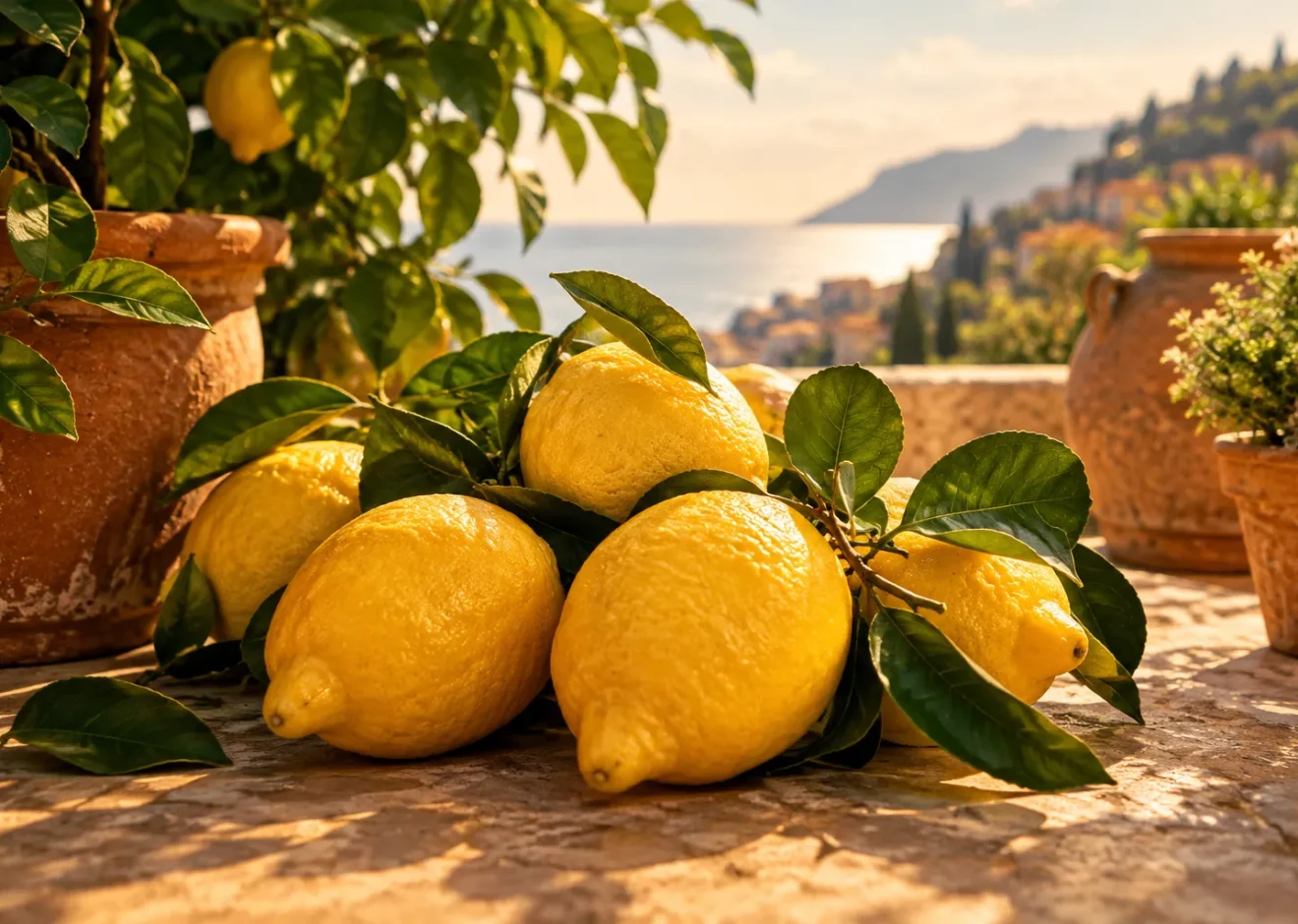
A single rootstock variety can determine whether an entire lemon orchard thrives or collapses, and Volkamer lemon has quietly held that responsibility in citrus industries across three continents for decades.
Yet beyond its agronomic reputation, Volkamer lemon is also a distinctive fruit in its own right: a curious botanical hybrid that tastes like a lemon but grows to roughly the size of a small orange, with a peel so rich in bioactive compounds that food scientists are now exploring it as a functional ingredient in everything from marmalade to antibacterial food coatings.
This article covers the full profile of the Volkamer lemon, from its origins and commercial role to its culinary potential and practical growing requirements, and presents a tested recipe that brings this underappreciated citrus to the home kitchen.
Key Takeaways
- Volkamer lemon (Citrus volkameriana) is both a commercially important rootstock and a distinct edible fruit with a mild lemon flavor profile.
- The peel contains high levels of limonene (approximately 91% of essential oil), ascorbic acid, and phenolic compounds with documented antibacterial activity.
- It is cold-sensitive and best grown under glass in temperate climates, but performs strongly in desert and semi-arid production zones.
- Modern research supports its use as a rootstock candidate in challenging irrigation conditions, including semi-arid environments.
- Culinary applications include marmalade, nectar, cakes, pickles, and fresh juice, all supported by positive sensory evaluations.
Title
Volkamer Lemon Marmalade with Spiced Honey Glaze
Recipe Subtitle
A bold, aromatic preserve that transforms the thick, antioxidant-rich peel of the Volkamer lemon into a jewel-bright marmalade with layers of warm spice.
Recipe Description
This Volkamer lemon marmalade harnesses the fruit’s notably thick peel and mild citrus flavor to produce a preserve that is less sharp than traditional Seville orange marmalade yet far more complex than standard lemon jam. The addition of raw honey and a measured blend of warm spices, cinnamon, cardamom, and a hint of clove, complements the fruit’s natural beta-carotene richness and rounds out any residual bitterness. The result is a glossy, amber-toned spread suitable for artisan toast, glazed poultry, cheese boards, and gourmet gifting.
Recipe Keywords
Volkamer lemon marmalade, Citrus volkameriana recipe, homemade citrus preserve, spiced lemon marmalade, functional food citrus peel, artisan marmalade recipe, lemon peel jam
Difficulty Level
Intermediate
Preparation Time
45 minutes
Cooking Time
90 minutes
Rest Time
480 minutes (overnight maceration plus cooling)
Cooking Temperature (Fahrenheit)
220°F (setting point for preserves)
Calories
Approximately 52 calories per tablespoon serving
Best Season
Autumn through early winter, aligned with the natural Volkamer lemon harvest window of October through January
Cooking Methods
- Stovetop simmering
- High-heat reduction
- Water-bath canning
- Cold maceration
Cuisines Suggestions
- Mediterranean
- North African (Egyptian-inspired citrus preserves)
- Modern American artisan
Recipe Badges
- Gluten-Free
- Refined Sugar-Free Option
- Antioxidant-Rich
Recipe Keys
- Long maceration is essential, overnight soaking softens the thick Volkamer peel and draws out pectin naturally.
- Temperature precision at the setting point (220°F) prevents a runny or over-set result.
- Honey added off the heat preserves its enzymatic properties and prevents a burnt, caramelized note.
What Is a Volkamer Lemon?
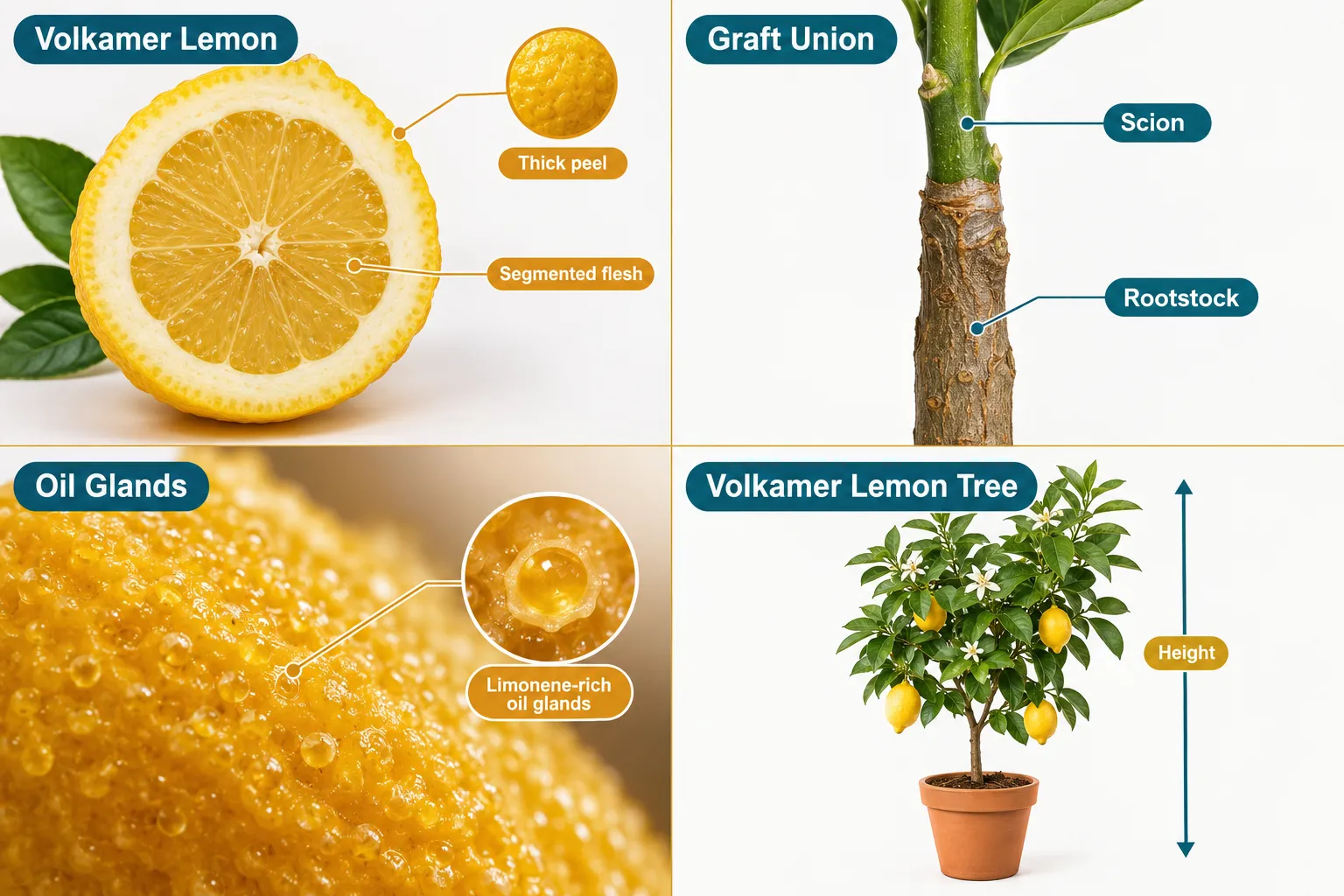
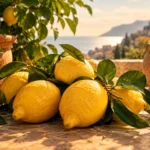
The Volkamer lemon occupies a fascinating position in the citrus family. Botanically classified as Citrus volkameriana, it is widely accepted as a natural hybrid, most likely between a lemon and a sour orange, that originated in the Mediterranean basin and has been cultivated for several centuries. The fruit is visually distinct: broader and rounder than a standard Eureka or Lisbon lemon, with a skin color that trends toward yellow-orange at full maturity, which led one specialist nursery to describe it aptly as “an orange that tastes like a lemon.”
The flavor profile is milder and less acidic than commercial lemons, making it approachable for culinary uses that might otherwise be overpowered by intense citric sharpness. The peel is comparatively thick, a characteristic that frustrated early commercial handlers but now proves valuable to food technologists and home preservers alike.
Key fruit characteristics at a glance:
| Attribute | Detail |
|---|---|
| Botanical name | Citrus volkameriana |
| Fruit size | Comparable to a small orange |
| Skin color at maturity | Yellow to yellow-orange |
| Flavor | Mildly tart, lemon-forward |
| Peel essential oil | ~91% limonene, ~9% pinene |
| Ascorbic acid (peel) | ~149.86 mg per 100 g |
| Harvest window | October to January |
The peel’s essential oil is dominated by limonene at roughly 91%, with pinene accounting for most of the remainder. Independent studies from Egypt and Algeria confirm this monoterpene-rich composition and report significant antibacterial activity in peel extracts, findings that underpin current scientific interest in Volkamer lemon as a functional food ingredient and natural antimicrobial agent.
Ingredients
- 4 large Volkamer lemons (approximately 900 g / 2 lb), thoroughly washed
- 1,000 ml filtered water, divided
- 600 g raw cane sugar (or 500 g sugar plus 120 g raw honey for the refined sugar-free option)
- 120 g raw wildflower honey (added off the heat)
- 1 cinnamon stick
- 4 green cardamom pods, lightly crushed
- 2 whole cloves
- 1 vanilla bean, split (optional, for depth)
- Juice of 1 standard lemon (to boost pectin and prevent crystallization)
- Pinch of fine sea salt
Instructions
- Prepare the peel. Using a sharp vegetable peeler, remove the zest from all four Volkamer lemons in wide strips, then slice into fine julienne (approximately 2 mm wide). Reserve. Halve the lemons, juice them, and reserve the juice and spent halves separately.
- Extract pectin naturally. Place the spent lemon halves, pith side down, in 500 ml of filtered water. Bring to a simmer over medium heat and cook uncovered for 30 minutes. Strain, pressing firmly to extract the pectin-rich liquid. Discard solids.
- Macerate. Combine the julienned peel with the remaining 500 ml of water in a large non-reactive bowl. Cover and refrigerate overnight (minimum 8 hours). This softens the peel and reduces bitterness.
- Combine. Drain the macerated peel and transfer to a wide, heavy-bottomed saucepan. Add the pectin liquid, reserved Volkamer lemon juice, standard lemon juice, cinnamon stick, cardamom pods, cloves, and vanilla bean if using.
- First cook. Bring to a gentle boil over medium heat and simmer for 20 minutes, or until peel is fully tender and translucent.
- Add sugar. Add the raw cane sugar (if using the honey option, add only the 500 g of sugar at this stage). Stir over low heat until completely dissolved, do not allow it to boil while undissolved sugar remains.
- Reduce and set. Raise heat to medium-high. Bring to a rolling boil and cook without stirring, monitoring temperature with a candy thermometer, until the mixture reaches 220°F (approximately 40-50 minutes). Remove the spice bundle.
- Add honey and salt. Remove the pan from the heat. Add the raw honey and sea salt. Stir gently for 2 minutes. The residual heat will incorporate the honey without destroying its beneficial properties.
- Test the set. Place a small spoonful on a chilled ceramic plate. After 60 seconds, push it gently, it should wrinkle and hold its shape.
- Jar. Ladle into sterilized glass jars, leaving 6 mm headspace. Seal and process in a boiling water bath for 10 minutes if shelf-stable storage is required, or refrigerate immediately for use within 6 weeks.
Equipment
- Heavy-bottomed wide saucepan (at least 4-quart capacity)
- Accurate candy/jam thermometer
- Sterilized glass preserving jars with new lids
- Fine-mesh strainer
- Large non-reactive mixing bowl
Nutrition
Per 1-tablespoon (approximately 20 g) serving:
| Nutrient | Amount |
|---|---|
| Calories | 52 kcal |
| Total Carbohydrates | 13.4 g |
| Total Fat | 0.1 g |
| Protein | 0.2 g |
| Vitamin C | ~4 mg |
| Total Phenolics | Trace (from peel) |
Notes
- Sourcing the fruit. Volkamer lemons are available through specialist citrus nurseries and, increasingly, through artisan produce suppliers between October and January. If sourcing potted plants, note that the cultivar is not frost-hardy and requires a heated conservatory or greenhouse in temperate climates, mature container plants can reach up to 3 meters in height.
- Controlling bitterness. The thick peel contains limonin precursors that can cause bitterness if the maceration step is shortened. Do not reduce the overnight soak to less than 6 hours. Changing the soaking water once during maceration further reduces bitter notes.
- Alternative uses. This marmalade functions exceptionally well as a glaze for roast duck or grilled halloumi, whisked with a tablespoon of olive oil and brushed on during the final 5 minutes of cooking.
FAQs
Can standard lemons be substituted if Volkamer lemons are unavailable? A combination of two Eureka or Lisbon lemons and one small navel orange closely approximates the Volkamer lemon’s flavor profile and peel thickness. Increase the maceration time by 2 hours since standard lemon peel is thinner and releases its essential oils more rapidly.
Why does the recipe call for honey added off the heat rather than during cooking? Raw honey contains enzymes and volatile aromatic compounds that degrade above approximately 104°F. Adding honey after the pan is removed from the heat preserves these properties, contributing a more nuanced floral note to the finished marmalade and supporting its positioning as a refined-sugar-reduced preserve.
The Volkamer Lemon as a Rootstock
Much of the world’s lemon production owes a quiet debt to the Volkamer lemon’s roots, quite literally. In Arizona, California, and other desert production zones, Citrus volkameriana is among the standard vigorous rootstocks used precisely because it produces high-yielding trees with excellent fruit size. However, commercial growers must manage notable drawbacks: cold sensitivity, susceptibility to brown wood rot caused by Fomitopsis meliae, proneness to “winter yellows,” and excessive trunk suckering that demands regular attention.
Modern agricultural research has addressed these challenges from multiple directions. Studies show that exogenous putrescine applications can mitigate the effects of flooding stress on Volkameriana rootstock, a practical finding for orchards on high-water-table soils. Separately, research on arbuscular mycorrhizal inoculants (specifically a Glomus Zac-19 consortium at 10 g per plant) demonstrates improved root development and above-ground growth in nursery seedlings without chemical fertilizer dependency, an outcome aligned with current sustainability goals in citrus production.
In semi-arid growing environments, Volkameriana rootstock has also demonstrated superior leaf nutrient status compared with competing genotypes under varying irrigation water quality conditions, including treatments with nano-selenium. These findings reinforce its standing as a resilient rootstock candidate where water quality is inconsistent.
Conclusion
The Volkamer lemon rewards attention at every level, from the commercial orchardist selecting rootstocks for desert production to the home cook seeking a less aggressive citrus for artisan preserves. Its peel is among the most compositionally rich in the citrus family, dense with limonene, ascorbic acid, beta-carotene, and phenolic compounds that translate directly into flavor, color, and functional value in the kitchen.
Actionable next steps for 2026:
- Source Volkamer lemons through specialist citrus nurseries or growers markets during the October-to-January harvest window.
- Prepare the marmalade recipe above using the overnight maceration protocol to ensure the peel reaches its full flavor potential.
- Explore the marmalade as a multi-use ingredient: glaze, condiment, cheese accompaniment, and baking component.
- For those with suitable growing conditions, a greenhouse, conservatory, or frost-free garden, consider cultivating a potted Volkamer lemon as a reliable, long-lived source of seasonal fruit.
The sophisticated audience that appreciates provenance and function in ingredients will find the Volkamer lemon one of the most rewarding citrus varieties available. Its story connects Mediterranean agricultural heritage, cutting-edge citrus breeding science, and a genuinely distinctive flavor, all within the reach of a well-stocked home kitchen.