Last updated: January 7 , 2026
Quick Answer: January 7 National Tempura Day is an annual food holiday celebrated every January 7 in the United States that honors the beloved Japanese frying technique of coating seafood and vegetables in a light, airy batter before deep-frying them to a golden crisp. The day encourages home cooks and restaurant-goers alike to prepare or enjoy tempura, one of the most recognized dishes in Japanese cuisine. It falls during a packed week of January food observances and offers a perfect excuse to explore Japanese cooking at home.
Key Takeaways
- January 7 is National Tempura Day, a food holiday dedicated to the Japanese deep-frying technique using a light, cold-water batter.
- Tempura originated in 16th-century Japan, introduced by Portuguese Jesuit missionaries who brought frying techniques from Europe.
- The key to authentic tempura batter is using ice-cold water and minimal mixing, lumps in the batter are intentional and desirable.
- Neutral oils with high smoke points, such as vegetable oil, canola oil, or rice bran oil, are best for frying tempura at home.
- Tempura is naturally adaptable for vegetarians and vegans, simply use vegetables, mushrooms, or tofu instead of shrimp.
- Common tempura mistakes include over-mixing the batter, using warm water, and overcrowding the frying pan.
- Many Japanese restaurants offer January 7 specials; calling ahead or checking apps like Yelp can surface local deals.
- January 7 sits in a rich stretch of food holidays, see the full January national days calendar for more celebrations this month.
What Is National Tempura Day?
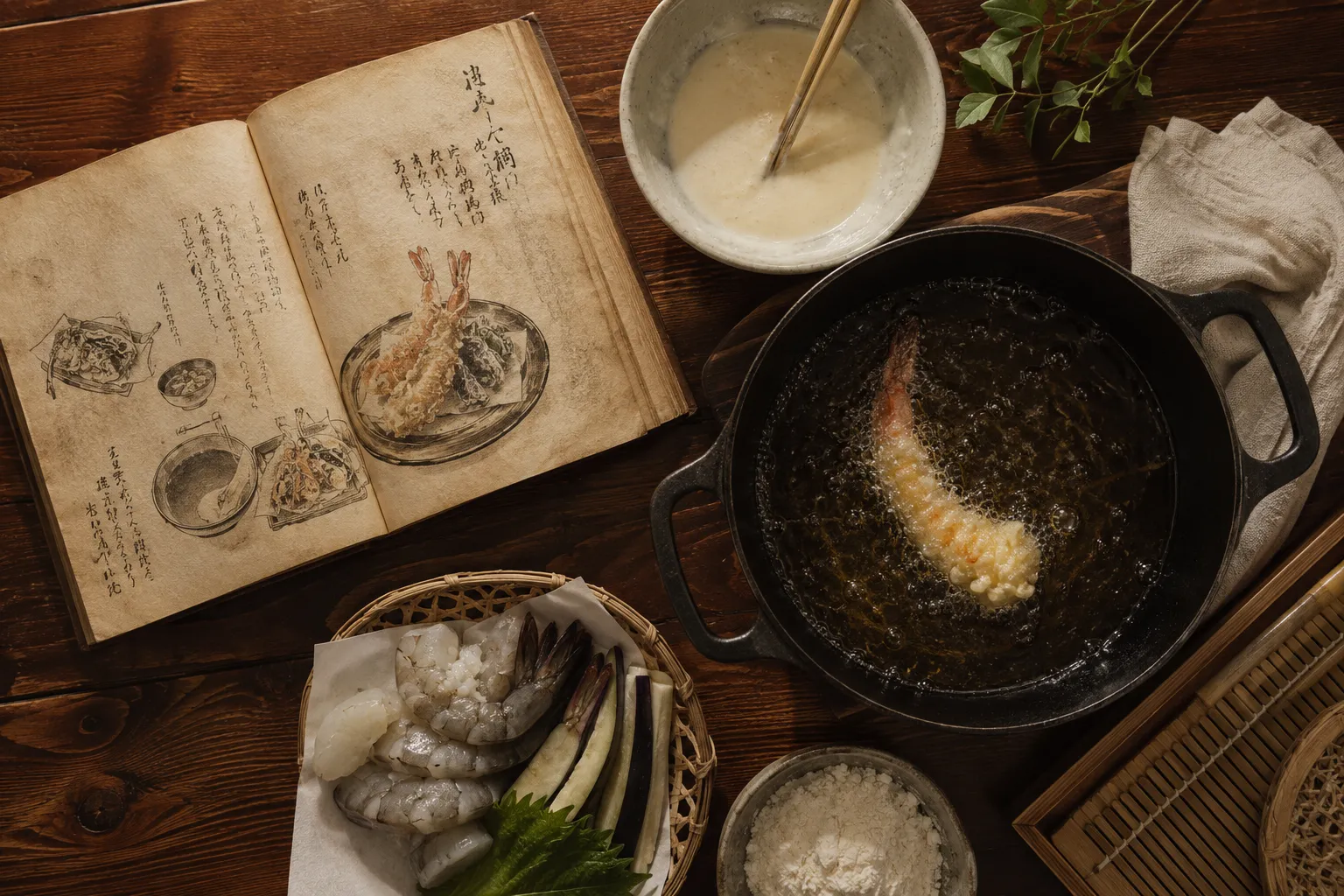
National Tempura Day is an unofficial American food holiday observed on January 7 each year that celebrates tempura, the Japanese cooking method of battering and deep-frying seafood, vegetables, and other ingredients until light and crispy. It is part of a broader tradition of food observances that spotlight individual dishes or cuisines, encouraging people to cook, eat out, or simply learn more about a particular food. January 7 sits alongside other early-month food holidays like National Spaghetti Day on January 4 and National Shortbread Day on January 6.
What makes tempura distinctive:
- The batter is intentionally thin and lumpy, producing a delicate, lace-like crust rather than a thick coating.
- Ingredients are fried quickly at high heat (around 340-360°F / 170-180°C), keeping the interior tender.
- Classic tempura is served with tentsuyu, a dipping sauce made from dashi broth, soy sauce, and mirin, alongside grated daikon radish.
Tempura History and Origin: Where Did It Come From?
Tempura has Portuguese roots, not purely Japanese ones. In the mid-16th century, Portuguese Jesuit missionaries arrived in Japan and brought with them a frying technique used during Quatuor Anni Tempora, the Catholic seasonal fasting periods when meat was avoided and vegetables were fried in batter. Japanese cooks adopted and refined the method over the following centuries, eventually transforming it into the delicate, iconic dish recognized worldwide today.
By the Edo period (1603-1868), tempura had become popular street food in Tokyo (then called Edo), sold by vendors at outdoor stalls called yatai. The dish evolved from a simple frying method into a refined culinary art form, with specialized tempura restaurants (tempura-ya) developing their own closely guarded batter recipes and frying oils.
Timeline of tempura’s development:
| Era | Development |
|---|---|
| Mid-1500s | Portuguese missionaries introduce frying technique to Japan |
| Edo period (1603-1868) | Tempura becomes popular street food in Tokyo |
| Meiji era (1868-1912) | Tempura-ya (specialty restaurants) become established |
| 20th century | Tempura spreads globally with Japanese cuisine |
| Present | Recognized as one of Japan’s most iconic dishes worldwide |
Why Is January 7 National Tempura Day?
January 7 was designated as National Tempura Day in the United States as part of the broader movement to assign food holidays to specific calendar dates. The exact originator of this particular date is not definitively documented in public records, which is common for many unofficial American food holidays. The date likely gained traction through food bloggers, culinary websites, and social media communities that began recognizing and promoting it in the 2000s and 2010s.
January 7 also holds cultural significance in Japan as Jinjitsu, the Festival of Seven Herbs, when a traditional rice porridge called nanakusa-gayu is eaten for good health in the new year. While the American food holiday and the Japanese tradition are separate observances, the date’s association with Japanese food culture makes January 7 a fitting choice for celebrating tempura.
How to Celebrate January 7 National Tempura Day
Celebrating January 7 National Tempura Day is straightforward, the goal is simply to enjoy tempura in some form. Options range from cooking at home to dining out, hosting a tempura party, or even watching a cooking video to learn more about the technique.
Ways to celebrate:
- Cook at home: Make a simple shrimp or vegetable tempura using the beginner recipe outlined below.
- Dine out: Visit a local Japanese restaurant and order tempura as an appetizer or main course.
- Host a tempura bar: Set up a station with pre-prepped vegetables, shrimp, and batter so guests can fry their own.
- Try a new ingredient: Use tempura batter on something unexpected, avocado, green beans, or even ice cream (tenpura aisu).
- Share on social media: Post your tempura photos with the hashtag #NationalTempuraDay.
This week of January is full of food holiday momentum. If you enjoyed National Whipped Cream Day on January 5 or National Cream Puff Day on January 2, tempura day continues the streak of hands-on culinary celebrations.
Best Tempura Recipes for Beginners and Batter Tips
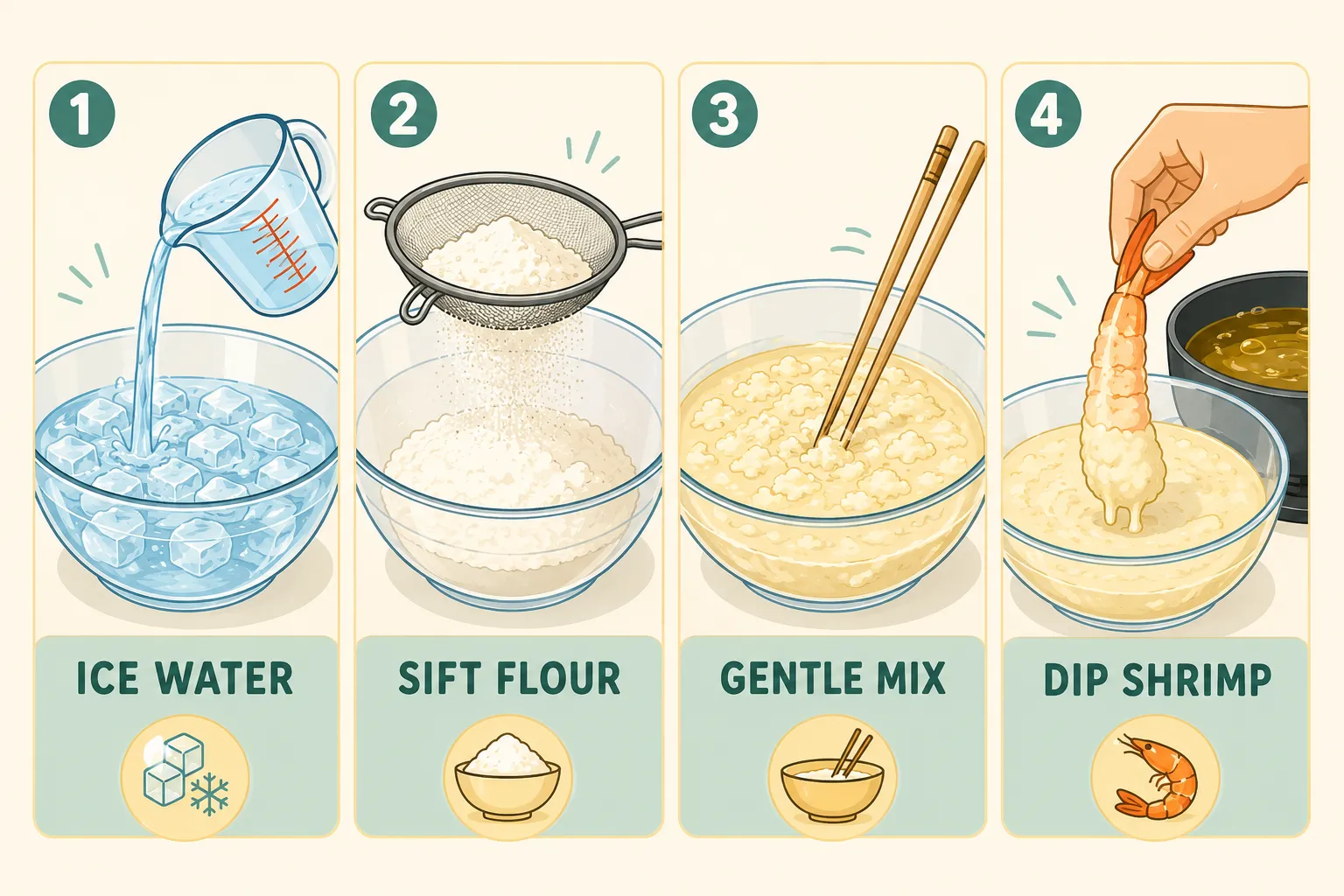
The best beginner tempura recipe uses three ingredients for the batter: cold water, egg, and all-purpose flour. The entire secret to great tempura lies in keeping the batter cold and under-mixed.
Basic tempura batter (serves 4):
- 1 cup (120g) all-purpose flour, sifted
- 1 large egg, beaten
- 1 cup (240ml) ice-cold water (add ice cubes to the measuring cup, then pour off the water)
Steps:
- Combine the beaten egg and ice-cold water in a bowl.
- Add the sifted flour all at once.
- Stir 3-4 times with chopsticks or a fork, stop immediately when the flour is roughly incorporated. Lumps are correct and essential.
- Use the batter immediately; do not let it sit at room temperature.
Tempura batter tips and tricks:
- Cold is critical: Warm water activates gluten and produces a dense, chewy coating. Ice water keeps the batter light.
- Under-mix on purpose: Over-mixing develops gluten, which ruins the delicate texture. A few dry flour streaks in the batter are fine.
- Dry your ingredients: Pat shrimp and vegetables completely dry before dipping. Moisture causes the batter to slide off and creates dangerous oil splatter.
- Fry in small batches: Adding too many pieces at once drops the oil temperature, leading to greasy, soggy tempura.
- Maintain oil temperature: Use a thermometer to keep oil between 340-360°F (170-180°C).
What Oil Is Best for Tempura Frying?
Neutral-flavored oils with high smoke points work best for tempura. The oil must withstand sustained heat above 350°F without breaking down or imparting strong flavor to the delicate batter.
Best oils for tempura:
- Rice bran oil, Traditional choice in Japan; very neutral flavor, high smoke point (~450°F / 232°C).
- Vegetable oil, Widely available, affordable, and neutral; smoke point around 400-450°F (204-232°C).
- Canola oil, Similar to vegetable oil; a reliable everyday choice.
- Sesame oil (small addition), Some traditional recipes add a small amount (5-10%) of sesame oil to the frying oil for a subtle nutty aroma. Do not use pure sesame oil, as it burns easily.
Oils to avoid: Olive oil, butter, and coconut oil all have flavor profiles or smoke points that make them unsuitable for tempura frying.
Tempura vs. Other Japanese Fried Foods
Tempura is distinct from other Japanese fried dishes in its batter composition and frying philosophy. Understanding the differences helps clarify what makes tempura unique.
| Dish | Batter/Coating | Texture | Common Ingredients |
|---|---|---|---|
| Tempura | Thin egg-flour-water batter | Light, lacy, delicate | Shrimp, vegetables |
| Karaage | Soy-marinated, potato starch | Crispy, juicy | Chicken |
| Tonkatsu | Breadcrumbs (panko) | Thick, crunchy | Pork cutlet |
| Kaki-age | Same as tempura, mixed | Fritter-style | Mixed vegetables/seafood |
Tempura uses the thinnest batter of any Japanese fried food, which is why technique matters so much. Karaage and tonkatsu are more forgiving for beginners because their coatings are more substantial.
Tempura for Vegetarians and Vegans
Tempura is one of the most vegetarian- and vegan-friendly Japanese dishes available. The standard batter contains egg, but it can be replaced with a simple flour-and-sparkling-water mixture for a fully vegan version.
Vegan tempura batter substitute:
- Replace the egg with an equal volume of ice-cold sparkling water for extra lightness.
- Use 1 cup cold sparkling water + 1 cup flour, mixed minimally.
Best vegetables for tempura:
- Sweet potato (kabocha squash is traditional)
- Broccoli florets
- Green beans
- Eggplant slices
- Shiitake and oyster mushrooms
- Bell pepper strips
- Asparagus spears
- Lotus root (renkon)
Vegetable tempura is not a compromise, in many Japanese restaurants, vegetable tempura is considered equally prestigious to shrimp tempura, and seasonal vegetable selections are a point of culinary pride.
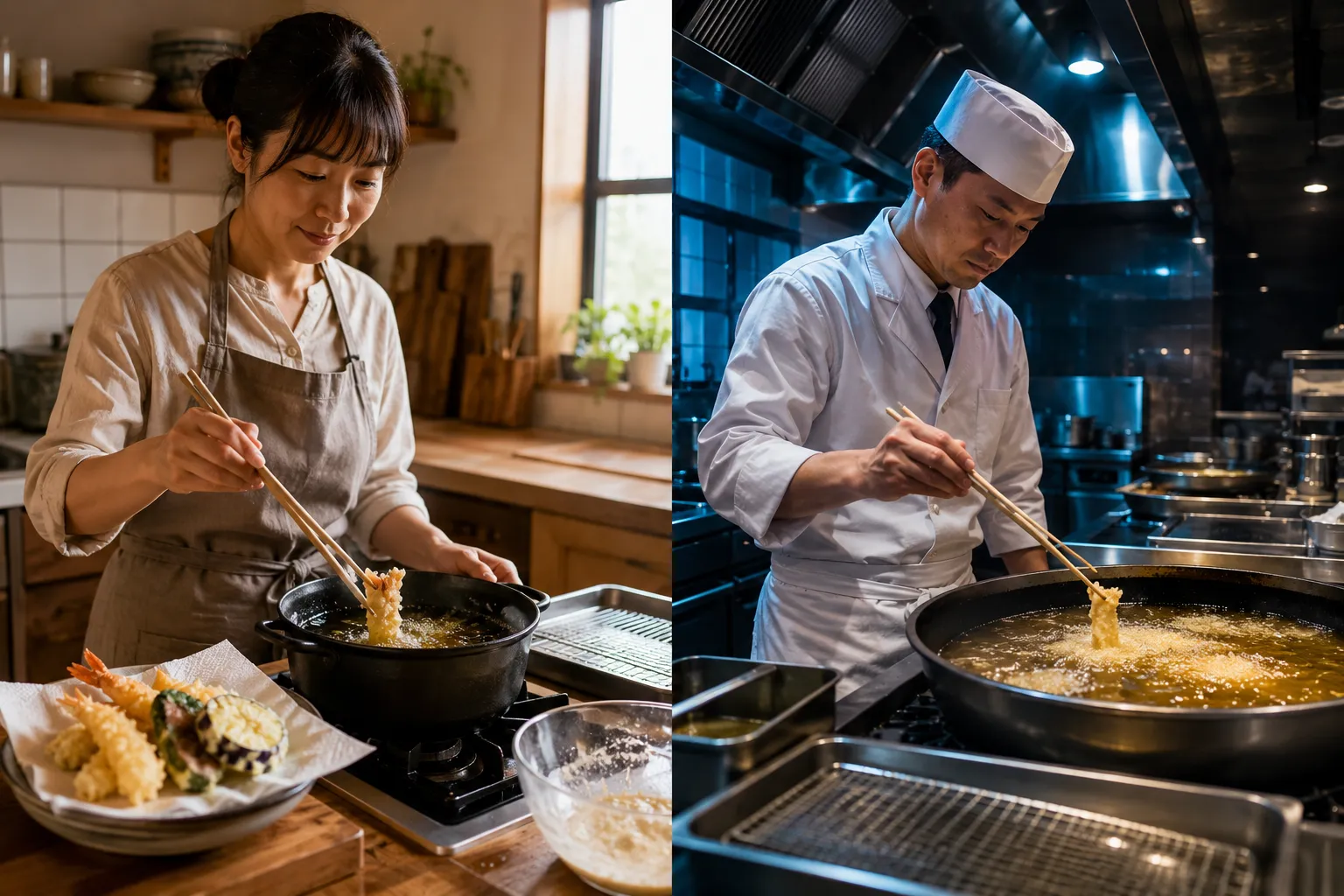
How to Make Tempura at Home vs. Restaurant Quality
Home tempura and restaurant tempura differ primarily in oil volume, equipment, and ingredient freshness, not in the fundamental technique. A home cook can achieve excellent results with a standard deep pot and a thermometer.
Key differences:
- Oil volume: Restaurants use large, deep fryers that maintain temperature even when food is added. At home, use at least 3 inches of oil in a heavy-bottomed pot (a Dutch oven works well) and fry in smaller batches.
- Ingredient quality: Restaurant tempura often uses premium tiger prawns and freshly harvested seasonal vegetables. At home, fresh or properly thawed (and dried) shrimp produce good results.
- Batter freshness: Restaurants make batter in small batches continuously. At home, make only as much batter as you’ll use in one session and keep it cold throughout.
- Dipping sauce: Make tentsuyu from scratch, combine 1 cup dashi, 3 tablespoons soy sauce, and 2 tablespoons mirin, then heat gently. Serve with finely grated daikon radish.
The most common reason home tempura disappoints is oil temperature management. An inexpensive clip-on thermometer solves this problem entirely.
Common Tempura Mistakes to Avoid
Most tempura failures trace back to a small set of avoidable errors. Knowing them in advance saves a lot of frustration.
Mistakes and how to fix them:
- Over-mixing the batter: Produces tough, dense coating. Fix: stir 3-4 times maximum, accept lumps.
- Using warm water: Activates gluten, ruins texture. Fix: always use ice-cold water, keep bowl over ice.
- Wet ingredients: Batter slides off, oil splatters dangerously. Fix: pat everything bone-dry with paper towels.
- Overcrowding the pan: Drops oil temperature, causes soggy results. Fix: fry 3-4 pieces at a time maximum.
- Letting batter sit: Gluten develops over time. Fix: make batter right before frying and use within 15 minutes.
- Wrong oil temperature: Too low = greasy; too high = burnt outside, raw inside. Fix: use a thermometer, target 350°F (175°C).
Where to Find Tempura Day Deals and Specials Near You
Many Japanese restaurants offer January 7 specials or promotions for National Tempura Day, though availability varies by location. The most reliable way to find deals is to search proactively rather than waiting for promotions to come to you.
How to find tempura day deals near you:
- Search “tempura near me” on Google Maps or Yelp and filter by “open now” on January 7.
- Check restaurant social media accounts (Instagram, Facebook) for January 7 promotions announced in the days before.
- Call local Japanese restaurants directly, many will offer a tempura special even if it’s not advertised online.
- Check apps like OpenTable or Resy for special menus tagged to the date.
- Look for Japanese grocery stores (such as Mitsuwa or H Mart in larger cities) that may offer prepared tempura or tempura kits as a promotion.
If dining out isn’t possible, ordering tempura from a Japanese restaurant for pickup or delivery is a perfectly valid way to mark the occasion. For more ideas on celebrating food holidays throughout the year, the full food observances calendar has options for every taste.

FAQ
What is National Tempura Day?
National Tempura Day is an unofficial American food holiday observed on January 7 each year. It celebrates tempura, the Japanese technique of battering seafood and vegetables in a thin, cold-water batter and deep-frying them until light and crispy.
When did National Tempura Day start?
The exact founding date of National Tempura Day is not officially documented. Like many American food holidays, it emerged organically through food bloggers and culinary websites in the 2000s and 2010s and gained wider recognition through social media.
Why is January 7 National Tempura Day?
January 7 was designated as National Tempura Day in the United States, likely because it coincides with Japan’s traditional January 7 observance of Jinjitsu (the Festival of Seven Herbs), giving the date a natural connection to Japanese food culture.
What is the best oil for frying tempura at home?
Rice bran oil is the traditional Japanese choice, but vegetable oil or canola oil work equally well for home cooks. All three are neutral in flavor and have smoke points high enough to fry tempura safely at 340-360°F (170-180°C).
Can vegetarians eat tempura?
Yes. Tempura is naturally suited to vegetarian cooking, sweet potato, eggplant, mushrooms, green beans, and broccoli all make excellent tempura. Vegans can replace the egg in the batter with cold sparkling water.
What is tentsuyu?
Tentsuyu is the traditional Japanese dipping sauce served with tempura. It is made from dashi broth, soy sauce, and mirin, served warm alongside finely grated daikon radish. The daikon is stirred into the sauce before dipping.
What is the difference between tempura and karaage?
Tempura uses a thin, delicate egg-flour-water batter and is most commonly used for shrimp and vegetables. Karaage is a Japanese fried chicken dish marinated in soy and ginger and coated in potato starch, producing a thicker, juicier result.
How do I keep tempura crispy after frying?
Place fried tempura on a wire rack over a baking sheet rather than on paper towels. Paper towels trap steam and soften the crust. Serve immediately, tempura loses its crispness within minutes of frying.
Is tempura gluten-free?
Standard tempura batter uses all-purpose wheat flour, so it is not gluten-free. A gluten-free version can be made using rice flour, which actually produces an even lighter, crispier texture than wheat flour.
What vegetables work best in tempura?
Sweet potato, kabocha squash, shiitake mushrooms, green beans, eggplant, asparagus, bell pepper, and lotus root all work well. The key is cutting vegetables to a uniform thickness (about 1/4 inch) so they cook evenly.
Conclusion
January 7 National Tempura Day is more than a calendar novelty, it’s a genuine opportunity to engage with one of the world’s most technically interesting and historically rich cooking traditions. Whether the goal is to master the ice-water batter at home, find a local Japanese restaurant offering a special menu, or simply learn more about how Portuguese missionaries inadvertently shaped Japanese cuisine, this food holiday delivers real culinary value.
Actionable next steps for January 7:
- Gather ingredients the day before: shrimp or vegetables, all-purpose flour, eggs, and a neutral frying oil.
- Chill a bowl and water in the refrigerator overnight so the batter stays cold.
- Set up a thermometer in the frying pot and target 350°F before adding the first piece.
- Make the tentsuyu dipping sauce ahead of time so it’s ready to serve warm.
- If cooking isn’t an option, call a local Japanese restaurant on January 6 to ask about any January 7 specials.
Tempura rewards attention to a few simple details, cold batter, dry ingredients, hot oil, small batches. Get those four things right, and the result is genuinely restaurant-quality. Explore more food holiday celebrations throughout January and beyond to keep the culinary momentum going all year.