January 6 National Shortbread Day: History, Recipes, and How to Celebrate
- 0
- 12 Min Read
Last updated: January 6, 2026
Quick Answer: January 6 National Shortbread Day is an annual food observance celebrated every January 6 in honor of one of the world’s most beloved butter-based biscuits. The day encourages people to bake, share, or buy traditional shortbread, which traces its roots to medieval Scotland. It falls on the same date as Epiphany, marking a sweet close to the holiday season.
Key Takeaways
January 6 is National Shortbread Day, observed annually in the United States and recognized internationally [2]
Shortbread originated in Scotland and is traditionally made from one part sugar, two parts butter, and three parts flour
Walker’s Shortbread, the iconic Scottish brand, recognizes January 6 as National Walker’s Shortbread Day [5]
Classic shortbread contains no eggs or leavening agents, which distinguishes it from butter cookies
Homemade shortbread stored in an airtight container typically lasts 1 to 2 weeks at room temperature
Common baking mistakes include overworking the dough and using cold butter
The day is best celebrated by baking from scratch, gifting tins of shortbread, or trying a new flavor variation
Dairy-free alternatives using coconut oil or vegan butter can produce acceptable results, though texture differs
What Is National Shortbread Day?
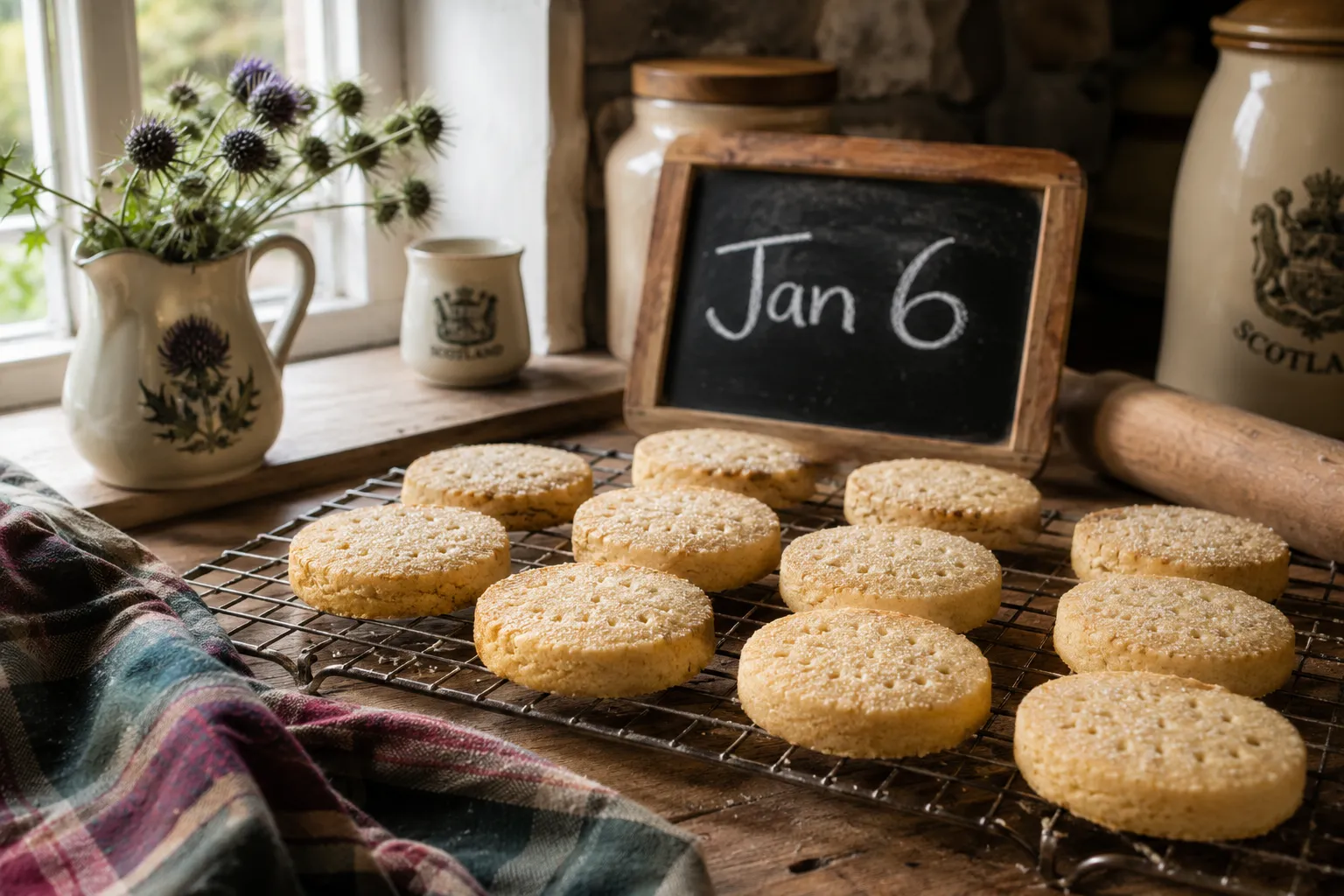
National Shortbread Day is an unofficial food holiday dedicated to celebrating shortbread, a classic Scottish biscuit made from butter, sugar, and flour. It is observed every year on January 6 and encourages baking enthusiasts, home cooks, and food lovers to enjoy this simple but satisfying treat [1].
The day has grown in recognition over the years, supported in part by major brands like Walker’s Shortbread, which uses the occasion to promote Scottish baking heritage [5]. While it is not a federal holiday, it appears on multiple national day calendars and food observance directories [6][9].
Why it matters: Shortbread represents one of the simplest examples of how a few quality ingredients, handled correctly, can produce something exceptional. The day gives both novice and experienced bakers a reason to practice that principle.
When Is National Shortbread Day Celebrated?
National Shortbread Day is celebrated on January 6 every year, without exception [2][6]. The date does not shift based on the day of the week.
In 2026, January 6 falls mid-week, making it a good opportunity to bake a batch over the weekend before and bring shortbread to share with colleagues or neighbors on the actual day.
Related observance: January 6 also coincides with Epiphany (Three Kings Day) in the Christian calendar, which marks the end of the twelve days of Christmas. The timing makes shortbread a natural fit as a final festive treat before the holiday season fully winds down [8].
Why Is January 6 Shortbread Day?
The exact origin of why January 6 was chosen for National Shortbread Day is not formally documented, but the date aligns with Epiphany and the traditional close of the Christmas and New Year holiday period [8]. Shortbread has long been associated with Scottish winter celebrations, including Hogmanay (Scottish New Year), so a January date fits the cultural context well [9].
Walker’s Shortbread, founded in Aberlour, Scotland in 1898, has been a major force in popularizing January 6 as a day to celebrate the biscuit globally [5]. Their ongoing recognition of the date has helped cement it on food holiday calendars across the United States and beyond [6].
Scottish Shortbread History and Origin
Shortbread originated in Scotland, with early versions dating back to the 12th century. The biscuit evolved from a medieval “biscuit bread” made from leftover bread dough dried out in a low oven. Over time, butter replaced yeast, and the modern shortbread recipe took shape [9].
Mary Queen of Scots is often credited with popularizing a refined version of shortbread in the 16th century, particularly a round version called “petticoat tails” cut into triangular wedges [2]. The recipe remained a luxury item for centuries because butter was expensive.
Key milestones in shortbread history:
12th century: Early biscuit bread precursors appear in Scotland
16th century: Mary Queen of Scots reportedly favored a version flavored with caraway seeds
1736: The first printed shortbread recipe appears in a Scottish cookbook
1898: Joseph Walker founds Walker’s Shortbread in Aberlour, Speyside, Scotland [5]
Present day: Shortbread is exported globally and recognized with its own national day on January 6
How to Make Shortbread for National Shortbread Day
Classic shortbread requires just three ingredients: butter, sugar, and flour. The standard ratio is 1 part sugar, 2 parts butter, and 3 parts flour by weight. No eggs, no leavening agents, and no milk are needed.
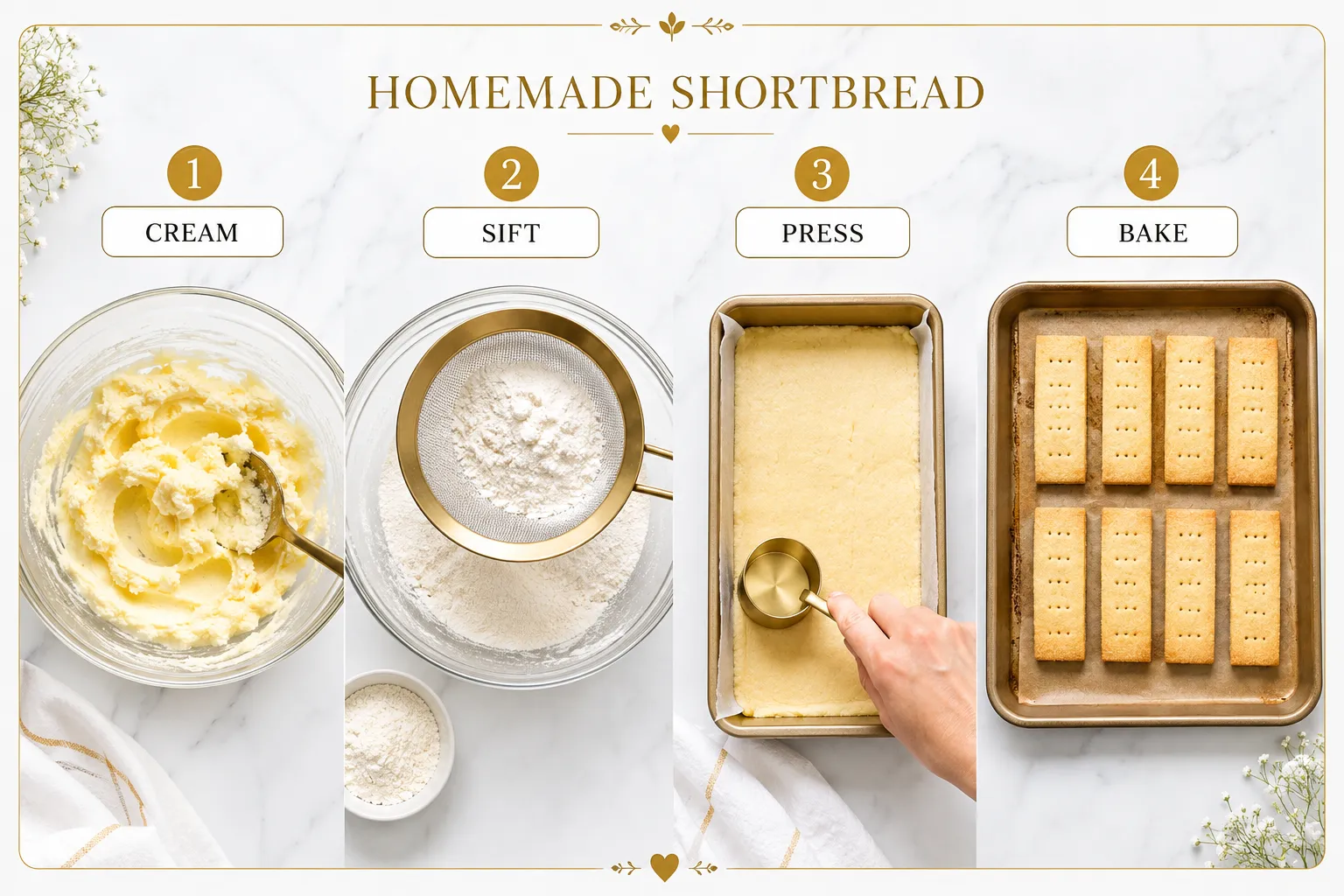
Basic shortbread recipe (makes approximately 16 fingers):
Bring 225g (1 cup) unsalted butter to room temperature until soft but not melted
Beat butter with 100g (1/2 cup) caster sugar until pale and creamy
Sift in 300g (2.5 cups) plain flour and mix until a soft dough forms, do not overwork
Press dough into a lined baking tin (roughly 20x30cm) or roll and cut into rounds
Prick the surface with a fork to prevent puffing
Chill the shaped dough in the refrigerator for 20 minutes
Bake at 160C (325F) for 20 to 25 minutes until pale golden, not brown
Dust with caster sugar while still warm, then cool completely before cutting
Critical tip: Use room-temperature butter. Cold butter will not cream properly, and melted butter produces a greasy, crumbly result.
What Makes Good Shortbread?
Good shortbread is defined by three qualities: a pale golden color, a short (crumbly) texture that melts in the mouth, and a clean buttery flavor. The word “short” in shortbread refers to the crumbly texture created by the high fat content, which inhibits gluten development [9].
Factors that determine quality:
Butter quality: Higher-fat European-style butter produces richer flavor
Sugar type: Caster sugar or icing sugar gives a finer, more delicate crumb than granulated sugar
Mixing technique: Minimal mixing after the flour is added keeps the texture tender
Baking temperature: Low and slow baking preserves the pale color and prevents a hard crust
Resting the dough: Chilling before baking helps the shortbread hold its shape
Common Shortbread Baking Mistakes to Avoid
The most common shortbread mistake is overworking the dough, which develops gluten and makes the biscuit tough rather than crumbly. Other frequent errors include baking at too high a temperature (which browns the outside before the center is cooked) and using cold butter that won’t incorporate smoothly.
Mistakes and fixes:
MistakeResultFixOverworking the doughTough, chewy textureMix only until dough just comes togetherCold butterLumpy, uneven doughUse room-temperature butterToo high oven temperatureBrown edges, raw centerBake at 160C (325F) maximumSkipping the chillDough spreads in ovenRefrigerate shaped dough 20 min before bakingCutting while hotCrumbling and breakingCool completely before slicing
Shortbread vs Butter Cookies: What Is the Difference?
Shortbread and butter cookies share a buttery flavor but differ in texture, ingredients, and structure. Shortbread contains no eggs and no leavening agents, which gives it a dense, crumbly, melt-in-the-mouth texture. Butter cookies typically include eggs and sometimes baking powder, producing a crisper, firmer bite that holds decorative shapes better.
Key differences at a glance:
Eggs: Butter cookies yes, shortbread no
Leavening: Butter cookies sometimes, shortbread never
Texture: Shortbread is crumbly and tender; butter cookies are crisper
Fat ratio: Shortbread has a higher butter-to-flour ratio
Decoration: Butter cookies are easier to frost and decorate; shortbread is typically plain or lightly dusted with sugar
Best Shortbread Recipes to Try
Beyond the classic plain version, several well-known variations are worth trying on January 6 National Shortbread Day.
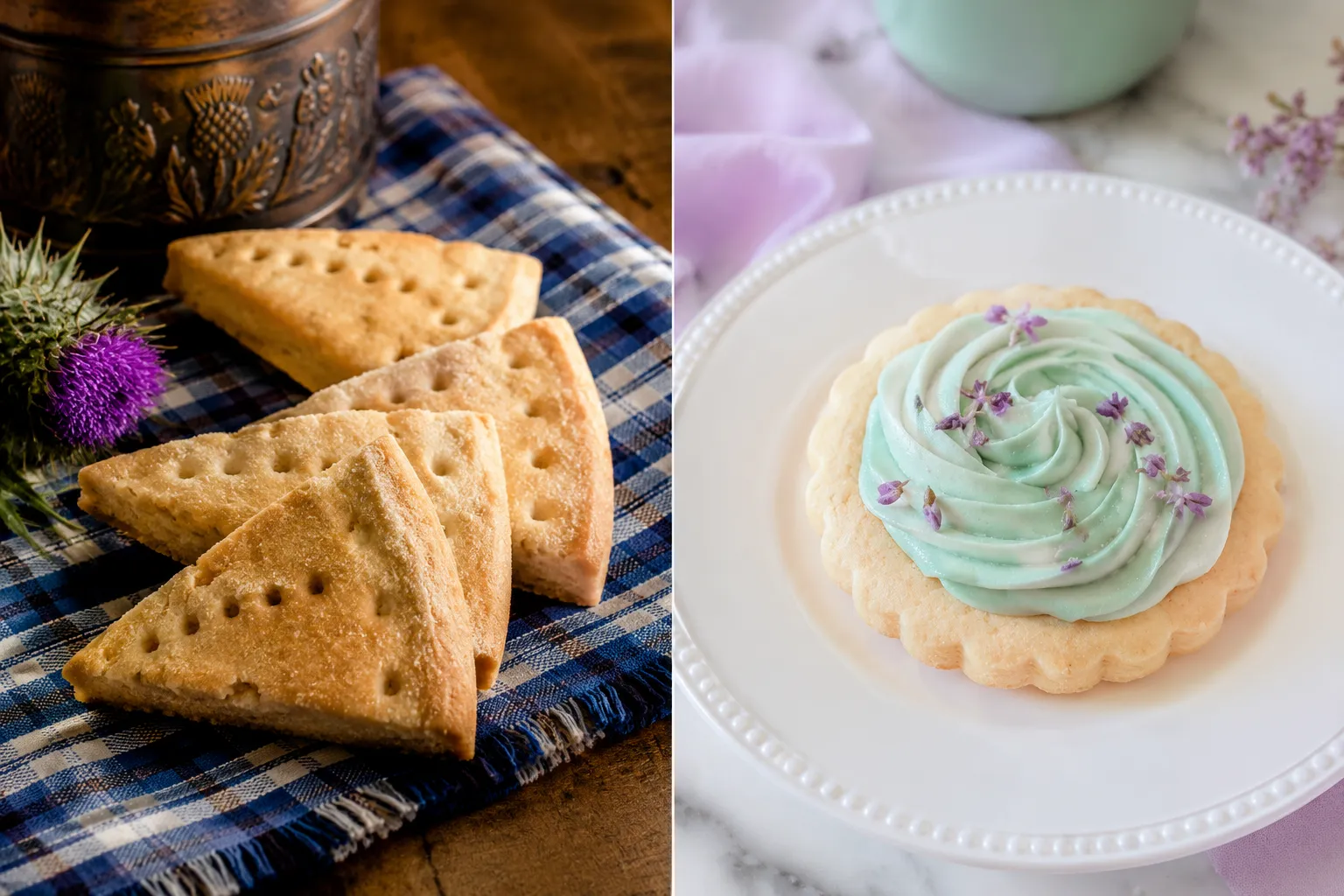
Petticoat tails: The traditional Scottish round, scored into triangular wedges, often flavored with a hint of caraway or lemon zest
Millionaire’s shortbread: A layered bar with shortbread base, caramel center, and chocolate topping
Lavender shortbread: Dried culinary lavender added to the dough for a floral note
Chocolate-dipped fingers: Classic fingers half-dipped in dark or milk chocolate
Orange and almond shortbread: Ground almonds replace a portion of the flour for a nuttier texture
Each variation uses the same base ratio and technique. The main change is adding flavoring to the creamed butter and sugar stage or substituting a portion of flour with ground nuts.
Shortbread Without Butter: Dairy-Free Alternatives
Traditional shortbread relies on butter for both flavor and texture, but dairy-free versions are possible. The best substitutes are high-fat vegan block butter (such as those made from coconut or palm oil) or refined coconut oil, which is solid at room temperature and neutral in flavor.
What to expect with substitutes:
Vegan block butter: Closest result to traditional shortbread; texture and flavor are very similar
Coconut oil (refined): Works but produces a slightly greasier texture; use in the same weight as butter
Margarine (soft tub): Not recommended; too high in water content, resulting in a soft and oily biscuit
Olive oil: Not suitable; cannot be creamed and produces a completely different product
Reduce baking time by 2 to 3 minutes when using coconut oil, as it conducts heat differently than butter.
Where to Buy Shortbread and Best Shortbread Brands
Shortbread is widely available in supermarkets, specialty food stores, and online retailers. For those who prefer to buy rather than bake on January 6 National Shortbread Day, several brands consistently receive strong reviews.
Well-regarded shortbread brands:
Walker’s Shortbread (Scotland): The most internationally recognized brand; uses a traditional recipe with no artificial additives [5]
Dean’s of Huntly (Scotland): Another Scottish producer known for all-butter recipes
Pepperidge Farm (USA): More widely available in American grocery stores; a softer, sweeter style
Walkers Pure Butter Rounds: A specific product line from Walker’s suited to gifting in tins
Walker’s Shortbread products are available in most major supermarket chains and through their official website, making them an accessible option for celebrating the day without baking [5].
How Long Does Homemade Shortbread Last?
Homemade shortbread stored in an airtight container at room temperature will stay fresh for 1 to 2 weeks. Because shortbread contains no eggs or dairy milk, it has a longer shelf life than many other baked goods.
Storage guidelines:
Room temperature (airtight tin): 1 to 2 weeks
Refrigerator: Up to 3 weeks, though condensation can soften the texture
Freezer (uncooked dough): Up to 3 months; slice from frozen and bake directly
Freezer (baked shortbread): Up to 3 months; thaw at room temperature for 1 hour
Avoid storing shortbread near strong-smelling foods, as the butter absorbs odors easily.
How to Celebrate National Shortbread Day
January 6 National Shortbread Day can be celebrated in multiple ways, from baking at home to gifting tins to exploring Scottish food culture. The day works equally well as a solo kitchen project or a group activity.
Practical ways to celebrate:
Bake a classic batch using the three-ingredient recipe and share with neighbors or coworkers
Host a shortbread tasting with different flavor variations (lavender, lemon, chocolate-dipped)
Order a tin from Walker’s Shortbread or another Scottish producer to support traditional makers [5]
Pair shortbread with tea or coffee for an afternoon break and learn about Scottish baking history
Bake with children using simple shortbread shapes cut with cookie cutters
Post a homemade batch on social media using the hashtag #NationalShortbreadDay to join the wider community

Frequently Asked Questions
What date is National Shortbread Day?
National Shortbread Day is always on January 6. The date does not change year to year.
Is National Shortbread Day an official holiday?
No. It is an unofficial food observance, not a federal or public holiday. It is recognized on multiple national day calendars but carries no legal status.
Who created National Shortbread Day?
The formal originator is not publicly documented. Walker’s Shortbread, the Scottish brand, has been a prominent promoter of the January 6 date and recognizes it as National Walker’s Shortbread Day.
Can shortbread be made without sugar?
Traditional shortbread requires sugar for both flavor and texture. Sugar-free versions using erythritol or powdered sweeteners are possible but produce a slightly different texture and may not brown the same way.
What is the difference between shortbread and shortcake?
Shortbread is a dry, crumbly biscuit with no liquid added beyond butter. Shortcake is a leavened, slightly sweet biscuit or cake used as a base for fruit and cream desserts. Both use the “short” technique of cutting fat into flour.
Why is shortbread called shortbread?
The word “short” refers to the crumbly, tender texture produced by a high fat content. Fat coats the flour particles and limits gluten development, resulting in a “short” (non-chewy) crumb.
Is shortbread gluten-free?
Traditional shortbread is not gluten-free because it uses wheat flour. Gluten-free versions can be made using rice flour or a certified gluten-free flour blend, which also produces a pleasantly crumbly texture.
What is the best flour for shortbread?
Plain (all-purpose) flour works well. Some Scottish recipes use a mix of plain flour and rice flour, which adds extra crunch. Self-raising flour is not recommended as it alters the texture.
Can shortbread dough be frozen?
Yes. Shortbread dough freezes well for up to 3 months. Roll it into a log, wrap tightly in cling film, and slice directly from frozen before baking.
How do you know when shortbread is done baking?
Shortbread is done when it is pale golden, not brown, and feels firm to a light touch in the center. The edges may show the faintest color. Overbaking makes it hard and dry.
Conclusion
January 6 National Shortbread Day is a simple, accessible food observance with genuine cultural roots in Scottish baking tradition. Whether the goal is to bake a classic three-ingredient batch, explore a new flavor variation, or simply pick up a tin from Walker’s, the day offers a low-barrier reason to slow down and enjoy one of the world’s most enduring biscuits.
Actionable next steps for 2026:
Mark January 6 on the calendar now and plan whether to bake, buy, or both
Source high-quality unsalted butter ahead of time for the best flavor
Try at least one variation beyond the classic recipe, such as millionaire’s shortbread or lavender fingers
Share a batch with someone who may not know about the day and spread the tradition
If baking with children or beginners, use the basic recipe as a first baking lesson since it requires minimal equipment and technique
Shortbread rewards patience and quality ingredients more than skill. That makes January 6 National Shortbread Day one of the most approachable food holidays on the calendar.
References
[1] National Shortbread Day – https://www.awarenessdays.com/awareness-days-calendar/national-shortbread-day/
[2] National Shortbread Day – https://nationaltoday.com/national-shortbread-day/
[5] National Shortbread Day Fun Facts – https://www.walkersshortbread.com/national-shortbread-day-fun-facts/
[6] National Shortbread Day January 6 – https://www.nationaldaycalendar.com/national-day/national-shortbread-day-january-6
[8] January 6 National Shortbread Day – https://web-holidays.com/blog/2014/01/06/january-6-national-shortbread-day
[9] Shortbread Day – https://www.daysoftheyear.com/days/shortbread-day/