Last updated: May 29, 2026
Quick Answer
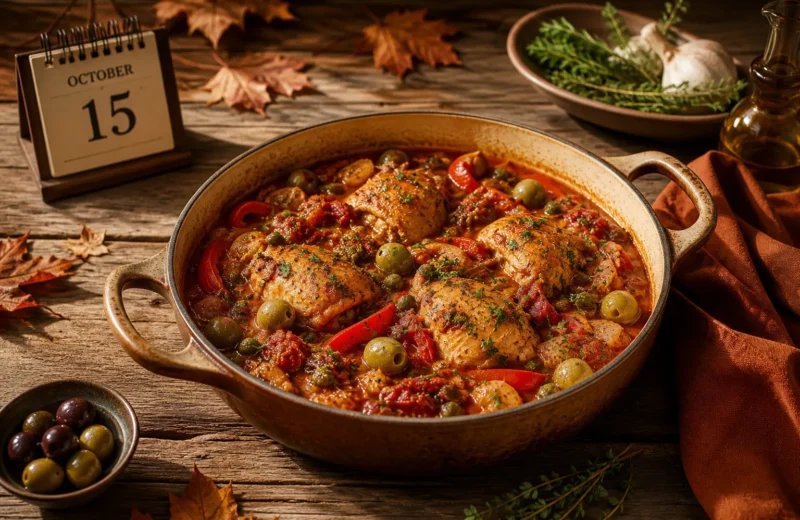
May 29: National Coq Au Vin Day is an annual, informal food holiday celebrated in the United States that honors the classic French dish of chicken braised in red wine with mushrooms, pearl onions, and bacon. The day is recognized on multiple major holiday calendars and falls on May 29 each year. [1] It has no official government backing but serves as a popular occasion for home cooks and food enthusiasts to attempt one of France’s most celebrated country recipes.
Key Takeaways
- May 29: National Coq Au Vin Day is observed annually on May 29 and appears on major U.S. food holiday calendars, including National Today and National Day Calendar. [1][8]
- The holiday is informal and U.S.-centric, not a French national holiday, and likely gained traction after Julia Child popularized coq au vin in the 1970s. [13]
- Some calendars list a separate “Coq Au Vin Day” on March 22, creating minor date confusion, but May 29 is the most widely cited date. [9]
- Coq au vin translates literally to “rooster in wine” and is a French braised chicken dish with red wine, mushrooms, lardons, and aromatics.
- Chicken thighs are the best cut for this recipe because their fat content holds up to long braising without drying out.
- A traditional coq au vin takes 1.5 to 2 hours total, including prep, and is considered beginner-friendly with patience.
- Burgundy or Pinot Noir are the classic wine choices, but any dry red wine works well.
- The dish can be made ahead and refrigerated for up to 3 days, and it freezes well for up to 3 months.
- A non-alcoholic version is possible using grape juice, chicken stock, and a splash of red wine vinegar.
- Classic side dishes include crusty bread, buttered egg noodles, mashed potatoes, or steamed green beans.
Why Is May 29 National Coq Au Vin Day?
May 29 is recognized as National Coq Au Vin Day on multiple U.S. food holiday calendars, though no single founding organization or official proclamation created it. [1][5] Like most food holidays, it is an informal, marketing-driven observance rather than a government-designated date. [10]
The holiday’s origins are loosely tied to the broader American fascination with French cuisine that grew through the 1960s and 1970s. Julia Child’s television appearances and cookbooks brought coq au vin into American home kitchens, making it one of the most recognized French dishes in the U.S. [13] Food holiday calendars, which proliferated online in the 2000s and 2010s, eventually assigned May 29 as the date to celebrate it.
A note on date confusion: some calendars, including sources that track food observances closely, list March 22 as an alternative “Coq Au Vin Day.” [9] The May 29 date is more widely cited across major platforms, including National Today and National Day Calendar’s May 29 lineup. [1][8] For practical purposes, May 29 is the date most food enthusiasts recognize in 2026.
“National Coq Au Vin Day is not actually a French holiday, it is mainly observed in the U.S. and was likely invented after the French food fad of the 1970s.” [13]
What Is Coq Au Vin and How Do You Make It?
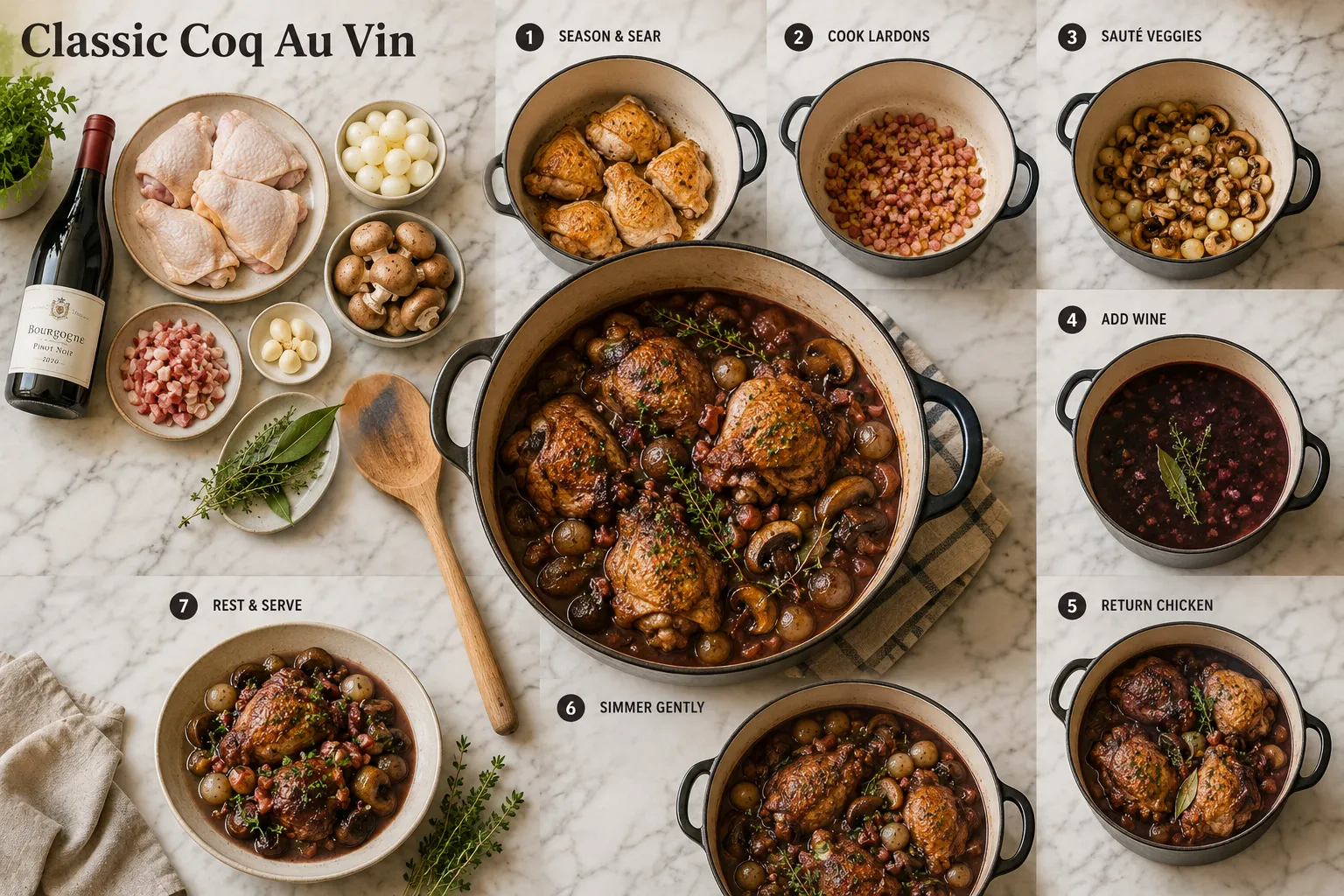
Coq au vin is a French braised chicken dish cooked slowly in red wine with mushrooms, pearl onions, lardons (small pieces of cured pork fat or bacon), garlic, and herbs. The name translates literally to “rooster in wine,” referring to the original use of a tough old rooster that needed long, slow cooking to become tender. [2]
Today, the dish uses standard chicken pieces. Here is a traditional method broken into clear steps:
Ingredients (serves 4):
- 8 bone-in, skin-on chicken thighs (or a mix of thighs and drumsticks)
- 1 bottle (750 ml) dry red wine (Burgundy or Pinot Noir preferred)
- 200g lardons or thick-cut bacon, cut into small pieces
- 250g cremini or button mushrooms, halved
- 1 cup pearl onions, peeled
- 4 garlic cloves, minced
- 2 tablespoons tomato paste
- 2 cups chicken stock
- Fresh thyme, bay leaves, parsley
- Salt, pepper, olive oil, butter
- 2 tablespoons flour (for dredging)
Method:
- Pat chicken dry, season with salt and pepper, and lightly dredge in flour.
- Sear chicken skin-side down in a Dutch oven with oil over medium-high heat until golden, about 5 minutes per side. Remove and set aside.
- In the same pot, render lardons until crispy. Add pearl onions and mushrooms; cook 5 minutes. Add garlic and tomato paste; stir 1 minute.
- Pour in the wine and stock, scraping up any browned bits. Add herbs.
- Return chicken to the pot, submerging it partially in the liquid.
- Cover and braise on low heat (or in a 325°F / 165°C oven) for 45 to 60 minutes, until chicken is cooked through and tender.
- Remove chicken. Reduce the sauce over medium heat if needed. Adjust seasoning and serve.
Coq Au Vin vs Beef Bourguignon: What’s the Difference?
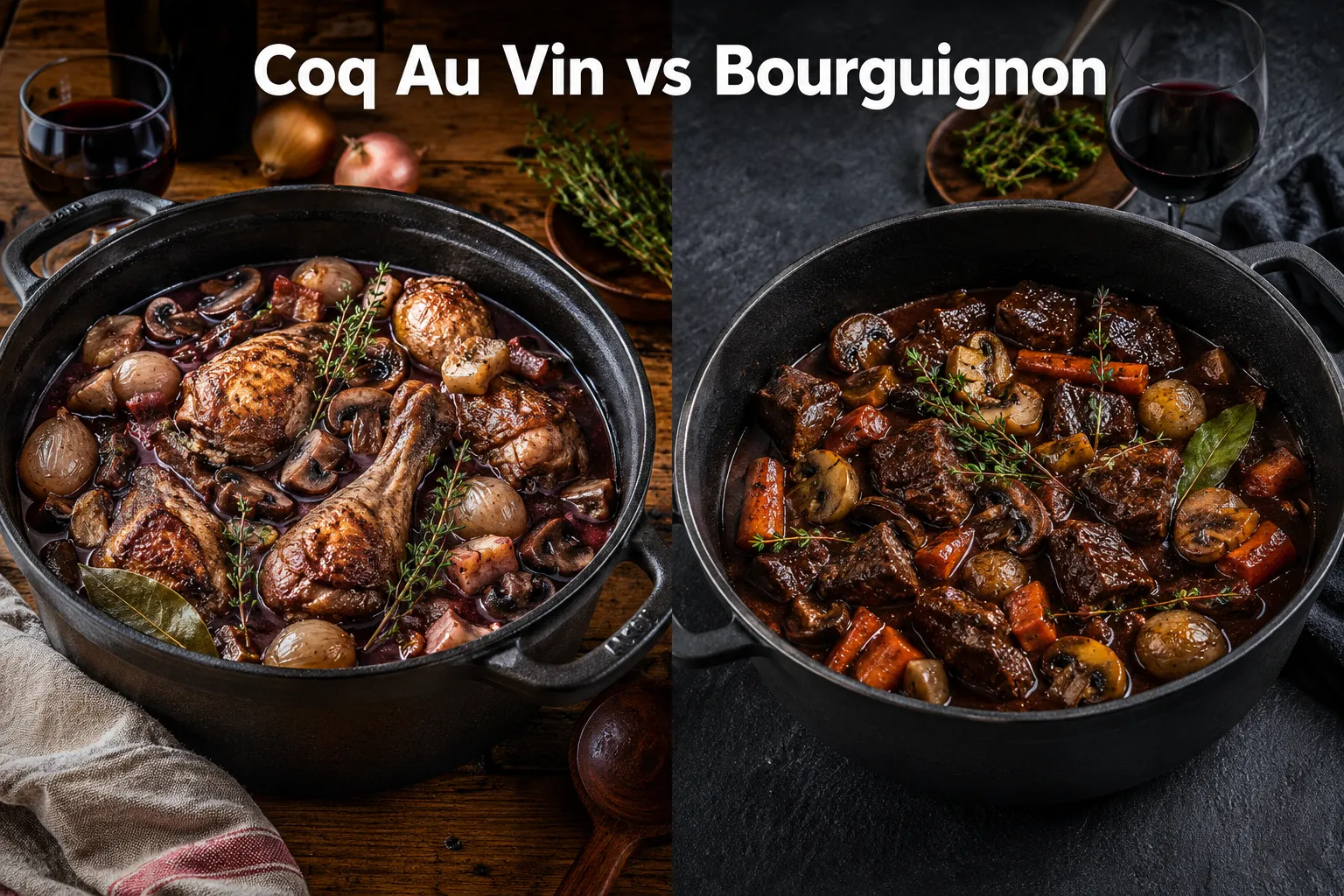
Both dishes are French braises cooked in red wine, but coq au vin uses chicken while beef bourguignon uses beef chuck or stew meat. The cooking time, texture, and flavor profile differ meaningfully.
| Feature | Coq Au Vin | Beef Bourguignon |
|---|---|---|
| Protein | Chicken (thighs/drumsticks) | Beef chuck or stew meat |
| Wine | Dry red wine (Burgundy/Pinot Noir) | Burgundy wine |
| Cook time | 45 to 60 minutes braising | 2.5 to 3 hours braising |
| Texture | Tender, moist chicken | Falling-apart beef chunks |
| Difficulty | Beginner-friendly | Moderate |
| Richness | Lighter, more delicate | Deeper, heavier |
Both dishes share pearl onions, mushrooms, lardons, and a wine-based sauce. If you enjoy coq au vin, you will likely enjoy beef bourguignon, and vice versa. Coq au vin is the faster weeknight option; beef bourguignon suits a weekend project. For another classic meat-focused food holiday, see the guide to April 27 National Prime Rib Day.
How Long Does Coq Au Vin Take to Cook?
A traditional coq au vin takes approximately 1.5 to 2 hours from start to finish, including about 20 to 30 minutes of prep and 45 to 60 minutes of braising. This makes it one of the more approachable French braises in terms of time.
- Prep time: 20 to 30 minutes (trimming, peeling, searing)
- Braising time: 45 to 60 minutes (stovetop or oven)
- Sauce reduction (optional): 10 to 15 minutes
- Total: Roughly 1.5 to 2 hours
Some recipes call for marinating the chicken in wine overnight, which adds passive time but deepens the flavor. For a weeknight version, skip the marinade and proceed directly to searing.
Is Coq Au Vin Hard to Make for Beginners?
Coq au vin is considered beginner-friendly for anyone comfortable with basic stovetop cooking. The technique, sear, build a sauce, braise, is straightforward and forgiving.
The most common stumbling block for beginners is managing heat during the braise. Too high and the chicken dries out; too low and the sauce never develops. A steady, gentle simmer (or a 325°F oven) solves this reliably.
Choose this recipe if: you have about 2 hours, own a Dutch oven or heavy-bottomed pot, and want to learn a foundational French braising technique.
Skip it if: you need dinner in under 30 minutes or do not have a heavy pot with a lid.
What Wine Should I Use for Coq Au Vin?
Use a dry red wine you would actually drink. Burgundy (Pinot Noir from the Burgundy region of France) is the traditional choice, but any dry, medium-bodied red wine works well. Avoid sweet wines, cooking wines from a bottle labeled “cooking wine,” and anything overly tannic.
Best options:
- Pinot Noir (classic, lighter body)
- Côtes du Rhône (earthy, affordable)
- Merlot (smooth, widely available)
- Gamay / Beaujolais (fruity, traditional alternative)
Avoid:
- Sweet wines (Moscato, Riesling)
- Heavy, tannic reds (Cabernet Sauvignon can work but may overpower)
- Bottled “cooking wine” with added salt
The wine does not need to be expensive. A bottle in the $10 to $20 range is entirely appropriate. Since you are using a full bottle, buying a second to serve alongside the meal is a natural pairing. If you enjoy food and drink pairings, the March 27 International Whiskey Day guide covers similar beverage-forward celebrations.
Coq Au Vin With Chicken Thighs vs Other Cuts
Chicken thighs are the best cut for coq au vin. Their higher fat content and connective tissue hold up to long braising without drying out, and they absorb the wine sauce more effectively than leaner cuts.
| Cut | Result | Recommended? |
|---|---|---|
| Bone-in thighs | Juicy, flavorful, holds shape | Best choice |
| Drumsticks | Good texture, easy to serve | Good |
| Bone-in breasts | Can dry out during long braise | Use with caution |
| Boneless thighs | Tender but less structure | Acceptable |
| Whole chicken (cut up) | Traditional, varied textures | Good for authenticity |
Common mistake: Using boneless, skinless chicken breasts. They overcook quickly and become dry and stringy in a 45-minute braise. If breasts are all that is available, reduce braising time to 25 to 30 minutes and check internal temperature (165°F / 74°C) early.
Can You Make Coq Au Vin Without Wine?
Yes, a non-alcoholic version of coq au vin is possible, though the flavor profile will differ. The wine provides acidity, depth, and color, all of which need substitutes.
Non-alcoholic substitutes (per 750 ml bottle of wine):
- 2 cups unsweetened grape juice + 1 cup chicken stock + 2 tablespoons red wine vinegar
- 3 cups chicken or vegetable stock + 1 tablespoon tomato paste + 1 tablespoon balsamic vinegar
- Non-alcoholic red wine (widely available in 2026 and the closest match)
The result will be lighter and slightly less complex, but still a satisfying braised chicken dish. Increase herbs and garlic slightly to compensate for the reduced depth.
Coq Au Vin Common Mistakes to Avoid
Even experienced cooks make these errors. Avoiding them makes the difference between a good dish and a great one.
- Not drying the chicken before searing. Moisture prevents browning. Pat chicken completely dry with paper towels before it touches the pan.
- Skipping the sear. The browned crust adds flavor through the Maillard reaction. Do not skip this step even if pressed for time.
- Using cold wine straight from the fridge. Cold liquid drops the pot temperature and stalls the braise. Let wine come to room temperature first, or add it gradually.
- Braising at too high a temperature. A rolling boil toughens the chicken. Maintain a gentle simmer, small bubbles breaking the surface, not a vigorous boil.
- Not reducing the sauce. After the chicken is done, the sauce may be thin. Remove the chicken and reduce the liquid over medium heat for 10 to 15 minutes for a glossy, concentrated finish.
- Adding mushrooms too early. Mushrooms added at the start of the braise become waterlogged. Sauté them separately and add in the last 15 minutes, or stir in just before serving.
Coq Au Vin Make-Ahead and Freeze: How Long?
Coq au vin is an excellent make-ahead dish. In fact, it tastes better the next day after the flavors have had time to meld overnight in the refrigerator.
- Refrigerator: Store in an airtight container for up to 3 days. Reheat gently on the stovetop over low heat, adding a splash of stock if the sauce has thickened too much.
- Freezer: Freeze in airtight containers or freezer bags for up to 3 months. Thaw overnight in the refrigerator before reheating.
Make-ahead tip: Cook the dish completely, cool to room temperature, then refrigerate. The fat will solidify on top overnight, making it easy to skim before reheating for a cleaner sauce.
Coq Au Vin Vegetarian Alternatives
A vegetarian version of coq au vin replaces chicken with hearty vegetables or plant-based proteins that can withstand braising. The wine-mushroom sauce is naturally vegetarian-friendly.
Best substitutes for chicken:
- Portobello mushrooms (whole caps or large chunks), closest texture match
- Cauliflower florets, holds shape well, absorbs sauce
- Chickpeas, add protein and body (for more on chickpeas, see April 21 National Chickpea Day)
- Seitan, chewy, protein-rich, braises well
- Firm tofu (pressed and seared), works but has a lighter flavor
Replace chicken stock with vegetable stock. Omit lardons or substitute smoked paprika and a drizzle of olive oil to replicate the smoky depth. Reduce braising time to 25 to 30 minutes for vegetables to avoid mushiness.
Coq Au Vin Side Dishes: What to Serve With It
The rich, wine-forward sauce of coq au vin pairs best with sides that can absorb it. Avoid anything too assertive in flavor that would compete with the dish.
Classic pairings:
- Crusty French bread or baguette, for soaking up the sauce
- Buttered egg noodles, traditional and simple
- Creamy mashed potatoes, a crowd-pleasing base
- Steamed or roasted green beans, cuts through the richness
- Roasted root vegetables, parsnips, carrots, or turnips complement the wine notes
Wine pairing: Serve the same wine used in cooking, or a similar Pinot Noir. The match is natural and requires no overthinking.
What to avoid: Heavy starches like mac and cheese or rich cream-based sides can make the meal feel overwhelming. Keep accompaniments simple so the coq au vin remains the centerpiece.
Coq Au Vin Calories and Nutrition Facts
A standard serving of coq au vin (approximately 2 chicken thighs with sauce, roughly 350 to 400g) contains an estimated 450 to 550 calories, depending on the recipe and portion size. These figures vary based on how much fat is skimmed, the amount of lardons used, and whether butter is added to finish the sauce.
Approximate nutrition per serving (estimate based on standard recipe):
| Nutrient | Approximate Amount |
|---|---|
| Calories | 480 to 540 kcal |
| Protein | 38 to 45g |
| Total Fat | 22 to 30g |
| Saturated Fat | 7 to 10g |
| Carbohydrates | 10 to 15g |
| Sodium | 600 to 900mg |
Note: These are estimates. Actual values depend on specific ingredients and quantities used. For a lower-calorie version, use skinless chicken thighs, reduce lardons by half, and skim fat from the sauce before serving.
Coq au vin is a protein-rich dish with moderate carbohydrates, making it compatible with lower-carb eating patterns when served without bread or pasta. The wine-based sauce contributes minimal residual alcohol after the long cooking process, as most evaporates during braising.
How to Celebrate May 29: National Coq Au Vin Day in 2026
May 29: National Coq Au Vin Day is best celebrated by actually making the dish, but there are several ways to mark the occasion depending on available time and skill level.
- Cook from scratch: Follow the traditional recipe above. Set aside a Sunday afternoon for the full experience.
- Order from a French bistro: Many French restaurants feature coq au vin on their menu. Call ahead to confirm availability on May 29.
- Host a dinner: Coq au vin scales easily for 4 to 8 people. Pair with a French wine and crusty bread for a simple dinner party.
- Try a shortcut version: Use a slow cooker. Add all ingredients and cook on low for 6 to 8 hours. The result is less traditional but still delicious.
- Share on social media: Use #NationalCoqAuVinDay to join the conversation and see how others are celebrating.
For more food holiday inspiration throughout the year, explore the full food holiday 2026 collection or check out another French-inspired celebration like March 20 National Ravioli Day.
FAQ
What does “coq au vin” mean in English? Coq au vin translates literally from French as “rooster in wine.” The original dish used a tough old rooster braised in wine to tenderize it. Modern recipes use standard chicken.
Is May 29 an official national holiday for coq au vin? No. May 29: National Coq Au Vin Day is an informal, U.S.-centric food observance with no government backing. It appears on food holiday calendars but carries no official status. [1][10]
Can I use white wine instead of red wine in coq au vin? Yes. A white wine version is sometimes called “coq au vin blanc.” It produces a lighter, more delicate sauce. Use a dry white wine such as Chardonnay or Sauvignon Blanc.
Do I have to marinate the chicken overnight? No. Overnight marinating is optional and deepens flavor, but it is not required. You can sear and braise the chicken directly without marinating for a weeknight version.
What is the best pot for coq au vin? A Dutch oven or heavy-bottomed braising pot with a tight-fitting lid is ideal. It distributes heat evenly and retains moisture during the long braise.
Can I make coq au vin in a slow cooker? Yes. Sear the chicken and render the lardons first for best flavor, then transfer everything to a slow cooker. Cook on low for 6 to 8 hours or high for 3 to 4 hours.
How do I know when coq au vin is done? The chicken is done when it reaches an internal temperature of 165°F (74°C) and the meat pulls away from the bone easily. The sauce should be slightly thickened and deeply colored.
Why is my coq au vin sauce too thin? Remove the chicken after braising and simmer the sauce uncovered over medium heat for 10 to 15 minutes to reduce and concentrate it. A cornstarch slurry (1 teaspoon cornstarch mixed with 1 tablespoon cold water) can also thicken it quickly.
Is coq au vin gluten-free? The traditional recipe uses a small amount of flour for dredging. To make it gluten-free, substitute rice flour or cornstarch for dredging, and ensure the chicken stock used is certified gluten-free.
What is the difference between coq au vin and chicken stew? Coq au vin is a specific French preparation using wine as the primary braising liquid, with lardons, mushrooms, and pearl onions. A generic chicken stew typically uses stock as the base and varies widely in ingredients and technique.
Conclusion
May 29: National Coq Au Vin Day is a fitting occasion to explore one of French cuisine’s most rewarding dishes. Whether cooking it for the first time or refining a technique developed over years, coq au vin rewards patience with a deeply flavored, satisfying result that feels far more impressive than the effort required.
Actionable next steps for 2026:
- Pick a date before or on May 29 to shop for ingredients, wine, chicken thighs, lardons, pearl onions, and mushrooms are the core list.
- Choose a dry red wine you enjoy drinking, since the bottle does double duty in the pot and at the table.
- Use bone-in, skin-on chicken thighs for the most forgiving and flavorful result.
- Make the dish a day ahead if serving guests, the flavor improves overnight and reheating is simple.
- Serve with crusty bread or buttered egg noodles to complete the meal without overcomplicating it.
For more food holiday guides and recipes throughout the year, explore the National Chicken Parm Day guide for another chicken-focused celebration, or browse April 25 National Steak Day for a different protein-forward food holiday.
References
[1] National Coq Au Vin Day – https://nationaltoday.com/national-coq-au-vin-day/ [2] anydayguide – https://anydayguide.com/calendar/1056 [5] May 29th National Coq Au Vin Day – https://www.listofnationaldays.com/may-29th-national-coq-au-vin-day/ [6] International Coq Au Vin Day – https://www.punchbowl.com/holidays/international-coq-au-vin-day [8] National Day Calendar Facebook Post – https://www.facebook.com/NationalDayCalendar/posts/may-29-2026-national-coq-au-vin-day-national-529-day-national-paperclip-dayceleb/1417599347074649/ [9] National Coq Au Vin Day – Cooking With Vinny – https://www.cookingwithvinny.com/uncategorized/national-coq-au-vin-day-2/ [10] National Coq Au Vin Day – There Is A Day For That – https://www.thereisadayforthat.com/holidays/usa/national-coq-au-vin-day