Last updated: August 3, 2026
Quick Answer: August 3 Watermelon Day, officially known as National Watermelon Day, is an annually recurring unofficial food holiday observed every year on August 3 in the United States and increasingly recognized internationally. It celebrates the watermelon as a peak-summer fruit through picnics, festivals, recipes, and social media sharing. The day is not a federal holiday but is widely promoted by food calendars, dietitians, and the watermelon industry.
Key Takeaways
- August 3 is National Watermelon Day, an unofficial U.S. food holiday observed every year on August 3. [1]
- The holiday has no confirmed founding year; it originated as a grassroots American food celebration with no single creator on record. [4]
- It is not a federal or public holiday, but it appears on major calendar platforms and is used by health professionals for nutrition outreach. [2]
- The National Watermelon Promotion Board treats August 3 as a key promotional date for the U.S. watermelon industry. [4]
- Celebrations include picnics, seed-spitting contests, watermelon carving, recipe sharing, and local festivals.
- Watermelon is about 92% water by weight, making it a genuine hydration food, especially relevant in the heat of early August.
- U.S. watermelon production reached approximately 3.7 billion pounds in 2024, according to USDA Economic Research Service data. [10]
- The holiday’s concept has spread globally, with Russian-language and other international calendars now listing August 3 as “Watermelon Day.” [5]
- Future dates follow the same August 3 pattern annually through at least 2030. [6]
- If watermelon isn’t your preference, the day is still a reason to explore melon-adjacent summer foods and fruit-based recipes.
What Is August 3 Watermelon Day?
August 3 Watermelon Day, also called National Watermelon Day, is an unofficial American food holiday dedicated to celebrating the watermelon as the defining fruit of summer. It is observed every year on August 3 and encourages people to eat, share, and enjoy watermelon in any form they like. [1]
The day falls at the heart of summer, when watermelons are at peak ripeness across most of the continental United States. The Old Farmer’s Almanac describes it as honoring “summer’s favorite juicy fruit” and frames it as a seasonal lifestyle observance rather than a civic or religious occasion. [7]
Key characteristics of the holiday:
- Unofficial and non-federal: no government proclamation required
- Annually recurring: always August 3, regardless of the day of the week [3]
- Inclusive: anyone can participate, from backyard picnics to restaurant specials
- Nutrition-adjacent: dietitians and health organizations use it to promote hydration and fruit consumption [2]
When Did August 3 Watermelon Day Start and Where Did It Originate?
The precise origin year of August 3 Watermelon Day is not documented in any verified historical record. Like many American food holidays, it emerged organically as a grassroots celebration rather than from a single founding event, organization, or legislative act. [4]
The United States has a long tradition of informal food holidays, and the watermelon holds a particularly deep cultural place in American summer life. The National Watermelon Promotion Board, the industry body that represents U.S. watermelon growers and shippers, has adopted August 3 as a focal point for promotional campaigns, which has helped cement the date in public awareness. [4]
Internationally, the concept has spread beyond American borders. Russian-language holiday calendars and other non-U.S. platforms now list August 3 as a global “Watermelon Day” (Den Arbuza), suggesting the holiday’s reach has grown well past its American roots. [5]
“The holiday has no single founding story, but that openness is part of its appeal, anyone can claim it as their own summer tradition.”
Is August 3 Watermelon Day an Official Holiday?
No, August 3 Watermelon Day is not an official federal or public holiday in the United States or any other country. It carries no legal status, meaning businesses do not close and no government observance is required. [1]
However, “unofficial” does not mean “unrecognized.” The day appears on major consumer calendar platforms including NationalToday, Timeanddate, WinCalendar, and the Old Farmer’s Almanac. [3][6][7] EatRight Illinois, a professional dietetics organization, lists it as a nutrition and dietetics-related event for 2026, showing that credentialed health professionals treat it as a legitimate outreach opportunity. [2]
Distinction worth knowing:
- Federal holiday: government-mandated, businesses may close
- Unofficial food holiday: culturally recognized, participation is voluntary
- August 3 Watermelon Day falls firmly in the second category
Why Is August 3 Watermelon Day a Thing?
August 3 Watermelon Day exists because watermelon is one of the most universally enjoyed summer foods in the United States, and early August is when the fruit reaches its seasonal peak. The holiday gives communities, brands, and individuals a shared reason to celebrate something simple and joyful at the height of summer. [1][7]
From a practical standpoint, the watermelon industry benefits from a dedicated promotional day. The National Watermelon Promotion Board uses the date to drive consumer engagement, recipe sharing, and retail activity. [4] For health professionals, it provides a timely hook to discuss hydration and fruit nutrition during the hottest weeks of the year. [2]
Culturally, the day taps into nostalgia for summer picnics, county fairs, and outdoor gatherings. U.S. communities host multi-day watermelon-themed festivals around August 3, with local contests and social events that turn the fruit into a symbol of hometown pride. [12]
How Do People Celebrate Watermelon Day on August 3?
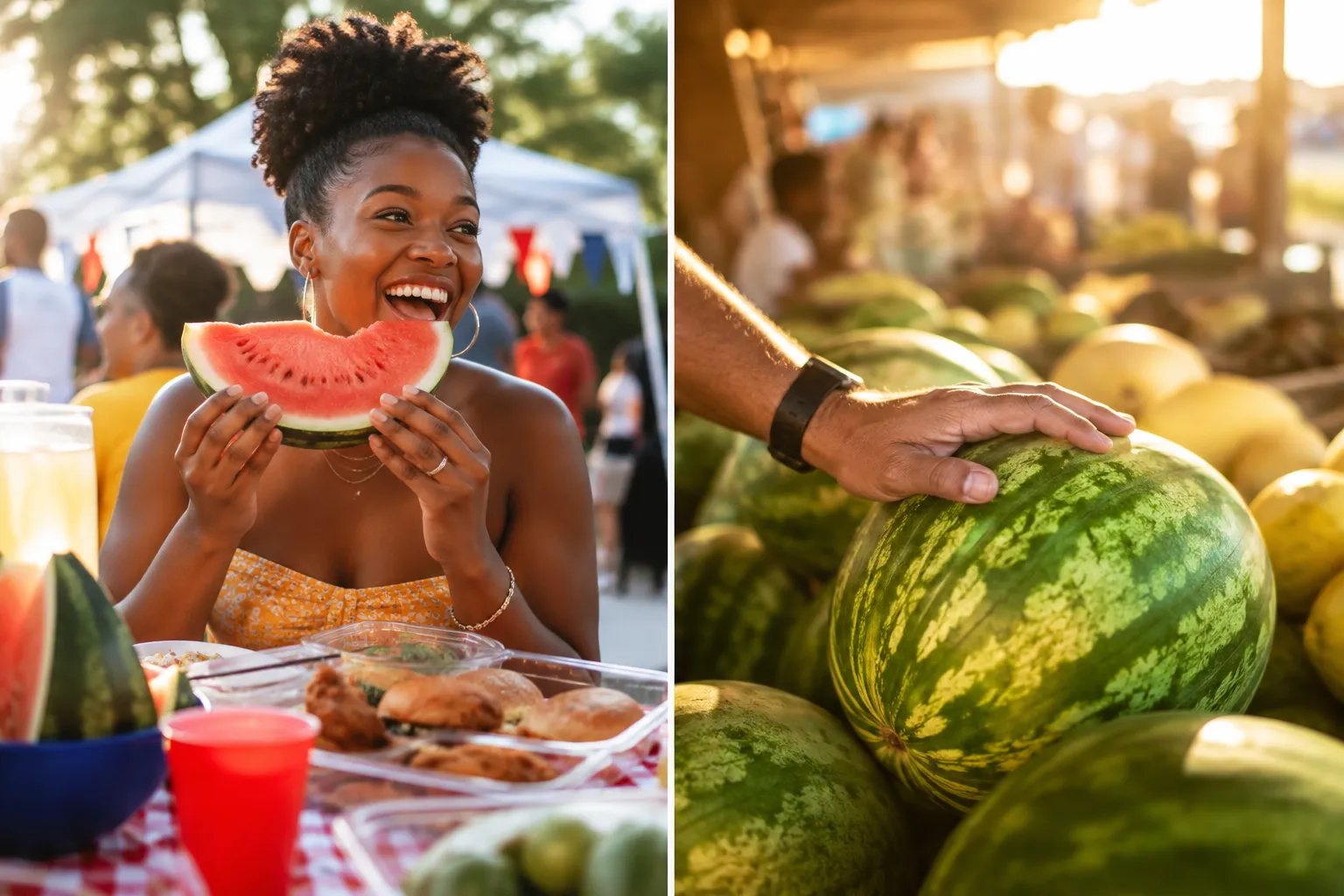
Celebrations range from casual backyard eating to organized community festivals. The common thread is making watermelon the centerpiece of a summer gathering. [1][7]
Popular ways to celebrate:
- Picnic or cookout: Serve chilled watermelon slices as a side or dessert at a backyard gathering
- Seed-spitting contest: A classic American summer game, especially popular with children
- Watermelon carving: Hollow out a watermelon to use as a fruit salad bowl or punch bowl
- Recipe challenge: Try a new watermelon recipe (see the recipes section below)
- Social media sharing: Post photos with hashtags like #NationalWatermelonDay or #WatermelonDay
- Local festivals: Many U.S. towns host watermelon festivals in early August with eating contests, live music, and vendors
- Retail promotions: Grocery stores and restaurants often offer watermelon-themed deals around August 3 [1]
For other summer food holidays happening nearby on the calendar, the August 1 Raspberry Pie Day guide offers ideas that pair well with a watermelon celebration.
Best Watermelon Recipes for August 3
The best watermelon recipes for August 3 range from simple sliced fruit to creative cocktails, salads, and frozen treats. Watermelon’s high water content and mild sweetness make it versatile in both savory and sweet applications.
Five recipes worth trying:
- Classic chilled slices, Cut into wedges, refrigerate for two hours, serve cold. No preparation needed; maximum simplicity.
- Watermelon feta mint salad, Cube watermelon, crumble feta, add fresh mint leaves and a drizzle of lime juice. Ready in ten minutes.
- Watermelon agua fresca, Blend watermelon chunks with water, lime juice, and a pinch of salt. Strain and serve over ice. Naturally low in calories.
- Grilled watermelon, Brush thick slices with a light coat of olive oil and grill for two minutes per side. The heat concentrates the sweetness and adds a smoky note.
- Frozen watermelon popsicles, Blend watermelon with a squeeze of lemon, pour into molds, freeze overnight. A crowd-pleaser for kids and adults alike.
For more frozen summer dessert inspiration, the July 17 National Peach Ice Cream Day guide covers similar no-fuss frozen treat techniques.
Savory pairing tip: Watermelon pairs well with salty, acidic, and herbal flavors, feta, prosciutto, jalapeño, basil, and lime are all proven combinations.
Watermelon Day August 3 vs. National Watermelon Day: Are They the Same?
Yes, “Watermelon Day August 3” and “National Watermelon Day” refer to the same holiday. The terms are used interchangeably across calendar platforms, and both consistently point to August 3 as the date. [1][3][6]
Some international calendars drop the “National” prefix and simply call it “Watermelon Day” or the equivalent in their language, reflecting the holiday’s spread beyond the United States. [5][9] The underlying celebration is identical: eat watermelon, share it with others, and mark the peak of summer.
One potential source of confusion: Some sources list a separate “International Watermelon Day” or regional variants. In practice, August 3 is the date that receives the most consistent recognition across English-language and international calendars alike. [3][14]
How to Pick a Good Watermelon for August 3
A ripe watermelon for August 3 has a deep hollow sound when thumped, a creamy yellow field spot on the underside, and feels heavy for its size. These three checks take about thirty seconds and dramatically improve the odds of getting a sweet, ripe fruit.
Step-by-step selection guide:
- Thump it, Tap the watermelon with your knuckles. A deep, hollow sound indicates ripe, juicy flesh. A dull or flat sound suggests overripe or underripe fruit.
- Check the field spot, The yellow or cream-colored patch where the melon rested on the ground should be a deep butter-yellow, not white or pale green. A darker spot means longer vine time and more sugar development.
- Lift it, A ripe watermelon is mostly water, so it should feel noticeably heavy for its size.
- Inspect the tail, If the stem end is still attached, a dry, brown stem suggests the melon ripened fully before harvest. A green stem may mean it was picked early.
- Look for webbing, Brown, cork-like webbing on the skin is a sign that bees pollinated the plant frequently, which correlates with sweetness.
Common mistake: Choosing the largest watermelon available. Size does not equal sweetness. A medium-sized melon with a deep field spot and hollow thump will almost always outperform a giant one.
Watermelon Day Deals on August 3
Grocery stores, restaurants, and food brands regularly offer watermelon-themed promotions around August 3. Deals typically include discounted whole watermelons, pre-cut fruit specials, and limited-time menu items.
Where to look for August 3 deals:
- Grocery chains: Check weekly circulars from major supermarkets in the week leading up to August 3. Whole watermelons frequently appear as loss leaders during peak summer weeks.
- Farmers markets: Local growers often have the freshest and most affordable watermelons in early August, when supply is at its highest.
- Restaurants and juice bars: Some establishments offer watermelon-themed specials, smoothies, or desserts on August 3.
- Social media promotions: Brands in the food and beverage space often run giveaways or discount codes tied to #NationalWatermelonDay.
Practical tip: Buy whole watermelons rather than pre-cut for better value and longer shelf life. A whole, uncut watermelon keeps at room temperature for up to two weeks and in the refrigerator for about a week after cutting.
Fun Facts About Watermelons for August 3
Watermelons are about 92% water by weight, which is why they are so effective at hydration on hot summer days. Beyond that, they carry a surprisingly rich history and a few genuinely unusual characteristics.
Ten facts worth sharing on August 3:
- Watermelons originated in the Kalahari Desert of Africa, where wild ancestors still grow today.
- The fruit belongs to the same family as cucumbers, pumpkins, and squash (Cucurbitaceae).
- Every part of a watermelon is edible, including the rind, which can be pickled or stir-fried.
- The first recorded watermelon harvest is documented in ancient Egyptian hieroglyphics dating back roughly 5,000 years.
- Square watermelons are grown in Japan, primarily as decorative items, by placing young fruit in cube-shaped molds.
- Watermelons are both a fruit and a vegetable, botanically a fruit, but legally classified as a vegetable in Oklahoma, which named it the state vegetable in 2007.
- U.S. watermelon production reached approximately 3.7 billion pounds in 2024, with Florida among the leading producing states. [10]
- Seedless watermelons are not genetically modified; they are produced through a conventional cross-pollination process developed in the 1940s.
- The world record for the heaviest watermelon stands at 350.5 pounds (158.8 kg), set in the United States.
- China produces more watermelons than any other country, accounting for roughly 70% of global output (estimate based on FAO data trends).
Watermelon Health Benefits for the August 3 Celebration
Watermelon offers genuine nutritional value, making it one of the few holiday foods that health professionals actively encourage. EatRight Illinois lists National Watermelon Day as a nutrition and dietetics event, signaling that registered dietitians use the day to promote the fruit’s benefits. [2]
Key health benefits:
- Hydration: At 92% water content, watermelon contributes meaningfully to daily fluid intake, especially important during hot August weather.
- Lycopene: Watermelon is one of the richest dietary sources of lycopene, an antioxidant linked to heart health and reduced oxidative stress. Red-fleshed varieties contain more lycopene than tomatoes per gram.
- Citrulline: The fruit contains the amino acid citrulline, which the body converts to arginine, supporting blood flow and cardiovascular function.
- Low calorie density: A two-cup serving contains roughly 80 calories, making it a satisfying, low-calorie snack.
- Vitamins A and C: Both support immune function and skin health.
Who benefits most: People exercising outdoors in August, anyone managing heat-related fatigue, and those looking for naturally sweet foods with minimal added sugar.
For more on celebrating summer food holidays with nutritious options, see the July 22 National BLT Day guide for ideas on building balanced summer meals.
Watermelon Growing Season and August Timing
August is peak harvest season for watermelons across most of the United States, which is exactly why August 3 is a logical date for a watermelon holiday. Watermelons require 70 to 90 days of warm growing conditions after transplanting, meaning seeds planted in late spring produce fruit ready for harvest in mid to late summer.
Growing season by region (approximate):
| Region | Planting Window | Harvest Window |
|---|---|---|
| Southeast U.S. | March to May | June to August |
| Midwest U.S. | May to June | August to September |
| Southwest U.S. | April to June | July to September |
| Northeast U.S. | May to June | August to September |
Florida, Georgia, Texas, and California are consistently among the top watermelon-producing states. The USDA Economic Research Service confirmed that U.S. production reached approximately 3.7 billion pounds in 2024, with Florida as a leading contributor. [10]
Practical implication for August 3: Buying watermelon on or around August 3 means buying at the peak of domestic supply, which typically translates to better quality and lower prices compared to early-season or late-season purchases.
What to Do If You Don’t Like Watermelon on August 3
Not everyone enjoys watermelon’s texture or flavor, and that’s a perfectly valid position. August 3 Watermelon Day can still be a fun summer food occasion even if the fruit itself isn’t appealing.
Alternatives and workarounds:
- Try a different preparation: People who dislike raw watermelon often enjoy it grilled, juiced, or blended into a smoothie, where the texture changes significantly.
- Use the rind: Pickled watermelon rind has a completely different flavor profile, tangy, crunchy, and mildly sweet, and is a traditional Southern U.S. condiment.
- Explore other melons: Honeydew, cantaloupe, and Galia melon share the seasonal timing and some flavor characteristics without the same texture.
- Make a watermelon-based drink: Watermelon juice or agua fresca is popular even among people who avoid eating the fruit directly.
- Celebrate the season instead: Use August 3 as a reason to host a summer gathering with a broader fruit spread. The July 15 National Gummy Worm Day guide and July 29 Lasagna Day guide show how food holidays can be adapted to personal tastes.
Edge case: People with a rare latex-fruit syndrome allergy may react to watermelon. If there is any history of oral allergy symptoms with melons, consult a healthcare provider before participating in August 3 tastings.
Frequently Asked Questions About August 3 Watermelon Day
What date is National Watermelon Day? National Watermelon Day is always August 3, every year. In 2026, it falls on Monday, August 3, 2026. [1][3]
Is August 3 Watermelon Day the same every year? Yes. Unlike holidays that float to the nearest Monday, August 3 Watermelon Day is fixed to August 3 regardless of the day of the week. [6]
Who created National Watermelon Day? No single creator or founding organization is on record. The holiday emerged organically as an American food celebration, with the National Watermelon Promotion Board later adopting it as a promotional focal point. [4]
Is August 3 Watermelon Day a federal holiday? No. It is an unofficial food holiday with no government backing, no business closures, and no legal status. [1]
How is August 3 Watermelon Day celebrated at schools? Schools sometimes incorporate the day into summer programs or early-fall activities, using it as a hook for nutrition education, science lessons about plant biology, or simple end-of-summer parties.
What is the nutritional value of watermelon? A two-cup serving of watermelon contains approximately 80 calories, 21 grams of carbohydrates, 1 gram of protein, and meaningful amounts of vitamins A and C, plus lycopene and citrulline.
Can watermelon be eaten at every meal on August 3? Yes, though variety helps. Watermelon works as a breakfast addition (with yogurt), a lunch side (in a salad), a snack (chilled slices), and a dessert (frozen pops or sorbet).
Are there other food holidays near August 3? Yes. August 1 is Raspberry Pie Day, and several other food holidays fall throughout July and August. See the August 1 Raspberry Pie Day guide for nearby celebration ideas.
What is the best way to store a cut watermelon? Wrap cut watermelon tightly in plastic wrap or store in an airtight container in the refrigerator. It keeps well for three to five days. Flavor and texture are best within the first two days.
Does watermelon have a lot of sugar? Watermelon has a moderate natural sugar content (about 9 grams per two-cup serving) but a low glycemic load due to its high water content, meaning it does not spike blood sugar as sharply as its glycemic index number might suggest.
How do restaurants celebrate August 3 Watermelon Day? Many restaurants add watermelon-themed specials to their menus, including watermelon salads, watermelon lemonade, watermelon sorbet, and cocktails featuring watermelon juice.
Is there a specific color of watermelon that is best? Red-fleshed varieties are most common and contain the highest lycopene levels. Yellow-fleshed watermelons exist and tend to be sweeter with a honey-like flavor. Both are worth trying on August 3.
Conclusion
August 3 Watermelon Day is one of the most straightforward food holidays on the calendar: no complex history, no required rituals, and no gatekeeping. It exists because watermelon is genuinely excellent in early August, when domestic supply peaks and the heat makes a cold, juicy slice feel like a small luxury.
Actionable next steps for August 3, 2026:
- Buy a whole watermelon using the thump-and-field-spot method outlined above for the best quality.
- Plan one new recipe beyond plain slices, the grilled watermelon or feta mint salad are both low-effort, high-reward options.
- Check local farmers markets for the freshest and most affordable options during peak harvest season.
- Share the day with at least one other person, whether at a picnic, a cookout, or simply by bringing a watermelon to the office.
- Use the nutrition angle if you’re looking for a reason to eat more fruit: watermelon’s hydration, lycopene, and low calorie density make it one of the most defensible summer snacks available.
The holiday asks very little and delivers a lot. That’s a reasonable trade for a Monday in August.
References
[1] National Watermelon Day – https://nationaltoday.com/national-watermelon-day/ [2] Index – https://www.eatrightillinois.org/index.php?option=com_jevents&task=icalrepeat.detail&evid=1415&Itemid=115&year=2026&month=08&day=03&title=national-watermelon-day&uid=80205d603db58a6998ea09ae661b3a56 [3] Watermelon Day – https://www.timeanddate.com/holidays/fun/watermelon-day [4] National Watermelon Day – https://www.trvst.world/mind-body/national-watermelon-day/ [5] Den Arbuza – https://media.halvacard.ru/life/den-arbuza [6] Watermelon Day – https://www.wincalendar.com/Watermelon-Day [7] 2026 08 03 – https://www.almanac.com/calendar/date/2026-08-03 [10] x – https://x.com/USDA_ERS/status/1951991447324094566
Leave a Reply