
Last updated: November 10, 2026
Quick Answer
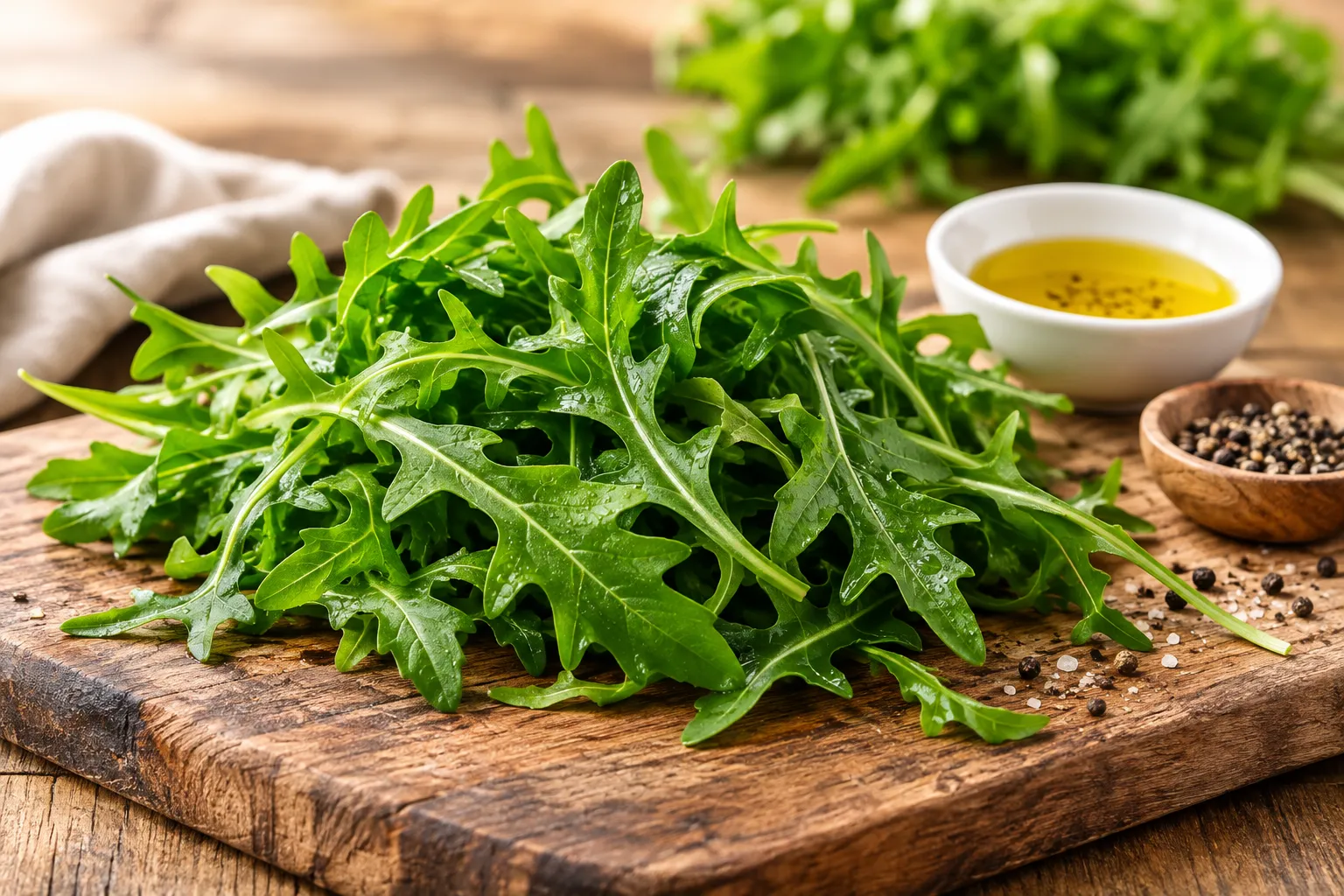
Arugula (Eruca vesicaria) is a fast-growing leafy green native to the Mediterranean, prized for its sharp, peppery bite and dense nutritional profile. It can be eaten raw or cooked, grows easily at home, and is available year-round in most grocery stores. The global arugula market was valued at approximately $0.6 billion in 2025 and is forecast to reach $1.1 billion by 2034, driven by rising demand from health-conscious consumers.
Key Takeaways
- Arugula and rocket are the same plant, the name changes by country, not by variety
- A 100-gram serving of raw arugula provides only about 19 calories while delivering 3.3 grams of protein, 55.5 mg of vitamin C, and 2,550 mcg of beta-carotene
- Arugula’s peppery flavor comes from naturally occurring glucosinolates, the same compounds found in mustard and horseradish
- It grows best in cool weather (spring and fall) and bolts quickly in summer heat, turning bitter
- Fresh arugula keeps 3 to 5 days in the refrigerator when stored dry and loosely wrapped
- Arugula is NOT safe for dogs in large amounts; it can cause gastrointestinal irritation
- Cooking arugula reduces its volume and softens bitterness but does diminish some heat-sensitive nutrients like vitamin C
- Watercress, baby spinach, or mizuna are the best substitutes when arugula is unavailable
- Indoor-grown micro arugula is now widely available at retailers like Whole Foods, expanding year-round access
- Italy’s Piana del Sele region produces Protected Geographical Indication (PGI) arugula, now featured on select premium menus
What Exactly Is Arugula?
Arugula is a cool-season annual leafy vegetable in the Brassicaceae family, botanically classified as Eruca vesicaria. It grows in loose rosettes of deeply lobed, dark green leaves and produces small white flowers with purple veins when it bolts.
Originally cultivated across the Mediterranean basin and parts of western Asia, arugula has been eaten since at least Roman times, when it was considered both a culinary herb and an aphrodisiac. Today it appears in salads, pizzas, pasta, grain bowls, and sandwiches worldwide.
Key characteristics at a glance:
| Feature | Detail |
|---|---|
| Botanical name | Eruca vesicaria |
| Family | Brassicaceae (mustard family) |
| Flavor profile | Peppery, slightly bitter, nutty |
| Growth habit | Cool-season annual rosette |
| Common names | Arugula (US), rocket (UK/AU), roquette (France), rucola (Italy) |
Is Rocket the Same Thing as Arugula?
Yes, rocket and arugula are the same plant. The difference is purely geographic: “arugula” is the standard term in the United States, while “rocket” is used in the United Kingdom, Australia, and much of the English-speaking world outside North America. Italian speakers call it rucola, the French say roquette, and Germans use Rucola or Rauke.
Wild rocket (Diplotaxis tenuifolia) is a related but distinct species. It has narrower leaves and an even more pungent, intense flavor than cultivated arugula. When a recipe specifies “wild rocket,” expect a sharper bite.
Why Does Arugula Taste So Peppery?
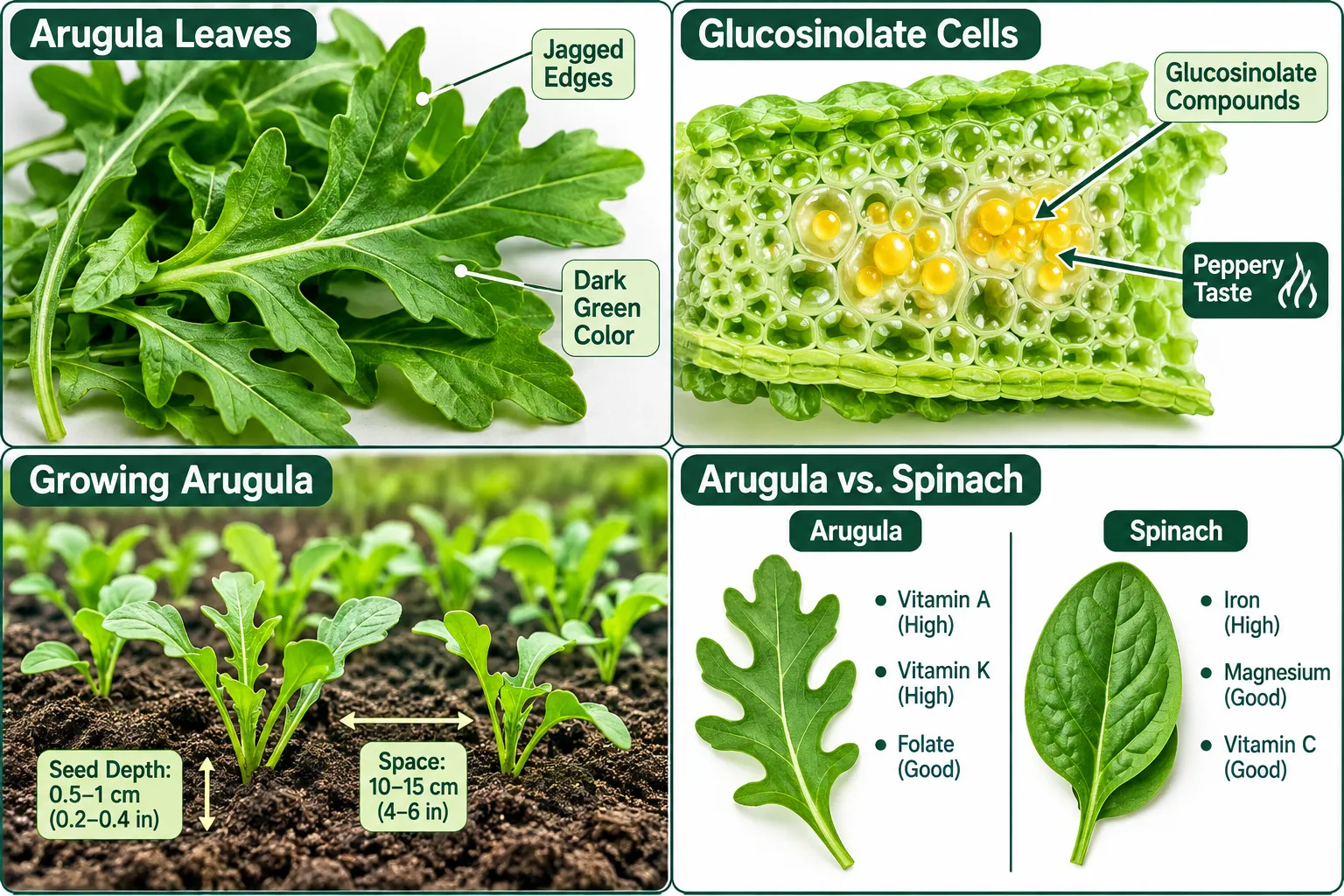
Arugula’s distinctive heat comes from glucosinolates, sulfur-containing compounds produced naturally in the leaves as a defense mechanism against insects. When the leaf tissue is chewed or cut, an enzyme called myrosinase converts these glucosinolates into isothiocyanates, which are the same chemical family responsible for the heat in mustard, wasabi, and horseradish.
The intensity of that peppery flavor varies based on:
- Plant age, younger leaves are milder; mature leaves are sharper
- Growing temperature, heat stress concentrates glucosinolates, making the leaves more pungent
- Water stress, drought conditions amplify bitterness
- Variety, wild rocket is markedly more intense than standard cultivated arugula
This is also why micro arugula, harvested young in controlled indoor environments, tends to have a bright, clean heat rather than an overwhelming bitterness.
Why Did My Arugula Get Bitter?
Arugula turns bitter primarily because of heat. When temperatures climb above roughly 75°F (24°C), the plant bolts, it sends up a flower stalk and shifts its energy from leaf production to seed production. During this process, glucosinolate concentrations spike in the remaining leaves, producing a sharp, unpleasant bitterness that is distinct from the pleasant pepper of young arugula.
Common causes of bitter arugula:
- Planted too late in spring or too early in summer
- Left in the ground after flowering begins
- Harvested from plants that have already flowered
- Stored too long (older leaves oxidize and taste harsher)
The fix: plant arugula in early spring or late summer for a fall harvest, and pick leaves before the plant bolts. If leaves are already bitter, blanching briefly in boiling water or combining them with sweet or acidic ingredients (honey, citrus, roasted beets) balances the flavor.
Arugula vs. Spinach: Which Is Healthier?
Both are nutritious, but they excel in different areas. Arugula is significantly lower in calories and delivers more vitamin C and beta-carotene per 100 grams, while spinach provides more iron, calcium, and folate per serving.
Direct comparison per 100 grams (raw):
| Nutrient | Arugula | Spinach |
|---|---|---|
| Calories | ~19 kcal | ~23 kcal |
| Protein | 3.3 g | 2.9 g |
| Vitamin C | 55.5 mg | 28 mg |
| Beta-carotene | 2,550 mcg | 5,626 mcg |
| Iron | 1.5 mg | 2.7 mg |
| Folate | 119 mcg | 194 mcg |
The practical answer: choose arugula when you want a peppery flavor boost and high vitamin C; choose spinach when you need more iron or folate. Many cooks blend both for nutritional balance and flavor complexity. For recipe ideas that use leafy greens as a base, the Stir Fry Recipes collection offers several solid applications.
Health Benefits of Arugula
Arugula is a nutrient-dense food that provides meaningful amounts of vitamins, minerals, and antioxidants for very few calories. A 100-gram serving contains approximately 19 kilocalories, 3.3 grams of protein, 55.5 milligrams of vitamin C, 119 micrograms of folate, and 2,550 micrograms of beta-carotene.
Established nutritional benefits:
- Vitamin K, arugula is a strong source, important for bone health and blood clotting
- Vitamin C, supports immune function and collagen synthesis
- Folate, critical for cell division; particularly important during pregnancy
- Beta-carotene, a precursor to vitamin A; supports eye health
- Glucosinolates, the compounds behind the peppery taste also carry antioxidant properties and are studied for their potential role in cellular protection
For those building plant-forward meals, the 72 Vegan Cookbook is a useful reference for integrating high-nutrient greens like arugula into everyday cooking.
Can You Eat Arugula Raw or Should You Cook It?
Arugula can and often should be eaten raw. Its peppery bite adds character to salads, flatbreads, grain bowls, and sandwiches without any preparation beyond washing. Raw arugula preserves the full complement of heat-sensitive nutrients, particularly vitamin C.
Cooking arugula is also a legitimate option, especially when the flavor needs to be softened. Brief wilting in a hot pan, stirring into warm pasta, or laying leaves on a hot pizza right after it comes out of the oven are the most effective approaches.
Choose raw when:
- Using as a salad base or garnish
- Topping a finished pizza or pasta dish
- Preserving maximum vitamin C content
Choose cooked when:
- Mature leaves are too pungent raw
- Incorporating into soups, egg dishes, or sautés
- Pairing with rich proteins where a milder green texture is preferred
Does cooking destroy nutrients? Some, yes. Heat degrades vitamin C significantly, and brief wilting reduces water-soluble B vitamins. However, fat-soluble antioxidants like beta-carotene become slightly more bioavailable with light heat and a small amount of olive oil.
How to Grow Arugula at Home
Arugula is one of the easiest leafy greens to grow at home and one of the fastest to mature. Seeds typically germinate in 5 to 7 days and reach harvest size in 30 to 40 days.
Step-by-step growing guide:
- Choose timing, sow seeds 4 to 6 weeks before the last frost in spring, or 6 to 8 weeks before the first frost in fall. Avoid planting during peak summer heat.
- Select a container or bed, arugula grows well in raised beds, containers at least 6 inches deep, or directly in garden soil. It prefers moderately fertile soil (Ellenberg nutrient value 6 on a 1-9 scale, indicating moderate fertility).
- Sow seeds, scatter seeds thinly, about 1/4 inch deep, and cover lightly with soil. No need to soak seeds in advance.
- Water consistently, keep soil evenly moist but not waterlogged. Inconsistent watering speeds bolting.
- Thin seedlings, once seedlings reach 2 inches, thin to about 6 inches apart to allow airflow and prevent disease.
- Harvest outer leaves, begin harvesting the outer leaves at 3 to 4 inches in length, leaving the growing center intact for continued production. This extends the harvest window by several weeks.
- Watch for bolting, if a central flower stalk appears, harvest everything immediately or the remaining leaves will become intensely bitter.
Arugula grows well indoors under grow lights during winter months, making it a practical year-round herb garden addition.
Where to Buy Fresh Arugula and How Much Does It Cost?
Fresh arugula is widely available at grocery stores, farmers’ markets, and specialty food retailers. Standard baby arugula typically retails for $2.50 to $4.00 for a 5-ounce clamshell at most supermarkets in the United States, though prices vary by region and season.
For premium options, indoor-grown micro arugula is now available nationally at Whole Foods Market at a suggested retail price of $4.99 for a 2-ounce package, following AeroFarms’ expansion of its microgreens line into more than 2,000 retail locations including Costco and Harris Teeter.
Where to find it:
- Supermarkets (produce section, often pre-bagged)
- Farmers’ markets (loose, often cheaper and fresher in spring and fall)
- Specialty and natural food stores (organic and PGI-certified options)
- Online delivery grocers (convenient but check arrival freshness)
In Germany and parts of Europe, fresh arugula is available nearly year-round through international supplier networks, with domestic seasons typically beginning in early May.
How Long Does Arugula Last in the Fridge?
Fresh arugula keeps for 3 to 5 days in the refrigerator under proper storage conditions. The main enemies are moisture, ethylene gas from other produce, and poor airflow.
Best storage method:
- Do not wash arugula until just before use, moisture accelerates rot
- Wrap loosely in a dry paper towel to absorb any humidity
- Place in a resealable bag or airtight container with a little air inside
- Store in the crisper drawer, away from apples and bananas (which emit ethylene)
Pre-washed, bagged arugula from the store generally lasts only 2 to 3 days once opened. Unwashed loose arugula from a farmers’ market can last up to 5 days if kept dry and cold. If leaves begin to wilt but have no slime or off-odor, they’re still safe to use in cooked preparations.
What Can You Substitute for Arugula in a Recipe?
The best substitute depends on whether you need to match arugula’s peppery bite, its soft texture, or both.
| Substitute | Best when… |
|---|---|
| Watercress | You need the same sharp, peppery flavor |
| Baby spinach | You want a mild green with similar texture |
| Mizuna | You want peppery flavor with a feathery texture |
| Radicchio (blended) | You want bitterness in a salad mix |
| Mustard greens | You want heat in a cooked application |
For pizza and pasta, watercress or baby spinach are the most practical swaps. For salads, mizuna comes closest to arugula’s overall character. The Skillet Recipes section includes several preparations where these substitutions translate well.
Is Arugula Safe for Dogs?
No, arugula is not recommended for dogs. While a small accidental nibble is unlikely to cause serious harm, arugula belongs to the Brassicaceae family and contains glucosinolates and isothiocyanates that can cause gastrointestinal irritation in dogs, including gas, bloating, and stomach upset. Larger amounts may disrupt thyroid function over time.
The straightforward rule: keep arugula and other members of the mustard family away from dogs. If a dog consumes a significant amount and shows signs of distress, contact a veterinarian.
Food Safety: What to Know Before Eating Arugula
Arugula, like all leafy greens, carries a risk of contamination when grown in open fields. In October 2026, a Salmonella Napoli outbreak in Sweden involving 16 reported cases was suspected to be linked to arugula imported from Italy, underscoring the food safety risks associated with pre-cut or field-grown leafy vegetables.
Following separate Cyclospora-related recalls affecting field-grown leafy greens in the United States during summer 2026, demand for greenhouse-grown and indoor-farmed arugula increased measurably, with some growers reporting sell-out conditions on products like their “Zesty Arugula” line.
Practical food safety steps:
- Wash arugula thoroughly under cold running water even if labeled “pre-washed”
- Buy greenhouse-grown or indoor-farmed varieties when available during active outbreak periods
- Check for active recalls at the FDA’s website before purchasing
- Do not eat arugula past its use-by date, especially if it smells off or has slimy patches
For those who enjoy pairing arugula with proteins on the grill, reviewing safe handling practices is worth the time, the Grilling Sausage guide covers cross-contamination basics that apply broadly.
Arugula Recipe: Classic Italian Arugula Salad with Lemon and Parmesan
Recipe Subtitle
A refined, three-ingredient Italian salad that lets fresh arugula’s peppery character stand at the center.
Recipe Description
This classic Italian preparation pairs fresh arugula with shaved Parmesan and a sharp lemon-olive oil dressing. It requires no cooking, comes together in under ten minutes, and serves as a first course, a side salad, or a topping for grilled proteins and steak preparations. The simplicity of the recipe depends entirely on the quality of the ingredients.
Recipe Keywords
Arugula salad, Italian arugula recipe, rocket salad, lemon Parmesan arugula, easy arugula recipe, fresh arugula dish, Mediterranean salad
Difficulty Level
Easy
Preparation Time
10 minutes
Cooking Time
0 minutes
Rest Time
5 minutes
Cooking Temperature (Fahrenheit)
No heat required, 70°F room temperature assembly
Calories
Approximately 180 calories per serving
Best Season
Spring and Fall
Cooking Methods
- Tossing
- Dressing emulsification
- Shaving (Parmesan)
- Hand-tearing (optional for large leaves)
Cuisines Suggestions
- Italian
- Mediterranean
- Modern American
Recipe Badges
- Gluten-Free
- Vegetarian
- Low-Calorie
Recipe Keys
- Use the freshest, youngest arugula leaves available, flavor and texture depend on it
- Dress the salad immediately before serving; arugula wilts quickly once dressed
- Shave Parmesan with a vegetable peeler for thin, elegant flakes rather than grated powder
Ingredients
- 4 cups (about 80 g) fresh baby arugula, washed and dried
- 1.5 oz (42 g) Parmigiano-Reggiano, shaved with a peeler
- 2 tablespoons extra-virgin olive oil
- 1 tablespoon fresh lemon juice
- 1/2 teaspoon lemon zest
- 1/4 teaspoon flaky sea salt
- Freshly cracked black pepper to taste
- Optional: 1 teaspoon Dijon mustard (for a sharper dressing)
Instructions
- Wash arugula leaves under cold running water and spin completely dry in a salad spinner. Any water left on the leaves will dilute the dressing.
- In a small bowl, whisk together olive oil, lemon juice, lemon zest, and sea salt until emulsified. Add Dijon mustard if using and whisk again.
- Place dry arugula in a wide salad bowl. Drizzle the dressing over the leaves just before serving, not before.
- Toss gently with clean hands or salad tongs, coating leaves evenly without crushing them.
- Transfer to a serving platter or individual plates.
- Lay shaved Parmesan over the top in an even, overlapping layer.
- Finish with freshly cracked black pepper. Serve immediately.
Equipment
- Salad spinner
- Small mixing bowl
- Whisk
- Vegetable peeler (for Parmesan)
- Wide salad bowl or serving platter
Nutrition
| Nutrient | Per Serving (approx.) |
|---|---|
| Calories | 180 kcal |
| Protein | 7 g |
| Total Fat | 15 g |
| Carbohydrates | 4 g |
| Fiber | 1 g |
| Sodium | 310 mg |
Notes
- Dress at the last moment. Arugula loses structural integrity within minutes of contact with an acid-based dressing. Have the dressing ready but toss only when guests are seated.
- Temperature matters. Arugula at refrigerator temperature tastes more bitter. Allow it to sit at room temperature for 5 minutes before dressing for a rounder, more balanced flavor.
- Scaling up. For larger groups, multiply all ingredients proportionally but keep the dressing slightly under-proportioned, it’s easier to add more than to rescue overdressed greens.
FAQs
Can this salad be made ahead of time? No. This salad must be dressed and served immediately. Prepared components (washed arugula, made dressing, shaved Parmesan) can be stored separately for up to 24 hours, but assembling even 20 minutes early results in wilted, soggy leaves.
Can I add protein to make it a main course? Yes. Sliced grilled chicken, seared steak, or sautéed shrimp all pair well with this base. Add the protein on top after dressing the greens, and reduce or eliminate the Parmesan if the protein is already salty.
Conclusion
Arugula is one of the most versatile and nutritionally efficient ingredients a home cook can keep on hand. It grows quickly at home, stores reasonably well for a delicate green, and delivers substantial flavor for minimal caloric cost. Understanding why it turns bitter (heat and bolting), when to eat it raw versus cooked, and how to store it properly eliminates the most common frustrations people encounter with this ingredient.
The practical next steps are straightforward: buy a fresh bunch or clamshell this week and try the salad recipe above as a starting point. If space allows, plant a row of seeds in a container on a windowsill or patio, arugula is genuinely one of the most rewarding quick-growing crops for beginners. For cooks who want to expand further into vegetable-forward cooking, the 220 Eggplant Cookbook and Stir Fry Recipes are strong next references for building skill with fresh produce at the center of the plate.