Last updated: August 23, 2026
Quick Answer
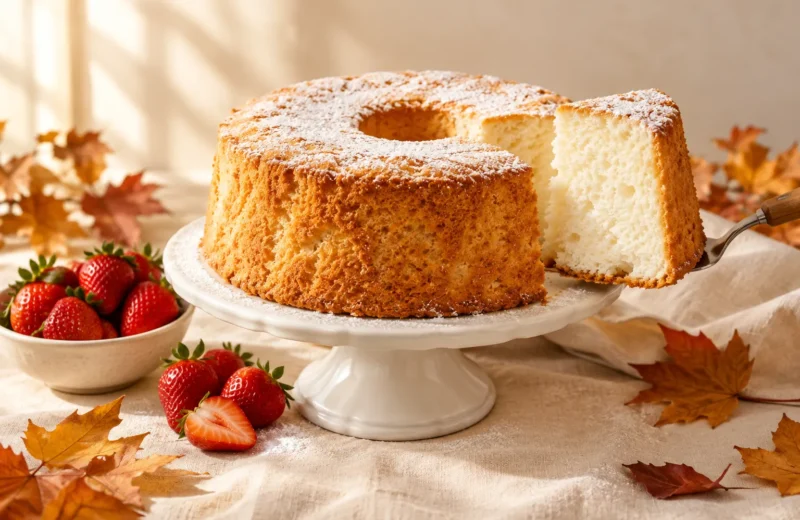
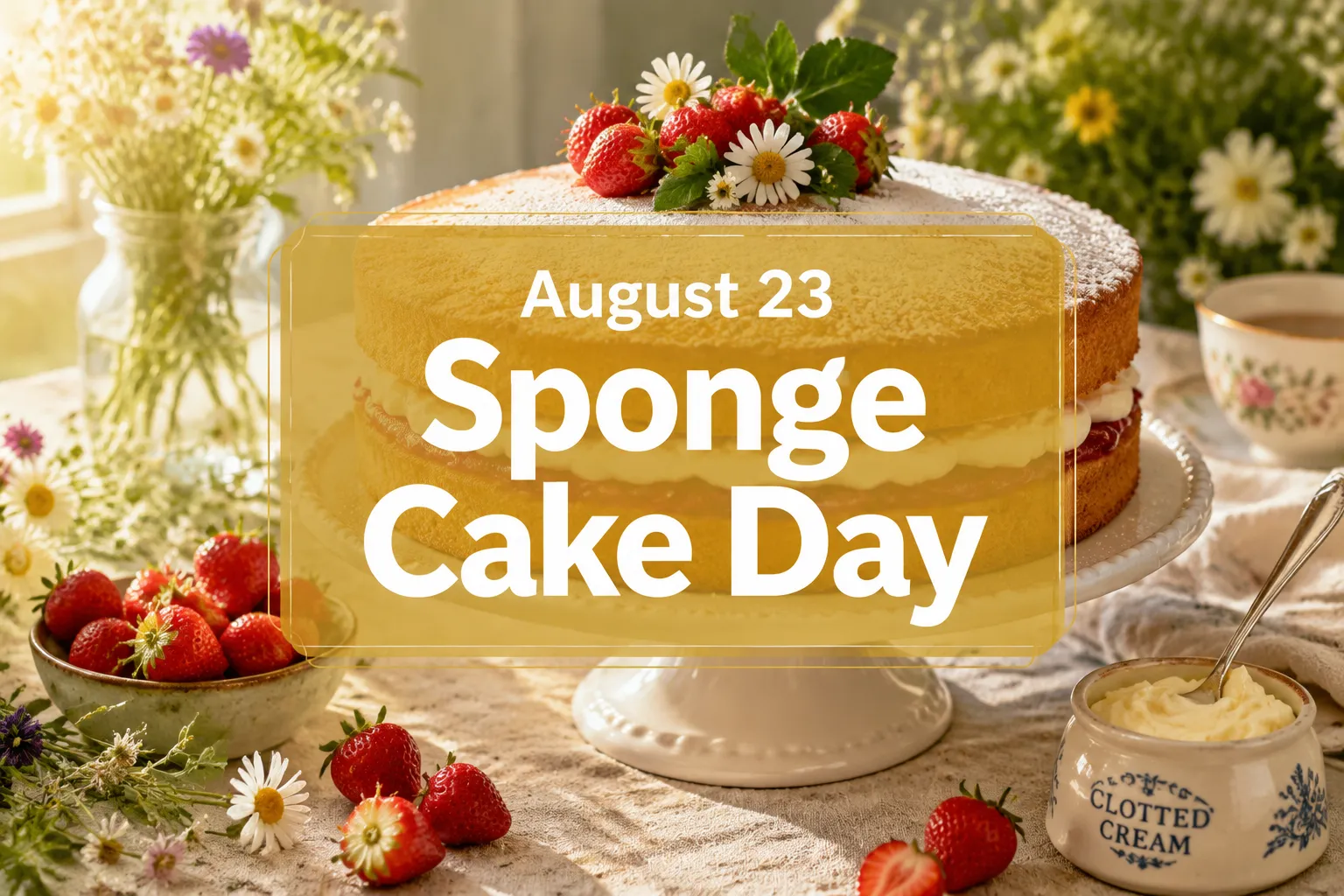
August 23 Sponge Cake Day, officially known as National Sponge Cake Day, is an annual unofficial food holiday observed in the United States on August 23 every year. It celebrates one of the oldest styles of non-yeasted cake, leavened primarily by whipped eggs rather than baking powder or yeast. In 2026, the day falls on a Sunday, making it a perfect occasion to bake, share, or simply enjoy a classic sponge cake. [1][5]
Key Takeaways
- National Sponge Cake Day is observed every year on August 23, a fixed date that does not shift with the day of the week.
- It is an unofficial food holiday with no government legislation or industry regulation behind it; it originated in American food-holiday culture. [2][8]
- Sponge cake is one of the oldest non-yeasted cakes, with documented recipes dating to at least 1615 in England. [8]
- The cake gets its light, airy texture from beaten eggs, not chemical leaveners or yeast.
- August 23 also hosts National Cuban Sandwich Day and National Buttered Corn Day, making it a busy date on the food-holiday calendar. [4][7]
- Celebrations can be as simple as baking a classic Victoria sponge at home or visiting a local bakery for a slice.
- Local bakeries and food brands sometimes run promotions and deals around the day, especially on social media.
- Sponge cake serves as the base for many beloved desserts, including Swiss rolls, trifles, and tiramisu.
- The cake has strong roots in British baking tradition but is enjoyed across Europe, Asia, and the Americas. [3][9]
- Proper storage keeps an unfilled sponge fresh for up to two days at room temperature.
What Is Sponge Cake Day on August 23?
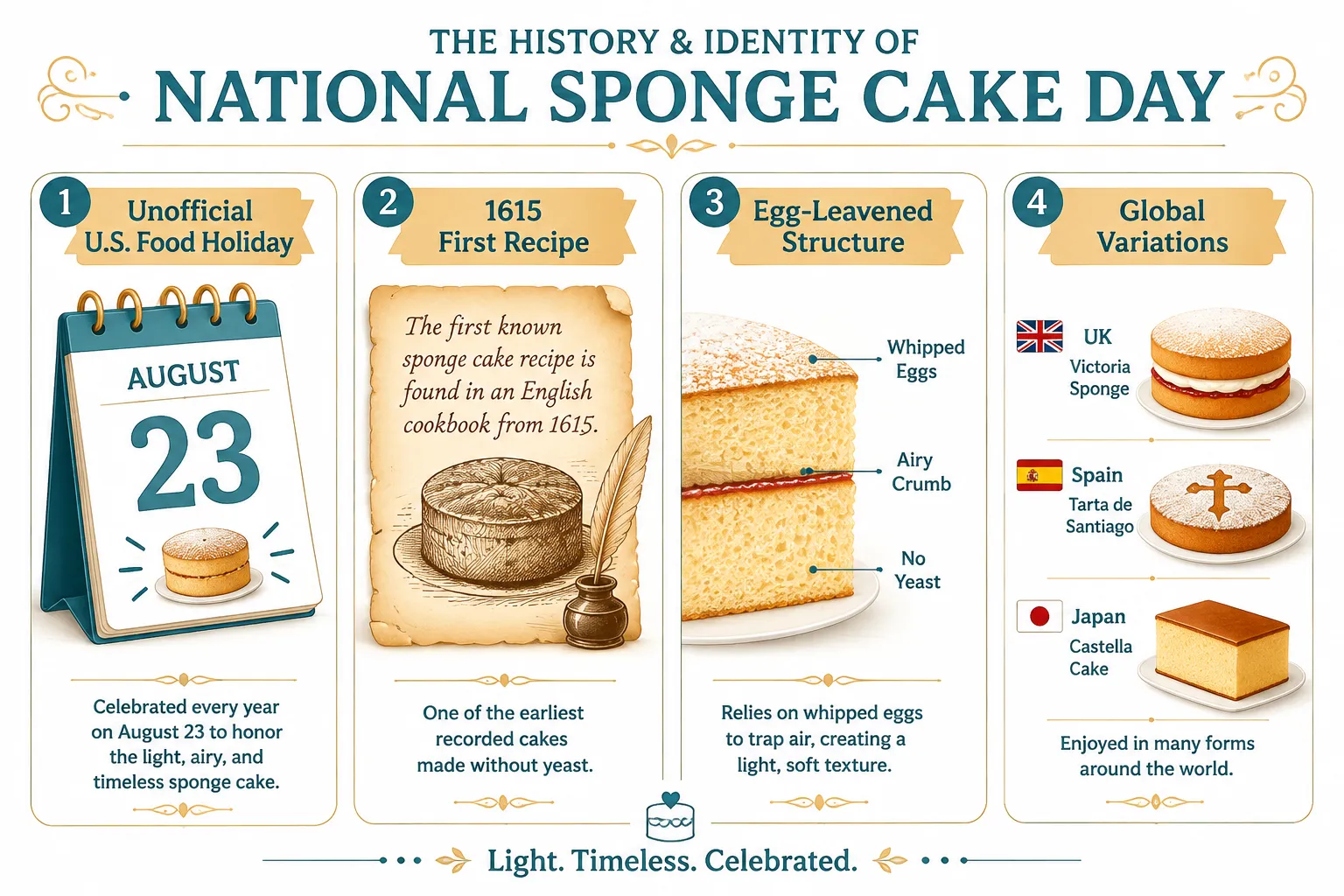
National Sponge Cake Day on August 23 is an annual food observance that encourages people to bake, buy, or eat sponge cake. It is listed on major holiday calendars as an unofficial celebration with no formal sponsor or governing body. [1][2]
The day sits within a broader tradition of American food holidays that assign a specific calendar date to a beloved ingredient, dish, or cooking style. August 23 Sponge Cake Day focuses on the egg-leavened cake style rather than any single recipe, so everything from a simple Victoria sponge to a Japanese castella qualifies as a proper way to mark the occasion. [8][9]
Who is it for? Anyone who enjoys baking or desserts. It is equally relevant for home bakers trying a recipe for the first time, professional pastry chefs showcasing a signature creation, and food brands looking for a timely content hook.
Is Sponge Cake Day Actually a Real Holiday?
August 23 Sponge Cake Day is a real observance in the sense that it appears consistently on food-holiday calendars and is widely acknowledged, but it carries no legal or official status. Major holiday encyclopedias classify it as an unofficial food holiday observed in the United States. [2][5]
No act of Congress, presidential proclamation, or industry body created it. Like many food holidays, it likely grew organically through food media, recipe blogs, and social sharing. The lack of a formal origin story is common for this category of observance.
“National Sponge Cake Day is treated as a fixed-date annual observance, listed for August 23 in every year from 2026 through 2030 on major holiday planning sites.” [1][5]
Bottom line: It is real enough to celebrate, share on social media, and use as a baking prompt, but it carries no civic or commercial obligations.
Where Did Sponge Cake Day Originate? History and Traditions
The precise origin of National Sponge Cake Day as a named holiday is unknown, which is typical of American food holidays. What is well-documented, however, is the long history of sponge cake itself. [8]
Sponge cake has roots going back centuries in European baking:
- 1615: English writer Gervase Markham recorded one of the earliest known sponge cake recipes, relying on beaten eggs for lift rather than yeast. [8]
- 17th century onward: The cake spread across Europe, appearing in Spanish, French, and British cookbooks under various names.
- Victorian era: The Victoria sponge, named after Queen Victoria, became the defining version in British baking culture. [3]
- 20th century: Versions like the Japanese castella and the American chiffon cake expanded the sponge family globally. [9]
The named “National Sponge Cake Day” is attributed to American food-holiday culture, even though the cake itself is often described as quintessentially English. [8][9] The day has no known single founder, corporate sponsor, or originating event, but it has appeared consistently on U.S. food-holiday calendars for many years.
For fans of other food observances, this mirrors how days like National Banana Bread Day developed: through community enthusiasm rather than formal declaration.
What Makes a Good Sponge Cake?
A good sponge cake is light, even-textured, and springy to the touch, with a pale golden crust and a fine, moist crumb. The key distinguishing feature is that its rise comes entirely from air beaten into eggs, not from baking powder or yeast. [8]
Core characteristics of a quality sponge cake:
| Feature | What to Look For |
|---|---|
| Texture | Fine, even crumb with no large air pockets |
| Color | Pale to golden, not dark brown on top |
| Spring | Bounces back when pressed lightly |
| Moisture | Moist but not dense or gummy |
| Flavor | Clean egg-and-vanilla base, not eggy or flat |
Key factors that determine quality:
- Egg volume: Beating eggs and sugar together until the mixture is pale and thick (the “ribbon stage”) is the single most important step.
- Folding technique: Flour must be folded in gently to preserve the air already beaten in. Overmixing deflates the batter.
- Oven temperature: A moderate oven (around 170-180°C / 340-355°F) bakes the cake evenly without collapsing the structure.
- Pan preparation: Greased and lined tins prevent sticking and allow even rise.
- Cooling: Cooling in the tin for a few minutes before turning out prevents the cake from sinking.
How to Make Sponge Cake for Sponge Cake Day: Best Recipes
The classic sponge cake recipe uses equal weights of eggs, sugar, butter, and flour, though some versions omit butter entirely for a lighter result. The method matters more than the ingredient list.
Classic Victoria Sponge (Serves 8-10)
Ingredients:
- 4 large eggs
- 200g (7 oz) caster sugar
- 200g (7 oz) self-raising flour, sifted
- 200g (7 oz) unsalted butter, softened
- 1 tsp vanilla extract
- Pinch of salt
Steps:
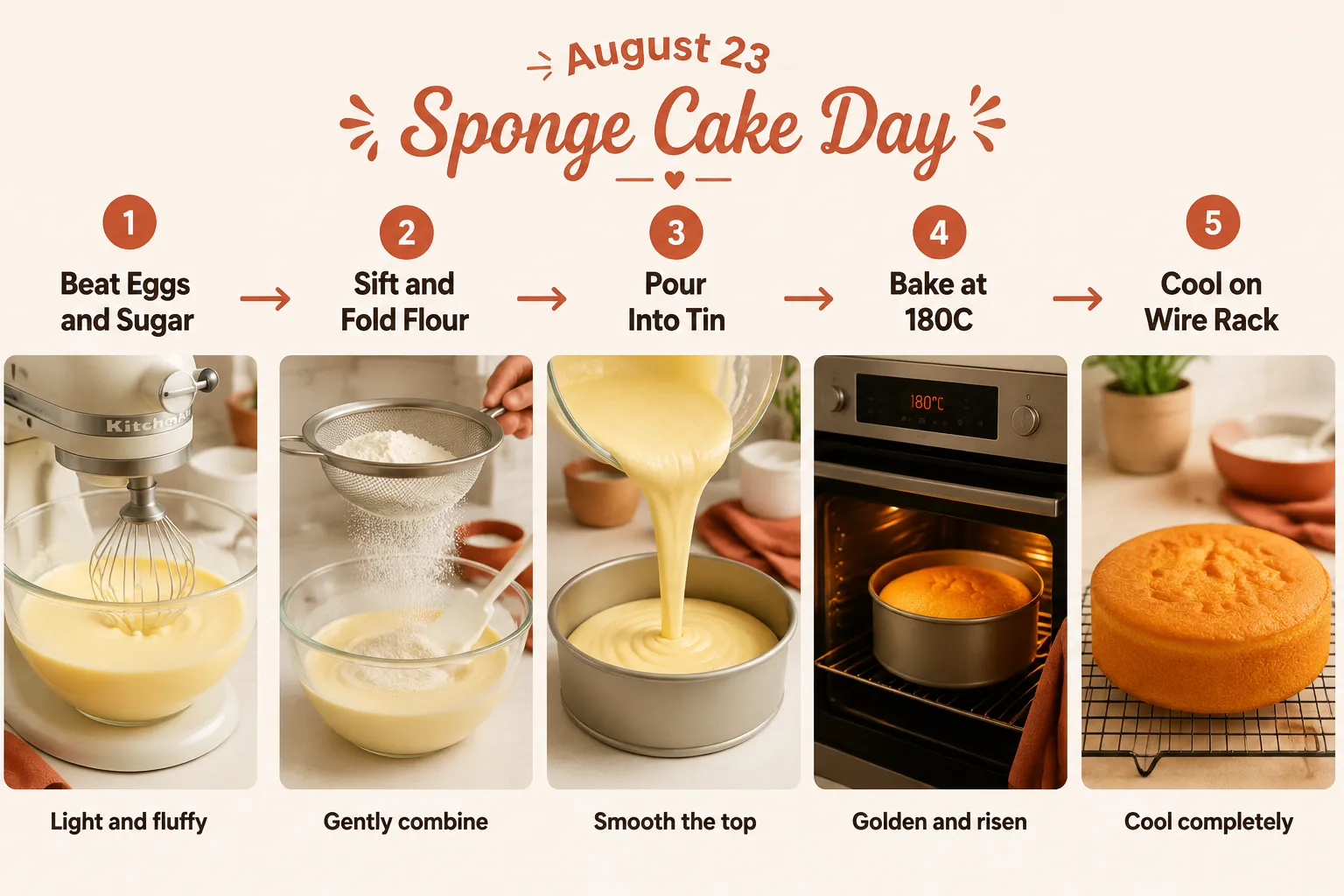
- Preheat the oven to 180°C (350°F). Grease and line two 20cm round cake tins.
- Beat butter and sugar together until pale and fluffy, about 4-5 minutes.
- Add eggs one at a time, beating well after each addition. Add vanilla.
- Sift flour over the mixture and fold in gently with a large metal spoon until just combined.
- Divide batter evenly between the tins and smooth the tops.
- Bake for 20-25 minutes until golden and a skewer comes out clean.
- Cool in tins for 5 minutes, then turn out onto a wire rack.
- Fill with jam and whipped cream once fully cool.
Genoise Sponge (Flourless-style, lighter)
A Genoise uses whole eggs beaten with sugar over gentle heat before folding in flour and melted butter. It produces a denser, moister crumb suited to soaking with syrup, making it ideal for trifles and layered cakes.
For more baking from scratch inspiration beyond sponge cake, there are plenty of recipes worth exploring.
Sponge Cake vs Other Cake Types: Key Differences
Sponge cake is one of several major cake categories, and understanding the differences helps bakers choose the right base for any dessert. [8]
| Cake Type | Leavening | Fat Content | Texture | Best Used For |
|---|---|---|---|---|
| Sponge | Beaten eggs | Low to none | Light, airy | Layered cakes, rolls, trifles |
| Butter cake | Baking powder | High (butter) | Dense, rich | Birthday cakes, loaf cakes |
| Chiffon | Baking powder + eggs | Oil-based | Moist, tender | Standalone slices |
| Angel food | Beaten egg whites | None | Very light | Low-fat desserts |
| Pound cake | Baking powder | Very high | Dense, heavy | Tea cakes, loaf slices |
Choose sponge cake if you need a versatile, light base that absorbs flavors well and pairs with fruit, cream, or custard. Choose a butter cake if you want a richer, more forgiving texture that holds up to heavy frosting.
Sponge cake also pairs beautifully with seasonal fruit. For ideas, see strawberry recipes and peach desserts that work perfectly as sponge cake fillings and toppings in August.
Common Mistakes When Baking Sponge Cake
Most sponge cake failures trace back to one of four errors: under-beating eggs, over-mixing flour, incorrect oven temperature, or opening the oven door too early. [8]
The most common mistakes and how to fix them:
- Flat cake: Eggs were not beaten long enough, or flour was stirred rather than folded. Solution: beat eggs and sugar until the mixture leaves a ribbon trail, and fold flour with a figure-eight motion.
- Sunken center: Oven was too hot, or the door was opened before the cake set. Solution: keep the oven at a steady moderate temperature and resist opening the door for the first 15 minutes.
- Rubbery texture: Too much mixing after adding flour develops gluten. Solution: fold until the flour just disappears, then stop.
- Sticking to the tin: Pan was not properly greased and lined. Solution: always use parchment paper on the base.
- Dense crumb: Butter or milk was added cold, causing the batter to curdle. Solution: use room-temperature ingredients.
Edge case: High-altitude baking (above 3,500 feet) reduces air pressure, causing sponge cakes to rise too fast and collapse. Reduce sugar slightly and increase flour by one tablespoon per cup to compensate.
How to Celebrate August 23 Sponge Cake Day
Celebrating August 23 Sponge Cake Day does not require elaborate planning. The most common approaches range from home baking to supporting local bakeries.
Practical ways to mark the day:
- Bake a classic sponge using the Victoria sponge recipe above, then share it with family, neighbors, or colleagues.
- Try a new variation: Attempt a Swiss roll, a Genoise layered with pastry cream, or a Japanese castella for something different.
- Visit a local bakery and ask if they are offering any August 23 specials or sponge cake features.
- Host a tea party: Sponge cake and tea is a classic pairing. Invite friends for an afternoon tea centered on the occasion. [10]
- Share on social media using hashtags like #NationalSpongeCakeDay or #SpongeCakeDay to join the broader conversation.
- Teach a beginner: Use the day as an excuse to show a child, partner, or friend how to bake their first sponge cake.
If you enjoy food-holiday baking, the baking tag is a useful resource for recipes tied to other calendar occasions throughout the year.
Sponge Cake Day Deals and Discounts: What to Expect
Dedicated national-chain deals specifically for August 23 Sponge Cake Day are rare, but local bakeries, cafes, and grocery stores sometimes offer promotions tied to the occasion. [7]
Where to look for deals:
- Local bakeries: Many independent bakeries use food holidays as a marketing hook. Check their social media pages in the days leading up to August 23.
- Grocery store bakery sections: Some supermarkets discount sponge cakes or run buy-one-get-one offers on baking ingredients around food holidays.
- Online recipe platforms and food blogs: These often publish free recipes, printable guides, or discount codes for baking supplies on food holidays.
- Subscription boxes: Baking subscription services occasionally feature sponge cake kits timed to August 23.
For broader food-holiday deal hunting, checking restaurant deals and free food deals pages around August 23 can surface relevant local offers.
Common mistake: Searching for deals on the day itself is often too late. Check bakery social media accounts and email newsletters a few days before August 23 for the best offers.
How to Store Sponge Cake After Baking
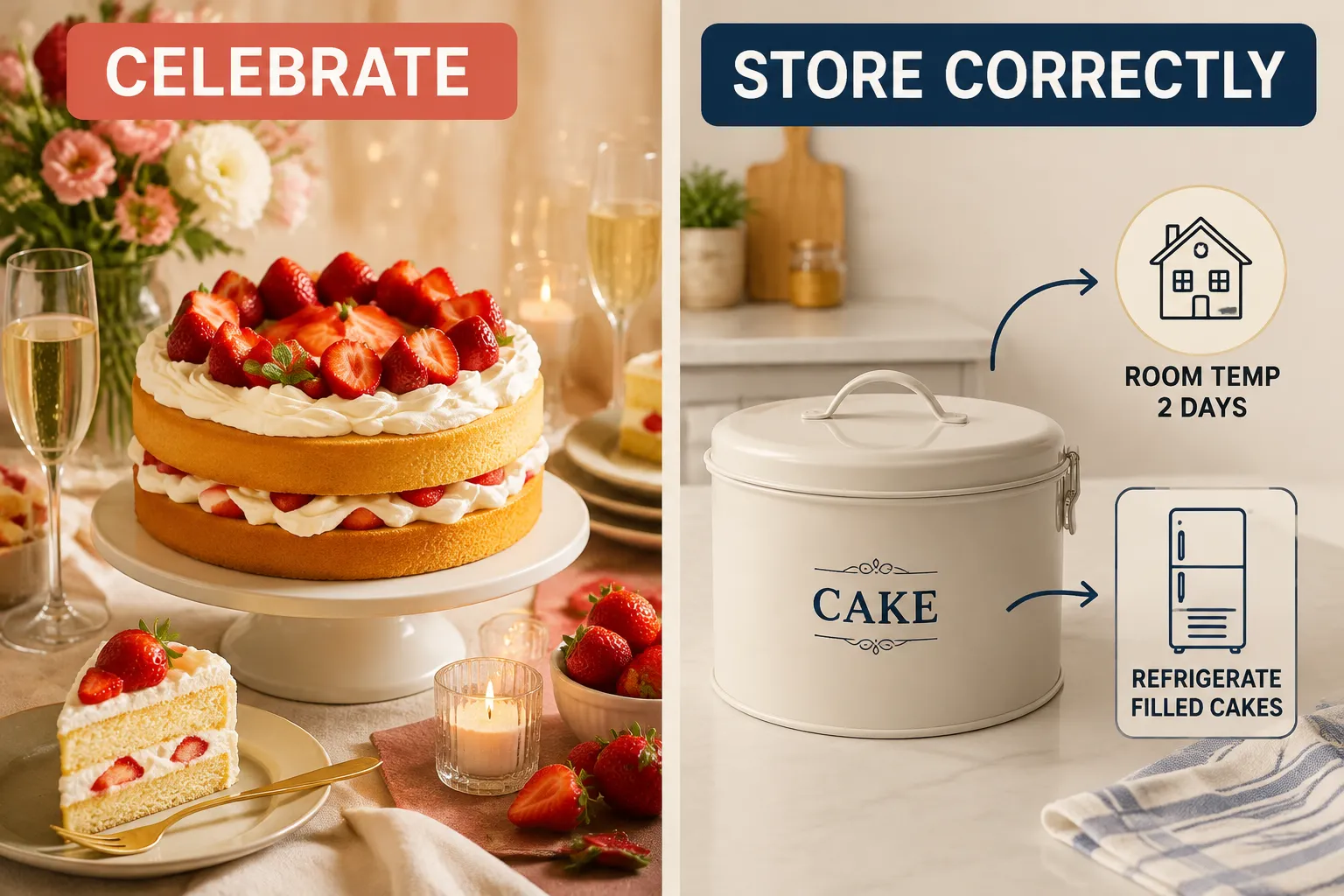
An unfilled sponge cake can be stored at room temperature for up to two days, wrapped tightly in plastic wrap or placed in an airtight container. Refrigeration is recommended once the cake is filled with cream or fresh fruit.
Storage guidelines by filling type:
- Plain sponge (no filling): Wrap in plastic wrap and store at room temperature for 1-2 days, or freeze for up to 3 months.
- Jam-filled sponge: Room temperature in an airtight tin for up to 2 days.
- Cream-filled sponge: Refrigerate and consume within 2 days. Bring to room temperature for 20 minutes before serving for best texture.
- Fresh fruit-topped sponge: Refrigerate and consume the same day or the next day, as fruit releases moisture that softens the crumb.
Freezing tip: Freeze sponge layers unfilled and undecorated. Wrap each layer individually in plastic wrap, then foil. Thaw at room temperature for 2-3 hours before filling and serving.
For guidance on storing other baked goods, the advice on how to store pecans illustrates general principles about airtight containers and temperature control that apply broadly to baked items.
FAQ
What day is National Sponge Cake Day? National Sponge Cake Day is observed every year on August 23. In 2026, it falls on a Sunday. [1][5]
Is National Sponge Cake Day an official U.S. holiday? No. It is an unofficial food holiday with no government legislation or formal sponsorship. It is observed informally through baking, social media, and bakery promotions. [2][8]
What is the difference between a sponge cake and a regular cake? A sponge cake is leavened by beaten eggs rather than baking powder or yeast, giving it a lighter, airier texture than most butter or pound cakes.
Can sponge cake be made without butter? Yes. A classic Genoise or angel food cake uses little or no butter. The structure comes entirely from whipped eggs, resulting in an even lighter texture.
What are the most popular sponge cake variations? The Victoria sponge (UK), Genoise (France/Italy), Castella (Japan/Portugal), and Biscuit de Savoie (France) are among the most widely made sponge cake styles globally. [9]
Why does my sponge cake sink in the middle? The most common causes are opening the oven door too early, an oven temperature that is too high, or underbaking. Always check the cake is fully set before removing it from the oven.
How long does a sponge cake last? An unfilled sponge keeps for 1-2 days at room temperature. A cream-filled sponge should be refrigerated and consumed within 2 days.
What other food holidays share August 23? August 23 also hosts National Cuban Sandwich Day and National Buttered Corn Day in the United States. [4][7]
Can sponge cake be frozen? Yes. Freeze unfilled, undecorated sponge layers wrapped tightly in plastic wrap and foil for up to 3 months.
What is the best filling for a sponge cake? Whipped cream and strawberry jam is the classic British pairing. Lemon curd, pastry cream, fresh berries, and mascarpone are also popular choices.
Is sponge cake the same as angel food cake? No. Angel food cake uses only egg whites and no fat, making it even lighter. A standard sponge uses whole eggs and sometimes butter.
When did sponge cake first appear in recipes? One of the earliest documented sponge cake recipes appears in Gervase Markham’s 1615 English cookbook, making it one of the oldest non-yeasted cake styles on record. [8]
Conclusion
August 23 Sponge Cake Day is a straightforward, enjoyable food holiday that gives bakers and dessert lovers a clear reason to spend time in the kitchen or visit a favorite bakery. The day celebrates a cake style with genuine historical depth, dating back over four centuries, and one that remains a foundation of modern pastry across multiple cultures.
Actionable next steps for 2026:
- Pick a recipe now. Choose between a classic Victoria sponge, a lighter Genoise, or a Japanese castella depending on your skill level and available equipment.
- Source ingredients in advance. Good-quality eggs and caster sugar are the two non-negotiables. Buy them a day or two before August 23.
- Check local bakeries. Search social media for any August 23 promotions in your area in the week before the holiday.
- Share the results. Post a photo with #NationalSpongeCakeDay on August 23 to connect with other bakers marking the occasion.
- Explore variations. Once comfortable with the basic sponge, try adding seasonal fillings like fresh peaches or strawberries to make the cake your own.
Whether the goal is a first attempt at home baking or a refined layered showpiece, August 23 Sponge Cake Day offers a concrete, low-pressure occasion to practice one of baking’s most fundamental and rewarding techniques.
References
[1] National Sponge Cake Day – https://nationaltoday.com/national-sponge-cake-day/ [2] dayspedia – https://dayspedia.com/us/calendar/holiday/1553/ [3] diffordsguide – https://www.diffordsguide.com/on-this-day/august/23 [4] National Sponge Cake Day – https://www.punchbowl.com/holidays/national-sponge-cake-day [5] National Sponge Cake Day – https://www.holidaycalendar.io/holiday/national-sponge-cake-day [6] Watch – https://www.youtube.com/watch?v=ilm6x30NKOc [7] August Food Holidays Calendar – https://thedeliciouslife.com/august-food-holidays-calendar/ [8] Sponge Cake Day – https://www.cooksinfo.com/sponge-cake-day [9] National Sponge Cake Day August 23 – https://www.journee-mondiale.com/en/day/national-sponge-cake-day-august-23/ [10] facebook – https://www.facebook.com/25anne92/posts/-today-august-23-is-national-sponge-cake-day-sponge-cake-and-tea-is-always-is-yu/1296275841951423/