
Last updated: October 13, 2026
Quick Answer: Eating almonds every day delivers measurable benefits for heart health, blood sugar regulation, gut microbiome diversity, and cognitive function. A standard daily serving of about 23 almonds (roughly one ounce) provides a concentrated dose of healthy fat, fiber, protein, and vitamin E. Most people begin noticing meaningful changes in metabolic markers within four to eight weeks of consistent daily consumption.
Key Takeaways
- A daily one-ounce serving of almonds (about 23 nuts) lowers LDL cholesterol and supports overall cardiometabolic health [1]
- Almonds feed beneficial gut bacteria, improving microbiome diversity and digestive function [2]
- Daily almond snacks are linked to improved executive function and better blood sugar control [4]
- Almonds are one of the richest food sources of vitamin E, an antioxidant that supports skin health and immune function
- People with metabolic syndrome show specific health improvements from a daily almond snack [7]
- Eating almonds does not cause weight gain when they replace less nutritious snack foods
- Oxalate content in almonds can be a concern for people prone to kidney stones
- Raw almonds and dry-roasted almonds offer similar nutrition; heavily processed or salted varieties are less ideal
What Are the Health Benefits of Eating Almonds Daily?
Almonds deliver a broad range of health benefits that span heart health, metabolic function, gut support, and brain performance. A single one-ounce serving contains roughly 6 grams of protein, 14 grams of fat (mostly monounsaturated), 3.5 grams of fiber, and nearly 50% of the daily recommended intake of vitamin E, according to U.S. Department of Agriculture nutrition data. That nutrient density makes almonds one of the most studied nuts in clinical research.
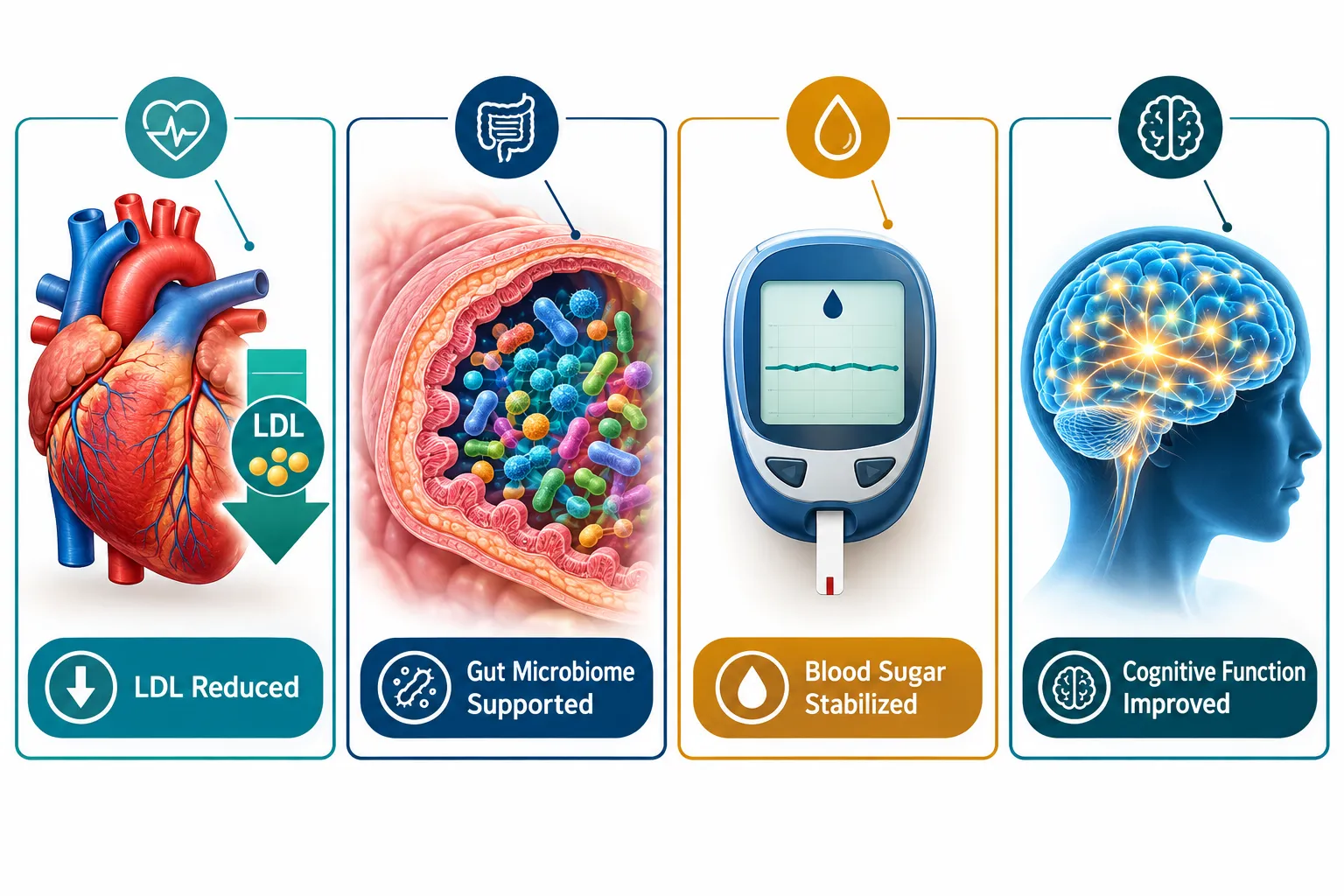
The potential health benefits of eating almonds every day include:
- Heart health: Almonds lower LDL cholesterol and improve overall lipid profiles [1][5]
- Blood sugar control: Daily almond consumption reduces fasting glucose and improves insulin sensitivity [4]
- Gut health: Almonds act as a prebiotic, feeding beneficial bacteria in the gut microbiome [2]
- Cognitive function: A daily almond snack is linked to improved executive function in adults [4]
- Weight management: Almonds support satiety and do not promote weight gain when substituted for processed snacks [8]
- Skin health: High vitamin E content in almonds protects skin cells from oxidative damage
- Bone health: Almonds provide calcium, magnesium, and phosphorus, all of which support bone density
The Linus Pauling Institute at Oregon State University in Corvallis has published extensive research on how micronutrients in almonds, including vitamin E and magnesium, contribute to chronic disease prevention. Researchers such as Maret Traber and Emily Ho have studied how these ingredients interact with metabolic pathways.
What Is Metabolic Syndrome and Why Do Almonds Help?
Metabolic syndrome is a cluster of five conditions, high blood pressure, high blood sugar, excess abdominal fat, low HDL cholesterol, and high triglycerides, that together raise the risk of heart disease and type 2 diabetes. According to the American Heart Association, roughly one in three American adults meets the criteria for metabolic syndrome. Almonds address several of these risk factors simultaneously, which is why researchers and registered dietitians increasingly recommend them as a daily food for people metabolic syndrome affects.
Research published by Oregon State University found that a daily almond snack improves health in people with metabolic syndrome across multiple markers, including blood lipids and body composition [7]. Lead researcher Laura Beaver noted that almonds provided benefits beyond simple caloric substitution. The study, conducted at Oregon State University Skip, demonstrated that the food amp ingredients in almonds work synergistically rather than in isolation.
Key mechanisms through which almonds benefit metabolic syndrome:
- Fat profile: The monounsaturated fat and polyunsaturated fat in almonds reduce cardiovascular inflammation. Fat saturated fat is minimal in almonds compared to other snack foods.
- Fiber: Almond fiber slows glucose absorption, moderating post-meal blood sugar spikes
- Magnesium: Supports insulin receptor sensitivity
- Polyphenols: Concentrated in the almond skin, these compounds reduce oxidative stress
For anyone managing metabolic syndrome, replacing a daily processed snack with almonds is a practical, evidence-backed dietary shift. Diet amp nutrition professionals, including those credentialed as RDN and CDCES, commonly recommend this swap in clinical practice. Lynn Grieger RDN CDCES, a well-known contributor to everyday health nutrition content, has noted that almonds fit naturally into a Mediterranean-style eating pattern that targets metabolic risk. Medically reviewed guidance from dietitians like grieger rdn cdces consistently endorses almonds as a functional food. Reviewed lynn grieger content on everyday health platforms frequently cites almond research. Medically reviewed lynn grieger articles note that daily almond consumption is among the most evidence-supported dietary habits for metabolic health.
Are Almonds Good for Heart Health and Cholesterol?
Yes, almonds are among the best-studied foods for heart health. Multiple clinical trials confirm that daily almond consumption lowers LDL cholesterol, reduces total cholesterol, and improves the LDL-to-HDL ratio without lowering beneficial HDL [1][5].
A landmark study published in the Journal of the American Heart Association found that replacing a typical muffin snack with almonds significantly improved lipid profiles in adults with elevated cardiovascular risk [1]. A follow-up study in the same journal confirmed that almonds reduced LDL particle number, a more precise predictor of heart disease than standard LDL measurement alone [5].
Global experts agree almonds provide benefits for cardiometabolic health, as summarized in a consensus statement from the Almond Board of California [3]. The statement, developed with researchers from multiple countries, concluded that evidence from randomized controlled trials consistently supports almonds as a heart-protective food.
Practical heart health benefits from daily almonds:
- Lowers LDL by an average of 5-10% in controlled studies [1]
- Reduces oxidized LDL, the form most associated with arterial plaque
- Improves endothelial function, the ability of blood vessels to dilate properly
- Provides arginine, an amino acid that supports nitric oxide production and vascular health
Almonds and Digestion: What Happens in Your Gut?
Almonds function as a prebiotic food, meaning their fiber and polyphenol content feeds beneficial bacteria in the gut rather than being absorbed directly. Research published in the European Journal of Nutrition found that daily almond consumption increased populations of Bifidobacterium and Lactobacillus, two of the most health-promoting gut bacteria [2].
The gut health benefits of almonds extend beyond simple fiber intake. Almond skins contain flavonoids and tannins that reach the colon largely intact, where they serve as fuel for the microbiome. A healthy gut microbiome is linked to better immune function, lower systemic inflammation, improved mood, and reduced risk of metabolic disease.
One practical note: some people experience mild bloating when they first add almonds to their daily diet. This is a normal adjustment as the gut microbiome adapts to increased prebiotic fiber. Starting with half a serving (about 12 almonds) for the first week can ease this transition.
Do Almonds Help Lower Blood Sugar Levels?
Almonds help stabilize blood sugar by slowing carbohydrate absorption and improving insulin sensitivity. A study published in Metabolism found that eating almonds before a high-carbohydrate meal significantly reduced the post-meal blood sugar spike compared to eating the meal without almonds [6].
For people at risk of type 2 diabetes, this effect is particularly relevant. The combination of fat, protein, and fiber in almonds creates a slow-digesting food matrix that moderates glycemic response. Research from the Almond Board of California confirms that a daily almond snack is linked to improved blood sugar control over time [4].
The glycemic index of almonds is extremely low, at approximately 0-15, making them one of the most blood-sugar-friendly snack foods available. For people managing type 2 diabetes or pre-diabetes, almonds fit well into a low-glycemic eating pattern.
Snacking on Almonds for Weight Loss: Are Almonds Good for You?
Almonds support weight management rather than weight gain, provided they replace less nutritious foods rather than simply adding calories to an existing diet. Despite being calorie-dense (about 164 calories per ounce), almonds promote satiety through their protein, fat, and fiber content, which reduces overall caloric intake throughout the day [8].

A meta-analysis published in the Journal of Nutrition found that nut consumption, including almonds, was not associated with weight gain and was linked to reduced waist circumference over time [8]. Part of this effect comes from the fact that the cell walls of whole almonds are not fully broken down during digestion, meaning the body absorbs fewer calories from almonds than the nutrition label suggests.
For weight loss specifically:
- Eat almonds as a mid-morning or mid-afternoon snack to reduce hunger before meals
- Pair almonds with fruit or vegetables for a more filling snack
- Avoid flavored or chocolate-covered almonds, which add significant sugar and calories
- A serving of 23 almonds (one ounce) is the standard recommended amount for weight management
Almond butter is another practical option for people who prefer a spread. Two tablespoons of almond butter provide similar nutrition to a one-ounce serving of whole almonds. For more ideas on incorporating nuts and healthy ingredients into festive recipes, see this guide to National Almond Buttercrunch Day.
Almonds vs. Other Nuts: How Do They Compare?
Almonds stand out among nuts for their exceptionally high vitamin E content and their fiber-to-calorie ratio. Compared to walnuts, cashews, pistachios, and macadamia nuts, almonds provide the most vitamin E per serving and among the highest amounts of calcium.
| Nut (1 oz) | Calories | Protein | Fat | Fiber | Vitamin E |
|---|---|---|---|---|---|
| Almonds | 164 | 6g | 14g | 3.5g | 7.3mg |
| Walnuts | 185 | 4g | 18g | 1.9g | 0.2mg |
| Cashews | 157 | 5g | 12g | 0.9g | 0.3mg |
| Pistachios | 159 | 6g | 13g | 3g | 0.7mg |
| Macadamia nuts | 204 | 2g | 21g | 2.4g | 0.1mg |
Walnuts lead in omega-3 fatty acids, making them the top choice for brain health and inflammation reduction. Pistachios offer the most antioxidants per serving. Macadamia nuts are highest in monounsaturated fat but lowest in protein. Almonds almond products, including almond flour and almond butter, offer the most versatile nutrition profile across the full range of health benefits. Almonds other nuts each have distinct strengths, and rotating between varieties provides the broadest spectrum of nutrients.
If choosing one nut to eat every day, almonds are arguably the most well-rounded option based on the volume of clinical research supporting their benefits. Almonds healthy eating patterns are consistently associated with lower disease risk across multiple population studies.
Almonds and Skin Health: The Vitamin E Connection
Almonds are one of the richest dietary sources of vitamin E, providing about 7.3 milligrams per ounce, which is roughly half the daily recommended intake for adults. Vitamin E is a fat-soluble antioxidant that protects skin cells from UV-induced oxidative damage and supports the skin barrier function.
Research from the Linus Pauling Institute at Oregon State University confirms that adequate vitamin E intake is associated with reduced photoaging and improved skin elasticity. The institute’s 101 complete guide to micronutrients notes that most Americans do not meet the recommended daily intake for vitamin E through diet alone, making almonds a practical solution.
Beyond topical almond skin-care products, eating almonds daily builds systemic vitamin E levels that support skin from the inside out. A study in the British Journal of Dermatology found that plant-based antioxidants, including those found in almonds, reduced markers of skin oxidative stress [10].
Can Eating Too Many Almonds Be Bad for You?
Yes, eating too many almonds can cause side effects, particularly for people with specific health conditions. The most common issues from overconsumption include digestive discomfort from excess fiber, weight gain from excess calories, and elevated oxalate intake.
Key concerns with eating too many almonds:
- Oxalate content: Almonds are high in oxalates, which can contribute to kidney stone formation in susceptible people. Unless a person has a history of calcium oxalate kidney stones, moderate consumption is generally safe.
- Calorie excess: Eating more than two to three ounces daily without adjusting other food intake can lead to gradual weight gain
- Vitamin E toxicity: Very high doses from supplements combined with daily almonds could theoretically approach the upper tolerable limit, though food sources alone are unlikely to cause toxicity
- Tree nut allergies: Almonds are a top-eight allergen. People with tree nut allergies should avoid almonds entirely. Can eating almonds cause allergies? Yes, and reactions can range from mild oral allergy syndrome to severe anaphylaxis.
- Medication interactions: Almonds are high in vitamin E, which has mild blood-thinning properties. People on anticoagulant medications should discuss daily almond intake with their healthcare provider.
The Dietary Guidelines for Americans support nuts as part of a healthy dietary pattern, noting that the evidence base for nuts is among the strongest of any single food group [9].
How Many Almonds Should You Eat Per Day?
One ounce (about 23 almonds) is the standard evidence-based daily serving recommended by nutrition researchers and dietitians. This amount provides meaningful health benefits without excess calories.
For specific goals:
- Heart health: 1 to 1.5 ounces daily, as used in most cholesterol-lowering studies [1][5]
- Blood sugar management: 1 ounce before or with meals [6]
- Weight management: 1 ounce as a meal replacement snack [8]
- Gut health: 1.5 ounces daily to maximize prebiotic effect [2]
The best time of day to eat almonds depends on individual goals. Eating almonds in the morning supports sustained energy and reduces mid-morning hunger. Eating almonds before a carbohydrate-rich meal blunts blood sugar spikes. Eating almonds as an afternoon snack reduces pre-dinner overeating. There is no single best time; consistency matters more than timing.
How long does it take to see health benefits from almonds? Most metabolic markers, including LDL cholesterol and fasting blood sugar, show measurable improvement within four to eight weeks of daily almond consumption. Gut microbiome changes can occur within two weeks. Skin improvements from increased vitamin E levels typically take six to twelve weeks.
Raw Almonds vs. Roasted Almonds: Which Is Better?
Raw almonds and dry-roasted almonds have nearly identical nutrition profiles. The primary difference is that roasting slightly reduces some heat-sensitive nutrients, including a small percentage of vitamin E, but the difference is not clinically significant at typical serving sizes.
What to avoid:
- Oil-roasted almonds add unnecessary fat and calories
- Honey-roasted or flavored almonds add significant sugar
- Heavily salted almonds add sodium that can offset heart health benefits
Dry-roasted almonds are a practical and equally healthy alternative to raw almonds for people who prefer a crunchier texture. Eating almonds in either form daily is far more important than the preparation method.
The Future of Almonds in Metabolic Health Research
Emerging research is exploring how daily almond consumption interacts with the gut-brain axis, epigenetic markers, and personalized nutrition. The Oregon State University research team, including Laura Beaver and other investigators affiliated with the Linus Pauling Institute, is investigating whether specific almond polyphenols can modulate gene expression related to metabolic syndrome [7].
The Almond Board of California continues to fund independent research through the department agriculture and university partnerships, with several trials underway examining almonds’ impact on gut-derived inflammation and cardiovascular disease endpoints [3][9]. Agriculture april 2019 data from the department agriculture april confirmed almonds as a top source of several under-consumed nutrients in the American diet.
Future research directions include:
- Personalized dose-response studies based on gut microbiome composition
- Long-term trials (beyond 12 weeks) on metabolic syndrome reversal
- Studies on almond consumption and cognitive decline prevention in older adults
- Research on almond-derived bioactive compounds as functional food ingredients
FAQ: What Really Happens to Your Body When You Eat Almonds Every Day
What are the health benefits of eating almonds?
Eating almonds every day supports heart health by lowering LDL cholesterol, helps stabilize blood sugar, feeds beneficial gut bacteria, and provides high levels of vitamin E for skin and immune health. Research also links daily almond consumption to improved cognitive function and better weight management. Most benefits become measurable within four to eight weeks of consistent daily eating.
What not to mix with almonds?
Avoid combining almonds with anticoagulant medications without medical guidance, as vitamin E has mild blood-thinning properties. People prone to kidney stones should limit almonds combined with other high-oxalate foods such as spinach and beets. Mixing almonds with high-sugar foods like chocolate coatings or honey glazes negates many of their metabolic health benefits by adding excess sugar and calories.
What are the top 3 healthiest nuts to eat everyday?
Almonds, walnuts, and pistachios consistently rank as the top three healthiest nuts based on clinical research. Almonds lead in vitamin E and calcium content. Walnuts are the best source of plant-based omega-3 fatty acids and support brain health. Pistachios offer the highest antioxidant content per serving and are among the lowest-calorie nuts. Rotating all three provides the broadest nutritional coverage.
What can happen if you eat too many almonds?
Eating too many almonds, typically more than two to three ounces per day, can cause digestive discomfort including bloating and loose stools from excess fiber. High oxalate content increases kidney stone risk in susceptible individuals. Excess calorie intake from large quantities of almonds can contribute to weight gain if not offset elsewhere in the diet. People with tree nut allergies can experience serious reactions even from small amounts.
Conclusion
What really happens to your body when you eat almonds every day is well-documented: LDL cholesterol drops, gut bacteria diversify, blood sugar stabilizes, and vitamin E levels rise. The research base supporting daily almond consumption is among the strongest for any single food, with benefits confirmed across heart health, metabolic syndrome, gut health, cognitive function, and skin health.
Actionable next steps:
- Start with one ounce (23 almonds) daily, ideally replacing a processed snack rather than adding to existing intake
- Choose raw or dry-roasted almonds without added salt or sugar for maximum benefit
- If you have kidney stones, a tree nut allergy, or take blood-thinning medications, consult a healthcare provider before making almonds a daily habit
- Track your LDL cholesterol and fasting blood sugar at your next routine blood test to measure your personal response
- Pair almonds with other nutrient-dense foods. For inspiration on building healthy, balanced meals, explore this guide to National Salad Day recipes and ideas
For those who enjoy almonds in baked goods and treats, the National Almond Buttercrunch Day complete 2026 guide offers creative ways to enjoy almond-based recipes. And if you are curious about how nuts pair with other antioxidant-rich foods, the National Dark Chocolate Day guide explores the complementary health benefits of dark chocolate and nuts together.
The evidence is clear: a small handful of almonds each day is one of the simplest, most cost-effective dietary habits for long-term health. nbsp nbsp nbsp
References
[1] Jaha.114 – https://www.ahajournals.org/doi/10.1161/jaha.114.000993
[2] Pmc6855931 – https://pmc.ncbi.nlm.nih.gov/articles/PMC6855931/
[3] Global Experts Agree Almonds Provide Benefits Cardiometabolic Health – https://www.almonds.org/about-us/press-room/global-experts-agree-almonds-provide-benefits-cardiometabolic-health
[4] Daily Snack Almonds Linked Improved Executive Function Blood Sugar And Weight – https://www.almonds.org/about-us/press-room/daily-snack-almonds-linked-improved-executive-function-blood-sugar-and-weight
[5] Jaha.116 – https://www.ahajournals.org/doi/10.1161/jaha.116.005162
[6] pubmed.ncbi.nlm.nih.gov – https://pubmed.ncbi.nlm.nih.gov/20833991/
[7] Daily Almond Snack Improves Health People Metabolic Syndrome – https://news.oregonstate.edu/news/daily-almond-snack-improves-health-people-metabolic-syndrome
[8] Pmc4469426 – https://pmc.ncbi.nlm.nih.gov/articles/PMC4469426/
[9] Abc Dietary Guidelines Factsheet – https://www.almonds.org/sites/default/files/2026-02/ABC-Dietary-Guidelines-Factsheet.pdf
[10] onlinelibrary.wiley – https://onlinelibrary.wiley.com/doi/10.1002/ptr.7622
Meta Title: What Happens to Your Body Eating Almonds Every Day
Meta Description: Discover what really happens to your body when you eat almonds every day, from lower LDL cholesterol and better gut health to improved blood sugar and glowing skin in 2026.