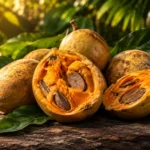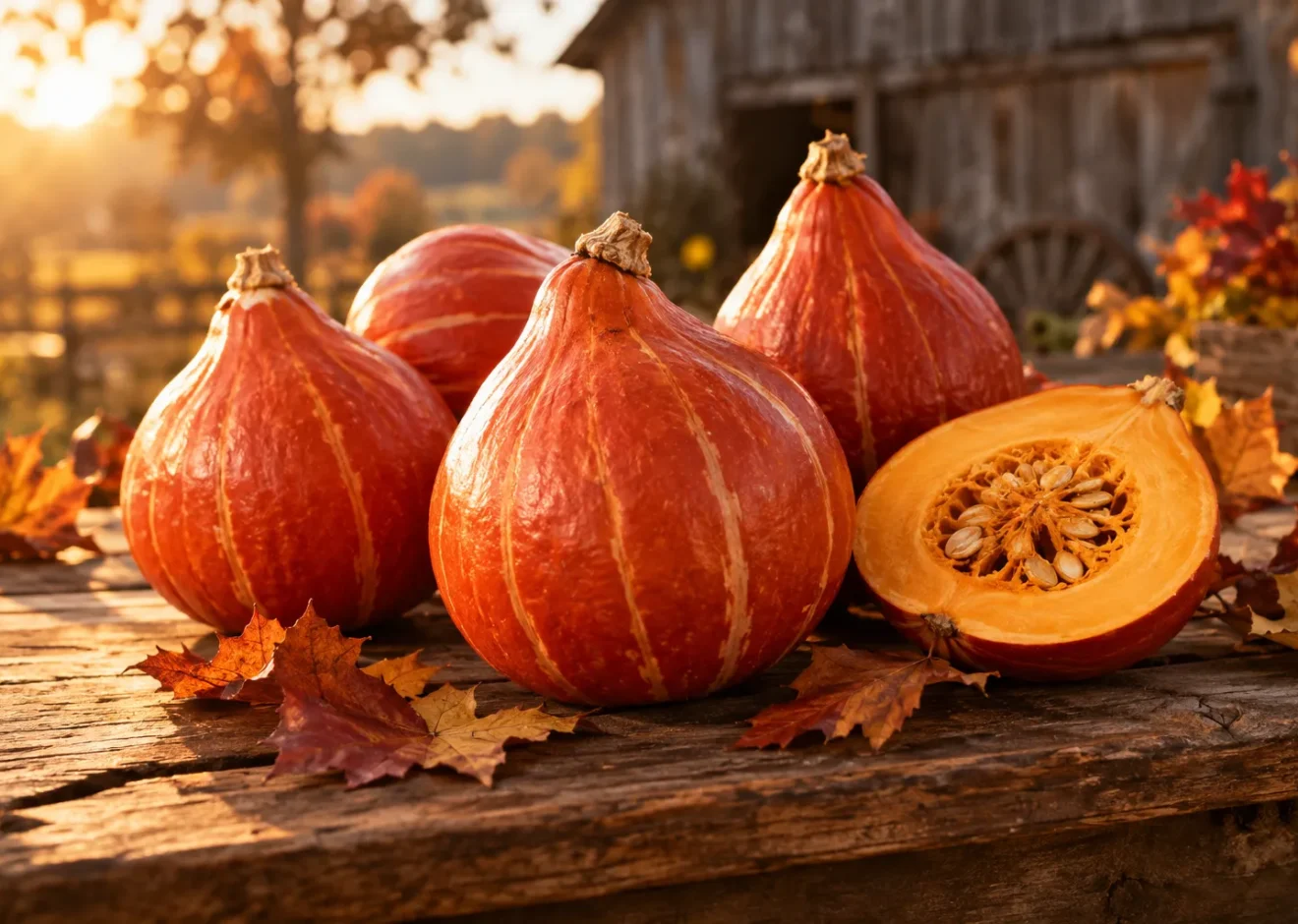
A roasted squash so rich and custard-like it once replaced pumpkin in New England pies, Boston Morrow Squash has earned its place among the most historically significant winter squash varieties in North America. Documented for nearly two centuries, this open-pollinated heirloom belongs to the species Cucurbita maxima and carries a lineage that traces directly to Indigenous agricultural knowledge. In 2026, seed houses from coast to coast still sell it, conservation organizations actively protect it, and home cooks who discover it rarely go back to ordinary pumpkin.
Key Takeaways
- Boston Morrow Squash is an heirloom winter squash with documented history stretching back to the early 1800s, originating from Native American seed stock.
- Its flesh is thick, fine-grained, and nearly fiber-free, making it the preferred choice for pies, soups, and custard-based baking.
- Fruits typically weigh 10 to 20 pounds and mature in approximately 100 to 110 days.
- The variety is listed on Slow Food’s international Ark of Taste as a culturally endangered food worth preserving.
- It stores well for 4 to 6 months after curing, making it an excellent comfort food classic for autumn and winter cooking.
Title
Roasted Boston Morrow Squash With Brown Butter and Sage
Recipe Subtitle
A heritage winter squash roasted to caramelized perfection, honoring two centuries of New England culinary tradition.
Recipe Description
Boston Morrow Squash, prized for its dense, custard-like flesh and naturally sweet flavor, transforms under high oven heat into a deeply caramelized side dish with complex, buttery notes. This recipe uses a simple combination of brown butter, fresh sage, and sea salt to amplify the squash’s inherent richness without masking its character. The result is an elegant, seasonally appropriate dish that works equally well as a standalone side or as the foundation for soups and pies.
Recipe Keywords
Boston Morrow Squash recipe, heirloom winter squash, roasted squash side dish, New England squash recipe, Cucurbita maxima, heritage squash cooking, fall squash recipes
Difficulty Level
Easy
Preparation Time
20 minutes
Cooking Time
50 minutes
Rest Time
10 minutes
Cooking Temperature (Fahrenheit)
400°F
Calories
Approximately 185 calories per serving
Best Season
Autumn through early winter (September through January)
Cooking Methods
- Roasting
- Pan-searing (for brown butter)
- Baking
- Steaming (optional, for soup variation)
Cuisines Suggestions
- New England American
- French rustic
- Farm-to-table contemporary
Recipe Badges
- Gluten-Free
- Vegetarian
- Naturally Sweetened
Recipe Keys
- Use high oven heat (400°F) to develop caramelization on the cut surface.
- Brown the butter separately and pour it over the squash just before the final 10 minutes of roasting for maximum flavor.
- Allow the squash to rest 10 minutes after roasting; this redistributes moisture and deepens the flavor profile.
The Origin and Cultural Significance of Boston Morrow Squash
The story of Boston Morrow Squash begins around 1831, when seeds were obtained in Buffalo, New York from an unnamed Native American tribe that visited the region annually each spring. Those seeds were passed to John M. Ives of Salem, Massachusetts, who cultivated and popularized the variety under the name “Autumnal Marrow Squash.” By the mid-19th century, it had become a New England standard, appearing regularly in cookbooks, seed catalogs, and household gardens throughout the region.
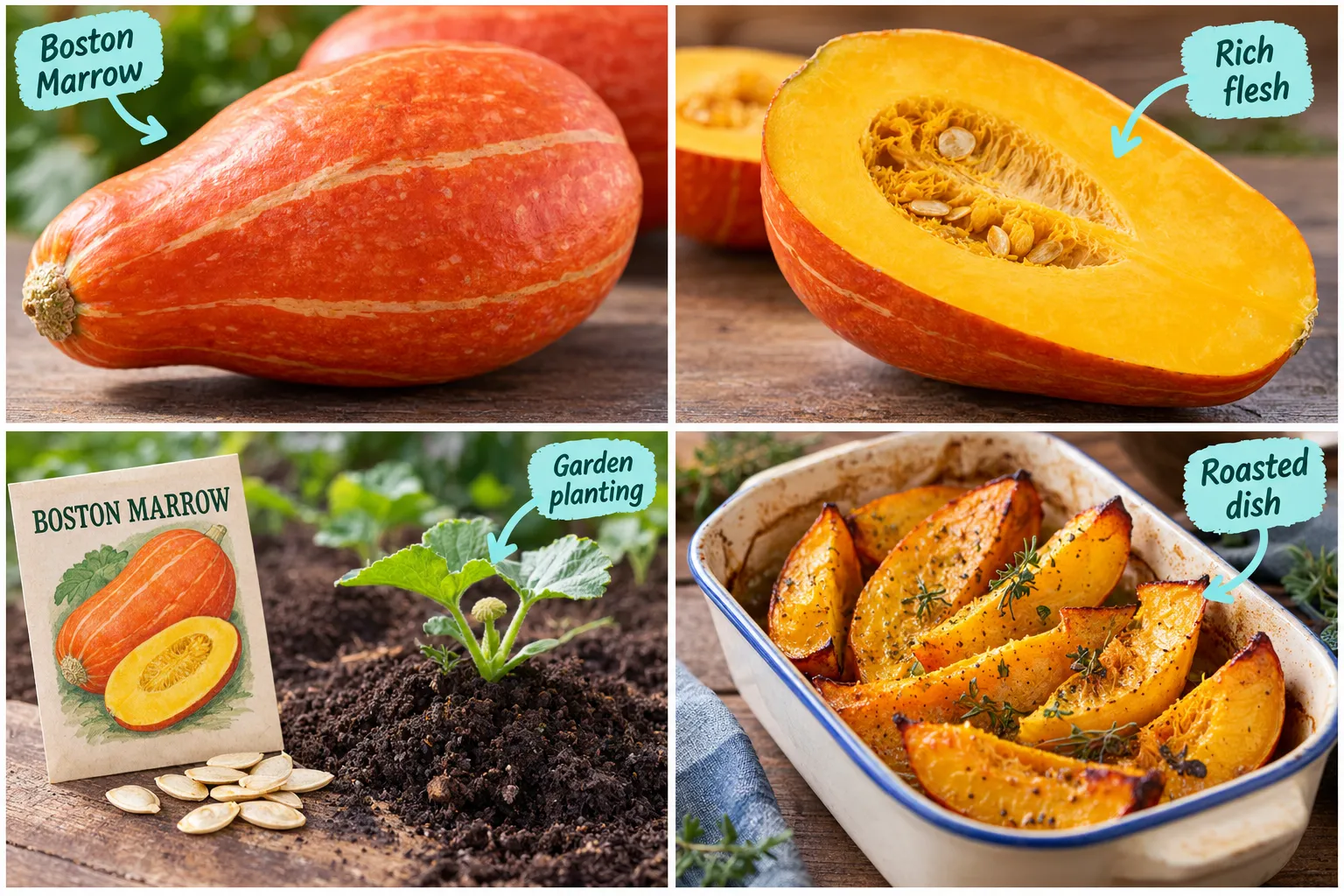
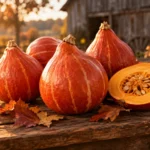
The variety belongs to the Hubbard group of squashes within Cucurbita maxima, sharing its classification with Golden Delicious and Delicious squash. Its shape is distinctly teardrop or oval with pointed ends, and its exterior is a vivid reddish-orange, sometimes marked by faint pale stripes running from stem to blossom end. Fruits commonly weigh between 10 and 20 pounds, though specimens reaching 25 pounds are not unusual, and exceptional examples have been reported at up to 50 pounds.
What made Boston Morrow Squash the dominant pie squash of 19th-century New England was its flesh: thick, fine-grained, nearly fiber-free, and naturally sweet with a custard-like consistency that required minimal processing. Heritage food historians note that it served as a common base for commercially produced canned “pumpkin” products long before standardized pumpkin varieties dominated the market. Today, Slow Food’s international Ark of Taste lists it as a culturally significant variety worth active preservation, and Slow Food USA maintains a dedicated catalog entry for it.
Cultivation remains accessible in 2026. Boston Morrow Squash requires a long, warm growing season with full sun. Seeds should be sown after all frost danger has passed, once soil temperatures reach at least 70°F, in rich, well-drained soil with hills spaced six to eight feet apart. Maturity falls between 100 and 110 days, placing harvest in mid- to late autumn. Once cured, fruits store reliably for four to six months, a practical advantage that made the variety indispensable to pre-refrigeration households and remains appealing to modern pantry-focused cooks. The variety now grows across the United States, from its original New England home to Washington, California, and Florida, adapting well to cool, short-season regions when given adequate time to mature.
For those interested in exploring the broader world of preserved and heirloom food traditions, the 165 Jam Cookbook offers complementary recipes that pair beautifully with roasted winter squash preparations.
Ingredients
| Quantity | Ingredient |
|---|---|
| 1 medium (approx. 5 lb) | Boston Morrow Squash, halved and seeded |
| 4 tablespoons | Unsalted butter |
| 12 leaves | Fresh sage |
| 1.5 teaspoons | Flaky sea salt |
| 1 teaspoon | Freshly ground black pepper |
| 2 tablespoons | Extra-virgin olive oil |
| 1 tablespoon | Pure maple syrup |
| 1/4 teaspoon | Freshly grated nutmeg |
Instructions
- Preheat the oven to 400°F. Line a heavy-duty rimmed baking sheet with parchment paper.
- Prepare the squash. Using a sharp, heavy chef’s knife, halve the squash lengthwise. Scoop out the seeds and fibrous center with a large spoon. Cut each half into 2-inch wedges or leave as halves for a more dramatic presentation.
- Season the squash. Brush the cut surfaces generously with olive oil. Season with 1 teaspoon of sea salt, black pepper, and freshly grated nutmeg.
- Arrange on the baking sheet cut-side down. This promotes direct contact with the hot pan, accelerating caramelization on the flesh.
- Roast for 35 minutes until the cut surface is deeply golden and the flesh yields easily when pressed through the skin.
- Brown the butter. While the squash roasts, melt butter in a small saucepan over medium heat. Swirl continuously until the milk solids turn amber and the butter smells nutty, approximately 4 to 5 minutes. Add sage leaves and fry for 30 seconds. Remove from heat immediately.
- Flip the squash cut-side up. Drizzle the brown butter and fried sage evenly over each piece. Add the maple syrup and remaining sea salt.
- Return to oven for an additional 10 to 15 minutes until the surface is caramelized and glossy.
- Rest for 10 minutes before serving. This allows residual heat to finish cooking the flesh and allows flavors to settle.
- Serve directly from the pan, garnished with the crisped sage leaves.
Equipment
- Heavy-duty rimmed baking sheet
- Sharp, heavy chef’s knife
- Small saucepan (for brown butter)
- Pastry brush
- Large spoon or melon baller (for seeding)
Nutrition
| Nutrient | Per Serving (approx. 1.5 cups) |
|---|---|
| Calories | 185 kcal |
| Protein | 2.8 g |
| Total Fat | 11 g |
| Carbohydrates | 22 g |
| Dietary Fiber | 3.5 g |
| Natural Sugars | 8 g |
Nutritional values are estimates based on standard ingredient data and will vary with squash size and ripeness.
Notes
- Sourcing the squash: Boston Morrow Squash is available through heirloom seed suppliers including Baker Creek Heirloom Seeds and Seed Savers Exchange. At farmers markets and specialty grocers, it may be labeled “Boston Marrow”, both spellings refer to the same variety. For those interested in growing from seed, the 550 Spinach Cookbook and similar vegetable-focused resources offer useful companion planting guidance for kitchen gardens.
- Soup variation: The roasted flesh scoops cleanly from the skin and purees into an exceptionally smooth soup. Combine with vegetable stock, a touch of cream, and warming spices such as cinnamon and white pepper. The nearly fiber-free texture eliminates the need for straining.
- Pie application: Boston Morrow Squash produces a pie filling that is denser and more flavorful than standard canned pumpkin. Substitute it one-for-one in any traditional pumpkin pie recipe. The 2053 Pie Cookbook contains multiple heritage squash pie recipes that pair exceptionally well with this variety.
FAQs
Q: Can Boston Morrow Squash be used in place of pumpkin in baking? Yes. Its flesh is denser, sweeter, and less fibrous than most pumpkin varieties, making it a superior substitute in pies, custards, and breads. Simply roast, scoop, and puree the flesh before using it in any recipe that calls for pumpkin puree.
Q: How long does Boston Morrow Squash keep after harvest? When properly cured, left in a warm, dry location for approximately 10 days after harvest to harden the skin, Boston Morrow Squash stores for four to six months at room temperature in a cool, dry space. Avoid refrigerating whole squash before cutting, as cold temperatures below 50°F can degrade the flesh texture over time.
Conclusion
Boston Morrow Squash is more than a seasonal ingredient, it is a living document of North American food history. From its Indigenous origins in the early 19th century to its current status on Slow Food’s Ark of Taste, this heirloom variety has demonstrated remarkable staying power precisely because its culinary qualities are genuinely exceptional. The flesh is dense, naturally sweet, and nearly fiber-free, making it one of the most versatile winter squash varieties available to home cooks today.
Actionable next steps for home cooks in 2026:
- Source seeds from Baker Creek Heirloom Seeds, Seed Savers Exchange, or OSC Seeds to grow Boston Morrow Squash in the next growing season.
- Purchase a whole squash at a specialty grocer or farmers market this autumn and begin with the roasted brown butter recipe above.
- Explore the 211 Stuffing Cookbook for complementary holiday side dishes that pair well with roasted heritage squash.
- Use roasted Boston Morrow Squash puree as a direct replacement for canned pumpkin in seasonal baking, and note the difference in depth and sweetness.
- Share seeds with neighbors and local seed libraries to support the preservation of this culturally significant variety.
The revival of heirloom ingredients like Boston Morrow Squash represents a broader movement toward flavor-first, historically grounded cooking, one that connects the modern kitchen to centuries of agricultural knowledge. For those who appreciate the intersection of food history and exceptional taste, this squash is an essential addition to the autumn table.