Last updated: October 20, 2026
Quick Answer
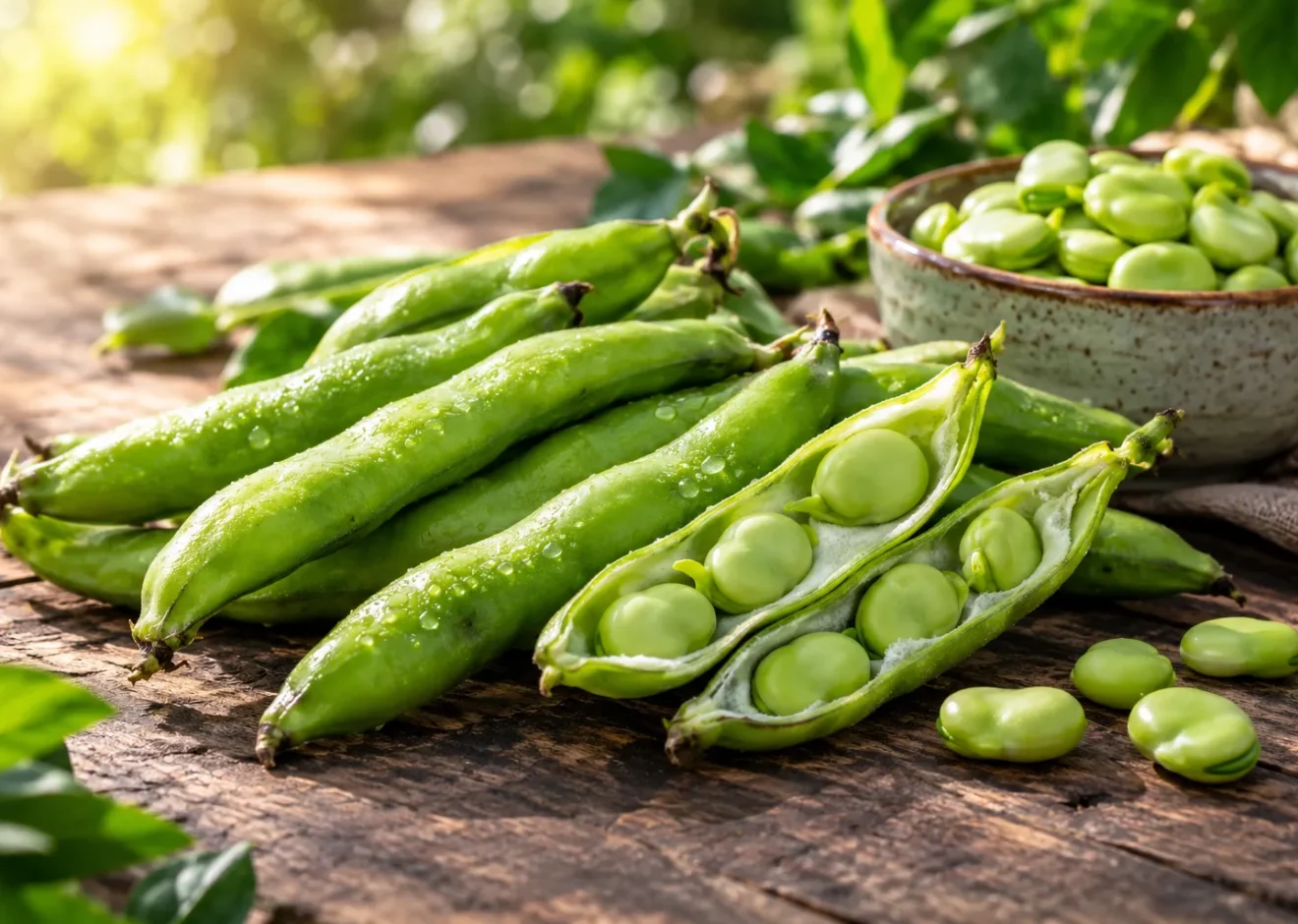
Broad beans (Vicia faba), also called fava beans, are one of the oldest cultivated legumes on earth, grown across the Mediterranean, Middle East, South America, and northern Europe for thousands of years. Fresh broad beans have a creamy, slightly earthy flavor and are best enjoyed in spring when pods are young and tender. They can be boiled, steamed, sauteed, or pureed, and they deliver impressive amounts of plant-based protein, fiber, and key micronutrients per serving.
Key Takeaways
- Broad beans and fava beans are the same plant (Vicia faba), the name simply differs by region.
- Double-podding (removing both the outer pod and the inner gray skin) produces the sweetest, most vibrant flavor.
- Raw broad beans are safe in small amounts for most people, but those with G6PD deficiency must avoid them entirely due to the risk of favism.
- A serving of cooked broad beans provides roughly 13 grams of protein and 9 grams of fiber.
- A clinical trial found that fava bean protein hydrolysate combined with resistance training produced approximately 12% greater strength gains than training alone over 56 days.
- Fresh broad beans are a spring crop; frozen beans are available year-round and are a reliable substitute.
- The EU’s 2026 legume roadmap positions broad beans as a cornerstone of domestic protein production, aiming to reduce reliance on imported soy.
- Recent drought in northern Europe cut horse bean (broad bean) yields by an estimated 10-15%, highlighting supply variability.
- Broad beans have a low glycemic response, making them well-suited to blood-sugar management strategies.
What Are Broad Beans and Where Do They Come From?
Broad beans are the seeds of Vicia faba, a hardy annual legume in the pea family. Archaeobotanical evidence places their cultivation in the Near East and eastern Mediterranean as far back as 6,000-8,000 BCE, making them one of the first crops deliberately grown by humans.
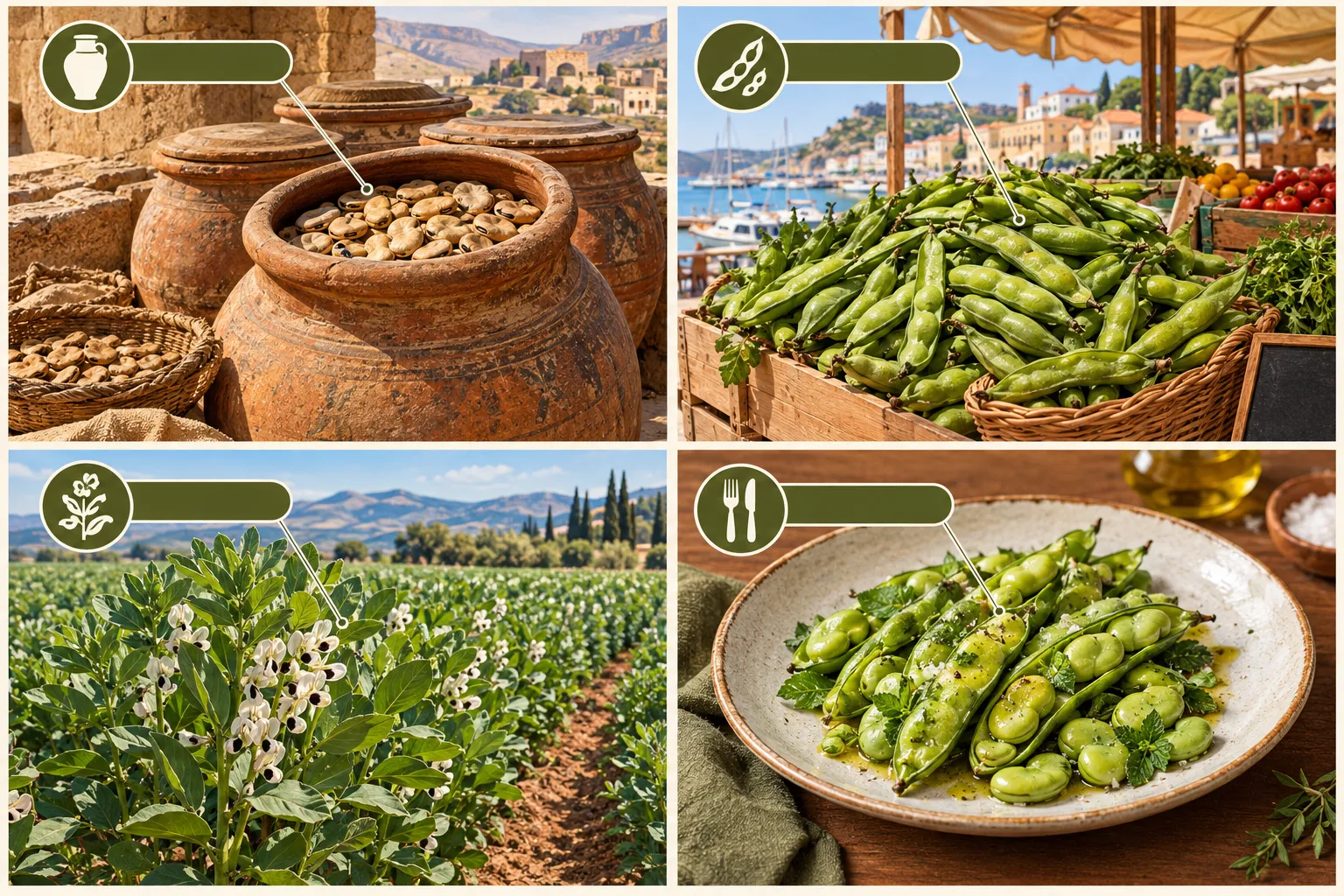
From those early origins, broad beans spread westward through North Africa, across Europe, and eastward into Central Asia. Ancient Egyptian tombs contain preserved specimens. Classical Roman agriculture relied on them as a protein staple. They traveled with Spanish colonizers to South America, where they became an essential ingredient in Andean cooking. Today, China, Ethiopia, Egypt, Australia, and the United Kingdom rank among the world’s largest producers.
In 2026, a European roadmap for fava beans in food and feed identified the crop as a cornerstone of a planned “legume renaissance,” aiming to scale domestic protein production and reduce dependence on imported soy across the EU. The ambition reflects both the crop’s agronomic value, broad beans fix atmospheric nitrogen and improve soil health, and its growing relevance in plant-based food systems.
Are Broad Beans the Same as Fava Beans?
Yes, completely. “Broad bean” is the term used predominantly in the United Kingdom, Australia, and New Zealand. “Fava bean” is the common name in North America, Italy (fava), and much of the Middle East (ful). Both names refer to the same species: Vicia faba.
Regional naming variations also include “horse bean” (a term used in northern European agricultural trade, particularly for field-grade varieties) and “Windsor bean” for a classic English heirloom cultivar. When a recipe calls for fava beans, broad beans from the grocery store or garden are a direct, exact substitute.
What Do Broad Beans Taste Like?
Fresh, double-podded broad beans taste creamy, mildly sweet, and faintly earthy, closer to a fresh pea than a dried lentil. Younger beans pulled early in the season are delicate and buttery. Larger, more mature beans develop a starchier, more pronounced savory depth.
Dried or canned broad beans have a denser, nuttier flavor profile, and the texture becomes firmer and more mealy. Cooking method also matters: a quick blanch followed by a saute in olive oil and garlic preserves brightness, while long braises and stews pull out a rich, umami-forward quality that anchors dishes like Egyptian ful medames. If you enjoy the flavor range of chickpea recipes or asparagus dishes, broad beans occupy a satisfying middle ground between the two.
How to Remove Broad Bean Skins
Double-podding is the single most important technique for broad beans, and it takes only a few minutes. It transforms a bitter, chewy bean into something silky and vibrant green.
Step-by-step process:
- Shell the beans from the outer furry pod by snapping the top and pulling down the seam.
- Blanch the shelled beans in boiling salted water for 2 minutes.
- Drain immediately and transfer to a bowl of ice water for 1-2 minutes.
- Pinch the pale gray-green outer skin at one end of each bean, it slips off easily, revealing the bright inner bean.
Beans younger than about 1.5 cm can sometimes be eaten without double-podding; the skin is thin enough to be pleasant. Larger beans almost always benefit from this step.
How Do You Cook Broad Beans?
Broad beans are forgiving and respond well to several cooking methods. The key rule: do not overcook them. They need far less time than dried legumes.
Primary cooking methods:
- Blanching and sauteing: Blanch 2-3 minutes, double-pod, then saute with olive oil, garlic, and lemon zest for 3-4 minutes. A classic preparation across Italian and Middle Eastern kitchens.
- Steaming: Steam shelled beans for 4-5 minutes. Retains more nutrients than boiling and produces a clean, pure flavor.
- Braising (dried beans): Soak dried broad beans overnight, then simmer in seasoned stock for 45-60 minutes until tender. This method underpins ful medames and Moroccan bessara.
- Roasting: Toss dried, cooked broad beans in olive oil and spices, then roast at 400°F (205°C) for 20-25 minutes until crispy. An excellent snack or salad topper.
For soup applications, broad beans pair naturally with other legumes and spring vegetables. For deeper inspiration, browse the 1718 Soup Cookbook or the 457 Stew Cookbook.
Can You Eat Broad Beans Raw?
Most healthy adults can eat a small number of young, fresh broad beans raw without any issue. The beans are mildly sweet at this stage and are occasionally added to spring salads in Italian cuisine. However, raw broad beans contain antinutritional factors, including vicine and convicine, that are reduced by cooking.
More critically, anyone with glucose-6-phosphate dehydrogenase (G6PD) deficiency must not eat raw (or even cooked) broad beans. G6PD deficiency is an inherited enzyme disorder; exposure to vicine and convicine can trigger favism, an acute form of hemolytic anemia that requires medical attention. The condition is more common in populations from Mediterranean, Middle Eastern, and West African backgrounds. If there is any uncertainty about G6PD status, consult a healthcare provider before consuming broad beans in any form.
Why Do Some People Get Sick from Broad Beans?
The cause is favism, a potentially serious reaction in people with G6PD deficiency. The antinutritional glycosides vicine and convicine, naturally present in Vicia faba seeds, oxidize red blood cells in G6PD-deficient individuals, triggering their destruction (hemolytic anemia). Symptoms can include fatigue, jaundice, dark urine, and in severe cases, organ stress.
Breeding programs are actively developing low-vicine/convicine broad bean cultivars to expand safe consumption for this population. Cooking reduces (but does not eliminate) these compounds, so caution is advised regardless of preparation method for anyone with a confirmed G6PD deficiency.
Beyond favism, some people experience mild digestive discomfort from broad beans due to their high fiber and oligosaccharide content, a common response to legumes in general that typically improves as gut bacteria adapt.
Broad Beans Health Benefits and Nutrition
Broad beans are genuinely nutrient-dense. A 100-gram serving of cooked broad beans provides approximately:
| Nutrient | Amount (per 100g cooked) |
|---|---|
| Calories | ~110 kcal |
| Protein | ~8 g |
| Dietary Fiber | ~5.4 g |
| Carbohydrates | ~19.7 g |
| Total Fat | ~0.4 g |
| Iron | ~1.5 mg |
| Folate | ~104 mcg |
Key health benefits:
- Blood sugar management: Broad beans have a very low glycemic response. Research reports peak blood glucose of approximately 1.02 g/L at 90 minutes after ingestion, consistent with their classification as a low-glycemic pulse. Their resistant starch content also slows glucose absorption.
- Sports performance: A randomized controlled trial in healthy adults found that fava bean protein hydrolysate (PeptiStrong) combined with resistance training produced approximately 12.2% greater strength gains and 21.6% better muscular endurance than training plus placebo over 56 days.
- Gut and cardiovascular health: Phenolic compounds, soluble fiber, and resistant starch from broad beans are associated with cardiovascular risk reduction and may support a healthy gut microbiome, according to a 2024-2025 review of faba bean bioactive compounds.
- Gastroprotective properties: Experimental studies found that crude extracts from Vicia faba seeds showed significant anti-ulcer activity in animal models, providing approximately 39.83% protection in one model, though human trials have not yet been conducted.
For those building plant-based meal plans, combining broad beans with complementary protein sources from 2397 beans recipes and 2762 salad recipes is a practical strategy.
How to Store and Freeze Broad Beans
Fresh broad beans in the pod keep in the refrigerator for up to 5 days. Store them unwashed in a ventilated bag or paper-lined container. Once shelled, use within 2 days.
Freezing is the best way to preserve freshness beyond the spring season:
- Shell the beans and blanch in boiling salted water for 2 minutes.
- Drain and cool immediately in ice water.
- Pat dry, spread on a baking sheet, and freeze for 1 hour.
- Transfer to labeled freezer bags. Frozen broad beans keep well for up to 12 months.
There is no need to double-pod before freezing, remove the inner skin after thawing, when they are easier to handle. Frozen broad beans can go straight into boiling water from frozen; add 1-2 minutes to the blanching time.
Where Can I Buy Fresh Broad Beans?
Fresh broad beans in the pod appear at farmers markets, specialty grocery stores, and some larger supermarkets from April through July in the Northern Hemisphere. The peak season is May and June in temperate climates. Outside that window, frozen broad beans are available year-round in most major grocery chains and are nearly identical in flavor and nutrition to fresh once double-podded.
Dried broad beans (whole or split, with or without skin) are available year-round in Middle Eastern grocery stores, health food shops, and online retailers. Canned fava beans are also widely stocked and require only rinsing before use.
What Can I Substitute for Broad Beans in Recipes?
When broad beans are unavailable, several substitutes work well depending on the dish:
- Edamame (fresh soybeans): The closest match for texture and color in salads and side dishes.
- Green peas or petit pois: Sweeter and smaller, but effective in pasta, risotto, and spring soups.
- Lima beans: Similar creamy texture; use in braises and purees.
- Chickpeas: Works well in North African and Middle Eastern preparations. Explore 101 Chickpea Recipes for technique guidance.
- Cannellini or butter beans: Good in hearty stews and dips where a white bean profile is acceptable.
Choose edamame if the visual brightness of green matters; choose lima beans or butter beans if the creaminess of the texture is the priority.
Common Mistakes When Cooking Broad Beans
Skipping double-podding on large beans. The gray outer skin on mature beans is bitter and tough. Blanch and peel every time for beans larger than thumbnail size.
Overcooking. Fresh broad beans need 2-3 minutes of blanching, not 10. Extended heat turns them from vibrant green to army-grey and makes them mealy.
Not salting the blanching water. Generously salted boiling water seasons the beans from the inside and improves color retention.
Using dried beans without an overnight soak. Dried broad beans, especially the skin-on variety, need 8-12 hours of soaking before any cooking. Skipping this leads to uneven texture and longer cooking times.
Adding acid too early. Lemon juice, tomatoes, and vinegar toughen bean skins when added at the start of cooking. Always add acidic ingredients at the finish.
How to Grow Broad Beans in Your Garden
Broad beans are among the easiest vegetables for home gardeners. They tolerate frost, fix nitrogen in the soil, and produce reliable yields with minimal inputs.
Basic growing guide:
- Sowing time: October-November for an overwintering crop (milder climates) or February-April for a spring crop. Broad beans prefer cool weather and will struggle in summer heat.
- Soil: Well-drained, moderately fertile soil. pH 6.0-7.0. No heavy nitrogen fertilizing needed, they fix their own.
- Spacing: Sow seeds 5 cm (2 inches) deep, 20-25 cm (8-10 inches) apart, in double rows with 45 cm (18 inches) between rows.
- Support: Tall varieties (over 60 cm) need staking or string supports to prevent wind damage.
- Pinch the tips: When the first flowers appear and four clusters have formed, pinch out the top 8 cm of each plant. This reduces blackfly (black bean aphid) infestation and encourages pod set.
- Harvest: Pods are ready when they feel plump and firm but the beans are not yet bulging hard against the pod wall. From seed to harvest: approximately 16-25 weeks depending on variety and planting season.
Recipe: Classic Blanched Broad Beans with Garlic and Lemon
Title
Classic Spring Broad Beans with Garlic, Olive Oil, and Lemon
Recipe Subtitle
A simple, elegant preparation that lets the natural sweetness of fresh broad beans take center stage.
Recipe Description
This classic preparation blanches and double-pods fresh broad beans, then finishes them briefly in extra-virgin olive oil with garlic, lemon zest, and sea salt. The result is a vibrant, protein-rich side dish or starter that works equally well alongside grilled fish, lamb, or served on toasted bread. It is ready in under 20 minutes and requires no advanced technique.
Recipe Keywords
Broad beans recipe, fava bean side dish, spring vegetables, blanched broad beans, Mediterranean legumes, healthy plant-based side, garlic broad beans
Difficulty Level
Easy
Preparation Time
10 minutes
Cooking Time
6 minutes
Rest Time
2 minutes
Cooking Temperature (Fahrenheit)
212°F (rolling boil for blanching)
Calories
Approximately 175 calories per serving (based on a 150g cooked serving with olive oil)
Best Season
Spring (peak season for fresh broad beans)
Cooking Methods
Blanching, sauteing, double-podding technique
Cuisines Suggestions
Italian, Middle Eastern, British
Recipe Badges
- Gluten-Free
- High-Protein
- Vegan
Recipe Keys
- Double-pod every bean larger than thumbnail size for best flavor and texture.
- Do not overcook; 2-3 minutes of blanching is sufficient.
- Add lemon juice only at the finish to preserve color and prevent toughening.
Ingredients
| Quantity | Ingredient |
|---|---|
| 1 kg (2.2 lbs) | Fresh broad beans in the pod |
| 2 tablespoons | Extra-virgin olive oil |
| 2 cloves | Garlic, thinly sliced |
| 1 | Lemon (zest and juice) |
| 1/2 teaspoon | Flaky sea salt |
| 1/4 teaspoon | Freshly cracked black pepper |
| 1 tablespoon | Fresh mint leaves, torn (optional) |
| 1 tablespoon | Flat-leaf parsley, roughly chopped |
Instructions
- Shell the broad beans from their pods by snapping each end and pulling down the seam. Discard the pods.
- Bring a large pot of well-salted water to a rolling boil.
- Add the shelled beans and blanch for exactly 2 minutes.
- Drain immediately and transfer to a bowl of ice water. Let sit for 2 minutes.
- Drain the cooled beans. Pinch each bean at one end to slip off the pale outer skin, revealing the bright green inner bean. Discard the skins.
- Heat olive oil in a wide skillet over medium heat. Add the sliced garlic and cook for 90 seconds until just golden, stirring frequently.
- Add the double-podded beans to the skillet and toss for 2 minutes until warmed through and lightly coated in the garlic oil.
- Remove from heat. Add lemon zest, a squeeze of lemon juice, salt, and pepper. Toss once more.
- Transfer to a warm serving plate and scatter with torn mint and parsley.
- Serve immediately as a side dish or spoon onto toasted bread for a starter.
Equipment
- Large pot (for blanching)
- Colander
- Large bowl (for ice bath)
- Wide skillet or saute pan
- Citrus zester
Nutrition (per serving, serves 4)
| Nutrient | Amount |
|---|---|
| Calories | 175 kcal |
| Protein | 10 g |
| Total Fat | 7 g |
| Carbohydrates | 18 g |
| Dietary Fiber | 6 g |
| Sodium | 290 mg |
Notes
- Frozen broad beans can replace fresh. Thaw first, then proceed from step 5 (double-podding). Reduce blanching to 1 minute.
- Scale up easily: This recipe doubles well for a crowd. The key is maintaining a hard boil and not overcrowding the pot.
- Pairing suggestion: These beans work beautifully alongside grilled lamb chops (see 163 Lamb Cookbook) or as part of a composed spring salad with asparagus from the 356 Asparagus Cookbook.
FAQs About Broad Beans
Q: Are broad beans and edamame the same thing? No. Broad beans (Vicia faba) and edamame (immature soybeans, Glycine max) are different species. They have a similar appearance when shelled and share a fresh, green flavor profile, making edamame a reasonable culinary substitute, but they are botanically unrelated.
Q: Can broad beans be eaten by pregnant women? Yes, for most women broad beans are safe and nutritious during pregnancy. They are a good source of folate, which is critical for fetal neural development. However, women who carry or have G6PD deficiency should seek medical advice before consuming them.
Q: How do I know when fresh broad beans are past their best? Pods that have turned yellow, feel very hard and dry, or show black spotting are overripe. The beans inside will be starchy and tough. Choose firm, bright-green pods that give slightly when squeezed.
Q: Are dried broad beans the same as dried fava beans? Yes, exactly the same. Dried fava beans are available in whole form (with skin) or split (skin removed). Split dried broad beans cook faster and do not require as long a soak.
Q: Do broad beans cause gas? They can, particularly in people not accustomed to eating legumes regularly. The oligosaccharides (complex sugars) in broad beans ferment in the gut. Soaking dried beans and discarding the soaking water, and starting with smaller portions, both help reduce this effect.
Q: Can broad beans be used in soup? Absolutely. Pureed broad beans form the base of Egyptian ful medames and the Moroccan dip bessara, both slow-simmered, deeply savory preparations. For fresh bean soups, a quick broth with spring vegetables, pancetta, and a handful of double-podded beans is ready in under 30 minutes. Browse 1718 Soup Cookbook for further ideas.
Conclusion
Broad beans are one of the most versatile, nutritionally substantive, and historically significant legumes available to the modern cook. From a 10-minute spring side dish to a slow-braised North African stew, their adaptability across cuisines and preparations is unmatched among fresh legumes.
For home cooks in 2026, the practical takeaways are clear: buy fresh beans in spring when they are at peak flavor, always double-pod beans larger than thumbnail size, avoid overcooking, and pair them with bold companions like garlic, lemon, herbs, and good olive oil. Anyone building a plant-forward diet will find that broad beans, whether fresh, frozen, or dried, offer exceptional protein, fiber, and micronutrient density for relatively low cost.
Start with the recipe above. Once double-podding becomes second nature and the vibrant green of a freshly blanched bean becomes familiar, the broader world of broad bean cooking opens quickly, from Italian pasta dishes to Middle Eastern spreads to high-protein salads and beyond. Pair them with the full range of 2397 beans recipes to keep discovery moving forward.