
Last updated: October 30, 2026
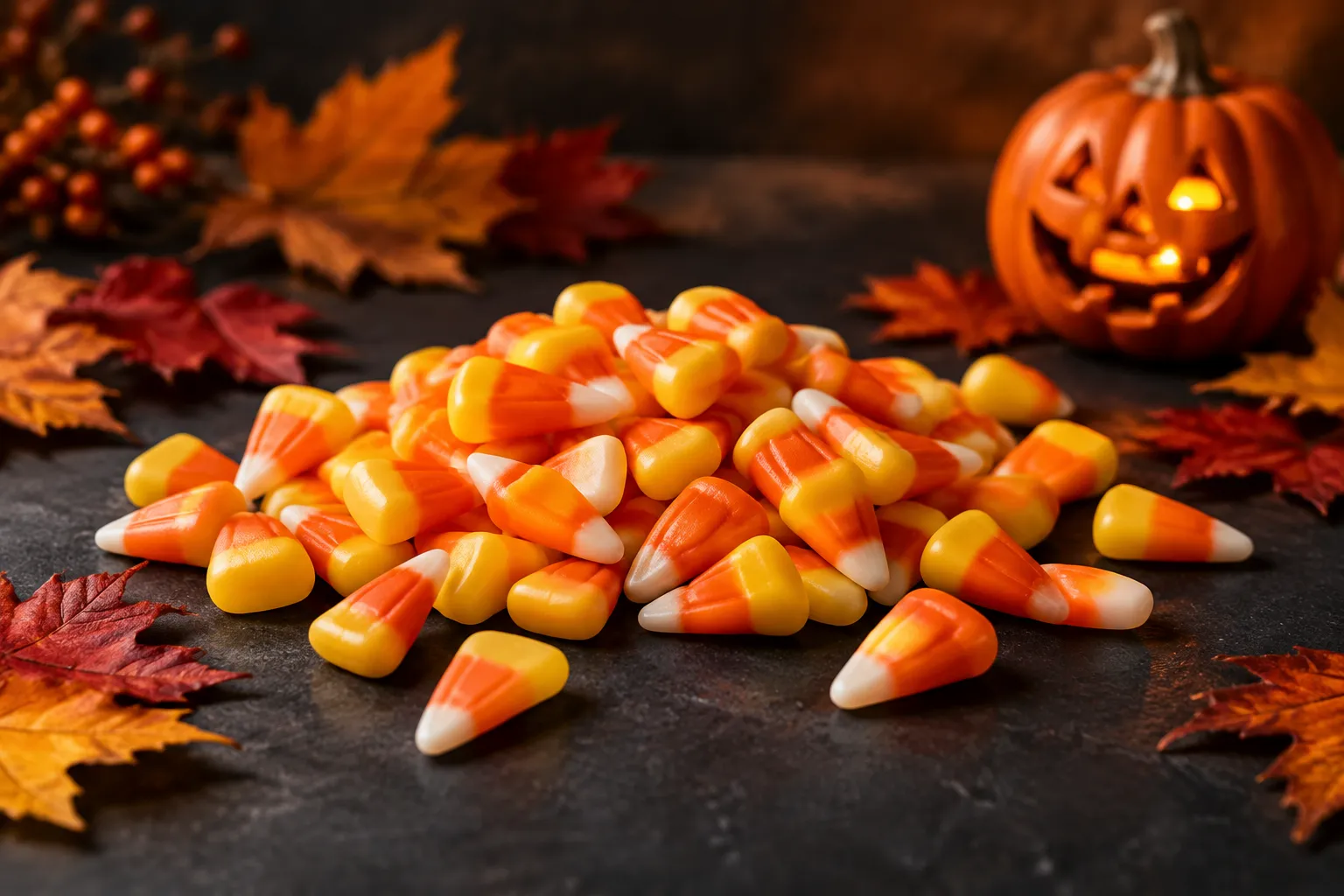
Quick Answer: October 30 National Candy Corn Day is an unofficial American food holiday observed every year on October 30, the day before Halloween. It celebrates the iconic tricolor sugar candy that has been a Halloween staple for well over a century. No legislation created the day; it emerged through confectionery industry promotion and popular culture, and it now appears on major holiday calendars worldwide. [1][2]
Key Takeaways
- October 30 National Candy Corn Day falls one day before Halloween each year, making it the unofficial launch of Halloween candy season.
- Candy corn was invented in the 1880s, most likely by George Renninger of the Wunderle Candy Company, and popularized by the Goelitz Candy Company (now Jelly Belly).
- The candy is not made from corn; its main ingredients are sugar, corn syrup, and confectioner’s wax.
- An estimated 35 million pounds of candy corn are produced annually in the United States, according to the National Confectioners Association. [3]
- Despite consistently ranking among “least favorite” Halloween candies in polls, candy corn sells in enormous quantities every autumn.
- Sugar-free and allergen-friendly versions exist and are increasingly available at mainstream retailers.
- Candy corn can be used in baking, trail mix, cocktails, and craft projects, it’s more than just a standalone treat.
- The candy’s divisiveness is part of its cultural staying power; few sweets generate this level of passionate debate.
What Is National Candy Corn Day and Why October 30?
National Candy Corn Day is celebrated on October 30 each year as a tribute to one of America’s most recognized seasonal candies. The date was chosen specifically for its proximity to Halloween on October 31, since candy corn is almost exclusively associated with the fall holiday season. [2]
The day has no single founder or official government recognition. It functions as an informal food holiday, much like other observances on the national food holiday calendar. The National Confectioners Association and various confectionery brands have amplified the date through marketing campaigns, social media, and retailer promotions, which has cemented it on mainstream holiday calendars. [1]
Why October 30 specifically? Placing the celebration on the eve of Halloween maximizes candy corn’s cultural relevance. It gives consumers, brands, and media a dedicated moment to spotlight the candy right before trick-or-treaters take to the streets.
Candy Corn Facts and History
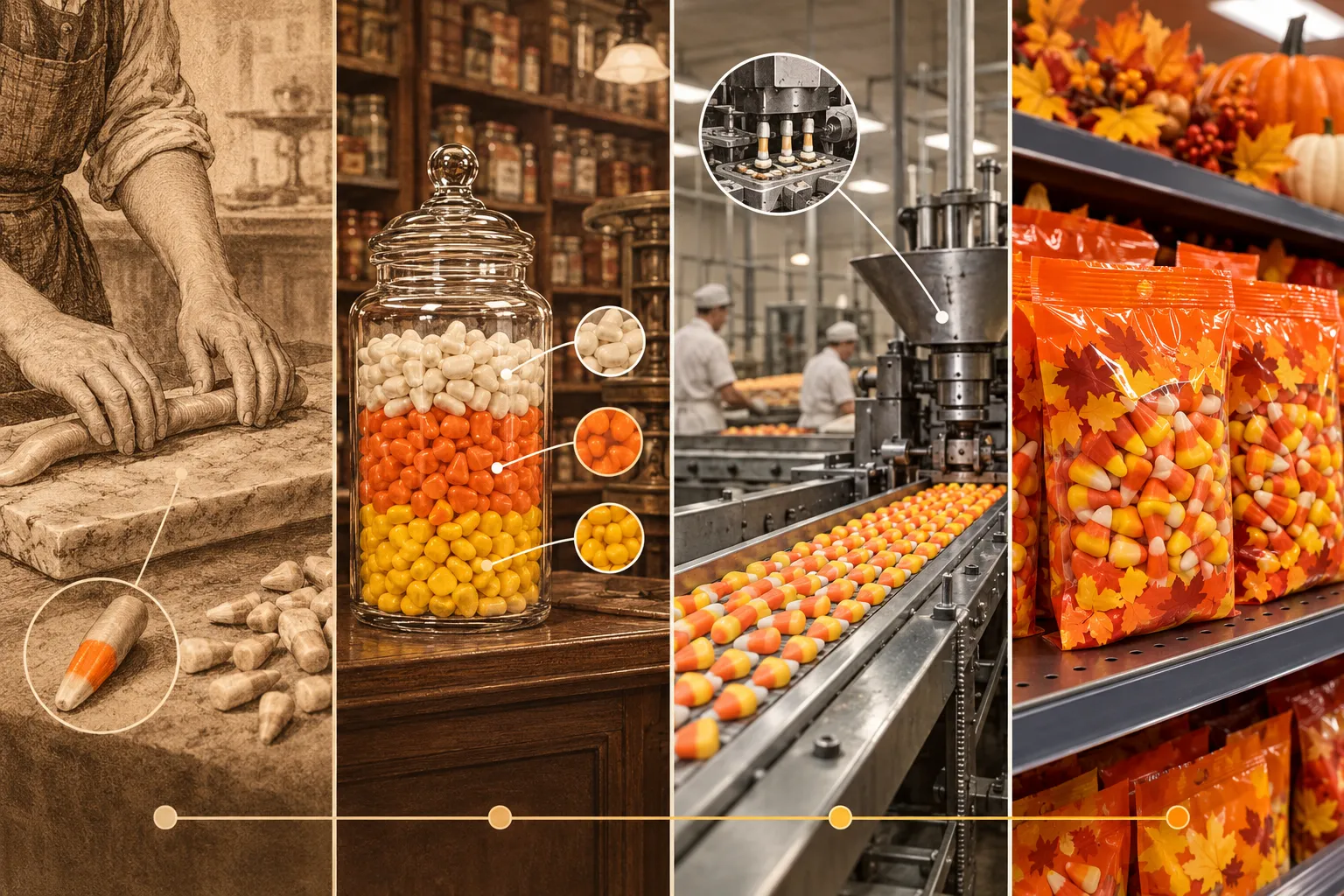
Candy corn has a longer history than most people realize. The candy is believed to have been invented around 1880 by George Renninger, a confectioner working at the Wunderle Candy Company in Philadelphia. The Goelitz Candy Company (now known as Jelly Belly Candy Company) began mass-producing it in 1898 and played the largest role in establishing it as a Halloween icon. [4]
Key historical milestones:
- 1880s: First produced by hand using a labor-intensive “corn starch mogul” method, where workers poured three separate layers of colored sugar into molds.
- Early 1900s: Sold as a penny candy in general stores, associated with harvest themes rather than Halloween specifically.
- Mid-20th century: Mechanized production made candy corn cheap and abundant, and Halloween became its primary sales window.
- 1950s, 1970s: Trick-or-treating culture cemented candy corn as a seasonal staple.
- Present day: Roughly 35 million pounds are produced in the U.S. each year, with the vast majority sold between August and November. [3]
Originally called “Chicken Feed,” candy corn was marketed to an agrarian America where corn and farm themes resonated. The rooster on early Goelitz packaging reinforced that rural identity. [5]
Is Candy Corn Actually Made from Corn?
No, candy corn does not contain whole corn or cornmeal. The name references its shape, each kernel is molded to resemble a large grain of field corn, not its ingredients. [6]
Standard candy corn ingredients include:
- Sugar
- Corn syrup
- Confectioner’s glaze (shellac)
- Salt
- Dextrose
- Gelatin
- Sesame oil
- Artificial flavors
- Yellow 6, Yellow 5, and Red 3 dyes
Corn syrup does appear in the recipe as a sweetener and binder, so corn-derived products are technically present, but the candy’s identity is sugar-forward, not corn-forward. Consumers with corn syrup sensitivities should check labels carefully. [6]
Candy Corn Nutrition Facts and Ingredients
Candy corn is a pure sugar confection with minimal nutritional value beyond calories. A standard serving of 19 pieces (about 30 grams) contains roughly 140 calories, 0 grams of fat, 36 grams of carbohydrates, and 28 grams of sugar. [6]
| Nutrient | Per 19-piece serving (approx. 30g) |
|---|---|
| Calories | ~140 |
| Total Fat | 0 g |
| Sodium | 70 mg |
| Total Carbohydrates | 36 g |
| Sugars | 28 g |
| Protein | 0 g |
Because the candy contains gelatin, it is not vegan. The confectioner’s glaze (shellac, derived from lac bugs) also makes it non-vegan. It is gluten-free in most standard formulations, but manufacturing cross-contamination is possible. Always verify with the specific brand. [4]
Why Is Candy Corn So Divisive?
Candy corn occupies a unique psychological space: it is one of the most purchased Halloween candies in America, yet it regularly tops “worst candy” lists in consumer polls. Research and reporting on the phenomenon suggest that people buy and eat it anyway, sometimes out of nostalgia, sometimes simply because it is everywhere during October. [7]
Several factors feed the division:
- Texture: The waxy, dense chew is unlike most modern candy. Fans love the distinctive bite; critics find it unpleasant.
- Sweetness level: Candy corn is almost entirely sugar. People with a lower sugar tolerance find it cloying after just a few pieces.
- Nostalgia bias: For many Americans, candy corn is emotionally tied to childhood Halloween memories, which creates strong positive associations regardless of taste preference.
- Social contagion: Calling candy corn bad has become a cultural shorthand for Halloween humor, which inflates how negative the perception appears online compared to actual purchasing behavior. [7]
“People keep calling candy corn the worst candy, then buy and eat it anyway.”, headline from KTEN News, reflecting a widely reported behavioral pattern among consumers. [7]
This is arguably what keeps October 30 National Candy Corn Day culturally relevant year after year: the debate itself is the celebration.
Best Candy Corn Brands to Buy in 2026
Several brands produce candy corn, and quality does vary noticeably between them.
Top brands to consider:
- Jelly Belly (Brach’s parent brand heritage): The Goelitz/Jelly Belly lineage produces what many consider the benchmark candy corn, firm texture, classic vanilla-butter-honey flavor profile.
- Brach’s: The most widely distributed brand in the U.S., available at virtually every grocery and drug store. Brach’s is the dominant market leader by volume. [3]
- Starburst Candy Corn: A fruity variation that appeals to consumers who dislike the traditional flavor.
- Trader Joe’s Autumn Mix: A seasonal house-brand offering with a slightly softer texture.
- Zachary Confections: A budget option sold in bulk, popular for decorating and baking rather than snacking.
Choose Brach’s if you want the most classic, widely available version. Choose Jelly Belly or a specialty brand if you want premium texture and more nuanced flavor. Choose Starburst or flavored varieties if you dislike traditional candy corn but still want to participate in the holiday.
Sugar-Free and Allergen-Free Candy Corn Options
Sugar-free candy corn does exist, though options are more limited than standard versions. Brands like Melster and certain private-label health food retailers produce sugar-free formulations using maltitol or other sugar alcohols as substitutes. [6]
What to know before buying:
- Sugar-free versions may cause digestive discomfort in large amounts due to sugar alcohols.
- Most candy corn (including sugar-free) is naturally gluten-free, but cross-contamination in shared facilities is a real risk, look for certified gluten-free labeling.
- Standard candy corn contains gelatin, making it non-vegan. Vegan candy corn options are available from brands like Surf Sweets and certain natural food retailers.
- Tree nut and peanut allergies: Most candy corn is produced in facilities that also process nuts. Check the allergen statement on each package.
How to Celebrate October 30 National Candy Corn Day
Celebrating October 30 National Candy Corn Day doesn’t require elaborate planning. The most direct approach is simply buying a bag of candy corn and sharing it, but there are more creative options worth considering.
Easy ways to celebrate:
- Host a candy corn taste test comparing two or three different brands side by side.
- Use candy corn as a topping for cupcakes, brownies, or popcorn.
- Set up a candy corn guessing jar game for a Halloween party.
- Post a candy corn recipe on social media with the hashtag #NationalCandyCornDay.
- Give away bags of candy corn as early trick-or-treat treats on October 30.
For those who enjoy broader food holidays, pairing candy corn celebrations with other seasonal food events, similar to how fans of National Peanut Butter Day and National Steak Day create themed menus, makes for a fuller holiday experience.
Candy Corn Recipes and Creative Uses
Candy corn works surprisingly well in recipes beyond straight snacking. Its sugar content makes it an effective sweetener-plus-decoration in baked goods, and its bold color is useful for Halloween-themed presentations.
Popular candy corn recipe ideas:
- Candy Corn Fudge: Melt white chocolate with sweetened condensed milk, layer with food coloring to mimic the tricolor pattern, and press candy corn pieces into the top before it sets.
- Candy Corn Trail Mix: Combine candy corn with salted peanuts, pretzels, and chocolate chips for a sweet-salty snack mix.
- Candy Corn Bark: Melt white chocolate, pour onto a parchment-lined sheet, and scatter candy corn across the surface before it hardens.
- Candy Corn Cocktail: Dissolve candy corn in warm vodka or rum overnight, strain, and mix with orange juice for a seasonal drink.
- Candy Corn Rice Krispie Treats: Fold candy corn into melted marshmallow-butter-cereal mixture before setting.
Much like National Marmalade Day and National Tamale Day inspire home cooks to experiment with underappreciated ingredients, October 30 is a good prompt to try candy corn beyond the bowl.
How to Make Homemade Candy Corn
Making candy corn from scratch is a genuine challenge, but it’s achievable with the right equipment and patience. The traditional method requires a candy thermometer and a piping bag or specialized molds.
Basic homemade candy corn method:
- Combine 2 cups powdered sugar, 1 tablespoon butter, 1 tablespoon heavy cream, and a pinch of salt. Mix into a smooth dough.
- Divide the dough into three equal portions.
- Color one portion yellow (food coloring), one orange, and leave one white.
- Roll each portion into long, thin ropes of equal length.
- Press the three ropes side by side, then gently flatten into a triangular log shape.
- Slice crosswise into individual kernels, approximately half an inch thick.
- Allow to dry on parchment paper for several hours until firm.
Homemade candy corn will have a softer, more fondant-like texture than commercial versions. It keeps for up to one week in an airtight container at room temperature.
Candy Corn vs. Other Halloween Candies: How Does It Compare?
| Candy | Main Flavor | Vegan-Friendly | Gluten-Free | Divisiveness |
|---|---|---|---|---|
| Candy Corn | Honey-vanilla sugar | No (gelatin) | Usually yes | Very high |
| Reese’s Peanut Butter Cups | Chocolate-peanut butter | No (dairy) | Yes | Very low |
| Snickers | Chocolate-caramel-peanut | No (dairy) | Yes | Low |
| Smarties | Tart fruit sugar | Yes | Yes | Medium |
| Milk Duds | Chocolate-caramel | No (dairy) | No | Medium |
Candy corn stands out as the most divisive Halloween candy by a wide margin, but also as one of the few that generates its own national holiday. Its longevity despite persistent criticism is a testament to the power of tradition and seasonal marketing.
Where to Buy Candy Corn Near Me
Candy corn is one of the easiest seasonal candies to find. From late August through early November, it appears in virtually every U.S. retail channel. [3]
Where to look:
- Grocery stores: Brach’s and store-brand candy corn appear in the seasonal aisle at chains like Kroger, Safeway, Publix, and HEB.
- Drug stores: CVS and Walgreens stock candy corn in large bags beginning in September.
- Mass retailers: Walmart and Target carry multiple brands, including bulk bags and specialty flavors.
- Online: Amazon, Walmart.com, and candy-specific retailers like CandyWarehouse.com ship candy corn year-round.
- Specialty stores: World Market and Trader Joe’s offer seasonal and flavored variations.
Outside the Halloween season, candy corn can be harder to find in physical stores but remains available through online retailers year-round.
Fun Activities for Candy Corn Day
October 30 National Candy Corn Day is a low-barrier holiday that works for all ages, classrooms, offices, and social media audiences alike.
Activity ideas:
- Candy corn art: Use candy corn pieces to create mosaic designs on cardstock, a popular classroom craft for all ages.
- Math and counting games: Fill a jar with candy corn and use it for estimation challenges with kids.
- Candy corn trivia night: Build a Halloween trivia round around candy corn history and facts.
- Baking competition: Challenge friends or coworkers to create the best candy corn-inspired dessert.
- Social media challenge: Post a photo of a creative candy corn use and tag it with #CandyCornDay.
- Blind taste test: Sample candy corn from three to five brands without seeing the packaging and rank them.
These activities pair naturally with other fall food celebrations. Fans of themed food events who enjoy National Frappe Day or similar occasions will find candy corn day equally easy to build a small event around.
FAQ
What date is National Candy Corn Day? National Candy Corn Day is observed on October 30 every year, the day before Halloween. [2]
Who invented candy corn? Candy corn is most commonly attributed to George Renninger of the Wunderle Candy Company in the 1880s. The Goelitz Candy Company (now Jelly Belly) popularized it through mass production beginning in 1898. [4]
Is candy corn gluten-free? Most standard candy corn formulations are gluten-free by ingredient, but cross-contamination in shared manufacturing facilities is possible. Look for certified gluten-free labeling if you have celiac disease or a serious gluten intolerance. [6]
Is candy corn vegan? Standard candy corn is not vegan because it contains gelatin and confectioner’s glaze (shellac). Vegan alternatives are available from select natural food brands. [4]
How much candy corn is produced each year? The National Confectioners Association estimates approximately 35 million pounds of candy corn are produced annually in the United States, with most sold in the fall season. [3]
Why does candy corn taste the way it does? The classic flavor comes from a combination of sugar, corn syrup, vanilla, and a subtle honey or butter note from the confectioner’s wax and added flavorings. The waxy texture is a byproduct of the production process, not a flaw in the recipe. [6]
Can candy corn be used in baking? Yes. Candy corn melts when heated and can be incorporated into fudge, cookies, bark, and rice crispy treats. It also works well as a topping or decoration on frosted baked goods. [3]
Is there a sugar-free version of candy corn? Yes, sugar-free candy corn is produced by a small number of brands using maltitol or other sugar alcohol substitutes. Availability is limited compared to standard versions, but online retailers carry multiple options year-round.
Does candy corn contain real corn? No. Candy corn contains corn syrup but not actual corn kernels or cornmeal. The name refers to the candy’s shape, which resembles a large grain of field corn. [6]
Where did the name “candy corn” come from? The candy was originally marketed as “Chicken Feed” in the 1880s because of its corn kernel appearance and its association with farm culture. Over time, “candy corn” became the standard name. [5]
Conclusion
October 30 National Candy Corn Day is more than a marketing exercise, it’s an annual reminder of how deeply food traditions embed themselves in cultural life. A candy invented in the 1880s still generates passionate debate, massive sales, and its own dedicated holiday more than 140 years later. That staying power says something important about the role nostalgia and seasonal ritual play in consumer behavior.
Actionable next steps for October 30, 2026:
- Buy a bag of candy corn from a brand you haven’t tried before and compare it to your usual choice.
- Make one candy corn recipe, even something as simple as tossing it into popcorn, to experience the candy in a new way.
- Share the debate: post your candy corn opinion (pro or con) on social media and invite friends to weigh in.
- If you’re hosting a Halloween party, use candy corn as a low-cost, high-impact table decoration and conversation starter.
- Check out more national food holidays to build a year-round calendar of food celebrations.
Whether the candy ends up in the bowl or in a baked good, October 30 is the right day to give it its moment.
References
- National Candy Corn Day. punchbowl.com.
- Candy Corn Day. timeanddate.com.
- Candy Corn Facts Trivia. farmersalmanac.com.
- Candy Corn. wikipedia.org.
- Candy Corn Facts Halloween Candy History. qz.com.
- National Candy Corn Day What Is Ingredients Halloween. usatoday.com.
- Article 9ba13d96 508e 5e93 84e8 9ca11b37ad9a. kten.com.
