
Last updated: October 29, 2026
Quick Answer
October 29 National Oatmeal Day is an annual unofficial food holiday observed in the United States each year on October 29. It celebrates oatmeal as one of the most versatile, nutritious, and widely eaten breakfast grains in the world. The day has no official government proclamation but is widely recognized across food calendars, media outlets, and recipe communities.
Key Takeaways
- October 29 National Oatmeal Day falls on a Thursday in 2026 and is observed every year on October 29
- The holiday is unofficial, with no documented federal statute or presidential proclamation behind it
- The exact origin of National Oatmeal Day is not well documented; sources note that no single founder has been identified
- Oatmeal is a whole grain food linked to heart health, improved cholesterol, and sustained energy
- There are four main types of oatmeal: steel-cut, rolled, quick-cook, and instant, each with different textures and cook times
- Certified gluten-free oats are available for people with celiac disease or gluten sensitivity
- Overnight oats require no cooking and take about five minutes to prepare the night before
- Popular toppings include fresh fruit, nut butters, seeds, spices, and natural sweeteners
- Meal prepping oatmeal for the week can be done in batches in about 20 minutes
- Oatmeal compares favorably to many other breakfast grains for fiber content, especially soluble fiber called beta-glucan
What Is National Oatmeal Day and Why October 29?
National Oatmeal Day is an informal American food holiday held every year on October 29, designed to celebrate oatmeal’s place as a comforting, nutritious breakfast staple. Multiple holiday calendars confirm the October 29 date and describe it as a themed food observance rather than a legally recognized holiday. [1][2][3]
The reason the date falls on October 29 specifically is not clear. Historical reviews note that “the exact origin of National Oatmeal Day isn’t well documented,” and no founder or sponsoring organization has been publicly identified. [4] Some researchers point out that an earlier version of an “Oatmeal Day” existed in January, and the shift to October may have started as a calendar error that was widely copied over time. [5]
October 29 does land well in the fall calendar, when cooler temperatures make warm porridge more appealing, so the date at least makes cultural sense even if its precise history is murky. [2]
History of National Oatmeal Day
The historical record for October 29 National Oatmeal Day is thin. No statute, presidential proclamation, or official government body has ever formally established the date. [3][5]
What is documented is that oats themselves have a long global history. Oats were cultivated in ancient Europe and Asia and became a dietary staple in Scotland, Ireland, and parts of Scandinavia for centuries before spreading to North America. The grain’s reputation as cheap, filling, and nourishing made it a household essential long before any food holiday was attached to it.
The modern observance appears to have grown organically through food blogs, holiday listing websites, and media coverage, all of which reference October 29 without citing a definitive origin story. [4] This pattern is common for unofficial food holidays in the United States, many of which began through marketing campaigns or informal community celebrations before gaining widespread calendar recognition.
Different Types of Oatmeal Explained
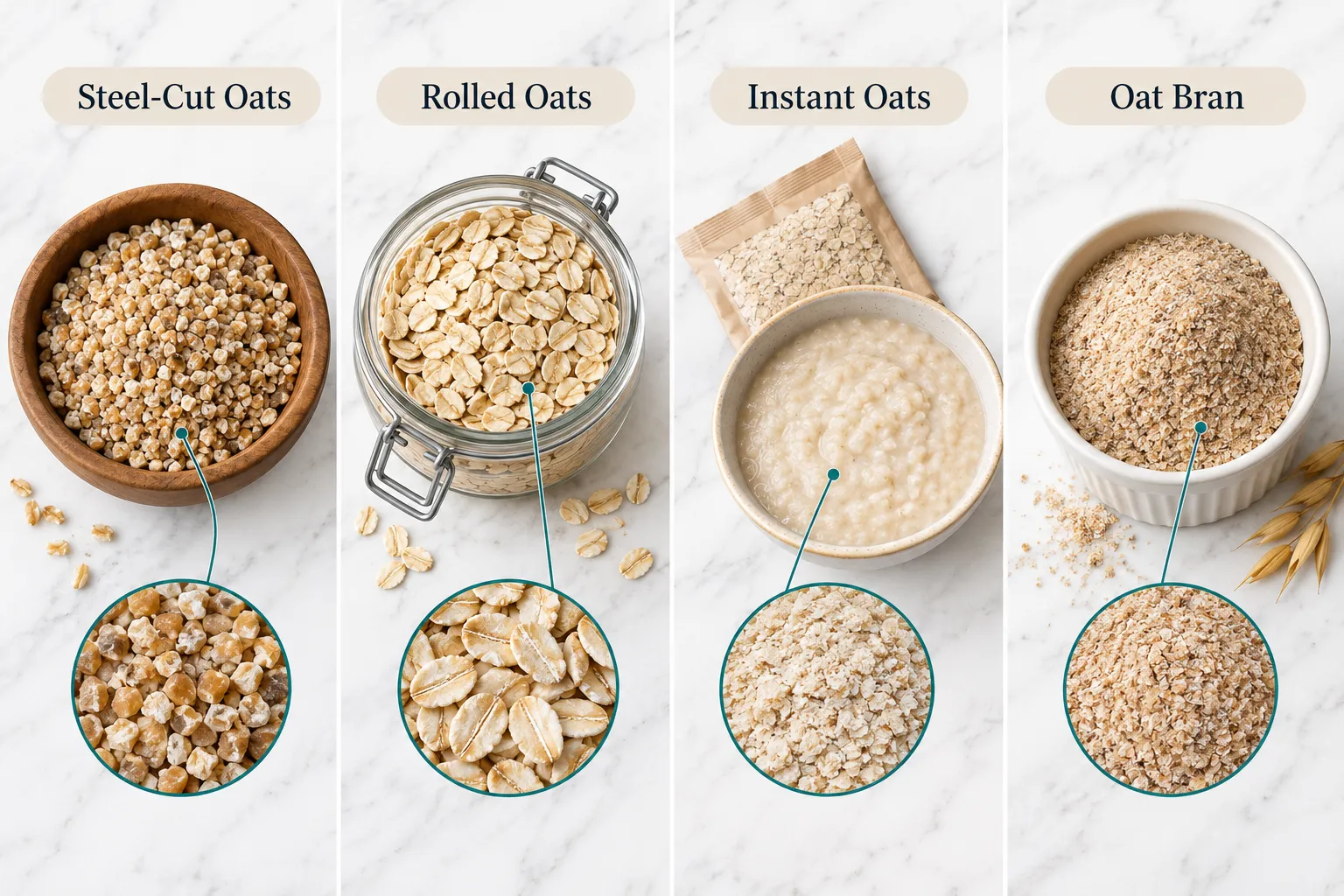
Not all oatmeal is the same. The four main types differ in processing level, texture, cooking time, and how they behave in recipes.
| Type | Processing | Cook Time | Texture | Best For |
|---|---|---|---|---|
| Steel-cut | Least processed (chopped whole groat) | 20-30 min | Chewy, nutty | Slow mornings, meal prep |
| Rolled (old-fashioned) | Steamed and flattened | 5-10 min | Soft but textured | Everyday bowls, baked goods |
| Quick-cook | Rolled thinner | 1-3 min | Softer | Fast mornings |
| Instant | Pre-cooked and dried | 1 min or less | Very soft | Convenience, travel |
Steel-cut oats retain the most of the whole grain structure and have a lower glycemic index than instant varieties. Rolled oats are the most versatile for both cooking and baking. Instant oats trade some texture and nutritional density for speed.
For most recipes referenced on October 29 National Oatmeal Day, rolled oats work best because they balance convenience with texture.
Is Oatmeal Really Good for You? Health Benefits of Eating Oatmeal
Yes, oatmeal is genuinely nutritious, not just a health marketing claim. Oats are one of the few grains with a meaningful amount of soluble fiber called beta-glucan, which has been linked to reduced LDL cholesterol levels in peer-reviewed research. [6]
Key health benefits of eating oatmeal regularly include:
- Heart health: Beta-glucan fiber may help lower LDL (“bad”) cholesterol, supporting cardiovascular health [6]
- Blood sugar management: The soluble fiber slows digestion, helping to moderate blood glucose spikes after eating
- Satiety: Oats are filling, which can support weight management by reducing hunger between meals
- Micronutrients: Oats provide manganese, phosphorus, magnesium, iron, and B vitamins
- Gut health: Prebiotic fiber in oats feeds beneficial gut bacteria
One important note: oatmeal prepared with large amounts of added sugar, cream, or flavored instant packets can offset these benefits significantly. Plain oats with whole-food toppings deliver the most nutritional value.
Gluten-Free Oatmeal Options
Oats are naturally gluten-free, but most commercially grown oats are processed in facilities that also handle wheat, barley, or rye, making cross-contamination a real risk for people with celiac disease or non-celiac gluten sensitivity.
Certified gluten-free oats are grown and processed under strict protocols to prevent cross-contamination. Brands that carry a certified gluten-free label have been independently tested to meet established thresholds (generally below 20 parts per million of gluten).
Choose certified gluten-free oats if you have celiac disease or a confirmed gluten sensitivity. Standard supermarket rolled oats, even if they seem plain, are not safe for this group unless the package carries a recognized certification mark.
For more allergen-friendly cooking ideas, explore peanut allergy alternatives for other substitution strategies that apply well to oatmeal recipes.
Best Oatmeal Recipes to Make on October 29
October 29 National Oatmeal Day is an ideal occasion to try something beyond plain porridge. The following recipe categories cover the full range from quick weekday options to more elaborate preparations.
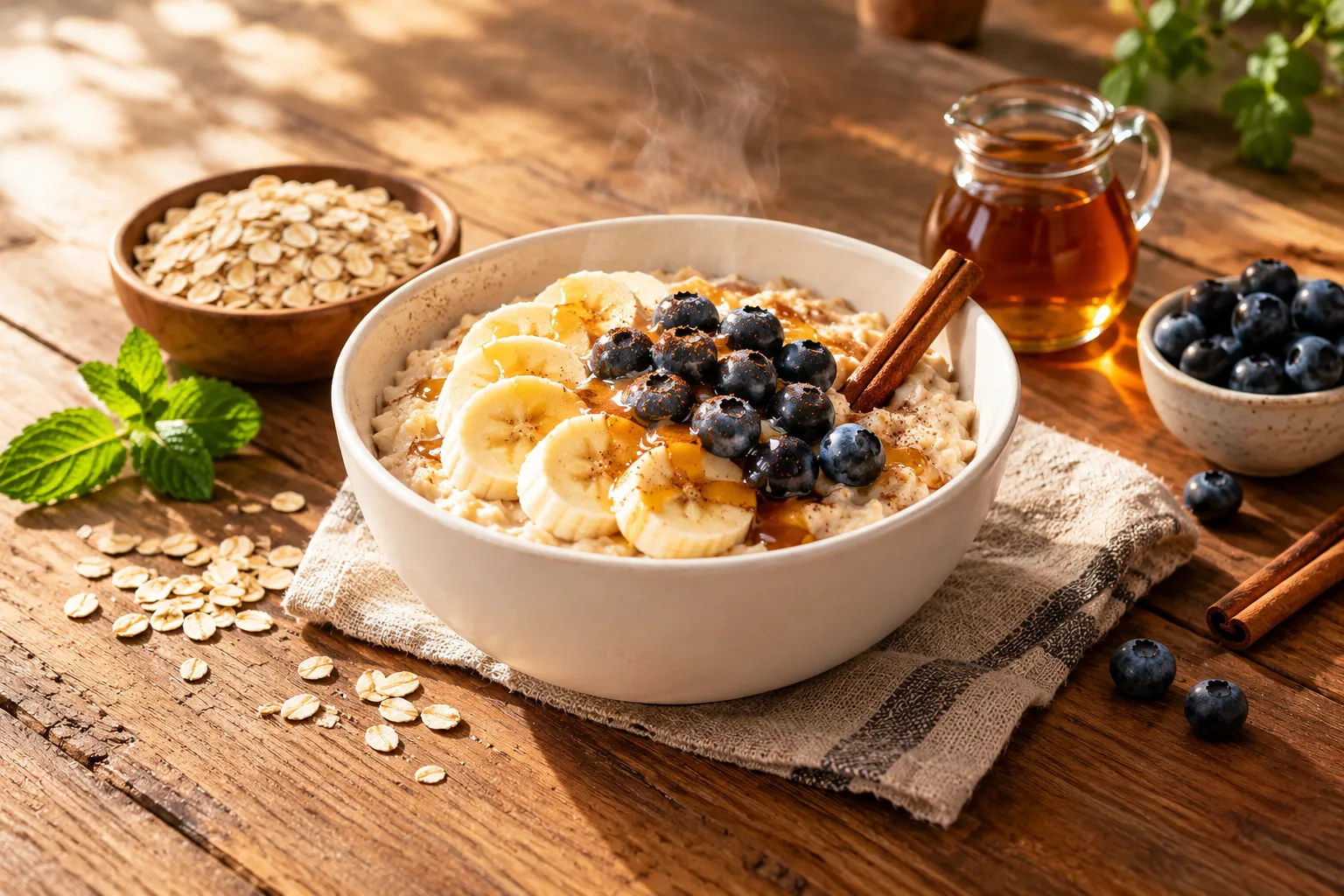
Classic stovetop oatmeal: Simmer one cup of rolled oats in two cups of water or milk for five to seven minutes, stirring occasionally, until creamy. Top with sliced banana and a teaspoon of honey.
Savory oatmeal: Cook steel-cut oats and top with a poached egg, sauteed spinach, and a pinch of smoked paprika. This approach treats oatmeal like a grain bowl rather than a sweet breakfast.
Baked oatmeal: Mix rolled oats with eggs, milk, baking powder, and your choice of fruit, then bake at 375F for 35 to 40 minutes. It slices like a casserole and reheats well throughout the week.
Oatmeal cookies and bars: Rolled oats are the backbone of classic oatmeal raisin cookies and granola bars. For a broader collection of oatmeal-based recipes and preparations, the 468 Oatmeal Cookbook is a strong reference point.
Overnight Oats Recipe for Beginners
Overnight oats require no cooking and are ready to eat straight from the refrigerator the next morning, making them one of the easiest oatmeal preparations for busy schedules.
Basic overnight oats (one serving):
- Add 1/2 cup of rolled oats to a jar or container with a lid
- Pour in 1/2 cup of milk (dairy or plant-based) and 1/4 cup of plain yogurt
- Add 1 teaspoon of chia seeds and 1 teaspoon of maple syrup
- Stir to combine, then seal and refrigerate overnight (minimum 6 hours)
- In the morning, stir again and add toppings of choice
The ratio of oats to liquid is the most important variable. Too little liquid produces dry, chalky oats. Too much produces a thin, soupy consistency. The 1:1 oats-to-liquid ratio (with yogurt counted as part of the liquid) is the standard starting point.
Creative Oatmeal Topping Ideas and How to Make Oatmeal Taste Better
Plain oatmeal tastes bland on its own, but the right toppings transform it completely. The key is combining a sweetener, a fat source, a texture element, and a flavor accent.
Sweeteners:
- Maple syrup, honey, brown sugar, or mashed ripe banana
Fat sources (add creaminess and satiety):
- Almond butter, peanut butter, tahini, coconut cream, or a spoonful of full-fat yogurt
Texture elements:
- Toasted pecans, pumpkin seeds, granola, or shredded coconut
Flavor accents:
- Cinnamon, cardamom, vanilla extract, orange zest, or a pinch of sea salt
A small pinch of salt added during cooking is one of the most underrated tricks for making oatmeal taste better. It doesn’t make the oatmeal salty; it rounds out the flavor and makes other toppings more vivid.
For a complementary flavor combination, a spoonful of homemade caramel drizzled over apple oatmeal is a popular fall variation worth trying on October 29.
How to Meal Prep Oatmeal for the Week
Batch-cooking oatmeal on a Sunday takes about 20 minutes and eliminates weekday breakfast decisions entirely. Steel-cut oats work best for meal prep because they hold their texture in the refrigerator for four to five days without becoming mushy.
Batch prep method:
- Bring 4 cups of water (or milk) to a boil in a medium saucepan
- Add 1 cup of steel-cut oats and a pinch of salt
- Reduce heat to low and simmer uncovered for 20 to 25 minutes, stirring occasionally
- Remove from heat and let cool for 10 minutes
- Divide into four or five individual containers
- Refrigerate for up to five days
To reheat, add two tablespoons of water or milk to a portion before microwaving for 60 to 90 seconds. This restores the creamy consistency. Add fresh toppings after reheating rather than before storing.
Oatmeal vs Other Breakfast Grains
Oatmeal holds its own against most common breakfast grains, particularly for fiber and protein content.
| Grain (cooked, 1 cup) | Fiber | Protein | Notable trait |
|---|---|---|---|
| Rolled oats | ~4g | ~6g | High soluble fiber (beta-glucan) |
| Cream of wheat | ~1g | ~4g | Lower fiber, smoother texture |
| Quinoa | ~5g | ~8g | Complete protein, all amino acids |
| Brown rice (as cereal) | ~3.5g | ~5g | Mild flavor, gluten-free by nature |
| Cornmeal porridge | ~2g | ~3g | Lower protein and fiber |
(Values are estimates based on standard nutritional databases; individual brands vary.)
Oatmeal’s main advantage over most alternatives is its beta-glucan content, a specific type of soluble fiber not found in meaningful quantities in wheat, corn, or rice cereals. Quinoa edges out oats on protein and offers a complete amino acid profile, but oats are typically less expensive and more widely available.
For a grain-adjacent breakfast comparison, rice pudding recipes offer another whole-grain morning option worth exploring.
Fun Facts About Oats
A few details about oats that are genuinely surprising:
- Oats were one of the last major cereal crops to be domesticated, lagging behind wheat and barley by several thousand years
- Scotland has a long cultural association with oats, and Scottish oat porridge (made with steel-cut oats, water, and salt, no sweetener) is considered the traditional preparation
- In 2012, PepsiCo’s Quaker Oats brand ran a campaign noting that Americans eat an estimated 2.7 billion servings of oatmeal per year, though this figure reflects marketing data from that period [7]
- The U.S. Food and Drug Administration approved a health claim for oat beta-glucan and heart disease risk reduction in 1997, making it one of the earliest food-specific health claims allowed on packaging [6]
- Oat straw, the dried stalks of the oat plant, has historically been used in herbal teas and is sold separately from the grain
October also overlaps loosely with broader oat-themed observances, as some sources note that October has been informally associated with oatmeal promotion alongside the October 29 date. [8][9]
Restaurants Giving Deals on National Oatmeal Day
Restaurant promotions for October 29 National Oatmeal Day are not standardized or guaranteed year to year. Some coffee chains and fast-casual breakfast restaurants have offered limited-time discounts or free oatmeal samples on October 29 in past years, but these promotions are announced close to the date and vary by location.
How to find 2026 deals:
- Check the social media accounts of major coffee and breakfast chains in the week leading up to October 29
- Search “[chain name] National Oatmeal Day 2026” in the days immediately before the holiday
- Sign up for loyalty program emails from restaurants that serve oatmeal, as deals are often sent to members only
There is no reliable centralized database of participating restaurants. The safest approach is to celebrate at home with a recipe that suits your taste rather than depending on a deal that may not materialize in your area.
FAQ
What day is National Oatmeal Day in 2026? National Oatmeal Day falls on Thursday, October 29, 2026. It is observed annually on October 29 every year.
Is National Oatmeal Day a federal holiday? No. National Oatmeal Day is an unofficial food observance with no federal or state government recognition. No law or presidential proclamation established it. [3][5]
Who started National Oatmeal Day? The origin is not documented. No founder or sponsoring organization has been publicly identified, and the date may have spread through food blogs and holiday calendars without a single originator. [4]
Can people with celiac disease eat oatmeal on National Oatmeal Day? Yes, but only if they use certified gluten-free oats. Standard oats carry a cross-contamination risk from wheat, barley, and rye during processing.
What is the healthiest way to eat oatmeal? Plain rolled or steel-cut oats cooked in water or unsweetened milk, topped with fresh fruit, nuts, and a small amount of natural sweetener. Minimizing added sugar preserves the most nutritional benefit.
How long does cooked oatmeal last in the refrigerator? Cooked oatmeal stored in a sealed container lasts four to five days in the refrigerator. Steel-cut oats hold their texture best over multiple days.
What is the difference between overnight oats and regular oatmeal? Regular oatmeal is cooked with heat. Overnight oats are soaked raw in liquid overnight, which softens them without cooking. Both use rolled oats and produce a similar final texture.
Is oatmeal good for weight loss? Oatmeal is high in fiber and protein relative to its calorie count, which promotes satiety. It can support weight management as part of a balanced diet, but calories from added toppings still count.
Can oatmeal be eaten savory instead of sweet? Yes. Savory oatmeal topped with eggs, vegetables, cheese, or broth is popular in many cuisines and is a practical way to add variety to oatmeal routines.
What is beta-glucan? Beta-glucan is a soluble dietary fiber found in oats and barley. It forms a gel-like substance in the digestive tract and has been linked to lower LDL cholesterol and improved blood sugar regulation. [6]
Conclusion
October 29 National Oatmeal Day may be informal and historically undocumented, but it provides a practical reason to revisit one of the most nutritious and affordable breakfast options available. Whether the goal is heart health, meal prep efficiency, creative recipe exploration, or simply a warm bowl on a cool autumn morning, oats deliver on all fronts.
Actionable next steps for October 29, 2026:
- Pick one new recipe format to try: overnight oats, baked oatmeal, or savory oatmeal
- Buy certified gluten-free oats if anyone in your household has celiac disease or gluten sensitivity
- Batch-cook a week’s worth of steel-cut oats on October 29 to simplify the following week’s breakfasts
- Experiment with two or three topping combinations using the sweet-fat-texture-accent framework
- Browse the 468 Oatmeal Cookbook for a wider range of oatmeal-based recipes beyond the basic bowl
For more food holiday inspiration throughout the year, check out National Popcorn Day on January 19 and National Chocolate Pudding Day on June 26 for similar guides to other beloved food observances.
References
- National Oatmeal Day. celebrationnation.com.
- National Oatmeal Day. nationaltoday.com.
- National Oatmeal Day. checkiday.com.
- National Oatmeal Day. holidaydaylist.com.
- National Oatmeal Day. holidayscalendar.com.
- Story. abcnews.com.
- Lets Hear You Cheer Yay Oats. pepsico.com.
- Oatmeal. calendar.cx.
- National Oatmeal Day Kalw Almanac October 29 2015. kalw.org.
