
Last updated: October 31, 2026
Quick Answer
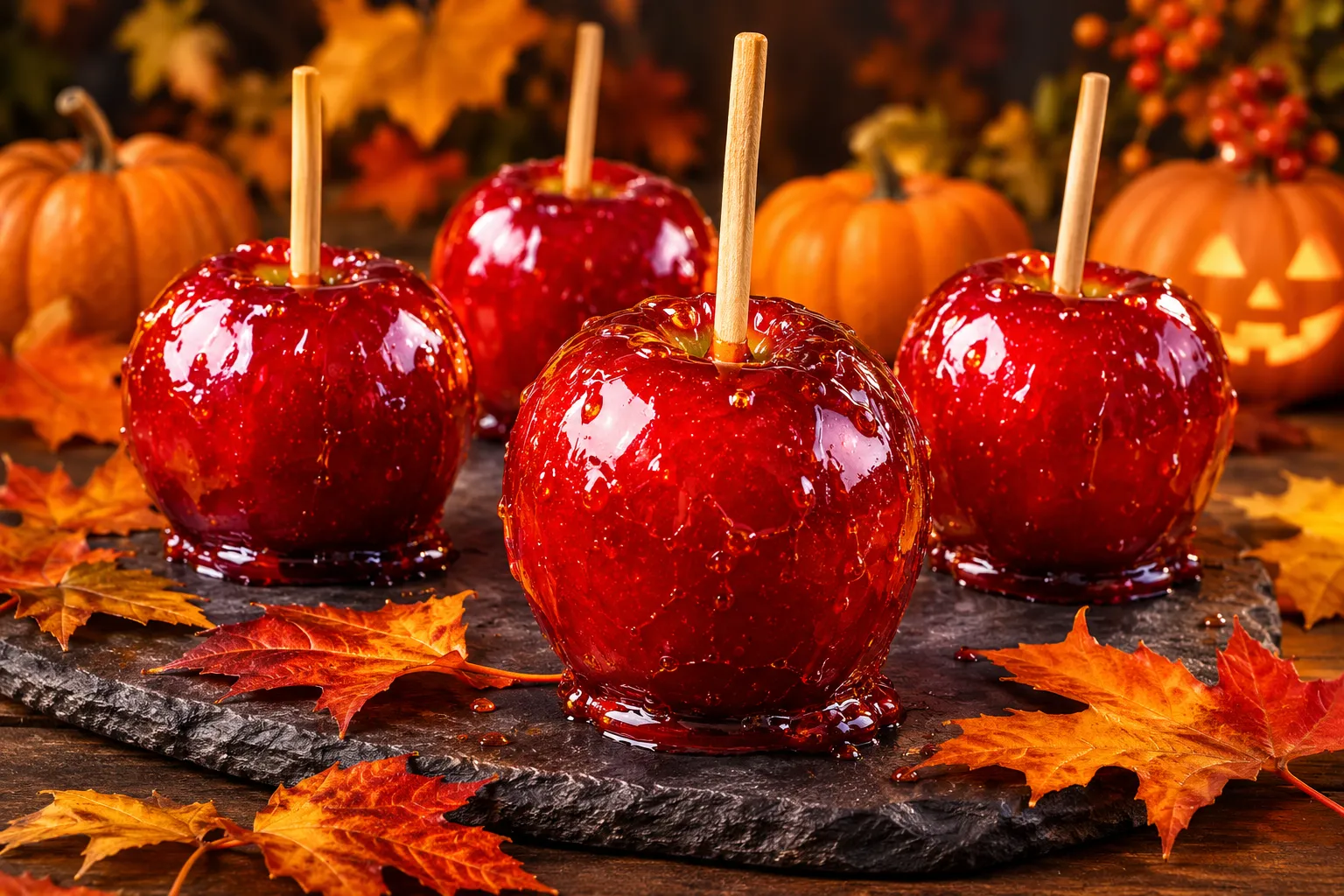
October 31 National Candy Apple Day is an annual informal food observance celebrated every Halloween alongside trick-or-treating, fall festivals, and other seasonal traditions. It honors the glossy, sugar-coated apple treat first created in Newark, New Jersey, in 1908. The day has no government declaration behind it, but it is consistently recognized across major food-holiday calendars, including Checkiday, The Nibble, and Wikipedia’s list of food days. [1][2]
Key Takeaways
- October 31 National Candy Apple Day falls on Halloween every year and is treated as a recurring annual observance, not a one-time event. [1][2]
- The candy apple was invented in 1908 by Newark confectioner William W. Kolb, who dipped apples in shiny red cinnamon candy coating. [2]
- The holiday has no verified government origin; one source estimates it was established in 1988, but no documentary proof exists. [3]
- Classic candy apples use a hard sugar-and-corn-syrup shell; caramel apples use a soft, chewy coating, they are distinctly different treats.
- Candy apples last up to one week at room temperature if stored properly; humidity is the biggest enemy of the candy shell.
- Common mistakes when making candy apples at home include using wet apples, skipping a candy thermometer, and pulling the coating before it reaches the hard-crack stage (300-310°F / 149-154°C).
- Several food-holiday calendars also list National Caramel Apple Day on October 31, making it a dual celebration for apple-dessert fans.
- If nut allergies or dental concerns are an issue, caramel apple slices, baked apple crisps, and apple nachos are solid alternatives.
- For the best candy apple coating adhesion, apples must be completely dry, room temperature, and free of wax residue.
- You can make candy apples up to 24 hours ahead; beyond that, moisture from the apple begins to soften the shell.
What Is National Candy Apple Day and Why Is It October 31
National Candy Apple Day is an informal annual food holiday observed on October 31 in the United States. It celebrates the candy apple, a whole fresh apple dipped in a hard, glossy sugar coating, typically red and flavored with cinnamon or cherry. [2]
The date is no coincidence. Candy apples have been tied to autumn fairs, carnivals, and Halloween celebrations for over a century. Placing the holiday on October 31 clusters it naturally with Halloween’s existing traditions, costumes, trick-or-treating, and seasonal sweets. [2] The Nibble’s October food-holiday calendar lists both National Candy Apple Day and National Caramel Apple Day on October 31, alongside National Carve a Pumpkin Day, reinforcing the intentional Halloween alignment.
The day itself is informal. Checkiday categorizes it among other unofficial observances and cites no statutory origin. [2] Wikipedia’s list of food days includes it in the October 31 row but leaves the “Origin” column blank. One source, WhatNationalDayIsIt, claims the holiday was established in 1988, but provides no documentation, so that date should be treated as anecdotal. [3]
Bottom line: If you’re looking for an official proclamation, there isn’t one. October 31 National Candy Apple Day is a culturally recognized, widely listed food observance that gains its legitimacy through consistent annual celebration rather than any legal act.
Candy Apple History: When Did This Tradition Start
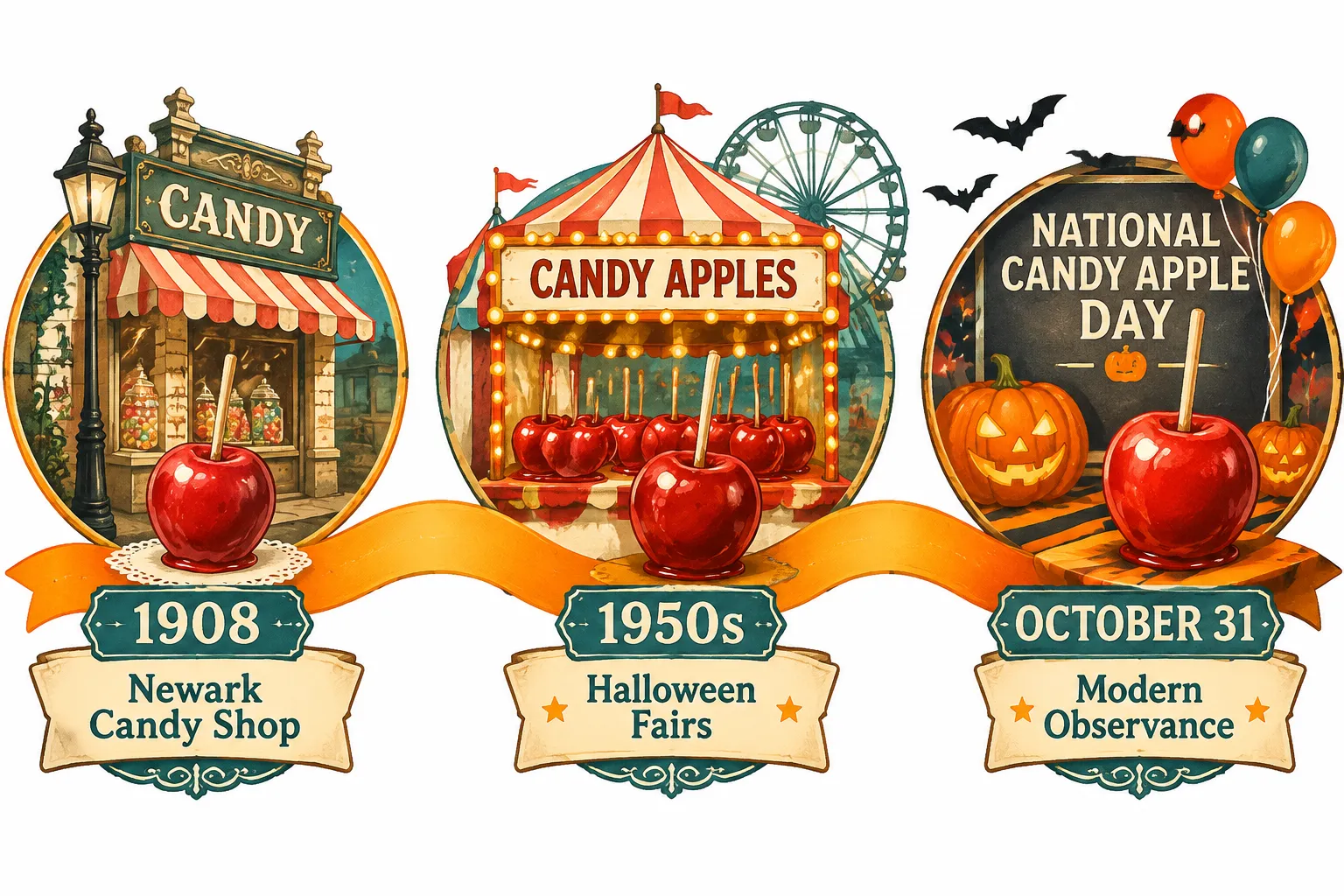
The candy apple was born in 1908 in Newark, New Jersey. Confectioner William W. Kolb experimented with a red cinnamon candy mixture and coated whole apples on sticks, creating the glossy treat now recognized worldwide. [2][3]
Kolb’s creation spread quickly through fairs, carnivals, and circuses. By the mid-20th century, candy apples had become a Halloween staple, appearing at school parties and neighborhood trick-or-treat tables throughout the 1950s and 1970s. [3] FoodHolidays.app credits Dan Walker of Kraft Foods with helping bring caramel apples and candy apple culture into broader commercial recognition during the 1950s, and notes that Vito Raimondi’s caramel-apple-making machine (invented in 1960) dramatically increased production volume.
One unexpected cultural spin-off: the iconic glossy red finish of Kolb-style candy apples reportedly inspired the color “Candy Apple Red,” which became popular for automotive paint, nail polish, and lipstick from the 1950s onward.
For more fall baking inspiration tied to this season, browse fall baking ideas and the extensive 1165 Apple Cookbook for apple-focused recipes year-round.
How to Make Candy Apples at Home: Easy Recipe
Making candy apples at home requires only a handful of ingredients, but temperature control is non-negotiable. The candy coating must reach the hard-crack stage (300-310°F / 149-154°C) to set firm and glossy.
Ingredients (makes 6 apples):
- 6 medium apples (Granny Smith or Fuji work best)
- 2 cups granulated sugar
- 1 cup light corn syrup
- 1/2 cup water
- Red food coloring (gel preferred)
- 1/2 tsp cinnamon extract or cherry flavoring
- 6 wooden candy apple sticks
Steps:
- Wash apples thoroughly, remove wax coating by briefly dipping in boiling water, then dry completely.
- Insert sticks firmly through the stem end.
- Line a baking sheet with parchment paper and lightly grease it.
- Combine sugar, corn syrup, and water in a heavy-bottomed saucepan over medium-high heat. Do not stir once it begins to boil.
- Clip a candy thermometer to the side of the pan. Cook until the mixture reaches 300°F (149°C).
- Remove from heat. Stir in food coloring and flavoring quickly.
- Tilt the pan and dip each apple, swirling to coat evenly. Let excess drip off.
- Place on prepared baking sheet. Allow 15-20 minutes to set fully at room temperature.
Key decision rule: Use Granny Smith apples if you want a tart contrast with the sweet shell. Use Fuji or Honeycrisp if you prefer a sweeter overall bite.
How to Get Candy Coating to Stick to Apples Properly
The coating fails to stick when the apple surface is wet, waxy, or too cold. Every drop of moisture prevents the sugar from adhering.
Checklist for proper adhesion:
- Remove store wax: Briefly dip the apple in boiling water for 5 seconds, then wipe dry.
- Dry thoroughly: Pat with a clean towel, then air-dry for at least 30 minutes.
- Bring to room temperature: Cold apples cause the hot sugar to set too fast before it coats evenly.
- Dip in one smooth motion: Swirl once, lift, and let gravity pull the excess off. Multiple dips create uneven layers.
- Work quickly: The sugar syrup cools fast once off the heat; keep the pan warm if making a large batch.
Common mistake: Using refrigerator-cold apples straight from the bag. The temperature shock causes the coating to run off rather than adhere.
Why Do Candy Apples Get Sticky and How to Prevent It
Candy apples become sticky when humidity causes the sugar shell to absorb moisture from the air. Sugar is hygroscopic, it pulls water molecules toward itself, and a relative humidity above roughly 50% is enough to soften the shell within hours.
Prevention tips:
- Make candy apples on a dry day, not a rainy one.
- Store finished apples individually wrapped in cellophane, twisted tightly at the stick end.
- Keep them at room temperature in a cool, dry space. Refrigeration introduces condensation, which accelerates softening.
- Do not store near cut fruit, which releases moisture into the air.
How Long Do Candy Apples Last Before They Go Bad
A properly stored candy apple lasts up to one week at room temperature. The hard sugar shell itself does not spoil quickly, but the fresh apple inside continues to release moisture, which eventually breaks down the coating from the inside out.
| Storage Method | Shelf Life |
|---|---|
| Room temperature, wrapped in cellophane | Up to 7 days |
| Room temperature, unwrapped | 1-2 days before stickiness |
| Refrigerated | Not recommended (condensation softens shell) |
| Frozen | Not recommended (texture degrades on thaw) |
Edge case: In high-humidity climates or during wet autumn weather, even properly wrapped apples may soften within 2-3 days. Making smaller batches closer to the serving date is the practical solution.
Can You Make Candy Apples Ahead of Time
Yes, candy apples can be made up to 24 hours ahead without significant quality loss. After 24 hours, moisture migration from the apple core begins to visibly affect the shell’s texture and clarity.
For October 31 National Candy Apple Day parties or Halloween events, the practical window is:
- Same day: Best results, clearest shine, firmest shell.
- Night before: Acceptable for most purposes; wrap tightly in cellophane immediately after setting.
- Two days before: Shell may show slight cloudiness or soft spots near the stick entry point.
If planning a large batch for a national food holiday celebration, prep the sticks, washed apples, and measured ingredients the day before, then dip on the morning of October 31.
Best Candy Apple Toppings and Flavors
The classic red cinnamon shell is just the starting point. Modern candy apples come in dozens of flavor profiles and topping combinations, making October 31 National Candy Apple Day an opportunity to experiment. [2]
Popular coatings:
- Classic red cinnamon hard candy shell
- Cherry-flavored red shell
- Green apple (sour) shell
- Black candy coating (activated charcoal or black food gel) for Halloween aesthetics
- White chocolate drizzle over a standard red base
Topping ideas (press on immediately after dipping, before the shell sets):
- Crushed peanuts or almonds (see 348 Almond Recipes for more nut-based ideas)
- Rainbow sprinkles
- Mini M&Ms or candy-coated chocolate pieces
- Crushed Oreos
- Sea salt flakes for a sweet-salty contrast
- Edible glitter for Halloween party presentations
Choose X if: You want a dramatic Halloween table centerpiece, go with black coating and orange sprinkles. You want classic county-fair flavor, stick with red cinnamon and no toppings.
Candy Apples vs. Caramel Apples: What’s the Difference
Candy apples and caramel apples look similar but have distinct coatings, textures, and preparation methods. Candy apples use a hard, glassy shell made from cooked sugar syrup; caramel apples use a soft, chewy coating made from melted caramel or toffee.
| Feature | Candy Apple | Caramel Apple |
|---|---|---|
| Coating texture | Hard, glassy, brittle | Soft, chewy, stretchy |
| Main ingredient | Sugar + corn syrup | Caramel or toffee |
| Required temperature | 300-310°F (hard-crack stage) | 245-250°F (firm-ball stage) |
| Shelf life | Up to 7 days | 1-2 weeks refrigerated |
| Best for | Visual impact, Halloween | Flavor depth, toppings |
| Dental concern | High (hard bite) | Moderate (sticky) |
Both appear on The Nibble’s October 31 food-holiday calendar as separate entries, so technically the date honors both.
Where to Buy Candy Apples Near Me
Candy apples are widely available in October at grocery stores, candy shops, farmers markets, and seasonal pop-up booths near Halloween. Major retailers like Walmart, Target, and Whole Foods typically stock pre-made candy apples in October. Specialty candy stores and gourmet apple shops (common in apple-growing regions) often offer artisan versions with premium toppings.
Where to look:
- Grocery store seasonal sections (usually stocked from early October)
- Local apple orchards and farm stands
- Halloween pop-up candy shops
- Farmers markets
- Gourmet candy retailers online (search “gourmet candy apples” for shipped options)
Candy apple deals and discounts on October 31: Many candy stores and bakeries run Halloween promotions. Check local business social media pages in the week before October 31 for flash sales, buy-one-get-one deals, or free toppings offers tied to National Candy Apple Day. CDKitchen specifically frames October 31, 2026 as a prime occasion for candy apple promotions and party hosting. [4]
Are Candy Apples Safe for Kids With Allergies
Plain candy apples (sugar, corn syrup, water, food coloring, flavoring, apple) are naturally free of the most common allergens: gluten, dairy, eggs, and soy. However, cross-contamination and added toppings change the picture.
Allergy considerations:
- Nut allergies: Any candy apple rolled in peanuts, almonds, or mixed nuts is a serious risk. Always confirm topping ingredients.
- Corn syrup sensitivity: Standard recipes use corn syrup; substitute with pure cane syrup or glucose syrup if needed.
- Food dye reactions: Some children are sensitive to Red 40, the most common dye in red candy coatings. Natural beet-based dyes are an alternative.
- Dental appliances: The hard shell is a dental hazard for children with braces or loose teeth. Sliced caramel apple versions are a safer option.
Practical rule: If buying from a store or fair, always ask whether shared equipment is used for nut-containing products.
Other Apple Desserts Instead of Candy Apples
If candy apples aren’t right for your group, due to allergies, dental concerns, or preference, several apple-based alternatives capture the same fall spirit.
- Caramel apple slices: All the flavor, none of the hard-bite risk.
- Baked cinnamon apples: Core and bake with brown sugar, butter, and spices.
- Apple nachos: Thinly sliced apples drizzled with caramel, chocolate, and toppings.
- Apple cider donuts: A fair-food classic with a similar seasonal appeal.
- Apple crisp or crumble: A crowd-pleasing warm dessert for parties.
- Mini apple pies: For a more structured dessert option, explore 2053 Pie Cookbook for seasonal pie ideas.
These alternatives also work well alongside candy apples at a Halloween party spread, giving guests options regardless of dietary needs.
Common Mistakes When Dipping Apples in Candy Coating
Even experienced home cooks run into problems. Here are the most frequent errors and how to fix them:
- Not reaching hard-crack temperature: Pulling the syrup at 280°F instead of 300°F produces a sticky, soft coating that never truly hardens. Use a thermometer, no guessing.
- Skipping the wax removal step: Store-bought apples are waxed for shelf life. That wax repels the sugar coating. A quick boiling-water rinse and thorough dry fixes this.
- Dipping wet or cold apples: Moisture causes the coating to slide off; cold surfaces cause uneven thickness. Room temperature, bone-dry apples only.
- Stirring after boiling begins: Stirring introduces crystallization, producing a grainy, opaque shell instead of a glassy one. Set it and leave it.
- Making too large a batch at once: The syrup cools quickly after leaving heat. Dip 6-8 apples per batch maximum.
- Storing in the refrigerator: Condensation forms on cold surfaces, destroying the shell. Always store at room temperature, wrapped individually.
For broader homemade confection guidance, 154 Homemade Recipes includes a range of from-scratch treat ideas suited to holiday celebrations.
FAQ
What date is National Candy Apple Day? National Candy Apple Day is observed annually on October 31, the same day as Halloween. All major food-holiday calendars, including Checkiday and The Nibble, confirm this date. [1][2]
Is National Candy Apple Day an official US holiday? No. It is an informal food observance with no government proclamation or legal status. It is recognized through cultural tradition and food-holiday calendars rather than any official act. [2]
Who invented the candy apple? William W. Kolb, a candy maker in Newark, New Jersey, is credited with creating the candy apple in 1908 by coating apples in shiny red cinnamon candy. [2][3]
What apples work best for candy apples? Granny Smith apples are the most popular choice because their tartness balances the sweet coating. Fuji and Honeycrisp are good alternatives for a sweeter result. Avoid very large apples, they are harder to coat evenly.
Can you use white sugar instead of corn syrup? Corn syrup helps prevent crystallization. You can reduce the amount, but removing it entirely often results in a grainy, cloudy shell. If corn syrup is not an option, glucose syrup is the closest functional substitute.
Why is my candy coating cloudy instead of clear? Cloudiness usually means the sugar crystallized during cooking, often from stirring after the boil started or from sugar crystals on the sides of the pan. Brush the inner pan walls with a damp pastry brush while cooking to prevent this.
How do you eat a candy apple without breaking a tooth? Bite at the side of the apple rather than directly through the hard candy face. Many people score the coating lightly with a knife before serving to make it easier to bite through.
Are candy apples vegan? A standard candy apple (sugar, corn syrup, water, food coloring, apple) is vegan. Always check flavoring extracts and food dyes for animal-derived additives, as some red dyes (like carmine) are not vegan.
What is the difference between National Candy Apple Day and National Caramel Apple Day? Both fall on October 31 according to The Nibble’s calendar. They celebrate different treats: candy apples have a hard sugar shell; caramel apples have a soft, chewy caramel coating.
How early should I start making candy apples for a Halloween party? The morning of October 31 is ideal. Making them the evening before is acceptable if they are individually wrapped and stored in a cool, dry place. Avoid making them more than 24 hours in advance.
What temperature does candy coating need to reach? The hard-crack stage: 300-310°F (149-154°C). Below 300°F, the coating stays tacky. Above 310°F, it can burn and turn bitter.
Where can I find creative apple recipes beyond candy apples? The 1165 Apple Cookbook is a strong resource, and browsing national food day tags can surface seasonal apple-forward celebrations throughout the year.
Conclusion
October 31 National Candy Apple Day is one of those informal holidays that earns its place on the calendar through sheer cultural persistence. From William W. Kolb’s 1908 Newark candy shop to Halloween party tables in 2026, the candy apple has remained a fall icon for over a century.
Actionable next steps for October 31:
- Gather ingredients the day before and prep your apples by removing wax and air-drying overnight.
- Invest in a candy thermometer, it is the single most important tool for a successful batch.
- Try at least one non-classic topping: crushed almonds, sea salt, or edible glitter add a modern twist without changing the fundamental recipe.
- If serving children with allergies or braces, offer caramel apple slices alongside the classic whole version.
- Check local candy shops and grocery stores for October 31 deals tied to the holiday before making a full home batch. [4]
Whether you make them from scratch or pick them up at a farmers market, celebrating October 31 National Candy Apple Day is as simple as enjoying a treat that has defined autumn for generations.
References
- checkiday.com.
- National Candy Apple Day. checkiday.com.
- Candy Apple. whatnationaldayisit.com.
- National Candy Apple Day. cdkitchen.com.
