March 5 National Marmalade Day: History, Recipes & How to Celebrate in 2026
- 0
- 14 Min Read
Last updated: March 5, 2026
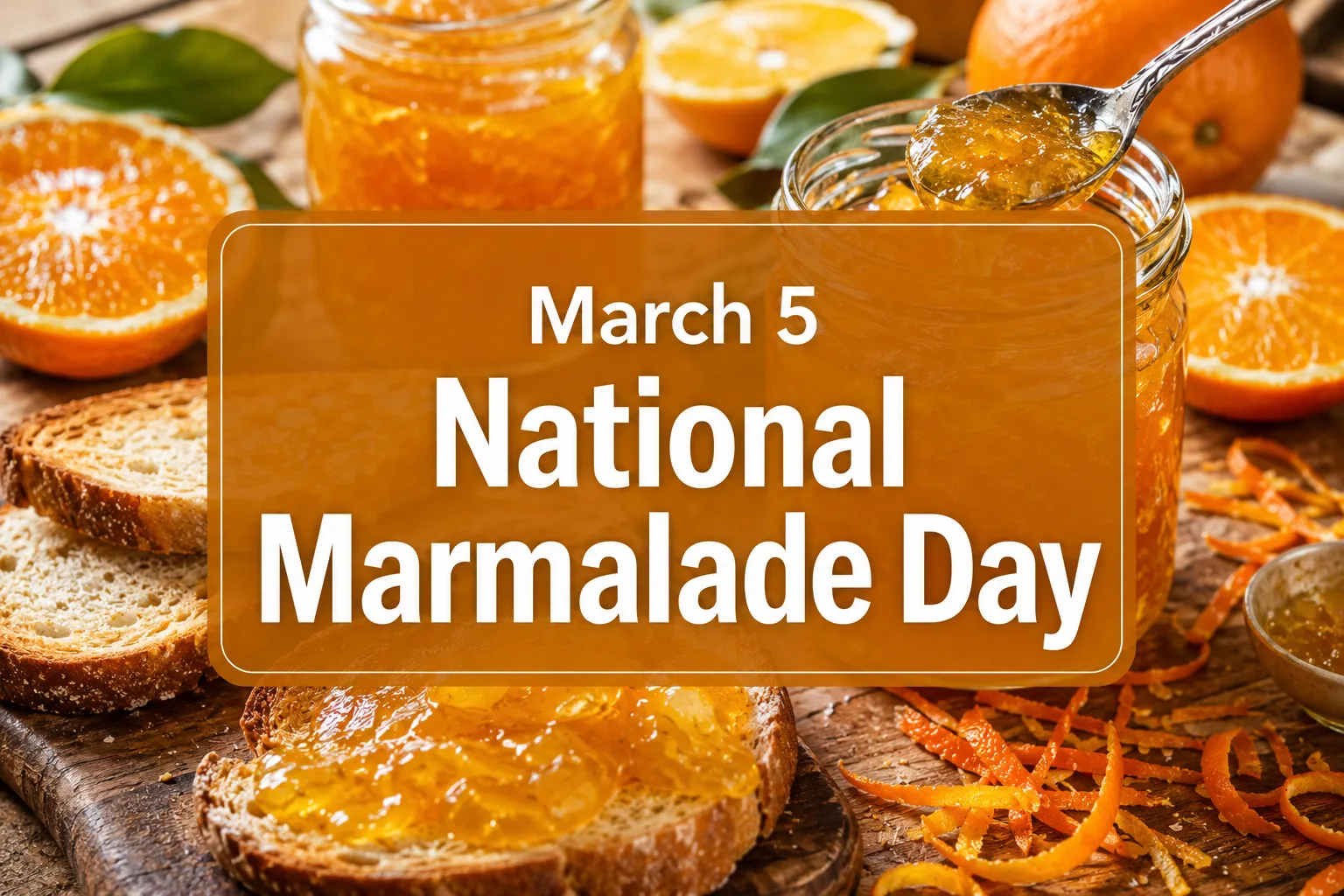
Quick Answer: March 5 National Marmalade Day is an annual food holiday celebrating one of the world’s oldest citrus preserves. First recognized on March 5, 2004, the day honors marmalade’s centuries-long history and encourages people to eat, make, and share this bittersweet spread. In 2026, it falls on a Thursday and is observed primarily in the United States and the United Kingdom.
Key Takeaways
- March 5 is the most widely recognized date for National Marmalade Day, with origins tracing back to a branded event launched on March 5, 2004 [1]
- Marmalade differs from jam and jelly because it is made with citrus fruit and includes pieces of peel, giving it a distinctive bitter flavor
- Seville oranges are the traditional base ingredient, though lemon, grapefruit, and lime versions are common
- Most commercial marmalades are naturally gluten-free and can be made vegan
- Proper storage in a sealed jar keeps unopened marmalade fresh for up to two years; refrigerate after opening and use within three to four weeks
- The Dalemain Marmalade Festival in Cumbria, England, is the world’s largest marmalade competition and runs annually in late February or early March
- Marmalade contains small amounts of vitamin C and dietary fiber from citrus peel, though its sugar content is high
- National Marmalade Day is a great excuse to try artisan brands, make a batch at home, or use marmalade as a glaze, sauce, or baking ingredient
What Is National Marmalade Day and Why March 5?
March 5 National Marmalade Day is a food holiday dedicated to marmalade, the citrus-based preserve made from fruit juice, peel, and sugar. March 5 became the recognized date after a promotional event launched on that date in 2004 by UK preserve brand Duerr’s, which helped cement the day in food media calendars [1].
The date has since been reinforced by food publications and event listings that consistently list March 5 as the primary observance [2][7]. Some confusion exists because a competing informal observance occasionally circulates on March 13, which gained traction during pandemic-era virtual content. However, March 5 remains the most widely cited and commercially recognized date.
The timing also aligns with the tail end of Seville orange season (January through February), making early March a natural moment to celebrate freshly made marmalade. The Dalemain Marmalade Festival in Cumbria, England, which draws thousands of entries from home preservers and professionals worldwide, typically runs in late February or early March, reinforcing the seasonal connection.
“Marmalade is one of the few preserves that has its own dedicated festival, its own dedicated day, and a centuries-long argument about who invented it.”, food historians, broadly
Marmalade History and Origin
Marmalade’s roots stretch back to 15th-century Portugal, where a quince paste called marmelada (from marmelo, meaning quince) was traded across Europe. The citrus version familiar today developed in Britain during the 18th century, when Seville oranges from Spain became widely available [8].
Key milestones in marmalade history:
- 1561: Records suggest Mary Queen of Scots consumed a quince-based marmelada for seasickness
- 1700s: Scottish and English producers began making orange marmalade from Seville oranges
- 1797: Janet Keiller of Dundee, Scotland, is often credited with popularizing chunky orange marmalade commercially, though the exact story is debated [8]
- 1800s: Marmalade became a British breakfast staple, exported globally through the British Empire
- 2004: National Marmalade Day is formally recognized on March 5 [1]
The Dalemain World Marmalade Awards, launched in 2005, gave the preserve a modern cultural platform and helped revive interest among younger home cooks.
Marmalade vs. Jam vs. Jelly: What Is the Difference?
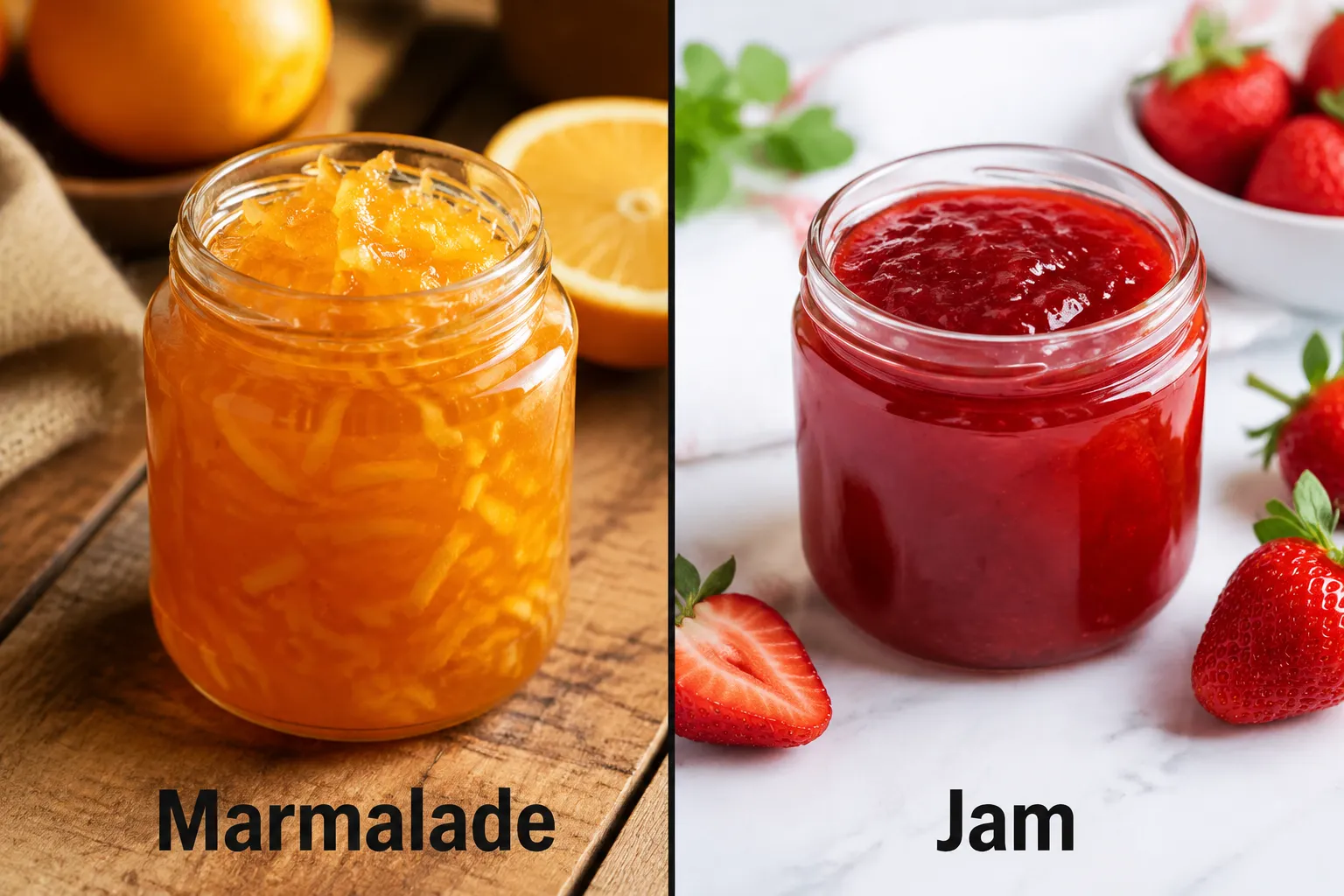
Marmalade, jam, and jelly are all fruit preserves, but they differ in ingredients and texture. Marmalade is made exclusively from citrus fruit and always includes pieces of peel, which gives it a characteristic bitter edge. Jam uses crushed or chopped fruit (any variety) with sugar and no peel. Jelly is made from strained fruit juice only, producing a clear, smooth spread with no fruit pieces.
| Feature | Marmalade | Jam | Jelly |
|---|---|---|---|
| Base fruit | Citrus only | Any fruit | Any fruit (juice) |
| Peel included | Yes | No | No |
| Texture | Chunky or fine-cut | Thick, fruit pieces | Smooth, clear |
| Flavor profile | Sweet and bitter | Sweet, fruity | Sweet, mild |
| Best use | Toast, glazes, sauces | Toast, pastries, PB&J | Toast, glazes, desserts |
Marmalade vs. orange jam: Orange jam is made from the flesh of oranges without peel, producing a sweeter, smoother spread. Marmalade includes peel, which adds bitterness and a more complex flavor. If a jar labeled “orange jam” contains no peel, it is not technically marmalade.
How to Celebrate March 5 National Marmalade Day
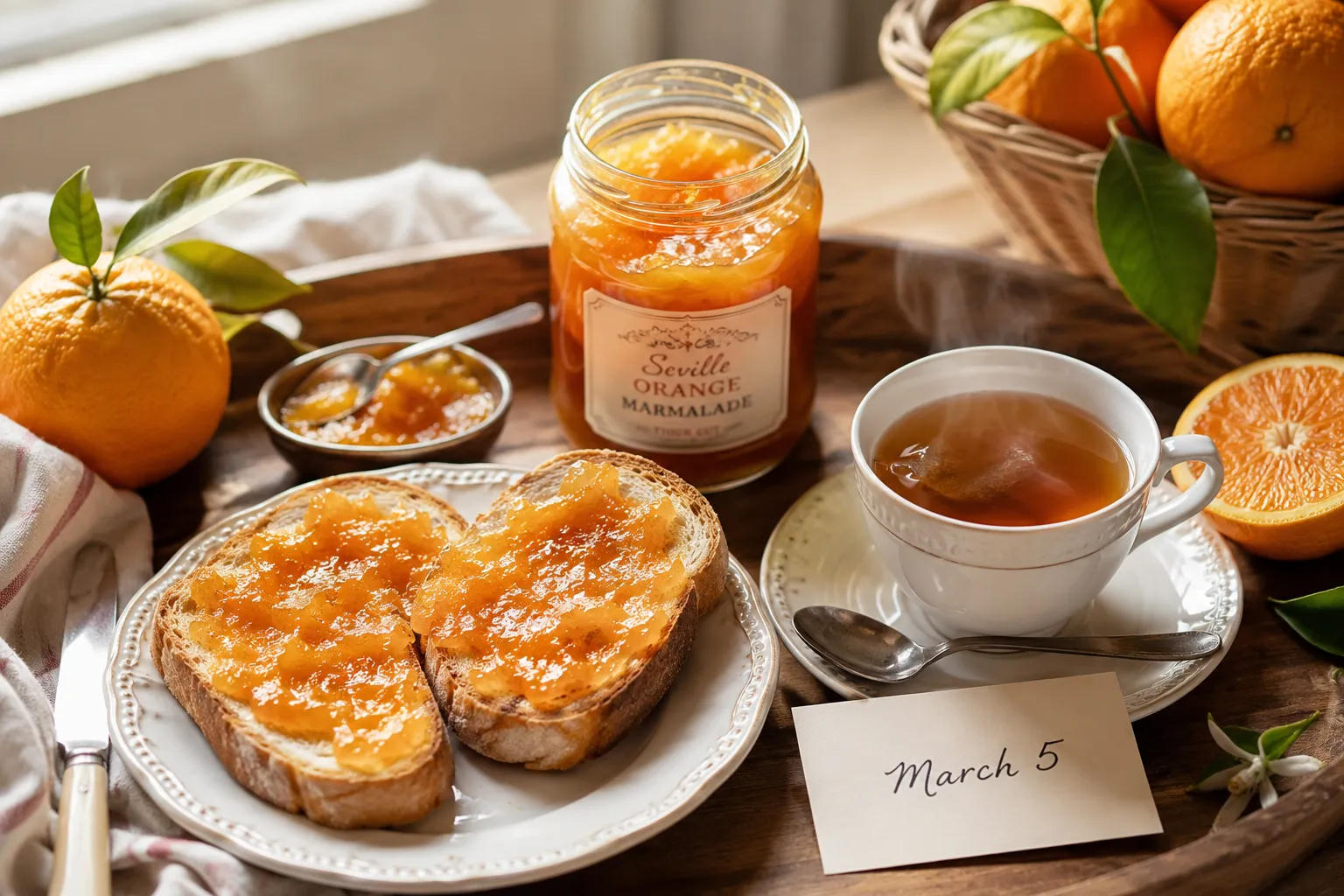
Celebrating March 5 National Marmalade Day doesn’t require a grand plan. The simplest approach is to eat marmalade on toast, but the day offers plenty of creative options for food lovers at every skill level.
Simple ways to celebrate:
- Spread thick-cut Seville orange marmalade on buttered sourdough toast
- Try a brand you’ve never bought before, such as an artisan small-batch variety
- Make a batch of homemade marmalade (see the recipe section below)
- Host a marmalade tasting with three to five different varieties
- Use marmalade as a glaze on roast chicken, salmon, or pork ribs [4]
- Bake marmalade into muffins, scones, or a sponge cake
- Share a jar as a gift with a handwritten note
For those who enjoy pairing food holidays, March 5 lands close to other seasonal food celebrations. If you enjoy baking and preserves, you might also enjoy exploring our guide to National Blueberry Pancake Day for more breakfast-themed inspiration, or check out the 165 Jam Cookbook for recipes that pair beautifully with homemade marmalade.
How to Make Homemade Marmalade: A Simple Recipe
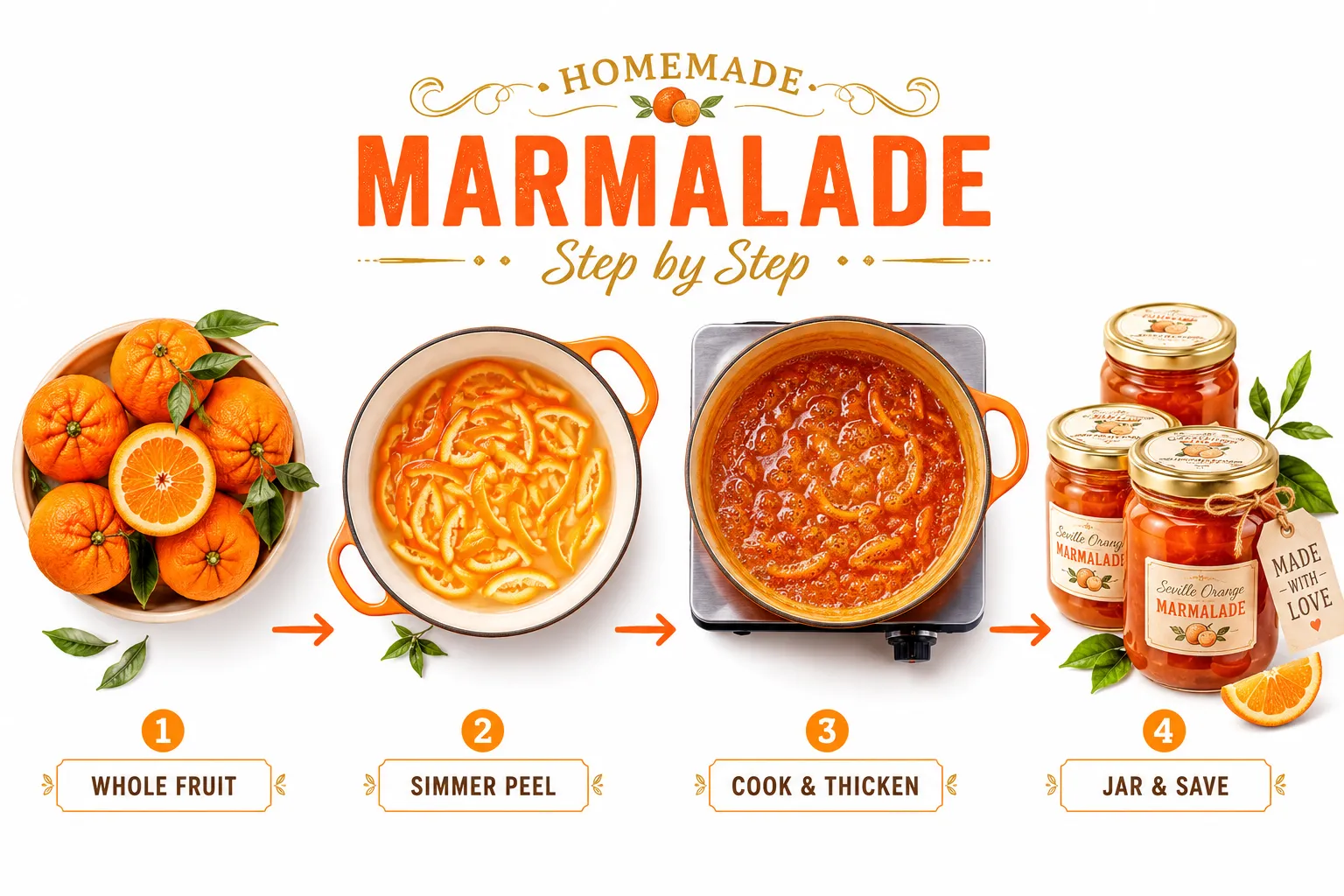
Homemade marmalade requires just three ingredients: citrus fruit, sugar, and water. The process takes about two hours but is straightforward for beginner preservers [5][6].
Basic Seville Orange Marmalade (makes approximately 4 to 5 jars)
Ingredients:
- 1 kg (about 2.2 lbs) Seville oranges
- 2 liters (about 8.5 cups) water
- 2 kg (about 4.4 lbs) granulated sugar
Steps:
- Wash the oranges thoroughly. Halve and juice them, reserving the juice and seeds.
- Cut the peel into thin or thick strips depending on your preference. Tie the seeds and any white pith scraps in a muslin bag (this releases natural pectin, which helps the marmalade set).
- Place the peel, juice, muslin bag, and water in a large heavy-bottomed pot. Simmer uncovered for 1.5 to 2 hours until the peel is completely soft.
- Remove the muslin bag, squeezing it gently back into the pot to release pectin.
- Add the sugar and stir over low heat until fully dissolved.
- Bring to a rolling boil and cook until the setting point is reached (104°C / 220°F on a candy thermometer, or use the cold plate test: drop a small amount on a chilled plate; if it wrinkles when pushed, it’s ready).
- Skim off any foam, then pour into sterilized jars and seal immediately.
Common marmalade-making mistakes to avoid:
- Not softening the peel enough before adding sugar: Sugar hardens peel. Always fully soften it first.
- Skipping the pectin step: Removing the muslin bag too early reduces the natural pectin and produces a runny set.
- Boiling before sugar dissolves: This causes crystallization.
- Underfilling jars: Air space encourages mold. Fill to within 5mm of the rim.
- Using sweet oranges instead of Seville: Sweet oranges lack the bitterness and pectin level needed for traditional marmalade [5].
Best Marmalade Brands to Try
Several well-established brands produce high-quality marmalade worth trying on March 5 National Marmalade Day. Availability varies by country, but most can be found in major supermarkets or ordered online.
- Duerr’s (UK): One of the oldest marmalade brands, founded in 1881, and the company behind the original March 5 National Marmalade Day promotion [1]
- Robertson’s (UK): Known for its “Golden Shred” fine-cut orange marmalade, a British household staple for over 130 years
- Wilkin & Sons Tiptree (UK): An award-winning Essex producer with a range of citrus varieties including Seville orange, lemon curd, and grapefruit
- Bonne Maman (France/US): Widely available in American supermarkets; produces a mild, sweet orange marmalade
- Stonewall Kitchen (US): An artisan American brand with creative varieties like orange ginger and lemon rosemary
- Mackays (Scotland): A Dundee-based producer that honors the Scottish marmalade tradition with chunky-cut varieties
Choose based on preference:
- For traditional bitter flavor: Duerr’s or Robertson’s Thick Cut
- For a milder, sweeter taste: Bonne Maman
- For creative flavor combinations: Stonewall Kitchen or Tiptree
Where to Buy Marmalade Near Me
Marmalade is widely available in grocery stores, specialty food shops, and online retailers. Most major supermarket chains stock at least two to three varieties in the jam and preserves aisle. For artisan or imported options, check specialty food stores, British import shops, or online retailers such as Amazon, World Market, or the brand’s own website.
Tips for finding quality marmalade:
- Look for “Seville orange” on the label for the most traditional flavor
- “Fine cut” means thin peel strips; “thick cut” or “chunky” means larger pieces
- Check the ingredient list: the best marmalades list fruit first, before sugar
- Farmers’ markets in late winter often feature local small-batch producers
Marmalade Nutrition Facts and Health Benefits
Marmalade is primarily a sugar-based preserve, so it should be consumed in moderation. A typical one-tablespoon (20g) serving of orange marmalade contains roughly 49 calories, 13 grams of sugar, and small amounts of vitamin C from the citrus peel and juice. The peel also contributes a modest amount of dietary fiber.
What marmalade offers nutritionally:
- Small amounts of vitamin C (antioxidant support)
- Trace dietary fiber from citrus peel
- No fat or cholesterol
- Natural flavonoids from citrus, which some research associates with cardiovascular benefits (though marmalade’s sugar content offsets these in large quantities)
Is marmalade gluten-free? Yes. Traditional marmalade contains only citrus fruit, sugar, and water, making it naturally gluten-free. Always check labels on flavored or specialty varieties, as some may include additives.
Is marmalade vegan? Standard marmalade is vegan. Some premium varieties use beeswax or honey-based pectin substitutes, so check the label if strict veganism is a concern.
Why Is Marmalade Bitter and Is That Normal?
Yes, bitterness is a defining and intentional characteristic of marmalade. The bitter flavor comes from compounds in citrus peel, particularly from Seville oranges, which contain higher levels of bitter flavonoids than sweet oranges [8]. The pith (white layer beneath the outer peel) also contributes bitterness.
This bitterness is what separates marmalade from orange jam and is considered a quality marker by traditionalists. If a marmalade tastes only sweet with no bitter edge, it was likely made with sweet oranges or had most of the pith removed.
For those who find marmalade too bitter:
- Try “fine cut” varieties, which use less peel
- Look for marmalades made with blood oranges or tangerines, which are milder
- Pair marmalade with rich, fatty foods (butter, cream cheese, pork) to balance the bitterness
Best Ways to Use Marmalade in Cooking
Marmalade is far more versatile than its reputation as a toast topping suggests. Its combination of sweetness, acidity, and bitterness makes it a strong flavoring agent in both sweet and savory cooking [4].
Savory uses:
- Glaze for meat: Brush marmalade over chicken thighs, pork tenderloin, or salmon fillets before roasting
- Sauce base: Whisk into pan drippings with mustard and a splash of whiskey for a quick pan sauce (for more whiskey-based cooking ideas, see the 167 Whiskey Cookbook)
- Salad dressing: Blend with olive oil, Dijon mustard, and white wine vinegar
- Cheese board accompaniment: Pairs exceptionally well with sharp cheddar, aged Gouda, and brie
Sweet uses:
- Cake filling or glaze: Spread between sponge cake layers or brush over a warm loaf cake
- Muffins and scones: Swirl into batter before baking
- Oatmeal topping: Stir a spoonful into hot oatmeal (see our 468 Oatmeal Cookbook for more ideas)
- Thumbprint cookies: Use as a jam substitute in shortbread thumbprints
Marmalade Storage Tips: How Long Does It Last?
Unopened commercially produced marmalade typically lasts up to two years when stored in a cool, dark pantry. Once opened, refrigerate the jar and use within three to four weeks for best flavor and safety. Homemade marmalade, properly sealed in sterilized jars, can last up to one year unopened.
Storage checklist:
- Store unopened jars away from heat and direct sunlight
- Always use a clean, dry spoon to avoid introducing moisture or bacteria
- If mold appears on the surface, discard the entire jar
- Homemade marmalade that did not set properly (too runny) should be refrigerated and used within two weeks
- Freezing is possible but changes the texture of the peel; not generally recommended
Frequently Asked Questions About March 5 National Marmalade Day
What date is National Marmalade Day? March 5 is the most widely recognized date for National Marmalade Day. It was established on March 5, 2004, and is consistently listed as the primary date by food media and event guides [1][2][7].
Is there more than one National Marmalade Day date? Yes, some informal sources reference March 13 as an alternative date, largely due to pandemic-era virtual content. March 5 remains the original and most recognized date.
What is the Dalemain Marmalade Festival? The Dalemain World Marmalade Awards and Festival is an annual competition held at Dalemain Mansion in Cumbria, England. It is the world’s largest marmalade competition, attracting thousands of entries from home preservers and professional producers globally.
Can I make marmalade without Seville oranges? Yes. Lemons, grapefruits, limes, blood oranges, and even kumquats all make excellent marmalade. Seville oranges are traditional because of their high pectin content and strong bitter flavor, but any citrus with a thick peel works well.
How is marmalade different from orange jam? Marmalade contains citrus peel and has a bitter flavor. Orange jam is made from orange flesh only, with no peel, and tastes sweeter and milder.
Is store-bought marmalade as good as homemade? Both have merit. Commercial marmalades from quality brands like Duerr’s or Tiptree are consistent and convenient. Homemade marmalade allows full control over sweetness, peel thickness, and flavor additions like ginger or whiskey.
What foods pair best with marmalade? Classic pairings include buttered toast, scones, and croissants. For savory pairings, try it with sharp cheddar, roast pork, or grilled salmon. For more breakfast pairing ideas, see our guide to National Croissant Day.
Is marmalade suitable for diabetics? Standard marmalade is high in sugar and should be consumed carefully by people managing blood sugar. Sugar-free or reduced-sugar marmalades are available from specialty brands and are made with pectin and sweeteners instead of granulated sugar.
Why does my homemade marmalade not set? The most common causes are insufficient pectin (from not using the seeds and pith), not reaching the correct setting temperature (104°C / 220°F), or using sweet oranges instead of Seville. Re-boiling with added pectin can sometimes rescue a runny batch.
What is the best marmalade for cooking? For savory glazes and sauces, use a thick-cut Seville orange marmalade with a strong bitter note. For baking, a finer-cut or milder variety blends more smoothly into batters and fillings.
Conclusion
March 5 National Marmalade Day is more than a novelty food holiday. It’s a genuine opportunity to reconnect with one of the oldest preserved foods in the Western culinary tradition, one that has survived centuries precisely because it rewards both simplicity and creativity.
Actionable next steps for 2026:
- Mark your calendar for March 5 and plan at least one marmalade-focused meal or snack
- Try a new brand or variety you haven’t tasted before, whether that’s a chunky Seville orange classic or a ginger-spiked artisan jar
- Make a batch at home using the three-ingredient recipe above, especially while Seville oranges are still in season
- Cook with marmalade beyond toast: use it as a glaze, sauce base, or baking ingredient to discover its full range
- Share the day by gifting a jar to a neighbor, colleague, or friend with a note about the holiday’s history
For more food holiday inspiration throughout the year, explore our coverage of National Dark Chocolate Day and National Pizza Day, and browse all our food holiday guides for year-round celebration ideas.
References
[1] Spread The Word It’s National Marmalade Day – https://duerrs.co.uk/spread-the-word-it%E2%80%99s-national-marmalade-day/
[2] Holidays March – https://www.thenibble.com/fun/more/facts/holidays-march.asp
[4] Tip Of The Day Uses For Marmalade – https://blog.thenibble.com/2019/02/21/tip-of-the-day-uses-for-marmalade/
[5] Its Marmalade Making Time Again – https://www.waresofknutsford.co.uk/blog/its-marmalade-making-time-again/
[6] Marmalade – https://www.diy.org/article/marmalade
[7] eventguide – https://eventguide.com/today/days/2026/03/05.htm
[8] Marmalade A Preserve We Must Preserve – https://www.telegraph.co.uk/foodanddrink/7175487/Marmalade-a-preserve-we-must-preserve.html