April 20 National Pineapple Upside-Down Cake Day: History, Recipes, and How to Celebrate in 2026
- 0
- 14 Min Read

Last updated: April 20, 2026
Quick Answer: April 20 National Pineapple Upside-Down Cake Day is an unofficial annual food holiday in the United States observed every year on April 20. It celebrates the classic American dessert featuring caramelized pineapple rings, maraschino cherries, and a buttery brown sugar glaze baked beneath a simple yellow cake batter, then flipped upside-down to reveal a glossy, jewel-toned top. The holiday has no federal or state proclamation but is widely recognized across food communities, baking blogs, and social media.
Key Takeaways
- April 20 National Pineapple Upside-Down Cake Day falls on Monday, April 20, 2026, and repeats annually on April 20.
- The holiday is unofficial and culturally driven, with no government recognition.
- The dessert’s popularity traces to the 1920s, when canned pineapple became widely available in American households.
- The classic recipe requires just a handful of pantry staples: butter, brown sugar, canned pineapple rings, maraschino cherries, and basic cake batter.
- Yes, the cake must be flipped immediately after baking for best results.
- Butter-free and fresh-pineapple variations are possible but require technique adjustments.
- Fruit alternatives such as peaches, pears, and cherries work well with the same upside-down method.
- The day is best celebrated by baking the cake at home, sharing it with others, or visiting a local bakery.
What Is National Pineapple Upside-Down Cake Day?
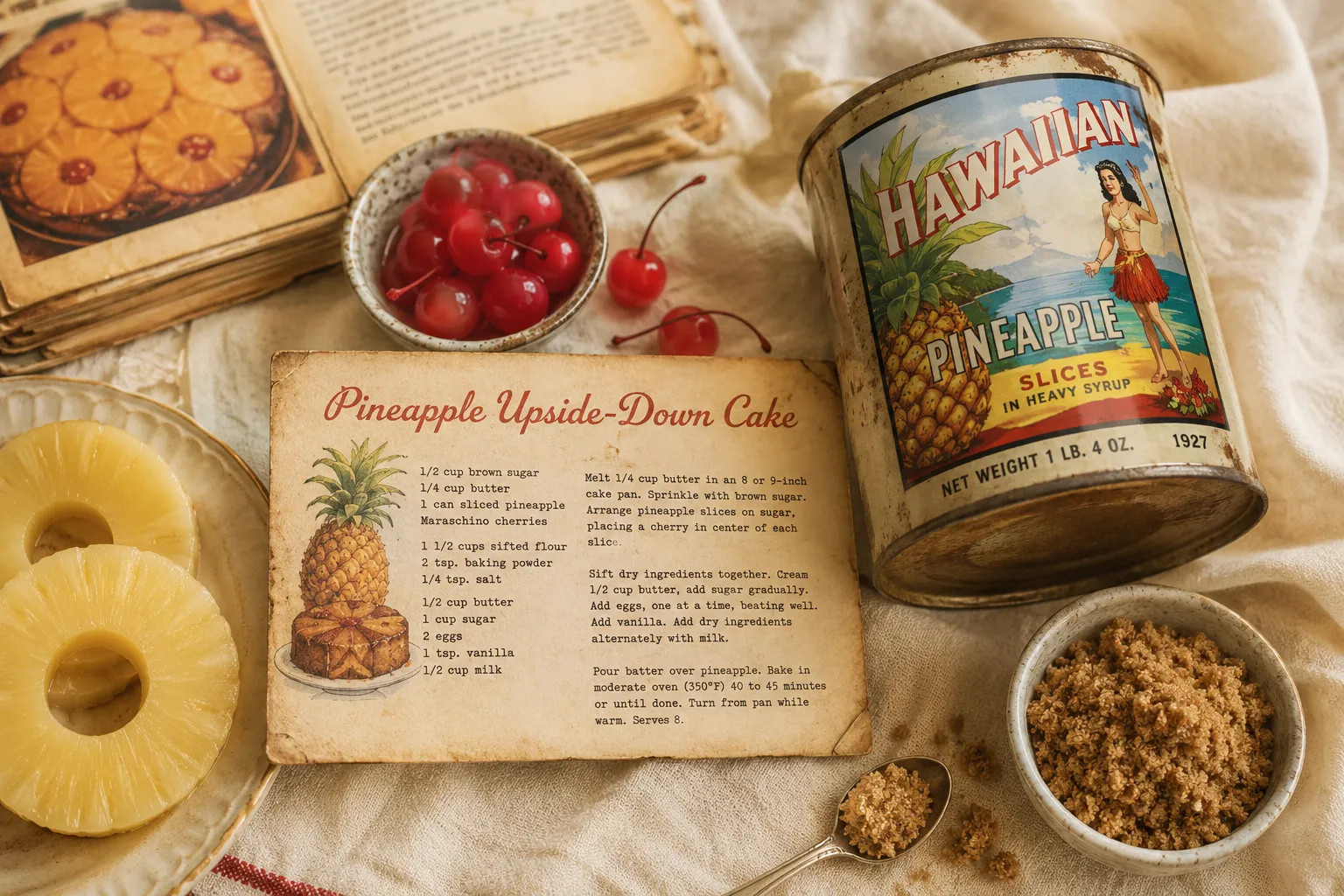
National Pineapple Upside-Down Cake Day is an unofficial American food holiday observed annually on April 20. It is dedicated to celebrating the retro baked dessert known for its caramelized pineapple topping, sticky brown sugar glaze, and soft cake base that gets revealed only after the pan is inverted.
The holiday appears on major food and event calendars under categories like “Food & Drinks” and “Fun and Flavorful Food Holidays.” It carries no legal status at the federal or state level, but that has not stopped it from gaining genuine traction among home bakers, food bloggers, and dessert enthusiasts each year. [2][7][10]
The core activity is simple: bake or eat a pineapple upside-down cake. That accessibility is a big part of why the holiday resonates. It does not require a party, a gift, or a reservation. [7]
Is National Pineapple Upside-Down Cake Day a Real Holiday?
It is a real cultural observance, but not a legally recognized public holiday. No federal agency, state legislature, or presidential proclamation has officially designated April 20 as National Pineapple Upside-Down Cake Day.
Instead, the day belongs to the growing category of informal American food observances that spread through community participation, social media sharing, and food culture websites. Sites like Checkiday, Calendarr, and National Today all list it as an annual observance on April 20, confirming its consistent, year-over-year presence. [3][4][7]
Bottom line: It is as “real” as the people who celebrate it make it. Millions of similar unofficial food holidays exist on the American calendar, and this one has earned its place through decades of nostalgic affection for the dessert itself.
Where Did Pineapple Upside-Down Cake Originate?
The pineapple upside-down cake became a mainstream American dessert in the 1920s, driven largely by the mass commercialization of canned pineapple. Before canned fruit became affordable and widely distributed, fresh pineapple was expensive and difficult to source for most American households.
The Dole Food Company and other canning operations made pineapple rings a pantry staple, and home cooks quickly incorporated them into skillet cakes that were baked fruit-side-down and then inverted for serving. The technique itself was not new. Skillet cakes baked over open fires had been common for generations, and the “upside-down” method was used with apples and other fruits long before pineapple became the star ingredient.
The dessert’s retro charm is a direct product of that mid-century American kitchen culture, and it is that nostalgia that gives April 20 National Pineapple Upside-Down Cake Day much of its emotional appeal. [3][9]
When Did National Pineapple Upside-Down Cake Day Start?
No single founding date or originating organization has been publicly documented for this holiday. This is common among informal American food observances, where the origin is often attributed to food bloggers, marketing campaigns, or community traditions rather than a formal declaration.
What is documented is the holiday’s consistent annual presence. Multiple calendar sources confirm it has been observed on April 20 across multiple years, with future dates already projected through 2031: April 20, 2027 (Tuesday), April 20, 2028 (Thursday), and beyond. [3][10]
The lack of a traceable founder does not diminish the holiday. Many beloved food observances, including National Chocolate Cake Day on January 27 and National Carrot Cake Day on February 3, share similarly murky origin stories.
Why Is April 20 Pineapple Upside-Down Cake Day?
April 20 is the designated date for this observance, though no public record explains why this specific date was chosen over others. This is typical of informal food holidays, where the date selection is often arbitrary or tied to an undocumented early promotion.
What matters more than the “why” of the date is the consistency of the observance. April 20 has been the established date across all major food holiday calendars for multiple consecutive years, making it the recognized and reliable annual anchor for the celebration. [2][4][7][10]
Spring timing also works in the holiday’s favor. April is a natural season for baking and entertaining, and a warm, caramelized fruit cake fits the transitional mood between winter comfort food and summer freshness.

How to Make Pineapple Upside-Down Cake: Best Classic Recipe
The classic pineapple upside-down cake comes together in under an hour and requires no special equipment beyond a 9-inch round cake pan or cast-iron skillet.
Ingredients:
| Component | Quantity |
|---|---|
| Unsalted butter | 4 tablespoons (for topping) |
| Brown sugar, packed | 2/3 cup |
| Canned pineapple rings | 1 can (20 oz), drained |
| Maraschino cherries | 7-9 cherries |
| All-purpose flour | 1.5 cups |
| Granulated sugar | 3/4 cup |
| Baking powder | 1.5 teaspoons |
| Salt | 1/4 teaspoon |
| Eggs | 2 large |
| Whole milk | 1/2 cup |
| Vanilla extract | 1 teaspoon |
| Vegetable oil or melted butter | 1/3 cup |
Steps:
- Preheat oven to 350 degrees F (175 C).
- Melt butter in the bottom of the pan over low heat or in the oven. Stir in brown sugar until evenly spread.
- Arrange pineapple rings over the brown sugar layer. Place one cherry in the center of each ring and fill gaps with additional cherries.
- Whisk dry ingredients in one bowl, wet ingredients in another, then combine until just smooth. Do not overmix.
- Pour batter over the pineapple layer.
- Bake 40-45 minutes until a toothpick inserted in the center comes out clean.
- Cool in the pan for exactly 5 minutes, then invert immediately onto a serving plate.
For more baking inspiration on food holidays, see National Blueberry Pancake Day on January 28 or explore the 2,444-recipe Cake Cookbook for variations.
Do You Flip Pineapple Upside-Down Cake Before Serving?
Yes, flipping the cake is the essential final step. The cake is baked with the pineapple layer on the bottom of the pan. Inverting the pan after baking reveals the caramelized fruit on top, which is the defining visual and textural feature of the dessert.
Timing matters. Wait exactly 5 minutes after removing the cake from the oven before flipping. Too soon and the cake may fall apart. Too long and the caramel layer can harden and stick to the pan, pulling the topping away from the cake.
How to flip safely:
- Place a large flat serving plate face-down on top of the pan.
- Hold both the plate and pan firmly with oven mitts.
- Flip in one confident, swift motion.
- Let the pan sit for 30 seconds before lifting it off, allowing any remaining caramel to drip down.
Pineapple Upside-Down Cake vs. Regular Cake: What Is the Difference?
A pineapple upside-down cake differs from a standard layer cake in both construction and serving method. In a regular cake, the topping (frosting, glaze, or decoration) is applied after baking. In an upside-down cake, the topping is baked into the bottom of the pan and revealed by inverting.
Key differences at a glance:
- Topping placement: Bottom of pan during baking, top after flipping
- Frosting: None required; the caramelized fruit layer is the finish
- Texture: Denser and moister than a typical sponge cake due to the fruit juices soaking upward
- Serving: Best served warm or at room temperature the same day
- Skill level: Beginner-friendly compared to multi-layer frosted cakes
The upside-down method produces a self-glazing effect that no frosting can replicate. That combination of sticky caramel, soft fruit, and tender crumb is what makes the dessert distinctive.
Common Mistakes Making Pineapple Upside-Down Cake
Even experienced bakers run into problems with this cake. Here are the most frequent errors and how to avoid them.
Mistake 1: Not draining the pineapple well enough. Excess liquid from canned pineapple makes the batter soggy and prevents proper caramelization. Drain rings thoroughly and pat them dry with paper towels.
Mistake 2: Skipping the cooling window. Flipping immediately out of the oven causes structural collapse. Waiting more than 10 minutes causes the caramel to set and stick. The 5-minute window is not optional.
Mistake 3: Overmixing the batter. Overmixing develops gluten and produces a tough, dense cake. Stir until just combined.
Mistake 4: Using a pan that is too thin. Thin pans cause the brown sugar layer to burn before the cake bakes through. A cast-iron skillet or heavy-gauge aluminum pan distributes heat more evenly.
Mistake 5: Not greasing the pan sides. Even with butter on the bottom, the sides need greasing to allow clean release.
Can You Make Pineapple Upside-Down Cake Without Butter?
Yes, a butter-free version is possible, though the caramel layer will have a slightly different texture and flavor. Coconut oil is the most common substitute and works well because it has a similar fat content and a complementary tropical flavor that pairs naturally with pineapple.
Substitution guide:
- Coconut oil: 1:1 swap for butter in both the topping and batter; produces a slightly firmer caramel
- Vegan butter: 1:1 swap; closest to the original result
- Avocado oil: Works in the batter but does not caramelize as well in the topping layer
For the topping specifically, some fat is necessary to create the caramel. Completely fat-free versions tend to produce a dry, crystallized sugar layer rather than a glossy glaze.
Pineapple Upside-Down Cake Without Canned Pineapple: Using Fresh Fruit
Fresh pineapple works, but it requires one important adjustment. Raw fresh pineapple contains bromelain, an enzyme that breaks down proteins and can prevent cake batter from setting properly if it comes into direct contact. Briefly cooking or roasting fresh pineapple slices before assembling the cake deactivates bromelain and produces better results.
Steps for using fresh pineapple:
- Slice fresh pineapple into 1/4-inch rings or chunks.
- Sauté in a small amount of butter and brown sugar for 3-4 minutes until slightly softened.
- Proceed with the standard assembly method.
Fresh pineapple produces a brighter, less sweet flavor compared to canned rings, which suits bakers who find the classic version too sugary.
Pineapple Upside-Down Cake Alternatives with Other Fruit
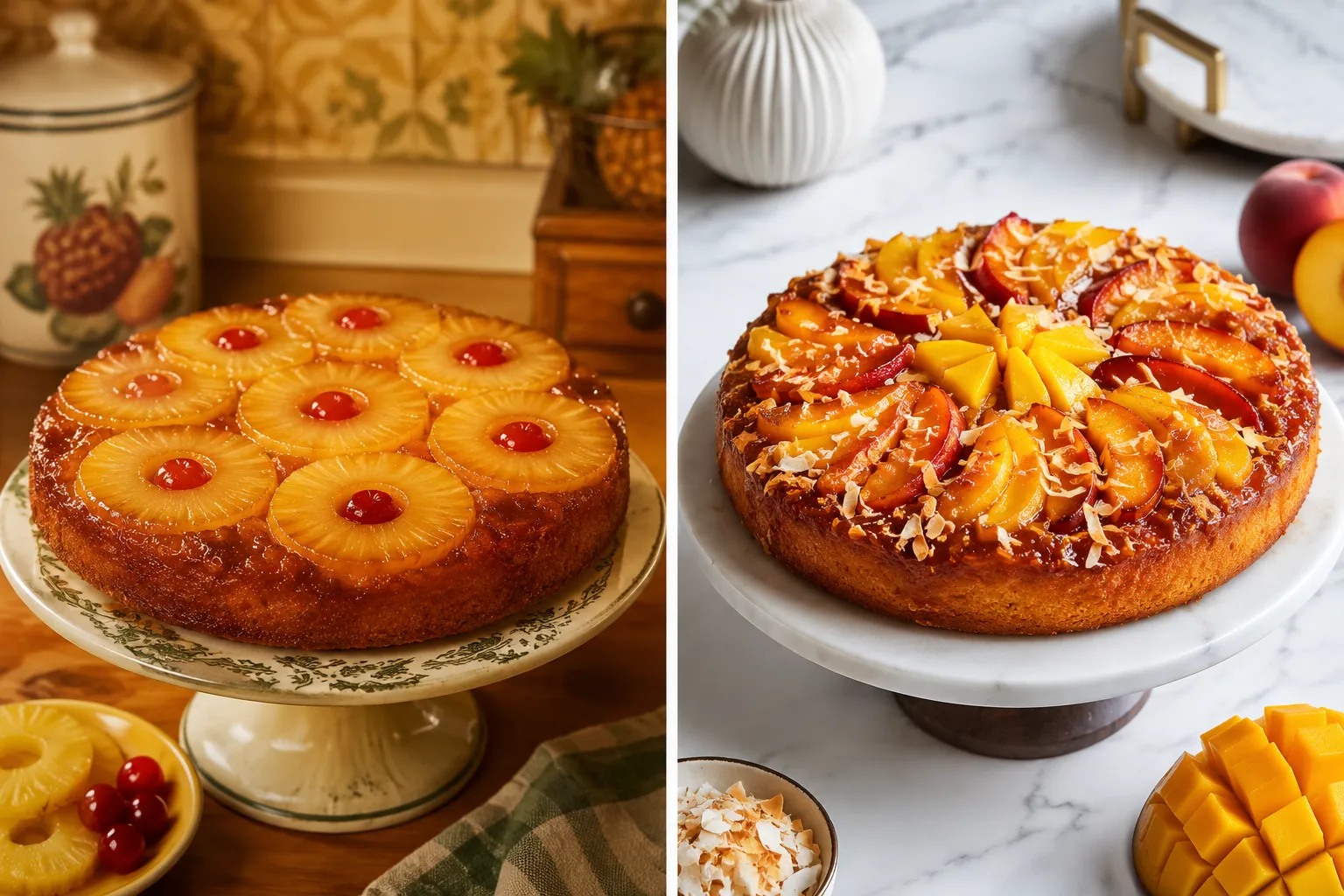
The upside-down technique works with almost any firm fruit that caramelizes well. These alternatives are worth trying for April 20 National Pineapple Upside-Down Cake Day if pineapple is not available or preferred.
Best fruit alternatives:
- Peaches: Sliced canned or fresh peaches produce a soft, honey-sweet result
- Pears: Firm Bosc pears hold their shape and caramelize beautifully
- Cherries: Pitted fresh or canned cherries create a striking dark-red topping
- Mangoes: Fresh mango slices offer a tropical variation with bright acidity
- Apples: Classic and reliable, especially with cinnamon added to the brown sugar layer
- Plums: Produce a tart, jewel-toned topping; pair well with almond extract in the batter
Choose X if: Use peaches or pears for a crowd-pleasing, mild flavor. Use plums or cherries for a more sophisticated, slightly tart result. Use mangoes if you want to keep the tropical theme without pineapple.
For more cake-adjacent food holidays, see National Plum Pudding Day on February 12 and the 103-recipe Cupcake Cookbook for single-serving dessert ideas.
How to Celebrate National Pineapple Upside-Down Cake Day on April 20
April 20 National Pineapple Upside-Down Cake Day is best celebrated through direct participation: baking, sharing, or eating the cake. There is no formal event structure, which makes it flexible for any schedule or skill level. [7][9][13]
Practical ways to celebrate in 2026:
- Bake from scratch using the classic recipe above. The entire process takes under 90 minutes including cooling time.
- Host a bake-off with friends or coworkers, each bringing a different fruit variation.
- Visit a local bakery and request a pineapple upside-down cake or check if one is featured as a daily special.
- Share on social media using hashtags like #NationalPineappleUpsideDownCakeDay and #April20 to connect with other bakers.
- Bake with kids as an introduction to the concept of inverted baking and caramelization.
- Send a cake to a neighbor, coworker, or family member as a small act of hospitality.
The holiday’s informal nature means there is no wrong way to participate. Even ordering a slice at a diner counts. [7]
For more food holiday inspiration, explore National Chocolate Cake Day and National Carrot Cake Day for year-round baking occasions.
FAQ: April 20 National Pineapple Upside-Down Cake Day
What date is National Pineapple Upside-Down Cake Day? It is observed every year on April 20. In 2026, that falls on a Monday. [4][10]
Is National Pineapple Upside-Down Cake Day a federal holiday? No. It is an unofficial cultural food observance with no government recognition at any level. [2][7]
Who created National Pineapple Upside-Down Cake Day? No founding organization or individual has been publicly documented as the creator. The holiday spread organically through food culture and calendar websites.
Can I use a box cake mix for pineapple upside-down cake? Yes. A standard yellow or butter cake box mix works well as the batter layer. Prepare the caramel and pineapple topping from scratch, then pour the prepared box mix batter on top and bake as directed.
How long does pineapple upside-down cake last? The cake is best eaten the day it is made. Stored covered at room temperature, it stays fresh for up to 2 days. Refrigerated, it lasts up to 4 days, though the caramel layer softens.
Can pineapple upside-down cake be made gluten-free? Yes. Substitute a 1:1 gluten-free all-purpose flour blend for regular flour. The topping layer is naturally gluten-free.
What pan size is best for pineapple upside-down cake? A 9-inch round cake pan or a 10-inch cast-iron skillet are the standard choices. A 9×13-inch rectangular pan also works for a larger batch.
Why did my caramel layer stick to the pan? The most common cause is waiting too long before flipping. The caramel hardens as it cools. Flip within 5-10 minutes of removing from the oven.
Does pineapple upside-down cake need to be refrigerated? Not if consumed within 2 days. For longer storage, refrigerate in an airtight container.
What is the difference between pineapple upside-down cake and pineapple upside-down cupcakes? The cupcake version uses a muffin tin with one pineapple chunk and one cherry per cup. The method is identical, but individual portions are easier to serve and flip.
Conclusion
April 20 National Pineapple Upside-Down Cake Day is a simple, accessible food holiday that requires nothing more than a few pantry ingredients and about an hour of time. The dessert at its center is a genuine American classic, rooted in the early 20th century and still capable of impressing a table of guests with its glossy, caramelized presentation.
Actionable next steps for 2026:
- Plan ahead: Mark April 20 on your calendar and stock up on canned pineapple rings, brown sugar, and maraschino cherries before the day arrives.
- Choose your variation: Decide whether you want the classic recipe, a butter-free version, or a fresh-fruit alternative based on your dietary needs and what is in season.
- Avoid the common mistakes: Drain pineapple thoroughly, do not overmix the batter, and flip the cake within the 5-10 minute window after baking.
- Share the experience: Bring the cake to work, post a photo, or bake it with someone who has never tried the upside-down technique before.
The holiday’s unofficial status is not a limitation. It is an invitation to participate on your own terms, with a dessert that has earned its place in American baking culture for over a century.
References
[1] National Pineapple Upside Down Cake Day – https://cookingcontestcentral.com/national-pineapple-upside-down-cake-day/ [2] dayspedia – https://dayspedia.com/us/calendar/holiday/1236/ [3] National Pineapple Upside Cake Day – https://nationaltoday.com/national-pineapple-upside-cake-day/ [4] National Pineapple Upside Down Cake Day – https://www.calendarr.com/united-states/national-pineapple-upside-down-cake-day/ [7] National Pineapple Upside Down Cake Day – https://www.checkiday.com/4e5e30385040fcf78a06463e1d2c53ab/national-pineapple-upside-down-cake-day [9] April 20 – https://www.calendaroftheday.com/april-20/ [10] National Pineapple Upside Down Cake Day – https://www.holidaycalendar.io/holiday/national-pineapple-upside-down-cake-day