February 12 National Plum Pudding Day: History, Recipes, and How to Celebrate in 2026
- 0
- 14 Min Read
Last updated: February 12 , 2026
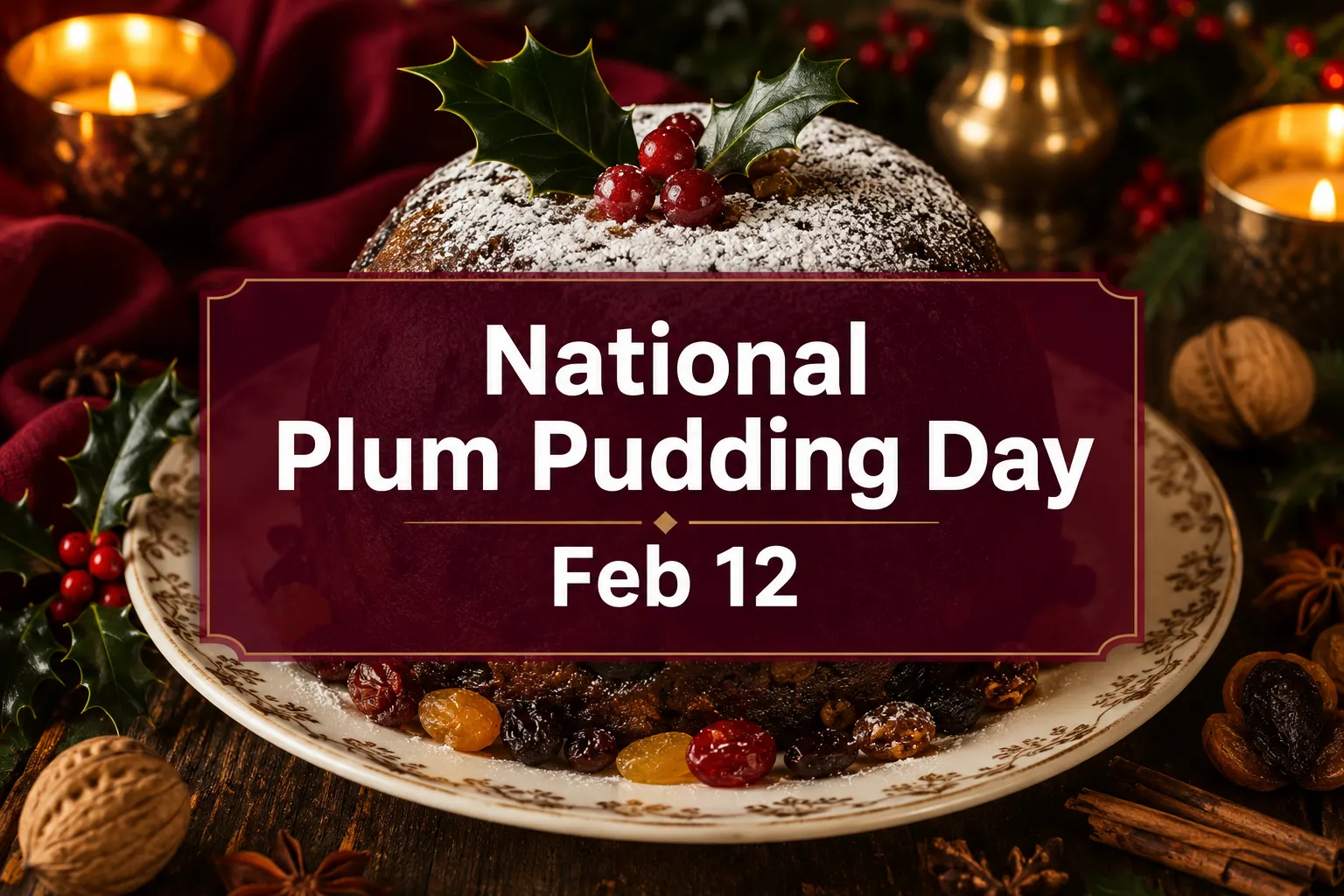
Quick Answer: February 12 National Plum Pudding Day is an annual informal food holiday observed in the United States every February 12. It celebrates plum pudding, a dense, fruit-filled steamed dessert with deep roots in British culinary tradition. The day is not a government-recognized public holiday but is widely listed on food holiday calendars and gives the classic dessert a second moment in the spotlight well outside the Christmas season.
Key Takeaways
- February 12 National Plum Pudding Day is observed every year on February 12 and is listed on major food holiday calendars including National Day Calendar, Checkiday, and Calendarr.
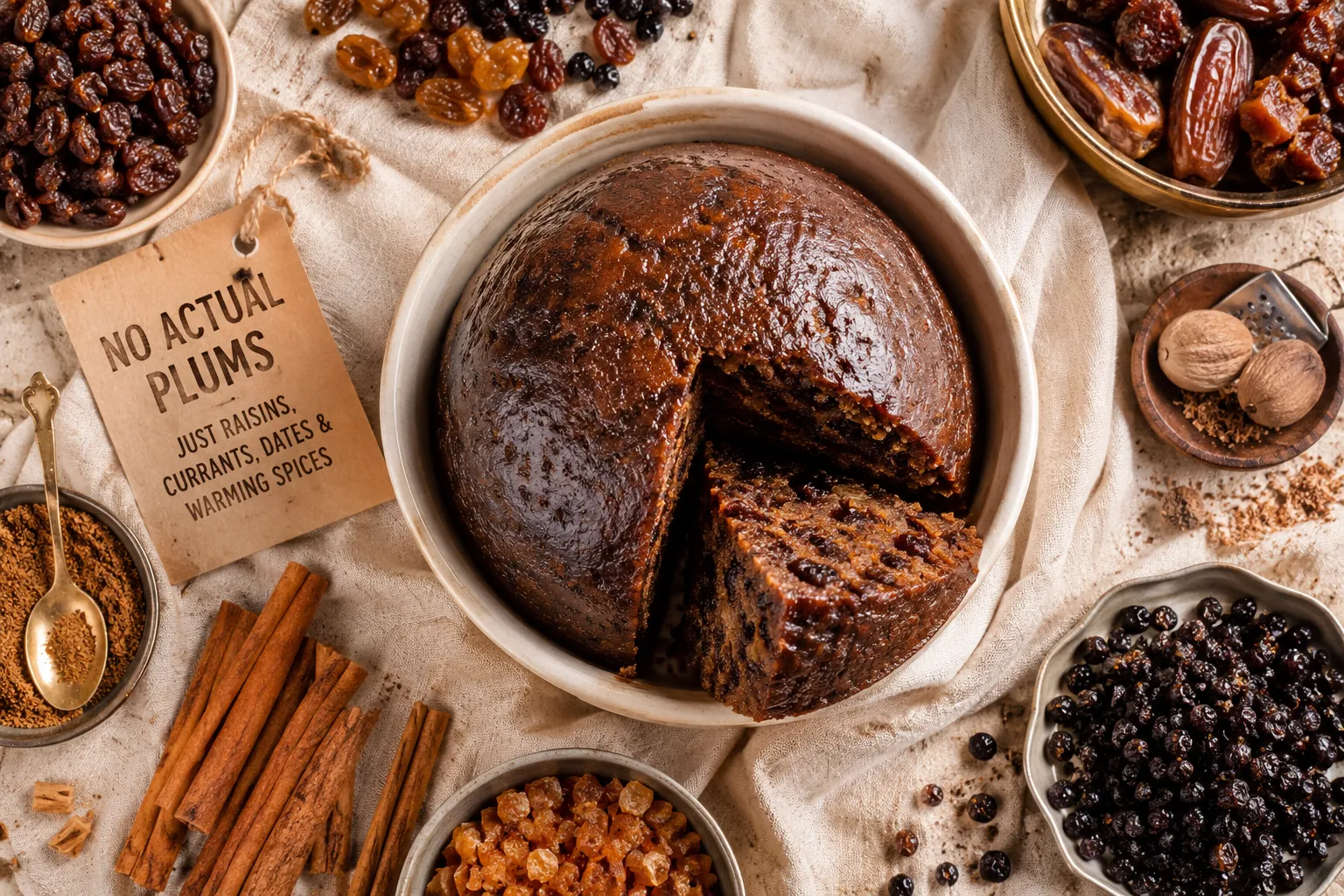
- Plum pudding contains no actual plums. The word “plum” historically referred to dried fruits such as raisins, currants, and dates.
- Plum pudding and Christmas pudding are essentially the same dessert under two different names.
- The day has no official government or legislative backing; it is a culturally curated food observance promoted primarily through online calendars and social media.
- A traditional plum pudding can be made weeks or months in advance and actually improves with age.
- Alcohol-free versions are easy to make and taste just as rich when the right substitutions are used.
- Gluten-free plum pudding is achievable with a few straightforward flour swaps.
- The dessert pairs well with brandy butter, custard, cream, or vanilla ice cream.
What Is Plum Pudding and Does It Have Plums in It?
Plum pudding is a dense, steamed or boiled dessert made primarily from dried fruits, spices, breadcrumbs, suet, eggs, and often alcohol such as brandy or stout. It contains no actual plums. The name comes from an older English usage of the word “plum,” which once referred broadly to any dried fruit, particularly raisins and currants. [12]
The confusion is understandable, but the ingredient list tells the real story. A standard plum pudding includes:
- Dried fruits: raisins, currants, sultanas, dates, mixed peel
- Spices: nutmeg, cinnamon, allspice, cloves
- Binding agents: eggs, suet (or vegetable shortening), breadcrumbs
- Liquid: brandy, dark rum, stout, or fruit juice
- Optional extras: chopped nuts, grated apple, treacle, or brown sugar
The result is a dark, moist, intensely flavored dessert that is nothing like a fruit-topped tart. It is traditionally steamed for several hours, then stored and reheated before serving. [3]
When Did National Plum Pudding Day Start?
No confirmed founding date or originating organization has been publicly documented for February 12 National Plum Pudding Day. The observance appears across food holiday calendars as a recurring annual event, but no legislative record, official proclamation, or named creator has been verified. [1][5]
This is common among informal food holidays. Many were created by food brands, bloggers, or calendar sites in the late 20th or early 21st century as a way to generate engagement around specific foods. National Plum Pudding Day shares February 12 with National Lost Penny Day, reflecting the broader trend of bundling multiple light-hearted observances on a single date. [6]
What is clear is that the day continues to gain visibility year after year. Multiple calendar platforms confirm it as a recurring observance, with future dates already listed through the early 2030s. [2]
Plum Pudding vs. Christmas Pudding: What’s the Difference?
Plum pudding and Christmas pudding are the same dessert. The two names are used interchangeably in British and Commonwealth culinary tradition. “Christmas pudding” became the dominant term because the dish is most commonly made and served during the Christmas season, but the underlying recipe is identical. [3][9]
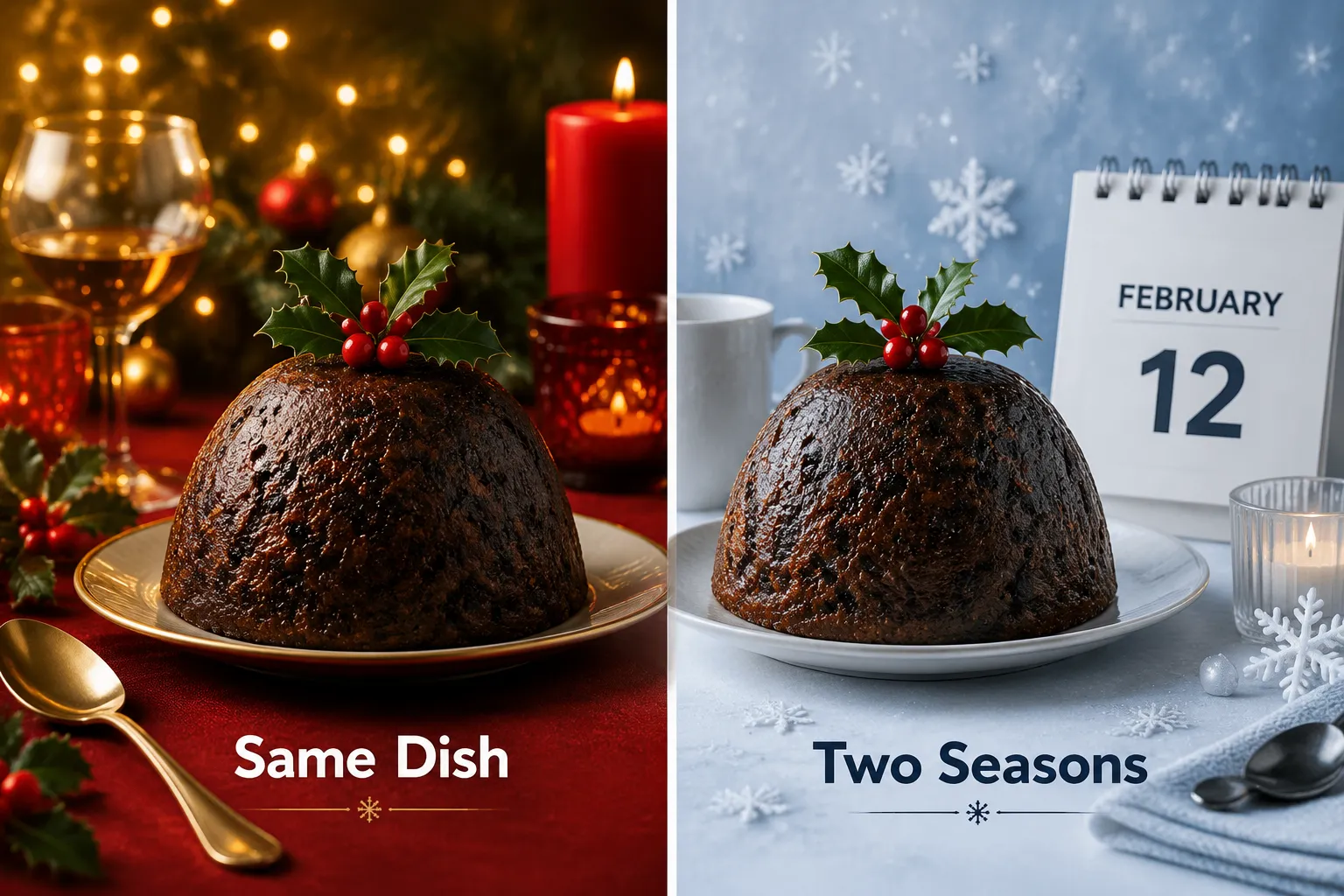
February 12 National Plum Pudding Day gives the dessert a second occasion outside the holiday season. Several sources describe the February timing as giving plum pudding a “second life,” allowing people who missed it at Christmas to enjoy it again, or simply to revisit a classic dish in a less crowded culinary moment. [10]
Key distinction to remember: If a recipe is labeled “Christmas pudding,” it can be made and served on February 12 without any changes. The name is seasonal; the dish is not.
How to Make Plum Pudding from Scratch
Making plum pudding from scratch takes time but is not technically difficult. The process involves soaking fruit, mixing a batter, and steaming the pudding for several hours. Most bakers make it at least a week ahead to let the flavors develop.
Basic Step-by-Step Process
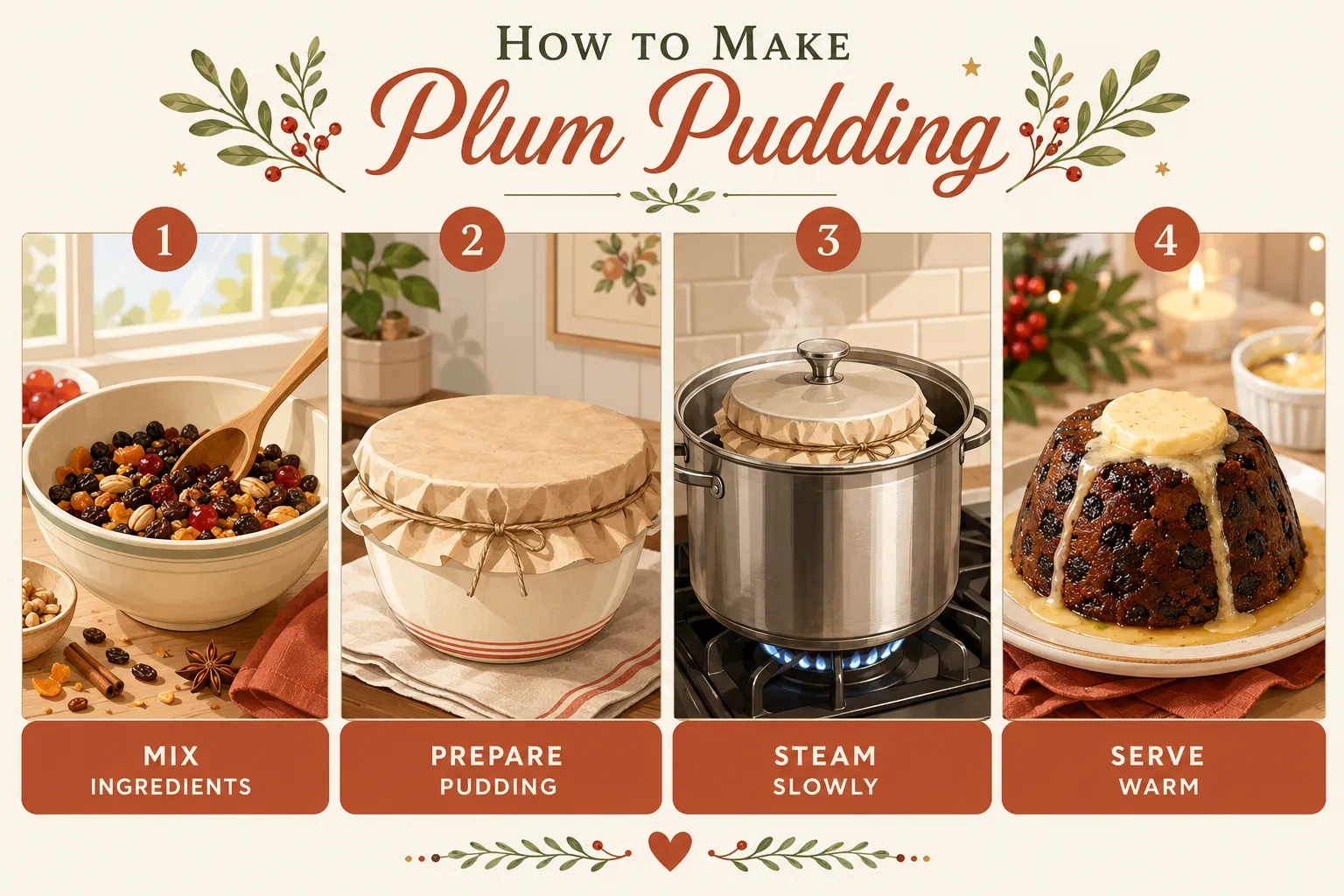
- Soak the dried fruit. Combine raisins, currants, sultanas, and mixed peel in a bowl. Cover with brandy, dark rum, or fruit juice. Soak overnight or for at least 12 hours.
- Mix the batter. Combine soaked fruit with breadcrumbs, flour, suet or butter, brown sugar, eggs, spices (nutmeg, cinnamon, allspice), and treacle or molasses. Stir until fully combined.
- Fill the basin. Grease a pudding basin and fill it three-quarters full with the mixture. Press down firmly to remove air pockets.
- Cover and seal. Place a circle of parchment paper directly on the surface, then cover the basin tightly with foil or a pudding cloth tied with string.
- Steam the pudding. Place the basin in a large pot with boiling water reaching halfway up the sides. Steam for 5 to 8 hours, checking water levels regularly.
- Cool and store. Allow the pudding to cool completely, then re-cover with fresh parchment and foil. Store in a cool, dark place.
- Reheat before serving. Steam again for 2 to 3 hours before serving, or microwave individual portions for 2 to 3 minutes.
Best Plum Pudding Tips for Beginners
- Use a mix of at least three dried fruits for depth of flavor.
- Dark treacle or blackstrap molasses gives the pudding its characteristic dark color.
- Do not skip the soaking step; it is essential for texture and taste.
- A slow cooker can substitute for stovetop steaming with excellent results.
Can You Make Plum Pudding Without Alcohol?
Yes, plum pudding can be made without alcohol and still produce a rich, flavorful result. The alcohol in traditional recipes serves two purposes: flavor and preservation. Both can be replicated with non-alcoholic substitutes.
Alcohol-free substitution options:
| Replaces | Use Instead |
|---|---|
| Brandy or rum (soaking) | Orange juice, apple juice, or cold black tea |
| Stout or dark beer | Strong brewed coffee or cola |
| Brandy butter sauce | Vanilla butter sauce with orange zest |
When using juice instead of spirits, the pudding’s shelf life shortens significantly. An alcohol-free pudding should be refrigerated and consumed within one week rather than stored for months.
Traditional Plum Pudding Aging Process: How Long?
Traditional plum pudding is typically made four to eight weeks before it is served, and some bakers start as early as Stir-Up Sunday (the last Sunday before Advent in November). The aging process allows the alcohol and fruit flavors to meld and deepen considerably.
During storage, many bakers “feed” the pudding by unwrapping it every week or two and spooning a tablespoon of brandy or rum over the surface before re-sealing. This keeps the pudding moist and intensifies the flavor.
Minimum aging: One week produces a noticeably better pudding than one made and served the same day. Optimal aging: Four to six weeks is the sweet spot for most home bakers. Maximum aging: A well-made, alcohol-preserved pudding stored in a cool, dark place can last up to one year.
How Long Does Plum Pudding Last and How Should You Store It?
A properly made plum pudding with a full measure of alcohol can last up to 12 months when stored correctly. An alcohol-free version should be consumed within 5 to 7 days if refrigerated.
Storage guidelines:
- Room temperature (alcohol version): Up to 12 months in a cool, dark cupboard, tightly wrapped in parchment and foil.
- Refrigerator (any version): Up to 3 months for alcohol versions; up to 1 week for alcohol-free.
- Freezer: Up to 12 months for any version, well-wrapped in plastic and foil.
Always allow a frozen pudding to thaw completely in the refrigerator before reheating.
Where to Buy Plum Pudding Near Me
Plum pudding is available at specialty food stores, British import shops, and some larger grocery chains, particularly around the holiday season. In February, availability can be more limited, but several reliable sources carry it year-round.
Where to look:
- Specialty British import stores (search “British food shop” plus your city)
- World Market / Cost Plus World Market stores often carry imported puddings
- Online retailers including Amazon, British Corner Shop, and Marks & Spencer’s international shipping
- Whole Foods Market and similar natural food grocers sometimes stock premium versions
- Ethnic grocery stores serving British or Australian communities
When buying pre-made pudding, check the label for the steaming instructions. Most commercial puddings require reheating for 1 to 2 hours or a shorter microwave method.
What Do You Serve with Plum Pudding?
Plum pudding is almost always served warm with a rich accompaniment. The dense, dark pudding benefits from something creamy or buttery alongside it.
Classic serving options:
- Brandy butter: Softened butter whipped with powdered sugar and brandy; the most traditional pairing
- Custard: Warm vanilla custard poured generously over the top
- Clotted cream or double cream: Simple and rich
- Vanilla ice cream: A modern contrast of hot and cold
- Hard sauce: Similar to brandy butter but firmer in texture
For a dramatic presentation, warm a small amount of brandy in a ladle, pour it over the pudding, and ignite it just before serving. The blue flame is a classic British table tradition and makes for a memorable February 12 celebration.
Plum Pudding Nutrition Facts and Calories
Plum pudding is a calorie-dense dessert, as expected from a dish built on dried fruit, suet, sugar, and alcohol. Exact figures vary by recipe and serving size, but a typical 100-gram serving of traditional plum pudding contains approximately:
- Calories: 280 to 330 kcal (estimate based on standard recipe composition)
- Carbohydrates: 45 to 55 grams
- Fat: 8 to 12 grams
- Protein: 3 to 5 grams
- Fiber: 2 to 4 grams (from dried fruit)
These are estimates based on standard home recipe compositions. Commercial products will vary, and labels should be consulted for precise values. The high dried-fruit content does provide meaningful amounts of iron and potassium, though the sugar and fat content make plum pudding a treat rather than an everyday food.
Is Plum Pudding Gluten-Free? Options and Substitutions
Traditional plum pudding is not gluten-free because it contains wheat flour and breadcrumbs. However, gluten-free versions are straightforward to make with a few substitutions.
Gluten-free swaps:
- Replace plain wheat flour with a 1:1 gluten-free baking flour blend
- Use gluten-free breadcrumbs (made from gluten-free bread or rice crackers)
- Confirm that any packaged mixed peel or dried fruit is processed in a gluten-free facility
The texture of a gluten-free plum pudding is slightly denser than the wheat version but still very satisfying. For those with celiac disease, cross-contamination during steaming is not a concern, but all individual ingredients should be verified as certified gluten-free.
For more food holiday ideas that accommodate dietary needs, explore the full range of national food holidays on StillCooking.
Plum Pudding Common Mistakes to Avoid
Even experienced bakers run into problems with plum pudding. The most common errors are fixable with a little preparation.
- Not soaking the fruit long enough. Overnight is the minimum; 24 hours is better. Dry fruit produces a crumbly, less flavorful pudding.
- Overfilling the basin. The pudding expands during steaming. Fill no more than three-quarters full.
- Letting the steaming pot run dry. Check water levels every 45 minutes and top up with boiling water. A dry pot can crack the basin or burn the pudding.
- Skipping the resting period. A pudding served the same day it is made tastes flat. Even a 24-hour rest improves it noticeably.
- Using low-quality spices. Fresh, fragrant spices make a significant difference in a dish where spice is the backbone of the flavor profile.
- Cutting it too soon after reheating. Let the pudding rest for 5 minutes after steaming before turning it out; it holds its shape better.
How to Celebrate February 12 National Plum Pudding Day in 2026
February 12 National Plum Pudding Day is an informal observance, which means there are no rules. The goal is simply to engage with a centuries-old dessert tradition. [5]
Practical ways to celebrate:
- Make it from scratch using the steps above, even if it means starting a few days early for the soaking and aging process
- Buy a pre-made pudding from a specialty store and try a new accompaniment like brandy butter or clotted cream
- Host a tasting comparing two or three commercial versions side by side
- Pair it with a warm drink such as a spiced tea, mulled cider, or coffee (for more warm drink inspiration, see National Gourmet Coffee Day)
- Share on social media with the hashtag #NationalPlumPuddingDay to connect with others celebrating the day
- Explore the history of British dessert traditions with family or friends over a slice
If plum pudding is not to your taste, February is a rich month for food holidays. Check out the National Chocolate Cake Day guide for another dessert option, or browse the full national food days archive for ideas throughout the year.
Frequently Asked Questions
What day is National Plum Pudding Day? National Plum Pudding Day is observed every year on February 12. It is an annual informal food holiday in the United States. [1][2]
Why does plum pudding not have plums? The word “plum” in older English referred to dried fruits like raisins and currants, not fresh plums. The name stuck even as the language evolved. [12]
Is plum pudding the same as Christmas pudding? Yes. Plum pudding and Christmas pudding are the same dessert. “Christmas pudding” is the seasonal name; “plum pudding” is the traditional name. [3]
Can you eat plum pudding cold? Technically yes, but it is traditionally served warm. Cold plum pudding is denser and less aromatic. Reheating brings out the spices and softens the texture significantly.
How do you reheat plum pudding? Steam the pudding in its basin for 2 to 3 hours, or microwave individual slices for 2 to 3 minutes on medium power. Cover with a damp paper towel when microwaving to retain moisture.
Does plum pudding need to be refrigerated? An alcohol-preserved plum pudding can be stored at room temperature in a cool, dark place for up to 12 months. Alcohol-free versions must be refrigerated and consumed within one week.
Who invented plum pudding? Plum pudding evolved from medieval English pottages and porridges over several centuries. No single inventor is credited. By the 17th century, it had taken a form close to what is recognized today.
Is National Plum Pudding Day an official holiday? No. It is an informal, culturally curated food observance with no government recognition or legislative backing. [5][1]
What is the best alcohol to use in plum pudding? Brandy is the most traditional choice. Dark rum and stout are also commonly used. Each produces a slightly different flavor profile, with brandy giving the cleanest, most classic result.
Can children eat plum pudding? Traditional plum pudding contains alcohol. For children, an alcohol-free version using fruit juice is the appropriate choice. The flavor is still rich and satisfying without the spirits.
Where did the tradition of flaming plum pudding come from? The practice of pouring warm brandy over the pudding and igniting it dates to at least the 17th century in England. The blue flame was considered festive and was associated with good luck.
What other food holidays are in February? February features several food observances. For a broader look at the calendar, the national food days archive covers observances across every month.
Conclusion
February 12 National Plum Pudding Day is a small but genuinely interesting food holiday. It shines a light on a dessert that most people associate exclusively with Christmas, giving it a second moment of recognition in the middle of winter. The day requires no formal participation, but it offers a concrete reason to try something most home cooks have never made from scratch.
Actionable next steps for 2026:
- Start soaking dried fruit on February 10 or 11 if making a quick version for February 12.
- Order a commercial pudding online now if you want a traditional imported version in time for the day.
- Decide on your accompaniment before the day: brandy butter, custard, or cream each require a few minutes of preparation.
- Explore gluten-free or alcohol-free adaptations if dietary needs apply, using the substitution guide above.
- Share the history of the “no plums in plum pudding” fact with anyone who joins the celebration. It is reliably surprising every time.
For more food holiday inspiration throughout the year, browse the complete national food holidays collection or check out the January 23 National Pie Day guide for another classic baked dessert celebration.
References
[1] dayspedia – https://dayspedia.com/us/calendar/holiday/1130/ [2] National Plum Pudding Day – https://www.calendarr.com/united-states/national-plum-pudding-day/ [3] National Plum Pudding Day – https://nationaltoday.com/national-plum-pudding-day/ [5] National Plum Pudding Day – https://www.checkiday.com/17bb77120ec7fba7c6c4a66a4ac45498/national-plum-pudding-day [6] February 12 Every Year National Plum Pudding Day National Lost Penny Day – https://holidaydoodles.com/february-12-every-year-national-plum-pudding-day-national-lost-penny-day/ [9] facebook – https://www.facebook.com/wcti12/posts/national-plum-pudding-day-celebrated-on-february-12th-honors-the-beloved-christm/1041659911326715/ [10] anydayguide – https://anydayguide.com/calendar/857 [12] diffordsguide – https://www.diffordsguide.com/on-this-day/february/12