April 9 National Chinese Almond Cookie Day: History, Recipes, and How to Celebrate in 2026
- 0
- 13 Min Read
Last updated: April 9, 2026
Quick Answer
April 9 National Chinese Almond Cookie Day is an annual informal food holiday observed every April 9 in the United States, dedicated to celebrating the classic Chinese almond cookie. The day has no government or federal backing but is widely tracked by food holiday calendars and celebrated by home bakers, Chinese-American restaurants, and cookie enthusiasts. In 2026, it falls on a Thursday.
Key Takeaways
- April 9 National Chinese Almond Cookie Day is observed every year on April 9 and is confirmed through at least 2031 on major holiday calendars.
- The holiday is informal, with no known government origin and no confirmed founding organization.
- Chinese almond cookies are traditionally round and coin-shaped, symbolizing prosperity and good fortune.
- Authentic recipes use lard or shortening for their signature crumbly texture, though butter works as a substitute.
- Most Chinese almond cookies are made with almond extract rather than ground almonds, making them a potential option for some tree-nut-sensitive individuals (though not all).
- Stored properly in an airtight container, Chinese almond cookies last up to two weeks at room temperature and up to three months frozen.
- The cookies are widely available at Chinese bakeries, Asian grocery stores, and online retailers.
- Common baking mistakes include over-mixing the dough and skipping the egg wash, which affects color and texture.
What Is National Chinese Almond Cookie Day?
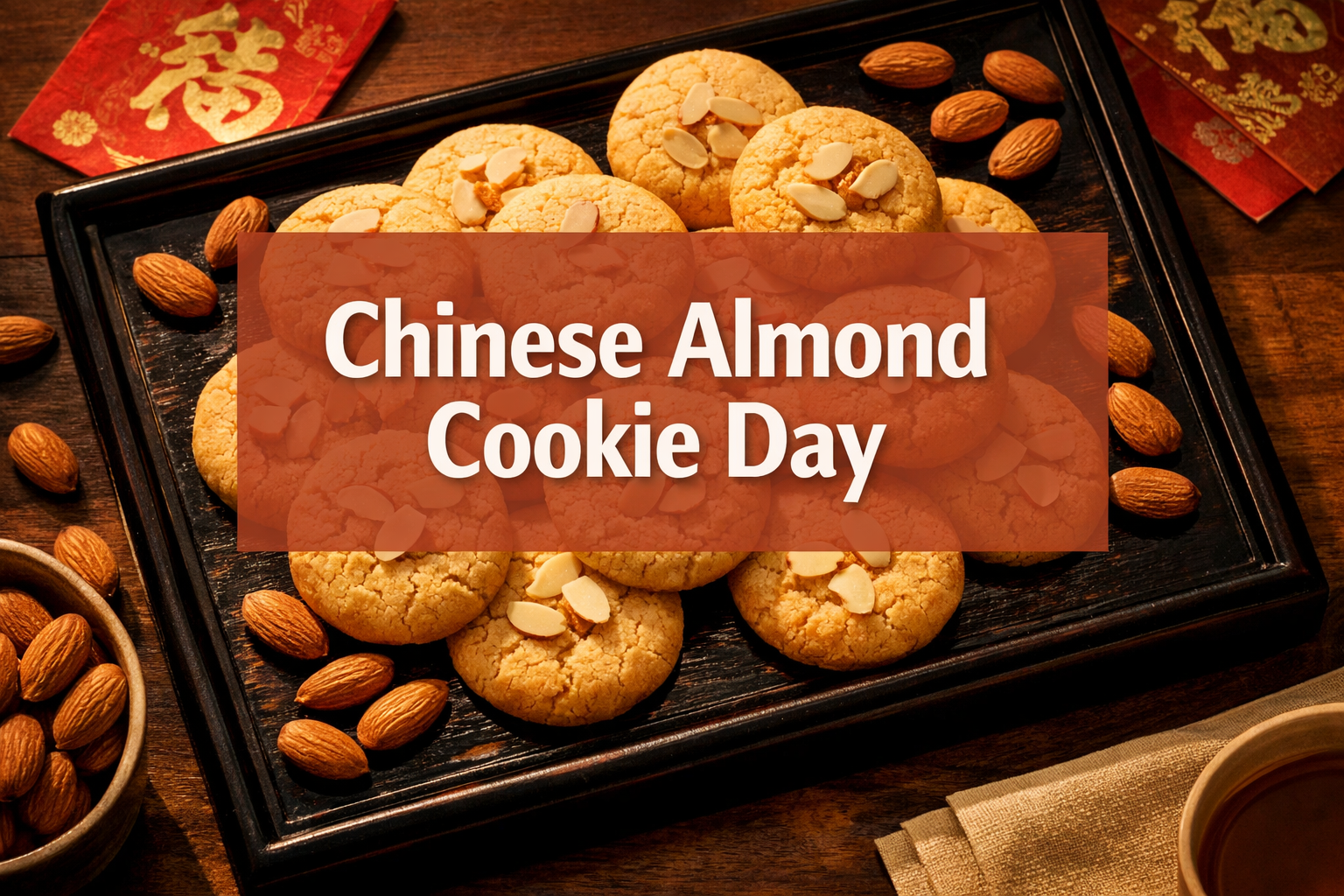
National Chinese Almond Cookie Day is an informal U.S. food holiday celebrated annually on April 9 to honor the Chinese almond cookie, a crisp, slightly sweet, and subtly nutty treat closely tied to Chinese-American culinary culture. It is listed and tracked by major food holiday directories including National Today, National Day Calendar, and Days of the Year, among others [2][3][9].
The day is classified as a non-official observance. No U.S. federal or state legislation created it, and it carries no government recognition. It sits in the same category as hundreds of other informal “national days” that food communities and enthusiasts celebrate each year [3][9].
Who celebrates it? Home bakers, Chinese-American communities, food bloggers, and anyone who enjoys discovering lesser-known food holidays. It’s also a natural tie-in for Chinese bakeries and Asian-cuisine restaurants looking to engage customers.
Why Is April 9 Almond Cookie Day? Origins of the Holiday
The exact origin of April 9 National Chinese Almond Cookie Day is unknown. No founding individual, organization, or brand has been publicly credited with establishing the date [9]. This is common among informal food holidays, many of which emerged from food bloggers, trade associations, or enthusiast communities without formal documentation.
What is clear is that the holiday has been observed and tracked for well over a decade. Food writers were noting it as early as 2013 [7], and it continues to appear on mainstream holiday calendars updated through 2026 and beyond [1][2][9].
The choice of April 9 specifically has no documented cultural or historical explanation tied to Chinese tradition. It is most likely an arbitrary date chosen by whoever first promoted the observance.
The History of Chinese Almond Cookies
Chinese almond cookies as Americans know them today are largely a Chinese-American creation, not a direct import from mainland China. Food historians and bloggers suggest the cookie likely developed in the United States in the early 1900s, adapted from traditional Chinese walnut cookies that carried symbolic meaning around prosperity and good fortune [7][9].
The round, coin-like shape of the cookie is intentional. In Chinese culture, round foods often symbolize completeness, wealth, and luck. This made almond cookies a natural fit for Chinese New Year celebrations and other festive occasions [9].
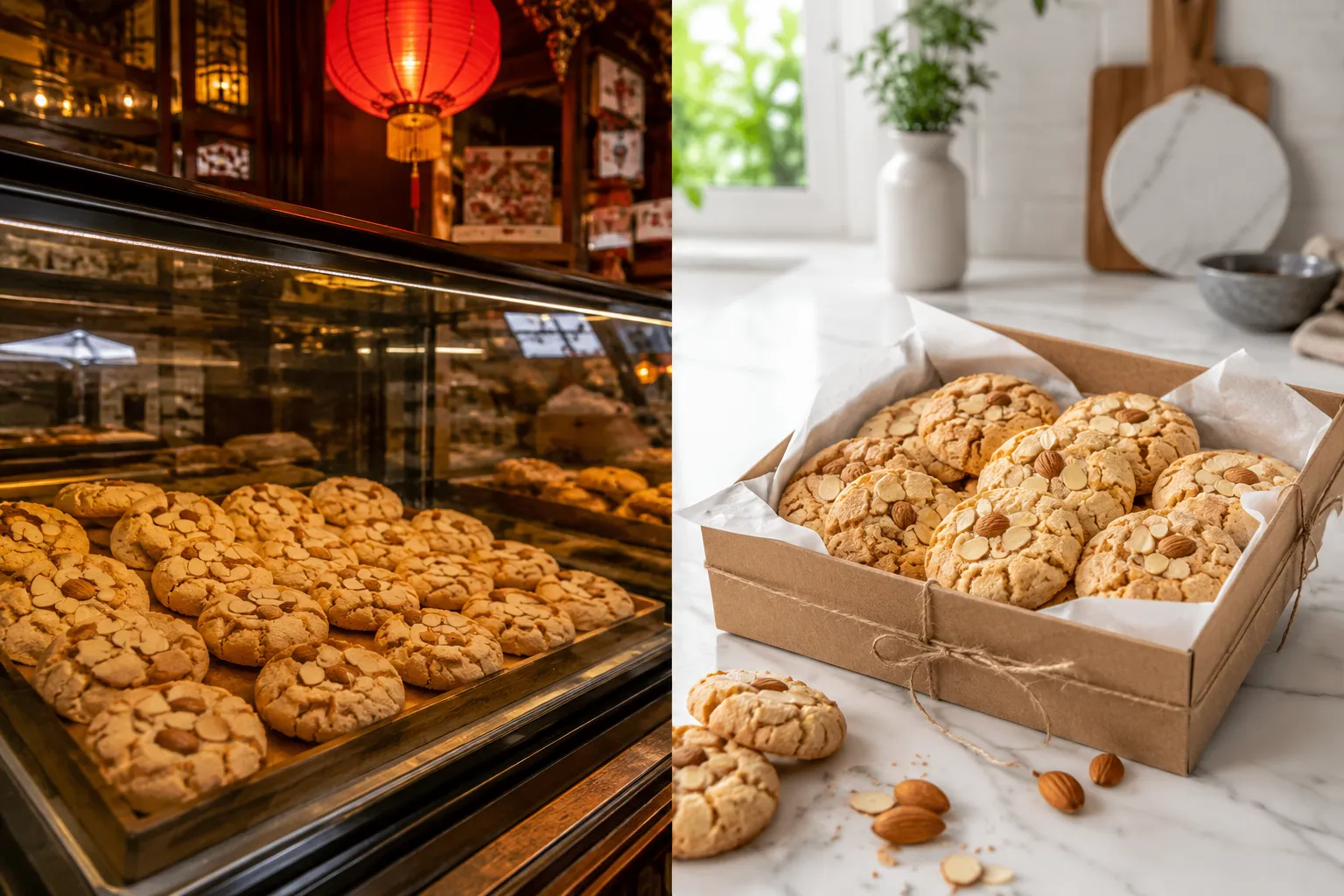
Over the twentieth century, Chinese-American bakeries refined the recipe, settling on a shortbread-style cookie made with lard, flour, sugar, and almond extract, topped with a whole almond and brushed with egg wash before baking. The result is a pale golden, crumbly cookie with a distinct almond aroma that became a staple of Chinese restaurant dessert trays and Chinatown bakery cases across the country.
For more food holiday history and recipes, browse the full national food days calendar at stillcooking.com.
Are Chinese Almond Cookies Actually Made with Almonds?
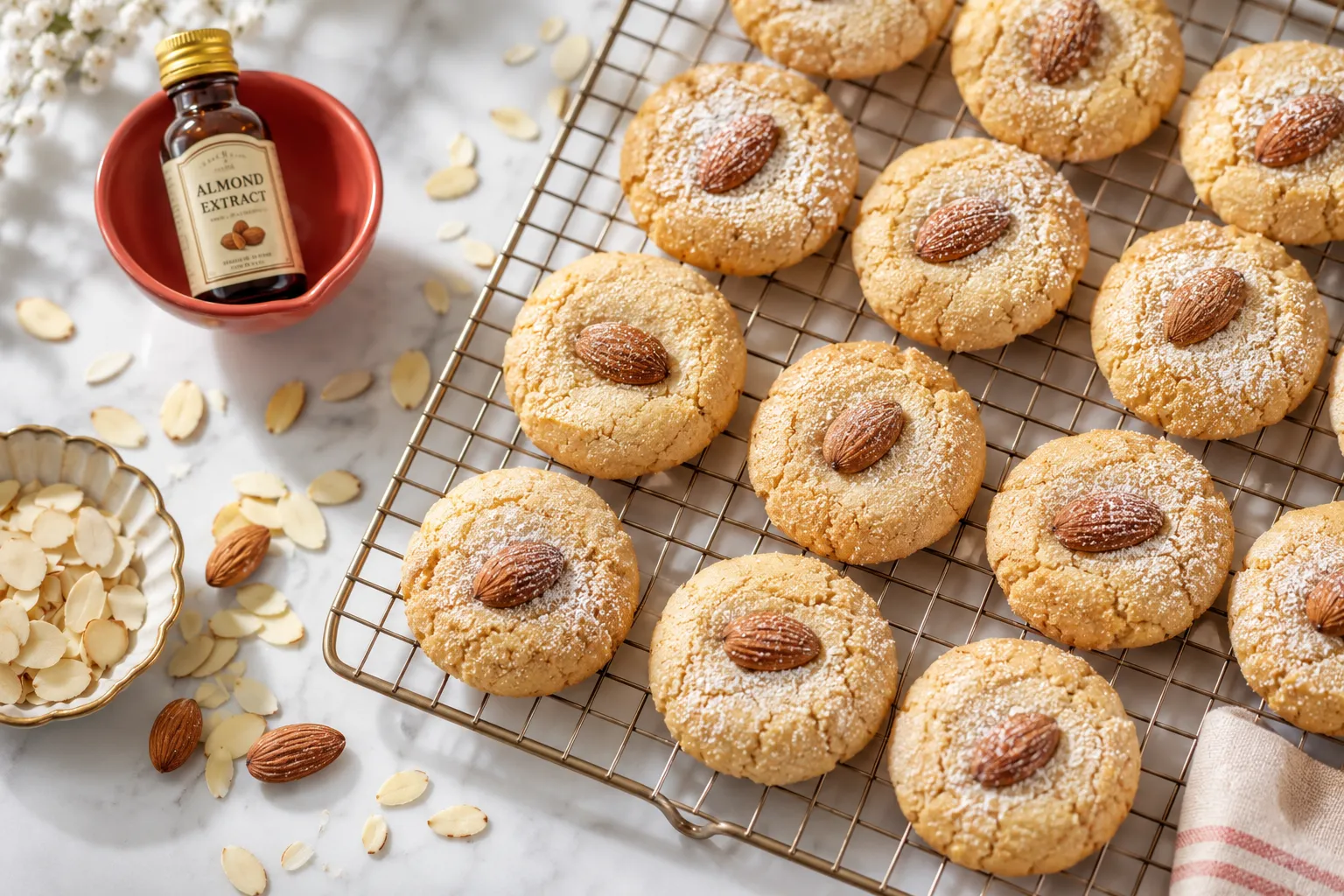
Chinese almond cookies typically contain almond extract and one whole almond pressed on top, but most traditional recipes do not use ground almonds or almond flour as a primary ingredient. The primary flavor comes from almond extract, which is made from bitter almond oil or benzaldehyde.
This distinction matters for several reasons:
- Flavor: Almond extract delivers a stronger, more concentrated almond flavor than ground almonds alone.
- Texture: The classic crumbly texture comes from lard or shortening combined with all-purpose flour, not from nut flour.
- Allergy considerations: Because the main almond component is extract (and one whole almond on top), some recipes can be adapted for people who react to almond flour specifically, though the whole almond topping still poses a risk for those with tree nut allergies. See the allergy section below for more detail.
Modern variations do incorporate almond flour for a denser, more moist cookie, but these are adaptations rather than the traditional form.
How to Make Chinese Almond Cookies at Home: Best Recipe
Making Chinese almond cookies at home is straightforward. The recipe uses pantry staples and requires no special equipment beyond a baking sheet and a mixing bowl.
Standard yield: approximately 24 cookies
Ingredients:
- 2 cups all-purpose flour
- 1/2 cup granulated sugar
- 1/4 teaspoon baking soda
- 1/4 teaspoon salt
- 1/2 cup lard or vegetable shortening (cold)
- 1 egg, beaten (divided: part for dough, part for egg wash)
- 1 teaspoon almond extract
- 24 whole blanched almonds (for topping)
Steps:
- Preheat oven to 325 degrees Fahrenheit (163 degrees Celsius).
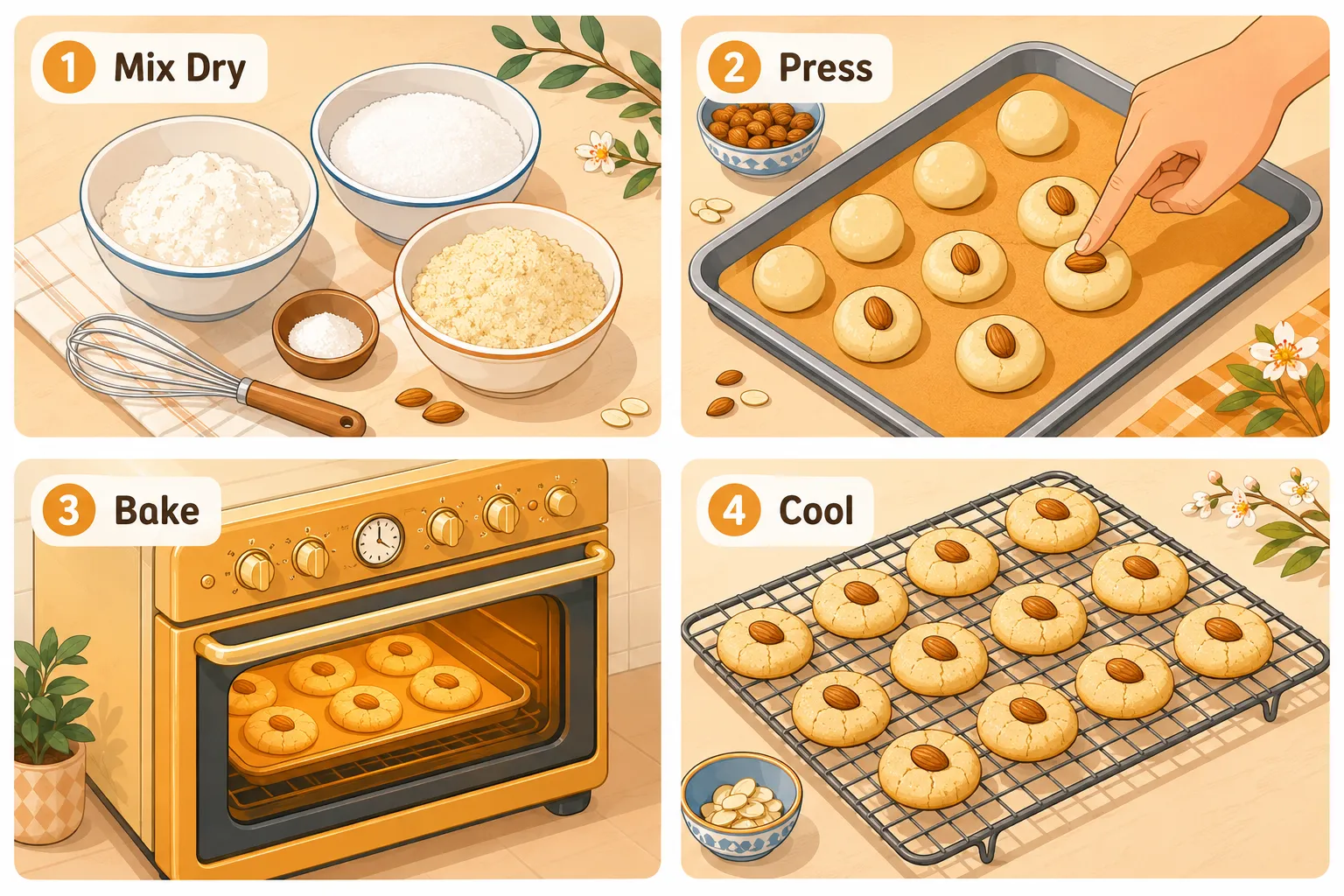
- Whisk together flour, sugar, baking soda, and salt in a large bowl.
- Cut in the cold lard or shortening using a pastry cutter or your fingers until the mixture resembles coarse crumbs.
- Add most of the beaten egg and the almond extract. Mix until a smooth dough forms. Do not over-mix.
- Roll dough into 1-inch balls and place 2 inches apart on an ungreased baking sheet.
- Flatten each ball slightly with your palm.
- Brush the tops with the reserved egg wash.
- Press one whole almond into the center of each cookie.
- Bake 15 to 18 minutes, until the edges are just golden.
- Cool on a wire rack before serving.
Choose lard if you want the most authentic, crumbly texture. Choose butter if you prefer a slightly richer flavor. Choose shortening if you need a dairy-free option that still delivers a tender crumb.
If you enjoy baking from scratch, the Chinese cookbook collection at stillcooking.com offers additional inspiration for Chinese-American recipes.
Common Mistakes When Baking Almond Cookies
Even a simple recipe has pitfalls. These are the most frequent errors home bakers make:
- Over-mixing the dough. Once the egg is added, mix only until the dough comes together. Over-mixing develops gluten and produces a tough cookie instead of a crumbly one.
- Skipping the egg wash. The egg wash is what gives the cookie its characteristic golden sheen. Without it, the cookies look pale and matte.
- Using warm fat. Lard or shortening should be cold when cut into the flour. Warm fat blends in too smoothly and eliminates the flaky, crumbly texture.
- Overbaking. These cookies should look barely golden at the edges when pulled from the oven. They firm up as they cool. Overbaked cookies become hard rather than crisp.
- Pressing the almond too deep. The whole almond should sit on top of the cookie, not be buried in it. Press it in just enough to adhere.
Where to Buy Authentic Chinese Almond Cookies
Authentic Chinese almond cookies are available through several channels:
- Chinese bakeries: The best source for freshly made cookies. Chinatown bakeries in major U.S. cities (San Francisco, New York, Los Angeles) typically stock them year-round.
- Asian grocery stores: Packaged versions from brands like Kee Wah Bakery or Golden Pineapple are widely available.
- Online retailers: Sites like Amazon and specialty Asian food retailers ship packaged Chinese almond cookies nationwide.
- Chinese-American restaurants: Many serve them as complimentary desserts or sell them at the counter.
When buying packaged cookies, check the ingredient list. Higher-quality packaged versions use lard or butter rather than hydrogenated oils, and real almond extract rather than artificial flavoring.
How Long Do Chinese Almond Cookies Last, and Can You Freeze Them?
Stored in an airtight container at room temperature, Chinese almond cookies last up to two weeks without significant loss of quality. Keep them away from moisture, which softens the crisp texture.
For longer storage, Chinese almond cookies freeze well. Place them in a single layer in a freezer-safe container or zip-lock bag, separating layers with parchment paper. Frozen cookies keep their quality for up to three months. Thaw at room temperature for 30 to 60 minutes before serving.
Edge case: If the cookies were made with fresh egg wash and are particularly moist from butter, they may soften slightly faster than lard-based versions. Store lard-based cookies at room temperature; refrigerate butter-based versions if your kitchen runs warm.
Difference Between Chinese Almond Cookies and Regular Cookies
Chinese almond cookies differ from standard American cookies in several key ways:
| Feature | Chinese Almond Cookie | Typical American Cookie |
|---|---|---|
| Fat used | Lard or shortening | Butter |
| Texture | Dry, crumbly, crisp | Chewy or soft |
| Sweetness level | Lightly sweet | Moderately to very sweet |
| Primary flavor | Almond extract | Vanilla, chocolate, etc. |
| Cultural symbolism | Prosperity, good fortune | Generally none |
The crumbly, dry texture of a Chinese almond cookie is closer to a shortbread than a chocolate chip cookie. It pairs well with tea rather than milk.
Almond Cookie Alternatives for People with Nut Allergies
People with tree nut allergies should approach Chinese almond cookies with caution. The whole almond on top is a direct tree nut allergen, and almond extract derived from real bitter almonds also poses a risk. Some commercial almond extracts use benzaldehyde (a synthetic compound) rather than actual almonds, which may be tolerated by some individuals, but this varies by person and allergy severity.
Safer alternatives for nut-allergic individuals:
- Sesame cookies: A common Chinese bakery item made without nuts, with a similar round shape and crisp texture.
- Vanilla shortbread: Delivers a similar crumbly texture with no nut exposure.
- Sunflower seed cookies: Use sunflower seed butter and sunflower extract as substitutes; the flavor profile is different but the texture is comparable.
- Coconut cookies: A nut-free option with a naturally sweet flavor.
Always check labels carefully and consult an allergist before making substitutions if the allergy is severe.
If you enjoy exploring other baked treats with interesting histories, check out the guide to National Molasses Bar Day or the story behind National Dark Chocolate Day.
Nutritional Information for Chinese Almond Cookies
Chinese almond cookies are a moderately caloric treat. The exact numbers vary by recipe and serving size, but a standard homemade cookie (approximately 20 to 25 grams) made with lard contains roughly:
- Calories: 90 to 110 per cookie (estimate based on standard recipe proportions)
- Fat: 5 to 6 grams, primarily from lard or shortening
- Carbohydrates: 12 to 14 grams
- Sugar: 5 to 7 grams
- Protein: 1 to 2 grams
These are estimates based on standard recipe ingredient ratios. Packaged commercial versions vary significantly. Butter-based or almond-flour-based versions will have different fat and calorie profiles.
Chinese almond cookies are not a low-calorie food, but they are relatively modest in sugar compared to many American cookies. Their small size naturally limits portion intake.
Who Celebrates April 9 National Chinese Almond Cookie Day?
The holiday is primarily observed in the United States, where Chinese-American culinary traditions are well established [2][3]. Celebrations range from home baking sessions to social media posts, bakery promotions, and food blog features.
Key groups who engage with the day include:
- Home bakers looking for a new recipe to try
- Chinese-American families and communities
- Food bloggers and social media creators covering food holidays
- Chinese bakeries and Asian-cuisine restaurants using it as a promotional hook
- Anyone who follows the national day calendar and enjoys themed cooking
The holiday has no formal events, parades, or organized activities. Celebration is personal and informal, much like other food holidays such as National Frozen Yogurt Day or National Chocolate Fondue Day.
FAQ: April 9 National Chinese Almond Cookie Day
What day is National Chinese Almond Cookie Day in 2026? April 9, 2026 falls on a Thursday. That is the date to observe the holiday this year.
Is National Chinese Almond Cookie Day a federal holiday? No. It is an informal, non-governmental food observance with no legislative backing at the federal or state level [3][9].
Who created National Chinese Almond Cookie Day? The founding individual or organization is unknown. The observance has been tracked for over a decade but has no documented creator [9].
Can I make Chinese almond cookies without lard? Yes. Vegetable shortening or cold unsalted butter both work as substitutes. Shortening most closely replicates the texture of lard. Butter produces a slightly richer flavor but a less crumbly result.
Are Chinese almond cookies the same as fortune cookies? No. Fortune cookies are thin, crisp, folded wafers with a paper message inside. Chinese almond cookies are round, solid, shortbread-style cookies flavored with almond extract. Both are associated with Chinese-American dining culture but are entirely different products.
Do Chinese almond cookies contain gluten? Traditional recipes use all-purpose wheat flour, so yes, they contain gluten. Gluten-free versions can be made using a 1:1 gluten-free flour blend, though the texture may differ slightly.
How do you keep Chinese almond cookies crisp? Store them in an airtight container at room temperature, away from humidity. Adding a food-safe silica gel packet to the container helps maintain crispness in humid climates.
Can children help make Chinese almond cookies? Yes. The dough is simple and safe to handle. Children can roll the dough into balls and press the almonds into the tops, making it a good family baking activity for April 9.
Are Chinese almond cookies vegan? Traditional recipes include egg (for the egg wash) and lard (from pork fat), so they are not vegan. Vegan versions can substitute flaxseed egg wash and vegetable shortening, though the texture and color will differ slightly.
Where can I find more Chinese-inspired recipes? The Chinese cookbook collection at stillcooking.com is a good starting point for exploring Chinese and Chinese-American cooking.
Conclusion
April 9 National Chinese Almond Cookie Day is a small but genuinely enjoyable food holiday that connects everyday baking to a rich thread of Chinese-American culinary history. The cookies themselves are accessible to make, require no exotic equipment, and reward patience with a crisp, fragrant result that pairs perfectly with tea.
Actionable next steps for April 9, 2026:
- Bake a batch at home using the recipe above. Start the day before so the cookies have time to cool and firm up fully.
- Visit a local Chinese bakery if one is nearby. Support small businesses and try an authentic version alongside your homemade batch.
- Share on social media with the hashtag #NationalChineseAlmondCookieDay to connect with other food holiday enthusiasts.
- Explore the history further by browsing Chinese-American food writing or picking up a cookbook focused on Chinese baking traditions.
- Try a variation such as an almond flour version or a sesame-topped adaptation to understand how small ingredient changes shift the texture and flavor.
The holiday may be informal, but the cookies are the real thing.
References
[1] dayspedia – https://dayspedia.com/us/calendar/holiday/1212/ [2] National Chinese Almond Cookie Day – https://nationaltoday.com/national-chinese-almond-cookie-day/ [3] National Chinese Almond Cookie Day April 9 – https://www.nationaldaycalendar.com/national-day/national-chinese-almond-cookie-day-april-9 [5] National Chinese Almond Cookie Day April 9 – https://calendar.cx/national-chinese-almond-cookie-day-april-9/ [6] April 9 National Chinese Almond Cookie Day – https://web-holidays.com/blog/2021/02/06/april-9-national-chinese-almond-cookie-day [7] 99365 National Chinese Almond Cookie Day – https://eatmywords.net/2013/04/09/99365-national-chinese-almond-cookie-day/ [8] April 9th National Chinese Almond Cookie Day – https://www.listofnationaldays.com/april-9th-national-chinese-almond-cookie-day/ [9] National Chinese Almond Cookie Day – https://www.daysoftheyear.com/days/national-chinese-almond-cookie-day/ [10] National Chinese Almond Cookie Day – https://newsd.in/national-chinese-almond-cookie-day/