February 8 National Molasses Bar Day: History, Recipes, and How to Celebrate in 2026
- 0
- 14 Min Read
Last updated: February 8, 2026
Quick Answer: February 8 National Molasses Bar Day is an unofficial American food holiday celebrated annually on February 8 to honor the molasses bar, a dense, chewy baked treat made with dark molasses, warm spices, and flour. The day encourages home bakers and food lovers to bake, share, or simply enjoy this old-fashioned confection. No single governing body officially registers this holiday, but it appears on widely followed national food day calendars each year.
Key Takeaways
- February 8 is recognized as National Molasses Bar Day on popular national food holiday calendars across the United States.
- Molasses bars are thick, chewy baked goods made with dark or blackstrap molasses, flour, spices such as ginger and cinnamon, and a fat like butter or oil.
- The holiday has no confirmed founder or official origin date, which is common for many informal American food observances.
- Molasses bars differ from gingerbread cookies primarily in texture and form: bars are thicker and chewier, while gingerbread cookies are thinner and crisper.
- A standard homemade batch of molasses bars can last up to five days at room temperature and up to three months in the freezer.
- Many traditional molasses bar recipes contain dairy (butter), but dairy-free versions using coconut oil or vegan butter are easy substitutes.
- Molasses provides iron, calcium, and potassium, making it one of the more nutrient-dense sweeteners used in baking.
- Celebrating is simple: bake a batch at home, visit a local bakery, or share the holiday on social media using food day hashtags.
What Is National Molasses Bar Day?
National Molasses Bar Day is an informal American food holiday observed on February 8 each year. It celebrates the molasses bar, a traditional baked good with deep roots in colonial and early American cooking. The day is listed on popular national food day calendars and is observed primarily by home bakers, food bloggers, and anyone who appreciates old-fashioned baking traditions.
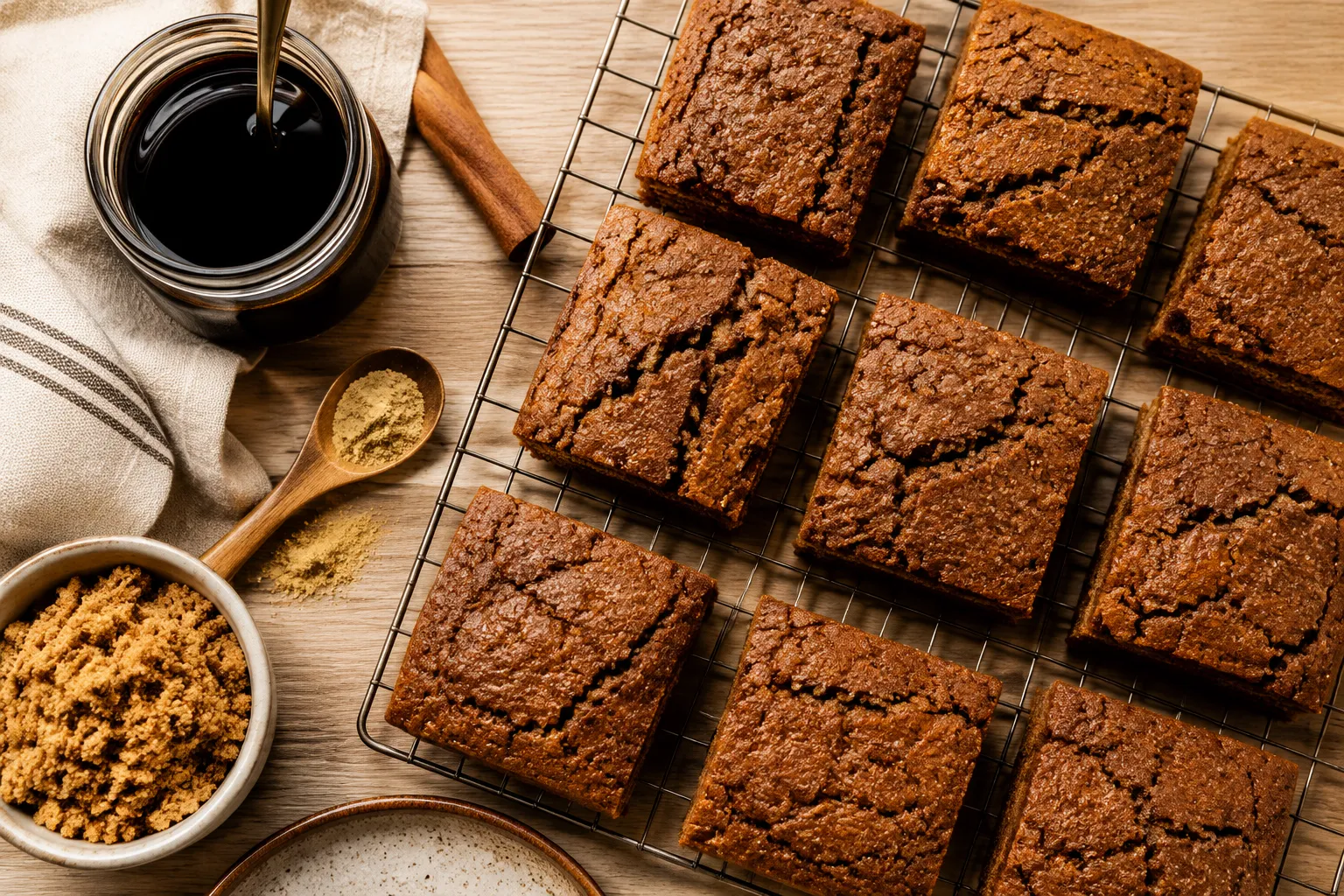
Molasses bars are square or rectangular baked treats cut from a single pan, similar in concept to a brownie but flavored with dark molasses and warming spices. They have a dense, moist crumb and a slightly sticky surface. Some recipes add a simple powdered sugar glaze or cream cheese frosting on top.
If you enjoy tracking national food holidays throughout the year, February 8 is a great mid-winter occasion to warm up the kitchen.
When Did National Molasses Bar Day Start?
The exact founding date and creator of National Molasses Bar Day are not publicly documented. This is true of many informal American food holidays, which tend to emerge organically through food bloggers, calendar publishers, and social media communities rather than through formal proclamations.
The holiday appears on multiple national food day tracking websites and has been listed consistently in February for at least the past decade. Without an official registry or founding organization, the precise origin remains unclear.
This ambiguity is not unusual. Many entries on the national food days calendar share a similar story: they gain traction through repetition and community participation rather than a single founding moment.
Why Is February 8 Molasses Bar Day?
February 8 was likely assigned to molasses bars because mid-winter is a natural time for warm, spiced baked goods. There is no documented explanation for why this specific date was chosen over any other in February.
From a practical standpoint, molasses bars fit the season well. They are warming, filling, and made from pantry staples that most households stock year-round. February also falls during a period with fewer major food holidays, which may have made it a logical slot for a lesser-known treat.
How to Make Molasses Bars at Home
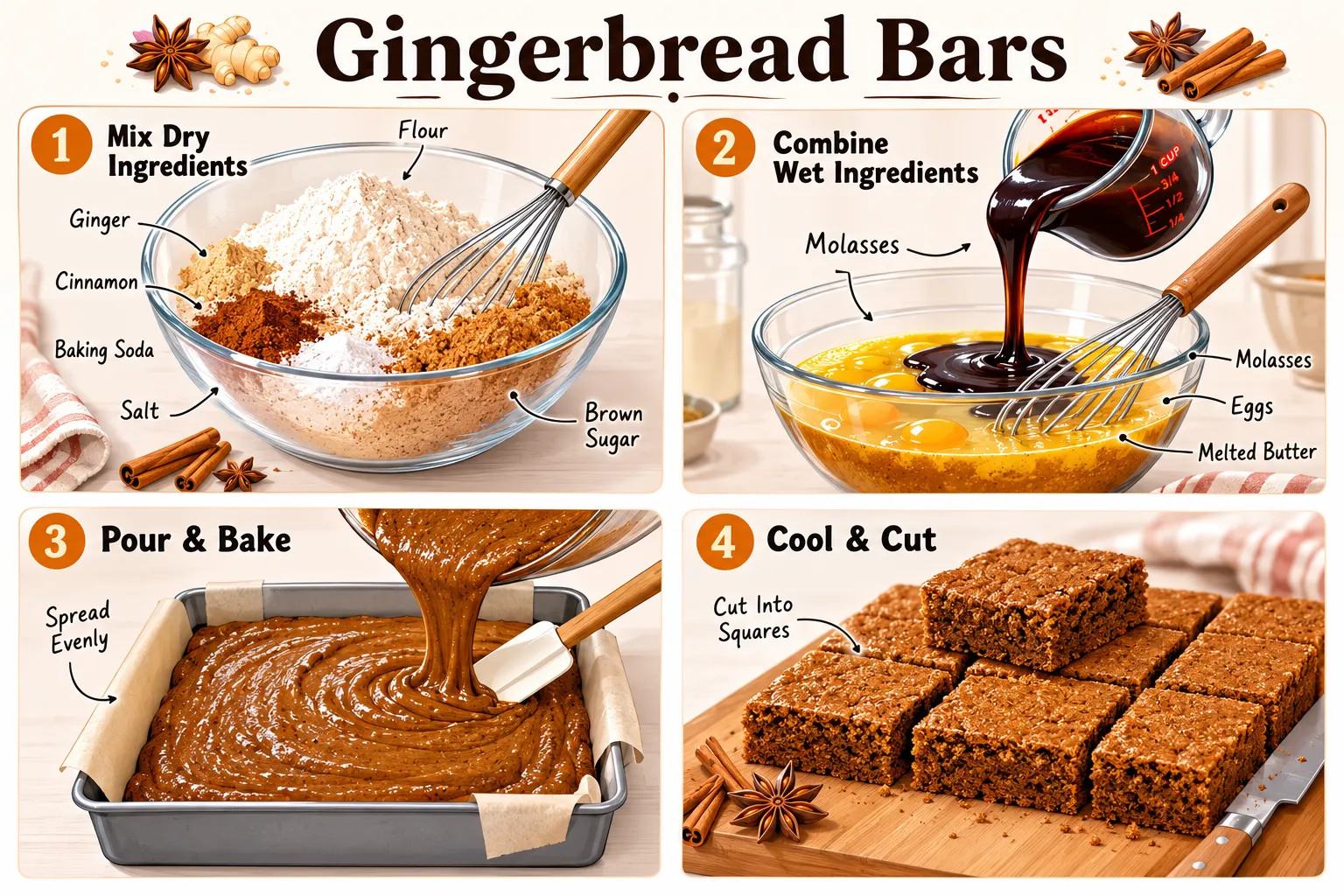
Making molasses bars at home requires basic pantry ingredients and about 30 to 35 minutes of total time. The process is straightforward enough for beginner bakers.
Basic ingredients for one 9×13-inch pan:
- 2 cups all-purpose flour
- 1 teaspoon baking soda
- 1 teaspoon ground ginger
- 1 teaspoon ground cinnamon
- 1/4 teaspoon ground cloves
- 1/2 teaspoon salt
- 1/2 cup (1 stick) unsalted butter, softened
- 3/4 cup granulated sugar
- 1 large egg
- 1/2 cup dark molasses
- 1/4 cup hot water
Steps:
- Preheat the oven to 375 degrees Fahrenheit. Grease a 9×13-inch baking pan.
- Whisk together the flour, baking soda, spices, and salt in a medium bowl.
- In a large bowl, beat the butter and sugar together until light and fluffy.
- Add the egg and molasses to the butter mixture and mix well.
- Alternate adding the dry ingredients and hot water to the wet mixture, starting and ending with the dry ingredients.
- Spread the batter evenly into the prepared pan.
- Bake for 18 to 22 minutes, or until a toothpick inserted in the center comes out clean.
- Cool completely before cutting into bars. Add a glaze or frosting if desired.
Common mistake: Overbaking is the most frequent error. Molasses bars should look slightly underdone in the center when pulled from the oven; they firm up as they cool. Baking them until fully set in the oven typically results in a dry, crumbly texture.
If you enjoy baking from scratch, the 2137 Cookie Cookbook is a useful resource for expanding your repertoire of bar and cookie recipes.
Best Molasses Bar Recipes and Variations
The classic spiced molasses bar is the most common version, but several popular variations exist. Choose based on your flavor preferences and dietary needs.
| Variation | Key Addition | Best For |
|---|---|---|
| Classic spiced | Ginger, cinnamon, cloves | Traditional flavor |
| Frosted molasses bars | Cream cheese frosting | Richer, dessert-style |
| Glazed molasses bars | Powdered sugar + milk glaze | Quick finish |
| Ginger-orange | Orange zest + fresh ginger | Bright, citrusy flavor |
| Dairy-free | Coconut oil instead of butter | Vegan and dairy-free diets |
Choose the classic version if you want the most authentic old-fashioned flavor. Choose the frosted version if you are serving these as a dessert at a gathering. Choose the dairy-free version if you are baking for guests with dairy restrictions.
Where to Buy Molasses Bars Near Me
Molasses bars are not as widely available in commercial bakeries as cookies or brownies, so finding them requires some searching. Specialty bakeries, old-fashioned candy shops, and farm-to-table cafes are the most likely sources.
Best places to look:
- Local artisan bakeries, especially those that specialize in traditional or heritage recipes
- Farmers markets, particularly in New England and the Mid-Atlantic states where molasses has a long culinary history
- Online bakeries that ship nationally (search “molasses bars” on Etsy’s food marketplace or specialty food sites)
- Grocery store bakery sections around the holiday season, when molasses-spiced items are more common
If local options are limited, baking at home on February 8 National Molasses Bar Day is the most reliable way to enjoy them fresh.
Difference Between Molasses Bars and Gingerbread Cookies
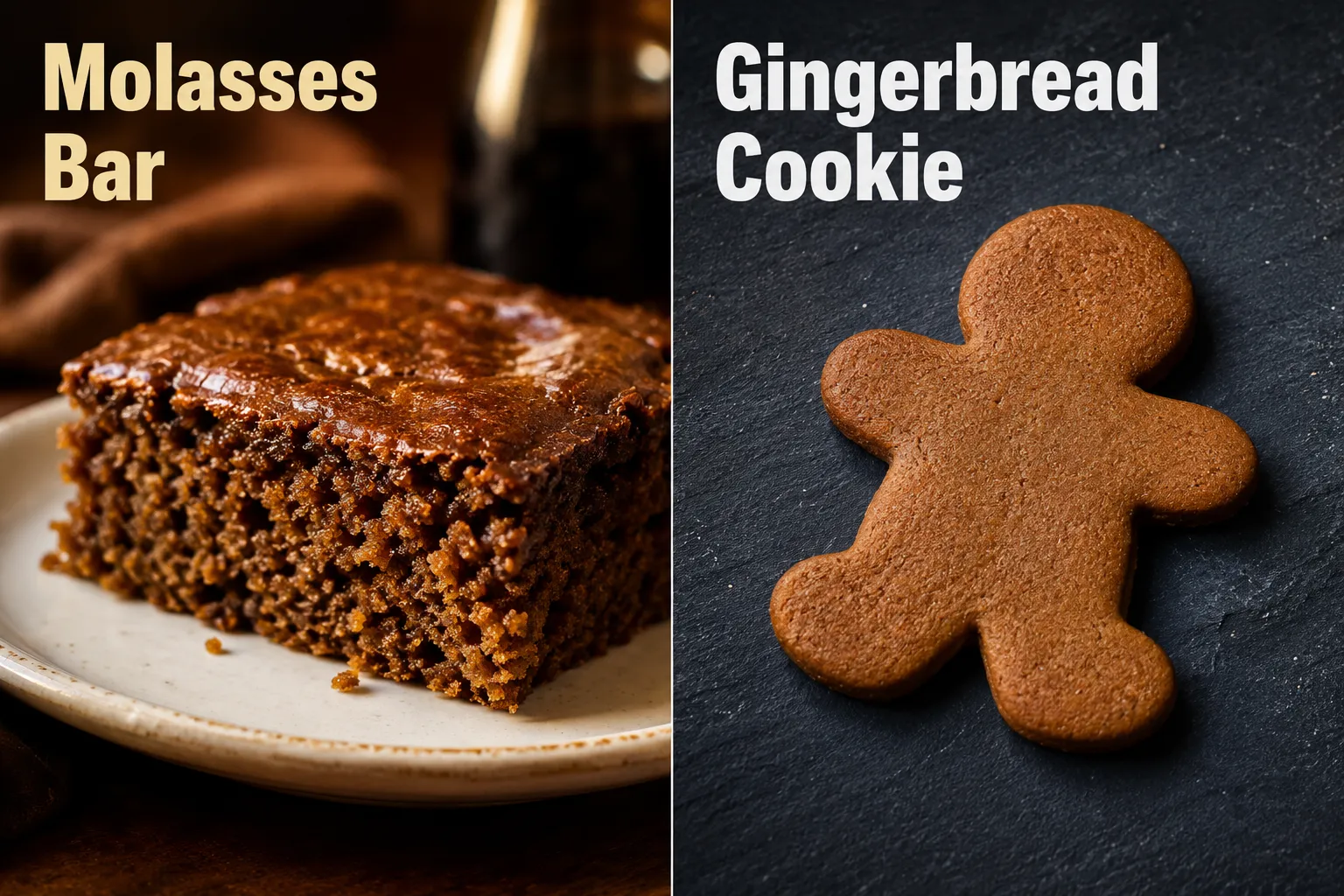
Molasses bars and gingerbread cookies share many of the same ingredients, but they are distinct in texture, form, and baking method. Molasses bars are baked in a pan and cut into squares, producing a thick, chewy, cake-like texture. Gingerbread cookies are rolled out and cut into shapes, then baked until crisp or semi-firm.
Key differences at a glance:
- Form: Bars are pan-baked and cut; cookies are individually shaped.
- Texture: Bars are dense and chewy; cookies range from soft to crisp.
- Molasses content: Bars typically use more molasses per cup of flour than most gingerbread cookie recipes.
- Fat ratio: Bars often use more butter or oil, contributing to their moist crumb.
- Serving style: Bars are more casual and portable; decorated gingerbread cookies are often a presentation item.
Molasses Bar vs. Molasses Cookie: What Is the Difference?
A molasses bar and a molasses cookie both use dark molasses as a primary flavoring, but they differ in texture and format. Molasses cookies are typically drop cookies or rolled cookies, round in shape, often with a crinkled sugar-coated exterior. Molasses bars are baked in a sheet pan, producing a thicker, softer, more uniform result.
Think of it this way: a molasses cookie is a standalone item shaped before baking, while a molasses bar is a pan dessert sliced after baking, more similar in concept to a brownie.
Molasses Bar Nutrition Facts
Molasses bars are a moderately calorie-dense baked good, and their nutritional profile varies by recipe. The molasses itself contributes meaningful micronutrients that refined sugar does not.
Estimated nutrition per standard bar (based on a 9×13 pan cut into 24 bars, using a classic butter-based recipe):
- Calories: approximately 130 to 160 per bar
- Total fat: 4 to 6 grams
- Carbohydrates: 22 to 26 grams
- Sugar: 12 to 15 grams
- Protein: 1 to 2 grams
What molasses adds nutritionally: One tablespoon of blackstrap molasses contains roughly 20% of the daily value for iron, 10% for calcium, and 15% for potassium, according to USDA food composition data. These values dilute across a full batch but still make molasses a more nutrient-rich sweetener than white sugar.
Note: These figures are estimates based on standard recipe proportions. Actual values depend on specific ingredients and portion sizes.
Can You Freeze Molasses Bars?
Yes, molasses bars freeze well and maintain good texture for up to three months when stored properly. This makes them an ideal make-ahead treat for February 8 National Molasses Bar Day celebrations or for batch baking.
How to freeze molasses bars:
- Allow bars to cool completely before freezing. Warm bars create condensation that leads to freezer burn.
- Cut into individual portions.
- Place bars in a single layer on a baking sheet and freeze for one hour (flash freeze).
- Transfer to an airtight freezer bag or container, separating layers with parchment paper.
- Label with the date and freeze for up to three months.
- Thaw at room temperature for 30 to 60 minutes before serving. Do not microwave from frozen, as this can make the texture rubbery.
How Long Do Homemade Molasses Bars Last?
Homemade molasses bars last three to five days at room temperature when stored in an airtight container. Refrigeration extends shelf life to about one week but can slightly dry out the texture.
- Room temperature (airtight container): 3 to 5 days
- Refrigerator (airtight container): Up to 7 days
- Freezer: Up to 3 months
If bars are frosted with cream cheese frosting, they must be refrigerated and will last up to five days in the fridge.
Do Molasses Bars Have Dairy?
Most traditional molasses bar recipes contain dairy in the form of butter. However, molasses bars are easy to make dairy-free by substituting the butter with an equal amount of coconut oil, vegan butter, or a neutral vegetable oil.
Eggs are typically used in molasses bar recipes but are not dairy. For a fully vegan version, replace each egg with a flax egg (one tablespoon ground flaxseed mixed with three tablespoons water, rested for five minutes).
Choose a dairy-free version if you are baking for guests with lactose intolerance, milk allergies, or vegan dietary preferences. The texture will be slightly different (a touch less rich) but still satisfying.
Common Mistakes When Baking Molasses Bars
Several consistent errors show up in home-baked molasses bars. Knowing them in advance saves a batch.
- Overbaking: The most common mistake. Pull the pan when the center looks just set; it will firm up as it cools.
- Using unsulfured vs. blackstrap molasses interchangeably: Blackstrap molasses is significantly more bitter and intense. Most recipes call for unsulfured or “mild” molasses. Substituting blackstrap without adjusting sugar levels produces an overpowering, bitter result.
- Not measuring flour correctly: Packing flour into the measuring cup adds excess flour, making bars dry and dense. Spoon flour into the cup and level it off.
- Skipping the hot water: Hot water in the batter helps activate the baking soda and creates a smoother batter. Skipping it or using cold water affects both rise and texture.
- Cutting bars while warm: Warm molasses bars are fragile and will crumble. Wait until fully cooled before slicing.
Who Celebrates February 8 National Molasses Bar Day?
February 8 National Molasses Bar Day is celebrated primarily in the United States, with the strongest cultural connection in New England, where molasses has been a kitchen staple since the colonial era. Home bakers, food bloggers, baking enthusiasts, and social media communities are the most active participants.
The holiday also resonates with people who have a personal or family connection to old-fashioned baking traditions. Grandparents who grew up with molasses-based recipes, heritage food advocates, and anyone interested in American culinary history tend to find the day meaningful.
Schools, community centers, and food-focused social media accounts sometimes mark the occasion with baking demonstrations or recipe shares. It is not a workplace or public holiday, so participation is entirely voluntary and informal.
If you enjoy celebrating food traditions throughout the year, February 8 fits naturally alongside other winter food observances. Check out the guide to January 31 National Hot Chocolate Day for another cozy mid-winter food holiday, or explore January 22 National Southern Food Day for more heritage-driven food celebrations.
FAQ: February 8 National Molasses Bar Day
What day is National Molasses Bar Day? National Molasses Bar Day falls on February 8 every year. It is an informal food holiday observed primarily in the United States.
Is National Molasses Bar Day an official holiday? No. It is an unofficial food observance that appears on popular national food day calendars but has no government or formal organizational backing.
What type of molasses is best for molasses bars? Unsulfured molasses (sometimes labeled “mild” or “original”) is the standard choice for most recipes. It has a balanced sweetness and deep flavor without the bitterness of blackstrap molasses.
Can molasses bars be made gluten-free? Yes. Substitute a 1:1 gluten-free all-purpose flour blend for the regular flour. Results vary by brand, but most 1:1 blends produce an acceptable texture in bar recipes.
How do you know when molasses bars are done baking? Insert a toothpick in the center; it should come out with a few moist crumbs but no wet batter. The edges will look set and the center will appear just barely firm.
Are molasses bars the same as molasses brownies? They are very similar in concept. Some bakers use the terms interchangeably. Technically, brownies refer specifically to chocolate-based pan bars, while molasses bars are spice-based. The format and texture are comparable.
What can you serve with molasses bars? Molasses bars pair well with hot beverages. A cup of coffee, black tea, or warm apple cider complements their spiced flavor. They also work well alongside vanilla ice cream as a dessert.
Do molasses bars need to be refrigerated? Not if they are unfrosted and will be consumed within three to five days. Store them in an airtight container at room temperature. Frosted bars (especially with cream cheese frosting) must be refrigerated.
Can children help make molasses bars? Yes. Molasses bar baking is a good beginner project for children under adult supervision. Measuring dry ingredients, mixing batter, and spreading it into the pan are all manageable tasks for kids aged six and up.
Where can I find more national food day recipes? The national food days tag on stillcooking.com covers dozens of food holidays throughout the year with history, recipes, and celebration ideas. You might also enjoy the January 24 National Peanut Butter Day guide for another beloved baking ingredient holiday.
Conclusion
February 8 National Molasses Bar Day is a simple, satisfying occasion to reconnect with one of American baking’s oldest traditions. Molasses bars are inexpensive to make, require no special equipment, and produce a deeply flavored result that holds up well for days or freezes for months.
Actionable next steps for 2026:
- Bake a batch on February 8. Use the classic recipe outlined above as a starting point, then adjust spices to your preference.
- Try one variation. Add a cream cheese frosting, swap in orange zest, or make a dairy-free version to find your preferred style.
- Share the occasion. Post a photo on social media with a food holiday hashtag to connect with others celebrating the day.
- Explore the history. Read about molasses in American colonial cooking to deepen your appreciation for the ingredient.
- Stock your pantry now. Pick up a bottle of unsulfured molasses before February 8 so you are ready to bake without a last-minute grocery run.
For more food holiday inspiration throughout the year, explore the full national food holidays collection, or check out the January 28 National Blueberry Pancake Day guide for another easy, crowd-pleasing recipe celebration.