Last updated: July 5, 2026
Quick Answer
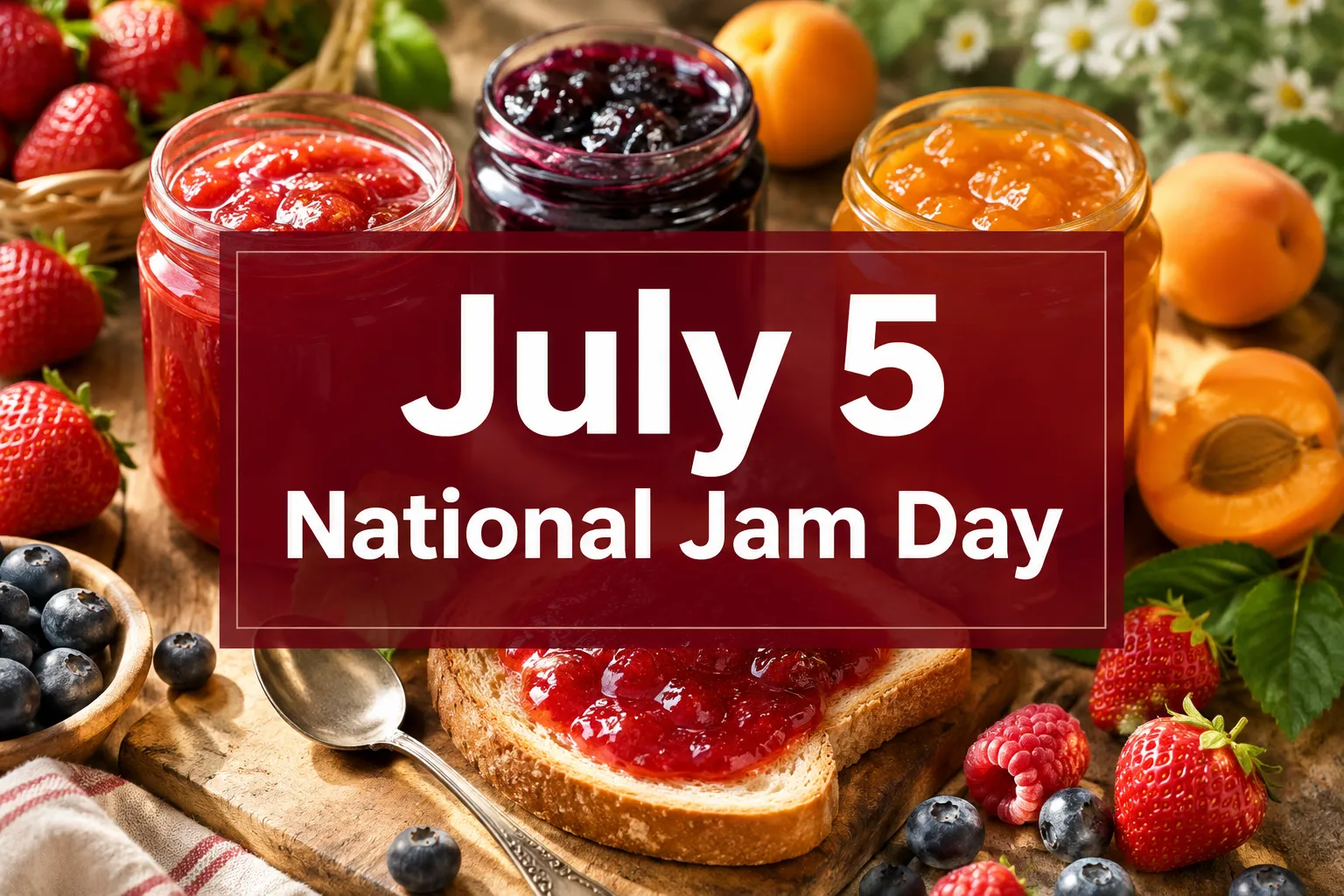
July 5 National Jam Day is an informal food holiday observed annually on July 5 to celebrate jam in all its forms, from homemade fruit preserves to beloved store-bought spreads. The day encourages home cooks, food enthusiasts, and brands to make, share, and enjoy jam. While it has no government or legislative backing, it appears consistently across food holiday calendars and is actively used by brands and bloggers as a promotional and content occasion [1][2][8].
Key Takeaways
- July 5 is widely recognized as National Jam Day across food holiday calendars, food blogs, and brand promotions [2][5][7]
- The holiday has no official legislative origin and is considered an informal or grassroots food observance [3][9]
- Jam brands such as Wilkin & Sons (Tiptree) use the day for heritage storytelling and product spotlights [6]
- Strawberries, raspberries, apricots, and blueberries are among the best fruits for beginner jam makers
- Homemade jam typically lasts 1 to 2 years sealed and 3 to 4 weeks once opened and refrigerated
- Jam and jelly differ primarily in texture: jam contains crushed fruit, while jelly is made from strained fruit juice
- Pectin is not strictly required to make jam, though it helps achieve a firmer set faster
- National Jam Day falls on July 5, right when summer fruit is at peak season in the Northern Hemisphere
- The day is often grouped with National Apple Turnover Day and National Graham Cracker Day on July 5 [2][8]
- Celebrating is simple: make a batch of jam, host a tasting, or share a jar with a neighbor
What Is National Jam Day?
National Jam Day is an annual food holiday dedicated to celebrating fruit jam, one of the oldest preserved foods in culinary history. The day honors both the craft of jam making and the simple pleasure of spreading a spoonful of sweet, fruity preserve onto toast, scones, or pastry.
Jam itself is a cooked mixture of crushed or chopped fruit and sugar, heated until the fruit breaks down and the mixture thickens. Unlike jelly, jam retains pieces of fruit and has a softer, more textured consistency. The tradition of preserving fruit as jam dates back centuries, long before refrigeration, when cooking fruit with sugar was a practical way to extend shelf life through winter months.
Today, National Jam Day is embraced by home cooks, food bloggers, artisan producers, and major brands alike. Wilkin & Sons, the British jam maker behind the Tiptree label, used the 2024 observance to celebrate 139 years of jam making and spotlight staff favorites, demonstrating how deeply the day resonates with producers who have built their identity around the craft [6].
When Is National Jam Day Celebrated?
National Jam Day is celebrated on July 5 every year. In 2026, that falls on a Sunday, making it an ideal day for a leisurely jam-making session or a summer brunch spread.
The July 5 date appears consistently across multiple food holiday tracking sites, food blogger content calendars, and brand promotional posts [2][5][7][8]. It shares the date with National Apple Turnover Day and National Graham Cracker Day, which gives creative cooks a natural opportunity to pair themes, for example, serving jam-filled turnovers or spreading jam over graham crackers.
Why Is July 5 National Jam Day?
No single founding organization or legislative act created July 5 National Jam Day. Like many informal food holidays, it most likely emerged from grassroots online communities, food marketing campaigns, or social media content calendars rather than any official body.
A tracking site that monitors social media chatter around food holidays notes that “National Jam Day” sees recurring online mentions each year, with an early peak of activity recorded on July 5, 2016, suggesting the observance gained traction organically through digital sharing [3]. General holiday aggregators such as National Today and Days of the Year do not list it among their featured July 5 observances, which further supports the conclusion that it remains a niche, community-driven food day rather than a nationally recognized holiday [9][10].
The timing, however, makes practical sense. July sits squarely in the heart of summer fruit season in the Northern Hemisphere. Strawberries, raspberries, apricots, cherries, and blueberries are all at or near peak ripeness in early July, making it a logical moment to celebrate the art of turning fresh fruit into jam.
Is National Jam Day a Real Holiday?
National Jam Day is a real observance in the sense that it is genuinely recognized and celebrated by food communities, brands, and content creators, but it is not a public holiday, federal observance, or legislatively recognized day.
The distinction matters for practical purposes. No banks close, no mail stops, and no government offices observe it. What it does offer is a shared cultural moment that food lovers, jam makers, and brands use as a hook for recipes, promotions, and storytelling. Tiptree’s Facebook page describes it as “a day to appreciate and enjoy your favourite jams, whether homemade or store-bought,” which captures the spirit well [1].
For food bloggers and content creators, July 5 National Jam Day appears on multiple editorial planning calendars as a reliable content opportunity [7][8].
What Is the Difference Between Jam and Jelly?
Jam contains crushed or chopped fruit cooked with sugar, resulting in a thick, textured spread with visible fruit pieces. Jelly is made from strained fruit juice, producing a clear, smooth, firm gel with no fruit solids.
Here is a quick comparison:
| Type | Made From | Texture | Fruit Pieces |
|---|---|---|---|
| Jam | Crushed/chopped fruit + sugar | Thick, soft, spreadable | Yes |
| Jelly | Strained fruit juice + sugar | Firm, clear, smooth | No |
| Preserves | Whole or large fruit pieces + sugar | Chunky, loose | Yes (large) |
| Marmalade | Citrus fruit + peel + sugar | Firm-set, slightly bitter | Yes (peel) |
How Do You Celebrate July 5 National Jam Day?
The most direct way to celebrate July 5 National Jam Day is to make a batch of homemade jam, share it with others, or try a new flavor. The day is flexible enough to suit any skill level or schedule.
Ideas for celebrating:
- Make jam from scratch. Pick a single fruit you love and follow a basic recipe. Strawberry jam is the most popular starting point for beginners.
- Host a jam tasting. Set out four to six jars of different jams, both homemade and store-bought, with bread, crackers, and cheese for pairing. If you enjoy other fruit-forward baked goods, National Strawberry Rhubarb Pie Day in June is another great occasion to explore fruit flavors.
- Gift a jar. A handmade jam with a handwritten label makes a thoughtful, low-cost gift.
- Try a new pairing. Jam works beyond toast: stir it into yogurt, swirl it into oatmeal, spread it on buttermilk biscuits, or use it as a glaze for roasted meats.
- Share on social media. Post a photo of your jam with the hashtag #NationalJamDay to join the broader community conversation [1][4].
- Visit a farmers market. Many local producers sell small-batch jams. Buying one is a quick way to support artisan food makers and discover regional flavors.
Best Jam Recipes for National Jam Day
Classic strawberry jam is the most accessible recipe for beginners, but National Jam Day is also a great excuse to experiment with less common flavors.
Three recipes worth trying in 2026:
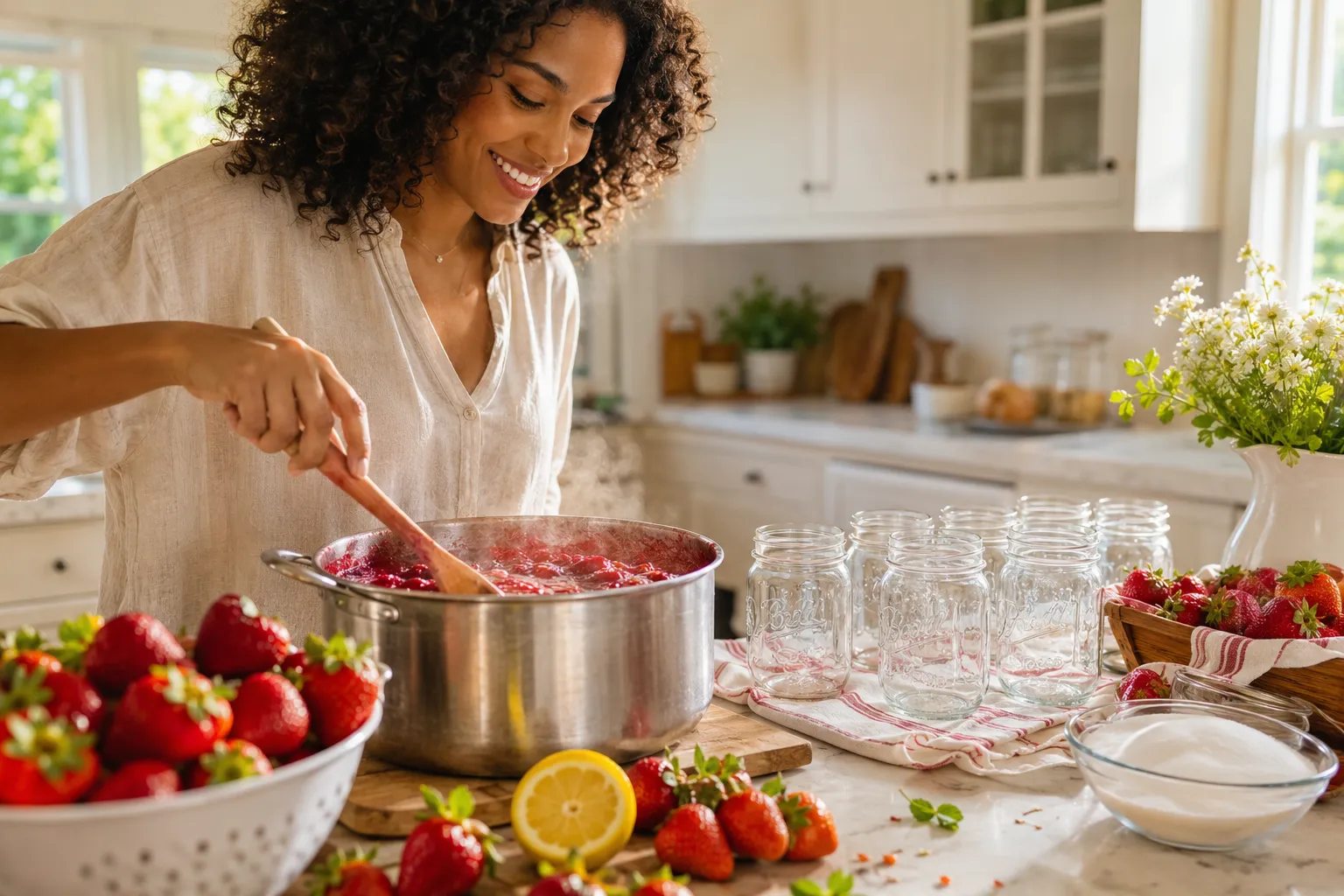
1. Classic Strawberry Jam
- 2 lbs fresh strawberries, hulled and halved
- 1.5 cups granulated sugar
- 2 tablespoons fresh lemon juice
Combine all ingredients in a heavy saucepan. Cook over medium heat, stirring frequently, until the mixture reaches 220 degrees Fahrenheit (the gel point). Skim foam, pour into sterilized jars, and seal.
2. Blueberry Vanilla Jam Add one split vanilla bean to a standard blueberry jam recipe during cooking. Remove before jarring. The vanilla rounds out the tartness of the berries and adds a subtle floral note.
3. Apricot Ginger Jam Combine 2 lbs pitted apricots with 1.5 cups sugar, 2 tablespoons lemon juice, and 1 teaspoon freshly grated ginger. The ginger adds warmth without overpowering the fruit.
For those who enjoy fruit-forward baked goods alongside their jam, National Cherry Tart Day and National Strawberry Shortcake Day in June offer complementary recipe inspiration.
Homemade Jam vs. Store-Bought for Jam Day
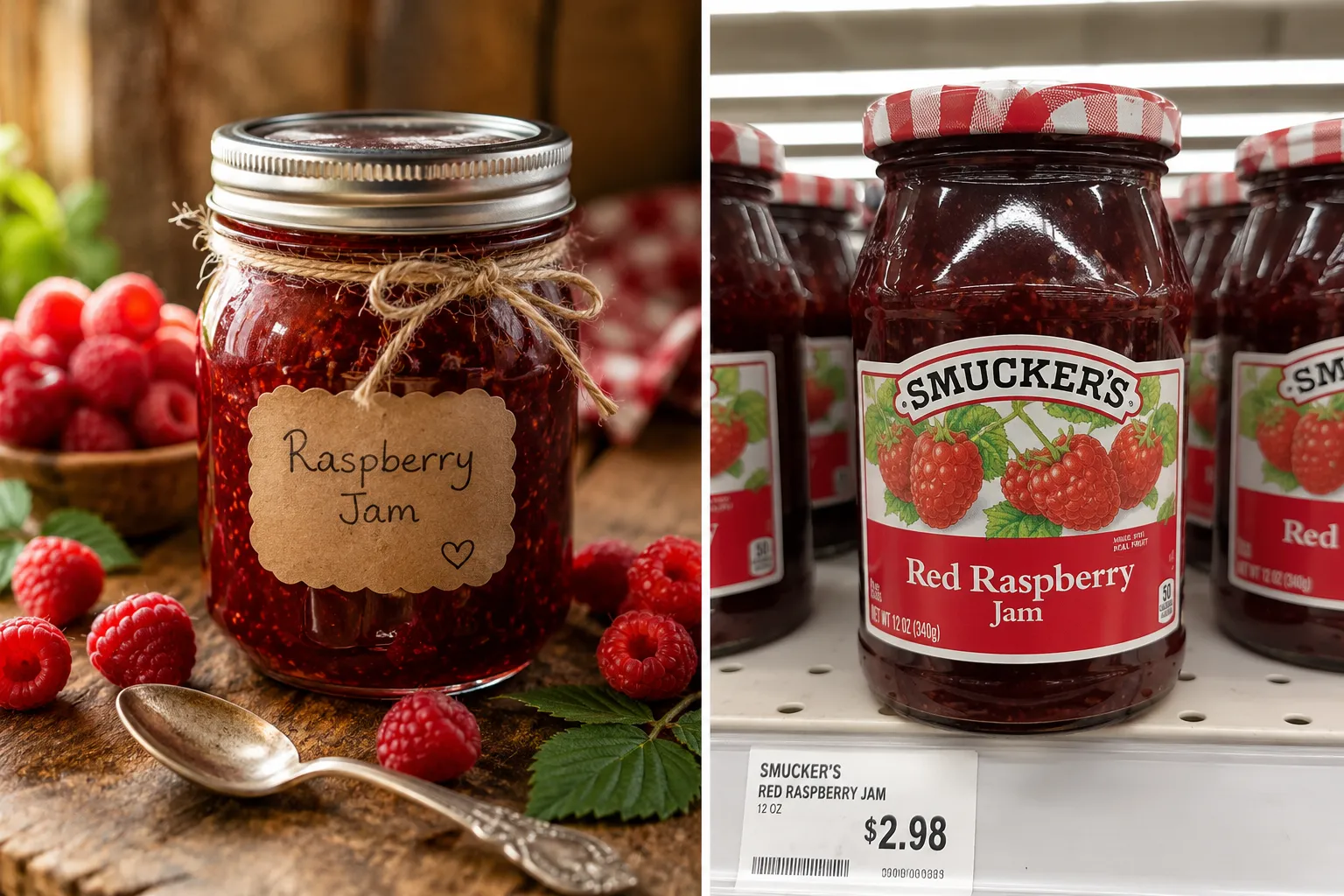
Homemade jam typically contains fewer additives, allows full control over sugar levels and flavor combinations, and carries a personal quality that store-bought products cannot replicate. Store-bought jam offers convenience, longer shelf stability, and consistent texture.
Choose homemade if:
- You want to control sugar content or use alternative sweeteners
- You have access to fresh, seasonal, or local fruit
- You want a unique flavor combination not available commercially
- You enjoy the process of preserving as a hobby
Choose store-bought if:
- Time is limited and you still want to celebrate the day
- You want to sample multiple flavors without a full cooking session
- You are new to jam and want a reference point before making your own
Both options are equally valid for celebrating July 5 National Jam Day. The Tiptree Facebook post specifically notes the day is “a day to appreciate and enjoy your favourite jams, whether homemade or store-bought” [1].
Jam Making Tips for Beginners
Beginners should start with a high-pectin fruit like strawberries or apricots, use a heavy-bottomed pot to prevent scorching, and always sterilize jars before filling.
Essential beginner tips:
- Use ripe but not overripe fruit. Overripe fruit has less natural pectin, which makes setting harder.
- Do not skip the lemon juice. Acid activates pectin and brightens flavor.
- Test the set before jarring. Place a small plate in the freezer. Drop a teaspoon of hot jam on it, wait 30 seconds, then push it with your finger. If it wrinkles, it is ready.
- Sterilize jars properly. Wash jars in hot soapy water, then heat them in a 225-degree oven for 10 minutes before filling.
- Work in small batches. Four to six cups of fruit at a time is easier to manage and sets more reliably than large batches.
- Skim the foam. Foam on the surface of cooking jam is harmless but affects the final appearance. Skim it off just before jarring.
A common beginner mistake is cooking jam over too high a heat, which causes scorching at the bottom before the top of the mixture reaches the gel point. Medium heat with frequent stirring is safer and produces a cleaner flavor.
Can You Make Jam Without Pectin?
Yes, jam can be made without added pectin. Many fruits contain enough natural pectin to set on their own when cooked with sugar and acid. Strawberries, apricots, plums, and citrus fruits all have moderate to high natural pectin levels.
Without added pectin, jam requires a longer cooking time to reach the gel point. The trade-off is a slightly more concentrated, deeper fruit flavor, though the texture may be softer than pectin-assisted jams.
Fruits that set well without added pectin:
- Apples (very high natural pectin)
- Citrus fruits
- Plums
- Apricots
- Quince
Fruits that benefit from added pectin:
- Strawberries (moderate pectin)
- Blueberries
- Peaches
- Cherries
- Raspberries
If you prefer to skip commercial pectin entirely, combining a low-pectin fruit with a high-pectin one, such as strawberry and apple, is a reliable workaround.
Best Fruits for Making Jam
The best fruits for jam are those with a good balance of natural pectin, sugar, and acidity. Strawberries remain the most popular choice worldwide, but stone fruits and berries all perform well.
Top fruit choices by season and ease:
| Fruit | Pectin Level | Best For |
|---|---|---|
| Strawberry | Medium | Classic beginner jam |
| Raspberry | Medium-High | Bright, tart flavor |
| Apricot | Medium-High | Stone fruit jam, pairs with ginger |
| Blueberry | Low-Medium | Rich color, mild flavor |
| Plum | Medium-High | Deep, complex flavor |
| Peach | Low | Soft, sweet summer jam |
| Cherry | Low-Medium | Pairs well with vanilla or almond |
For those who love raspberry-forward recipes, National Raspberry Popover Day in May is another occasion to explore the fruit in baked form.
How Long Does Homemade Jam Last?
Properly sealed homemade jam stored in a cool, dark place lasts 1 to 2 years unopened. Once opened and refrigerated, it should be used within 3 to 4 weeks for best quality.
Storage guidelines:
- Unopened, properly canned: Up to 1 to 2 years in a cool, dark pantry
- Opened, refrigerated: 3 to 4 weeks
- Freezer jam (no heat processing): Up to 1 year frozen, 3 weeks after thawing in the refrigerator
Signs that jam has spoiled include mold growth, an off smell, or a fermented taste. Always discard jam if the seal on the jar was broken before opening or if the lid does not pop when pressed.
National Jam Day Events and Traditions Near You
National Jam Day does not have a centralized event calendar, but local farmers markets, community kitchens, and specialty food stores sometimes host jam-making workshops or tastings around July 5.
How to find events:
- Search “jam making class near me July 2026” on Google or Eventbrite
- Check local farmers market websites for summer workshop schedules
- Look for announcements from artisan jam producers or specialty food shops on social media
- Contact a local community center or cooking school about one-day preserving workshops
Traditions worth starting:
- An annual jam swap where friends each bring a jar of homemade jam to trade
- A “jam of the season” challenge where participants try one new fruit each July
- Pairing jam with other summer baked goods, such as the National Strawberry Parfait Day recipes from June, to build a full summer fruit dessert spread
The social media dimension of the day is also active. Food holiday communities on Facebook mark July 5 as Jam Day and invite members to share photos and recipes [4], making online participation an easy entry point for those without access to local events.
Conclusion
July 5 National Jam Day may not carry the weight of a federal holiday, but it delivers something more useful: a specific, seasonally timed reason to slow down, work with fresh summer fruit, and reconnect with one of the oldest food preservation traditions in existence.
Actionable next steps for 2026:
- Plan your batch now. Visit a farmers market before July 5 and pick up 2 lbs of your favorite summer fruit.
- Gather your equipment. You need a heavy-bottomed pot, a candy thermometer, sterilized jars, and a ladle. Nothing exotic.
- Start simple. Classic strawberry jam with three ingredients is the best first project for anyone new to preserving.
- Share the result. Gift a jar, post a photo, or host a tasting. The day is more fun as a shared experience.
- Explore pairings. Jam belongs on more than toast. Try it with biscuits, swirled into yogurt, or as a glaze. For more fruit-forward baking ideas, explore National Apple Strudel Day recipes that pair naturally with fruit spreads.
Whether the batch is strawberry, apricot, or something more adventurous, July 5 is the right moment to make it.
FAQ
What day is National Jam Day? National Jam Day is observed on July 5 each year. In 2026, it falls on a Sunday.
Who created National Jam Day? There is no known founding organization or individual credited with creating National Jam Day. It appears to have emerged organically through online food communities and marketing calendars rather than any official body [3].
Is National Jam Day an official US holiday? No. National Jam Day is an informal food observance with no government recognition, legislative backing, or public holiday status [9][10].
What is the difference between jam and preserves? Jam is made from crushed or chopped fruit cooked with sugar. Preserves contain whole or large pieces of fruit suspended in a syrup or gel, giving them a chunkier texture than jam.
Can I make jam without a canning kit? Yes. For short-term use, jam can be made and stored in clean glass jars in the refrigerator without a full water-bath canning process. Refrigerator jam keeps for 3 to 4 weeks and requires no special equipment beyond a pot and clean jars.
What fruit is easiest for beginner jam makers? Strawberries are the most popular starting point because they are widely available in early July, have a familiar flavor, and require only three ingredients: fruit, sugar, and lemon juice.
How much sugar does jam need? Traditional jam recipes use roughly equal weights of fruit and sugar, though many modern recipes reduce sugar to 60 to 75 percent of the fruit weight. Lower sugar jams may require added pectin to achieve a proper set.
Does homemade jam need to be refrigerated? Properly sealed and heat-processed homemade jam does not require refrigeration until opened. Once opened, it should be kept in the refrigerator and used within 3 to 4 weeks.
What other food holidays are on July 5? July 5 is also recognized as National Apple Turnover Day and National Graham Cracker Day in many food holiday calendars, making it a naturally themed day for baked goods with jam [2][8].
Can I use frozen fruit to make jam? Yes. Frozen fruit works well for jam. Thaw it completely and drain any excess liquid before cooking to avoid a watery set.
References
[1] TiptreeOfficial Facebook Post – https://www.facebook.com/TiptreeOfficial/posts/national-jam-day-is-celebrated-on-july-5th-its-a-day-to-appreciate-and-enjoy-you/1153913016774710/
[2] The Nibble – Holidays July – https://www.thenibble.com/fun/more/facts/holidays-july.asp
[3] What National Day Is It – Jam – https://www.whatnationaldayisit.com/day/Jam/
[4] Facebook Food Holiday Group – July Calendar – https://www.facebook.com/groups/234795750902521/posts/1709392753442806/
[5] Foodie Giggles – Food Holidays July – https://foodiegiggles.com/food-holidays-july
[6] Tiptree – National Jam Day 2024 – https://www.tiptree.com/blogs/news/national-jam-day-2024
[7] Fine Lime Designs – July Food Days For Food Bloggers – https://www.finelimedesigns.com/july-food-days-for-food-bloggers/
[8] Ingredi – Food Fireworks Flavor July Holidays – https://ingredi.com/blog/food-fireworks-flavor-july-holidays-youll-eat-right-up/
[9] Days of the Year – July 5 – https://www.daysoftheyear.com/days/jul/05/
[10] National Today – July 5 – https://nationaltoday.com/july-5/