July 8 National Raspberry Day: History, Recipes, and How to Celebrate in 2026
- 0
- 15 Min Read
Last updated: July 8, 2026
Quick Answer
July 8 National Raspberry Day is an annual food holiday celebrated on July 8 in the United States, dedicated to one of summer’s most popular berries. The day encourages people to eat, cook with, and appreciate fresh raspberries at the peak of their summer season. It falls perfectly during peak raspberry harvest time in North America, making it an ideal moment to enjoy the fruit at its freshest.
Key Takeaways
- July 8 is National Raspberry Day in the United States, observed every year on the same date
- Raspberries belong to the rose family (Rosaceae) and are technically an aggregate fruit, not a true berry
- Fresh raspberries are available at their peak from June through August across most of North America
- Raspberries are rich in vitamin C, manganese, dietary fiber, and antioxidants called anthocyanins
- Common raspberry varieties include red, black, golden, and purple, each with distinct flavor profiles
- Frozen raspberries are nutritionally comparable to fresh and work better in cooked recipes
- Raspberries can be grown at home in USDA hardiness zones 3 through 9 with proper care
- Beyond jam, raspberries work well in smoothies, salad dressings, cocktails, sauces, and baked goods
- The holiday has no single verified founder but has been widely observed since at least the early 2010s
What Is National Raspberry Day?
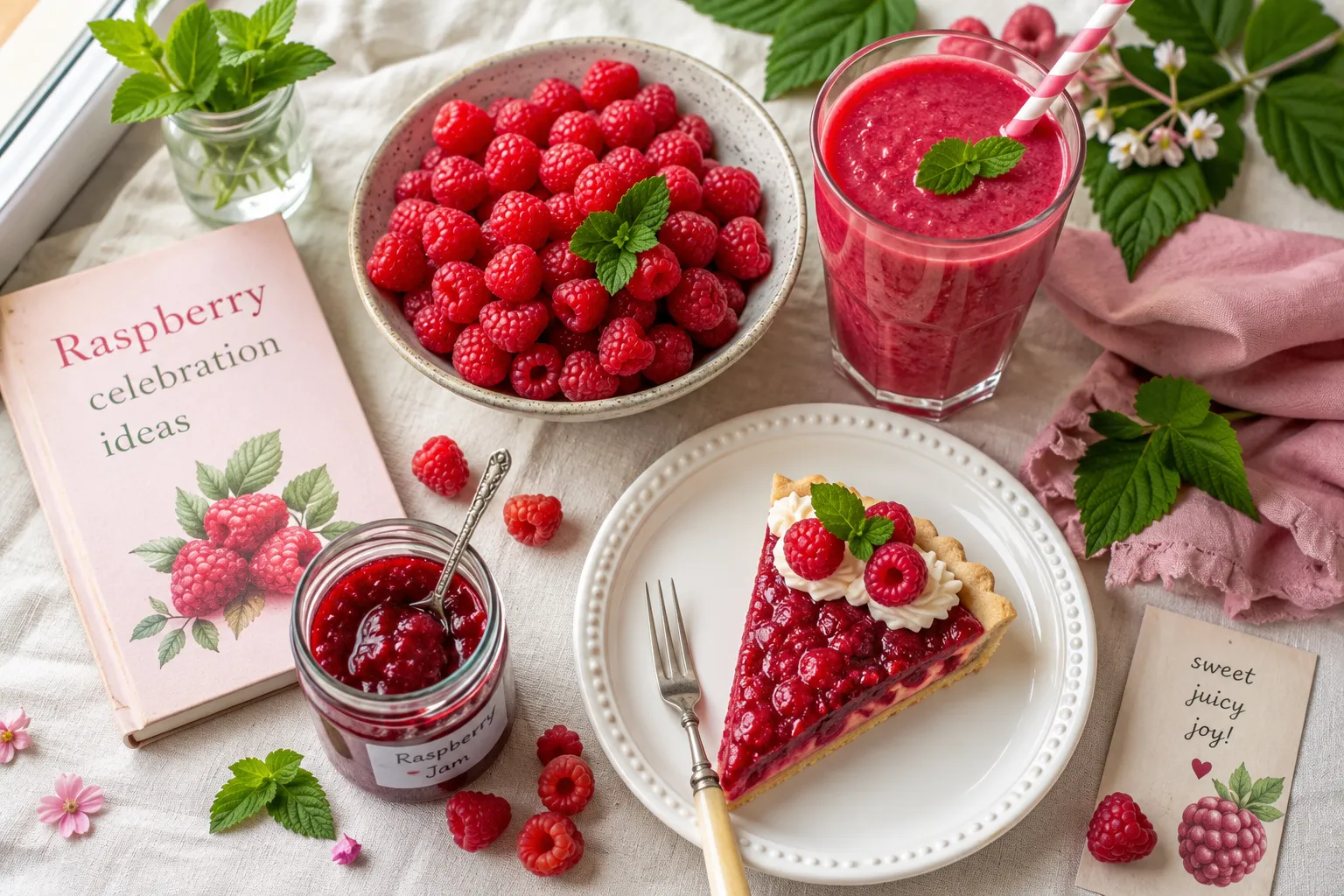
National Raspberry Day is an unofficial food holiday in the United States that celebrates the raspberry in all its forms, from fresh-picked fruit to jams, desserts, and beverages. The day has no formal governing body or legislation behind it, but it is widely recognized across food blogs, grocery retailers, and culinary communities each year.
The holiday serves a practical purpose beyond fun: it lands right in the middle of peak raspberry season in most of North America, making it a natural prompt to buy local, cook seasonally, and explore the full range of what raspberries can do in the kitchen.
Who it’s for: Anyone who enjoys cooking, baking, or eating fruit. It’s also a good opportunity for home gardeners, farmers market vendors, and food businesses to highlight fresh summer produce.
When Is National Raspberry Day Celebrated?
National Raspberry Day is celebrated on July 8 every year without exception. Unlike some food holidays that shift to the nearest Monday or float by week, this one stays fixed to the calendar date.
July 8 sits squarely in the heart of summer, which aligns well with the natural harvest window for raspberries in the continental United States. Growers in the Pacific Northwest, Michigan, and the Mid-Atlantic states typically see peak yields between late June and mid-August, so the timing is not arbitrary.
Why Is July 8 National Raspberry Day?
The specific origin of July 8 as the date for National Raspberry Day is not officially documented, and no single organization has claimed credit for establishing it. This is common among informal food holidays in the United States, many of which emerged organically through social media, food calendars, and retail promotions during the 2000s and 2010s.
The most logical explanation is seasonal: July 8 falls during peak raspberry availability across most growing regions in North America. Choosing a date when the fruit is actually abundant makes the holiday more actionable and relevant for consumers and growers alike.
“The best food holidays are the ones that match what’s actually in season. July 8 for raspberries is a case where the calendar and the harvest align almost perfectly.”
History of National Raspberry Day and the Raspberry Itself
The raspberry has a long history that predates any food holiday by centuries. Raspberries (Rubus idaeus) are native to Asia Minor and North America, and evidence of human consumption dates back to prehistoric times. Ancient Greeks and Romans cultivated them, and by the 1600s, European settlers were bringing cultivated varieties to North America.
Commercial raspberry cultivation in the United States expanded significantly in the 19th century, particularly in the Pacific Northwest and Great Lakes regions. Today, the U.S. produces raspberries across multiple states, with Washington, California, and Oregon leading commercial output.
As for the holiday itself: National Raspberry Day as a recognized observance appears to have gained traction in the early 2010s alongside the broader growth of food holiday culture online. It is now listed on most major food holiday calendars and receives attention from grocery chains, food brands, and recipe sites each July.
If you enjoy celebrating other berry-focused food holidays, the May 3 National Raspberry Popover Day guide covers a related celebration earlier in the year.
How to Celebrate July 8 National Raspberry Day
Celebrating July 8 National Raspberry Day does not require elaborate planning. The simplest approach is to buy fresh raspberries and eat them, but there are many ways to mark the day with more intention.
Simple ways to celebrate:
- Visit a local farmers market and buy fresh, locally grown raspberries
- Try a new raspberry recipe (see the section below for ideas)
- Make a raspberry smoothie or add raspberries to your morning oatmeal or yogurt
- Share a raspberry-themed dish on social media using the hashtag #NationalRaspberryDay
- Give a pint of fresh raspberries to a neighbor or coworker
- Visit a pick-your-own raspberry farm if one is nearby
For food businesses and restaurants: Offer a raspberry-featured special, run a social media promotion, or partner with a local berry farm to source fresh fruit for the day.
For more summer food holiday inspiration, check out the June 21 National Smoothie Day guide for raspberry smoothie ideas, or the June 14 National Strawberry Shortcake Day page for a berry-forward dessert pairing.
Best Raspberry Recipes for National Raspberry Day
Raspberries are one of the most versatile fruits in the kitchen. Their balance of tartness and sweetness makes them work in both sweet and savory applications.
Top recipe ideas for the holiday:
- Raspberry vinaigrette: Blend fresh raspberries with olive oil, red wine vinegar, honey, and Dijon mustard for a bright salad dressing
- Raspberry crumble: Toss raspberries with sugar and lemon zest, top with an oat-butter crumble, and bake until golden
- Raspberry lemonade: Muddle fresh raspberries into classic lemonade for a seasonal twist
- Raspberry chia jam: Cook raspberries down with chia seeds and maple syrup for a no-pectin jam that sets in the refrigerator overnight
- Raspberry tart: Fill a pre-baked shortcrust shell with pastry cream and top with fresh raspberries
- Raspberry barbecue glaze: Reduce raspberries with apple cider vinegar, brown sugar, and smoked paprika for a fruity glaze on grilled chicken or pork
Common mistake: Overcooking fresh raspberries destroys their bright color and delicate flavor. When adding them to baked goods, fold them in at the last moment and use frozen raspberries (which hold their shape better under heat) for anything that requires extended oven time.
What Can I Make with Raspberries Besides Jam?
Jam is the most traditional use, but raspberries go far beyond preserves. Fresh raspberries work in savory sauces, cocktails, frozen desserts, and even salad dressings.
Beyond jam, try these uses:
- Raspberry coulis (a smooth sauce for plating desserts or drizzling over cheesecake)
- Raspberry shrub (a drinking vinegar used in cocktails and mocktails)
- Raspberry ice cream or sorbet
- Raspberry compound butter (blend into softened butter for a spread on scones or pancakes)
- Raspberry-glazed salmon or duck breast
- Raspberry overnight oats
- Raspberry muffins or scones
For another fruit-forward baking idea, the May 21 National Strawberries and Cream Day guide offers complementary berry recipes worth exploring.
Where Do Raspberries Come From?
Raspberries are native to both Asia Minor and North America, with wild species found across temperate regions of Europe, Asia, and the Americas. The most commonly cultivated variety, Rubus idaeus, originated in the mountainous regions of Asia Minor and spread through Europe during ancient times.
In the modern commercial market, the top raspberry-producing countries include Russia, Mexico, Serbia, the United States, and Poland. Within the U.S., Washington State produces the largest share of commercially grown raspberries, followed by California and Oregon. Domestically grown fresh raspberries are most widely available from late June through August.
Health Benefits of Eating Raspberries
Raspberries are among the most nutrient-dense fruits available, particularly for their calorie count. A one-cup serving (approximately 123 grams) of fresh raspberries contains roughly 64 calories while delivering meaningful amounts of several key nutrients.
Key nutritional highlights (per one-cup serving, based on USDA food composition data):
| Nutrient | Amount |
|---|---|
| Calories | ~64 |
| Dietary fiber | ~8 grams |
| Vitamin C | ~32 mg (about 35% of daily value) |
| Manganese | ~0.8 mg (about 35% of daily value) |
| Vitamin K | ~9.6 mcg |
Notable health properties:
- Antioxidants: Raspberries contain anthocyanins and ellagic acid, compounds studied for their potential role in reducing oxidative stress
- Fiber: The high fiber content supports digestive health and contributes to satiety
- Low glycemic impact: Despite their natural sweetness, raspberries have a relatively low glycemic index, making them a reasonable choice for people managing blood sugar
Note: Nutritional values are based on general USDA food composition data and can vary by variety and growing conditions. Consult a registered dietitian for personalized dietary guidance.
Fresh vs. Frozen Raspberries: Which Is Better?
Fresh and frozen raspberries are both excellent choices, and the better option depends entirely on how they will be used. Fresh raspberries are ideal for eating raw, garnishing desserts, and any recipe where texture and appearance matter. Frozen raspberries are better for cooked applications, smoothies, and baking.
Decision rule:
- Choose fresh if: you are eating them as-is, topping a tart, or garnishing a dish where visual appeal counts
- Choose frozen if: you are making a sauce, smoothie, baked good, or jam, and want consistent flavor year-round at a lower cost
Frozen raspberries are typically picked and flash-frozen at peak ripeness, which means their nutritional profile is comparable to fresh. They also tend to cost less per ounce and are available year-round, unlike fresh raspberries which are seasonal.
Common mistake: Thawing frozen raspberries and then using them in a recipe that calls for fresh will result in a mushy texture. Add frozen raspberries directly to recipes without thawing whenever possible.
Raspberry Varieties: Types and Flavors
There are four main raspberry types grown for consumption, each with a distinct flavor profile and best use.
| Variety | Color | Flavor Profile | Best Use |
|---|---|---|---|
| Red raspberry | Bright red | Tart-sweet, classic | Eating fresh, jam, desserts |
| Black raspberry | Deep purple-black | Earthy, intense, sweet | Jams, baked goods, wine |
| Golden raspberry | Yellow-orange | Mild, honey-sweet, low acid | Fresh eating, sauces |
| Purple raspberry | Dark purple | Bold, complex, less tart | Jam, juice, baking |
Red raspberries (Rubus idaeus) are by far the most commercially available variety in the United States. Black raspberries (Rubus occidentalis) are native to North America and have a more complex, earthy flavor that works especially well in jams and baked goods. Golden raspberries are the mildest and sweetest, making them a good choice for people who find red raspberries too tart.
How to Grow Raspberries at Home
Raspberries can be grown at home in most temperate climates across the United States. They thrive in USDA hardiness zones 3 through 9 and require relatively little space once established.
Basic growing requirements:
- Sunlight: At least 6 to 8 hours of direct sun per day
- Soil: Well-drained, slightly acidic soil with a pH between 5.5 and 6.5
- Spacing: Plant canes 18 to 24 inches apart in rows spaced 8 to 10 feet apart
- Watering: Consistent moisture, roughly 1 to 1.5 inches per week during the growing season
- Support: A trellis or wire support system helps keep canes upright and improves air circulation
Two main types for home growers:
- Summer-bearing: Produce one large crop in early to mid-summer; require pruning of old canes after harvest
- Ever-bearing (fall-bearing): Produce two smaller crops, one in late summer and one in fall; easier to manage for beginners
Common mistake: Planting raspberries in poorly drained soil leads to root rot, the most common cause of failure for home growers. Raised beds are a practical solution for gardens with heavy clay soil.
Where to Buy Fresh Raspberries Near Me
Fresh raspberries are widely available during summer months through several retail channels. The best sources for quality and freshness, ranked in general order of preference:
- Local farmers markets: Typically the freshest option, often picked within 24 to 48 hours of sale
- Pick-your-own farms: Offers the freshest possible fruit and often the best value per pound
- Grocery store produce sections: Widely available from June through August; look for firm, dry berries with no signs of mold or crushing
- CSA (community-supported agriculture) boxes: Many CSA programs include raspberries during peak season
- Online grocery delivery: Convenient but carries more risk of receiving damaged fruit due to the berry’s fragility
What to look for when buying: Choose raspberries that are bright in color, firm but not hard, and free of moisture or mold. Avoid containers with stained bottoms, which indicate crushed or leaking berries underneath. Fresh raspberries have a very short shelf life (2 to 3 days in the refrigerator), so buy only what you plan to use within a day or two.
Common Mistakes When Cooking with Raspberries
Even experienced cooks make avoidable errors with raspberries. Here are the most frequent ones and how to sidestep them.
- Washing too early: Raspberries absorb water quickly and mold faster once wet. Rinse them just before use, not when you bring them home
- Overcooking: High heat for extended periods turns raspberries dull and mushy. For sauces, cook briefly over medium heat and remove from heat as soon as the berries break down
- Using fresh in baked goods: Fresh raspberries release too much liquid during baking, which can make muffins or cakes soggy. Use frozen raspberries (unthawed) for baked goods
- Skipping the sugar balance: Raspberries vary in tartness by variety and ripeness. Always taste before adding sugar, and consider a small amount of lemon juice to brighten the flavor even when the berries are sweet
- Storing at room temperature: Raspberries deteriorate within hours at room temperature. Refrigerate immediately and use within 2 to 3 days
FAQ About July 8 National Raspberry Day
What day is National Raspberry Day? National Raspberry Day is July 8 every year. It is a fixed-date food holiday observed annually in the United States.
Is National Raspberry Day an official U.S. holiday? No. It is an unofficial food holiday with no federal recognition or legislation. It is observed informally through social media, food communities, and retail promotions.
Who created National Raspberry Day? The specific founder of National Raspberry Day has not been officially documented. Like many food holidays, it appears to have emerged organically through food culture and social media during the early 2010s.
Are raspberries actually berries? Botanically, no. Raspberries are aggregate fruits made up of many small drupelets clustered around a central core. True botanical berries include bananas, grapes, and tomatoes. The everyday use of “berry” for raspberries is culinary rather than botanical.
Can I use frozen raspberries to celebrate National Raspberry Day? Absolutely. Frozen raspberries are nutritionally comparable to fresh and work well in smoothies, sauces, jams, and baked goods. They are a practical choice when fresh raspberries are not available or are out of budget.
What is the best way to store fresh raspberries? Refrigerate unwashed raspberries in a single layer on a paper towel-lined container. Use within 2 to 3 days. Do not wash until just before eating or cooking.
Are raspberries good for you? Yes. Raspberries are high in dietary fiber, vitamin C, manganese, and antioxidants while being relatively low in calories. They are widely considered one of the more nutritious fruits available.
What pairs well with raspberries? Raspberries pair well with chocolate, lemon, vanilla, cream, mint, peaches, balsamic vinegar, and dark spirits like bourbon or red wine. They also complement savory ingredients like duck, pork, and aged cheeses.
When is raspberry season in the United States? Peak raspberry season in most of the continental United States runs from late June through mid-August. The Pacific Northwest and Great Lakes regions are the primary growing areas.
How many calories are in a cup of raspberries? A one-cup serving of fresh raspberries contains approximately 64 calories, according to USDA food composition data.
Conclusion
July 8 National Raspberry Day lands at the best possible time: right when fresh raspberries are at their most abundant and flavorful across North America. Whether the goal is to eat a handful straight from the carton, try a new recipe, or visit a local farm, the holiday offers a genuine reason to engage with one of summer’s most nutritious and versatile fruits.
Actionable next steps for 2026:
- Mark July 8 on your calendar and plan one raspberry-focused meal or snack
- Check local farmers market listings for nearby berry vendors or pick-your-own farms
- Try one recipe outside your comfort zone, such as a raspberry vinaigrette or a savory raspberry glaze
- If you have garden space, consider planting an ever-bearing raspberry variety this fall for next year’s harvest
- Share what you make on social media with #NationalRaspberryDay to connect with other raspberry enthusiasts
For more berry-forward food holiday ideas, explore the May 21 National Strawberries and Cream Day guide or the June 9 National Strawberry-Rhubarb Pie Day guide for complementary summer fruit celebrations. And if you’re looking to build a full summer baking spread, the June 14 National Strawberry Shortcake Day page pairs perfectly with a raspberry topping variation.