
Last updated: November 22, 2026
Quick Answer
November 22 National Kimchi Day is a legally recognized food holiday in South Korea, created by a 2020 law promoting kimchi’s cultural and industrial value. The date was chosen because kimchi is made from roughly 11 ingredients, and each one is said to deliver 22 health benefits. The day has since spread well beyond Korea: in 2026, Los Angeles City Council proclaimed November 22 as Kimchi Day [1][2], and Korean officials held a Kimchi Global Vision Declaration in New York [3][4].
Key Takeaways
- The holiday was established by South Korean law in 2020 and is observed annually on November 22.
- The numbers matter: 11 core ingredients times 22 benefits each, hence 11/22.
- In 2026, Los Angeles became the latest U.S. city to proclaim the date [1][2].
- Several U.S. states, including California, New York, Virginia and Washington, have passed Kimchi Day measures.
- A Kimchi Global Vision Declaration was held in New York in November 2026 [3][4].
- Kimchi can be vegan, but most traditional recipes contain fish sauce or salted shrimp.
- Home fermentation takes 1 to 5 days at room temperature before refrigeration.
- There are well over 100 documented kimchi varieties, not just the red cabbage version.
What Is National Kimchi Day
National Kimchi Day is an official commemorative day in South Korea honoring kimchi as a food, a cultural practice and an export industry. It was created under the Kimchi Industry Promotion Act, with the first observance in 2020.
Two things get celebrated at once. First, kimjang, the communal late-autumn practice of making winter kimchi, which UNESCO inscribed on its Intangible Cultural Heritage list in 2013. Second, the modern kimchi business: growers, sauce makers, packers and exporters who ship Korean kimchi to more than 90 countries.
November 22 is less a novelty food holiday than a policy tool. It was written into law specifically to support farmers and processors while building kimchi’s reputation abroad.
Why Is November 22 National Kimchi Day
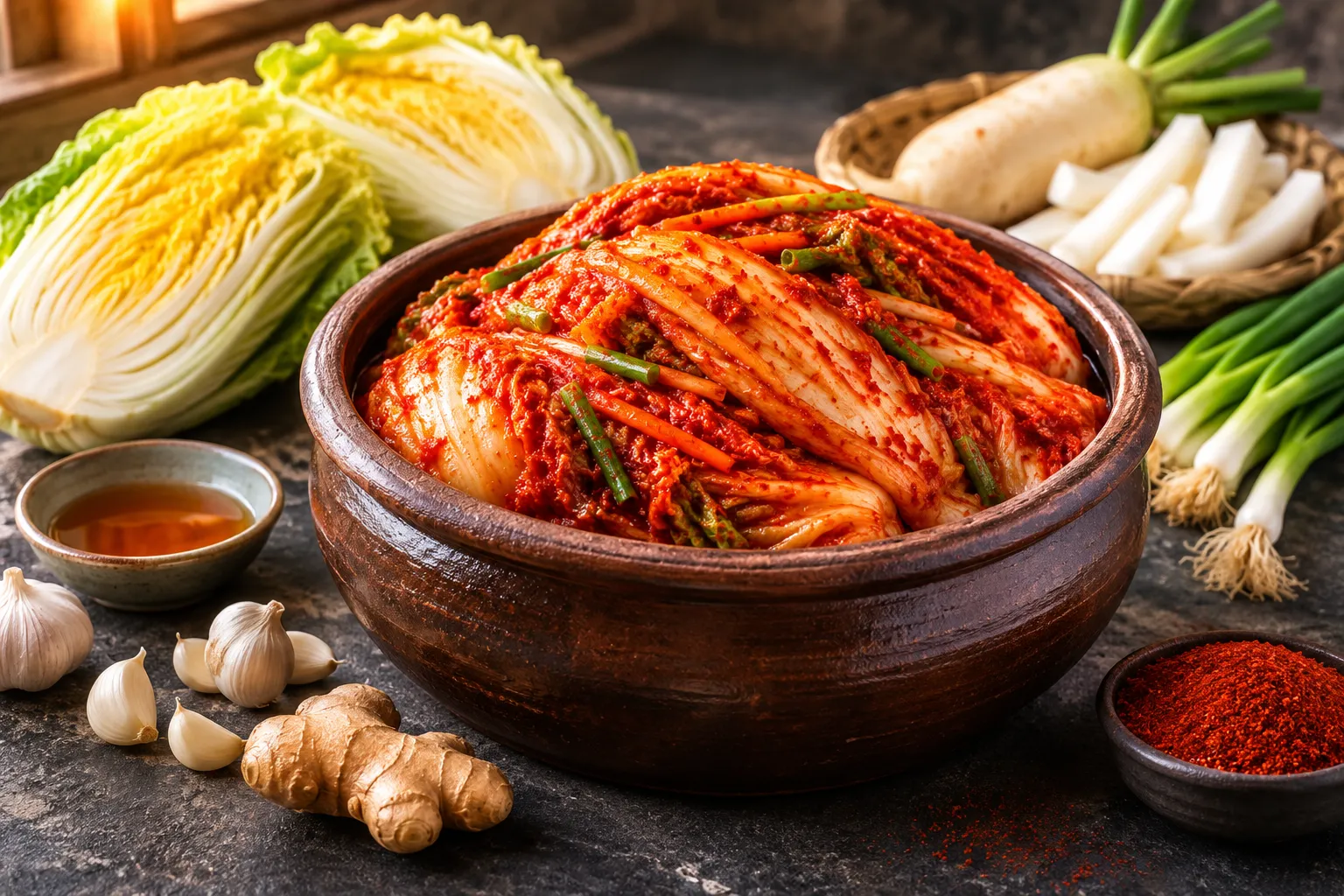
The date encodes the food itself. Kimchi is built from about 11 main ingredients (napa cabbage, radish, garlic, ginger, scallion, chili powder, salted seafood, salt, sugar, glutinous rice paste, and onion or pear, depending on the version), and Korean promoters cite 22 benefits attributed to each. 11 plus 22 gives November 22.
There’s a seasonal logic too. Late November is when Korean households historically held kimjang, after the cabbage harvest and just before the ground froze. Picking that week ties the legal holiday to the actual farming calendar rather than an arbitrary slot.
How to Celebrate National Kimchi Day
Make a jar, share a jar, or eat somewhere that takes kimchi seriously. Those are the three realistic options for most people.
- Hold a small kimjang. Two people, two cabbages, one afternoon. It’s a social activity by design.
- Give it away. Traditional kimjang ended with neighbors trading containers. Jars travel well.
- Cook with aged kimchi, not fresh. Kimchi jjigae, kimchi fried rice and kimchi pancakes all want sour, three-weeks-plus kimchi.
- Visit a Korean market on or near the date. Many run tastings and discounts on packaged brands.
- Attend a proclamation or festival if your city holds one.
If you only have an hour, make geotjeori, the quick unfermented salad version. It’s ready immediately and skips the waiting.
How to Make Kimchi for Beginners
Start with one napa cabbage, coarse sea salt without iodine, and Korean chili flakes (gochugaru). Everything else is adjustable.
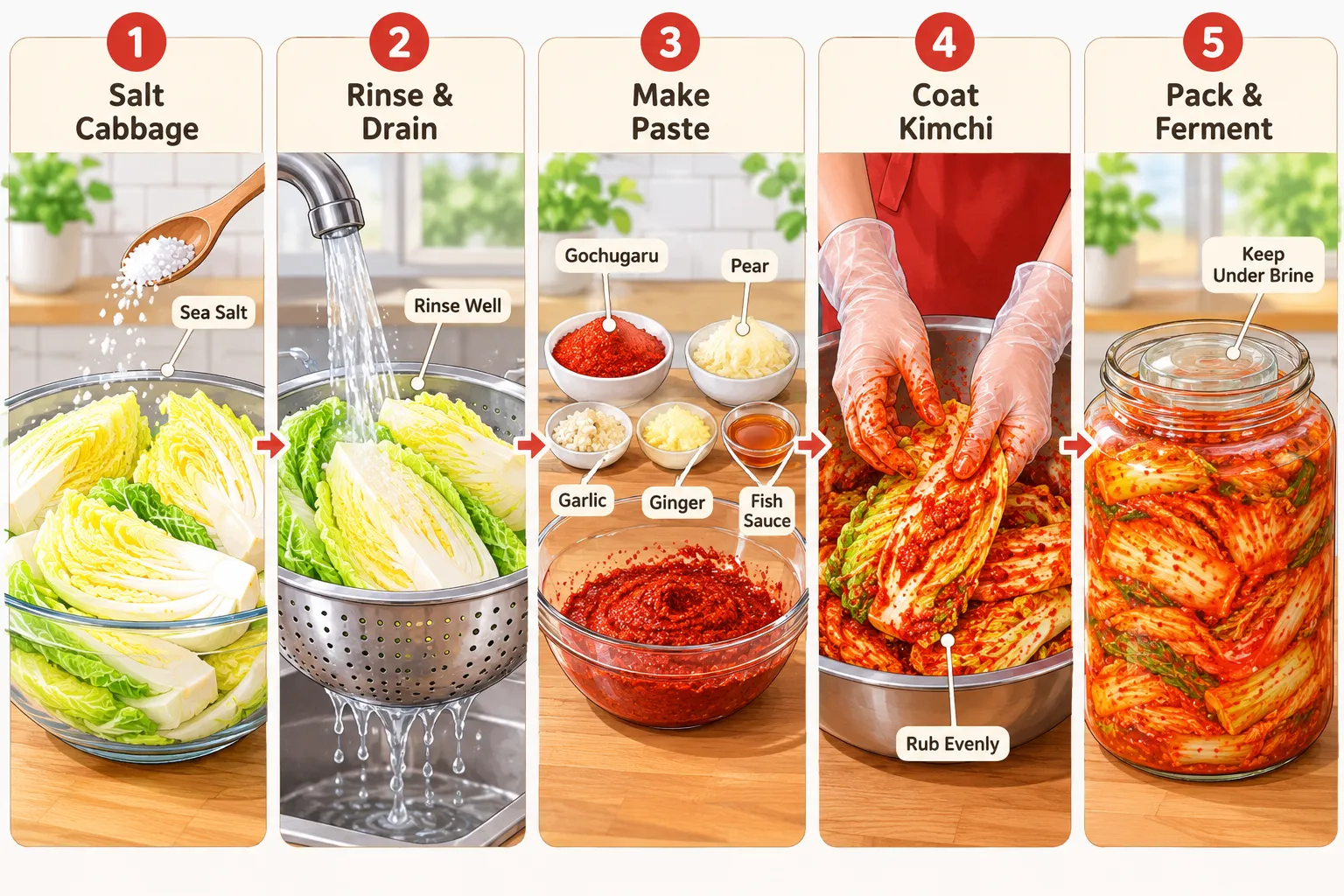
- Cut and salt. Quarter the cabbage lengthwise. Salt between the leaves using about 1/2 cup coarse salt per 2-pound head. Rest 2 hours, turning once.
- Rinse three times in cold water, then drain upside down for 30 minutes. Undrained cabbage makes watery kimchi.
- Make the paste. Blend 4 cloves garlic, 1 teaspoon grated ginger, 2 tablespoons fish sauce, 1 tablespoon sugar or grated pear, and 1/4 to 1/2 cup gochugaru. A cooled sweet-rice-flour slurry helps it cling.
- Coat. Wear gloves. Spread paste leaf by leaf, then add radish matchsticks and cut scallions.
- Pack tight into a clean jar, leaving 2 inches of headspace. Press until brine rises over the cabbage.
- Ferment, then refrigerate.
For related fermented-vegetable techniques and brine-heavy cooking, the 457 Stew Cookbook covers dishes that use aged kimchi well.
How Long Does Kimchi Take to Ferment
Plan on 1 to 5 days at room temperature, then weeks to months in the fridge. Warmer kitchens ferment faster.
| Stage | Temperature | Time | What you’ll notice |
|---|---|---|---|
| Active fermentation | 68-72°F | 1-2 days | Bubbles, rising brine, mild tang |
| Slower ferment | 60-65°F | 3-5 days | Gentler sourness, crisper texture |
| Cold storage | 34-39°F | Weeks to months | Flavor deepens, acidity builds |
| Cooking kimchi | Fridge | 3+ weeks | Sour, soft, ideal for stew |
Taste daily. When it’s pleasantly tart and fizzy on the tongue, move it to the fridge. Burp the jar once a day during the room-temperature stage or expect overflow.
What Are the Different Types of Kimchi
Korea documents well over 100 varieties, sorted by vegetable, season and brine style. Red napa cabbage kimchi (baechu kimchi) is just the most exported one.
- Baechu kimchi – napa cabbage, chili, salted seafood. The default.
- Kkakdugi – cubed Korean radish, crunchy, standard with soups.
- Dongchimi – clear radish water kimchi, no chili, served chilled.
- Baek kimchi – white cabbage kimchi without chili flakes; good for kids.
- Oi sobagi – stuffed cucumber kimchi, a summer version eaten fresh.
- Chonggak kimchi – whole ponytail radishes with greens attached.
- Pa kimchi – scallion kimchi, pungent and strongly fermented.
Choose dongchimi or baek kimchi if you can’t handle heat. Choose kkakdugi if texture matters more than spice.
Is Kimchi Vegan or Vegetarian
Most traditional kimchi is not vegan. Standard recipes include fish sauce, anchovy stock or saeujeot (salted fermented shrimp), all animal products.
Vegan versions work fine. Replace the seafood with any of these:
- Soy sauce plus a strip of dried kelp (kombu) simmered into stock
- Doenjang or miso, used sparingly
- Dried shiitake powder for savory depth
- Salted plum or pear juice for sweetness and acidity
Check labels on store-bought jars; many list anchovy even when the front says “vegetable kimchi.” Temple-style Korean kimchi also omits garlic, onion and scallion.
Common Mistakes When Making Kimchi
The usual failures are salt-related, not spice-related.
- Using iodized table salt. It can off-flavor the batch and slow fermentation. Use coarse sea salt.
- Under-salting the cabbage. It stays stiff and spoils instead of souring.
- Not draining. Excess water dilutes the brine and dulls the flavor.
- Leaving cabbage above the brine. Exposed leaves grow mold. Press it down, add a weight.
- Sealing the jar tight for days. Carbon dioxide builds. Burp it.
- Refrigerating immediately. You’ll get salty salad, not kimchi. Give it at least a day warm.
Edge case: a white film on the surface is usually kahm yeast, harmless, and can be skimmed. Fuzzy green, black or pink growth means discard the batch.
Best Kimchi Recipes to Make at Home
Once a jar turns sour, it becomes an ingredient. These are the dishes that use it best.
- Kimchi jjigae – stew with pork belly or tofu, kimchi brine, and a spoon of gochujang.
- Kimchi bokkeumbap – fried rice with day-old rice, chopped kimchi and a fried egg.
- Kimchijeon – thin savory pancake of kimchi, flour and brine, pan-fried crisp. If you like fried batter work, the 401 Fried Recipes collection covers technique.
- Kimchi grilled cheese – sharp cheddar, squeezed-dry kimchi, buttered sourdough.
- Kimchi mandu – dumplings with tofu, pork and chopped kimchi.
- Kimchi sundubu – soft tofu stew, ready in 15 minutes.
Squeeze kimchi before adding it to anything fried or baked. The brine keeps; use it in marinades or in a garlic-forward recipe.
Kimchi vs Other Fermented Foods
Kimchi is a lactic-acid vegetable ferment, like sauerkraut, but with more aromatics and usually some seafood.
| Food | Base | Key flavorings | Typical ferment |
|---|---|---|---|
| Kimchi | Napa cabbage, radish | Chili, garlic, ginger, fish sauce | 1-5 days, then cold |
| Sauerkraut | Green cabbage | Salt only (sometimes caraway) | 1-4 weeks |
| Miso | Soybeans, koji | Salt | Months to years |
| Yogurt | Milk | Live cultures | 4-12 hours, warm |
| Kombucha | Sweet tea | SCOBY | 7-14 days |
Pick kimchi over sauerkraut when you want heat and umami. Pick sauerkraut when you want a neutral sour that disappears into a sandwich.
What Are the Health Benefits of Eating Kimchi
Kimchi is low in calories, high in fiber and vitamin C, and contains live Lactobacillus bacteria when unpasteurized. The “22 benefits” framing used in Kimchi Day promotion is a marketing summary, not a clinical finding.
What’s reasonably supported: fermented vegetables contribute live cultures and dietary fiber. What’s overstated: claims that kimchi cures or prevents specific diseases.
One real caution. Kimchi is salty, often 300 to 600 mg sodium per half-cup serving depending on brand. If you’re managing blood pressure, treat it as a condiment.
Where to Find Kimchi Day Events and Restaurant Specials
Check Korean cultural centers, city council calendars and Korean grocery chains first. Official Kimchi Day programming is organized more by governments and trade groups than by restaurants.
In 2026, activity included the Los Angeles City Council proclamation of November 22 as Kimchi Day [1][2] and a Kimchi Global Vision Declaration event in New York tied to Korea’s cultural diplomacy push [3][4][5]. Korean officials, including the First Lady, participated in New York programming around the date [6][7][8]. Overseas festivals and school kimchi-making classes have also run in Malaysia, Germany and across U.S. cities.
Where to look for specials:
- Korean supermarket chains (H Mart, Zion Market) around the week of November 22
- Packaged brands running global campaigns, such as Jongga [9]
- Korean Cultural Centers in LA, New York, Washington and Chicago
- University Korean student associations, which often host free kimjang events
FAQ
When is National Kimchi Day? November 22, every year, in South Korea and in a growing number of U.S. states and cities.
Who created National Kimchi Day? The South Korean government, through the Kimchi Industry Promotion Act, with the first official observance in 2020.
Is Kimchi Day recognized in the United States? Yes, at state and city level. California, Virginia, New York, Washington and New Jersey have passed Kimchi Day measures, and Los Angeles proclaimed the date in 2026 [1][2].
Does kimchi need to be refrigerated? After the initial 1 to 5 day room-temperature ferment, yes. Cold storage slows souring and keeps texture.
Can kimchi go bad? It gets sour over months but stays safe if submerged in brine. Discard it if you see fuzzy colored mold or smell anything rotten rather than sour.
Is all kimchi spicy? No. Baek kimchi and dongchimi contain no chili flakes at all.
How much kimchi should you eat per day? A quarter to half cup is a normal serving. Watch the sodium if you eat it daily.
What’s the difference between kimchi and kimjang? Kimchi is the food. Kimjang is the communal late-autumn practice of making a winter supply, recognized by UNESCO in 2013.
Conclusion
Three next steps. Salt a cabbage this week and let it ferment two days before refrigerating, so you have sour kimchi ready by mid-December. Check your city council and local Korean Cultural Center listings for November 22 programming, since most 2026 events were government-led rather than restaurant-led. And buy one jar you didn’t make, ideally a radish kkakdugi or a white baek kimchi, to taste how different varieties actually behave.
For more single-date food holidays and the recipes attached to them, browse January 24 National Peanut Butter Day and September 16 Guacamole Day.
References
- La City Council to Proclaim Kimchi Day. nbclosangeles.com.
- La Proclaims Nov 22 as Kimchi Day. nbclosangeles.com.
- Korea Holds Landmark Kimchi Day Vision Declaration in New York. koreatimes.co.kr.
- Aen20261120007000315. yna.co.kr.
- Pyh20261120112900315. yna.co.kr.
- Pyh20261120112100315. yna.co.kr.
- Pyh20261120112100315. m-en.yna.co.kr.
- Article. news.sbs.co.kr.
- November 22 Is Kimchi Day Jongga Kimchi Reaches Tables Around the World. wowktv.com.