Last updated: September 3, 2026
Quick Answer
September 3 Baby Back Ribs Day, also called National Baby Back Ribs Day and National Barbecue Baby Back Ribs Day, is an annual informal food holiday observed every year on September 3. It celebrates one of America’s most beloved barbecue cuts by encouraging home cooks, restaurants, and food enthusiasts to fire up the grill or smoker. The day is not a federally recognized holiday but is widely promoted by food calendars, restaurant chains, and social media communities. [1][4]
Key Takeaways
- September 3 Baby Back Ribs Day falls on September 3 every year and is also tagged on social media as #NationalBabyBackRibsDay and #BabyBackRibsDay. [4]
- The holiday is informal, not legislated by any U.S. federal or state authority, but it is recognized across dozens of food-holiday calendars and event-listing sites. [1]
- Restaurant chains have used the day for promotions, including buy-one-get-one rack deals, making it a genuine marketing event for the food industry. [3]
- Baby back ribs come from the upper loin section of the pig, making them leaner and shorter than spare ribs.
- The ideal cooking temperature for baby back ribs is 225°F to 250°F, with total cook times ranging from 3 to 6 hours depending on method.
- Smoking and grilling are the two most popular cooking methods; smoking produces a deeper smoke ring and more complex flavor.
- The “bend test” and internal temperature of 190°F to 203°F are the most reliable ways to check doneness.
- Skipping membrane removal is the single most common mistake home cooks make with baby back ribs.
- The day has spread internationally, with coverage in Germany and the Czech Republic treating it as a lens into American barbecue culture. [7][10]
- Multiple holiday calendars already list September 3 Baby Back Ribs Day through 2028, signaling continued annual promotion. [1][4]
What Is September 3 Baby Back Ribs Day?
September 3 Baby Back Ribs Day is an annual food observance dedicated to baby back ribs, a cut of pork taken from the upper rib cage near the spine. The day encourages people to cook, order, or share baby back ribs and is recognized across food-holiday calendars, restaurant marketing campaigns, and social media platforms. [1][4]
The holiday goes by several names: National Baby Back Ribs Day, National Barbecue Baby Back Ribs Day, and National BBQ Baby Back Ribs Day are all used interchangeably. [1] Food-holiday roundup sites pair it with other September 3 observances, including National Welsh Rarebit Day, which means the date carries more than one food theme in some calendars. [6]
What makes baby back ribs special? Baby back ribs are shorter, curved pork ribs cut from the loin area. Because they sit higher on the pig’s back, the meat is leaner and more tender than spare ribs. A typical rack weighs between 1.5 and 2.5 pounds and contains 10 to 13 bones.
Is September 3 Baby Back Ribs Day Official?
September 3 Baby Back Ribs Day is not an official U.S. federal or state holiday. No known legislation or government proclamation has established it. [1]
Major encyclopedic lists of food days, as of mid-2026, omit National Baby Back Ribs Day while listing National Welsh Rarebit Day as the primary September 3 food observance. [1] This divergence between encyclopedic sources and commercial holiday calendars confirms that recognition of the day is driven largely by food marketers, restaurant operators, and event-listing sites rather than official institutions.
That said, “unofficial” does not mean unimportant. Food holidays like this one function as genuine marketing anchors. Restaurant-technology and delivery platforms explicitly advise operators to build special menus and promotions around September 3, framing it as a revenue opportunity. [3] The day has also attracted international attention, with German and Czech food publications covering it as a window into American barbecue culture. [7][10]
“National Baby Back Ribs Day is a recurring event that happens yearly on the 3rd of September.”, eventguide.com [4]
When Did Baby Back Ribs Day Start?
The precise origin of September 3 Baby Back Ribs Day is not documented in any verified historical record. No founding organization, individual creator, or specific year of establishment has been publicly confirmed.
This is common among informal food holidays. Many were created by food brands, trade associations, or marketing agencies at some point in the late 20th or early 21st century, and the founding details were never formally published. What is clear is that by the mid-2010s, September 3 was already appearing on food-holiday calendars as National Baby Back Ribs Day, and the date has been consistently reaffirmed each year since. [1][4]
Multiple holiday-calendar sites already display September 3 Baby Back Ribs Day for years through 2028, reflecting an expectation that the day will continue to be promoted annually. [1][4]
For more on how food holidays are celebrated and promoted throughout the year, the May 16 National Barbecue Day history and recipes guide offers useful context on the broader barbecue holiday tradition.
Baby Back Ribs vs Spare Ribs: What Is the Difference?
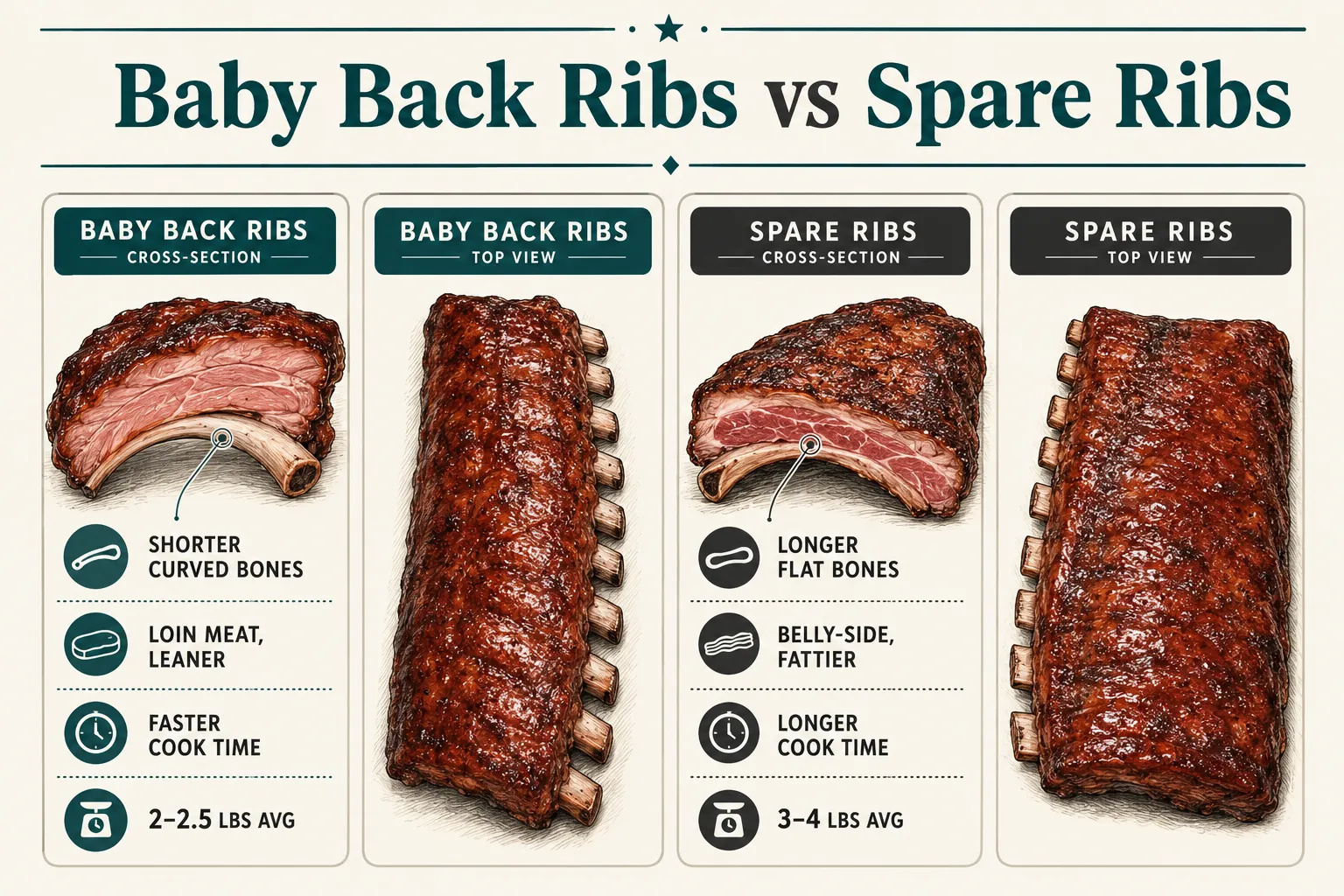
Baby back ribs come from the upper loin section of the pig, near the spine. Spare ribs come from the lower belly section. The difference matters for cooking time, texture, and flavor.
| Feature | Baby Back Ribs | Spare Ribs |
|---|---|---|
| Location on pig | Upper loin, near spine | Lower belly section |
| Bone length | Shorter, curved | Longer, flatter |
| Meat texture | Leaner, more tender | Fattier, richer flavor |
| Average rack weight | 1.5-2.5 lbs | 3-4 lbs |
| Typical cook time (low/slow) | 3-4 hours | 5-6 hours |
| Best for | Beginners, quick cooks | Competition BBQ, long smokes |
Choose baby back ribs if you want a faster cook, leaner meat, or a more approachable rack for a weeknight or holiday celebration. Choose spare ribs if you prefer a richer, fattier result and have more time.
How to Cook Baby Back Ribs at Home: Best Recipe and Method
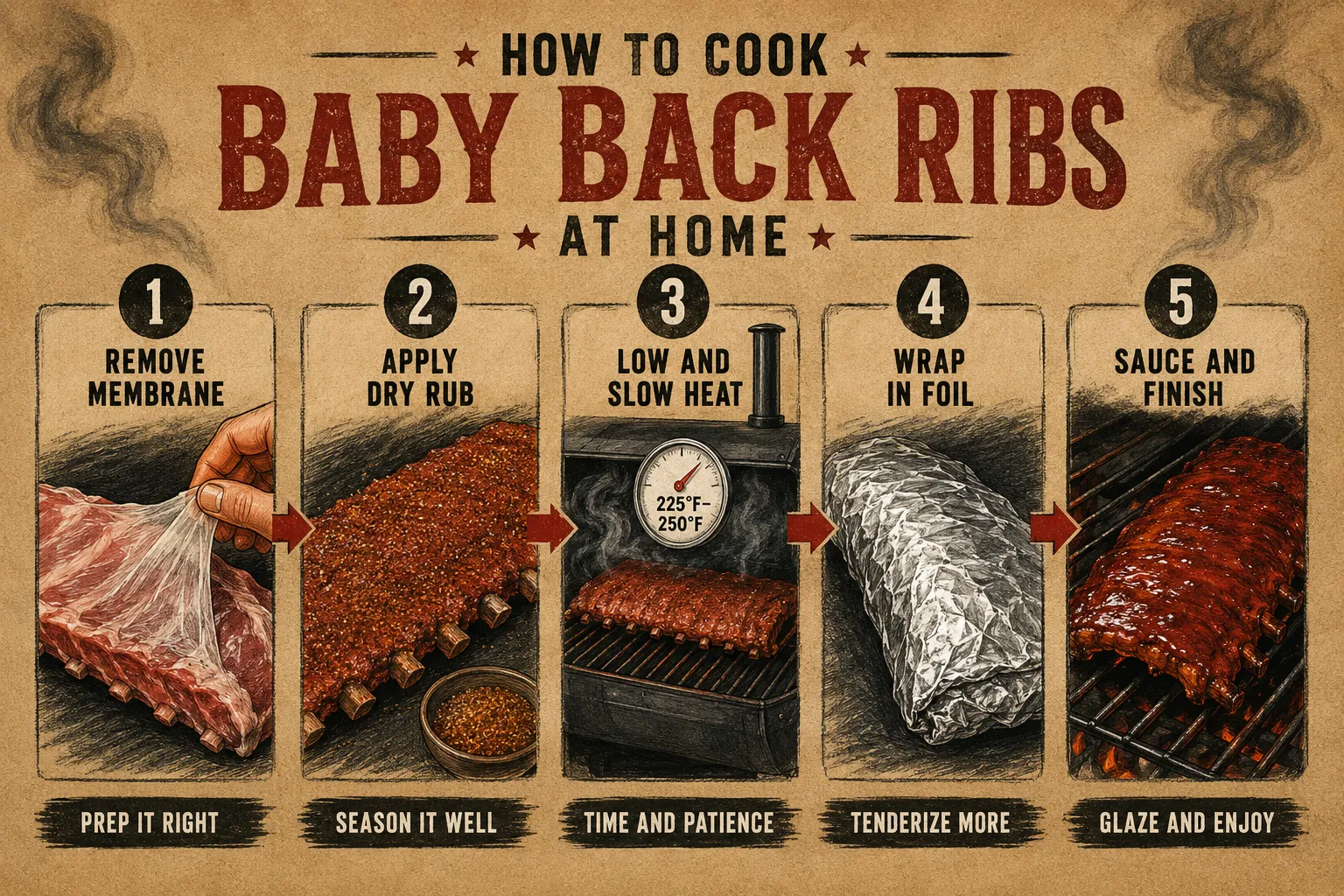
The best approach for home cooks is the 3-2-1 method (or a shortened 2-1-1 for baby backs), which uses low indirect heat, a foil wrap phase, and a final sauce glaze. This method consistently produces tender, fall-off-the-bone ribs without a smoker.
Step-by-step process:
- Remove the membrane. Flip the rack bone-side up. Slide a butter knife under the thin silver membrane at one end, grip it with a paper towel, and pull it off in one piece. Skipping this step is the most common mistake, the membrane blocks smoke and seasoning from penetrating the meat.
- Apply a dry rub. Coat both sides generously with a rub made from brown sugar, smoked paprika, garlic powder, onion powder, black pepper, salt, and a pinch of cayenne. Let it sit for at least 30 minutes, or overnight in the refrigerator.
- Cook low and slow. Set your oven or grill to 225°F to 250°F. Place ribs bone-side down on indirect heat. Cook uncovered for 2 to 3 hours.
- Wrap in foil. Wrap the rack tightly in heavy-duty aluminum foil with a small splash of apple juice or apple cider vinegar inside. Cook for another 1 to 2 hours.
- Sauce and finish. Unwrap, brush with your preferred barbecue sauce, and return to direct heat (or broil) for 15 to 20 minutes until the sauce caramelizes.
Best sauces and rubs for baby back ribs:
- Classic Kansas City style: thick, tomato-based, sweet and tangy
- Carolina vinegar sauce: thin, acidic, cuts through the fat
- Texas dry rub (no sauce): heavy on pepper and salt, smoke does the work
- Honey-chipotle glaze: sweet heat, excellent for oven-finished ribs
For more food holiday recipe inspiration, the March 26 National Ham and Eggs Day history and recipes guide covers other savory pork-forward celebrations worth bookmarking.
How Long Does It Take to Cook Baby Back Ribs?
Total cook time for baby back ribs ranges from 3 to 5 hours at 225°F to 250°F, depending on the method. Oven-baked ribs using the foil-wrap method typically take 3 to 3.5 hours. Smoked ribs take 4 to 5 hours. Grilled ribs using indirect heat take 3 to 4 hours.
Quick reference by method:
- Oven (225°F): 3 to 3.5 hours total
- Gas grill (indirect, 250°F): 3 to 4 hours
- Charcoal grill (indirect, 225°F): 3.5 to 4.5 hours
- Offset smoker (225°F): 4 to 5 hours
- Instant Pot (pressure cook): 25 to 30 minutes, then finish on grill for 10 minutes
Never rush ribs with high heat. Cooking above 300°F causes the exterior to dry out before the collagen in the connective tissue has time to break down. Low and slow is not optional, it is the mechanism that makes ribs tender.
Baby Back Ribs Smoking vs Grilling: Which Is Better?
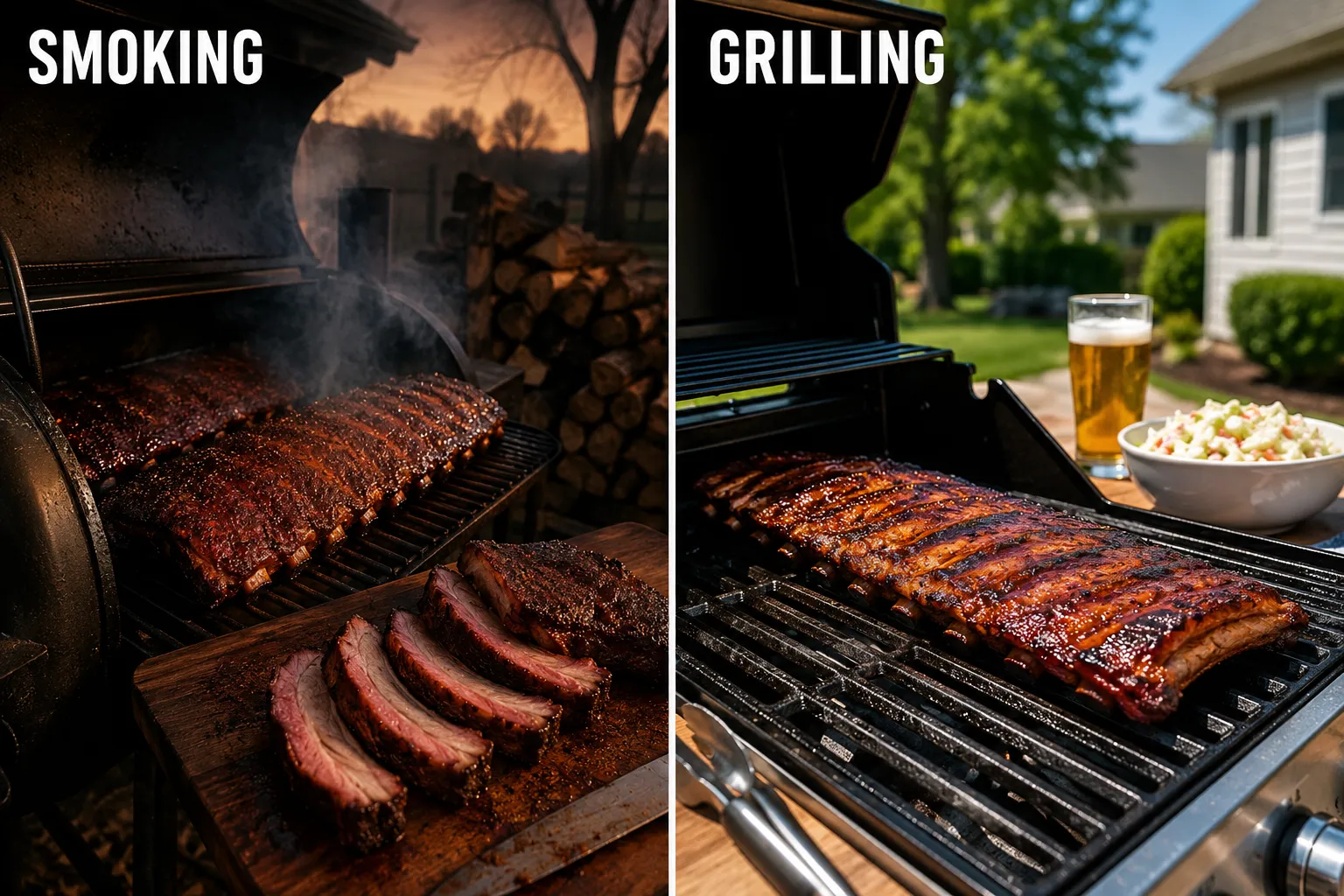
Smoking produces a deeper smoke ring, more complex flavor, and a traditional bark on the exterior. Grilling is faster and more accessible but relies on indirect heat to avoid burning. Both methods work well for baby back ribs; the choice depends on equipment, time, and flavor preference.
Smoking:
- Uses wood chips or chunks (applewood, hickory, cherry, pecan)
- Maintains 225°F for 4 to 5 hours
- Produces a visible pink smoke ring just below the surface
- Best for: competition-style ribs, maximum flavor depth
Grilling (indirect method):
- Set up a two-zone fire: coals or burners on one side only
- Place ribs on the cool side, lid closed
- Maintains 250°F for 3 to 4 hours
- Best for: weeknight cooks, households without a dedicated smoker
Common mistake: Placing ribs directly over the heat source on a grill. This chars the outside while leaving the inside tough. Always use indirect heat.
How to Tell When Baby Back Ribs Are Done
Baby back ribs are done when they reach an internal temperature of 190°F to 203°F, measured between the bones (not touching bone). At this range, the collagen has fully converted to gelatin, producing tender, juicy meat.
Three reliable doneness tests:
- Thermometer test: Insert an instant-read thermometer between two bones. 190°F is tender; 203°F is fall-off-the-bone.
- Bend test: Pick up the rack with tongs at one end. If the rack bends significantly and the surface cracks, the ribs are done.
- Toothpick test: Insert a toothpick or skewer between two bones. It should slide in with almost no resistance, like pushing into soft butter.
Avoid the “fall off the bone” myth as a universal target. Competition pitmasters actually prefer ribs that hold together with a slight tug, pure fall-off-the-bone texture can indicate the meat has been overcooked or steamed rather than smoked.
Common Mistakes When Cooking Baby Back Ribs
Most failed batches of baby back ribs come down to a short list of repeatable errors. Knowing them in advance saves time and wasted product.
- Not removing the membrane. The silverskin on the bone side blocks flavor and creates a chewy layer. Always remove it before seasoning.
- Cooking at too high a temperature. Anything above 300°F risks drying out the meat before it tenderizes.
- Skipping the rest period. After cooking, let ribs rest for 10 to 15 minutes before slicing. This allows juices to redistribute.
- Saucing too early. Barbecue sauce contains sugar, which burns quickly. Apply sauce only in the final 15 to 20 minutes of cooking.
- Boiling the ribs first. This removes flavor and fat that would otherwise contribute to the final taste. It also prevents a proper bark from forming.
- Cutting before resting. Slicing immediately releases all the accumulated juices onto the cutting board instead of keeping them in the meat.
Where to Buy Baby Back Ribs and Restaurant Deals on September 3
Baby back ribs are widely available at most grocery stores, warehouse clubs, and butcher shops year-round. For September 3 Baby Back Ribs Day in 2026, the best sources include:
- Grocery stores: Most major chains stock fresh and vacuum-sealed baby back ribs in the meat section. Look for racks with even marbling and a pinkish-red color.
- Warehouse clubs: Bulk packs offer better value per pound for larger gatherings.
- Local butchers: Often carry higher-quality heritage-breed pork with better fat marbling.
- Online meat delivery services: Several direct-to-consumer meat brands ship fresh or frozen racks with next-day delivery.
Restaurant deals on September 3: Casual dining chains with rib-focused menus have historically used September 3 as a promotional anchor. At least one major ribs-focused chain offered a buy-one-get-one rack deal on September 3, 2024, explicitly branded as a National Baby Back Ribs Day promotion. [3] For 2026, check the websites and apps of chains such as Chili’s, Applebee’s, TGI Fridays, and local BBQ specialists in the week leading up to September 3.
Pro tip: Delivery platforms and restaurant-tech sites advise operators to feature prix fixe menus with half or full racks, sides, and dessert on September 3, so bundle deals are worth looking for. [3]
If you enjoy pairing food holidays with great deals, the June 22 National Onion Rings Day guide covers a similar approach to tracking restaurant promotions around food observances.
How September 3 Baby Back Ribs Day Is Celebrated
Most people celebrate September 3 Baby Back Ribs Day by cooking ribs at home, visiting a barbecue restaurant, or sharing rib content on social media. The day functions less like a structured ceremony and more like a cultural prompt to engage with a beloved food.
Common ways to celebrate:
- Cook a full rack using the 3-2-1 method at home
- Host a backyard barbecue with multiple rib preparations
- Order ribs from a local BBQ restaurant or through a delivery app
- Share photos using #NationalBabyBackRibsDay or #BabyBackRibsDay [4]
- Try a new sauce, rub, or wood-smoke combination
- Pair ribs with classic sides: coleslaw, baked beans, cornbread, and mac and cheese
Recipe-focused sites treat the day as a hook for curated rib content, often pairing the date with collections of 20 or more baby back rib recipes to inspire home cooks. [9]
The holiday’s reach has extended beyond the U.S. A German food curiosity calendar describes “Tag der Baby Back Ribs” as celebrated by barbecue enthusiasts and meat lovers, characterizing baby back ribs as one of America’s most popular grilled dishes. [10] A Czech food industry article used the day to compare domestic rib pricing against American-style cuts available locally. [7]
For those who enjoy exploring the full calendar of American food holidays, the May 10 National Shrimp Day history and deals guide and the March 17 National Corn Dog Day guide offer similar deep dives into other beloved savory food observances.
FAQ
Q: What day is National Baby Back Ribs Day? National Baby Back Ribs Day is observed on September 3 every year. It is also called National Barbecue Baby Back Ribs Day and National BBQ Baby Back Ribs Day. [1][4]
Q: Is September 3 Baby Back Ribs Day a federal holiday? No. It is an informal food holiday with no federal or state legislative backing. It is recognized by food-holiday calendars, restaurant marketers, and social media communities rather than government institutions. [1]
Q: What is the difference between baby back ribs and spare ribs? Baby back ribs come from the upper loin near the spine. They are shorter, leaner, and cook faster (3 to 4 hours). Spare ribs come from the belly, are larger and fattier, and take 5 to 6 hours to cook.
Q: What temperature should baby back ribs be cooked to? Cook baby back ribs at 225°F to 250°F until the internal temperature between the bones reaches 190°F to 203°F. This range ensures the collagen has broken down fully for tender meat.
Q: How long do baby back ribs take to cook in the oven? In an oven set to 225°F, baby back ribs typically take 3 to 3.5 hours using the foil-wrap method. Higher temperatures reduce cook time but risk drying out the meat.
Q: What wood is best for smoking baby back ribs? Applewood and cherry wood produce a mild, slightly sweet smoke that complements pork well. Hickory delivers a stronger, more traditional BBQ flavor. Pecan is a middle-ground option with nutty undertones.
Q: Do I need to remove the membrane from baby back ribs? Yes. The membrane (silverskin) on the bone side blocks smoke and seasoning from penetrating the meat and creates a chewy texture. Remove it before applying any rub or marinade.
Q: When should I apply barbecue sauce to ribs? Apply sauce only in the final 15 to 20 minutes of cooking. Sauce contains sugar that burns quickly at high heat. Adding it too early causes charring rather than caramelization.
Q: Are there restaurant deals on September 3 Baby Back Ribs Day? Yes. Several casual dining chains have offered promotions on September 3, including buy-one-get-one rack deals. Check chain websites and delivery apps in the days leading up to September 3 for current offers. [3]
Q: What sides go best with baby back ribs? Classic pairings include coleslaw, baked beans, cornbread, mac and cheese, pickled onions, and potato salad. The acidity in coleslaw and pickles helps balance the richness of the ribs.
Q: Has September 3 Baby Back Ribs Day spread outside the United States? Yes. Food publications in Germany and the Czech Republic have covered the holiday, framing it as a lens into American barbecue culture and domestic meat pricing. [7][10]
Q: What hashtags are used for September 3 Baby Back Ribs Day? The most common hashtags are #NationalBabyBackRibsDay and #BabyBackRibsDay. [4]
Conclusion
September 3 Baby Back Ribs Day is a well-established informal food holiday that gives home cooks, restaurants, and barbecue enthusiasts a shared reason to celebrate one of America’s most iconic cuts. While it carries no official government recognition, its presence across dozens of food-holiday calendars, restaurant promotions, and international food publications confirms its cultural staying power. [1][4][7][10]
Actionable next steps for 2026:
- Home cooks: Buy a fresh rack of baby back ribs from your local butcher or grocery store, remove the membrane, apply a dry rub the night before, and use the 3-2-1 method on September 3.
- Restaurant owners and operators: Build a September 3 prix fixe menu or limited-time rib deal and promote it with high-quality food photography on social media using #NationalBabyBackRibsDay. [3]
- BBQ beginners: Start with the oven method at 225°F before investing in a smoker. Master the bend test and thermometer check before moving to more advanced techniques.
- Social media participants: Share your rib photos on September 3 using the official hashtags to join the broader community conversation. [4]
Whether the goal is a backyard smoke session or a restaurant deal, September 3 is the one day a year when baby back ribs take center stage, and the preparation starts well before the date arrives.
For more food holiday guides and recipes throughout the year, explore the August 30 Toasted Marshmallow Day guide and the August 22 Eat a Peach Day guide for late-summer food celebration ideas.
References
[1] National Baby Back Ribs Day – https://www.checkiday.com/eb1f92bd254ac114f51a393842588569/national-baby-back-ribs-day
[2] National Barbecued Spareribs Day – https://nationaltoday.com/national-barbecued-spareribs-day/
[3] September Food Holidays – https://get.grubhub.com/blog/september-food-holidays/
[4] eventguide – https://eventguide.com/d/102932.htm
[6] Holidays September – https://www.thenibble.com/fun/more/facts/holidays-september.asp
[7] Baby Back Ribs Maji Dnes Svatek A V Cesku Vyjdou Levneji Nez Nase Hospodska Zebra – https://svet-potravin.cz/baby-back-ribs-maji-dnes-svatek-a-v-cesku-vyjdou-levneji-nez-nase-hospodska-zebra/
[9] September Food Holidays – https://recipesforholidays.com/september-food-holidays/
[10] 3 September 2025 Tag Der Baby Back Ribs – https://besserwisser-kalender.de/2025/09/03/3-september-2025-tag-der-baby-back-ribs/