Last updated: October 10, 2026
Quick Answer
All there is to know about cooking comes down to five building blocks: heat control, seasoning, timing, the right equipment, and food safety. Learn four or five core techniques, sautéing, roasting, boiling, and braising, and most recipes turn into variations on a theme instead of a mystery. The rest is repetition: tasting as you go, adjusting salt and acid, and knowing when a dish is actually done.
Key Takeaways
- Five techniques cover most home recipes: sautéing, roasting, boiling, braising, grilling.
- Salt added early builds flavor into food; salt added only at the end just sits on the surface.
- An instant-read thermometer removes the guesswork behind doneness.
- Beginners get the fastest wins from boiling, roasting, and sautéing because mistakes are easy to catch.
- Cooking without a recipe works once you understand ratios: fat, acid, salt, and heat.
- Rising grocery prices in 2026 make batch cooking and pantry staples more valuable than before. [5]
- Most home cooks need six months to two years of regular practice to cook with confidence.
- Dietary substitutions work best when matched to the technique, not just the ingredient list.
All There Is to Know About Cooking: The Core Framework
Cooking is less about memorizing recipes and more about understanding a small set of repeatable moves. Once a cook understands how heat, salt, acid, and time interact, a recipe becomes a suggestion rather than a rulebook.
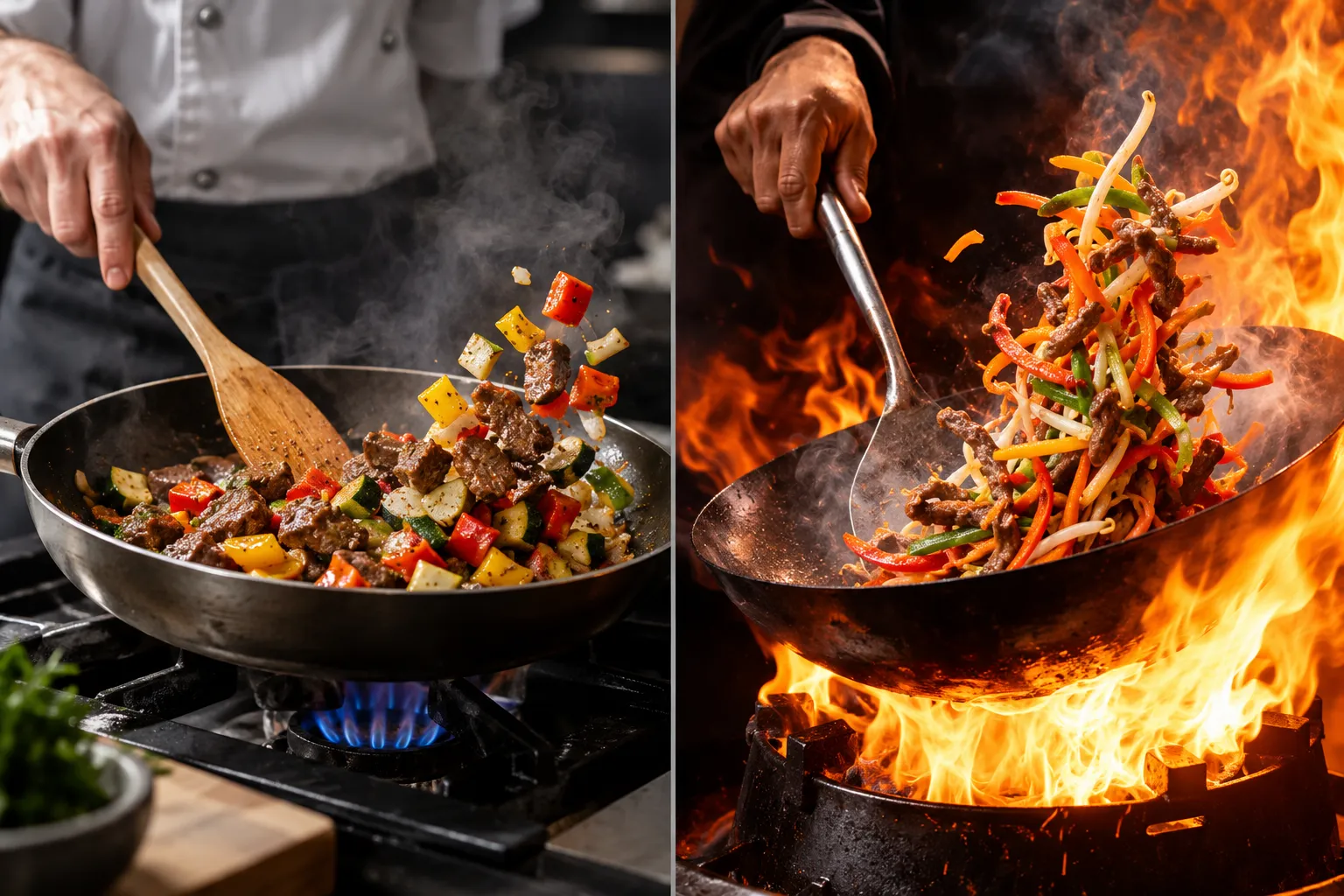
Three forces decide the outcome of almost every dish: temperature, seasoning, and timing. Consumer research backs this shift toward simpler, high-quality home cooking, 2026 data from the Institute of Food Technologists found that 55% of U.S. shoppers rank comfort food as their top home-cooking priority, followed closely by fast prep time, with six in ten actively seeking minimally processed ingredients. [1]
What are the basic cooking techniques everyone should know
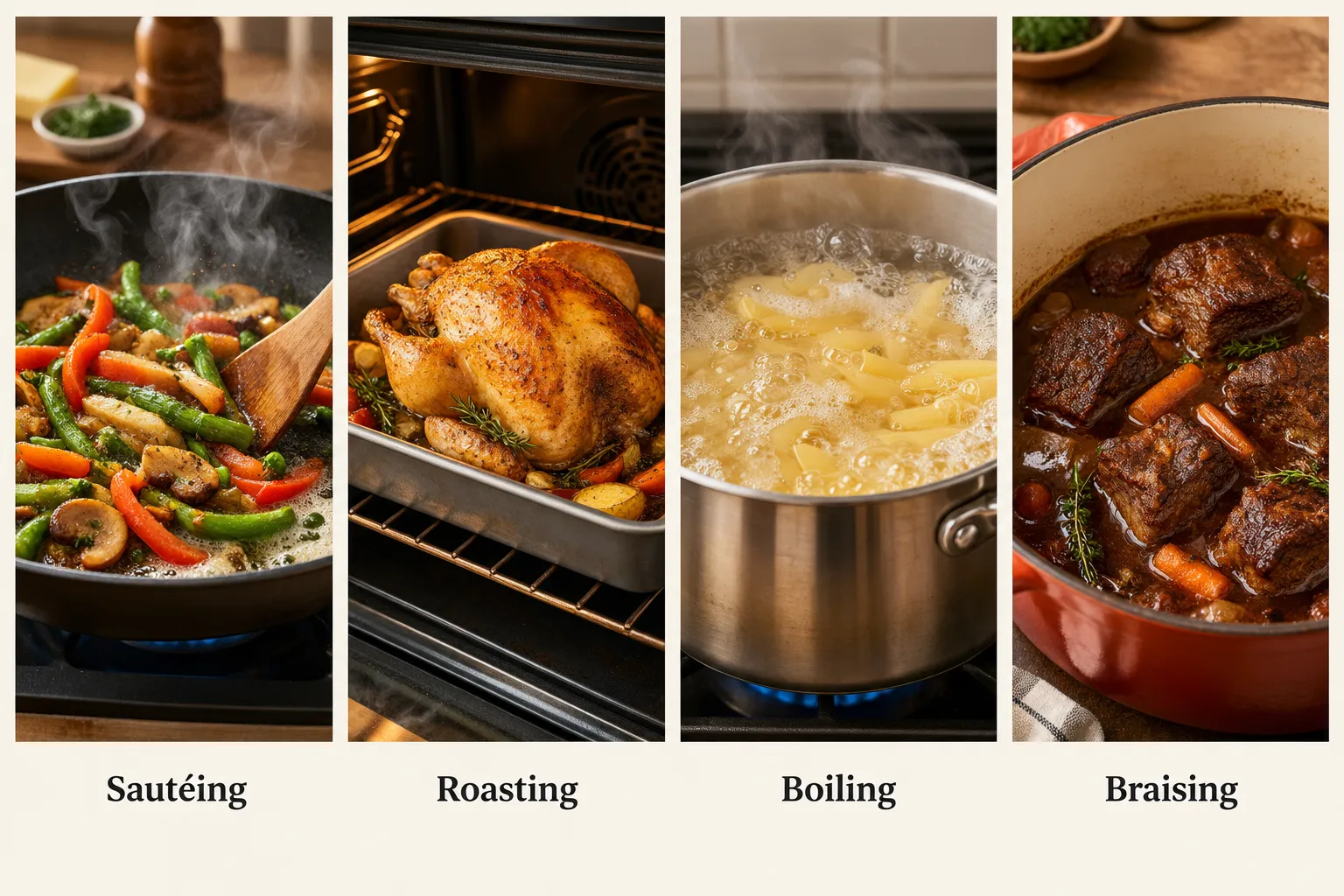
The basic techniques every home cook should know are sautéing, roasting, boiling or simmering, braising, and grilling. These five methods cover the majority of everyday meals and build the foundation for every advanced technique that follows.
- Sautéing: quick cooking in a small amount of fat over medium-high heat.
- Roasting: dry oven heat, usually above 375°F, for meats and vegetables.
- Boiling/simmering: cooking in liquid, used for grains, pasta, soups, and stocks.
- Braising: searing first, then slow-cooking in liquid at low heat for tough cuts.
- Grilling: direct, high heat from below, good for quick-cooking proteins and vegetables.
Knife skills matter as much as heat control. A clean julienne cut cooks faster and more evenly than a rough chop, worth practicing on a batch of julienne fries before moving to tougher vegetables. Common mistake: skipping mise en place (prepping and measuring everything first), which leads to burnt garlic and rushed decisions.
How do you know when food is cooked through
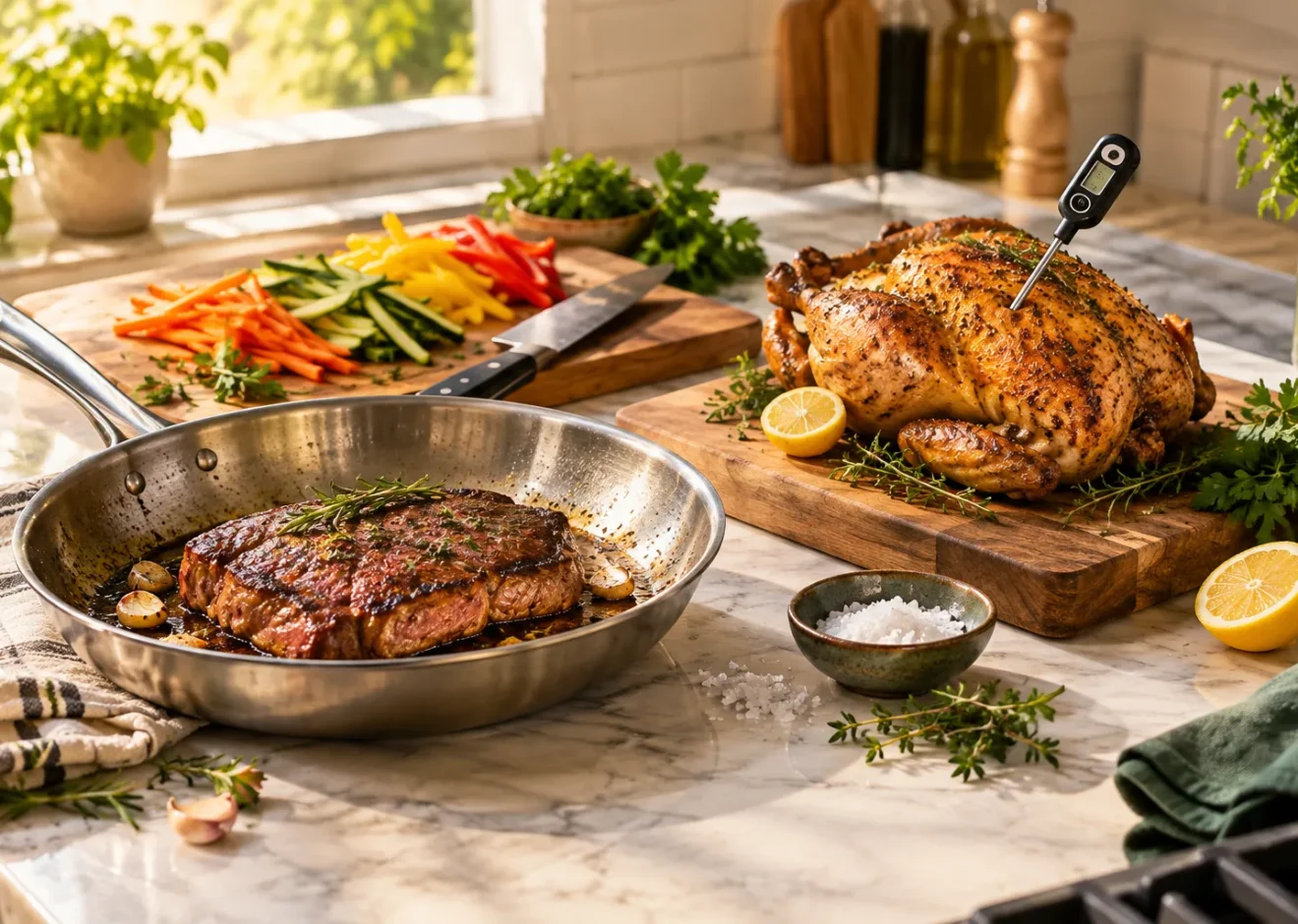
The most reliable way to know food is cooked through is an instant-read thermometer, not color or time. Safe minimum internal temperatures are 165°F for poultry, 145°F for whole cuts of beef, pork, and fish with a three-minute rest, and 160°F for ground meats.
Visual cues still help as backup:
- Fish flakes easily and turns opaque (see our salmon doneness guide for fish-specific cues).
- Chicken juices run clear, not pink.
- Baked goods spring back when pressed lightly.
Edge case: carryover cooking means food keeps rising in temperature after it leaves the heat, so pull proteins 3-5°F below target.
What’s the difference between baking and roasting
Baking and roasting both use dry oven heat, but baking suits batters, doughs, and dishes that hold their shape, while roasting applies higher heat to meats and vegetables that release fat and moisture as they cook.
| Factor | Baking | Roasting |
|---|---|---|
| Typical temp | 325-375°F | 375-450°F |
| Best for | Bread, cakes, casseroles | Meats, root vegetables, whole poultry |
| Texture goal | Set structure, even crumb | Browned exterior, caramelized edges |
Choose baking when a dish needs structure to set. Choose roasting when the goal is browning and rendered fat.
Best cooking methods for beginners
The best cooking methods for beginners are boiling, roasting, and sautéing, because each one is forgiving and easy to correct mid-process. Grilling and deep-frying demand tighter timing and are better attempted once the basics feel automatic.
A breaded, pan-fried dish like Wiener Schnitzel is a good next step once sautéing feels comfortable, it teaches heat management and breading in one dish. Beginners should master one new technique per week rather than chase five at once.
How to cook without a recipe
Cooking without a recipe works by building a dish around a ratio instead of a list of steps: one protein, one starch or vegetable, a fat, an acid, and a seasoning base. Once that pattern sticks, most weeknight meals can be improvised.
A simple formula: sauté a protein in fat, add aromatics, deglaze with an acid such as wine or citrus, then finish with salt and a fresh herb. This structure works across cuisines, from a quick stir-fry to a pan sauce for steak.
Why does salt enhance flavor in cooking
Salt enhances flavor by suppressing bitterness, amplifying natural sweetness, and drawing moisture to the surface, which improves browning. It does not just make food taste salty, it changes how the tongue perceives every other flavor on the plate.
Salting early, such as vegetables before roasting or meat 30-40 minutes before cooking, gives salt time to penetrate past the surface. Salting only at the table leaves flavor sitting on top instead of built in. Common mistake: under-salting pasta water, one of the few chances to season starch from the inside out.
What equipment do you actually need to start cooking
The essential equipment to start cooking is a sharp chef’s knife, a cutting board, one heavy skillet, one saucepan, a sheet pan, and an instant-read thermometer. Everything beyond this list is a convenience, not a requirement.
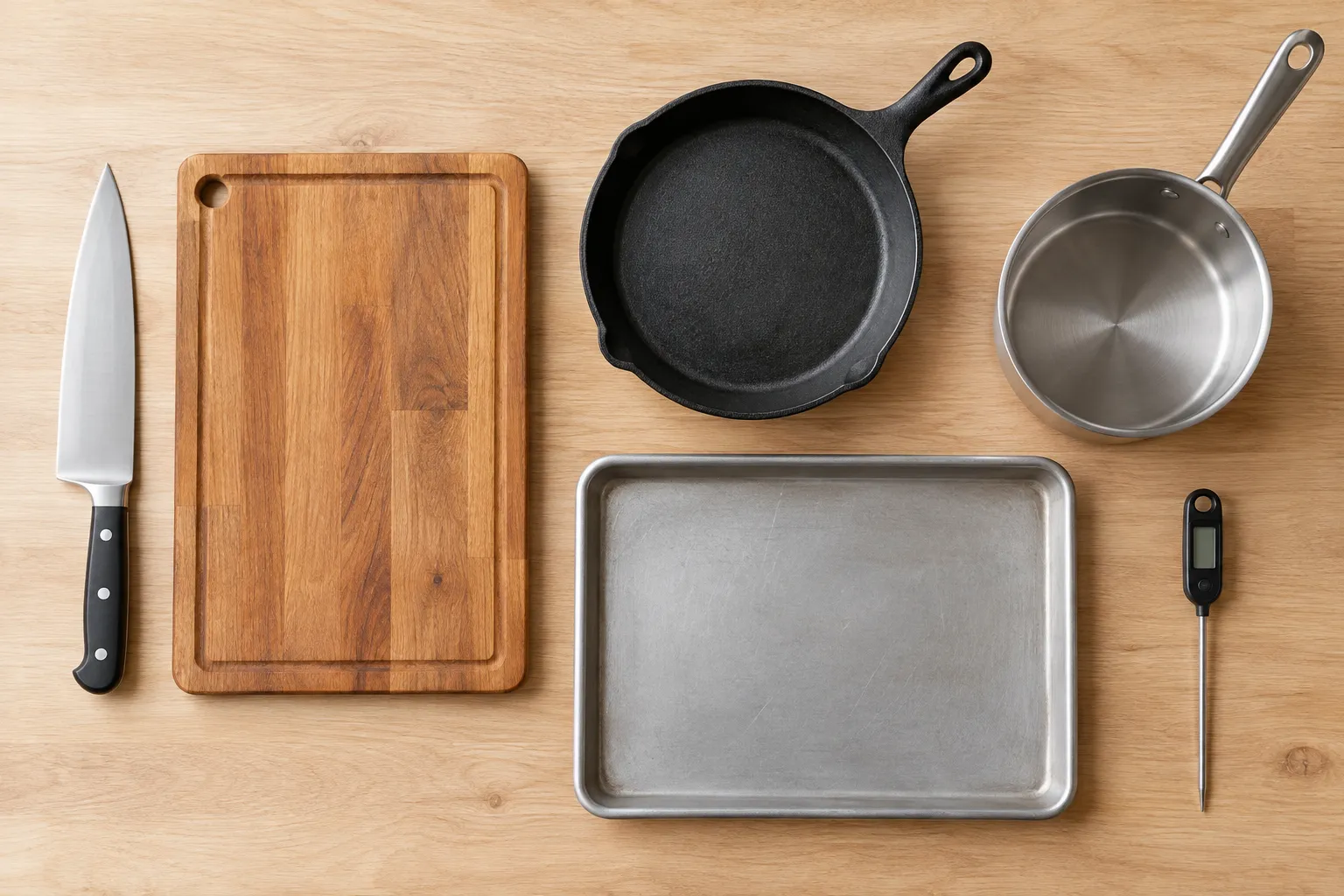
- Chef’s knife (8-inch): handles most cutting tasks.
- Cutting board: large enough to avoid crowding.
- Skillet: searing, sautéing, pan sauces.
- Saucepan: grains, sauces, simmered dishes.
- Sheet pan: roasting and baking.
- Instant-read thermometer: removes guesswork on doneness.
Cooks who work often with fish or shellfish benefit from a fish spatula and fine-mesh skimmer; see our seafood cooking resources for technique-specific tools.
How to meal prep and cook efficiently
Meal prepping efficiently means batch-cooking proteins and grains once, then reassembling them into different meals through the week. This cuts daily cooking time to roughly 10-15 minutes instead of 45.
- Pick two proteins and two grains or starches to cook in bulk.
- Roast a tray of mixed vegetables alongside them.
- Portion into containers right after cooling.
- Add sauces and seasonings at reheating, not at storage.
Anyone short on time can start with rec
References
- Top 10 Food Trends
- Food Trends For 2026
- Top Food Trends 2026 Michelin Guide Inspectors
- Our Top 10 Most Read Fb Industry News From Sept 2026
- Food Industry Prices Rise
- Top Food Trends 2026 Michelin Guide Inspectors
- 1087966 Investment In The Us Food Industry Is Growing
- Q3 2026 Food Industry Ma Roundup Protein Snacks And Grocery Changed Hands
- Industry Update Food Safety Developments Recalls And Incidents September 2026
- News Bites Big Foods Moves On Climate Nutrition And Tech
- fooddive
- foodnavigator
- Food Exec Brief Import Inflation Brand Divestitures And Ultra Processed Food Risks
- Food Industry Warns Price Rises Will Accelerate Unless Government Steps In
- Current