Last updated: September 9, 2026
Quick Answer
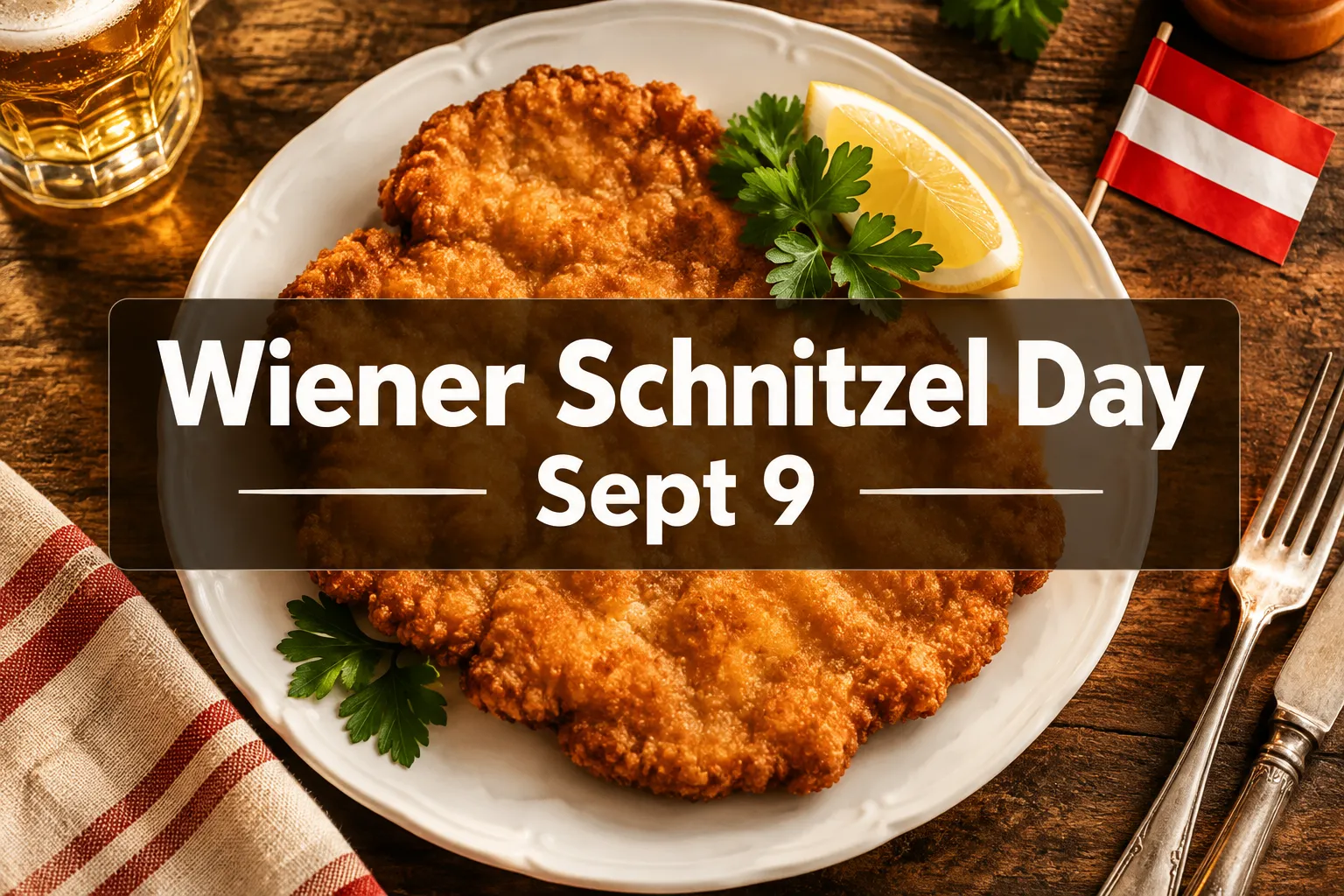
September 9 Wiener Schnitzel Day, also known as National Wiener Schnitzel Day, is an annual food observance celebrated every year on September 9. It honors the iconic Austrian dish of thin, breaded, pan-fried veal cutlet that is considered a cornerstone of Viennese culinary heritage. In 2026, the holiday falls on a Wednesday and is recognized by food enthusiasts, restaurants, and holiday calendars worldwide. [1][3]
Key Takeaways
- National Wiener Schnitzel Day is observed every year on September 9, with 2026 falling on a Wednesday. [1]
- The holiday celebrates authentic Wiener Schnitzel, which is traditionally made from veal, not pork.
- Wiener Schnitzel is considered a national dish of Austria and is protected as a cultural food designation.
- Celebrations include home cooking, restaurant visits, cooking competitions, and special promotional deals. [3]
- The U.S.-based fast-food chain Wienerschnitzel has historically offered free schnitzel promotions tied to the holiday. [2]
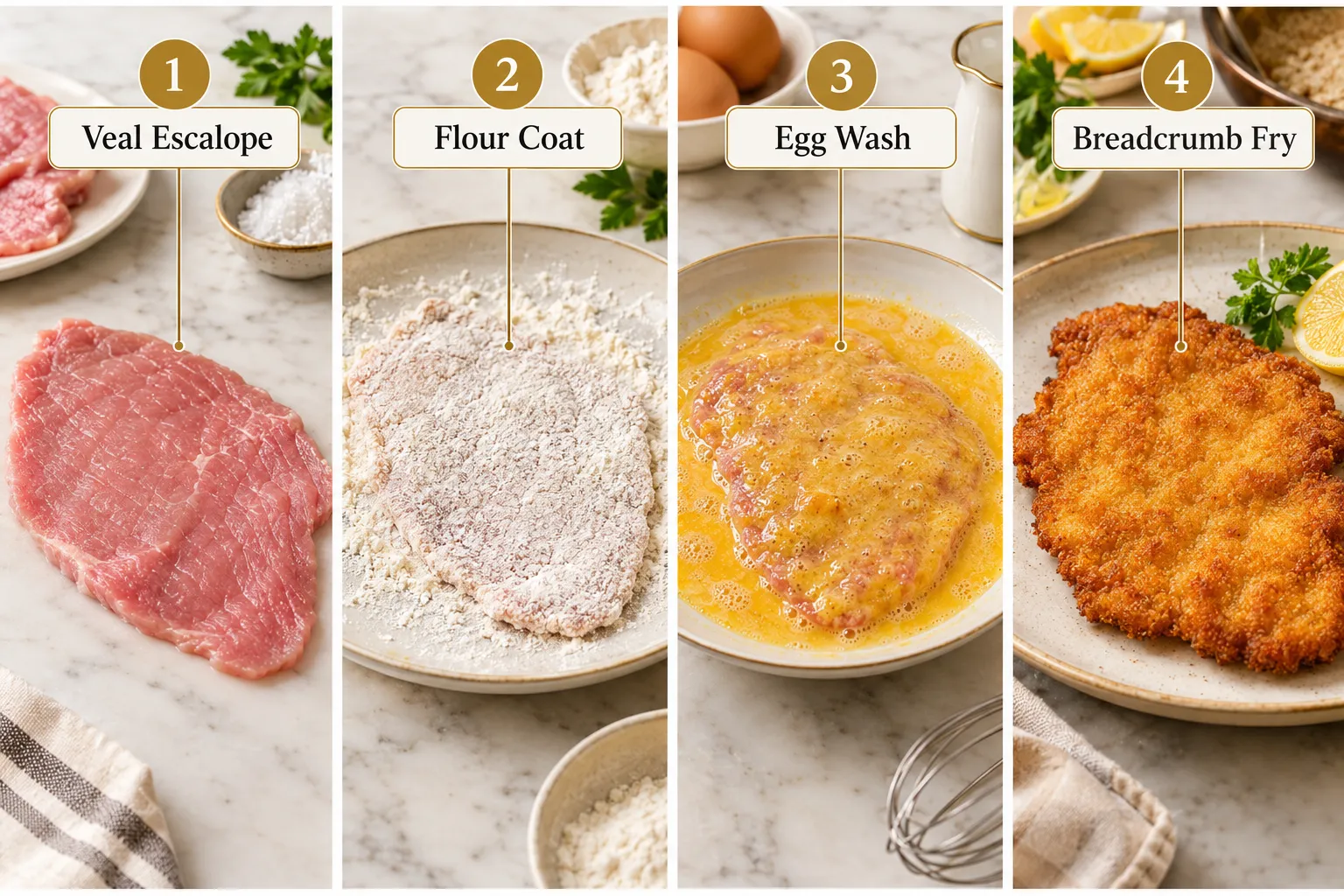
- Authentic preparation requires pounding the meat thin, using three separate coatings (flour, egg, breadcrumbs), and frying in clarified butter or neutral oil.
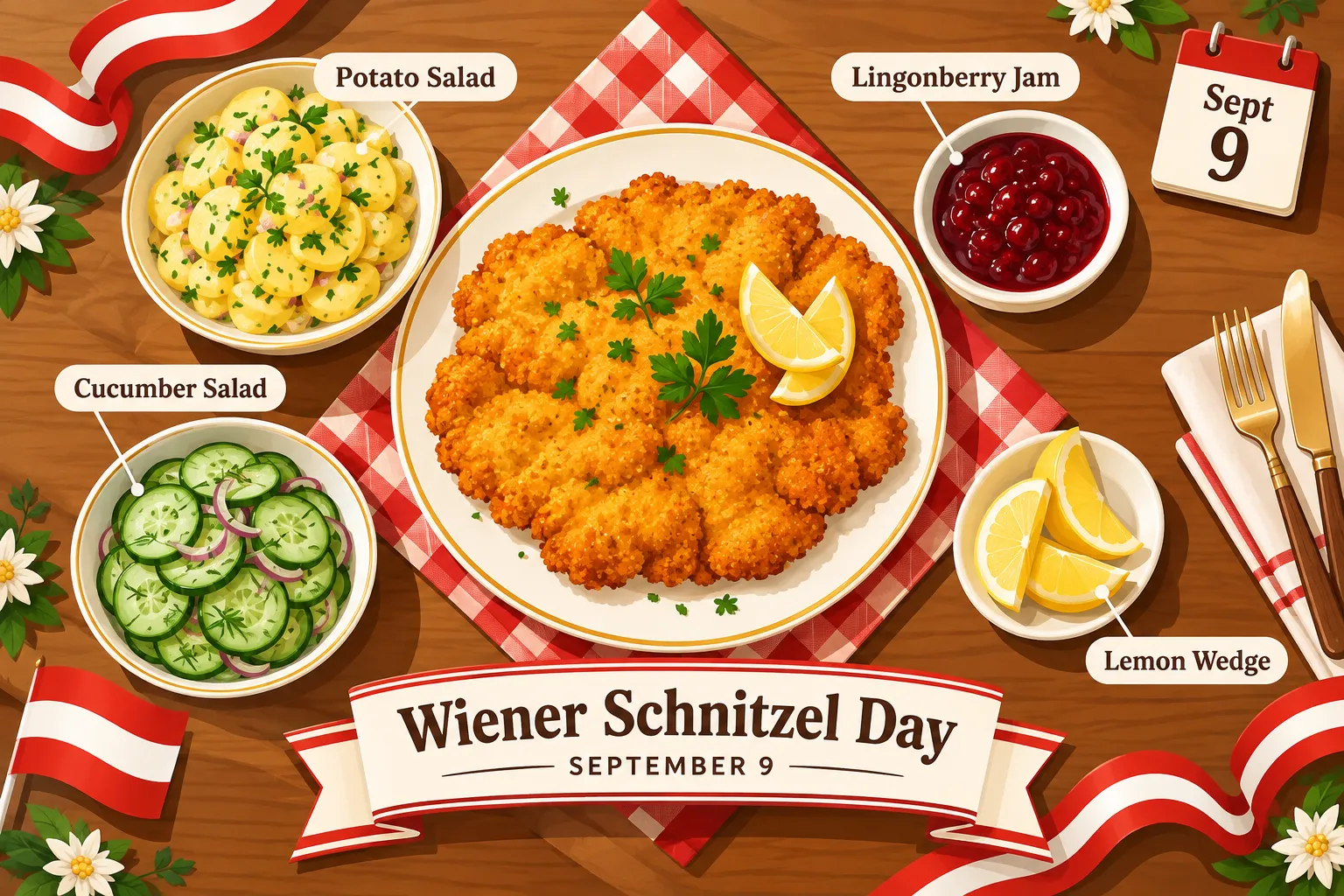
- Classic side dishes include Austrian potato salad, lingonberry jam, and cucumber salad.
- The holiday is tracked by major food calendar sites in both English and German, confirming its ongoing annual status. [5][6]
- Pork schnitzel is a widely accepted and more affordable substitute, though purists insist on veal.
- The day offers a genuine opportunity to explore Austrian and broader Central European culinary traditions.
What Is Wiener Schnitzel Day September 9?
National Wiener Schnitzel Day on September 9 is an unofficial but widely recognized annual food holiday dedicated to one of Austria’s most celebrated dishes. The day encourages people to cook, order, or simply appreciate a properly made Wiener Schnitzel. [6]
The dish itself is a thin veal cutlet that is pounded flat, coated in flour, beaten egg, and fine breadcrumbs, then pan-fried until golden and crisp. The name “Wiener” means “Viennese” in German, directly linking the dish to Vienna, Austria. Multiple food holiday calendars in both English and German confirm September 9 as the designated date, and the observance appears on tracking sites well into the 2030s. [5]
Who it’s for: Anyone who enjoys Central European cuisine, home cooks looking for a classic technique challenge, or diners seeking a reason to visit an Austrian or German restaurant.
Is Wiener Schnitzel Day a Real Holiday?
September 9 Wiener Schnitzel Day is a real, annually recognized food observance, though it is not a public or federal holiday. It carries no legal status, but it is consistently listed on major food holiday calendars and generates genuine public engagement each year. [6][8]
Food observances of this type function as cultural celebrations rather than official government designations. They are typically created by food enthusiasts, culinary organizations, or marketing bodies and gain traction through media coverage and social sharing. National Today, Checkiday, Dayspedia, and several German-language calendar sites all independently list September 9 as Wiener Schnitzel Day, which confirms its legitimacy as a recognized food holiday. [1][3][6]
“Wiener Schnitzel is considered Austrian cultural property, and September 9 gives the world a reason to celebrate that heritage.”
Wiener Schnitzel Day History and Origin
The precise origin of National Wiener Schnitzel Day as a calendar event is not officially documented, but the dish it celebrates has a well-established history. The holiday was created to honor a dish that has been central to Viennese cooking for centuries.
Wiener Schnitzel’s culinary roots are often traced to 19th-century Vienna, where the breaded veal cutlet became a staple of Austrian bourgeois cooking. Some food historians note a possible connection to Milanese cotoletta, though Austrian culinary tradition claims the Wiener Schnitzel as distinctly its own. The dish is so tied to Austrian identity that the name “Wiener Schnitzel” is legally protected in Austria and Germany: only a schnitzel made from veal may legally carry that name. A version made from pork must be labeled “Schnitzel Wiener Art” (Viennese-style schnitzel).
German-language holiday sites describe the September 9 observance as a day that honors this cultural and culinary legacy, noting that Wiener Schnitzel remains one of the most recognized Austrian dishes worldwide. [4][5]
How Do You Celebrate Wiener Schnitzel Day?
The most direct way to celebrate September 9 Wiener Schnitzel Day is to cook an authentic schnitzel at home, visit a restaurant that serves it, or look for special deals. Dayspedia notes that typical activities include tastings, cooking competitions, and events focused on preparing the perfect schnitzel. [3]
Practical ways to celebrate:
- Cook at home: Follow an authentic recipe using veal or pork, clarified butter or neutral oil, and fine white breadcrumbs.
- Dine out: Search for Austrian, German, or Central European restaurants in your area that may offer September 9 specials.
- Host a schnitzel dinner: Pair the dish with traditional Austrian sides and invite friends or family.
- Watch or read: Explore Austrian food culture through cookbooks, travel documentaries, or culinary videos.
- Share on social media: Use the hashtag #WienerSchnitzelDay to join the broader conversation.
- Check for deals: Some restaurants and chains have historically offered free or discounted schnitzel on this date. [2]
For more food holiday inspiration, see how other culinary observances are celebrated, such as the February 18 Crab Stuffed Flounder Day history and recipes or the January 21 National New England Clam Chowder Day.
Wiener Schnitzel vs. Other Breaded Cutlets: What Is the Difference?
Wiener Schnitzel is specifically a veal cutlet, and that distinction separates it legally and culinarily from other breaded cutlets. Many people use “schnitzel” as a generic term, but the authentic version has strict requirements.
| Dish | Meat | Origin | Key Distinction |
|---|---|---|---|
| Wiener Schnitzel | Veal | Austria | Legally protected name; must be veal |
| Schnitzel Wiener Art | Pork | Austria/Germany | Viennese-style but not authentic Wiener Schnitzel |
| Cotoletta alla Milanese | Veal (bone-in) | Italy | Thicker, often served bone-in |
| Chicken Schnitzel | Chicken breast | Various | Popular modern variant; not traditional |
| Tonkatsu | Pork | Japan | Uses panko breadcrumbs; served with tonkatsu sauce |
Key rule: If a menu lists “Wiener Schnitzel” and uses pork, that is technically a mislabeling under Austrian and German food law, though it is common in casual restaurants outside those countries.
Wiener Schnitzel Pork vs. Veal: Which Is Better?
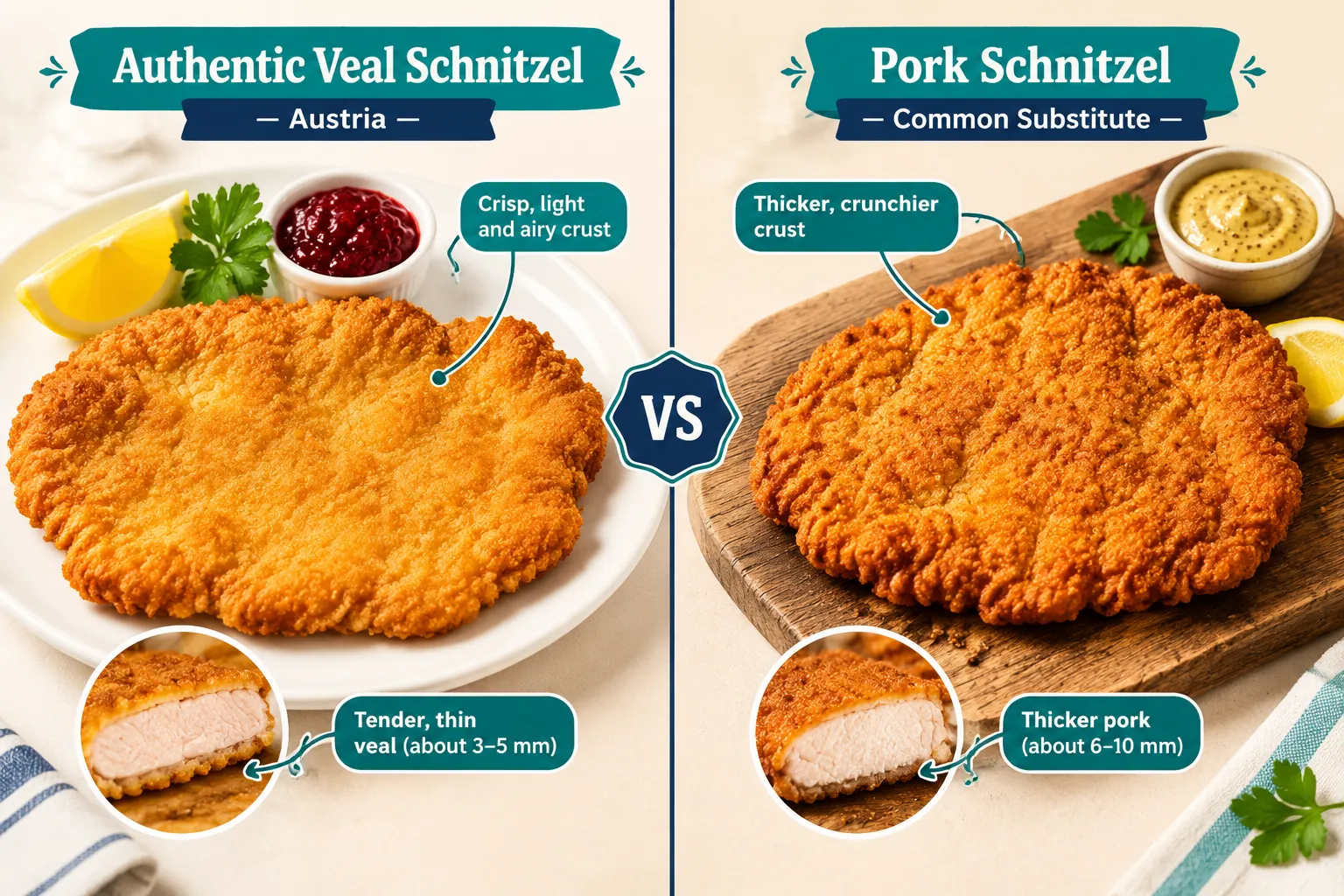
Veal is the traditional and legally correct meat for an authentic Wiener Schnitzel, but pork is a widely accepted and more affordable alternative. The choice depends on budget, availability, and personal preference.
Veal advantages:
- Milder, more delicate flavor
- Naturally tender texture that requires less pounding
- Authentic to the original Austrian recipe
- Preferred by purists and in traditional Austrian restaurants
Pork advantages:
- Significantly less expensive and easier to source
- Slightly richer flavor that some diners prefer
- Widely available at most grocery stores
- Equally crisp crust when prepared correctly
Choose veal if you want the authentic September 9 Wiener Schnitzel Day experience or are cooking for guests who appreciate traditional Austrian cuisine. Choose pork if cost or availability is a concern, the technique and result are nearly identical, and the difference in flavor is subtle to most palates.
Authentic Austrian Wiener Schnitzel: How to Make It
An authentic Wiener Schnitzel requires four elements: thinly pounded veal, a three-stage breading process, proper frying fat, and the right technique to achieve the signature “soufflé” crust. This is the best Wiener Schnitzel recipe approach for September 9.
Ingredients (serves 4):
- 4 veal escalopes (about 150g / 5 oz each)
- Salt and white pepper
- 100g (3/4 cup) all-purpose flour
- 2 large eggs, beaten
- 150g (1.5 cups) fine white breadcrumbs (not panko)
- Clarified butter or neutral oil for frying (enough for shallow frying, at least 1 cm deep)
- Lemon wedges and fresh parsley to serve
Step-by-step process:
- Pound the meat flat between two sheets of plastic wrap until about 4mm (1/8 inch) thick. Season lightly with salt and pepper.
- Set up three shallow dishes: one with flour, one with beaten egg, one with breadcrumbs.
- Coat in order: dredge each cutlet in flour (shake off excess), dip in egg (let excess drip), then press gently into breadcrumbs. Do not press hard, a loose coating creates the classic rippled crust.
- Heat the fat in a large, wide pan over medium-high heat until shimmering. The fat should be deep enough to allow the schnitzel to “swim.”
- Fry immediately after breading, about 2-3 minutes per side, moving the pan gently so hot fat washes over the top. The crust should be golden, not dark brown.
- Drain on a wire rack, not paper towels, to keep the crust crisp.
- Serve immediately with lemon wedges, Austrian potato salad, and lingonberry jam.
Common mistake: Pressing the breadcrumbs firmly onto the meat. This prevents the crust from puffing and creates a flat, dense coating instead of the signature light, rippled texture.
Can You Make Wiener Schnitzel Ahead of Time?
Wiener Schnitzel is best cooked and served immediately, but partial preparation ahead of time is practical. The breaded cutlets can be prepared up to several hours in advance and refrigerated uncovered before frying.
What works ahead:
- Pound and season the cutlets up to 24 hours in advance (store covered in the refrigerator).
- Bread the cutlets up to 2 hours before frying and refrigerate uncovered on a wire rack. This actually helps the coating adhere better.
What does not work ahead:
- Frying in advance and reheating. Reheated schnitzel loses its crisp crust and the meat becomes dry.
- Storing fully cooked schnitzel in a covered container, steam softens the crust quickly.
Edge case: If serving at a large gathering, fry in batches and keep finished schnitzels warm in a single layer on a wire rack in a low oven (around 90°C / 200°F) for no more than 10-15 minutes.
What to Serve with Wiener Schnitzel
Traditional Austrian accompaniments for Wiener Schnitzel are simple and designed to complement, not compete with, the delicate veal. The classic pairing is Austrian-style potato salad and a wedge of lemon.
Traditional Austrian sides:
- Austrian potato salad (Erdäpfelsalat): Made with vinegar and broth dressing, not mayonnaise. Warm or room temperature.
- Lingonberry jam (Preiselbeeren): The sweet-tart jam cuts through the richness of the fried crust.
- Cucumber salad (Gurkensalat): Thinly sliced cucumbers in a light vinegar dressing.
- Lemon wedge: Squeezed over the schnitzel just before eating.
Drink pairings:
- Dry Austrian white wine such as Grüner Veltliner or Riesling
- Light lager beer
- Sparkling water with lemon
For dessert, consider a classic Central European finish. Explore options like European torte recipes to round out an authentic Austrian-themed meal.
Where to Eat Wiener Schnitzel on September 9 and Deals to Look For
On September 9 Wiener Schnitzel Day, the best places to find schnitzel are Austrian and German restaurants, Central European bistros, and select chains that run holiday promotions. [2][6]
Where to look:
- Austrian, German, or Swiss restaurants in your city (search “Wiener Schnitzel near me” on Google Maps or Yelp)
- German-American clubs and cultural centers, which often host themed dinners around food holidays
- Central European delis and butcher shops that may offer prepared schnitzels
Deals and promotions: The U.S.-based Wienerschnitzel chain has historically run September 9 promotions. In 2017, the chain offered a free Chicken Schnitzel sandwich with any purchase, requiring a coupon and limited to one per person. [2] It is worth checking their current promotions page closer to the date, as similar offers may return.
Tip: Call ahead to Austrian or German restaurants in your area in the days before September 9. Some run limited specials only if reservations are made in advance.
Common Mistakes Making Wiener Schnitzel at Home
Most failed home attempts at Wiener Schnitzel come down to a few consistent errors. Knowing them in advance saves time and ingredients.
- Using the wrong breadcrumbs: Panko creates a thick, crunchy crust rather than the fine, light, rippled texture of an authentic schnitzel. Use fine, dry white breadcrumbs.
- Pressing the coating: As noted above, pressing the breadcrumbs firmly onto the meat flattens the crust. Press lightly or simply pat once.
- Insufficient fat: Schnitzel needs to fry in enough fat to float slightly. Too little fat causes uneven browning and a greasy result.
- Wrong temperature: Fat that is too cool results in a soggy, oil-soaked crust. Fat that is too hot burns the outside before the meat cooks through. Medium-high heat is correct.
- Overcrowding the pan: Frying more than one or two schnitzels at a time drops the oil temperature sharply. Fry in batches.
- Covering after cooking: Covering cooked schnitzel traps steam and softens the crust within minutes. Always rest on a wire rack, uncovered.
For those who enjoy exploring food holidays and their recipes throughout the year, the March 5 National Marmalade Day history and recipes and August 23 Sponge Cake Day offer similar deep dives into culinary observances.
FAQ
What date is National Wiener Schnitzel Day? National Wiener Schnitzel Day is observed every year on September 9. In 2026, it falls on a Wednesday. [1]
Is Wiener Schnitzel always made from veal? Authentic Wiener Schnitzel must be made from veal under Austrian and German food law. A pork version must be labeled “Schnitzel Wiener Art” (Viennese-style). In practice, many restaurants outside Austria use pork and still call it Wiener Schnitzel.
What is the difference between Wiener Schnitzel and regular schnitzel? “Schnitzel” is a general term for any thin, breaded, fried cutlet. “Wiener Schnitzel” specifically refers to the veal version originating in Vienna, Austria, and is a legally protected designation in Austria and Germany.
Can Wiener Schnitzel be made with chicken? Yes, chicken schnitzel is a popular modern variant, but it is not a traditional Wiener Schnitzel. The U.S. chain Wienerschnitzel has offered chicken schnitzel products as part of its menu and holiday promotions. [2]
What does “Wiener” mean in Wiener Schnitzel? “Wiener” is the German adjective for “Viennese,” meaning from Vienna (Wien in German). The name translates directly to “Viennese cutlet.”
How do you get the rippled crust on Wiener Schnitzel? The rippled, soufflé-like crust forms when the breadcrumbs are applied loosely (not pressed firmly) and the schnitzel is fried in enough hot fat to allow the coating to puff away from the meat. Moving the pan gently during frying helps hot fat wash over the surface and encourages the crust to separate slightly.
Is there a free Wiener Schnitzel deal on September 9, 2026? The Wienerschnitzel chain has offered free schnitzel promotions on past September 9 observances. Check their current promotions page closer to the date for any 2026 offers. [2][10]
What wine pairs best with Wiener Schnitzel? A dry Austrian Grüner Veltliner or a crisp Riesling are the classic pairings. Both wines have enough acidity to cut through the fried crust without overpowering the delicate veal.
How long does it take to make Wiener Schnitzel? Active preparation takes about 20-25 minutes, including pounding, breading, and frying. If the cutlets are pounded and seasoned in advance, the frying stage alone takes only 4-6 minutes per batch.
Where did Wiener Schnitzel originate? Wiener Schnitzel originated in Vienna, Austria. Its exact history is debated, with some accounts suggesting a connection to the Italian cotoletta alla Milanese, but Austrian culinary tradition firmly claims it as a distinctly Viennese creation.
What sides are traditional with Wiener Schnitzel? The classic Austrian accompaniments are vinegar-dressed potato salad (Erdäpfelsalat), lingonberry jam (Preiselbeeren), cucumber salad (Gurkensalat), and a lemon wedge.
Is National Wiener Schnitzel Day celebrated outside the United States? Yes. German-language holiday sites in Germany and Austria also list September 9 as “Tag des Wiener Schnitzels,” and the observance is described as worldwide in scope. [4][9]
Conclusion
September 9 Wiener Schnitzel Day is a genuine annual food observance that gives cooks, diners, and food enthusiasts a focused reason to engage with one of Austria’s most beloved dishes. Whether the goal is to attempt an authentic veal schnitzel at home, find a local restaurant offering a September 9 special, or simply learn more about Central European culinary heritage, the holiday delivers a clear and enjoyable framework.
Actionable next steps for 2026:
- Plan your meal now. Gather ingredients for an authentic recipe, veal escalopes, fine breadcrumbs, clarified butter, and the traditional sides.
- Check local restaurants. Search for Austrian or German restaurants near you and call ahead to ask about September 9 specials.
- Watch for chain promotions. Check the Wienerschnitzel chain’s deals page in the days before September 9 for any free or discounted offers. [2][10]
- Avoid the common mistakes. Use fine breadcrumbs, apply them loosely, fry in sufficient fat at the right temperature, and rest on a wire rack after cooking.
- Explore the broader tradition. Pair your schnitzel meal with Austrian wine, traditional sides, and perhaps a European torte for dessert to build a complete Viennese dining experience.
September 9 is one date on the food calendar that rewards a little preparation with a genuinely satisfying result.
References
[1] National Wiener Schnitzel Day – https://nationaltoday.com/national-wiener-schnitzel-day/ [2] Worlds Largest Hot Dog Chain Serves Free Schnitzel In Honor Of National Holiday – https://www.wienerschnitzel.com/worlds-largest-hot-dog-chain-serves-free-schnitzel-in-honor-of-national-holiday/ [3] Dayspedia – https://dayspedia.com/us/calendar/holiday/1565/ [4] Tag Des Wiener Schnitzels – https://www.terminvorschau.de/gedenktag/tag-des-wiener-schnitzels [5] Tag Des Wiener Schnitzels – https://www.kuriose-feiertage.de/tag-des-wiener-schnitzels/ [6] National Wiener Schnitzel Day – https://www.checkiday.com/72e693e0877c88037a415626f882af0e/national-wiener-schnitzel-day [7] National Wiener Schnitzel Day – https://www.holidayscalendar.com/event/national-wiener-schnitzel-day/ [8] Wiener Schnitzel – https://www.whatnationaldayisit.com/day/wiener-schnitzel/ [9] Kleiner-kalender.de – https://www.kleiner-kalender.de/event/tag-des-wienerschnitzels/108168.html [10] Deals – https://www.wienerschnitzel.com/tag/deals/