March 11 National Chicken Parm Day: History, Recipes, and How to Celebrate in 2026
- 0
- 12 Min Read
Last updated: March 11, 2026
Quick Answer: March 11 National Chicken Parm Day is an annual food holiday celebrated every March 11 in the United States, dedicated to one of the most beloved Italian-American dishes, chicken parmesan. It’s a day for home cooks and restaurant-goers alike to enjoy breaded, pan-fried chicken cutlets topped with marinara sauce and melted cheese. The holiday is informal and widely observed through restaurant specials, home cooking, and social media sharing.
Key Takeaways
- March 11 is National Chicken Parm Day, celebrated annually in the United States.
- Chicken parmesan (also called “chicken parm” or “chicken parmigiana”) is an Italian-American dish, not a traditional Italian one.
- The dish consists of breaded chicken cutlets, tomato sauce, and melted cheese, typically mozzarella and Parmesan.
- Many Italian-American restaurants offer specials and deals on March 11 each year.
- Fresh mozzarella produces a creamier result; shredded low-moisture mozzarella melts more evenly and browns better.
- A standard serving of chicken parm contains roughly 400 to 600 calories, depending on portion size and preparation method.
- Wine pairings: medium-bodied Italian reds like Chianti Classico or Barbera d’Asti complement the dish well.
- Breadcrumb-free versions using almond flour or crushed pork rinds work for low-carb and gluten-free diets.
- Common mistakes include skipping the pounding step, using wet chicken, and overcrowding the pan.
What Is National Chicken Parm Day?
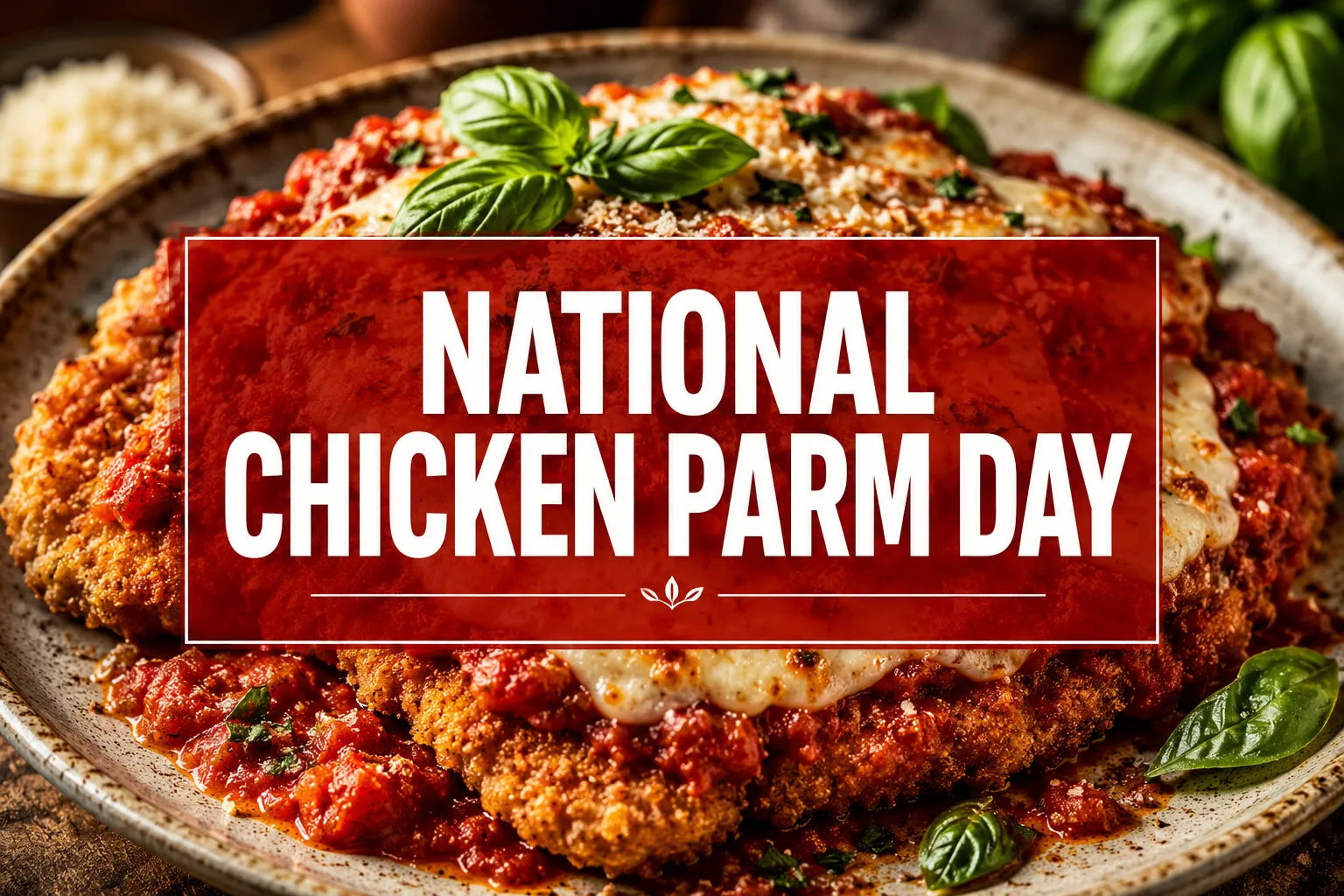
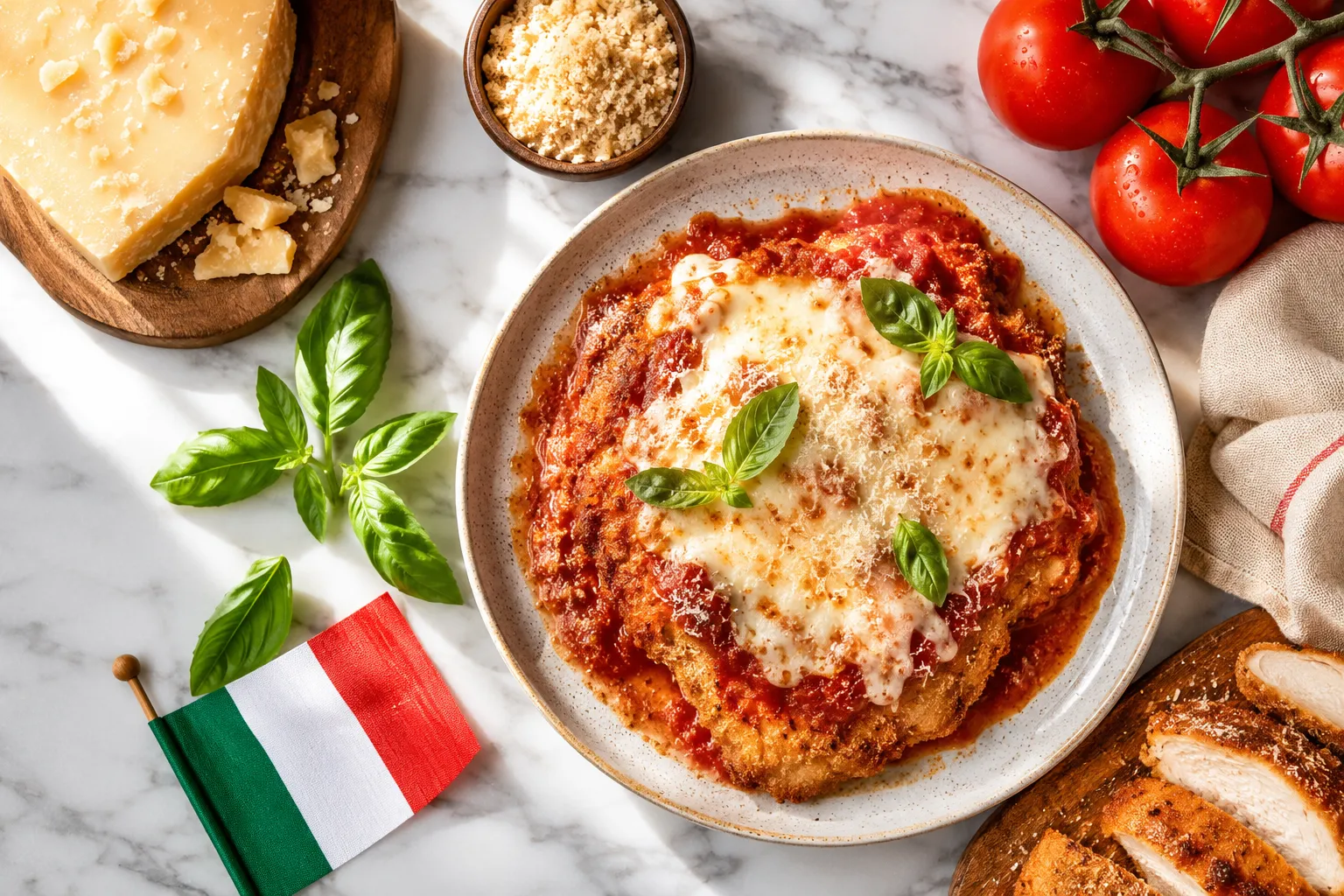
National Chicken Parm Day is an unofficial American food holiday observed every year on March 11. It celebrates chicken parmesan, a dish made from breaded chicken cutlets topped with tomato sauce and melted cheese, as a cultural staple of Italian-American cooking.
The holiday falls into the broad category of national food days, which are informal observances promoted by food brands, restaurants, and culinary communities rather than recognized by a government body. Similar food holidays include February 9 National Pizza Day and February 7 National Fettuccine Alfredo Day, both of which celebrate Italian-American favorites with restaurant deals and home cooking traditions.
Is chicken parm day a real holiday? It is real in the sense that it is widely observed and promoted, but it carries no legal or governmental recognition. Think of it as a cultural celebration rather than a public holiday.
When Is National Chicken Parm Day Celebrated?
National Chicken Parm Day is celebrated every year on March 11. The date does not change from year to year. In 2026, March 11 falls on a Wednesday.
Mark the date on your calendar well in advance, because many restaurant deals and limited-time promotions sell out or require reservations. Checking local Italian-American restaurants in late February gives you the best chance of securing a table or deal.
Why Is March 11 Chicken Parm Day?
The specific origin of March 11 as the date for National Chicken Parm Day is not thoroughly documented in public records. Like many national food days, it was likely established through a combination of food industry promotion, social media momentum, and calendar registration services such as National Day Calendar.
What is well documented is the dish’s broader cultural history. Chicken parmesan is an Italian-American creation, believed to have developed in the early-to-mid 20th century among Italian immigrant communities in the northeastern United States. It draws from the Southern Italian dish “melanzane alla parmigiana” (eggplant parmesan), substituting chicken for eggplant, a swap that likely reflected the greater availability and affordability of chicken in America at the time.
The dish’s name can be slightly misleading: despite being called “parmigiana,” the cheese most commonly used is mozzarella, with Parmesan added as a finishing touch. The “parmigiana” in the name refers to the style of preparation, not exclusively to the cheese.
Chicken Parm vs. Chicken Parmesan: Is There a Difference?
There is no meaningful difference. “Chicken parm” is simply the colloquial shorthand for “chicken parmesan” or “chicken parmigiana.” All three terms refer to the same dish.
The slight variation in formal naming, “parmesan” versus “parmigiana”, reflects the Americanization of the original Italian term. In Italy, “parmigiana” refers to the layered, baked preparation style associated with Parma. In American usage, the terms have merged into a single, interchangeable concept.
“Chicken parm” is not a different recipe from “chicken parmesan”, it is the same dish, just with a shorter name used in casual American dining.
How to Make Chicken Parm at Home: A Step-by-Step Guide
Making chicken parm at home is straightforward. The process takes about 45 minutes from start to finish for a standard four-serving batch.
Ingredients (serves 4):
- 4 boneless, skinless chicken breasts
- 1 cup Italian-seasoned breadcrumbs
- 1/2 cup grated Parmesan cheese
- 2 eggs, beaten
- 1/2 cup all-purpose flour
- 1.5 cups marinara sauce
- 8 oz fresh or shredded mozzarella
- Olive oil for frying
- Salt, pepper, garlic powder
Steps:
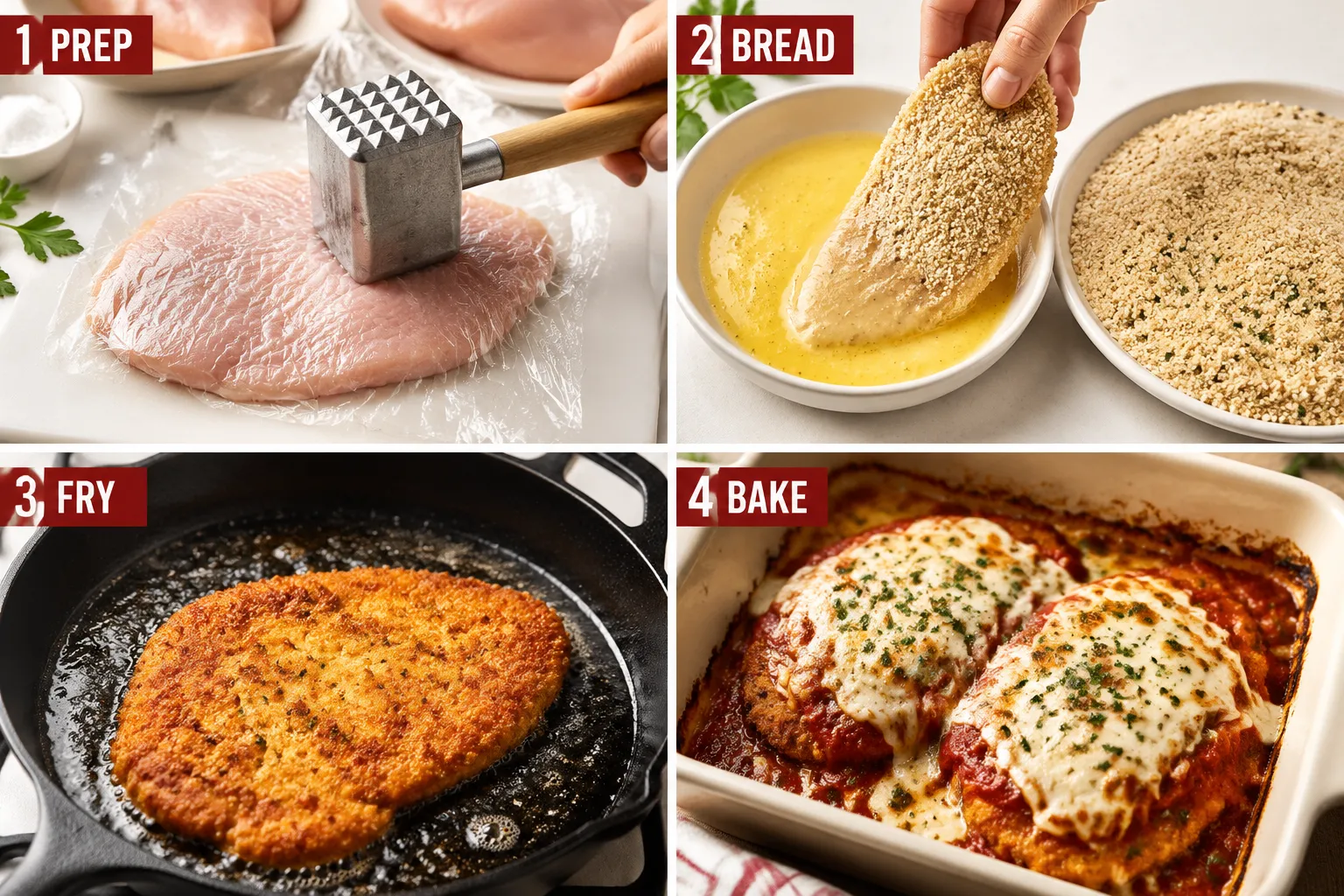
- Pound the chicken to an even 1/2-inch thickness. This ensures even cooking and prevents dry edges.
- Season each breast with salt, pepper, and garlic powder.
- Dredge in flour, dip in beaten egg, then coat in the breadcrumb-Parmesan mixture.
- Pan-fry in 1/4 inch of olive oil over medium-high heat, about 3 to 4 minutes per side, until golden brown.
- Transfer to a baking dish. Spoon marinara over each cutlet.
- Top with mozzarella and a sprinkle of additional Parmesan.
- Bake at 400°F (205°C) for 15 to 20 minutes, until cheese is bubbly and lightly browned.
- Rest for 5 minutes before serving. Garnish with fresh basil.
For a deeper dive into Italian-American pasta pairings to serve alongside, the Italian Cookbook collection and Pasta Cookbook at stillcooking.com offer excellent recipe inspiration.
Best Chicken Parm Recipe Variations for the Holiday
The classic recipe above is the foundation, but several popular variations are worth knowing for March 11 National Chicken Parm Day celebrations.
Fresh Mozzarella vs. Shredded Mozzarella
Fresh mozzarella produces a creamier, richer melt with a mild milky flavor. It releases more moisture during baking, which can slightly soften the breading underneath. Best choice for a restaurant-style presentation.
Shredded low-moisture mozzarella melts more evenly, browns better, and holds the topping together more firmly. Better for home cooks who want a clean, sliceable result.
Choose fresh mozzarella if you prioritize flavor and presentation. Choose shredded if you want a firmer, more consistent topping that’s easier to manage.
Chicken Parm Without Breadcrumbs
A breadcrumb-free version works well for low-carb, keto, or gluten-free diets. Substitute breadcrumbs with:
- Almond flour (fine grind) for a nutty, slightly denser crust
- Crushed pork rinds for a crispy, zero-carb coating
- Gluten-free seasoned panko for a texture closest to the original
The technique remains identical to the standard recipe. The coating simply swaps out the wheat-based breadcrumbs.
Common Mistakes When Making Chicken Parm
These are the errors that most often result in soggy, dry, or unevenly cooked chicken parm:
- Skipping the pounding step. Uneven chicken thickness leads to overcooked edges and undercooked centers.
- Not drying the chicken. Excess moisture prevents the breading from adhering properly. Pat chicken dry with paper towels before dredging.
- Overcrowding the pan. Too many cutlets at once drops the oil temperature, causing the breading to absorb oil rather than crisp up. Fry in batches.
- Using cold chicken straight from the fridge. Let chicken sit at room temperature for 15 minutes before cooking for more even results.
- Adding too much sauce. A thin, even layer of marinara is enough. Excess sauce makes the breading soggy during baking.
- Skipping the rest period. Cutting into the chicken immediately after baking releases juices and dries out the meat.
Where to Eat Chicken Parm on March 11 and Restaurant Deals
On March 11 National Chicken Parm Day, many Italian-American chain restaurants and independent trattorias run limited-time promotions. Here is how to find them:
- Check restaurant websites and apps in the first week of March. Chains like Carrabba’s Italian Grill, Olive Garden, and Maggiano’s Little Italy have historically offered discounts or specials around Italian-American food holidays.
- Follow local restaurants on social media. Independent Italian restaurants often announce same-day deals on Instagram and Facebook.
- Call ahead. Many smaller restaurants offer unadvertised specials to customers who ask.
- Look for prix-fixe menus. Some restaurants bundle chicken parm with pasta and a glass of wine at a set price for the holiday.
Note: Specific deals vary by year and location. Confirming directly with the restaurant before visiting is always the safest approach.
Chicken Parm Nutrition Facts
A standard restaurant-sized serving of chicken parmesan (approximately 8 oz of chicken plus sauce and cheese) contains roughly:
| Component | Approximate Amount |
|---|---|
| Calories | 400-600 kcal |
| Protein | 40-55 g |
| Total Fat | 18-28 g |
| Carbohydrates | 20-35 g |
| Sodium | 700-1,100 mg |
These figures are estimates based on standard preparation methods. Baked versions (without pan-frying) reduce fat by roughly 25 to 30 percent. Portion sizes at restaurants are often larger than home servings, which can push calorie counts to 800 or above when pasta is included.
Chicken Parm Wine Pairing Suggestions
Chicken parmesan pairs best with medium-bodied Italian red wines that can stand up to the acidity of the tomato sauce without overpowering the chicken.
Top pairings:
- Chianti Classico (Sangiovese-based): High acidity mirrors the marinara; earthy, cherry-forward flavors complement the dish without competing.
- Barbera d’Asti: Softer tannins and bright acidity make it an approachable, food-friendly choice.
- Montepulciano d’Abruzzo: A more affordable option with enough body and fruit to match the richness of the cheese.
- Dolcetto d’Alba: Light, dry, and low in tannins, a good choice if the cheese topping is the dominant flavor.
For those who prefer white wine, a dry, full-bodied white like Greco di Tufo or a Sicilian Grillo works well, particularly with lighter preparations using fresh mozzarella.
Avoid heavily oaked wines or very tannic reds (like a full Cabernet Sauvignon), as they tend to clash with tomato-based sauces.
How to Celebrate March 11 National Chicken Parm Day
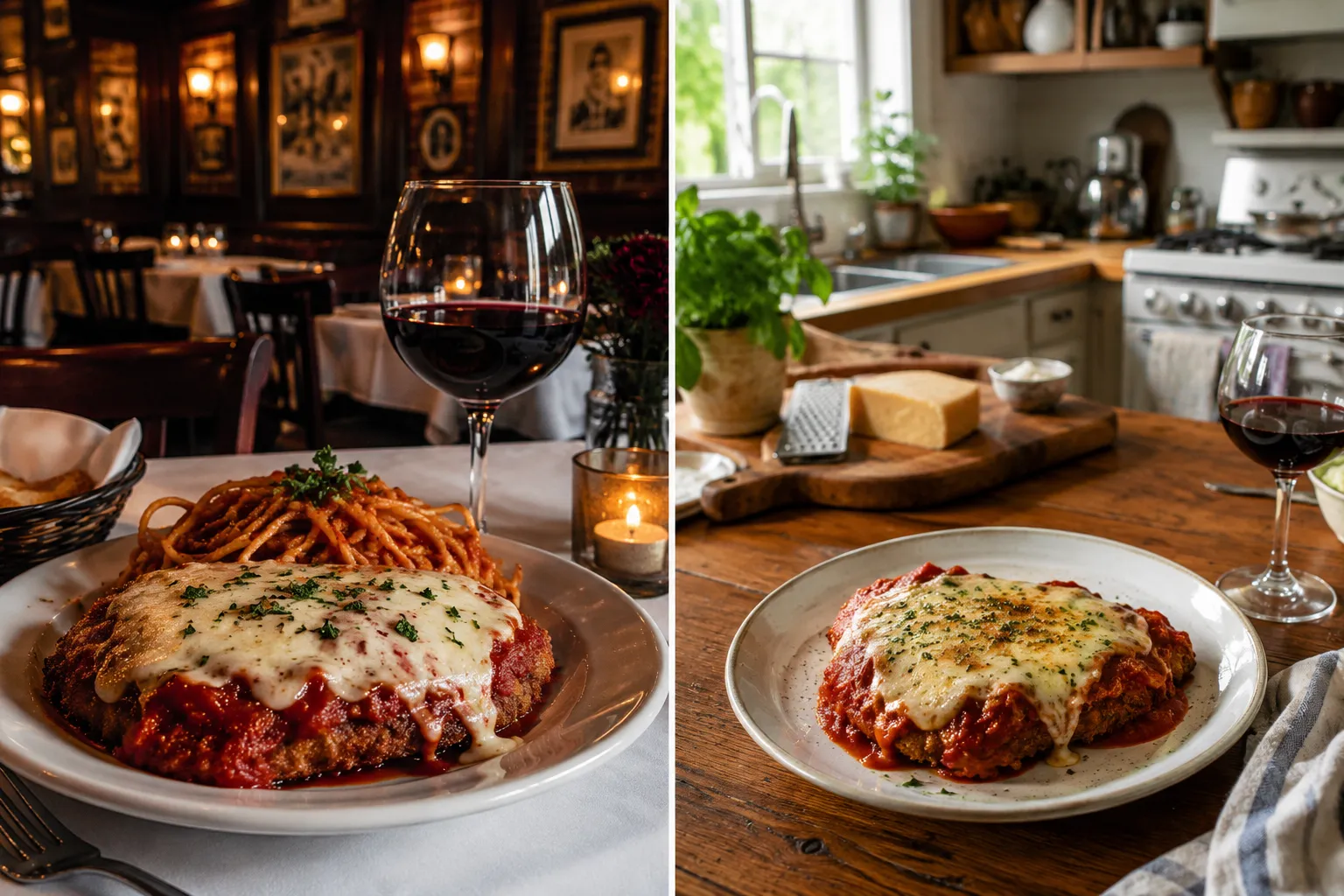
March 11 National Chicken Parm Day is flexible, there is no single “correct” way to observe it. Here are practical options for different situations:
At home:
- Cook a batch using the recipe above and invite friends or family for a casual dinner.
- Host a “chicken parm cook-off” where guests bring their own version for a friendly comparison.
- Pair the meal with a bottle of Chianti and a side of pasta. The Pasta Cookbook has solid inspiration for side dishes.
At a restaurant:
- Look for local Italian-American restaurants offering March 11 specials.
- Try a version you have never had before, some restaurants offer chicken parm subs, chicken parm pizza, or chicken parm sliders.
On social media:
- Share photos using hashtags like #NationalChickenParmDay and #ChickenParm.
- Tag the restaurant or recipe source to help others discover deals and inspiration.
If you enjoy celebrating national food days, check out similar observances like January 25 National Fish Taco Day and January 22 National Southern Food Day for more year-round food holiday ideas.
Frequently Asked Questions About March 11 National Chicken Parm Day
Q: What day is National Chicken Parm Day? National Chicken Parm Day is observed every year on March 11. The date is fixed and does not change.
Q: Is National Chicken Parm Day an official holiday? No. It is an informal food holiday with no government recognition. It is widely observed through restaurant promotions, social media, and home cooking traditions.
Q: What is the difference between chicken parmesan and chicken parmigiana? There is no difference. Both names refer to the same dish. “Parmigiana” is the Italian term; “parmesan” is the Americanized version. “Chicken parm” is the common shorthand.
Q: Is chicken parmesan actually Italian? Chicken parmesan as Americans know it is Italian-American, not traditionally Italian. It evolved from Italian immigrant communities in the U.S., drawing on Southern Italian eggplant parmigiana as a template.
Q: Can chicken parm be made gluten-free? Yes. Replace all-purpose flour with rice flour or a gluten-free blend, and substitute regular breadcrumbs with gluten-free panko or almond flour. The technique stays the same.
Q: What cheese is used in chicken parmesan? Most recipes use mozzarella as the primary melting cheese, with grated Parmesan added to the breadcrumb coating and sometimes sprinkled on top before baking.
Q: How many calories are in chicken parmesan? A standard serving contains approximately 400 to 600 calories, depending on portion size and preparation method. Restaurant portions with pasta can exceed 1,000 calories.
Q: What wine goes best with chicken parmesan? Chianti Classico is the classic pairing. Barbera d’Asti and Montepulciano d’Abruzzo are also excellent choices. Avoid heavily tannic reds.
Q: Can chicken parm be made ahead of time? Yes. Fry and bread the cutlets up to one day in advance, then store them uncovered in the refrigerator to keep the breading crisp. Add sauce and cheese just before baking.
Q: What do you serve with chicken parmesan? Common sides include spaghetti or linguine with marinara, garlic bread, Caesar salad, or roasted vegetables. A glass of Italian red wine rounds out the meal.
Conclusion
March 11 National Chicken Parm Day is one of the most satisfying food holidays on the calendar, and for good reason. Few dishes combine comfort, flavor, and cultural history as effectively as chicken parmesan.
Actionable next steps for 2026:
- Mark March 11 on your calendar now. Check local Italian-American restaurants in late February for deal announcements.
- Gather ingredients in advance. Chicken breasts, mozzarella, marinara, and Parmesan are all you need for a solid home version.
- Choose your mozzarella deliberately. Fresh for a restaurant-quality presentation; shredded for a cleaner, firmer result.
- Avoid the top mistakes: pound the chicken, dry it thoroughly, and fry in batches.
- Pick a wine pairing. A bottle of Chianti Classico or Barbera d’Asti elevates the meal significantly.
- Share the experience. Whether cooking at home or dining out, posting on social media with #NationalChickenParmDay helps others discover deals and recipes.
For more food holiday inspiration throughout the year, explore the full national food days archive at stillcooking.com.