
Last updated: February 7, 2026
Quick Answer: February 7 National Fettuccine Alfredo Day is an annual U.S. food holiday celebrated every February 7 that honors fettuccine alfredo, a pasta dish born in early 20th-century Rome. In 2026, the holiday falls on a Saturday, making it an ideal day to cook at home or dine out. The day is recognized across holiday calendars and celebrated by pasta lovers, home cooks, and Italian restaurants nationwide. [1][5]
Key Takeaways
- February 7 National Fettuccine Alfredo Day is observed every year on February 7 in the United States, with 2026 falling on a Saturday. [1][9]
- The dish was created by Roman restaurateur Alfredo di Lelio in the early 1900s, originally made with only butter and Parmigiano-Reggiano cheese.
- The holiday is U.S.-focused but recognized in Canada and referenced internationally. [2][10]
- Traditional Italian fettuccine alfredo contains no cream; the American version typically adds heavy cream and often chicken or vegetables.
- Common mistakes include using cold cheese, skipping pasta water, and overcooking the noodles.
- Fettuccine alfredo and carbonara are different dishes: carbonara uses eggs and guanciale, while alfredo relies on butter and parmesan.
- The dish can be made ahead of time, but the sauce is best prepared fresh and reheated gently with added pasta water.
- Many Italian-American restaurant chains offer deals or specials on February 7 each year.
What Is National Fettuccine Alfredo Day?
National Fettuccine Alfredo Day is an annual food holiday observed on February 7 that celebrates one of the most recognizable Italian-American pasta dishes in the world. [5] The day encourages people to cook fettuccine alfredo at home, visit Italian restaurants, and share their love of the dish on social media.
The holiday is part of a broader calendar of national food days that give everyday dishes a moment in the spotlight. It is primarily a United States observance but has been listed on Canadian and international food calendars as well. [10] No formal governing body created the day; like most food holidays, it grew organically through food media, restaurant promotions, and social sharing.
Why Is February 7 Fettuccine Alfredo Day?
February 7 is the date consistently assigned to National Fettuccine Alfredo Day across all major holiday calendars, though no single founding document pinpoints why this specific date was chosen. [1][6] The most likely explanation is that food holiday organizers selected a mid-winter date to give pasta lovers something warm and comforting to celebrate during the coldest stretch of the year.
The date has remained stable across decades of food holiday calendars, and multiple sources confirm 2026 and 2027 both fall on February 7, confirming the holiday does not shift year to year. [1][9]
When Did Fettuccine Alfredo Day Start and Who Created It?
The exact founding year of National Fettuccine Alfredo Day is not documented by a single authoritative source, which is common for informal food holidays. [8] Most food holiday tracking sites list it without a verified origin year, suggesting it emerged sometime in the late 20th or early 21st century through grassroots food culture and restaurant marketing.
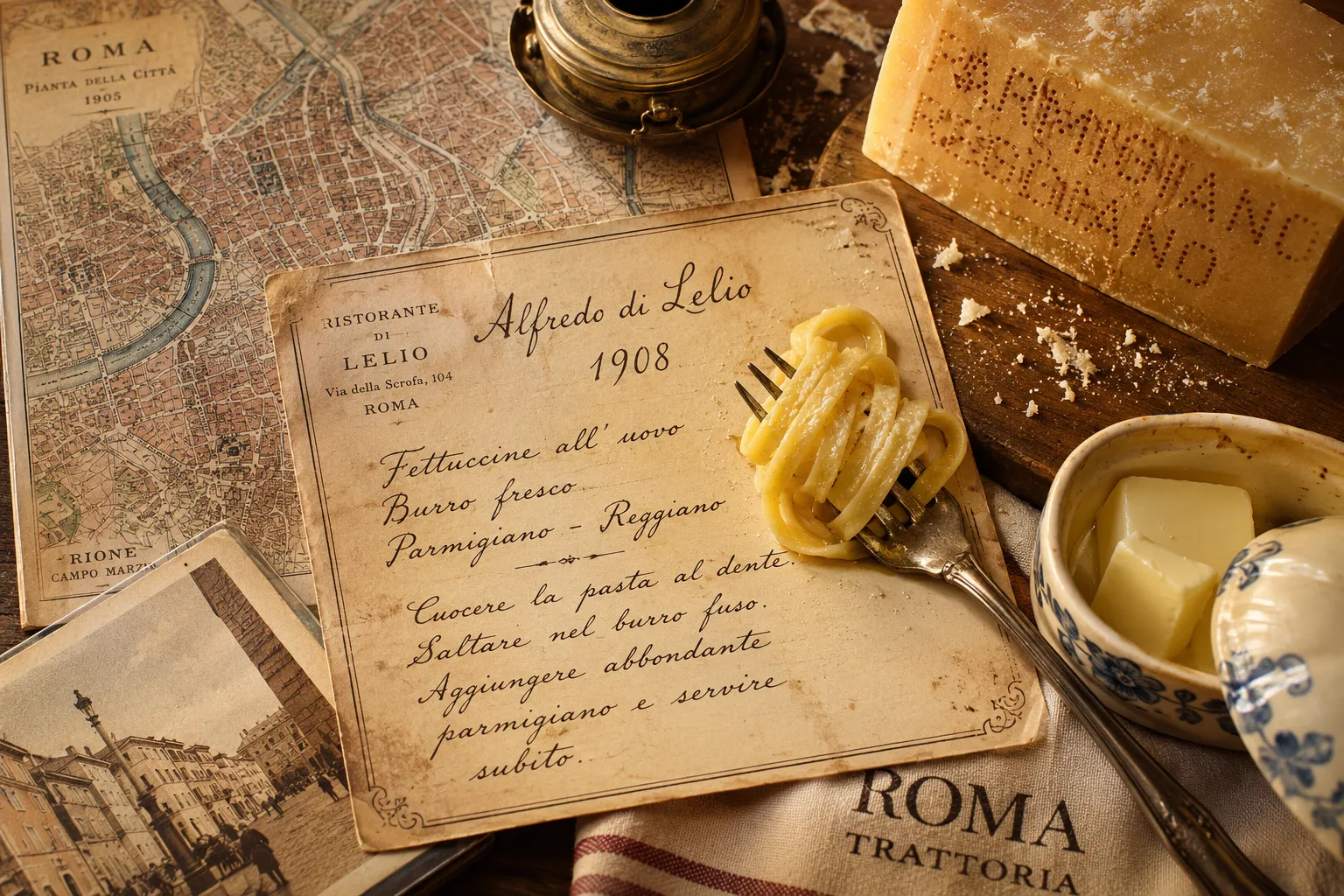
The dish itself, however, has a well-documented origin. Alfredo di Lelio, a Roman restaurateur, created the recipe around 1908 at his restaurant on Via della Scrofa in Rome. He developed it as a restorative dish for his wife after childbirth, combining fresh fettuccine with generous amounts of butter and Parmigiano-Reggiano. American actors Mary Pickford and Douglas Fairbanks reportedly ate at his restaurant during their honeymoon in 1927 and brought the recipe back to the United States, where it became a sensation. [5][8]
Is Fettuccine Alfredo Actually Italian?
Yes and no. The dish originated in Rome, but the version most Americans know is quite different from what Alfredo di Lelio originally made.
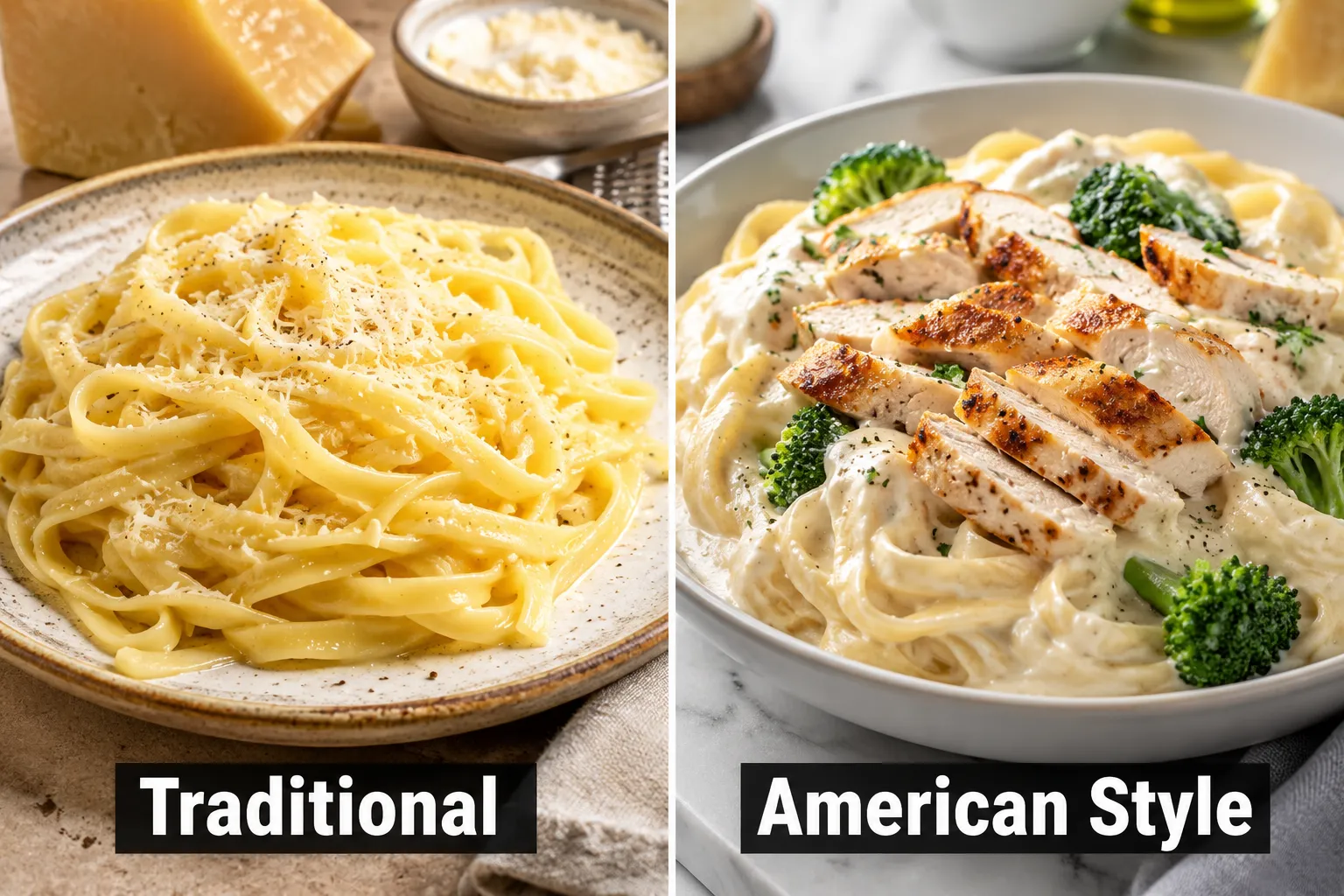
The authentic Roman recipe uses only three ingredients: fresh fettuccine, aged butter, and Parmigiano-Reggiano. There is no cream, no garlic, and no chicken. The sauce forms through an emulsification of butter and starchy pasta water with the cheese, creating a glossy, rich coating. [5]
The American version, which became standard in Italian-American restaurants through the mid-20th century, adds heavy cream to stabilize the sauce and make it easier to prepare in large quantities. This version is virtually unknown in Italy today. Many Romans consider the dish a tourist curiosity rather than a staple of Italian cuisine.
“The original alfredo sauce is a masterclass in simplicity: butter, cheese, and pasta water. No cream required.”
Traditional vs. Modern Fettuccine Alfredo
The difference between traditional and modern fettuccine alfredo comes down to ingredients and technique.
| Feature | Traditional Roman | American Style |
|---|---|---|
| Key ingredients | Butter, Parmigiano-Reggiano, pasta water | Butter, heavy cream, Parmesan, often garlic |
| Protein add-ins | None traditionally | Chicken, shrimp, or bacon common |
| Sauce texture | Light, glossy emulsion | Thick, creamy, heavier |
| Ease of preparation | Requires technique and timing | More forgiving with cream as a stabilizer |
| Calorie density | Moderate (butter and cheese) | Higher (cream adds significant fat) |
Choose traditional if you want to experience the dish as Alfredo di Lelio intended and you’re comfortable with pasta technique. Choose American style if you’re cooking for a crowd or prefer a richer, more stable sauce.
What’s the Difference Between Alfredo and Carbonara?
Alfredo and carbonara are both Roman pasta dishes with creamy-looking sauces, but they are fundamentally different recipes.
- Fettuccine alfredo uses butter and Parmigiano-Reggiano (plus cream in the American version). No eggs, no pork.
- Carbonara uses eggs, Pecorino Romano, guanciale (cured pork cheek), and black pepper. No butter, no cream.
The creaminess in carbonara comes from emulsified egg yolks and cheese, not dairy cream. Carbonara is also traditionally made with spaghetti or rigatoni, not fettuccine. Confusing the two is one of the most common errors in Italian-American cooking. If you’re celebrating February 7 National Fettuccine Alfredo Day, stick to the butter-and-cheese formula.
How to Celebrate February 7 National Fettuccine Alfredo Day in 2026
Celebrating February 7 National Fettuccine Alfredo Day can be as simple as cooking a bowl of pasta at home or as involved as hosting a pasta night for friends.
At home:
- Make the classic three-ingredient version: fresh fettuccine, high-quality European butter, and aged Parmigiano-Reggiano.
- Try a variation with roasted garlic, lemon zest, or truffle oil for a modern twist.
- Host a pasta bar where guests can add toppings like grilled chicken, sauteed mushrooms, or crispy prosciutto.
Dining out:
- Check Italian-American chains and local trattorias for February 7 specials. Restaurants often promote the holiday on social media in the days leading up to it. [4]
- Look for prix-fixe menus or discounted pasta entrees at local Italian restaurants.
On social media:
- Share your dish with the hashtag #NationalFettuccineAlfredoDay.
- Tag the restaurant if you dine out to help them gain visibility.
Since 2026’s date falls on a Saturday, it’s a natural fit for a dinner party or a relaxed weekend cooking project. For more food holiday inspiration throughout the year, the national food holidays calendar covers dozens of similar observances.
Best Fettuccine Alfredo Recipes for the Holiday
The best recipe depends on your skill level and the ingredients available.
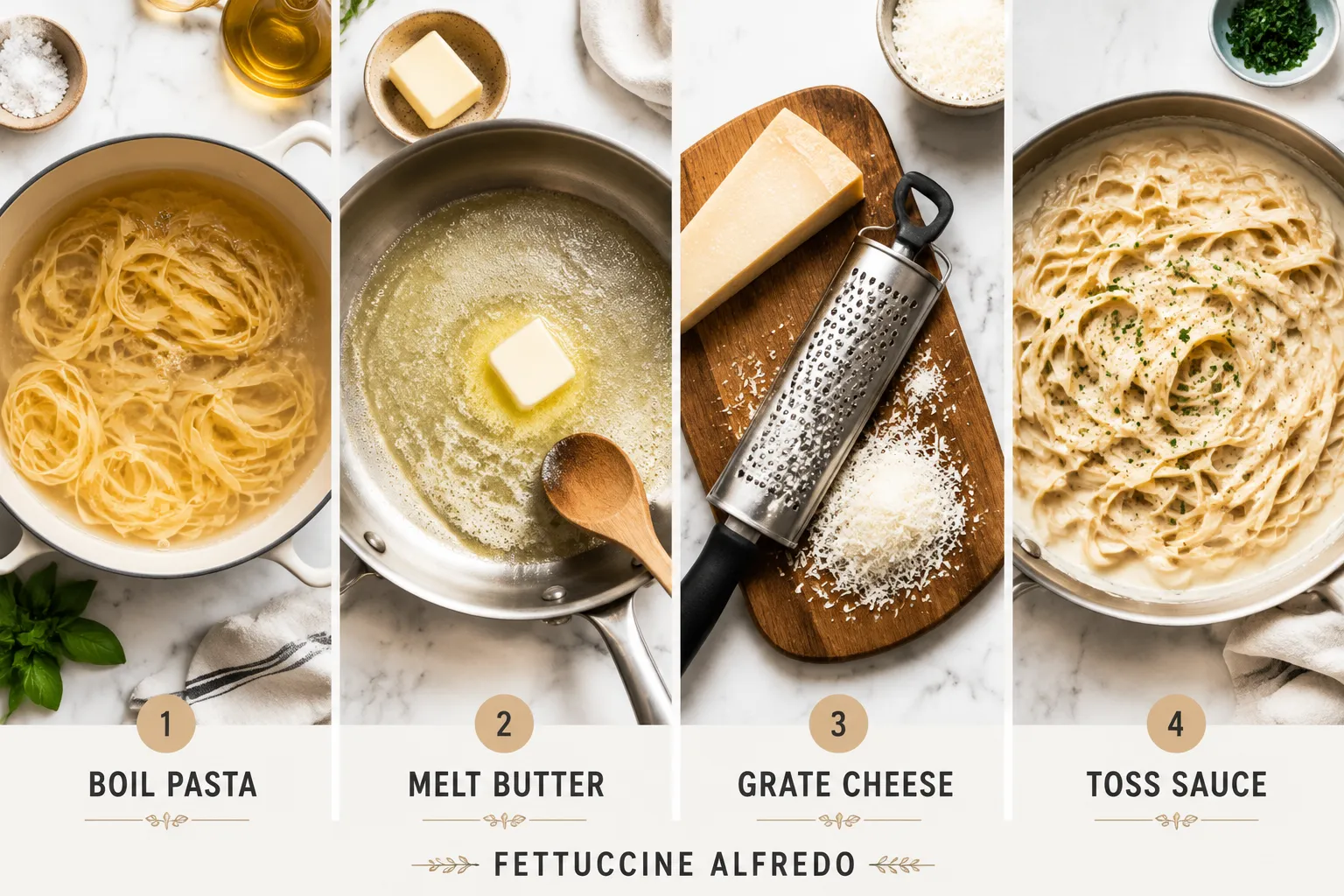
Classic Roman Alfredo (3 ingredients):
- Cook fresh fettuccine in well-salted water until just al dente. Reserve at least 1 cup of pasta water before draining.
- In a wide pan off the heat, combine 4 tablespoons of high-quality unsalted butter cut into small cubes.
- Add the hot drained pasta and a splash of pasta water. Toss vigorously.
- Add 1 cup of finely grated Parmigiano-Reggiano in small additions, tossing constantly and adding pasta water as needed to create a smooth, glossy sauce.
- Serve immediately.
American Cream Sauce Version:
- Melt 3 tablespoons of butter in a saucepan over medium heat.
- Add 1 cup of heavy cream and bring to a gentle simmer for 3 to 4 minutes until slightly reduced.
- Remove from heat and stir in 1 cup of grated Parmesan until melted.
- Season with salt, white pepper, and a pinch of nutmeg.
- Toss with cooked fettuccine and serve.
For pasta cooking fundamentals that apply to both versions, the pasta cooking tips resource covers timing, salting, and al dente technique in detail.
Common Mistakes When Making Fettuccine Alfredo
Most failed alfredo attempts trace back to a handful of consistent errors.
- Using pre-grated cheese from a canister: Pre-grated Parmesan contains anti-caking agents that prevent it from melting smoothly. Always grate fresh from a block.
- Adding cheese to a hot pan: High heat causes the cheese to seize and clump. Always remove the pan from direct heat before adding cheese.
- Skipping pasta water: The starchy water is essential for emulsification in the traditional version. Without it, the sauce breaks.
- Overcooking the pasta: Fettuccine should be al dente. Overcooked pasta turns mushy when tossed in a warm sauce.
- Using low-fat butter or margarine substitutes: The fat content in real butter is what creates the emulsion. Substitutes will not produce the same result.
Can You Make Fettuccine Alfredo Ahead of Time?
Fettuccine alfredo is best made and served immediately, but it can be prepared partially ahead of time with some adjustments.
What works ahead:
- Grate the cheese and store it covered in the refrigerator.
- Cook the pasta, toss it lightly with olive oil, and refrigerate it for up to 24 hours.
What does not work well ahead:
- The finished sauce does not hold well. Butter-based emulsions break when chilled and reheated, and cream sauces thicken significantly.
Reheating tips:
- Add a few tablespoons of water or low-sodium chicken broth to the pasta before reheating over low heat.
- Stir constantly and add more liquid as needed to restore the sauce consistency.
- Avoid the microwave if possible; stovetop reheating gives far better results.
Fettuccine Alfredo Without Heavy Cream: Alternatives That Work
Several substitutions can replace heavy cream in fettuccine alfredo without sacrificing too much richness.
- Whole milk plus butter: A 3:1 ratio of whole milk to butter, simmered until slightly reduced, approximates the fat content of cream.
- Cream cheese: A small amount (2 to 3 tablespoons) melted into the sauce adds body and tang.
- Cashew cream: Blended soaked cashews with water create a dairy-free alternative with a naturally rich texture.
- Evaporated milk: Lower in fat than cream but produces a stable, smooth sauce.
- Greek yogurt: Works as a lighter option, but must be added off the heat to prevent curdling.
For those exploring dairy-free or lighter cooking, the cheese lover’s day guide covers cheese alternatives and substitutions across a range of recipes.
Restaurants Offering Deals on Fettuccine Alfredo Day
Many Italian-American restaurant chains and local trattorias run promotions on February 7 each year. [4] Specific deals vary by location and year, so checking directly with restaurants is the most reliable approach.
Where to look for deals:
- Sign up for email lists at Olive Garden, Carrabba’s Italian Grill, Maggiano’s Little Italy, and Buca di Beppo before February 7.
- Follow local Italian restaurants on Instagram and Facebook, where they typically announce specials 2 to 5 days in advance.
- Check restaurant apps for in-app exclusive offers tied to the holiday.
- Use platforms like Yelp or Google Maps to search “fettuccine alfredo specials near me” on or around February 7.
Tip: Chains are more likely to run national promotions, while independent restaurants may offer specials only if they’re aware of the holiday. Calling ahead or mentioning the holiday when making a reservation can sometimes prompt a special offer.
FAQ: February 7 National Fettuccine Alfredo Day
What day is National Fettuccine Alfredo Day in 2026? National Fettuccine Alfredo Day falls on Saturday, February 7, 2026. [9]
Is National Fettuccine Alfredo Day an official U.S. holiday? No. It is an informal food holiday with no federal or state recognition. It is observed voluntarily by individuals, restaurants, and food media. [2][5]
Who invented fettuccine alfredo? Alfredo di Lelio, a Roman restaurateur, created the dish around 1908 in Rome, Italy. [5][8]
Does traditional fettuccine alfredo have cream? No. The original Roman recipe uses only butter, Parmigiano-Reggiano, and pasta water. Cream is an American addition. [5]
Can fettuccine alfredo be made gluten-free? Yes. Substitute the fettuccine with a gluten-free pasta made from rice, corn, or chickpea flour. The sauce itself contains no gluten.
What pasta shape is best for alfredo? Fettuccine is traditional and works best because its wide, flat surface holds the butter-cheese sauce well. Tagliatelle is a close substitute.
How many calories are in a serving of fettuccine alfredo? A standard restaurant portion of American-style fettuccine alfredo typically contains between 700 and 1,200 calories, depending on portion size and added ingredients. Home versions vary widely based on the recipe used.
Is fettuccine alfredo popular in Italy today? Not particularly. The dish is considered a tourist-oriented menu item in Rome and is rarely found in traditional Italian homes or restaurants outside of tourist areas.
What wine pairs well with fettuccine alfredo? A crisp, unoaked white wine such as Pinot Grigio, Gavi, or Soave complements the richness of the butter-cheese sauce without overwhelming it.
Can I celebrate February 7 National Fettuccine Alfredo Day if I’m vegetarian? Yes. The classic recipe is naturally vegetarian. Avoid add-ins like chicken or bacon, and the dish is fully plant-friendly (though not vegan due to butter and cheese).
What other food holidays are near February 7? January has several notable food holidays worth exploring, including National Southern Food Day on January 22 and National Hot Pastrami Sandwich Day on January 14.
Conclusion
February 7 National Fettuccine Alfredo Day is a straightforward celebration with a genuinely interesting history behind it. A dish born from a Roman restaurateur’s care for his wife became one of the most ordered pasta dishes in American dining history, even as it evolved far beyond its original three-ingredient simplicity.
Actionable next steps for 2026:
- Cook the classic version at home on February 7 using fresh fettuccine, real butter, and aged Parmigiano-Reggiano. Skip the cream at least once to taste what the original was about.
- Check restaurant deals by following your favorite Italian spots on social media in early February and signing up for their email lists now.
- Share the dish on social media with #NationalFettuccineAlfredoDay to join the broader conversation.
- Explore the history by reading more about Alfredo di Lelio and the dish’s journey from Rome to American dinner tables.
- Browse more food holidays at the national food days calendar to plan your next culinary celebration.
Whether the goal is a quick weeknight dinner or a full pasta night with friends, February 7 is a good reason to slow down, cook something classic, and appreciate a dish that has endured for more than a century.
References
[1] National Fettuccine Alfredo Day – https://www.holidaycalendar.io/holiday/national-fettuccine-alfredo-day [2] dayspedia – https://dayspedia.com/us/calendar/holiday/1125/ [3] National Food Day Calendar 2026 – https://restaurant.menufy.com/article/national-food-day-calendar-2026 [4] National Fettuccine Alfredo Day – https://www.punchbowl.com/holidays/national-fettuccine-alfredo-day [5] National Fettuccine Alfredo Day – https://nationaltoday.com/national-fettuccine-alfredo-day/ [6] February – https://nationalfooddays.org/month/february/ [8] National Fettuccine Alfredo Day – https://www.checkiday.com/27c25da6c445809b187d11458f99fe08/national-fettuccine-alfredo-day [9] checkiday – https://www.checkiday.com/2/7/2026 [10] National Fettuccine Alfredo Day – https://www.calendarr.com/canada/national-fettuccine-alfredo-day/