Last updated: July 20, 2026
Quick Answer
July 20 National Lollipop Day is an annual unofficial food holiday celebrated every July 20 in the United States. The day honors one of the world’s most recognizable candies, the lollipop, and encourages people of all ages to enjoy, share, and even make their own. Candy brands, retailers, and confectionery shops typically mark the occasion with promotions, giveaways, and social media campaigns.
Key Takeaways
- July 20 is National Lollipop Day, observed annually in the United States.
- The lollipop has a documented commercial history stretching back to the early 20th century, with the name “lollipop” trademarked by the Racine Confectionery Machine Company around 1908.
- Homemade lollipops require only a few ingredients: sugar, corn syrup, water, flavoring, and food coloring.
- Major candy brands including See’s Candies, Charms, Tootsie Pops, and Dum Dums frequently run National Lollipop Day deals.
- Lollipops are not inherently worse for teeth than other hard candies, but prolonged sucking increases acid exposure time, moderation and rinsing help.
- Both children and adults can enjoy lollipops; adult-oriented options include chili-mango, wine-infused, and artisan sea-salt chocolate varieties.
- Social media hashtags like #NationalLollipopDay and #LollipopDay drive significant engagement every July 20.
- Specialty lollipops are available at artisan candy shops, online retailers like Etsy and Amazon, and brand websites.
What Is National Lollipop Day?
National Lollipop Day is an unofficial American food holiday dedicated to celebrating the lollipop, a hard candy mounted on a stick. It falls every year on July 20 and is observed through candy giveaways, homemade lollipop projects, retail promotions, and social media sharing. While it carries no federal recognition, the day has grown into a widely acknowledged pop-culture event embraced by candy brands, schools, and food bloggers.
The lollipop itself is one of the simplest and most universal confections: boiled sugar syrup poured into a mold around a stick, then cooled into a hard candy. Variations range from single-flavor classics to layered, filled, and even savory-sweet artisan versions.
When Is National Lollipop Day Celebrated?
National Lollipop Day is celebrated on July 20 every year. The mid-summer timing makes it a natural fit for outdoor events, summer camps, and warm-weather candy promotions. In 2026, July 20 falls on a Monday, which means many brands launch weekend-adjacent promotions starting July 18 or 19 to capture more consumer attention.
Key dates around the 2026 holiday:
- July 18-19: Pre-holiday deals and social media build-up
- July 20: National Lollipop Day (main celebration)
- July 21: Many online deals extend through the following day
Why Is July 20 National Lollipop Day?
The exact origin of why July 20 was chosen as National Lollipop Day is not documented in any verified historical record. Like many unofficial food holidays in the United States, it likely emerged from a combination of candy industry marketing and grassroots food-holiday culture that expanded rapidly through the internet in the 2000s and 2010s. July 20 sits squarely in peak summer, a high-consumption season for candy, which makes it a commercially logical choice.
What is clear is that the lollipop itself has a well-established history that gives the holiday genuine cultural weight.
History of National Lollipop Day and the Lollipop Itself
The lollipop’s modern commercial history begins in the early 20th century. The Racine Confectionery Machine Company is widely credited with coining the name “lollipop” and producing one of the first automated lollipop-making machines around 1908. The name is often linked to a famous racehorse of the era named “Lolly Pop,” though this connection is debated among candy historians.
A brief timeline of lollipop history:
| Era | Milestone |
|---|---|
| Pre-1900s | Boiled sugar on sticks existed as informal street candy in Europe and America |
| 1908 | Racine Confectionery Machine Company trademarks “lollipop” name |
| 1931 | Tootsie Pop introduced, adding a chocolate center to the hard candy shell |
| 1950s-60s | Dum Dums and Charms become household staples in American candy culture |
| 1970s-80s | Ring Pop and novelty lollipops expand the category for children |
| 2000s | Artisan and gourmet lollipops emerge as a specialty market |
| 2010s | National Lollipop Day gains traction through social media and food blogs |
National Lollipop Day as a recognized annual celebration appears to have solidified sometime in the mid-2000s to early 2010s, riding the wave of food holiday culture popularized by websites and social platforms. Today it sits alongside other beloved candy observances, much like National Taffy Day on May 23 and National Jelly Bean Day on April 22, as a fixture in the American food holiday calendar.
How to Celebrate National Lollipop Day
July 20 National Lollipop Day can be celebrated in several ways, from simply buying a bag of your favorite brand to hosting a candy-making party. The best approach depends on your audience, whether you’re celebrating with kids, coworkers, or fellow candy enthusiasts.
Top ways to celebrate:
- Buy and share: Pick up a variety pack of lollipops and share them with coworkers, neighbors, or classmates.
- Make your own: Homemade lollipops are a surprisingly accessible kitchen project (see the recipe section below).
- Visit a candy shop: Many local confectioneries and specialty candy stores run National Lollipop Day specials.
- Host a tasting: Set up a blind taste test with different brands and flavors, a fun activity for adults and kids alike.
- Post on social media: Use #NationalLollipopDay to join the online conversation and share your candy photos.
- Gift a lollipop bouquet: Arrange assorted lollipops in a vase or foam block as an edible centerpiece or gift.
For those who enjoy making sweets from scratch, this day pairs well with other confectionery projects. If you love homemade candy, also check out the May 23 National Taffy Day guide for another fun candy-making holiday.
Homemade Lollipop Recipes: How to Make Lollipops at Home
Homemade lollipops require five basic ingredients and about 30 minutes of active time. The key is reaching the correct candy temperature, the “hard crack” stage at 300-310°F (149-154°C), using a candy thermometer.
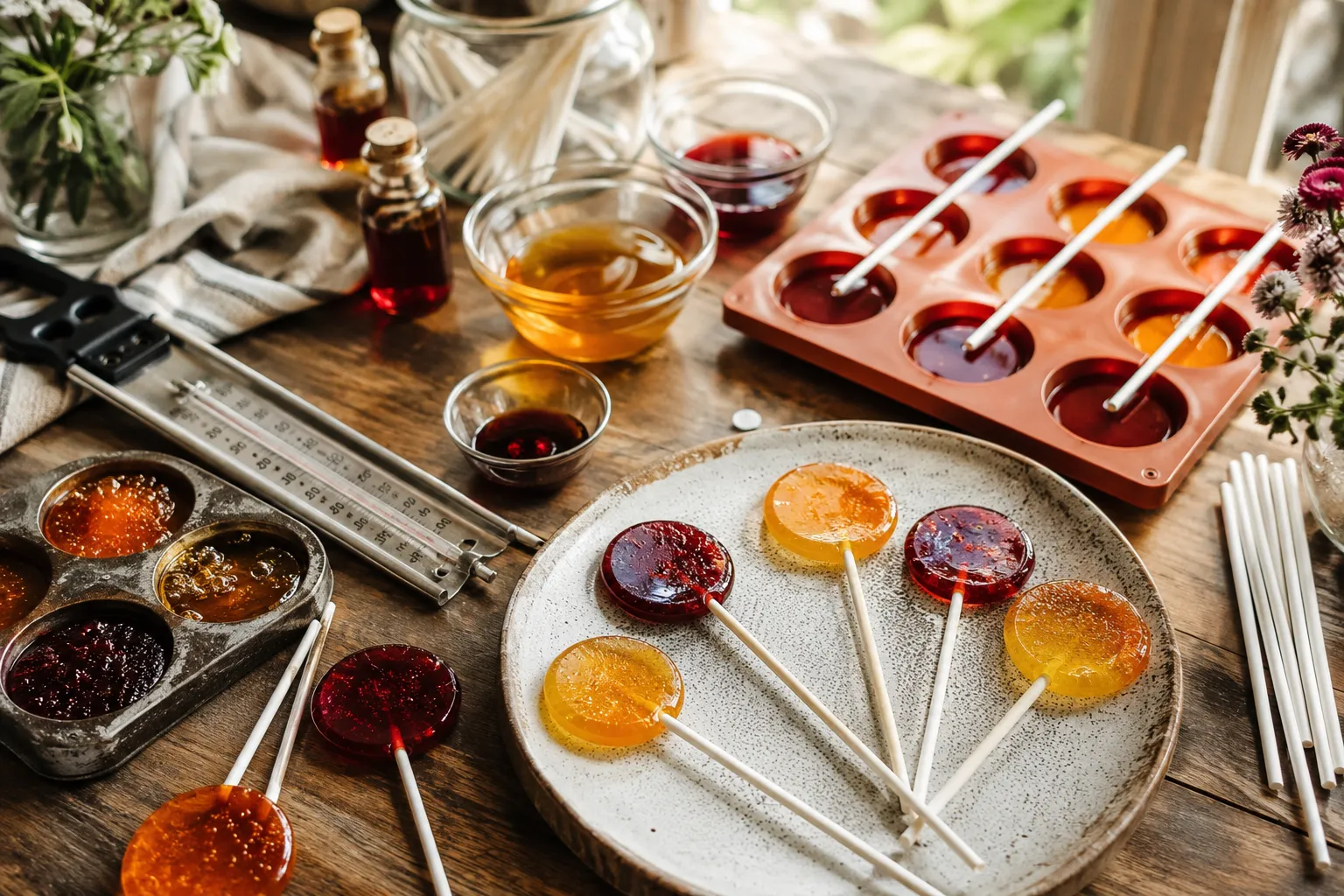
Basic Homemade Lollipop Recipe
Makes approximately 12 standard lollipops
Ingredients:
- 2 cups granulated white sugar
- 2/3 cup light corn syrup
- 3/4 cup water
- 1/2 teaspoon flavoring extract (cherry, watermelon, orange, or any preferred flavor)
- Food coloring (optional)
- Lollipop sticks and silicone molds or parchment paper
Steps:
- Lightly grease silicone molds or line a baking sheet with parchment paper. Lay out lollipop sticks.
- Combine sugar, corn syrup, and water in a heavy-bottomed saucepan over medium heat. Stir until sugar dissolves.
- Stop stirring once the mixture boils. Clip a candy thermometer to the side of the pan.
- Cook without stirring until the thermometer reads 300°F (149°C), the hard crack stage.
- Remove from heat immediately. Add flavoring and food coloring, stirring quickly.
- Pour into molds or drop spoonfuls onto parchment paper, placing a stick in each while still liquid.
- Allow to cool completely (about 15-20 minutes) before removing from molds.
Common mistakes to avoid:
- Stirring after the mixture boils causes crystallization and a grainy texture.
- Not using a candy thermometer leads to soft, sticky candy instead of hard lollipops.
- Pouring too slowly results in uneven shapes.
Best Lollipop Brands to Try on National Lollipop Day
Several well-established brands dominate the lollipop market, while a growing number of artisan makers offer premium alternatives. Here are the top options across different categories:
Classic Brands:
- Tootsie Pop, the iconic chocolate-center lollipop; available in cherry, grape, orange, raspberry, and more
- Dum Dums, small, affordable, and available in dozens of flavors including the mysterious “mystery flavor”
- Charms Blow Pops, hard candy shell with a bubblegum center
- Ring Pop, wearable candy beloved by children since the 1970s
Premium and Artisan Brands:
- See’s Candies, offers seasonal and specialty lollipops with high-quality ingredients
- Yummy Earth, organic, allergen-friendly lollipops in fruit flavors
- Zollipops, sugar-free, teeth-friendly lollipops sweetened with xylitol and erythritol
- Vintage Candy Co., retro and novelty lollipop assortments
Choose based on your needs:
- For kids’ parties: Dum Dums or Charms Blow Pops (affordable, variety packs available)
- For health-conscious consumers: Yummy Earth or Zollipops
- For gifting adults: See’s Candies or artisan Etsy shops
- For nostalgia: Tootsie Pops or Ring Pops
National Lollipop Day Deals and Discounts
Many candy brands and retailers offer deals specifically tied to July 20 National Lollipop Day. While specific 2026 promotions are announced closer to the date, here is what to expect based on past years:
Where to find deals:
- Brand websites and email lists: See’s Candies, Yummy Earth, and Zollipops have historically offered discount codes or free-shipping promotions on July 20.
- Amazon: Lollipop variety packs frequently appear as limited-time deals on food holiday dates.
- Target and Walmart: In-store candy sections often feature seasonal displays with discounted pricing around the holiday.
- Etsy: Artisan candy sellers frequently run flash sales tied to food holidays.
- Local candy shops: Many independent confectioneries offer a free lollipop with any purchase on July 20.
Pro tip: Sign up for email newsletters from your favorite candy brands at least two weeks before July 20 to receive early access to promotions.
Lollipop Day Events Near Me: How to Find Local Celebrations
Local National Lollipop Day events are typically informal and organized at the store or community level rather than through large event platforms. To find events near you in 2026:
- Search “National Lollipop Day 2026 [your city]” on Google and Instagram in the week leading up to July 20.
- Check local candy shops, bakeries, and confectioneries on Facebook for event announcements.
- Look for candy-making classes at community centers, culinary schools, or kitchen stores, many schedule these around food holidays.
- Children’s museums and summer camps often incorporate lollipop-making as a July activity.
If no local events exist, hosting a small lollipop tasting at home or work is a simple way to create your own celebration.
Fun Facts About Lollipops
Lollipops have a surprisingly rich history and some genuinely unusual records attached to them.
- The world’s largest lollipop on record (as recognized by Guinness World Records) weighed over 7,000 pounds and was created by See’s Candies in 2012.
- The name “lollipop” may derive from the Romani word “loli phaba,” meaning “red apple”, a common street candy sold on a stick in 19th-century England.
- Approximately 100 million Tootsie Pops are produced every day at peak production, according to the Tootsie Roll Industries company history.
- The famous “How many licks does it take to get to the center of a Tootsie Pop?” question has been studied by university engineering students multiple times, with estimates ranging from 144 to 411 licks depending on the method used.
- Lollipops are one of the few candies that appear in virtually every global candy culture, from Mexican tamarind-chili paletas to Japanese Chupa Chups to American Dum Dums.
Lollipops for Kids vs Adults: What Is the Difference?
Lollipops are not just for children, the adult artisan candy market has grown substantially, with flavors and formats designed specifically for grown-up palates. The main differences come down to flavor complexity, size, and ingredients.

Lollipops for Kids:
- Bright, simple flavors: cherry, grape, watermelon, blue raspberry
- Smaller size for safety (choking hazard considerations for very young children)
- Often feature characters, novelty shapes, or bubblegum centers
- Lower price point; sold in large variety packs
- Examples: Dum Dums, Ring Pops, Charms Blow Pops
Lollipops for Adults:
- Complex flavor profiles: chili-mango, lavender-honey, dark chocolate sea salt, bourbon caramel, wine-infused
- Larger format or multiple servings
- Often made with premium or organic ingredients
- Positioned as gifts or specialty items
- Examples: See’s Candies specialty pops, artisan Etsy sellers, Sugarfina
Choose kids’ lollipops if: you need affordable, crowd-pleasing options for parties or school events. Choose adult lollipops if: you are gifting, hosting a tasting, or want a more sophisticated candy experience.
Are Lollipops Bad for Your Teeth?
Lollipops are not uniquely damaging to teeth, but they do pose a higher risk than quickly eaten sweets because of prolonged sugar exposure. The longer sugar stays in contact with tooth enamel, the more opportunity bacteria have to produce enamel-eroding acid.
Key dental considerations:
- Duration matters most: A lollipop held in the mouth for 5-10 minutes exposes teeth to sugar far longer than a quickly chewed candy.
- Xylitol-sweetened options: Brands like Zollipops use xylitol, which research suggests may actually reduce cavity-causing bacteria rather than feed them.
- Timing helps: Eating lollipops as part of a meal (rather than between meals) reduces the number of daily acid exposure events.
- Rinse after: Rinsing with water immediately after finishing a lollipop reduces residual sugar on enamel.
- Brush timing: Wait at least 30 minutes after eating any sugary candy before brushing, as enamel is temporarily softened by acid and brushing too soon can cause micro-abrasion.
Bottom line: An occasional lollipop on National Lollipop Day is not a dental emergency. Consistent daily consumption without proper oral hygiene is where real risk accumulates.
Where to Buy Specialty Lollipops
Specialty and artisan lollipops are available through several channels, both online and in person.
Online:
- Etsy, the largest marketplace for handmade, custom, and novelty lollipops; search by flavor, occasion, or dietary need
- Amazon, wide selection of bulk and specialty brands with Prime delivery
- Brand websites, See’s Candies, Yummy Earth, Zollipops, and Sugarfina all sell direct-to-consumer
- Goldbelly, ships artisan candy from regional makers across the United States
In Person:
- Specialty candy stores and confectioneries (search “candy shop near me” on Google Maps)
- Whole Foods and natural grocery stores carry organic and allergen-free options
- Williams Sonoma and Sur La Table carry premium candy brands seasonally
- Farmers markets often feature local candy makers with handmade lollipop varieties
National Lollipop Day Social Media Ideas
Social media is one of the biggest drivers of National Lollipop Day awareness, with #NationalLollipopDay generating thousands of posts every July 20. Here are practical content ideas for individuals, brands, and food bloggers:
For individuals:
- Post a photo of your favorite childhood lollipop brand with a caption about your earliest candy memory.
- Share a step-by-step Instagram Story or TikTok of making homemade lollipops.
- Run a poll: “Tootsie Pop or Blow Pop?”, simple engagement with high response rates.
For brands and businesses:
- Announce a July 20-only discount code in a countdown post starting July 18.
- Partner with a local candy shop for a giveaway tied to follows and shares.
- Post a “flavor bracket” tournament graphic and ask followers to vote for their favorite lollipop flavor.
For food bloggers:
- Publish a recipe post or reel featuring a unique homemade lollipop flavor (lavender lemonade, hibiscus, or matcha work well visually).
- Create a “best lollipop brands ranked” video or carousel post.
Recommended hashtags: #NationalLollipopDay, #LollipopDay, #CandyLovers, #HomemadeCandy, #SweetTreats, #July20
If you enjoy covering food holidays on social media, other visually strong candy and dessert days worth covering include National Grape Popsicle Day on May 27 and National Chocolate Ice Cream Day on June 7.
FAQ: July 20 National Lollipop Day
Q: Is National Lollipop Day a federal holiday? No. National Lollipop Day is an unofficial food holiday with no government recognition. It is observed informally through consumer celebrations, brand promotions, and social media activity.
Q: What day is National Lollipop Day in 2026? National Lollipop Day 2026 falls on Monday, July 20, 2026.
Q: Who invented the lollipop? No single inventor is credited. The Racine Confectionery Machine Company is widely recognized for commercializing the modern lollipop and trademarking the name around 1908, but hard candy on sticks existed informally long before that.
Q: Are there sugar-free lollipops? Yes. Brands like Zollipops and Yummy Earth produce sugar-free or reduced-sugar lollipops sweetened with xylitol, erythritol, or stevia. These are widely available online and in health food stores.
Q: What is the most popular lollipop flavor? Cherry is consistently cited as the top-selling lollipop flavor in the United States across most major brands, followed by watermelon, grape, and blue raspberry.
Q: Can toddlers eat lollipops? Most pediatric dentists and pediatricians advise against giving hard candy, including lollipops, to children under age 3-4 due to choking risk. Always supervise young children with any hard candy.
Q: What is a Tootsie Pop? A Tootsie Pop is a lollipop brand produced by Tootsie Roll Industries featuring a hard fruit-flavored candy shell surrounding a chocolate Tootsie Roll center. It was introduced in 1931 and remains one of the best-selling lollipops in the United States.
Q: How long does it take to make homemade lollipops? Active preparation takes about 20-30 minutes. Add another 15-20 minutes of cooling time before the lollipops are ready to eat. Total time from start to finish is typically under one hour.
Q: Where can I find National Lollipop Day deals? Check brand websites, Amazon, Target, and local candy shops on and around July 20. Signing up for brand email lists in advance is the most reliable way to access discount codes.
Q: Are lollipops vegan? Many classic lollipops are vegan, but some contain confectioner’s glaze (shellac, derived from insects) or natural flavors from animal sources. Brands like Yummy Earth explicitly label their products as vegan. Always check the ingredient list if this matters to you.
Conclusion
July 20 National Lollipop Day is a simple but genuinely enjoyable food holiday that suits almost any age, budget, or skill level. Whether the plan is to grab a pack of Dum Dums from the checkout aisle, order an artisan sea-salt chocolate pop online, or spend an afternoon making homemade lollipops with kids, the day offers a low-effort, high-reward reason to enjoy one of the world’s most universally loved candies.
Actionable next steps for 2026:
- Mark July 20 on your calendar now and set a reminder for July 18 to check for early deals.
- Choose one celebration approach: buy, make, or visit a local candy shop.
- If making homemade lollipops, order lollipop sticks and silicone molds online at least a week in advance.
- Plan a social media post using #NationalLollipopDay and schedule it for July 20 morning for maximum visibility.
- Explore other sweet food holidays throughout the year, like National Ice Cream Cake Day on June 27 or National Cupcake Lovers Day on June 13, to keep the sweet celebrations going all year long.
Leave a Reply