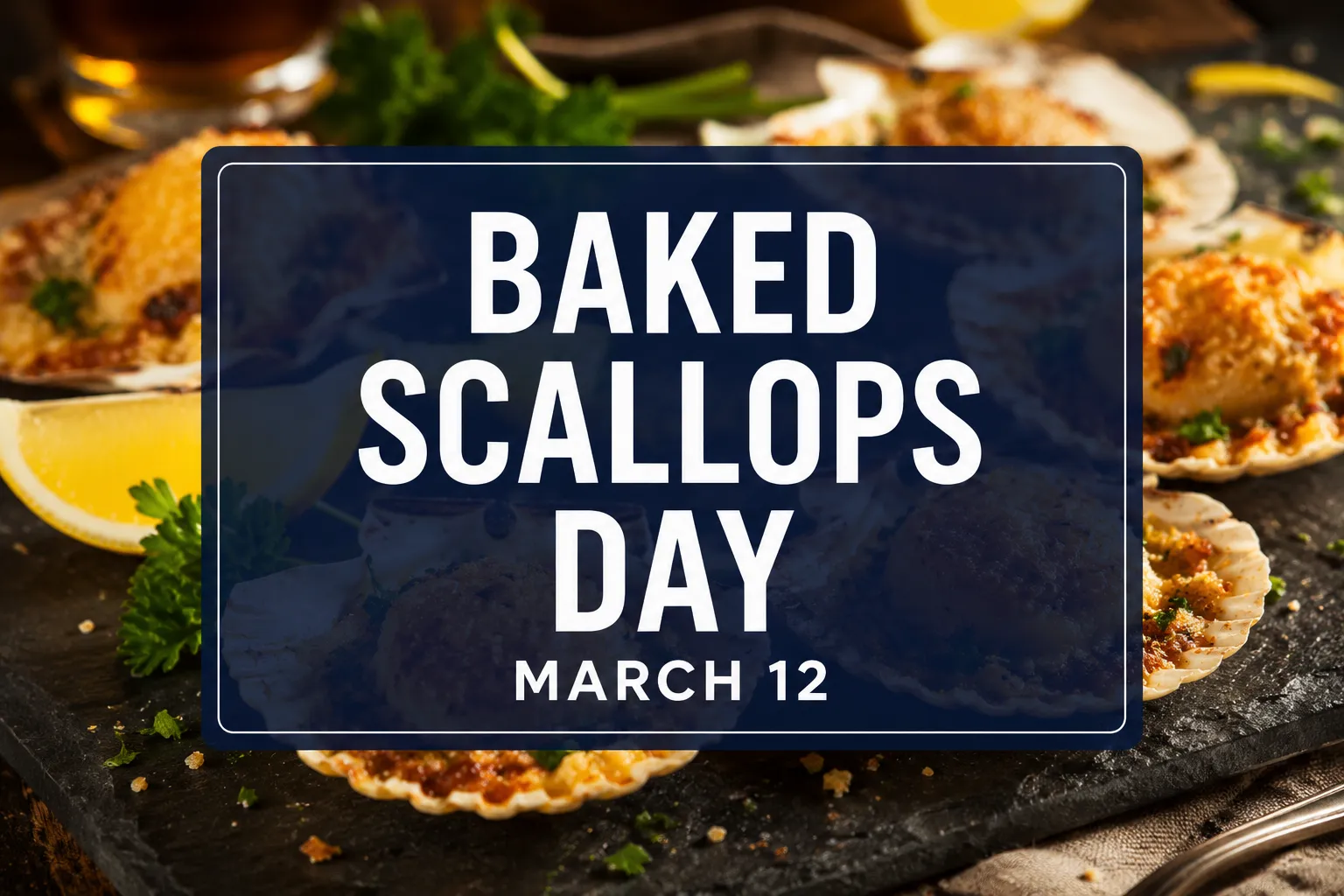
March 12 National Baked Scallops Day: History, Recipes, and How to Celebrate in 2026
- 0
- 14 Min Read
Last updated: March 12, 2026
Quick Answer: March 12 National Baked Scallops Day is an annual U.S. food observance dedicated to celebrating scallops prepared by baking rather than frying or sauteing. It falls on March 12 every year, with March 12, 2026 landing on a Thursday. The day has no official government proclamation but is widely recognized across food holiday calendars and celebrated by home cooks and restaurants alike.
Key Takeaways
- March 12 is National Baked Scallops Day, observed every year in the United States.
- The holiday focuses specifically on baked scallop dishes, not fried or pan-seared preparations.
- The earliest documented reference to the observance dates to March 12, 2005, in an Ohio newspaper.
- No official creator or government proclamation has been identified for this food holiday.
- Baked scallops are distinct from the October 2 National Fried Scallops Day.
- Fresh sea scallops are ideal for baking, but properly thawed frozen scallops work well too.
- Scallops are a lean, protein-rich shellfish with meaningful nutritional benefits.
- A classic baked scallops recipe takes under 20 minutes from prep to table.
- Crisp white wines and light sparkling wines pair best with baked scallops.
- Scallops are a shellfish allergen and require careful handling for food safety.
What Is National Baked Scallops Day?
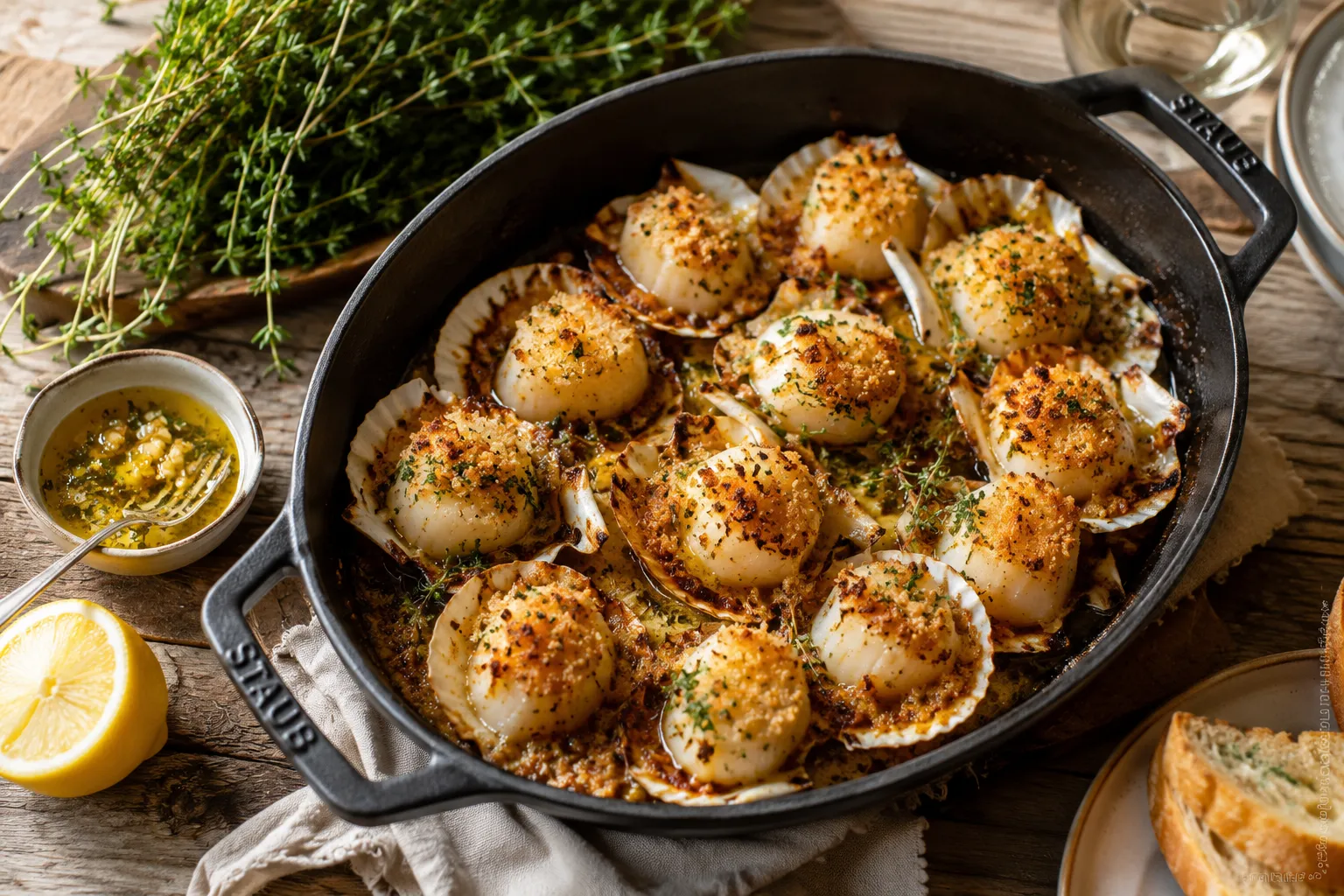
National Baked Scallops Day is an annual food observance held on March 12 that encourages people to prepare, order, or simply enjoy scallops cooked in the oven. The day highlights baking as a cooking method that preserves the scallop’s natural sweetness while adding rich toppings like garlic butter, breadcrumbs, and fresh herbs. [1][3]
Unlike broader seafood observances, this holiday zeroes in on one specific dish. Scallops are a prized shellfish found along both U.S. coasts, and baking them creates a tender, flavorful result that many home cooks find more forgiving than pan-searing. The observance sits alongside dozens of unofficial American food holidays that celebrate individual dishes or ingredients throughout the calendar year. For another beloved seafood food holiday, see the guide to January 25 National Fish Taco Day and the coverage of January 21 National New England Clam Chowder Day.
When Did National Baked Scallops Day Start, and Who Created It?
The earliest documented print reference to National Baked Scallops Day appears in the Coshocton Tribune (Ohio) on March 12, 2005, where the holiday is mentioned by name. [6][7] Days of the Year notes that references to the observance began circulating in the early 2000s, suggesting it emerged from the broader wave of informal food holidays that gained traction online during that period rather than from any longstanding culinary tradition. [9]
No creator has been publicly identified, and no government proclamation or formal registration has been found. HolidayCalendar explicitly states that the holiday’s origin and founder remain unknown. [7] CooksInfo categorizes it as a modern unofficial food holiday, noting that its presence in popular media outpaces any historical documentation. [6]
This pattern is common for food observances of this type. Many similar days, from National Carrot Cake Day to National Chocolate Cake Day, share the same informal origin story: a mention in print or online that gradually gains traction year after year. For context on how these observances develop, the guides to National Carrot Cake Day February 3 and National Chocolate Cake Day January 27 follow a nearly identical trajectory.
Baked vs. Fried Scallops: What Is the Difference?
Baked scallops and fried scallops are distinct dishes with different textures, flavor profiles, and cooking methods, and each has its own national observance. March 12 National Baked Scallops Day focuses on oven-cooked preparations, while October 2 is recognized as National Fried Scallops Day. [2][13]
| Feature | Baked Scallops | Fried Scallops |
|---|---|---|
| Cooking method | Oven, typically 400-425 degrees F | Deep-fried or pan-fried in oil |
| Texture | Tender, soft, slightly caramelized top | Crispy exterior, chewy interior |
| Common toppings | Breadcrumbs, butter, garlic, cheese | Batter or breading coating |
| Fat content | Lower (depends on butter used) | Higher due to frying oil |
| Skill level | Beginner-friendly | Requires temperature control |
Baking is often recommended for beginners because the oven’s consistent heat reduces the risk of overcooking. Frying delivers a satisfying crunch but requires monitoring oil temperature closely to avoid rubbery results.
Best Baked Scallops Recipe for March 12
A reliable baked scallops recipe for March 12 National Baked Scallops Day uses sea scallops, garlic butter, and seasoned breadcrumbs, baked at 400 degrees Fahrenheit for 12 to 15 minutes. This approach is beginner-friendly and produces consistently tender, golden results.
Classic Garlic Butter Baked Scallops
Ingredients (serves 4):
- 1.5 pounds large sea scallops, patted dry
- 4 tablespoons unsalted butter, melted
- 3 cloves garlic, minced
- 0.5 cup panko breadcrumbs
- 2 tablespoons fresh parsley, chopped
- Salt, black pepper, and a squeeze of fresh lemon
Steps:
- Preheat oven to 400 degrees F. Lightly grease a baking dish.
- Pat scallops completely dry with paper towels. This step is critical for browning.
- Arrange scallops in a single layer in the baking dish.
- Mix melted butter with garlic, then pour over scallops.
- Combine breadcrumbs with parsley, salt, and pepper. Sprinkle evenly over scallops.
- Bake 12 to 15 minutes until breadcrumbs are golden and scallops are just opaque.
- Finish with a squeeze of lemon and serve immediately.
Common mistake: Skipping the drying step. Wet scallops steam rather than bake, resulting in a rubbery, pale texture instead of a golden, tender one.
How to Cook Scallops So They Are Not Rubbery
Rubbery scallops result from overcooking or excess moisture, both of which are easy to prevent. The single most important step is patting scallops completely dry before cooking, and the second is pulling them from the oven the moment they turn opaque throughout.
Key rules to avoid rubbery scallops:
- Dry thoroughly: Use paper towels to remove all surface moisture before seasoning.
- Do not crowd: Give each scallop space in the baking dish so heat circulates evenly.
- Watch the clock: Most sea scallops at 400 degrees F are done in 12 to 15 minutes. Bay scallops, which are smaller, cook in 8 to 10 minutes.
- Check for opacity: A properly cooked scallop is just opaque in the center. A translucent center means underdone; a rubbery, shrunken scallop means overdone.
- Rest briefly: Let scallops sit for two minutes after removing from the oven before serving.
Frozen vs. Fresh Scallops for Baking
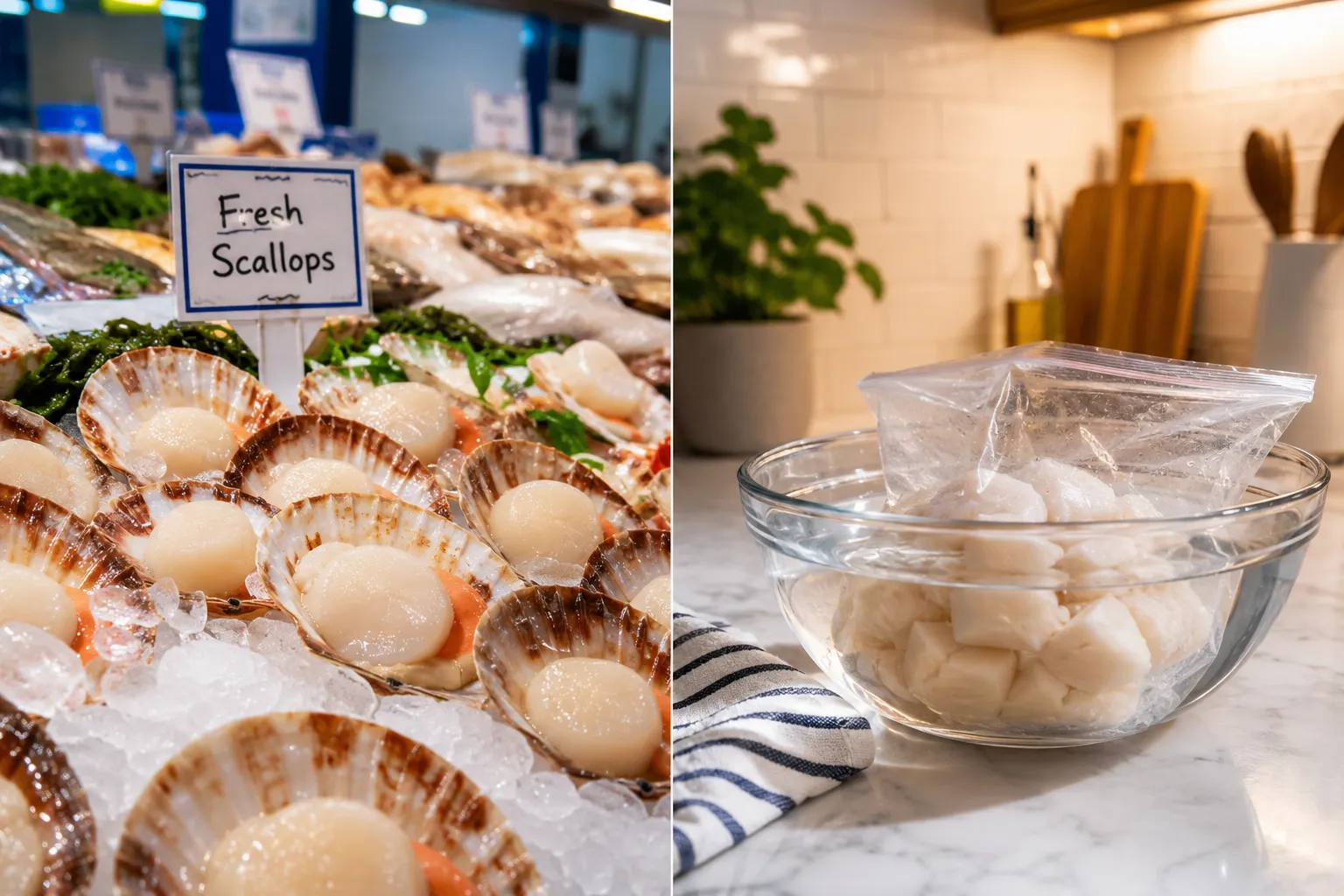
Fresh scallops are ideal for baking, but high-quality frozen scallops produce excellent results when thawed correctly. The key distinction is avoiding “wet” scallops, which are treated with sodium tripolyphosphate (a preservative that adds water weight) and cause steaming rather than browning in the oven.
Choose fresh scallops if:
- You live near a coastal fish market or quality seafood counter.
- You plan to cook within one to two days of purchase.
- You want the most pronounced natural sweetness.
Choose frozen scallops if:
- Fresh scallops are unavailable or prohibitively expensive in your area.
- You buy “dry-packed” frozen scallops, which contain no added water.
- You thaw them overnight in the refrigerator (never in warm water, which degrades texture).
How to identify dry-packed scallops: The label will say “dry” or “dry-packed.” Wet scallops look bright white and may feel slippery; dry scallops have a slightly ivory or beige tone and a firmer surface.
Are Scallops Healthy to Eat?
Scallops are a lean, nutrient-dense protein source that fits well into most balanced diets. A 3-ounce serving of cooked scallops provides roughly 20 grams of protein and fewer than 100 calories, according to the USDA FoodData Central database. They are also a natural source of magnesium, potassium, and vitamin B12.
Nutritional highlights per 3-ounce cooked serving (approximate, USDA data):
- Calories: approximately 94
- Protein: approximately 20 grams
- Total fat: approximately 1 gram
- Sodium: varies by preparation (watch added butter and salt)
- Omega-3 fatty acids: present in modest amounts
The main health consideration for baked scallops is the preparation. A classic garlic butter recipe adds saturated fat from butter. Substituting olive oil or reducing butter quantity keeps the dish lighter while retaining flavor.
Scallop Allergies and Food Safety
Scallops are a shellfish, and shellfish is one of the nine major food allergens recognized by the U.S. Food and Drug Administration. Anyone with a known shellfish allergy should avoid scallops entirely, as reactions can range from mild hives to severe anaphylaxis.
Food safety basics for scallops:
- Store fresh scallops at 32 to 38 degrees F and use within two days of purchase.
- Never leave raw scallops at room temperature for more than two hours.
- Cook scallops to an internal temperature of 145 degrees F, per FDA guidelines.
- Discard any scallops with an ammonia-like or strongly “fishy” odor before cooking.
- Cross-contamination: use separate cutting boards and utensils for shellfish and other foods.
Guests with shellfish allergies should be informed before serving any dish containing scallops, including sauces or broths made with scallop cooking liquid.
How Much Do Scallops Cost?
Scallop prices vary by region, season, and whether they are fresh or frozen. As a general estimate, fresh dry-packed sea scallops typically range from $18 to $35 per pound at U.S. fish markets and grocery stores as of 2026, though coastal areas and wholesale buyers often pay less. Frozen dry-packed scallops are generally less expensive, often ranging from $12 to $22 per pound.
Factors that affect price:
- Size: Larger “U/10” scallops (under 10 per pound) command premium prices.
- Source: Wild-caught Atlantic sea scallops from New England tend to cost more than imported farmed varieties.
- Season: Prices fluctuate with harvest seasons and fuel costs for fishing vessels.
- Retailer type: Specialty fish markets, warehouse clubs, and online seafood delivery services each offer different price points.
For a celebratory March 12 dinner at home, budgeting approximately $15 to $25 for scallops (serving four people) is a reasonable estimate depending on location and source.
What Wine Pairs with Baked Scallops?
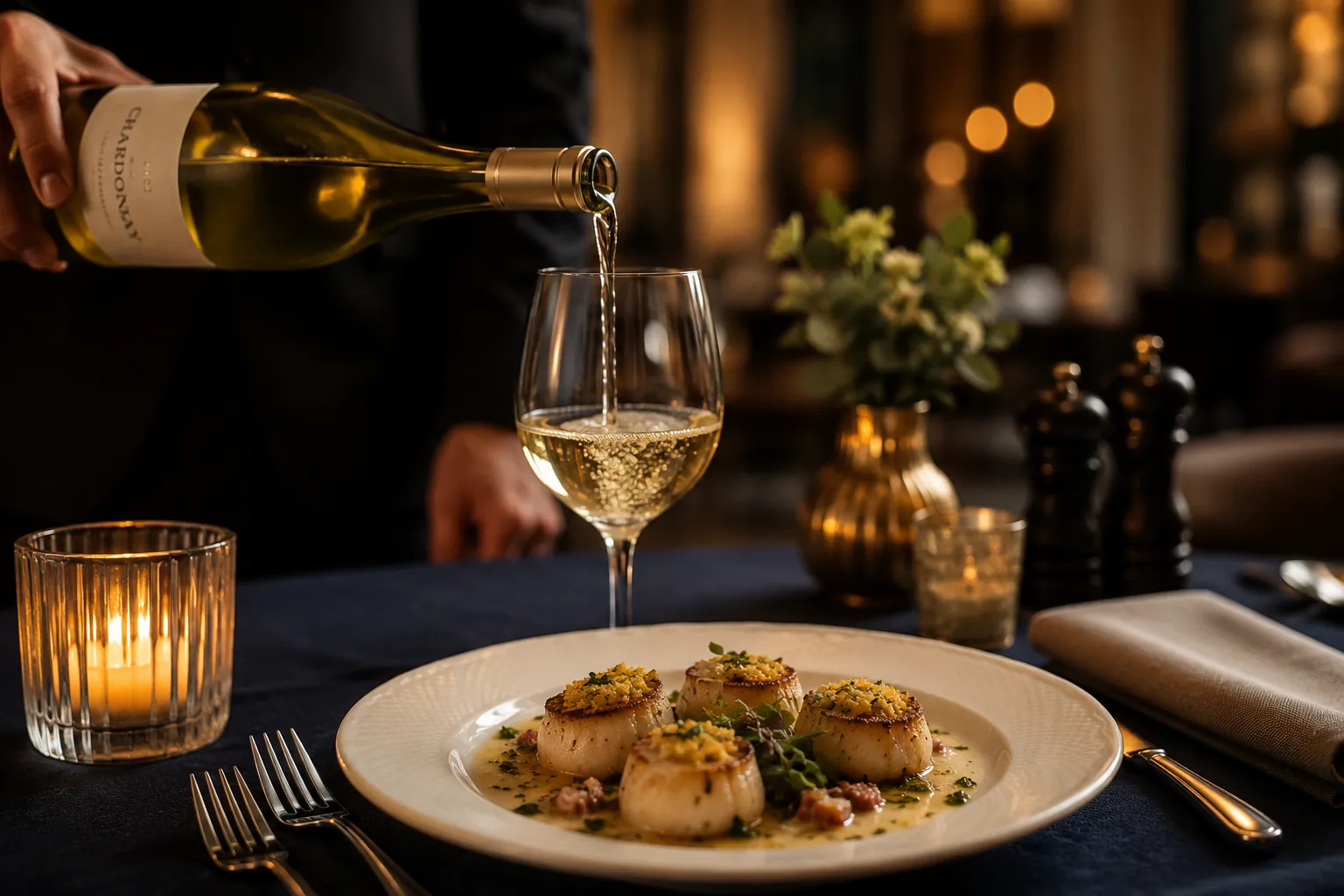
Crisp white wines with good acidity are the classic pairing for baked scallops, cutting through the richness of butter and complementing the scallop’s natural sweetness. The most recommended options are Chardonnay (unoaked or lightly oaked), Sauvignon Blanc, Pinot Grigio, and dry sparkling wines such as Cava or Prosecco.
Pairing guide:
- Unoaked Chardonnay: Bright citrus and mineral notes match the delicate sweetness of scallops without overwhelming them.
- Sauvignon Blanc: High acidity and herbaceous notes work especially well when the recipe includes fresh herbs or lemon.
- Pinot Grigio: A lighter, neutral option that lets the scallop flavor lead.
- Dry Cava or Prosecco: Bubbles cleanse the palate between bites, ideal for richer butter-based preparations.
- Avoid: Full-bodied oaked reds, which overpower the subtle flavor of scallops.
If wine is not preferred, a light sparkling water with lemon or a dry hard cider also pairs cleanly with baked scallops.
How to Celebrate March 12 National Baked Scallops Day
Celebrating March 12 National Baked Scallops Day is straightforward whether you prefer cooking at home, dining out, or sharing the occasion online. The day is an opportunity to try a new recipe, support a local seafood restaurant, or introduce scallops to someone who has never eaten them. [9][10]
Ways to celebrate:
- Cook at home: Use the classic garlic butter recipe above or experiment with variations like scallops gratin, lemon-caper baked scallops, or Parmesan-crusted preparations.
- Dine out: Call ahead to confirm that a local seafood restaurant or upscale bistro is featuring baked scallops on March 12. Some restaurants offer specials tied to food holidays.
- Host a tasting: Prepare two or three different baked scallop recipes and invite friends to compare flavors.
- Share on social media: Post a photo of your dish with the hashtag #NationalBakedScallopsDay to join the broader conversation.
- Pair with a full menu: Serve baked scallops as a starter before a pasta main course. For inspiration on pairing courses, the guide to National Fettuccine Alfredo Day February 7 offers useful ideas for building a complete Italian-inspired meal.
For those who enjoy exploring food holidays throughout the year, the food holidays category on stillcooking.com is a useful resource for planning ahead.
Where to Eat Baked Scallops on March 12
Seafood restaurants, coastal bistros, and upscale American dining establishments are the best places to find baked scallops on March 12. In coastal states like Massachusetts, Maine, Virginia, and the Carolinas, scallop dishes are often permanent menu fixtures. Inland, the best strategy is to call ahead or check the restaurant’s online menu before visiting.
Tips for finding baked scallops on March 12:
- Search for “baked scallops near me” on Google Maps or Yelp and filter by seafood restaurants.
- Check restaurant social media pages in the days leading up to March 12, as some establishments post specials tied to food observances.
- Upscale American, Italian, and French restaurants are more likely to offer baked scallop preparations than casual chains.
- Whole Foods Market, Trader Joe’s, and specialty grocery chains often stock high-quality fresh or frozen scallops for home cooking if dining out is not an option.
FAQ: March 12 National Baked Scallops Day
What day is National Baked Scallops Day in 2026? March 12, 2026 falls on a Thursday. [4][7]
Is National Baked Scallops Day an official U.S. holiday? No. It is an unofficial food observance with no government proclamation or legal recognition. [6][7]
Who created National Baked Scallops Day? No creator has been publicly identified. The earliest known reference appeared in an Ohio newspaper on March 12, 2005. [6][7]
What is the difference between bay scallops and sea scallops for baking? Sea scallops are larger (roughly 1.5 to 2 inches wide) and better suited for baking because they hold their shape. Bay scallops are smaller and sweeter but cook faster, typically in 8 to 10 minutes at 400 degrees F.
Can you bake scallops from frozen without thawing? It is not recommended. Cooking from frozen releases excess water, which steams the scallops rather than baking them and results in a rubbery texture. Thaw overnight in the refrigerator for best results.
How do you know when baked scallops are done? Scallops are done when they are just opaque throughout and the topping is golden. Overcooked scallops shrink noticeably and become rubbery. At 400 degrees F, most sea scallops are done in 12 to 15 minutes.
Are scallops safe for people with fish allergies? Scallops are shellfish, not fish, but individuals with shellfish allergies must avoid them. Those with fish-only allergies may tolerate scallops, but should consult a physician before consuming any shellfish.
What is the best size of scallop for baking? U/10 or U/15 sea scallops (10 to 15 per pound) are ideal for baking. Their size allows the exterior to develop a golden crust while the interior stays tender.
Is there a National Fried Scallops Day separate from March 12? Yes. October 2 is recognized as National Fried Scallops Day, which focuses on fried preparations rather than baked ones. [2][13]
How many scallops should you serve per person? As a main course, plan for 4 to 6 large sea scallops (about 5 to 6 ounces) per person. As a starter, 2 to 3 scallops per person is sufficient.
Conclusion
March 12 National Baked Scallops Day is a simple, enjoyable occasion that gives home cooks and seafood lovers a reason to put scallops at the center of the table. Whether you are preparing a classic garlic butter bake for the first time or refining a recipe you have made for years, the holiday rewards a little planning and good-quality ingredients.
Actionable next steps for March 12, 2026:
- Source your scallops early. Visit a fish market or order dry-packed sea scallops online by March 10 to ensure freshness.
- Choose your recipe. The classic garlic butter breadcrumb preparation is reliable for beginners; experienced cooks can try a Parmesan gratin or a lemon-caper variation.
- Select a wine pairing. Pick up an unoaked Chardonnay or Sauvignon Blanc to complement the dish.
- Invite someone new to scallops. The holiday is a low-pressure opportunity to introduce a hesitant guest to shellfish in one of its most approachable forms.
- Explore more food holidays. If seafood and shellfish dishes interest you, the January 21 National New England Clam Chowder Day guide and the broader national food holidays archive offer year-round inspiration.
Baked scallops are one of the more elegant dishes a home cook can master in under 20 minutes. March 12 is the perfect prompt to try.
References
[1] anydayguide – https://anydayguide.com/calendar/907 [2] dayspedia – https://dayspedia.com/us/calendar/holiday/1583/ [3] National Baked Scallops Day – https://nationaltoday.com/national-baked-scallops-day/ [4] National Baked Scallops Day 774 – https://www.wikidates.org/holiday/national-baked-scallops-day_774.html [6] Baked Scallops Day – https://www.cooksinfo.com/baked-scallops-day [7] National Baked Scallops Day – https://www.holidaycalendar.io/holiday/national-baked-scallops-day [9] Baked Scallops Day – https://www.daysoftheyear.com/days/baked-scallops-day/ [10] 2026 03 12 – https://everynationalday.com/event/national-baked-scallops-day/2026-03-12/ [13] Food Griot (referenced via research notes on baked vs. fried scallops distinction)