
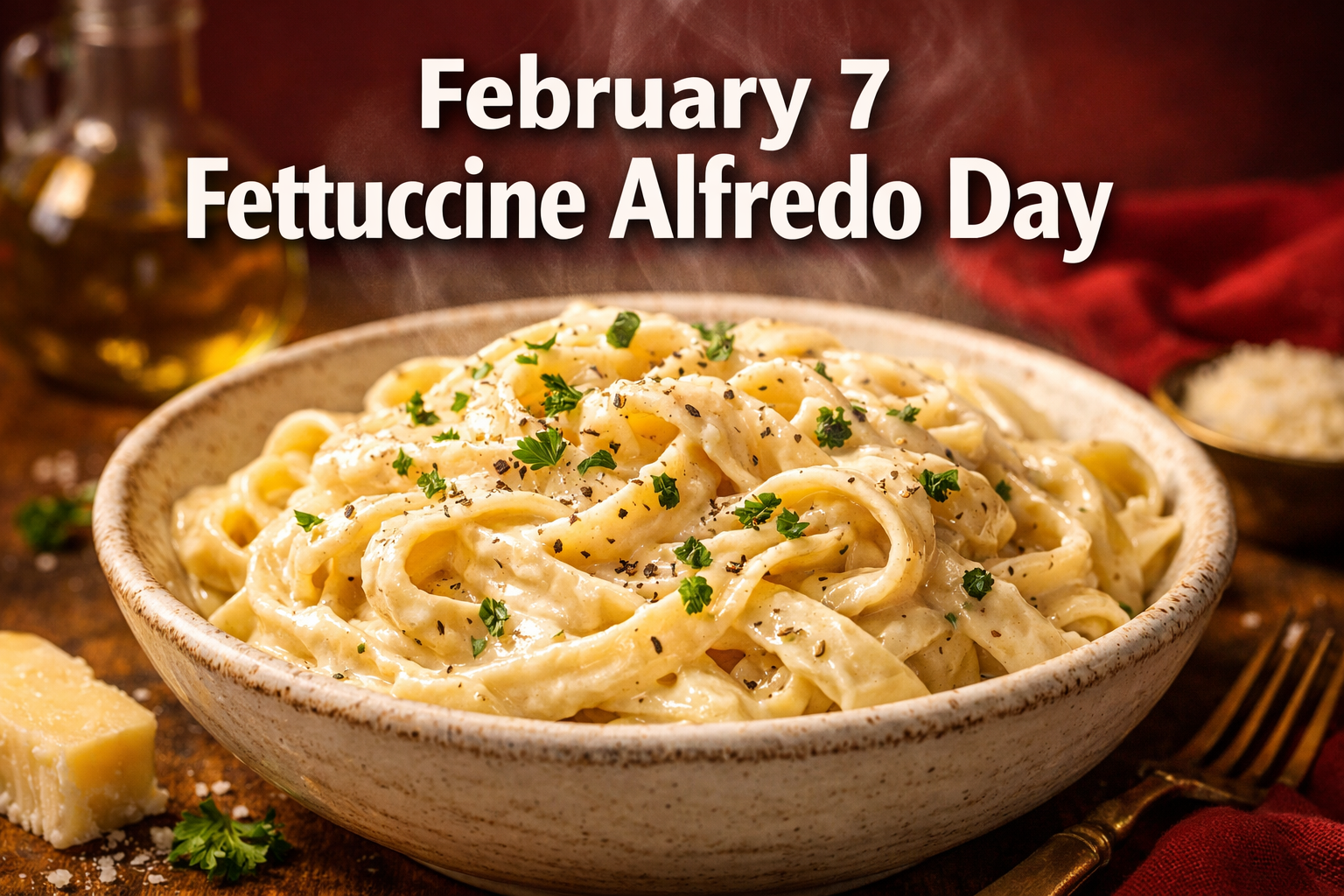
Every year on February 7, pasta lovers across the United States — and increasingly around the world — pause to honor one of the most beloved Italian-American dishes ever created. February 7 Fettuccine Alfredo Day is a delicious excuse to twirl a fork into silky, buttery noodles coated in a rich Parmesan cream sauce. But this food holiday is more than just a reason to eat pasta. It carries a fascinating history, cultural significance, and a story of culinary genius that stretches from a small Roman trattoria to dinner tables worldwide.
Key Takeaways
- 📅 February 7 Fettuccine Alfredo Day is an annual food holiday celebrated every February 7.
- 🍝 Fettuccine Alfredo was invented by Alfredo di Lelio in early 20th-century Rome, Italy.
- 🎬 Hollywood celebrities helped launch the dish to international fame in the 1920s.
- 🧀 The authentic Roman recipe uses only butter and Parmesan — no heavy cream required.
- 🍴 The holiday is the perfect opportunity to cook, share, and explore variations of this classic dish.
The Origin Story Behind February 7 Fettuccine Alfredo Day
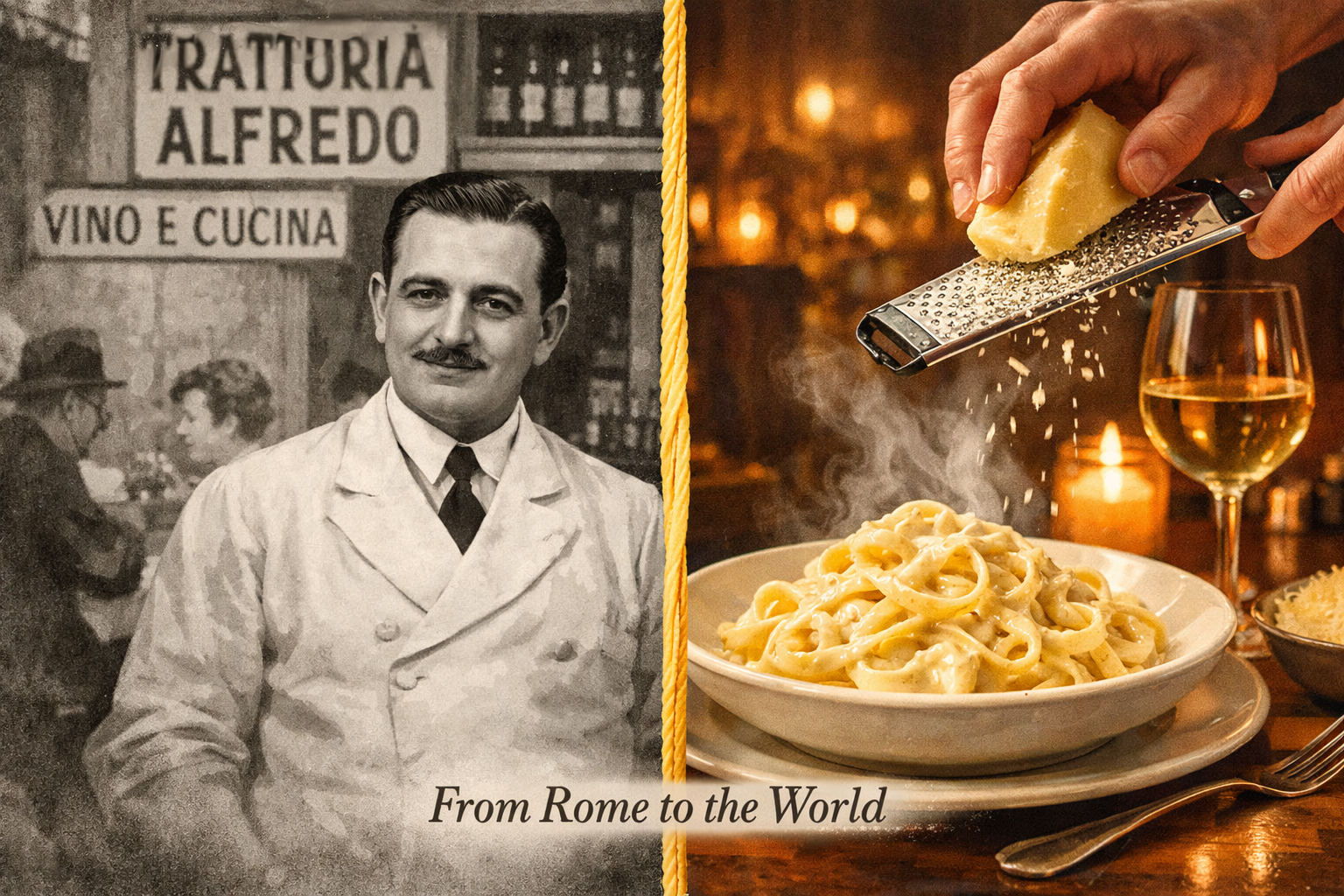
Who Invented Fettuccine Alfredo?
The story begins around 1908 in Rome, Italy. A restaurateur named Alfredo di Lelio was searching for a dish his pregnant wife could eat. She had lost her appetite, and Alfredo wanted something simple, nourishing, and comforting. He combined fresh fettuccine noodles with a generous amount of butter and aged Parmesan cheese, tossing them together until the mixture became a smooth, glossy sauce.
The dish worked. His wife loved it. Alfredo added it to the menu at his restaurant, Alfredo alla Scrofa, on the Via della Scrofa in Rome.
“What began as an act of love for a struggling wife became one of the most recognized pasta dishes in the world.”
How Hollywood Put It on the Map
For years, the dish remained a beloved local secret. Then came 1927 — a turning point. American silent film stars Mary Pickford and Douglas Fairbanks visited Rome on their honeymoon. They dined at Alfredo’s restaurant and were so enchanted by the pasta that they gifted Alfredo a gold fork and spoon engraved with their names.
When they returned to the United States, they raved about the dish. Word spread quickly through Hollywood and high society. American tourists began making pilgrimages to Alfredo’s restaurant specifically to taste the famous pasta. The dish crossed the Atlantic and became a staple of Italian-American cuisine.
Why February 7?
The exact origin of February 7 Fettuccine Alfredo Day as a formal food holiday is not tied to a single documented proclamation. Like many American food holidays, it emerged through popular culture, food bloggers, and culinary enthusiasts who wanted a dedicated day to celebrate the dish. February 7 has become the widely recognized and accepted date across food calendars, restaurant promotions, and social media communities.
Authentic vs. American-Style: Understanding the Dish
The True Roman Recipe 🇮🇹
Many people are surprised to learn that traditional Roman fettuccine Alfredo contains no heavy cream. The original recipe relies on just three ingredients:
| Ingredient | Role in the Dish |
|---|---|
| Fresh fettuccine pasta | The base — ideally homemade |
| High-quality unsalted butter | Creates the rich, silky sauce |
| Aged Parmigiano-Reggiano | Adds depth, salt, and creaminess |
The magic happens through technique. The hot pasta water, starchy noodles, cold butter, and finely grated Parmesan are tossed together rapidly. The result is a naturally creamy sauce without a drop of cream.
The American Adaptation 🇺🇸
When fettuccine Alfredo traveled to the United States, it evolved. American cooks and restaurant chefs added heavy cream to the sauce, making it richer and more stable for high-volume kitchens. Garlic, cream cheese, and even chicken were incorporated over time.
Today, the American version is arguably more well-known globally than the Roman original. Both versions have their merits, and February 7 Fettuccine Alfredo Day is a great occasion to try both.
How to Celebrate February 7 Fettuccine Alfredo Day
🍳 Cook It at Home
Making fettuccine Alfredo at home is easier than most people think. Here is a simple guide to the authentic Roman method:
Ingredients (serves 4):
- 400g fresh fettuccine
- 150g cold unsalted butter, cut into cubes
- 150g finely grated Parmigiano-Reggiano
- Salt and black pepper to taste
- Reserved pasta cooking water
Steps:
- Cook fettuccine in well-salted boiling water until just al dente.
- Reserve at least one cup of pasta cooking water before draining.
- Add butter to a warm (not hot) pan. Add drained pasta.
- Toss vigorously, adding small splashes of pasta water to emulsify.
- Remove from heat. Add Parmesan gradually, tossing constantly.
- Serve immediately with extra Parmesan and cracked black pepper.
🍽️ Dine Out
Many Italian and Italian-American restaurants offer special menus or discounts on February 7 to mark the occasion. Calling ahead or checking restaurant social media pages can reveal special promotions tied to the food holiday.
📱 Share on Social Media
Food holidays thrive on social media. Posting photos of homemade or restaurant fettuccine Alfredo with hashtags like #FettuccineAlfredoDay or #February7 connects pasta fans worldwide. It is also a fun way to discover new recipe variations and restaurant recommendations.
🎓 Learn the History
Use the day as an opportunity to explore Italian culinary history. Watching documentaries about Roman cuisine, reading about Alfredo di Lelio’s legacy, or exploring the difference between Italian-American and authentic Italian cooking can deepen appreciation for the dish.
Fun Facts About Fettuccine Alfredo
- 🏆 Alfredo di Lelio’s restaurant still operates in Rome today under the name Il Vero Alfredo.
- 🎬 The gold fork and spoon gifted by Mary Pickford and Douglas Fairbanks are still displayed at the restaurant.
- 🍝 Fettuccine means “little ribbons” in Italian — a reference to the pasta’s flat, wide shape.
- 🌍 In Italy, “fettuccine Alfredo” as a named dish is rarely found outside of tourist-heavy areas. Romans simply call it pasta al burro (pasta with butter).
- 📅 February 7 falls close to Valentine’s Day, making it a popular choice for romantic pasta dinners.
Nutritional Considerations
Fettuccine Alfredo is undeniably indulgent. A standard restaurant serving can contain 800–1,200 calories, depending on portion size and preparation. For those watching their intake, several modifications make the dish lighter without sacrificing flavor:
| Modification | Benefit |
|---|---|
| Use whole wheat fettuccine | Adds fiber, lowers glycemic impact |
| Reduce butter by 25% | Cuts saturated fat |
| Add steamed vegetables | Increases nutrients, adds volume |
| Use part-skim Parmesan | Slightly lower fat content |
Enjoying the dish in moderation on February 7 Fettuccine Alfredo Day — and savoring every bite — is the most satisfying approach.
Conclusion
February 7 Fettuccine Alfredo Day is more than a quirky food holiday. It is a celebration of culinary creativity, cross-cultural exchange, and the simple joy of a well-made pasta dish. From Alfredo di Lelio’s humble Roman kitchen to restaurant menus across the globe, fettuccine Alfredo has proven that great food transcends borders.
Actionable Next Steps 🍴
- Mark the calendar: Set a reminder for February 7 each year.
- Try the authentic recipe: Make the Roman butter-and-Parmesan version at least once.
- Visit a local Italian restaurant: Support local businesses while celebrating the holiday.
- Share the history: Tell friends and family the story behind the dish — it makes the meal more meaningful.
- Experiment with variations: Try adding truffle oil, roasted garlic, or fresh herbs to discover a personal favorite version.
Whether the celebration involves a home-cooked meal, a restaurant outing, or simply learning more about Italian culinary history, February 7 offers the perfect opportunity to appreciate one of the world’s great pasta dishes.
References
- Parasecoli, F. (2004). Al dente: A history of food in Italy. Reaktion Books.
- Riley, G. (2007). The Oxford companion to Italian food. Oxford University Press.
- Serventi, S., & Sabban, F. (2002). Pasta: The story of a universal food. Columbia University Press.
- Il Vero Alfredo Restaurant. (n.d.). The history of Alfredo di Lelio. Retrieved from official restaurant historical records.
- Mariani, J. (2011). How Italian food conquered the world. Palgrave Macmillan.