
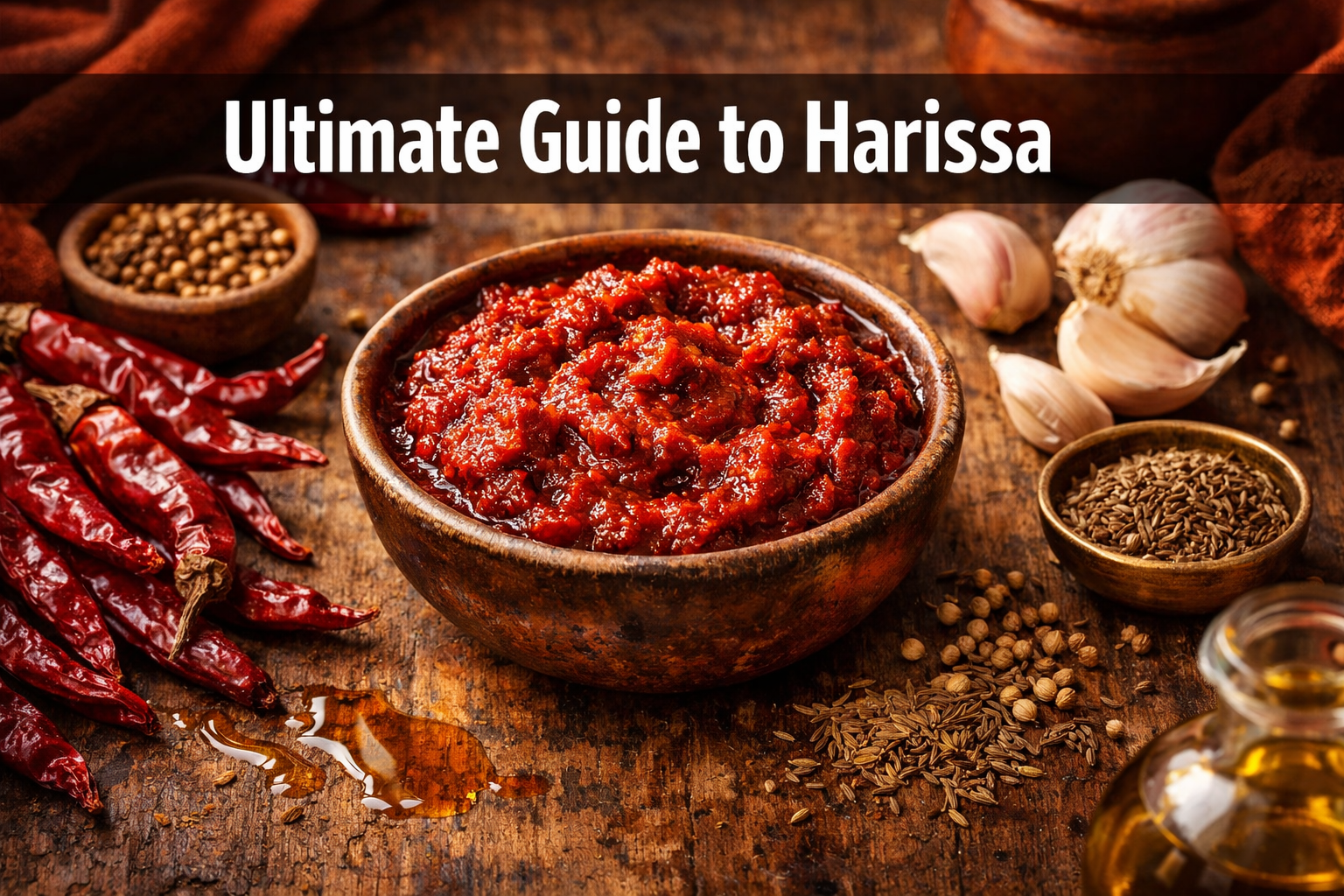
Quick Answer: Harissa is a fiery, aromatic chili paste from North Africa, most closely associated with Tunisian cuisine. It combines roasted red peppers, dried chilies, garlic, olive oil, and warm spices like caraway and coriander into a deeply layered condiment. Use it as a marinade, stir it into soups, or spread it on flatbread — its heat is bold but nuanced, not simply hot.
Key Takeaways
- 🌶️ Harissa originates in Tunisia and varies significantly by region, from rose-scented Moroccan versions to smokier Libyan styles.
- 🫙 Core ingredients are roasted red chilies, garlic, extra virgin olive oil, caraway, coriander, and an acid like lemon juice or vinegar.
- 🔥 Heat level is adjustable — swap chili varieties or blend with roasted bell peppers to control intensity without losing flavor.
- 🥩 Harissa excels as a marinade for lamb, chicken, and fish, and works equally well with roasted vegetables and noodle bowls.
- 🛒 Reliable commercial brands include BELAZU Rose Harissa, Mina Harissa Mild Sauce, and PUR Spices Medium Harissa Paste. [1]
- 🍋 Acid balance matters — lemon juice or vinegar rounds out the paste; tomato paste adds umami and deepens the red color. [3]
- ⏱️ Homemade harissa keeps up to two weeks refrigerated under a thin layer of olive oil.
- 🌍 2026’s spice revival trend has pushed harissa into mainstream menus, from fast-casual bowls to fine dining marinades. [6]
What Exactly Is Harissa, and Where Does It Come From?
Harissa is a North African chili paste built on roasted peppers, garlic, olive oil, and spices. It originates from Tunisia, where it functions as a national condiment eaten daily — stirred into couscous, spread on bread, and used to season stews. [7]
The word “harissa” comes from the Arabic root harasa, meaning “to pound or crush,” which describes the traditional preparation method. Historically, cooks pounded dried or roasted local peppers — particularly the Tunisian baklouti pepper — in a mortar with garlic and spices until smooth. [3]
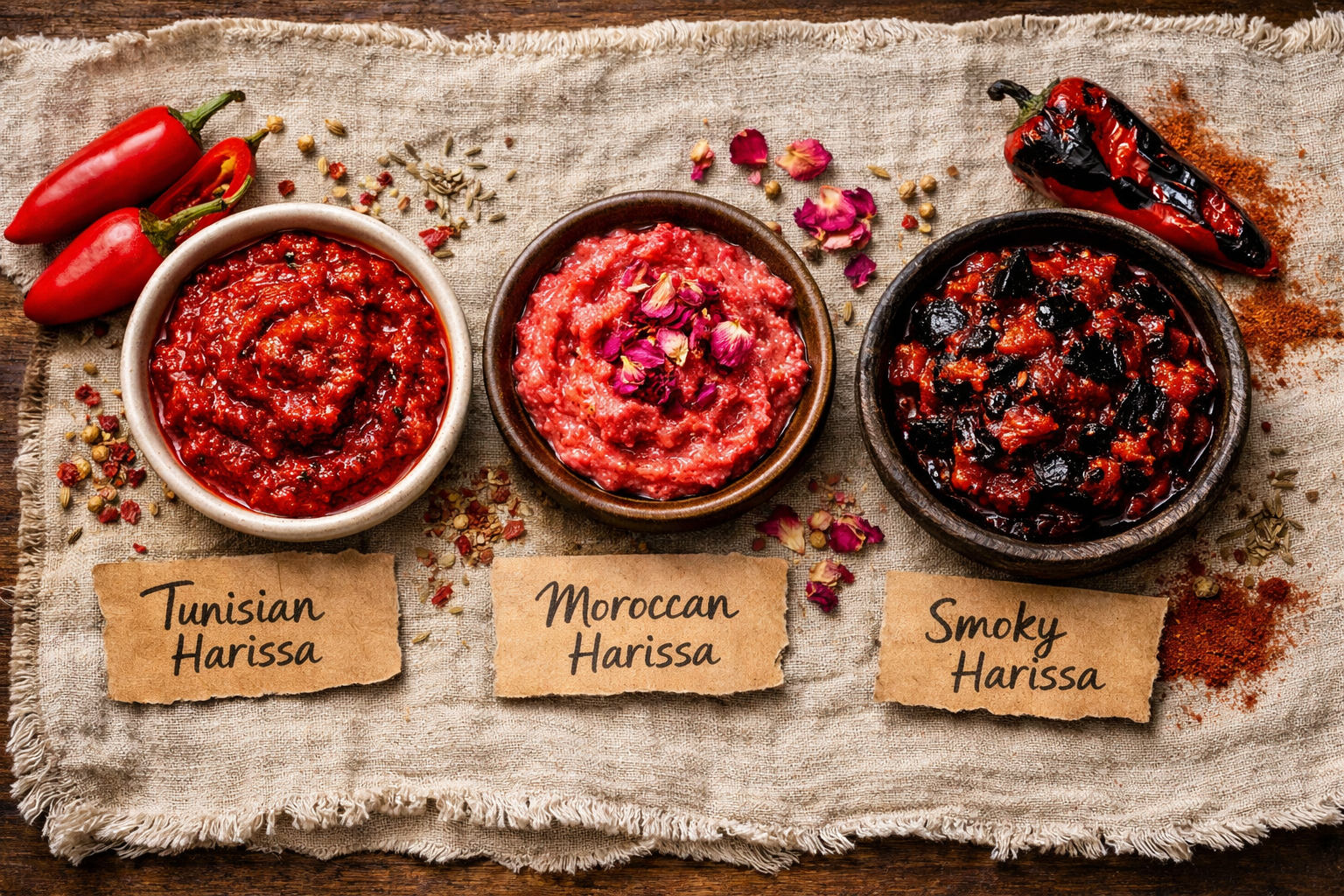
Regional variations matter:
| Region | Style | Key Characteristics |
|---|---|---|
| Tunisia | Classic red | Fiery, garlic-forward, caraway-heavy |
| Morocco | Rose harissa | Floral, milder, rose petals added |
| Libya | Smoky | Charred peppers, earthier base |
| Algeria | Tomato-blended | Softer heat, slightly sweeter |
“Harissa adds more than spice to Mediterranean dishes — it contributes a layered complexity that single-note hot sauces simply can’t match.” [5]
This complexity is exactly why this ultimate guide to harissa: the North African spice paste for layered heat and bold marinades is relevant for any cook who wants more depth from their heat.
What Are the Core Ingredients in Harissa Paste?
Every authentic harissa starts with four non-negotiable components: dried or roasted red chilies, garlic, extra virgin olive oil, and whole spices. The olive oil acts as the binding agent and preservative, while garlic provides the aromatic backbone. [3]
Standard harissa ingredient list:
- Dried red chilies (baklouti, guajillo, or New Mexico varieties)
- Roasted red bell peppers (for body and mild sweetness)
- Fresh garlic cloves
- Extra virgin olive oil
- Caraway seeds (toasted and ground)
- Coriander seeds (toasted and ground)
- Cumin (optional but common)
- Lemon juice or red wine vinegar
- Salt
Tomato paste is a useful optional addition — it deepens the red color, adds umami, and introduces a second layer of mild acidity without overpowering the chili flavor. [3]
Choose your chili wisely:
- Want traditional Tunisian heat? Use baklouti or a mix of guajillo and cayenne.
- Want mild complexity? Use roasted red bell peppers as the base with just a few dried chilies for warmth.
- Want smoky depth? Add a chipotle or two alongside standard dried red chilies.
If you enjoy exploring bold spice combinations, the International Hot & Spicy Food Day guide covers a wide range of global heat traditions worth pairing with harissa knowledge.
How Do You Make Harissa at Home?
Making harissa at home takes about 30 minutes and produces a paste far fresher than most jarred options. The process follows a simple sequence: rehydrate, roast, blend, season. [3]
Step-by-step homemade harissa:
- Rehydrate dried chilies — Remove stems and seeds, then soak in boiling water for 20 minutes until soft. Reserve the soaking liquid.
- Toast the spices — Dry-toast caraway and coriander seeds in a skillet for 60–90 seconds, then grind in a spice grinder or mortar.
- Roast the garlic — Roast 4–5 unpeeled cloves at 400°F (200°C) for 20 minutes, then peel.
- Blend the base — Combine drained chilies, roasted bell peppers (if using), roasted garlic, and ground spices in a food processor.
- Add olive oil — Stream in 3–4 tablespoons of extra virgin olive oil while blending to emulsify.
- Season and balance — Add lemon juice or vinegar, salt, and optionally a tablespoon of tomato paste. Blend until smooth.
- Store properly — Transfer to a jar, smooth the surface, and pour a thin layer of olive oil on top. Refrigerate up to two weeks.
Common mistake: Skipping the spice-toasting step. Untoasted caraway and coriander taste flat and slightly bitter. Thirty seconds in a dry pan transforms them completely.
How Does Harissa Work as a Marinade?
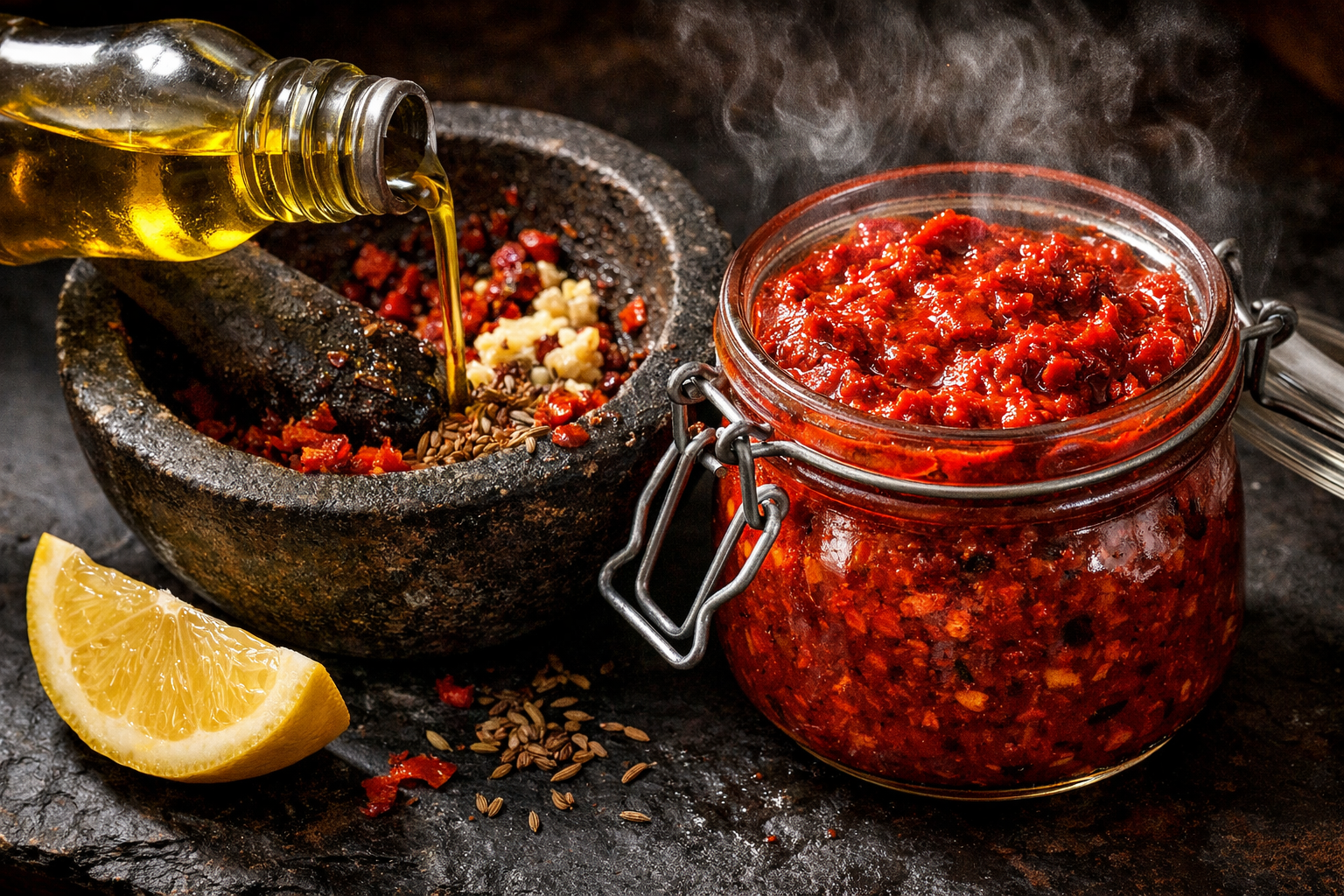
Harissa is one of the most effective marinades available because it combines fat (olive oil), acid (lemon juice), heat (chilies), and aromatics (garlic, spices) in a single paste. This is exactly what a good marinade needs. [5]
Marinade ratios by protein:
| Protein | Harissa Amount | Marinade Time |
|---|---|---|
| Lamb chops | 3 tbsp per 500g | 4–12 hours |
| Chicken thighs | 2–3 tbsp per 500g | 2–8 hours |
| Salmon fillets | 1–2 tbsp per fillet | 30–60 minutes |
| Firm tofu | 2 tbsp per 300g | 1–4 hours |
| Cauliflower | 2 tbsp per head | 30 minutes |
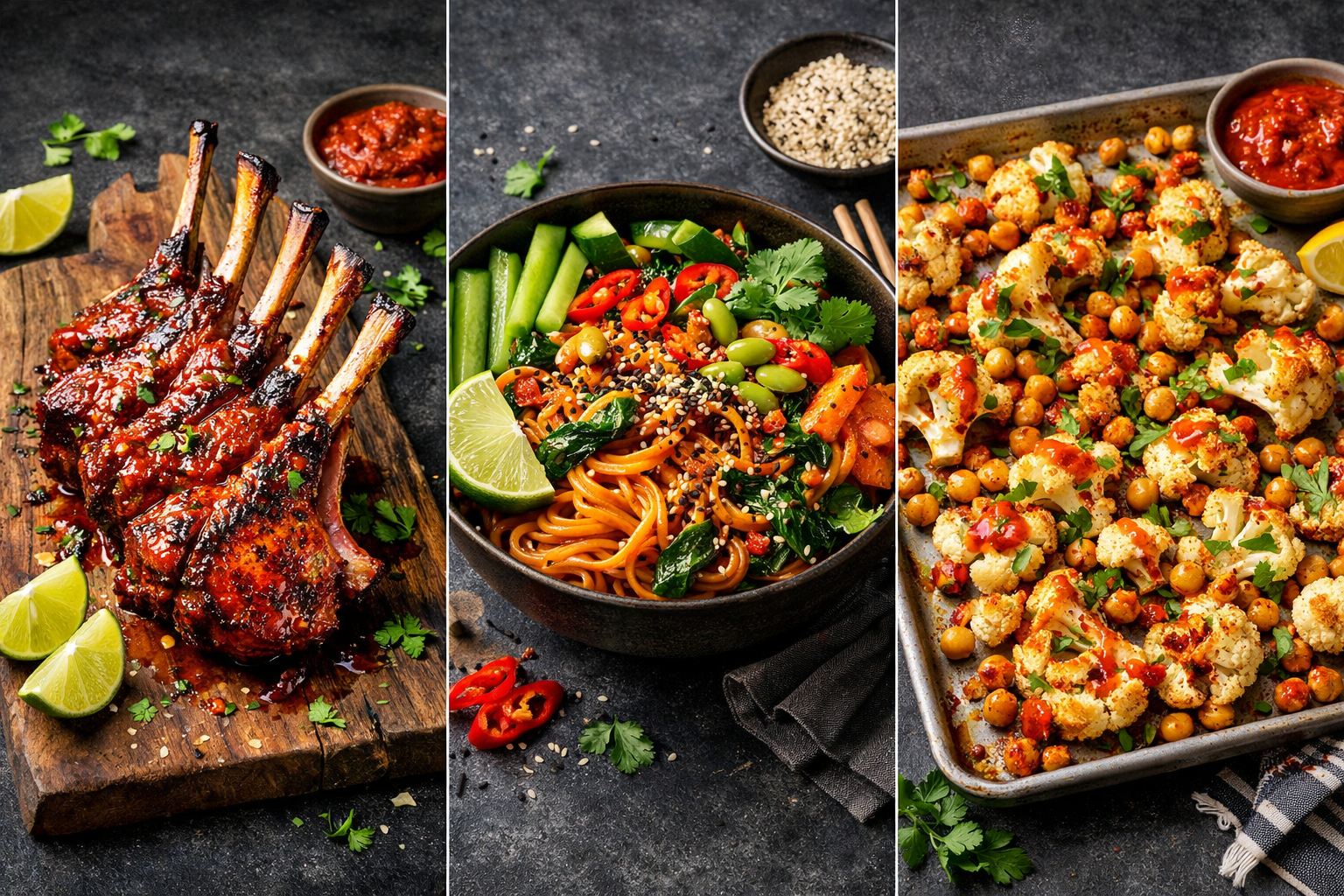
For lamb specifically, harissa’s caraway and coriander notes are a natural pairing — the spices echo traditional North African lamb preparations. Explore more lamb-focused cooking ideas at the lamb cookbook resource on StillCooking.
For noodle bowls: Whisk 2 tablespoons of harissa with 1 tablespoon of olive oil, 1 teaspoon of honey, and a squeeze of lemon. Toss with cooked noodles, roasted chickpeas, and wilted greens. The result is a weeknight meal with genuine depth.
For roasted vegetables: Coat cauliflower, carrots, or sweet potato in harissa thinned with olive oil before roasting at 425°F (220°C). The sugars in the vegetables caramelize against the chili paste and create slightly charred, complex edges.
What’s the Difference Between Harissa Paste, Powder, and Sauce?
These three formats serve different purposes in the kitchen. Choosing the right one depends on the application.
- Harissa paste — Thick, concentrated, oil-based. Best for marinades, stirring into stews, and spreading. Longest shelf life once opened (under olive oil).
- Harissa powder — Dry spice blend without oil or acid. Best for dry rubs, seasoning rice, or adding to spice mixes. More shelf-stable than paste.
- Harissa sauce — Thinner consistency, often with added tomato or vinegar. Best as a table condiment, dipping sauce, or quick stir-in for soups. [4]
Choose paste if you want maximum flavor concentration and plan to cook with it. Choose sauce if you want something ready to pour directly at the table.
The curry cookbook collection offers useful context on how spice pastes and powders behave differently in cooking — a principle that applies directly to harissa formats.
Which Commercial Harissa Brands Are Worth Buying in 2026?
Several commercial options deliver consistent quality without requiring a full homemade batch. [1][2]
Top-rated options as of 2026:
- 🥇 BELAZU Rose Harissa — Widely regarded as a benchmark product. Floral, complex, moderately hot. Works in both cooking and as a condiment.
- 🥈 Mina Harissa Mild Sauce — Accessible heat level, clean ingredient list, good for harissa beginners.
- 🥉 PUR Spices Medium Harissa Paste — Balanced heat, earthy spice notes, strong value for everyday cooking.
What to look for on the label:
- Extra virgin olive oil listed as an ingredient (not sunflower or vegetable oil)
- No artificial preservatives or colorings
- Chilies listed first or second in the ingredient order
- Short ingredient list (under 10 items is a good sign)
Avoid products with “natural flavors” as a substitute for actual spices — this usually signals a diluted product. [4]
How Does Harissa Fit Into 2026’s Spice Trend?
Harissa is one of several North African and Middle Eastern condiments driving what food trend analysts have called a “spice revival” in 2026 — a shift toward complex, layered heat rather than simple high-Scoville products. [6]
McCormick’s Flavor Forecast has consistently highlighted North African spice profiles as a growing category in professional and home kitchens. [6] Chefs are using harissa not just as a heat source but as a flavor-building tool in braises, vinaigrettes, and even compound butters.
This ultimate guide to harissa: the North African spice paste for layered heat and bold marinades aligns directly with that trend — harissa offers home cooks a single ingredient that delivers what would otherwise require five or six separate spices.
For cooks interested in exploring global spice traditions more broadly, the Recipes from Around the World collection is a practical starting point.
FAQ: Harissa Paste, Heat, and Cooking
Q: Is harissa very spicy? Heat level varies by brand and recipe. Traditional Tunisian harissa is genuinely hot. Rose harissa and many commercial versions are moderate. Blending with roasted bell peppers reduces heat without losing flavor.
Q: Can harissa be used as a substitute for sriracha or sambal? Yes, but the flavor profile is different. Harissa is earthier and spice-forward; sriracha is sweeter and more vinegary. Use harissa when you want complexity; use sriracha when you want bright, sharp heat.
Q: How long does homemade harissa last? Up to two weeks refrigerated, stored in a sealed jar with a thin layer of olive oil on top. For longer storage, freeze in ice cube trays and transfer to a bag — cubes last up to three months.
Q: Is harissa gluten-free? Traditional harissa contains no gluten. Always check commercial labels, as some sauces are processed in facilities that handle wheat.
Q: What’s the best way to reduce harissa’s heat for sensitive palates? Mix harissa with plain Greek yogurt, labneh, or sour cream in a 1:2 ratio. This creates a milder dip or sauce while preserving the spice flavor. Adding a teaspoon of honey also softens the burn.
Q: Can harissa be used in baking or non-savory applications? Rarely, but harissa-infused chocolate and chili-spiced desserts exist in modern pastry. For most home cooks, it’s best kept in savory applications.
Q: What dishes pair best with harissa? Lamb, chicken, eggs, roasted root vegetables, chickpeas, couscous, flatbread, noodle bowls, and fish. It also works stirred into tomato-based pasta sauces.
Q: Is rose harissa significantly different from standard harissa? Yes. Rose harissa includes dried rose petals and sometimes rose water, which adds a floral, slightly sweet note. It’s milder and more aromatic — better as a condiment than a cooking paste for high-heat applications.
Conclusion: Start with One Jar, Then Build from There
Harissa rewards cooks who treat it as a flavor base rather than just a hot sauce. The practical next steps are straightforward:
- Buy one quality jar — BELAZU Rose Harissa or Mina Mild are good starting points with broad appeal.
- Try one marinade application first — Chicken thighs or cauliflower are forgiving and show harissa’s range quickly.
- Make a batch from scratch once comfortable with the flavor profile — homemade harissa is noticeably fresher and fully customizable.
- Adjust heat by chili selection, not by reducing the paste — this preserves the full spice complexity.
- Explore regional styles — moving from Tunisian to Moroccan rose harissa opens up a different set of applications.
The ultimate guide to harissa: the North African spice paste for layered heat and bold marinades is ultimately a guide to using one ingredient more intelligently. Harissa doesn’t require expertise — just curiosity and a willingness to move past one-dimensional heat.
For cooks ready to explore more bold condiment territory, the dip and sauce cookbook collection offers additional inspiration across global flavor traditions.
References
[1] The Top 5 Best Harissa Paste in 2026 – https://www.youtube.com/watch?v=i0HLJEWWAm8 [2] Best Harissa Paste Sauce & Spice Guide: Top UK Picks for 2026 – https://chilli-no5.com/2026/01/09/best-harissa-paste-sauce-spice-guide-top-uk/ [3] Traditional Harissa Recipe: How to Make Homemade Harissa Paste – https://www.masterclass.com/articles/how-to-make-homemade-harissa-paste [4] Best Harissa UK: An Objective Guide to the Different Styles Available – https://www.artisanoliveoilcompany.co.uk/blogs/news/best-harissa-uk-an-objective-guide-to-the-different-styles-available [5] Harissa Adds More Than Spice to Mediterranean Dishes – https://www.nrn.com/chef-trends/harissa-adds-more-than-spice-to-mediterranean-dishes [6] McCormick Flavor Forecast Guide – https://www.mccormickforchefs.com/en-us/flavor-forecast-guide [7] Everything You Need to Know About Harissa – https://www.souschef.co.uk/blogs/the-bureau-of-taste/everything-you-need-to-know-about-harissa