
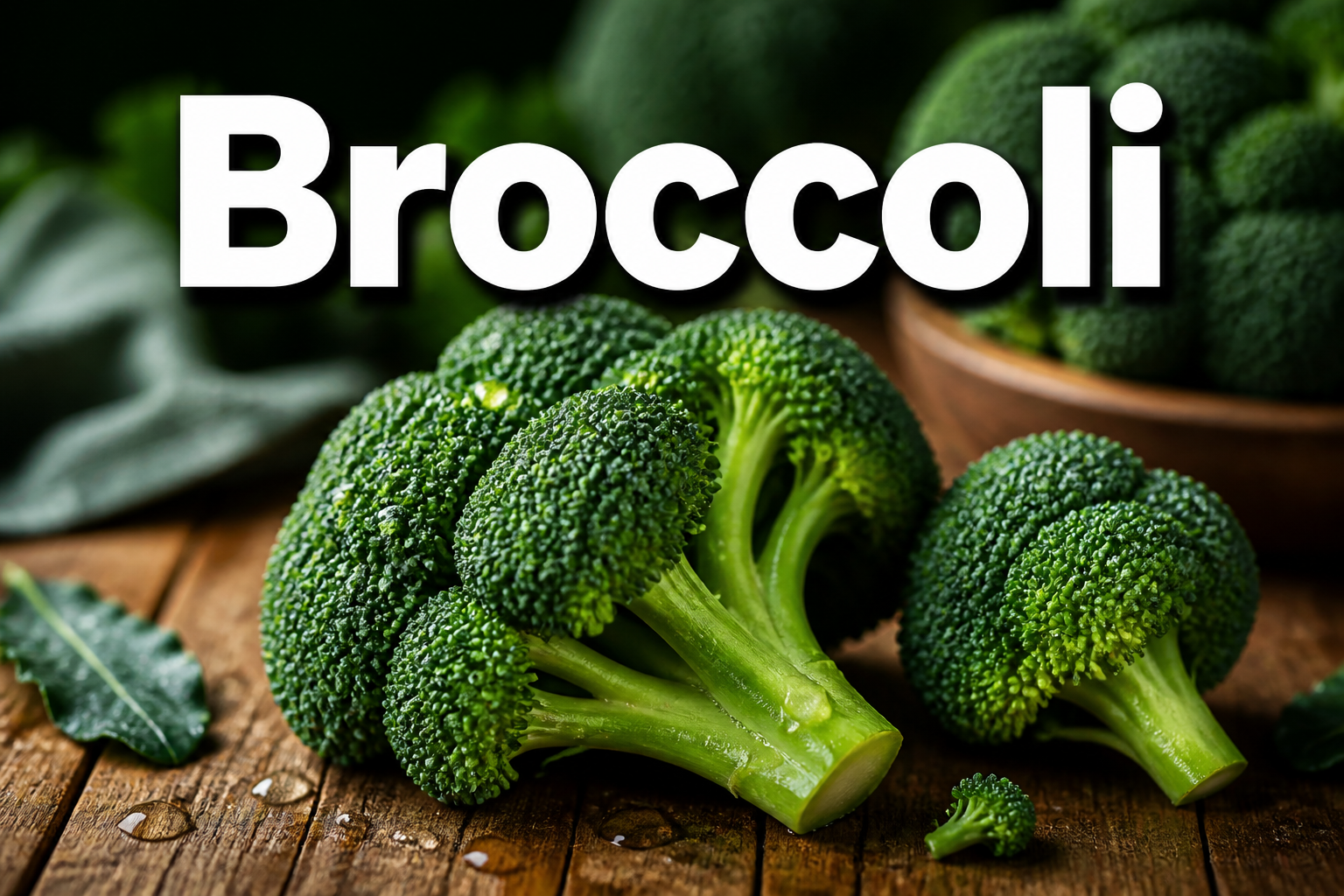
Quick Answer: Broccoli is a nutrient-dense cruciferous vegetable packed with vitamins C and K, fiber, and a powerful plant compound called sulforaphane. It can be eaten raw or cooked, pairs well with dozens of ingredients, and is one of the most accessible health-supporting vegetables available year-round.
Key Takeaways
- 🥦 Broccoli belongs to the Brassica oleracea species, alongside cauliflower, kale, and Brussels sprouts.
- One cup of raw broccoli (about 91g) provides roughly 135% of the daily recommended vitamin C intake (per USDA FoodData Central).
- Sulforaphane, a compound formed when broccoli is chopped or chewed, is one of the most studied plant compounds in nutrition science.
- Steaming preserves more nutrients than boiling, which can leach water-soluble vitamins into the cooking water.
- Broccoli is low in calories (about 31 calories per 100g raw) and high in fiber, making it suitable for most dietary patterns.
- It stores well in the refrigerator for 3–5 days and can be blanched and frozen for up to 12 months.
- Choose heads with tight, dark green florets and firm stems — yellow florets signal age and reduced nutritional quality.
- Broccoli pairs naturally with garlic, lemon, olive oil, cheese, and proteins like chicken or tofu.
What Exactly Is Broccoli?
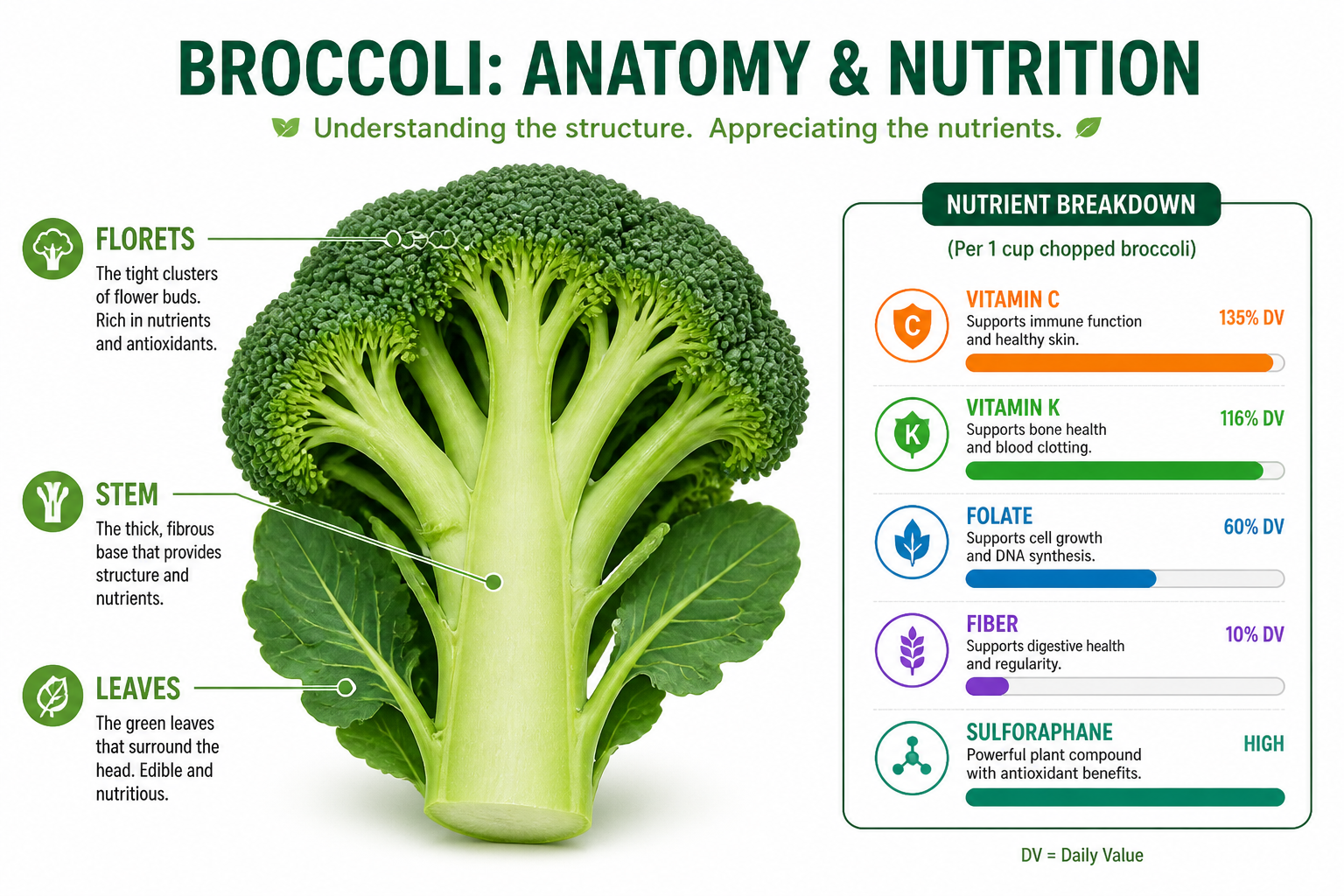
Broccoli (Brassica oleracea var. italica) is a flowering vegetable in the cabbage family, originating from Italy and cultivated for over 2,000 years. The edible parts are the green flower head (florets), the thick central stalk, and young leaves — all of which are nutritious.
It belongs to the cruciferous vegetable group, which also includes cauliflower, kale, arugula, and bok choy. This family is notable for producing glucosinolates, sulfur-containing compounds that convert into biologically active molecules like sulforaphane during digestion.
Common broccoli varieties include:
| Variety | Description | Best Use |
|---|---|---|
| Calabrese | The standard supermarket type; large green head | Roasting, steaming, stir-fry |
| Sprouting broccoli | Multiple small florets on long stems | Sautéing, pasta dishes |
| Broccolini | Hybrid with long thin stems; milder flavor | Quick sautéing, grilling |
| Romanesco | Fractal-shaped, nutty flavor | Roasting, raw platters |
| Broccoli rabe (rapini) | Leafy, bitter; technically a different species | Italian cooking, braising |
What Nutrients Does Broccoli Provide?
Broccoli is one of the most nutrient-dense vegetables by calorie. A single 100g raw serving delivers meaningful amounts of several vitamins and minerals without significant fat, sugar, or sodium.
Key nutrients per 100g raw broccoli (USDA FoodData Central):
- Vitamin C: ~89mg (approximately 99% of daily value)
- Vitamin K: ~102mcg (approximately 85% of daily value)
- Folate: ~63mcg (approximately 16% of daily value)
- Potassium: ~316mg
- Fiber: ~2.6g
- Protein: ~2.8g
- Calories: ~34kcal
💡 Pull quote: “Broccoli delivers more vitamin C per calorie than most citrus fruits — a fact that surprises many people who reach for oranges first.”
Broccoli also contains calcium, iron, magnesium, and B vitamins in smaller but meaningful amounts. For those eating plant-forward diets, it’s a practical way to cover multiple micronutrient gaps in one ingredient. If you’re building quick and deliciously healthy recipes, broccoli is one of the most efficient vegetables to include.
What Are the Health Benefits of Broccoli?
The health benefits of broccoli are well-documented in nutritional research, though most studies are observational or conducted in laboratory settings — meaning broccoli supports health as part of a balanced diet, not as a standalone cure.
Key evidence-backed benefits:
- Antioxidant activity: Broccoli contains vitamins C and E, beta-carotene, and flavonoids that help neutralize oxidative stress in cells.
- Sulforaphane research: This compound has been studied for potential anti-inflammatory and cellular-protective effects. Research is ongoing, but current findings are promising (particularly in cancer biology and gut health contexts).
- Bone support: The combination of vitamin K and calcium in broccoli contributes to bone density maintenance.
- Digestive health: The fiber content supports regular bowel movements and feeds beneficial gut bacteria.
- Heart health: Fiber, potassium, and antioxidants in broccoli are associated with cardiovascular health in population studies.
- Blood sugar regulation: The fiber and chromium content may help moderate post-meal blood glucose response.
Who benefits most from eating broccoli regularly:
- People eating low-vegetable diets who need micronutrient variety
- Those managing weight, as it’s filling and low-calorie
- Older adults who need vitamin K for bone health
- Individuals on plant-based diets seeking non-heme iron and folate sources
Broccoli pairs well alongside other nutrient-rich vegetables. For comparison, spinach and artichoke hearts offer complementary micronutrient profiles worth exploring.
How Should You Cook Broccoli?
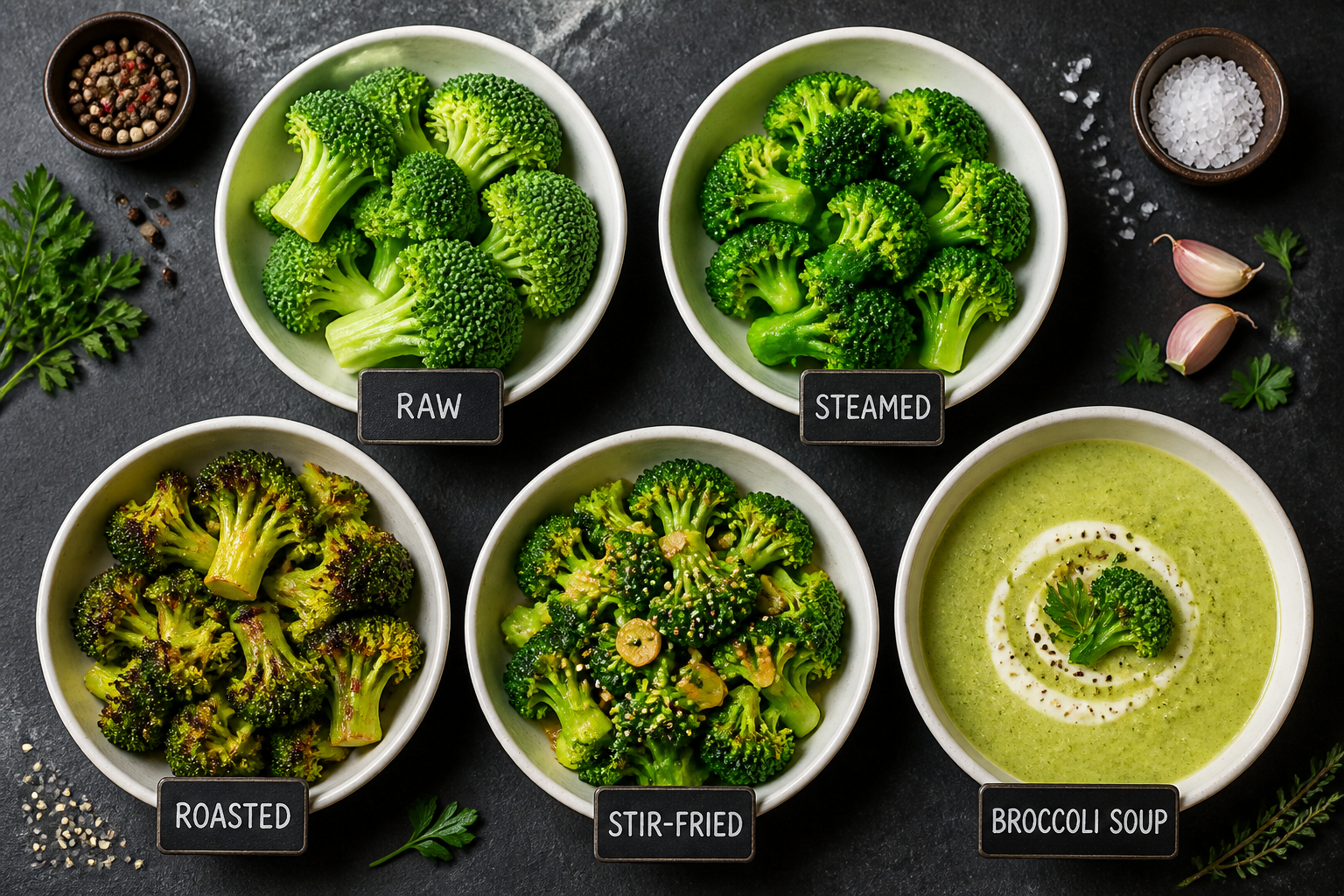
Cooking method directly affects how many nutrients survive to your plate. Broccoli is versatile — it works raw, lightly cooked, or fully roasted — but each method produces a different result in flavor and nutrition.
Cooking method comparison:
| Method | Nutrient Retention | Flavor Profile | Time |
|---|---|---|---|
| Raw | Highest | Crisp, slightly bitter | 0 min |
| Steaming | High | Tender, mild | 4–6 min |
| Stir-frying | Moderate-high | Savory, slightly charred | 5–7 min |
| Roasting | Moderate | Nutty, caramelized | 20–25 min at 220°C |
| Boiling | Lowest | Soft, bland | 3–5 min |
| Microwaving | High (minimal water) | Tender, clean | 3–4 min |
Practical cooking tips:
- Cut florets uniformly so they cook evenly.
- Add broccoli to stir-fries in the last 5 minutes to avoid overcooking.
- Toss with olive oil, garlic, and a pinch of salt before roasting for maximum flavor.
- Don’t discard the stem — peel the outer layer and slice it thin; it’s just as nutritious as the florets.
For savory pairings, broccoli works beautifully with garlic-forward dishes. Browse the garlic cookbook for inspiration on building flavor around both ingredients. It also makes an excellent addition to pasta dishes and rice-based recipes.
Common mistake: Overcooking broccoli until it turns olive-drab and mushy. This signals that chlorophyll has broken down and water-soluble vitamins have been lost. Aim for bright green and just-tender.
How Do You Buy and Store Broccoli?
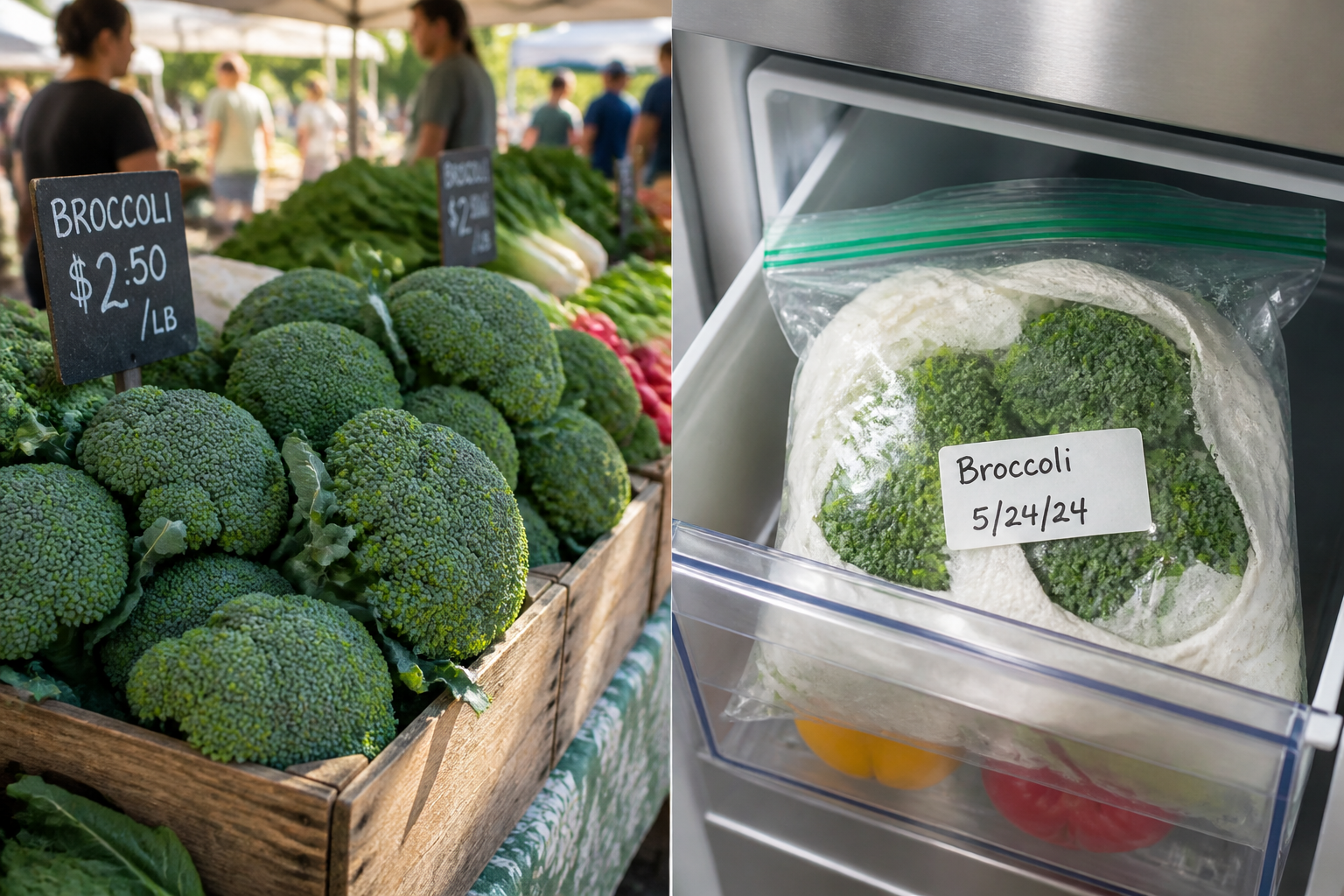
Fresh broccoli is available year-round in most grocery stores, with peak season running from October through April in the Northern Hemisphere.
What to look for when buying:
- Florets: Tight, dark green or blue-green clusters with no yellowing
- Stem: Firm and moist at the cut end, not dried out or hollow
- Smell: Mild, fresh — avoid heads with a strong sulfur odor
- Weight: Should feel heavy for its size
Storage guidelines:
- Refrigerator (unwashed): Wrap loosely in a damp paper towel, place in a zip bag, and store in the crisper drawer. Stays fresh for 3–5 days.
- Refrigerator (prepped): Cut florets keep for 2–3 days in an airtight container.
- Freezer: Blanch florets for 2–3 minutes, cool in ice water, pat dry, and freeze in a single layer before bagging. Keeps for up to 12 months.
- Avoid: Storing broccoli near ethylene-producing fruits like apples or bananas — this accelerates yellowing.
Choose fresh broccoli if: you’re eating it raw or lightly steamed within a few days. Choose frozen if: you’re adding it to soups, casseroles, or stir-fries and want a longer shelf life without waste.
What Dishes Can You Make with Broccoli?
Broccoli is one of the most adaptable vegetables in the kitchen. It works as a main component, a side dish, or a background ingredient in dozens of cuisines.
Popular broccoli dishes by category:
- Sides: Steamed with lemon butter, roasted with parmesan, blanched with sesame dressing
- Mains: Broccoli and cheddar soup, stir-fried broccoli with tofu or beef, broccoli pasta with garlic and chili
- Salads: Raw broccoli salad with bacon, cranberries, and sunflower seeds; warm roasted broccoli with feta
- Snacks/Appetizers: Raw florets with hummus or dips, broccoli fritters, broccoli-stuffed pastries
- Baked dishes: Broccoli quiche, broccoli and rice casserole, broccoli cheddar stuffed potatoes
For quick weeknight cooking, broccoli is a reliable partner for easy and fast meals because it cooks in under 10 minutes by most methods.
FAQ: Common Broccoli Questions
Q: Is raw broccoli healthier than cooked? Raw broccoli retains more heat-sensitive vitamins like vitamin C, but lightly steaming or microwaving broccoli increases the bioavailability of some other nutrients. Both forms are nutritious — variety is the practical goal.
Q: Can you eat broccoli stems? Yes. Broccoli stems are fully edible and nutritious. Peel the tough outer layer and slice or dice the inner core. The flavor is milder than the florets and the texture is firmer.
Q: Why does broccoli smell bad when cooked? Overcooking releases sulfur compounds from glucosinolates, producing that distinctive unpleasant odor. Cooking broccoli briefly (under 7 minutes) minimizes this.
Q: Is frozen broccoli as nutritious as fresh? Frozen broccoli is blanched before freezing, which causes some vitamin C loss, but it retains most other nutrients well. For cooked applications, frozen broccoli is a nutritionally comparable and convenient alternative.
Q: How much broccoli should you eat per week? Dietary guidelines generally recommend 2.5 cups of vegetables per day for adults. Including broccoli 3–4 times per week as part of a varied vegetable intake is a reasonable and practical target.
Q: Does broccoli interact with any medications? Broccoli is high in vitamin K, which affects blood clotting. People taking warfarin or other blood thinners should keep their broccoli intake consistent rather than dramatically increasing it, and consult their healthcare provider.
Q: Can broccoli cause digestive discomfort? For some people, yes. Broccoli contains raffinose, a complex sugar that gut bacteria ferment, producing gas. Starting with smaller portions and cooking broccoli (rather than eating it raw) can reduce this effect.
Q: What’s the difference between broccoli and broccolini? Broccolini is a hybrid of broccoli and Chinese kale (gai lan). It has thinner stems, smaller florets, and a milder, slightly sweeter flavor. Both are nutritious, but broccolini cooks faster and is less bitter.
Q: Is broccoli good for weight loss? Broccoli is low in calories and high in fiber and water content, which promotes satiety. It fits well into calorie-controlled diets, but no single food drives weight loss on its own.
Q: How do you keep broccoli bright green when cooking? Blanch in heavily salted boiling water for 2–3 minutes, then immediately transfer to ice water. This stops the cooking process and locks in the vibrant green color.
Conclusion
Broccoli earns its reputation as a nutritional standout — not because of hype, but because the evidence consistently supports its value as a fiber-rich, vitamin-dense, versatile vegetable. Whether eaten raw with a dip, roasted until caramelized, or stirred into a weeknight pasta, it delivers real nutritional return for minimal cost and effort.
Actionable next steps:
- Add broccoli to your weekly shopping list and aim to include it 3–4 times per week in varied preparations.
- Try roasting instead of boiling — it transforms the flavor and is far more likely to become a habit.
- Use the stems — peel and slice them to reduce food waste and get more value from each head.
- Pair with fat — vitamins A and K in broccoli are fat-soluble, so a drizzle of olive oil or a small amount of cheese improves absorption.
- Keep frozen broccoli on hand as a backup for busy nights when fresh isn’t available.
For more ideas on building nutritious meals around vegetables like broccoli, explore culinary delights and recipe inspiration or browse quick and easy cooking guides.