
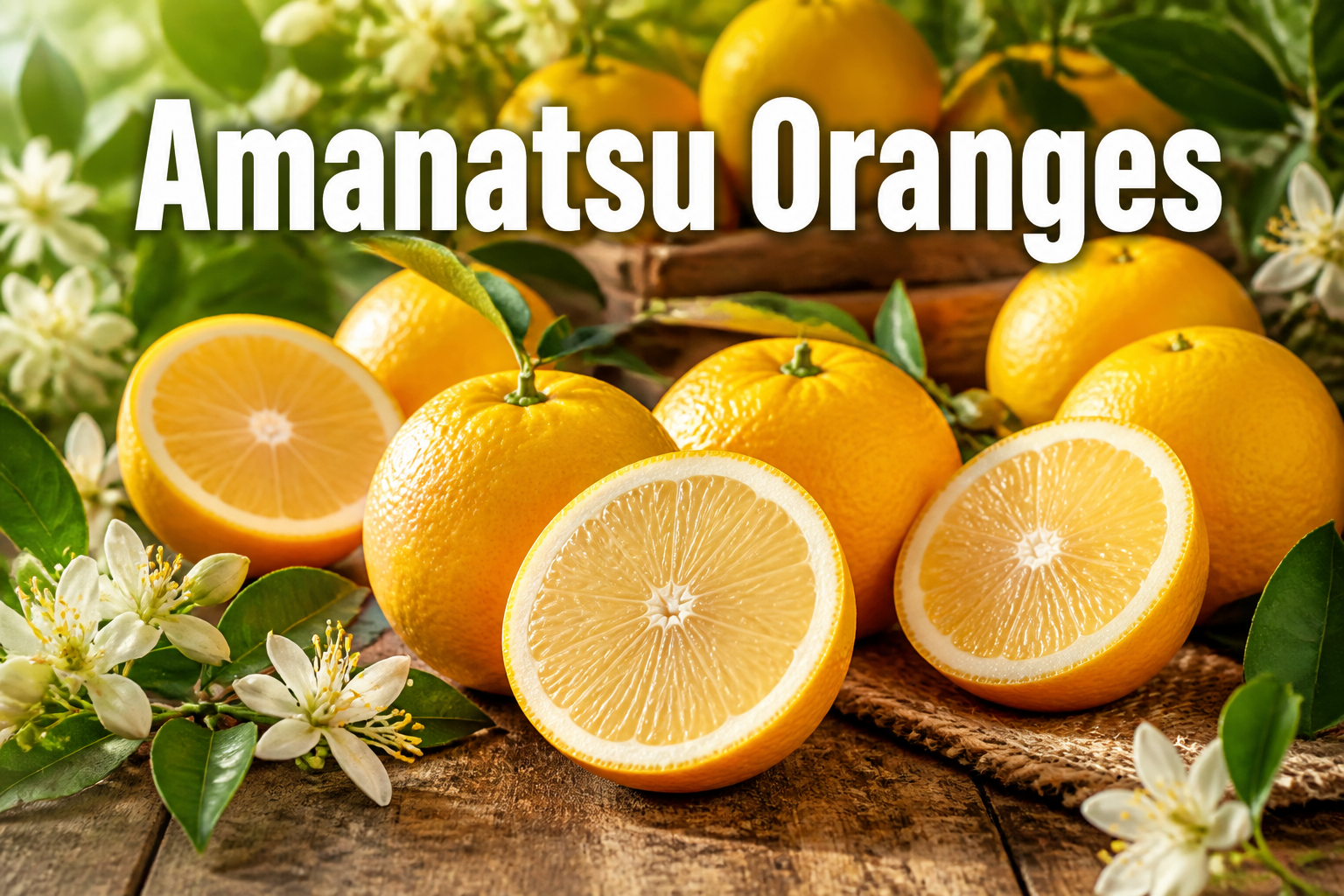
Quick Answer: Amanatsu oranges are a Japanese citrus variety prized for their thick peel, bright acidity, subtle bitterness, and gentle sweetness. They peak in spring, grow primarily in western Japan, and have become a sought-after ingredient in premium food and beverage products across the country in 2026.
Key Takeaways
- 🍊 Amanatsu (甘夏) is a Japanese citrus hybrid with a distinctive flavor profile combining tartness, mild bitterness, and sweetness.
- The fruit’s season runs roughly from late winter through spring (February to May), making it a hallmark of Japanese spring cuisine.
- Beni amanatsu, a reddish-skinned variant from Akune City, Kagoshima Prefecture, is rarer and increasingly featured in premium beverages. [2]
- Major growing regions include Wakayama and Kagoshima prefectures, each producing fruit with slightly different characteristics. [1]
- In spring 2026, amanatsu appeared in products ranging from ¥560 craft lemonades to ¥3,990 artisanal chocolates, signaling strong premium market positioning. [1][2]
- Freshness Burger’s beni amanatsu craft lemonade sold out before its sales period ended in 2025, prompting a March 2026 return. [2]
- The fruit’s thick peel is as valuable as its flesh, contributing bittersweet complexity to marmalades, confections, and chocolate.
- Amanatsu pairs well with dark chocolate, honey, yogurt, and sparkling water.
What Are Amanatsu Oranges?
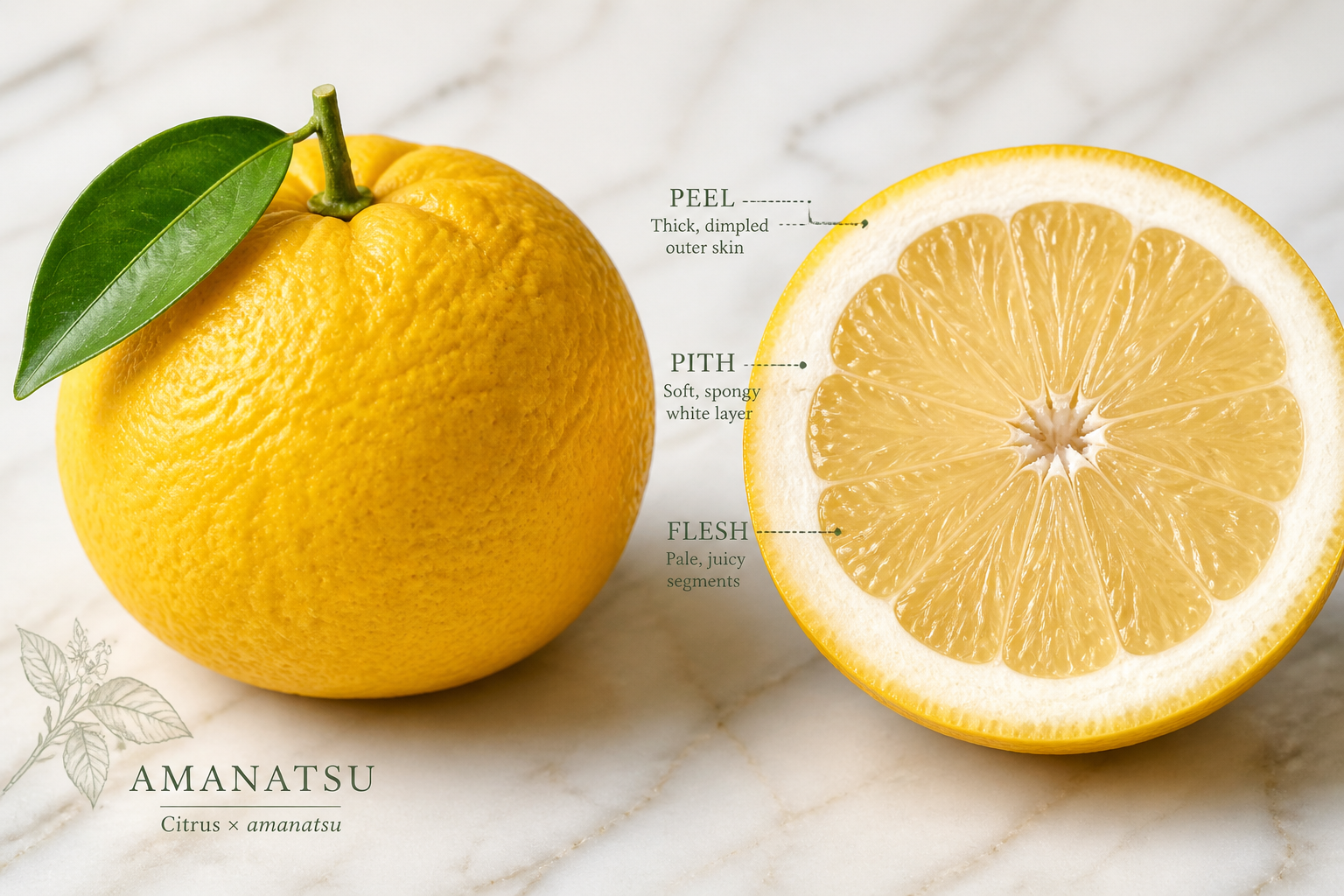
Amanatsu oranges are a Japanese citrus cultivar, botanically classified as Citrus natsudaidai or a close hybrid thereof. The name translates roughly to “sweet summer citrus,” though the fruit actually ripens in spring. Compared to common navel oranges or mandarins, amanatsu are noticeably larger, with a thick, bumpy peel and a flavor that balances tartness, mild bitterness, and a clean sweetness.
Key characteristics at a glance:
| Feature | Description |
|---|---|
| Peel | Thick, fragrant, pale yellow to deep orange |
| Flesh | Pale, juicy segments with moderate acidity |
| Flavor | Tart-sweet with subtle bitterness from the pith |
| Season | February through May |
| Primary regions | Wakayama, Kagoshima, Ehime, Kumamoto |
| Common uses | Fresh eating, marmalade, juice, confections |
The thick peel is not just packaging. It contains aromatic oils and contributes the characteristic bitterness that makes amanatsu so appealing to chefs and food manufacturers. Unlike thin-skinned citrus, the peel can be candied, zested, or incorporated whole into preparations without becoming unpleasantly harsh.
Where Do Amanatsu Oranges Come From?
Amanatsu oranges are grown primarily in western and southwestern Japan, with Wakayama and Kagoshima prefectures being two of the most recognized supply regions. [1]
Wakayama Prefecture has long been a center of Japanese citrus cultivation, and its amanatsu fruit is used in specialty applications including artisanal chocolate production. Minimal, a Tokyo-based bean-to-bar chocolate maker, sources whole amanatsu from Zenbee Farm in Wakayama for its spring 2026 confections. [1]
Kagoshima Prefecture, specifically Akune City on the western coast, is the birthplace of beni amanatsu, a naturally occurring variant distinguished by a reddish blush on its skin. Beni amanatsu is described as having a slightly different flavor balance compared to standard varieties, and it has attracted significant commercial interest in the beverage sector. [2]
“Beni amanatsu originated through a chance discovery in Akune City, Kagoshima Prefecture, and is now recognized as a distinctive domestic citrus variety.” [2]
Other prefectures including Ehime and Kumamoto also produce amanatsu, contributing to a relatively stable domestic supply each spring.
What Does Amanatsu Taste Like?
Amanatsu delivers a three-part flavor experience: bright acidity from the flesh, subtle bitterness from the peel and pith, and a gentle sweetness that rounds out the profile. [1] This combination is what separates it from sweeter citrus like mikan (satsuma) or the more purely sour yuzu.
The balance makes amanatsu versatile:
- Eaten fresh, the segments offer a refreshing tartness that’s less aggressive than grapefruit.
- In beverages, the acidity lifts the drink while the bitterness adds depth that simple lemon juice cannot replicate.
- In confections, especially chocolate, the peel’s aromatic bitterness creates contrast against rich, sweet bases.
Choose amanatsu if you want a citrus flavor with complexity rather than pure sweetness. If you prefer mild, candy-sweet citrus, mikan or dekopon may suit you better.
How Are Amanatsu Oranges Used in Cooking?
Amanatsu oranges work across a wide range of culinary applications, and nearly every part of the fruit is usable.
Common culinary uses:
- Marmalade and preserves — the peel’s pectin content and bitterness make it ideal for marmalade-style preparations, producing a complex, not-too-sweet spread.
- Juicing — fresh-squeezed amanatsu juice is used in dressings, marinades, and craft beverages.
- Candied peel — slow-cooked in sugar syrup, the thick peel becomes a confection in its own right.
- Baking — zest and juice add brightness to cakes, tarts, and custards; the fruit pairs especially well with vanilla and almond.
- Chocolate pairings — the peel’s bitterness complements dark chocolate, a combination that premium chocolatiers have embraced strongly in 2026. [1]
For a simple home preparation, halving an amanatsu and broiling it briefly with a drizzle of honey brings out the natural sugars while softening the bitterness. The result works as a breakfast side or a light dessert. If you enjoy experimenting with citrus in baked goods, the same techniques used for citrus-forward recipes like banana bread translate well to amanatsu-infused quick breads.
What Is Beni Amanatsu, and How Is It Different?
Beni amanatsu is a naturally discovered variant of standard amanatsu, originating in Akune City, Kagoshima Prefecture. [2] Its most visible difference is a reddish tint on the skin, which sets it apart visually at market.
Beyond appearance, beni amanatsu has attracted commercial interest because of its flavor nuance and relative scarcity. Freshness Burger introduced a beni amanatsu craft lemonade that sold out before its scheduled end date in 2025, prompting the chain to relaunch the product in March 2026 at all nationwide locations (excluding stadium and zoo venues). [2] The lemonade is priced at ¥560, positioning it as an accessible premium option. [2]
The broader craft lemonade series that includes the beni amanatsu variant had sold over 1.05 million cups cumulatively as of January 2026, a clear signal of sustained consumer demand. [2]
Beni amanatsu vs. standard amanatsu:
| Feature | Standard Amanatsu | Beni Amanatsu |
|---|---|---|
| Skin color | Yellow to deep orange | Orange with reddish blush |
| Origin | Multiple prefectures | Akune City, Kagoshima |
| Availability | Relatively common | Rarer, seasonal |
| Market positioning | General specialty | Premium/artisan |
How Is Amanatsu Performing in the Premium Food Market in 2026?
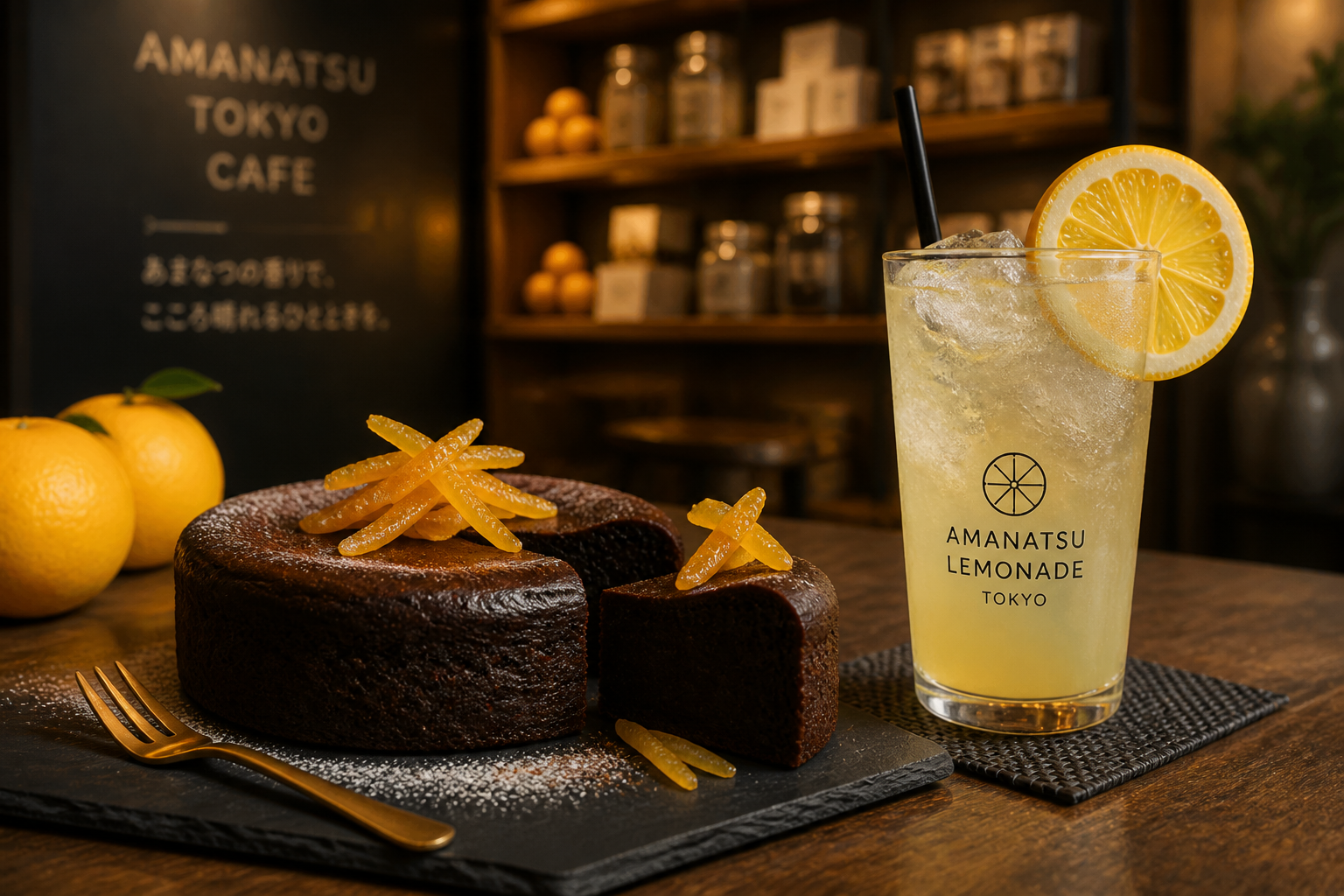
Amanatsu oranges have moved well beyond farmers’ markets and into mainstream premium retail in 2026. Two high-profile spring launches illustrate the trend clearly.
Minimal’s Amanatsu Mikan Nama Gateau Chocolat (spring 2026) uses whole amanatsu fruit sourced from Wakayama’s Zenbee Farm, incorporating the peel’s bitterness, the flesh’s acidity, and the fruit’s sweetness into a single chocolate preparation. Priced at ¥3,990, the product targets specialty food buyers willing to pay for provenance and complexity. [1]
Freshness Burger’s Beni Amanatsu Craft Lemonade (relaunched March 2026) takes a different approach: accessible price point (¥560), nationwide distribution, and a seasonal scarcity narrative built on the 2025 sellout. [2]
Together, these launches suggest a coordinated seasonal marketing window for amanatsu that runs from late March through May, aligning with the fruit’s natural harvest peak. The price spread from ¥560 to ¥3,990 shows that amanatsu appeals across multiple consumer segments simultaneously.
For anyone interested in incorporating seasonal Japanese ingredients into their cooking repertoire, amanatsu’s spring window overlaps nicely with other spring flavors. Pairing it with rich, creamy preparations — the way citrus brightens a cream cheese frosting or a chocolate mousse — is a reliable approach.
How Do You Select and Store Amanatsu Oranges?
Selecting good amanatsu oranges follows the same logic as most citrus: weight, firmness, and fragrance matter more than surface appearance.
Selection tips:
- Choose fruit that feels heavy for its size — this indicates juice content.
- The peel should be firm but not rock-hard. Slight give is acceptable; soft spots are not.
- A strong citrus fragrance at the stem end is a positive sign.
- Avoid fruit with shriveled skin or dry-looking peel, which signals age.
Storage:
- At room temperature, amanatsu keeps for about one week.
- Refrigerated in a crisper drawer, the fruit lasts two to three weeks.
- Zest and juice can be frozen for up to three months without significant flavor loss.
- Candied peel stored in an airtight container keeps for several weeks at room temperature.
The thick peel actually helps amanatsu outlast thinner-skinned citrus in storage, making it practical for home cooks who buy in small quantities.
Frequently Asked Questions About Amanatsu Oranges
What is the difference between amanatsu and natsumikan? Amanatsu (甘夏) is a sweeter, less acidic cultivar derived from natsumikan (夏蜜柑). Natsumikan is older and more sour; amanatsu was developed to offer a more balanced flavor for fresh eating and culinary use.
Is amanatsu the same as a grapefruit? No. While both have some bitterness and thick peels, amanatsu is a distinct Japanese citrus species. It is generally less bitter and less acidic than grapefruit, with a lighter, more floral flavor.
When is amanatsu season? The primary season runs from February through May in Japan, with peak availability in March and April.
Can you eat the amanatsu peel? Yes. The peel is one of the most valued parts of the fruit. It is used candied, zested, dried, and incorporated into confections and marmalades.
Where can you buy amanatsu outside Japan? Amanatsu is not widely exported. Outside Japan, it may appear at Japanese grocery stores or specialty Asian markets in major cities during spring. Beni amanatsu is even harder to find internationally.
Is amanatsu high in vitamin C? Like most citrus, amanatsu contains vitamin C, though specific per-fruit values vary by size and growing conditions. It also provides dietary fiber, particularly from the pith and peel.
What is beni amanatsu? Beni amanatsu is a naturally discovered variant from Akune City, Kagoshima, with a reddish skin tone and a flavor profile that has made it popular in craft beverages. [2]
How does amanatsu compare to yuzu? Yuzu is primarily used for its intensely aromatic zest and juice, rarely eaten fresh. Amanatsu is eaten as a whole fruit and is less pungent, with a more balanced sweet-tart profile.
Why did Freshness Burger bring back the beni amanatsu lemonade in 2026? The 2025 version sold out before the end of its sales period, indicating demand exceeded supply. The chain relaunched in March 2026 with nationwide availability. [2]
Can amanatsu be used in savory cooking? Yes. The juice works well in dressings, marinades for fish and poultry, and citrus-based sauces. The zest adds brightness to grain dishes and roasted vegetables.
Conclusion: Why Amanatsu Oranges Deserve a Place in Your Spring Kitchen
Amanatsu oranges occupy a unique position in the citrus world: complex enough to interest professional chefs and food manufacturers, yet approachable enough for everyday home cooking. Their three-part flavor profile (tart, bitter, sweet) gives them versatility that simpler citrus varieties can’t match.
The 2026 spring season has demonstrated clear commercial momentum for amanatsu, from artisan chocolate at ¥3,990 to mass-market craft lemonade at ¥560. [1][2] The beni amanatsu variant from Kagoshima adds another layer of interest for specialty buyers and adventurous cooks.
Actionable next steps:
- Find amanatsu this spring at Japanese grocery stores or specialty Asian markets before the season closes in May.
- Start with the peel — candy it or use it as zest before experimenting with the flesh.
- Try a simple pairing first: amanatsu juice over yogurt with honey, or zest stirred into a cake batter.
- Look for beni amanatsu if you’re near a well-stocked Japanese market; its rarity makes it worth seeking out.
- Preserve the season by freezing juice in ice cube trays and storing candied peel for use through summer.
If you enjoy working with bold, seasonal flavors, amanatsu is one of the most rewarding spring ingredients available in 2026.
References
[1] Minimal Amanatsu Mikan Gateau Chocolat Spring 2026 – https://www.haveagood-holiday.com/en/articles/minimal-amanatsu-mikan-gateau-chocolat-spring-2026
[2] Freshness Burger Beni Amanatsu Craft Lemonade Spring 2026 – https://www.haveagood-holiday.com/en/articles/freshness-burger-beni-amanatsu-craft-lemonade-spring-2026