

Every year, a quiet but delicious holiday arrives in the middle of winter — and it smells like warm spices and rich, dark sweetness. February 8 Molasses Bar Day is a national food holiday that invites bakers, sweet lovers, and history enthusiasts to celebrate one of America’s oldest and most beloved ingredients: molasses. Whether someone is a seasoned baker or just curious about food holidays, this day offers a wonderful reason to step into the kitchen and enjoy a timeless treat. 🍫
Key Takeaways
- 📅 February 8 Molasses Bar Day is an annual national food holiday celebrated on February 8th each year.
- 🍯 Molasses bars are dense, chewy baked goods made with dark molasses, warm spices, and simple pantry staples.
- 🏛️ Molasses has deep roots in American culinary and economic history, dating back to the colonial era.
- 🎉 The holiday is best celebrated by baking homemade molasses bars, sharing recipes, and exploring molasses-based foods.
- 🌍 Molasses remains a nutritionally valuable ingredient, offering iron, calcium, and potassium in each serving.
What Is February 8 Molasses Bar Day?
February 8 Molasses Bar Day is an unofficial but widely recognized national food holiday in the United States. It falls annually on February 8th and shines a spotlight on molasses bars — a classic baked good that has graced American kitchens for centuries.
Like many food holidays, the exact origin of this celebration is not officially documented. However, food holiday observances of this kind typically emerge from a combination of food industry promotion, culinary tradition, and grassroots enthusiasm from home bakers and food bloggers. The holiday gives people a fun, structured reason to bake, share, and appreciate a treat that might otherwise be overlooked in the modern dessert landscape.
“Food holidays like Molasses Bar Day keep culinary traditions alive and give communities a shared reason to gather around the table.”
A Brief History of Molasses in America
To truly appreciate February 8 Molasses Bar Day, it helps to understand the rich history of molasses itself.
Colonial Roots and the Triangular Trade
Molasses arrived in North America through the transatlantic trade routes of the 17th and 18th centuries. It was a byproduct of sugar refining in the Caribbean and became one of the most traded commodities of the colonial era. American colonists used molasses extensively — not just for baking, but also for brewing rum and as a general sweetener before refined sugar became widely affordable.
Molasses in American Baking Tradition
By the 19th century, molasses had become a kitchen staple across the United States. It was used in:
- Gingerbread cookies and cakes
- Boston baked beans
- Shoofly pie
- Molasses candy and taffy
- Molasses bars and squares
Molasses bars, in particular, became popular as an easy, affordable, and satisfying treat that could be made with ingredients most households already had on hand.
The Great Molasses Flood of 1919
One of the most unusual events in American history involved molasses. On January 15, 1919, a large storage tank in Boston’s North End burst, releasing a wave of molasses that flooded city streets. Though a tragic event, it cemented molasses as a deeply embedded part of American cultural memory.
What Are Molasses Bars?
Molasses bars are a type of bar cookie — similar in format to a brownie — but made with dark or blackstrap molasses as the primary sweetener. They are typically dense, chewy, and packed with warm spice flavors.
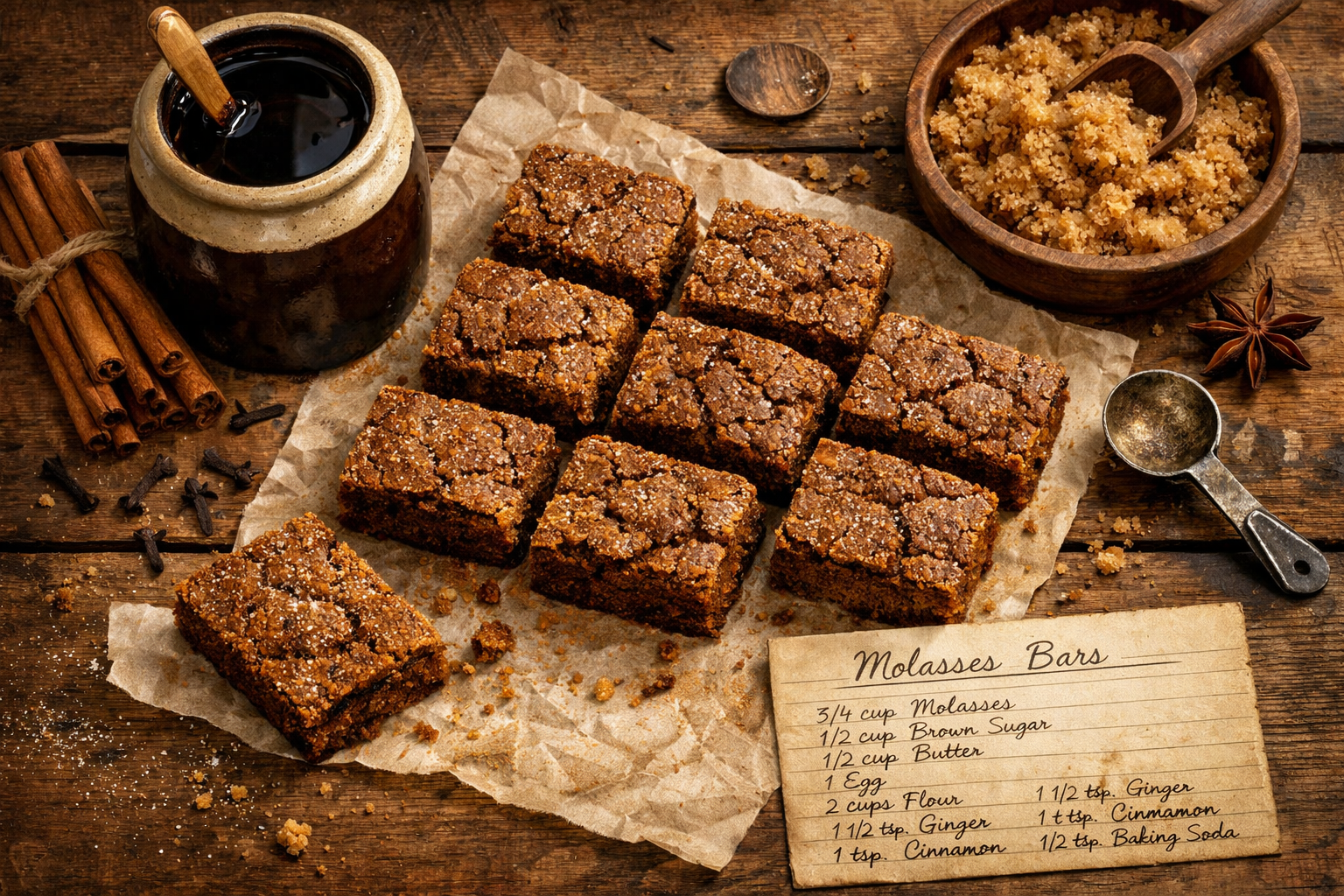
Classic Ingredients in Molasses Bars
| Ingredient | Role in the Recipe |
|---|---|
| Dark or blackstrap molasses | Primary sweetener and flavor base |
| All-purpose flour | Structure and texture |
| Brown sugar | Adds depth and caramel notes |
| Butter or shortening | Moisture and richness |
| Eggs | Binding agent |
| Cinnamon, ginger, cloves | Warm spice flavor profile |
| Baking soda | Leavening agent |
| Salt | Flavor balance |
Flavor Profile
Molasses bars deliver a complex, layered sweetness that is distinct from chocolate brownies or blondies. Expect:
- A deep, slightly bitter molasses base
- Warm spice notes from cinnamon and ginger
- A chewy, dense texture with a slightly sticky crumb
- A caramel-like finish from the brown sugar
Nutritional Value of Molasses
One reason molasses stands out from other sweeteners is its nutritional profile. Unlike refined white sugar, molasses retains many of the minerals found naturally in sugarcane.
Key Nutrients in One Tablespoon of Blackstrap Molasses
- Iron: Up to 20% of the daily recommended value
- Calcium: Approximately 10% of the daily recommended value
- Potassium: A meaningful source for heart health
- Magnesium: Supports muscle and nerve function
- B vitamins: Including B6
⚠️ Note: Molasses bars are still a dessert and should be enjoyed in moderation as part of a balanced diet.
How to Celebrate February 8 Molasses Bar Day in 2026
There are many fun and meaningful ways to mark February 8 Molasses Bar Day this year. Here are some ideas for individuals, families, schools, and businesses:
🏠 At Home
- Bake a classic batch of molasses bars using a traditional recipe
- Try a creative twist — add chocolate chips, pecans, or a cream cheese swirl
- Host a baking night with friends or family and compare recipes
- Share bars with neighbors to spread the sweetness
📱 On Social Media
- Post photos of homemade molasses bars using hashtags like #MolassesBarDay and #February8
- Share a favorite recipe or family tradition related to molasses baking
- Tag local bakeries and encourage them to feature molasses bars on the day
🏫 In Schools and Community Groups
- Organize a baking demonstration or cooking class focused on historical American recipes
- Use the holiday as a history lesson about molasses in colonial America
- Hold a bake sale featuring molasses bars to raise funds for a local cause
🏪 For Bakeries and Food Businesses
- Feature a limited-edition molasses bar on the menu for February 8th
- Offer a discount or promotion tied to the holiday
- Create social media content educating customers about the history of molasses
Simple Tips for Baking the Perfect Molasses Bar
Whether someone is baking for the first time or is an experienced home cook, these tips will help produce the best possible molasses bars:
- Use dark or blackstrap molasses — light molasses produces a milder flavor that lacks the signature depth.
- Don’t overbake — molasses bars should look slightly underdone when pulled from the oven; they firm up as they cool.
- Room temperature ingredients — bring butter and eggs to room temperature before mixing for a smoother batter.
- Line the pan with parchment paper — this makes removal and cutting much easier.
- Let them cool completely before cutting to get clean, even bars.
- Store in an airtight container — molasses bars stay fresh for up to five days at room temperature.
Fun Facts About Molasses and Molasses Bar Day 🎉
- The word “molasses” comes from the Portuguese word melaço, derived from the Latin mel, meaning honey.
- Blackstrap molasses is the darkest and most nutrient-dense form, produced from the third boiling of sugarcane juice.
- In the 18th century, molasses was so valuable that the British Parliament passed the Molasses Act of 1733 to control its trade.
- Molasses is a key ingredient in Worcestershire sauce, adding depth to that iconic condiment.
- The phrase “slow as molasses in January” is a classic American idiom referring to something that moves very slowly.
Conclusion
February 8 Molasses Bar Day is more than just a quirky food holiday — it is a celebration of culinary heritage, simple pleasures, and the timeless appeal of a well-made baked good. Molasses has played a remarkable role in American history, from colonial trade routes to kitchen tables across generations. Taking time on February 8th to bake, share, and enjoy molasses bars is a meaningful way to connect with that tradition.
Actionable Next Steps for 2026:
- ✅ Mark February 8th on the calendar right now
- ✅ Gather ingredients — molasses, brown sugar, spices, and flour — ahead of time
- ✅ Find a trusted recipe from a reliable baking resource or family cookbook
- ✅ Share the celebration on social media or with loved ones
- ✅ Explore molasses further — try it in other recipes like gingerbread, baked beans, or glazes
Celebrating food holidays like this one keeps culinary traditions alive and gives everyone a reason to slow down, bake something wonderful, and enjoy the sweeter side of life. 🍯
References
- Cressy, D. (2007). Coming Over: Migration and Communication Between England and New England in the Seventeenth Century. Cambridge University Press.
- Park, E. (2003). The Great Molasses Flood: Boston, 1919. Charlesbridge Publishing.
- United States Department of Agriculture. (2019). FoodData Central: Molasses, blackstrap. USDA Agricultural Research Service. https://fdc.nal.usda.gov
- Quinzio, J. (2009). Of Sugar and Snow: A History of Ice Cream Making. University of Pennsylvania Press.
- National Confectioners Association. (2022). Food Holiday Observances and Consumer Engagement Report. NCA.