
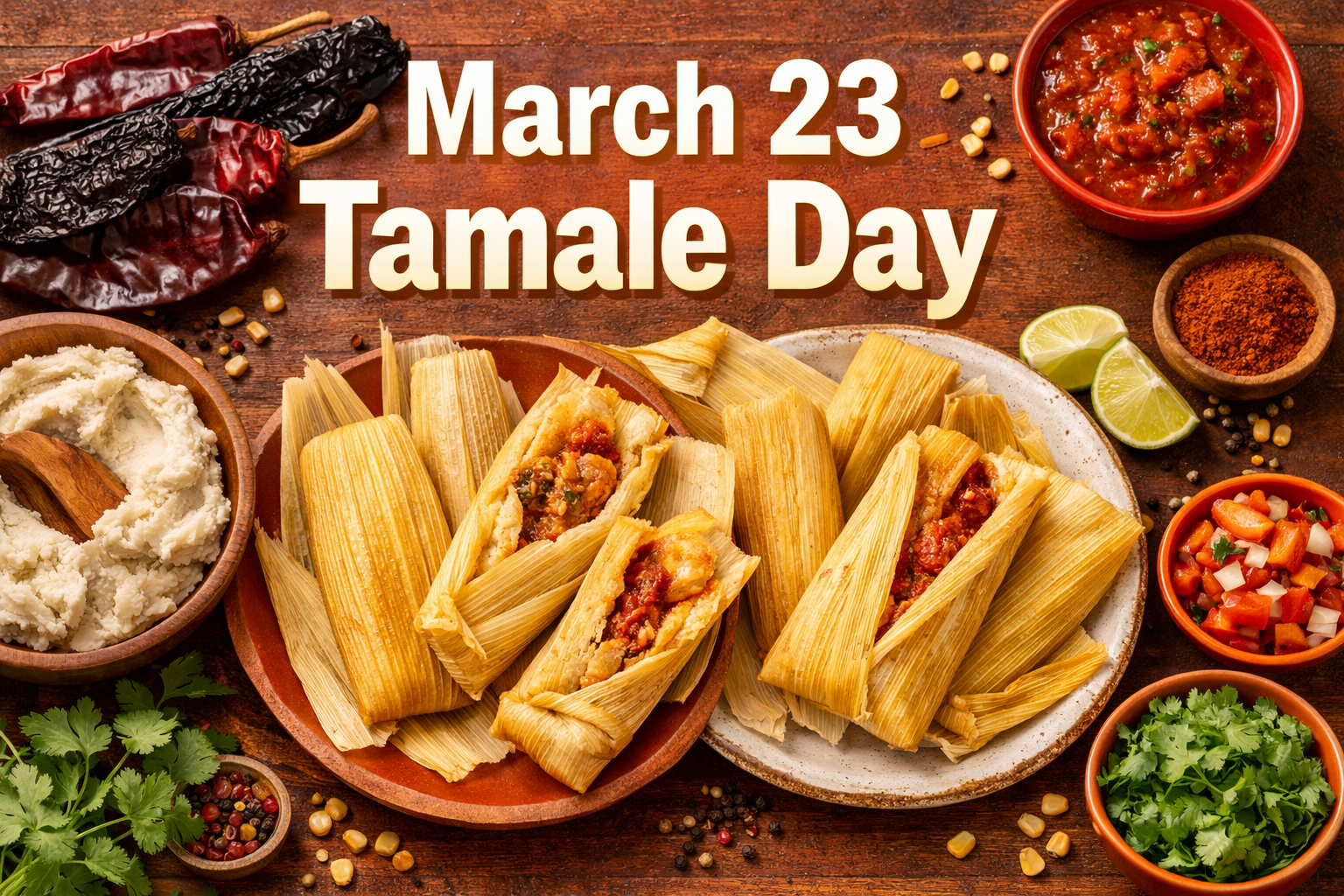
Every year on March 23, food lovers, home cooks, and cultural enthusiasts across the United States and beyond come together to celebrate one of the most beloved dishes in Latin American cuisine. March 23 Tamale Day is an unofficial food holiday dedicated to honoring the tamale — a centuries-old culinary treasure wrapped in corn husks and filled with tradition, flavor, and community.
Whether someone is a lifelong tamale fan or just discovering this dish for the first time, March 23 Tamale Day offers the perfect reason to gather in the kitchen, learn about a rich cultural legacy, and enjoy one of the world’s oldest prepared foods.
Key Takeaways 📌
- March 23 Tamale Day is an annual food holiday celebrating the tamale, a traditional Mesoamerican dish with thousands of years of history.
- Tamales are made from masa (corn dough), filled with various ingredients, wrapped in corn husks or banana leaves, and steamed.
- The holiday encourages cultural appreciation, family cooking traditions, and community gatherings known as tamaladas.
- Tamales come in dozens of regional varieties across Mexico, Central America, South America, and the United States.
- Celebrating in 2026 is easy — cook, share, order from a local restaurant, or attend a community event.
What Is March 23 Tamale Day?
March 23 Tamale Day is an informal food observance that puts the spotlight on tamales — one of the oldest prepared foods in the Americas. Unlike official federal holidays, food holidays like this one are community-driven celebrations that spread through social media, local events, restaurants, and food culture enthusiasts.
The date, March 23, serves as an annual reminder to pause and appreciate not just a delicious dish, but also the cultural heritage, labor, and love that go into making tamales. In recent years, the holiday has gained significant traction on platforms like Instagram, TikTok, and X (formerly Twitter), where food creators share recipes, videos, and family stories tied to tamale-making.
“A tamale is not just food — it is a memory, a tradition, and a gift wrapped in a corn husk.”
The Ancient History Behind the Tamale 🏺
To truly appreciate March 23 Tamale Day, it helps to understand just how old this food really is.
Origins in Mesoamerica
Tamales trace their roots back to ancient Mesoamerican civilizations, including the Aztec, Maya, and Olmec peoples. Archaeological evidence and historical records suggest tamales were being made as far back as 8000 to 5000 BCE. They were a portable, practical food — easy to carry, easy to cook, and nutritionally complete.
Ancient warriors, hunters, and travelers relied on tamales as a convenient meal. They were also used in religious ceremonies and offerings to the gods, making them spiritually significant as well as nutritionally important.
Spanish Influence and Evolution
When Spanish colonizers arrived in the Americas in the 16th century, they encountered tamales and introduced new ingredients like pork, chicken, cheese, and lard. These additions transformed tamale recipes and helped create the regional varieties enjoyed today.
Over centuries, tamales spread across Latin America, each region developing its own unique style, filling, and wrapping technique.
Regional Tamale Varieties Around the World 🌎
One of the most exciting aspects of celebrating March 23 Tamale Day is exploring the incredible diversity of tamale styles. Here is a quick overview:
| Region | Name/Style | Key Characteristics |
|---|---|---|
| Mexico (Central) | Tamale Rojo | Red chile sauce, pork or chicken |
| Mexico (Oaxaca) | Tamale Negro | Black mole sauce, banana leaf wrap |
| Guatemala | Chuchito | Smaller, thicker masa, tomato sauce |
| Colombia | Tamal Tolimense | Wrapped in banana leaves, rice and pork |
| El Salvador | Tamale de Elote | Sweet corn tamale, no filling |
| United States (Southwest) | New Mexico Tamale | Green or red chile, beef or pork |
| Venezuela | Hallaca | Corn dough, mixed meat stew, olives |
Each variety tells a story about the land, climate, and culture where it was created. Exploring these differences is one of the best ways to honor the spirit of March 23 Tamale Day.
How Tamales Are Made: The Basics 👩🍳
Making tamales is both an art and a labor of love. Here is a simplified breakdown of the traditional process:
- Prepare the masa — Mix masa harina (dried corn flour) with broth, lard or vegetable shortening, salt, and baking powder until a soft dough forms.
- Make the filling — Cook and season the chosen filling: pulled pork, shredded chicken, cheese and jalapeño, black beans, or sweet corn.
- Soak the corn husks — Dried corn husks are soaked in warm water until pliable and easy to fold.
- Spread and fill — Spread a thin layer of masa onto each husk, add a spoonful of filling, and fold the husk around the tamale.
- Steam — Stand tamales upright in a steamer pot and cook for 60 to 90 minutes until the masa pulls cleanly away from the husk.
- Rest and serve — Allow tamales to rest for a few minutes before unwrapping and serving with salsa, crema, or guacamole.
Pro tip: Making tamales is traditionally a group activity. The more hands, the faster — and more fun — the process becomes! 🙌
The Cultural Significance of Tamaladas
A tamalada is a communal tamale-making gathering — a beloved tradition in many Latin American and Latino communities. Friends and family come together, each person taking on a role in the assembly line: spreading masa, adding filling, folding husks, and stacking the steamer.
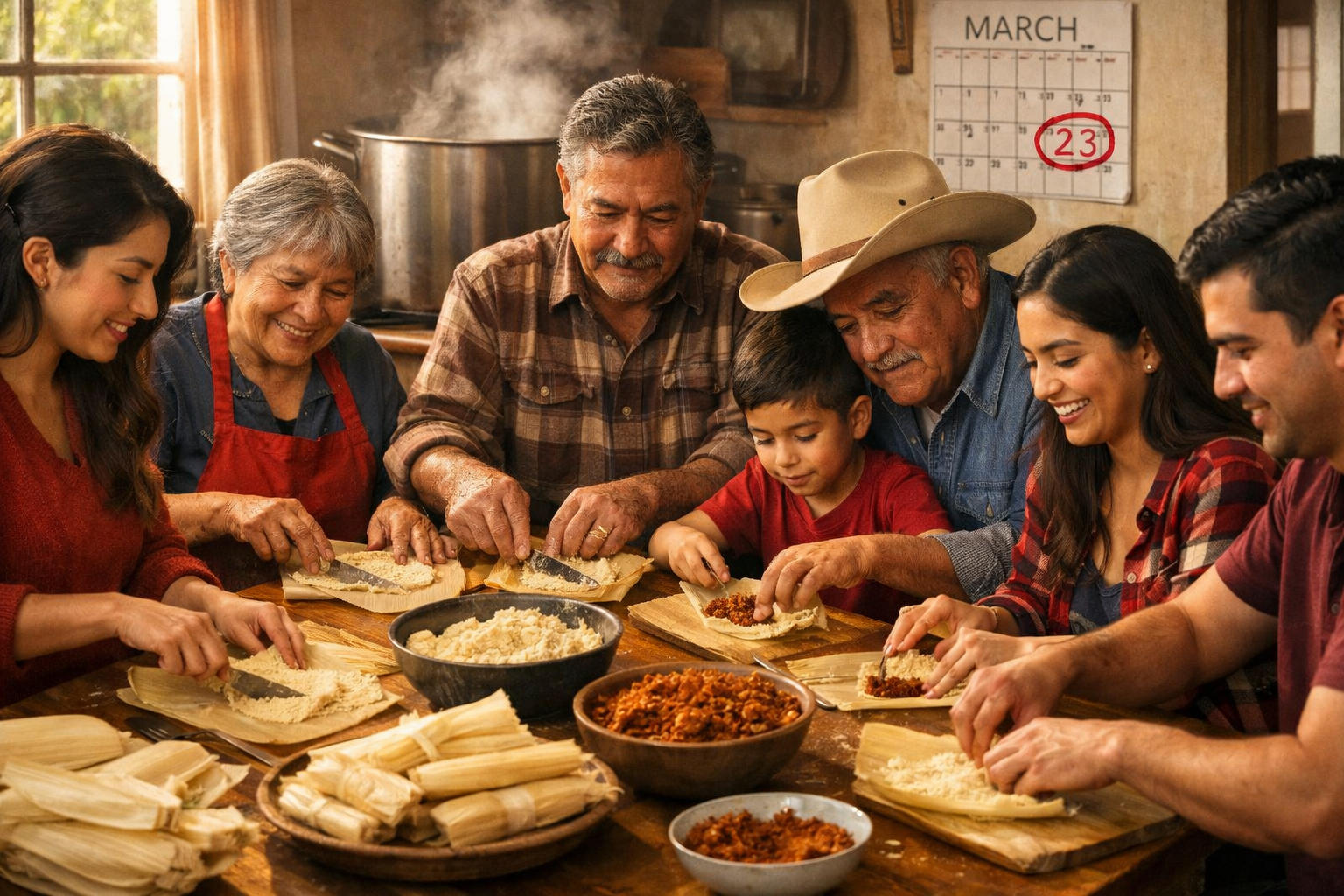
Tamaladas are more than cooking sessions. They are storytelling events, where recipes are passed down, family histories are shared, and bonds are strengthened. For many families, making tamales together is a holiday ritual tied to Christmas, Día de los Muertos, and other important occasions.
March 23 Tamale Day celebrates this communal spirit by encouraging people everywhere — regardless of their background — to experience the joy of making and sharing tamales.
“The tamalada is where recipes become memories and kitchens become classrooms.”
How to Celebrate March 23 Tamale Day in 2026 🎉
There are many ways to participate in March 23 Tamale Day, whether someone is an experienced cook or a curious beginner:
🏠 At Home
- Host a tamalada — Invite friends or family over and make tamales together.
- Try a new recipe — Experiment with a regional variety never made before, like Oaxacan black mole tamales or sweet corn tamales.
- Watch a cooking tutorial — Dozens of excellent tamale-making videos are available on YouTube and cooking platforms.
🍽️ At a Restaurant
- Support local Latin American restaurants — Order tamales from a local Mexican, Guatemalan, Salvadoran, or Colombian restaurant.
- Try a tamale flight — Some restaurants offer sampler plates with multiple tamale varieties.
📱 On Social Media
- Share your tamales — Post photos or videos using hashtags like #TamaleDay and #March23TamaleDay.
- Tag a local tamale maker — Show appreciation for small businesses and home cooks who keep the tradition alive.
🏫 In the Community
- Attend a local food festival — Many cities host Latin food events around this time of year.
- Donate tamales — Partner with a community organization to share tamales with those in need.
Nutritional Profile of a Tamale 🥗
Tamales can be a nutritious and satisfying meal when made with wholesome ingredients. Here is a general nutritional snapshot for one medium pork tamale:
| Nutrient | Approximate Amount |
|---|---|
| Calories | 285–350 kcal |
| Protein | 10–14 g |
| Carbohydrates | 35–40 g |
| Fat | 10–15 g |
| Fiber | 3–5 g |
| Iron | 10–15% DV |
Note: Values vary based on ingredients, size, and preparation method.
Tamales made with vegetable fillings, lean proteins, or plant-based masa can be an excellent option for health-conscious eaters. Bean and cheese tamales, for example, offer a good balance of protein and complex carbohydrates.
Conclusion: Celebrate March 23 Tamale Day With Purpose 🌽
March 23 Tamale Day is far more than a fun food holiday. It is an invitation to connect with a living culinary tradition that spans thousands of years and dozens of cultures. Every tamale carries within it the story of ancient civilizations, immigrant journeys, family kitchens, and shared meals.
In 2026, the celebration is bigger and more accessible than ever. Whether hosting a tamalada, visiting a local restaurant, or simply learning about the history of this extraordinary dish, everyone can participate meaningfully.
Actionable Next Steps ✅
- Mark March 23 on the calendar right now.
- Choose a tamale recipe to try — beginner-friendly or adventurous.
- Invite someone to cook or eat tamales with you.
- Share the experience on social media to spread awareness and appreciation.
- Support a local tamale maker or Latin American restaurant in your community.
The tamale has survived millennia because it brings people together. This March 23 Tamale Day, be part of that tradition.
References
- Coe, S. D. (1994). America’s First Cuisines. University of Texas Press.
- Pilcher, J. M. (1998). ¡Que vivan los tamales! Food and the Making of Mexican Identity. University of New Mexico Press.
- Long-Solís, J., & Vargas, L. A. (2005). Food Culture in Mexico. Greenwood Press.
- National Museum of American History, Smithsonian Institution. (2017). Food and culture: Tamales in American history. Retrieved from si.edu.
- Fussell, B. (1992). The Story of Corn. Alfred A. Knopf.