
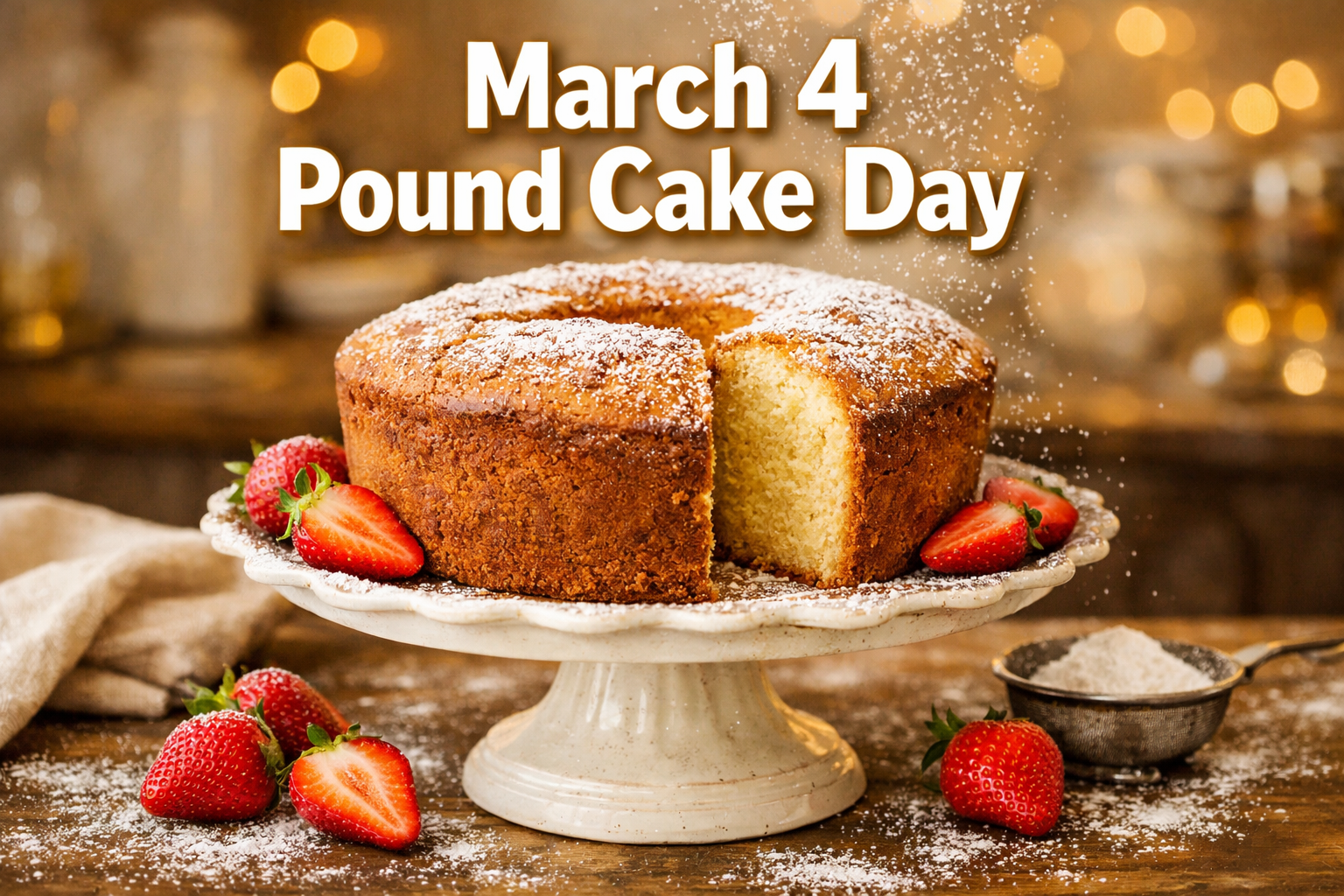
Every year on March 4, kitchens across the United States fill with the warm, buttery aroma of one of the most beloved baked goods in history. March 4 Pound Cake Day — also known as National Pound Cake Day — is an unofficial food holiday that celebrates a dessert so simple and satisfying that it has endured for centuries. Whether someone is a seasoned baker or a curious newcomer, this day offers the perfect excuse to dust off a loaf pan and honor a true classic. 🎂
Key Takeaways
- 📅 March 4 Pound Cake Day is observed annually on March 4 in the United States.
- 🏛️ Pound cake has roots dating back to early 18th-century Europe, making it one of the oldest standardized cake recipes in Western baking.
- 🧈 The traditional recipe uses equal weights of four ingredients: butter, sugar, eggs, and flour — hence the name “pound cake.”
- 🍓 The holiday is a popular occasion for baking, sharing, and experimenting with creative pound cake variations.
- 🇺🇸 National food holidays like this one drive significant engagement on social media and in home kitchens across the country.
The History Behind March 4 Pound Cake Day
Where Did Pound Cake Come From?
Long before food holidays existed, pound cake was already a staple of Western baking. The recipe originated in early 18th-century Northern Europe, likely in Britain or the Netherlands. The name comes directly from the original formula: one pound each of butter, sugar, eggs, and flour. This simple ratio made the recipe easy to remember at a time when literacy was not universal and written recipes were rare.
By the mid-1700s, pound cake had crossed the Atlantic. Amelia Simmons, author of American Cookery (1796) — considered the first American cookbook — included a pound cake recipe, cementing its place in American culinary tradition. Southern bakers, in particular, embraced the cake with enthusiasm, often adding flavorings like vanilla, lemon zest, or bourbon to create regional variations.
“Pound cake is not just a recipe — it’s a piece of living culinary history that connects modern bakers to generations past.”
How Did the Food Holiday Begin?
Like many national food days in the United States, the exact origin of March 4 Pound Cake Day is not officially documented. The holiday is part of a broader tradition of informal American food observances that grew in popularity through the internet age. Food bloggers, baking communities, and social media platforms helped spread awareness of the day, turning it into a widely recognized annual event.
The date — March 4 — also carries a subtle wordplay charm: “March forth!” This motivational phrase adds a playful layer of meaning, encouraging people to march forward into the kitchen and bake something wonderful.
What Makes Pound Cake Special? 🧁

The Classic Recipe Breakdown
The beauty of pound cake lies in its simplicity. The traditional four-ingredient formula has remained largely unchanged for over 300 years. Here is a quick comparison of the classic recipe versus modern adaptations:
| Version | Key Ingredients | Texture | Flavor Profile |
|---|---|---|---|
| Traditional | Butter, sugar, eggs, flour (1 lb each) | Dense, moist | Rich, buttery |
| Modern Classic | Butter, sugar, eggs, flour, vanilla, baking powder | Lighter, tender | Sweet, aromatic |
| Cream Cheese | Adds cream cheese | Extra moist, velvety | Tangy, rich |
| Lemon | Adds lemon zest and juice | Tender | Bright, citrusy |
| Chocolate Marble | Adds cocoa swirl | Dense with variation | Chocolatey, buttery |
Why Pound Cake Endures
Several qualities explain why pound cake has never gone out of style:
- Versatility — It pairs beautifully with fresh fruit, whipped cream, ice cream, glazes, and even savory toppings.
- Simplicity — The ingredient list is short and pantry-friendly.
- Longevity — Pound cake stays moist for several days, making it ideal for gifting.
- Scalability — The equal-weight formula is easy to scale up or down.
- Cultural resonance — It appears in Southern, Caribbean, African American, and European food traditions alike.
How to Celebrate March 4 Pound Cake Day
Baking at Home 🏠
The most popular way to observe March 4 Pound Cake Day is by baking one from scratch. Here are some tips for success:
- Use room-temperature ingredients. Cold butter and eggs do not cream properly, leading to a dense, uneven crumb.
- Cream butter and sugar thoroughly. This step — often 5 to 7 minutes — incorporates air and creates a lighter texture.
- Add eggs one at a time. This prevents the batter from curdling.
- Do not overmix after adding flour. Overmixing develops gluten and toughens the cake.
- Test for doneness with a toothpick. Insert it into the center — it should come out clean or with a few moist crumbs.
Share the Joy 🎁
Pound cake is one of the best baked goods to share. Consider these ideas for celebrating the day:
- Gift a loaf to a neighbor, coworker, or friend.
- Host a pound cake tasting with multiple flavor variations.
- Donate baked goods to a local shelter, school, or community center.
- Post a photo on social media using hashtags like #NationalPoundCakeDay and #March4PoundCakeDay.
Explore Creative Variations 🍋
In 2026, home bakers are pushing pound cake creativity further than ever. Some trending variations include:
- Matcha pound cake with white chocolate glaze
- Brown butter pound cake with sea salt caramel
- Cardamom and rose water pound cake
- Gluten-free almond flour pound cake
- Vegan pound cake using plant-based butter and flax eggs
March 4 Pound Cake Day and Food Culture
The Rise of National Food Holidays
The United States has hundreds of unofficial national food days, and March 4 Pound Cake Day sits comfortably among the most beloved. These observances serve several cultural functions:
- They preserve culinary heritage by drawing attention to traditional recipes.
- They drive community engagement both online and in local neighborhoods.
- They support small businesses like bakeries, specialty food shops, and ingredient suppliers.
- They inspire creativity by giving bakers a theme to experiment around.
According to food trend analysts, national food holidays consistently generate spikes in recipe searches, social media posts, and grocery store sales for related ingredients. Butter, sugar, and vanilla extract all see measurable upticks around March 4 each year.
Pound Cake in American Food Identity
Pound cake holds a particularly meaningful place in African American culinary tradition. Food historians note that enslaved Black women in the antebellum South were often the primary bakers in plantation households, and their skill and creativity shaped the pound cake recipes that became Southern classics. Recognizing this history adds depth and respect to the celebration of March 4 Pound Cake Day.
“To bake a pound cake is to participate in a living tradition shaped by generations of skilled, creative, and often uncelebrated hands.”
Quick Reference: March 4 Pound Cake Day at a Glance
| Detail | Information |
|---|---|
| Holiday Name | National Pound Cake Day / March 4 Pound Cake Day |
| Date | March 4 (annually) |
| Type | Unofficial U.S. food holiday |
| Origin | Informal; popularized through food blogging and social media |
| Best Celebrated By | Baking, sharing, tasting, and posting on social media |
| Key Hashtags | #NationalPoundCakeDay, #March4PoundCakeDay, #PoundCake |
Conclusion: March Forward and Bake! 🎂
March 4 Pound Cake Day is far more than a quirky calendar entry. It is a celebration of culinary history, community, creativity, and the simple pleasure of a perfectly baked cake. From its 18th-century European origins to its deep roots in American — and especially Southern — food culture, pound cake has earned its honorary holiday.
Actionable Next Steps
✅ Plan ahead — gather butter, sugar, eggs, and flour before March 4 arrives. ✅ Try a new variation — challenge yourself with a flavor or technique that is new to you. ✅ Share generously — bring a loaf to someone who would appreciate it. ✅ Document and share — post a photo and use #March4PoundCakeDay to join the community. ✅ Learn the history — take a moment to appreciate the rich cultural heritage behind every slice.
March 4 comes once a year. Make it count — march forth and bake! 🧈
References
- Simmons, A. (1796). American Cookery. Hudson & Goodwin.
- Twitty, M. W. (2017). The Cooking Gene: A Journey Through African American Culinary History in the Old South. Amistad Press.
- Davidson, A. (2014). The Oxford Companion to Food (3rd ed.). Oxford University Press.
- Albala, K. (2011). Food Cultures of the World Encyclopedia. Greenwood Press.