
Last updated: March 28, 2026
Quick Answer: January 6 National Shortbread Day is an annual food holiday celebrated every January 6 in the United States and beyond. It honors the beloved Scottish butter biscuit — shortbread — with baking, sharing, and tasting. The date coincides with Epiphany (Three Kings Day), making it a natural close to the holiday season and a sweet way to start the new year.
Key Takeaways
- January 6 is recognized as National Shortbread Day in the United States, celebrated annually.
- Shortbread originated in medieval Scotland, with its modern form credited to Mary, Queen of Scots in the 16th century.
- The classic shortbread recipe uses just three ingredients: butter, sugar, and flour — in a 1:2:3 ratio by weight.
- National Shortbread Day falls on Epiphany, the Christian feast day marking the end of the Twelve Days of Christmas.
- Shortbread comes in three traditional shapes: fingers, petticoat tails (rounds), and shortbread rounds.
- The holiday is a great opportunity to bake at home, gift tins of shortbread, or visit a local Scottish bakery.
- Quality shortbread depends almost entirely on butter quality — use unsalted, high-fat European-style butter for best results.
- Shortbread is naturally egg-free, making it accessible for people with egg allergies.
- Flavored variations (lavender, lemon, chocolate-dipped) are widely popular and easy to make at home.
What Is January 6 National Shortbread Day?
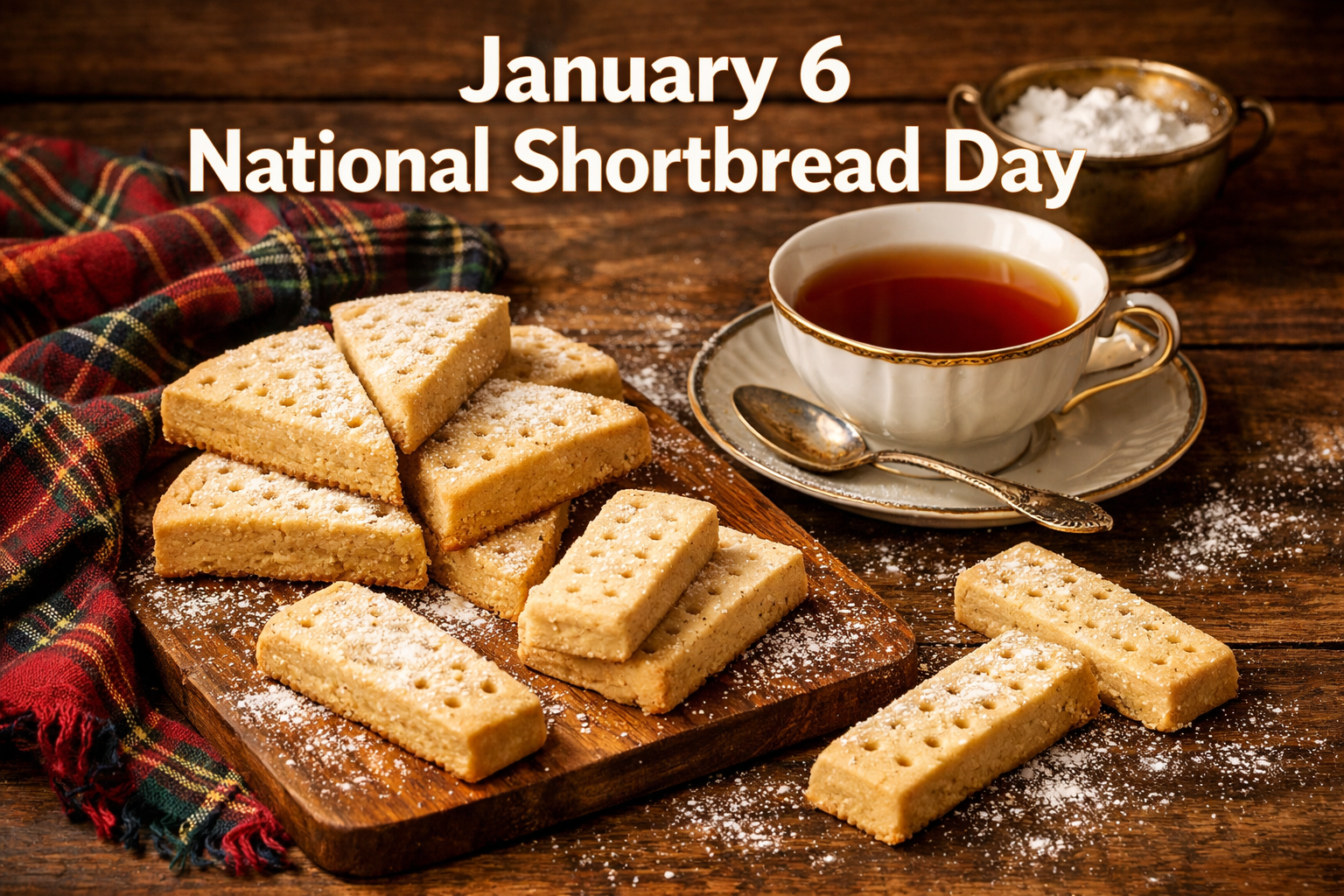
January 6 National Shortbread Day is a food observance dedicated to celebrating shortbread, one of the world’s simplest and most beloved baked goods. Every year on January 6, bakers, food enthusiasts, and Scottish culture fans mark the occasion by baking, buying, or gifting shortbread.
The holiday is informal — meaning no government body officially declared it — but it is widely recognized across food media, bakeries, and social platforms. It sits alongside dozens of similar U.S. food holidays that celebrate specific dishes or ingredients on designated calendar dates.
Why January 6? The date aligns with Epiphany, the Christian feast day that closes the Christmas season. Shortbread has deep roots in Scottish holiday tradition, historically baked for Christmas, Hogmanay (Scottish New Year), and Epiphany. Placing National Shortbread Day on January 6 connects the treat to its seasonal heritage.
A Brief History of Shortbread
Shortbread traces its roots to medieval Scotland, where leftover bread dough was dried out in a low oven to create a hard, twice-baked biscuit called “biscuit bread.” Over time, bakers replaced the yeast with butter, creating the rich, crumbly texture that defines shortbread today.
Mary, Queen of Scots (1542–1587) is widely credited with popularizing the refined version of shortbread. She reportedly favored “petticoat tails” — thin, round shortbread slices — at her court. Whether or not the legend is fully accurate, it cemented shortbread’s association with Scottish royalty and prestige.
For centuries, shortbread was considered a luxury item because butter was expensive. It was reserved for special occasions: Christmas, Hogmanay, and weddings. Scottish brides would have shortbread broken over their heads for good luck — a tradition that has largely faded but speaks to how deeply embedded the biscuit was in culture.
By the 19th century, mass production made shortbread widely affordable. Walker’s Shortbread, founded in Aberlour, Scotland in 1898, became one of the most recognized shortbread brands globally and remains a benchmark for the traditional style (Walker’s Shortbread, company history).
What Makes Shortbread Different from Other Cookies?
Shortbread is distinct from most cookies because it contains no eggs, no leavening agents (like baking powder), and no liquid. The only ingredients are butter, sugar, and flour.
| Feature | Shortbread | Standard Sugar Cookie | Butter Cookie |
|---|---|---|---|
| Eggs | No | Yes | Sometimes |
| Leavening | No | Yes | Sometimes |
| Texture | Dense, crumbly | Soft, chewy | Crisp, light |
| Flavor base | Pure butter | Vanilla/sugar | Butter + vanilla |
| Complexity | Very simple | Moderate | Moderate |
The word “short” in shortbread refers to the high fat content. In baking, fat “shortens” gluten strands, which prevents chewiness and produces a tender, crumbly crumb. More butter equals a “shorter,” more delicate texture. This is why butter quality matters so much — it’s the dominant flavor.
How to Celebrate January 6 National Shortbread Day
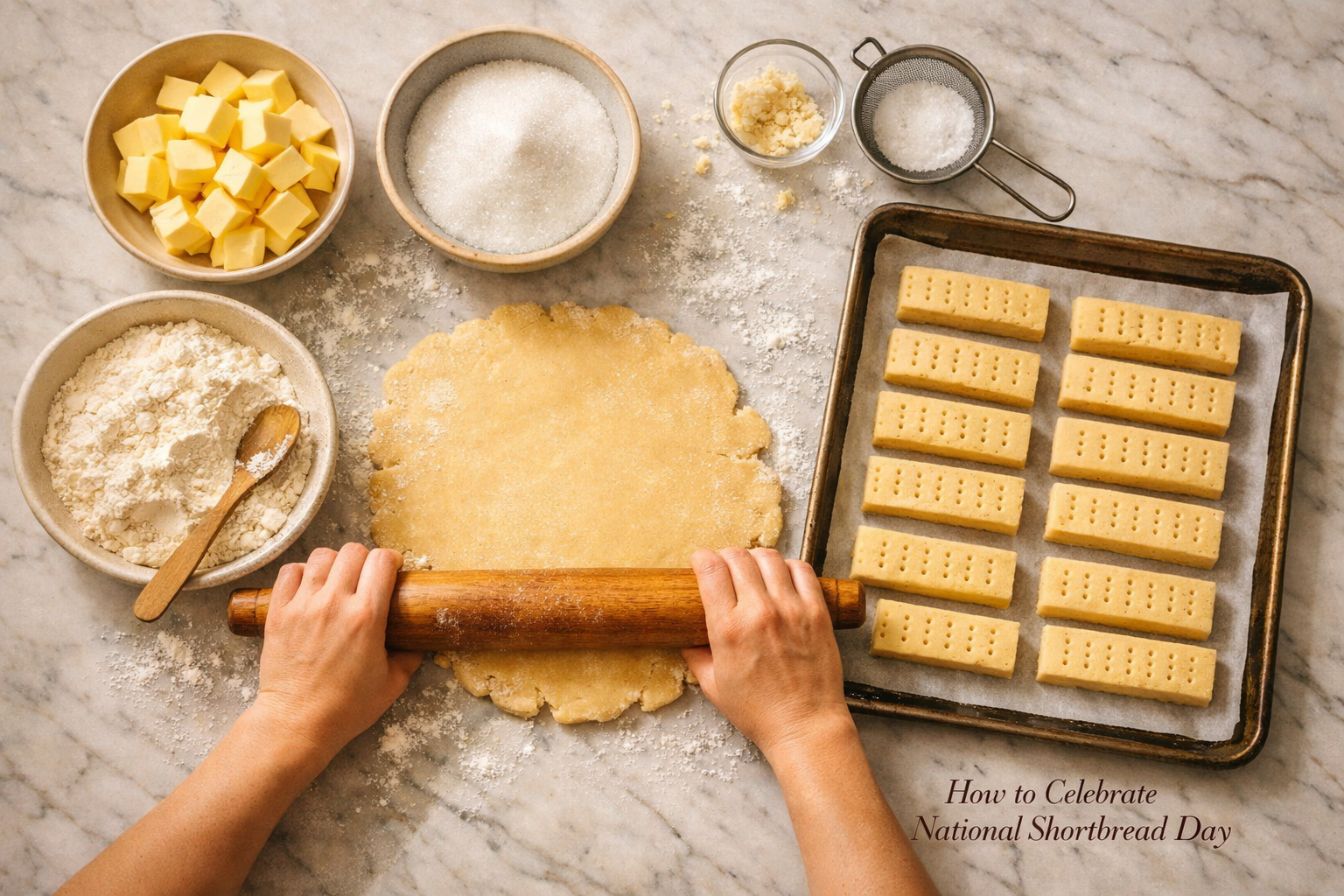
Celebrating January 6 National Shortbread Day doesn’t require much. The simplest approach is to bake a batch at home, but there are several other ways to mark the day.
Option 1: Bake classic shortbread at home The traditional recipe is beginner-friendly and takes under an hour start to finish.
Classic Shortbread Ratio (by weight):
- 1 part sugar (e.g., 50g caster or powdered sugar)
- 2 parts butter (e.g., 100g unsalted, softened)
- 3 parts flour (e.g., 150g all-purpose or rice flour blend)
Basic steps:
- Cream butter and sugar together until pale and smooth.
- Mix in flour gradually until a soft dough forms. Do not overwork it.
- Press into a pan or roll and cut into fingers or rounds.
- Prick the surface with a fork (this prevents puffing).
- Bake at 325°F (160°C) for 20–25 minutes until pale golden, not brown.
- Cool in the pan before cutting or removing.
Option 2: Buy from a Scottish or specialty bakery Support a local bakery or order from a Scottish import shop. Look for shortbread made with real butter and minimal additives.
Option 3: Gift a tin Shortbread keeps well for 2–3 weeks in an airtight tin, making it an easy gift. A decorated tin of homemade shortbread is a thoughtful, low-cost gesture.
Option 4: Host a shortbread tasting Set out 3–4 varieties (classic, lemon, chocolate-dipped, lavender) and compare flavors and textures with friends or family.
Popular Shortbread Variations Worth Trying
Classic shortbread is the foundation, but flavored versions are easy to make and widely enjoyed.
- 🍋 Lemon shortbread — Add 1 tsp lemon zest per 150g flour. Bright and refreshing.
- 🌸 Lavender shortbread — Use 1 tsp dried culinary lavender. Pairs well with Earl Grey tea.
- 🍫 Chocolate-dipped shortbread — Dip cooled fingers halfway into melted dark chocolate. Let set on parchment.
- 🌰 Brown butter shortbread — Brown the butter before creaming for a nuttier, deeper flavor.
- 🧀 Savory shortbread — Replace sugar with parmesan and add rosemary. Excellent with cheese boards.
- Millionaire’s shortbread — Layer shortbread with caramel and chocolate. A Scottish classic in its own right.
Choose lemon or lavender if serving with tea. Choose chocolate-dipped or millionaire’s if serving as a dessert or gift.
Common Mistakes When Making Shortbread
Even a three-ingredient recipe has pitfalls. These are the most frequent problems and how to avoid them.
- Using cold butter: Cold butter won’t cream properly. Always start with room-temperature butter.
- Overworking the dough: Too much mixing develops gluten, making shortbread tough instead of crumbly. Mix just until the dough comes together.
- Baking too hot: High heat browns shortbread too fast and dries it out. Keep the oven at 325°F (160°C) or lower.
- Skipping the rest: Chilling the shaped dough for 15–20 minutes before baking helps it hold its shape and improves texture.
- Cutting while hot: Shortbread is fragile when warm. Let it cool in the pan for at least 10 minutes before slicing.
FAQ: January 6 National Shortbread Day
Q: Is January 6 National Shortbread Day an official U.S. holiday? A: No. It is an informal food observance, not a federal or state holiday. No government body officially proclaimed it, but it is widely recognized in food media and by bakeries.
Q: Why is shortbread associated with Scotland? A: Shortbread developed in medieval Scotland and became a staple of Scottish celebrations including Hogmanay and Christmas. It remains a core part of Scottish culinary identity and is exported globally by brands like Walker’s.
Q: Can shortbread be made gluten-free? A: Yes. Replace all-purpose flour with a 1:1 gluten-free flour blend, or use a mix of rice flour and cornstarch. The texture will be slightly different but still enjoyable.
Q: How long does homemade shortbread last? A: Stored in an airtight container at room temperature, shortbread stays fresh for 2–3 weeks. It can also be frozen for up to 3 months.
Q: What is the difference between shortbread and shortcake? A: Shortbread is a dense, butter-rich biscuit with no eggs or leavening. Shortcake (as in strawberry shortcake) is a lightly sweetened, leavened biscuit or cake meant to be served with fruit and cream.
Q: Is shortbread the same as a butter cookie? A: They are similar but not identical. Shortbread has a higher butter-to-flour ratio and no eggs, making it denser and more crumbly. Butter cookies often include eggs and sometimes leavening, producing a lighter texture.
Q: What type of sugar works best in shortbread? A: Caster sugar (fine granulated) or powdered (icing) sugar both work well. Powdered sugar produces a slightly more delicate, melt-in-the-mouth texture.
Q: Can shortbread be made vegan? A: Yes. Substitute high-quality vegan butter (look for one with at least 80% fat content) for dairy butter. The result is close to traditional shortbread, though flavor may vary slightly.
Conclusion
January 6 National Shortbread Day is a simple, enjoyable celebration that connects a timeless Scottish baking tradition to the start of a new year. Whether baking a classic batch at home, gifting a decorated tin, or exploring flavored variations, the holiday is accessible to nearly everyone.
Actionable next steps for 2026:
- Mark January 6 on your calendar now so you don’t miss it next year.
- Gather ingredients in advance — butter, caster sugar, and flour are all you need for the classic version.
- Try one new variation this year, such as lemon zest or chocolate-dipped.
- Share on social media using #NationalShortbreadDay to connect with other bakers.
- Gift a tin to a neighbor, coworker, or friend as a thoughtful, homemade gesture.
Shortbread rewards simplicity. The fewer the ingredients, the more the quality of each one matters — and that’s a principle worth carrying into the rest of the year. 🍪
References
- Walker’s Shortbread. Company History and Heritage. Walker’s Shortbread Ltd. https://www.walkersshortbread.com (founded 1898; company history page, no specific publication year listed)
- Davidson, Alan. The Oxford Companion to Food. Oxford University Press, 1999.
- Brown, Catherine. Scottish Cookery. Mercat Press, 1999.