
Last updated: March 28, 2026
Quick Answer
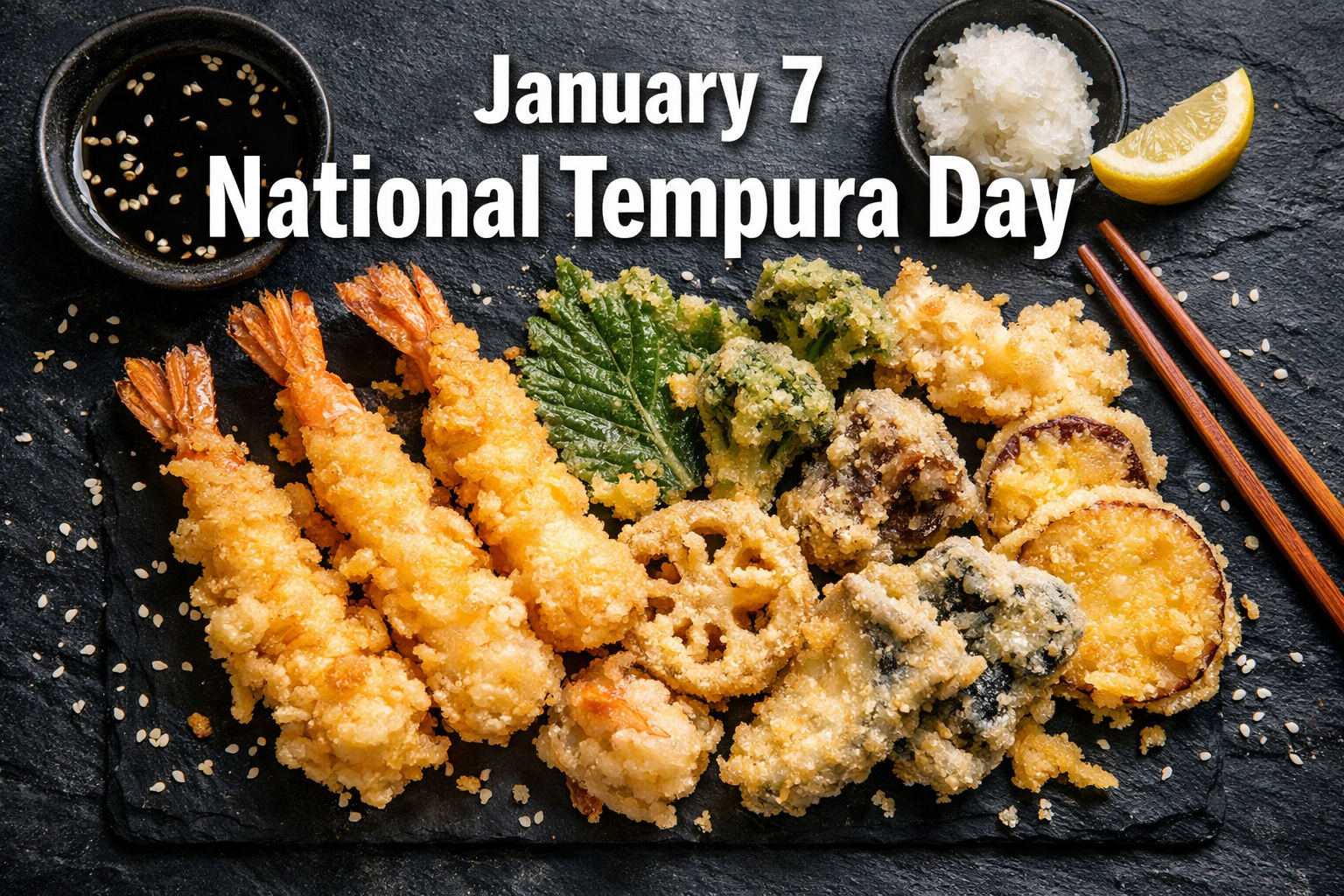
January 7 National Tempura Day is an annual food holiday celebrated in the United States on January 7th, dedicated to honoring the beloved Japanese cooking technique of light, crispy batter-fried seafood and vegetables. It’s a day to cook, order, or simply enjoy tempura — whether at a Japanese restaurant or in your own kitchen. The holiday blends culinary appreciation with cultural history, making it one of the more substantive food observances on the calendar.
Key Takeaways
- January 7 National Tempura Day falls every year on January 7th.
- Tempura is a Japanese dish with roots in 16th-century Portuguese culinary traditions.
- The dish features seafood or vegetables coated in a light, airy batter and deep-fried to a golden crisp.
- Classic tempura batter uses ice-cold water, which is key to its signature texture.
- Common tempura ingredients include shrimp, sweet potato, zucchini, broccoli, and mushrooms.
- Tempura is typically served with tentsuyu dipping sauce and grated daikon radish.
- The holiday is a great opportunity to try making tempura at home — it’s more approachable than most people expect.
- Celebrating can be as simple as visiting a Japanese restaurant or hosting a tempura fry night with friends.
- Tempura is relatively lower in calories than many other fried foods when prepared correctly, due to its thin batter.
- The dish has global appeal and appears on menus far beyond Japan, from high-end sushi bars to casual fusion restaurants.
What Is January 7 National Tempura Day?
January 7 National Tempura Day is a food holiday observed annually in the United States on January 7th. It exists to celebrate tempura — the Japanese culinary art of coating ingredients in a delicate, ice-cold batter and frying them until light and golden.
The holiday gives food lovers a reason to explore Japanese cuisine at the start of each new year. Whether someone is a seasoned home cook or a curious beginner, the day serves as both an invitation and an excuse to try something a little different from the usual January meal routine.
“Tempura is deceptively simple — the technique is accessible, but mastering the texture takes genuine attention to detail.”
The History Behind Tempura and Why January 7 Matters
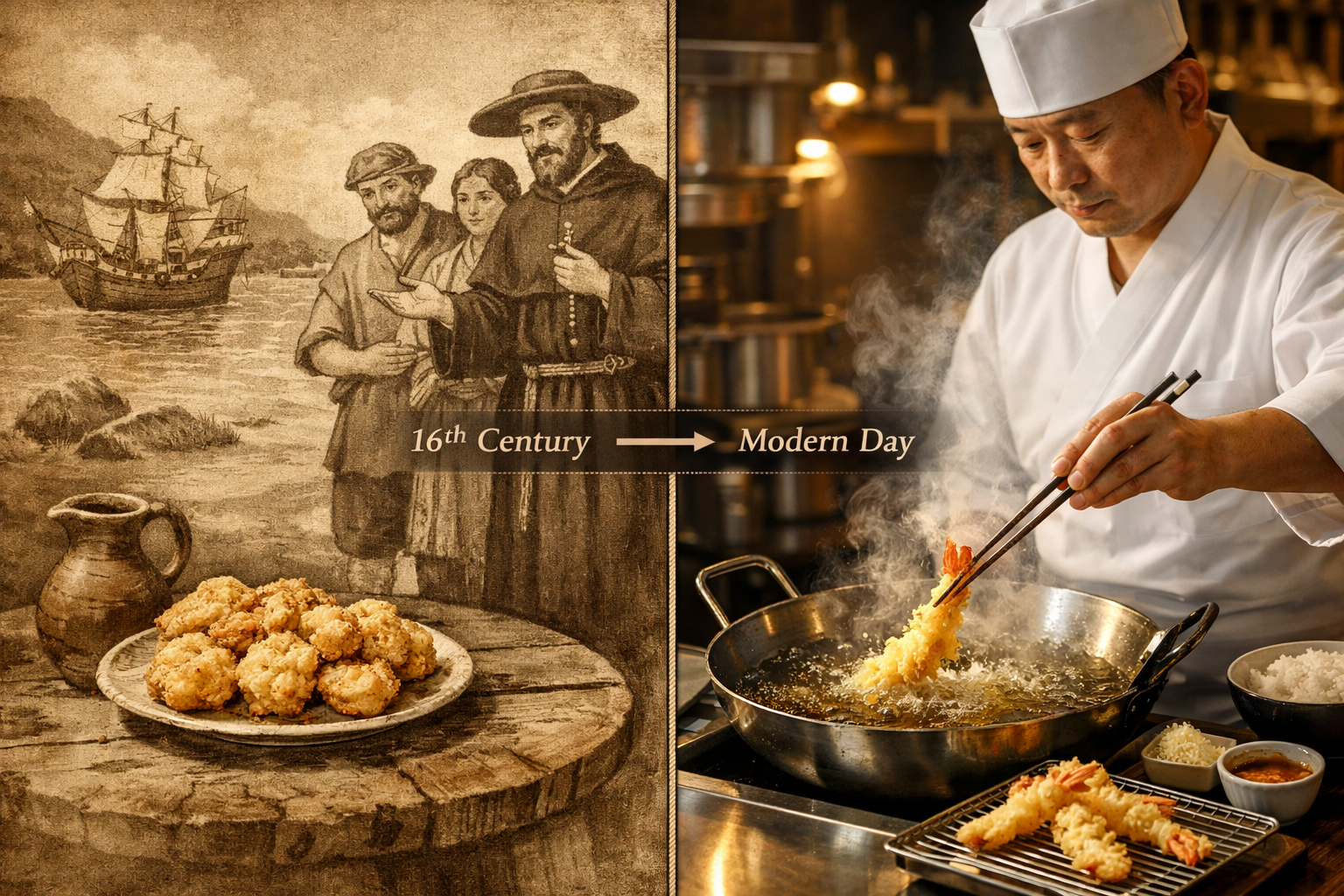
Tempura’s origins are more global than many people realize. The dish traces back to the 16th century, when Portuguese Jesuit missionaries arrived in Japan. They brought with them a tradition of eating fried vegetables during the Quatuor Anni Tempora — the Catholic fasting periods tied to the four seasons. Japanese cooks adapted this technique, refined the batter, and eventually created what the world now recognizes as tempura.
By the Edo period (1603–1868), tempura had become a popular street food in Japan, sold from outdoor stalls called yatai. Over centuries, it evolved from a humble fried snack into a refined culinary art form served in dedicated tempura-ya restaurants.
Why January 7 specifically? The origin of the date for National Tempura Day in the United States is not tied to a single verified historical event. Like many American food holidays, it likely emerged from food industry promotions and social media food calendars. However, January 7th has a nice cultural resonance: in Japan, January 7th (Nanakusa no Sekku) is the day people traditionally eat a seven-herb rice porridge to bring health in the new year — making early January a fitting time to celebrate Japanese culinary culture more broadly.
What Makes Tempura Different from Other Fried Foods?
Tempura stands apart from other fried dishes because of its batter composition and frying technique. The batter is intentionally thin, lumpy, and mixed with ice-cold water — sometimes even sparkling water — to minimize gluten development and trap air bubbles that create a light, crispy coating.
Key differences at a glance:
| Feature | Tempura | Standard Fried Batter |
|---|---|---|
| Batter texture | Thin, barely mixed | Thick, smooth |
| Water temperature | Ice-cold | Room temperature |
| Gluten development | Minimal (intentional) | Higher |
| Coating result | Light, airy, crispy | Dense, heavy |
| Typical ingredients | Seafood, vegetables | Meat, poultry, fish |
| Oil temperature | 340–360°F (170–180°C) | Varies widely |
The result is a coating that doesn’t overwhelm the ingredient inside. You can still taste the shrimp, the sweet potato, or the green bean — the batter enhances rather than masks.
Common mistake: Over-mixing the batter. Stirring until smooth activates gluten and produces a dense, doughy coating. A few quick strokes with chopsticks, leaving visible lumps, is the correct approach.
How to Celebrate January 7 National Tempura Day
Celebrating January 7 National Tempura Day doesn’t require special equipment or professional training. Here are practical ways to mark the occasion:
Option 1: Visit a Japanese restaurant Look for a local Japanese restaurant that serves tempura. Many offer shrimp tempura as an appetizer or as part of a bento box. Higher-end tempura-ya restaurants offer a full omakase-style tempura course.
Option 2: Make tempura at home Home tempura is genuinely achievable. The core recipe requires just a few pantry staples:
- All-purpose flour
- Ice-cold water (or sparkling water)
- One egg
- Neutral oil (vegetable or canola) for frying
- Your choice of shrimp, vegetables, or both
Option 3: Host a tempura fry night Set up a tabletop fryer or a deep pot with oil, prepare a variety of dipping ingredients, and let guests fry their own. It’s interactive and social — a good way to turn a food holiday into an actual event.
Option 4: Order in Many Japanese and Asian fusion restaurants offer tempura for delivery or takeout. Check apps like DoorDash, Uber Eats, or your local favorites.
Classic Tempura Ingredients to Try
Tempura works with a wide range of ingredients. The best choices share one trait: they cook quickly at frying temperatures, so the inside is done by the time the outside is golden.
Seafood:
- Shrimp (most popular; classic ebi tempura)
- Scallops
- White fish fillets
- Squid rings
Vegetables:
- Sweet potato slices
- Zucchini rounds
- Broccoli florets
- Bell pepper strips
- Shiitake mushrooms
- Green beans
- Lotus root
Less common but worth trying:
- Avocado
- Asparagus
- Shiso leaves (Japanese herb)
- Kabocha squash
Choose ingredients that are dry before battering. Pat them with a paper towel — excess moisture causes the batter to slide off and leads to uneven frying.
What to Serve with Tempura
Tempura is almost always served with tentsuyu, a dipping sauce made from dashi broth, soy sauce, and mirin. Grated daikon radish and fresh ginger are common accompaniments, added directly to the dipping sauce.
Simple tentsuyu ratio (approximate):
- 4 parts dashi
- 1 part soy sauce
- 1 part mirin
Warm the mixture gently before serving. Bottled tentsuyu is also widely available at Asian grocery stores for convenience.
Tempura is also served over rice (tendon — tempura rice bowl) or alongside soba noodles (tempura soba), both of which are excellent ways to turn the dish into a full meal.
FAQ: January 7 National Tempura Day
Q: When is National Tempura Day? National Tempura Day is observed annually on January 7th in the United States.
Q: Is tempura Japanese or Portuguese in origin? Tempura has mixed origins. Portuguese missionaries introduced the frying technique to Japan in the 16th century, but Japanese cooks refined and transformed it into the distinct dish recognized today.
Q: Is tempura healthy compared to other fried foods? Tempura uses a thin batter that absorbs less oil than thicker coatings, making it lighter than many fried foods. However, it is still a deep-fried dish and should be enjoyed in moderation as part of a balanced diet.
Q: Can tempura be made gluten-free? Yes. Substitute all-purpose flour with rice flour or a certified gluten-free flour blend. Rice flour actually produces a particularly crispy result.
Q: What oil is best for frying tempura? Neutral-flavored oils with high smoke points work best — vegetable oil, canola oil, or refined sesame oil. Avoid olive oil, which has too low a smoke point and a strong flavor.
Q: Can tempura be reheated? Tempura is best eaten immediately after frying. If reheating is necessary, use an oven or air fryer at around 375°F (190°C) for a few minutes. Microwaving makes it soggy.
Q: What is a tempura-ya? A tempura-ya is a restaurant in Japan that specializes exclusively in tempura, often serving it as a multi-course meal with each piece fried to order.
Q: Is there a National Tempura Day outside the U.S.? The January 7 observance is primarily a U.S.-based food holiday. Japan has its own culinary calendar, but a specific national tempura day equivalent is not widely observed there.
Conclusion
January 7 National Tempura Day is more than a quirky food holiday. It’s a genuine opportunity to engage with one of the world’s most refined frying techniques — one with a rich cross-cultural history spanning Portugal and Japan across several centuries.
Actionable next steps for 2026:
- Mark your calendar for January 7th and decide in advance whether you’ll cook at home or dine out.
- Gather ingredients ahead of time: shrimp, a few vegetables, flour, and a neutral oil are all you need to start.
- Try the tentsuyu dipping sauce from scratch — it takes under 10 minutes and makes a noticeable difference.
- Share the experience by hosting a small fry night or posting your tempura results on social media with the hashtag #NationalTempuraDay.
- Explore beyond shrimp — sweet potato and shiitake mushroom tempura are underrated and worth the effort.
Whether the goal is a quick restaurant visit or a full home-cooking session, January 7 National Tempura Day is a worthwhile reason to slow down, cook something intentional, and appreciate a dish that has traveled centuries and continents to reach the plate.
References
- Rath, E. C. (2010). Food and Fantasy in Early Modern Japan. University of California Press.
- Ashkenazi, M., & Jacob, J. (2000). The Essence of Japanese Cuisine: An Essay on Food and Culture. University of Pennsylvania Press.
- Davidson, A. (1999). The Oxford Companion to Food. Oxford University Press.
- Hosking, R. (1996). A Dictionary of Japanese Food: Ingredients and Culture. Tuttle Publishing.