
Last updated: March 28, 2026
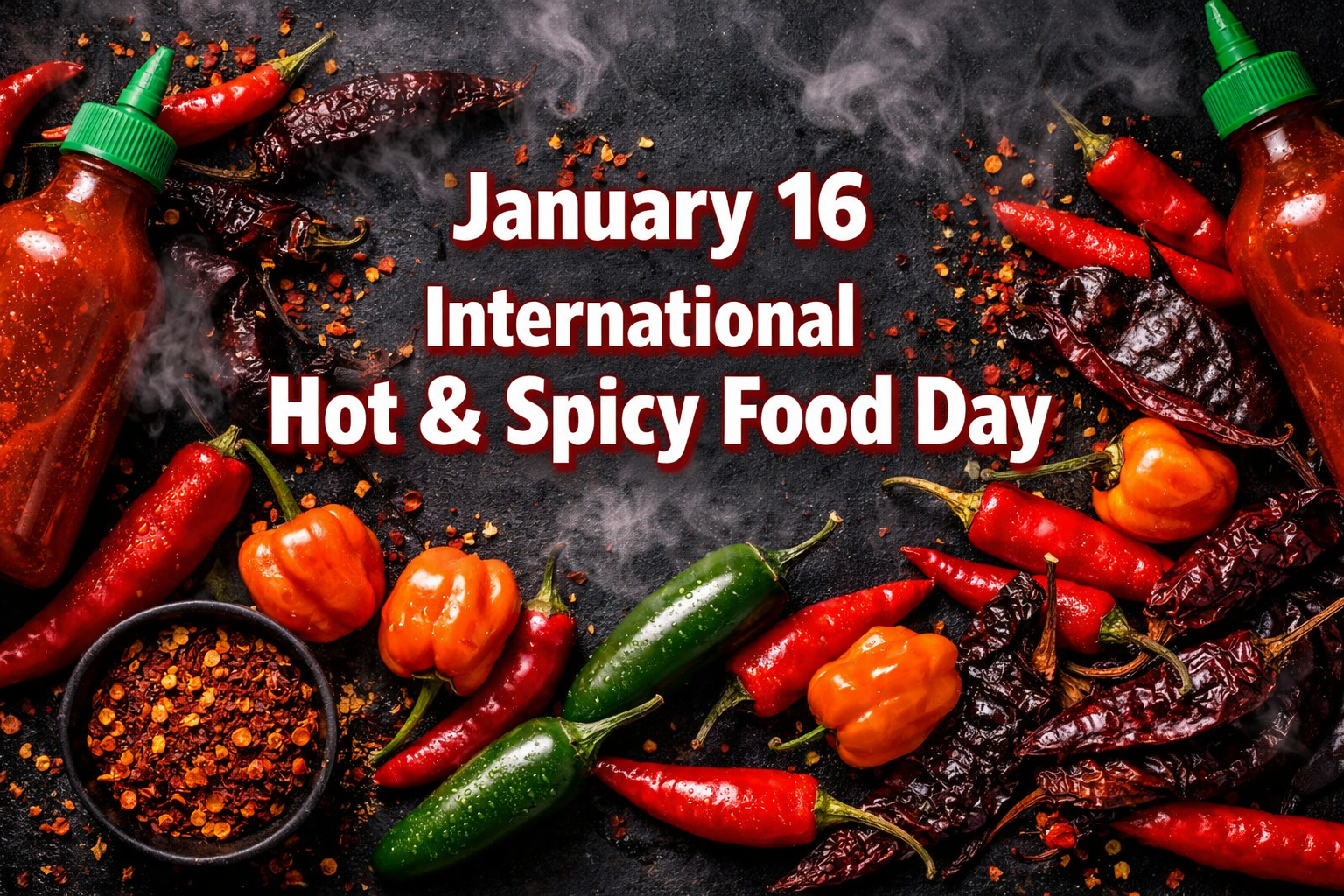
Quick Answer: January 16 International Hot & Spicy Food Day is an annual food observance celebrated every January 16 that honors spicy cuisine from around the world. It encourages food lovers to try hot and spicy dishes, explore global chili culture, and appreciate the science and history behind heat in food. No registration or official body is required to participate — anyone can join in.
Key Takeaways
- January 16 is recognized globally as International Hot & Spicy Food Day, a food holiday dedicated to fiery flavors.
- The day celebrates chili peppers, hot sauces, spicy cuisines, and the cultures that built their food traditions around heat.
- Capsaicin — the compound responsible for chili heat — has been studied for potential health benefits, including pain relief and metabolism support.
- Heat in food is measured using the Scoville Heat Unit (SHU) scale, developed by pharmacist Wilbur Scoville in 1912.
- Popular ways to celebrate include cooking spicy recipes at home, visiting spicy food festivals, hosting hot sauce tastings, and trying a new cuisine.
- The day is observed worldwide, with particularly strong cultural resonance in Mexico, India, South Korea, Thailand, and the American Southwest.
- Chili peppers originated in the Americas and spread globally after the 16th century through trade routes.
- Beginners can participate safely by starting with mild-to-medium heat levels and working up gradually.
What Is January 16 International Hot & Spicy Food Day?
January 16 International Hot & Spicy Food Day is an informal but widely observed annual food holiday that celebrates spicy food, chili culture, and the global love of heat. It falls every year on January 16 and gives food enthusiasts a dedicated reason to explore hot cuisine — from a simple jalapeño salsa to a bowl of fiery Sichuan mapo tofu.
The day has no single founding organization, which is common for many food holidays. It has grown organically through social media, food blogs, and culinary communities over the past two decades. By 2026, it appears on most major food holiday calendars and generates significant activity across platforms like Instagram, TikTok, and food-focused communities.
🌶️ “Spicy food isn’t just a flavor preference — it’s a cultural identity for billions of people worldwide.”
Why Is January 16 Celebrated as Spicy Food Day?
The exact origin of January 16 as the chosen date is not formally documented, which is typical for grassroots food observances. What matters more is what the date represents: a midwinter moment to bring warmth and excitement to the table.
January is a cold month in the Northern Hemisphere, and spicy food has a long association with generating body warmth and comfort. Celebrating spicy food in mid-January fits naturally with the season.
Why this day resonates:
- It breaks up the post-holiday lull in January with a fun, food-centered event.
- Spicy food culture is universal — it crosses geographic and economic boundaries.
- The rise of hot sauce as a mainstream condiment (hot sauce retail sales in the U.S. have grown steadily over the past decade, according to market research firm IBISWorld) has made spicy food more relevant than ever.
The Science Behind Spicy Food: What Makes It Hot?
Spicy heat comes from capsaicin, a chemical compound found primarily in chili peppers. Capsaicin binds to pain receptors in the mouth called TRPV1 receptors, which normally respond to heat and physical abrasion. The brain interprets this binding as burning, even though no actual tissue damage occurs.
Key facts about capsaicin and heat:
| Concept | Detail |
|---|---|
| Active compound | Capsaicin (and related capsaicinoids) |
| Measurement scale | Scoville Heat Units (SHU) |
| Scale creator | Wilbur Scoville, 1912 |
| Bell pepper SHU | 0 SHU |
| Jalapeño SHU | 2,500–8,000 SHU |
| Habanero SHU | 100,000–350,000 SHU |
| Carolina Reaper SHU | 1,400,000–2,200,000 SHU (among hottest known) |
Potential health associations (based on published research, not guarantees):
- Capsaicin has been studied for its role in temporary metabolism increases (Ludy et al., Chemical Senses, 2012).
- Topical capsaicin is used in FDA-approved pain relief products for conditions like neuropathy.
- Some research suggests regular chili consumption may be associated with cardiovascular benefits, though study designs vary widely.
Common mistake: Drinking water when your mouth burns from capsaicin makes it worse. Capsaicin is oil-soluble, so dairy products (milk, yogurt) or starchy foods are far more effective at neutralizing the burn.
How to Celebrate January 16 International Hot & Spicy Food Day
Celebrating January 16 International Hot & Spicy Food Day requires no special equipment or membership — just a willingness to turn up the heat. Here are practical ways to mark the occasion, from low-effort to fully committed.
For beginners:
- Add a fresh jalapeño or serrano pepper to a meal you already cook regularly.
- Try a new hot sauce from a local grocery store or specialty shop.
- Order a spicier dish than usual at a restaurant you already enjoy.
For enthusiasts:
- Host a hot sauce tasting with friends, ranking sauces by heat and flavor.
- Cook a dish from a cuisine known for heat: Korean buldak (fire chicken), Thai green curry, or Szechuan dan dan noodles.
- Visit a local farmers market and buy fresh chili varieties you’ve never cooked with.
For serious chili fans:
- Attempt a chili pepper challenge (responsibly, and never pressure others to participate).
- Grow your own chili plants — many varieties thrive indoors in winter with a grow light.
- Enter or organize a local chili cook-off in honor of the day.
Choose this approach if…
- You’re new to spicy food: start with SHU levels under 5,000 and build tolerance gradually.
- You have a group: a hot sauce tasting is social, low-risk, and highly entertaining.
- You want a deeper experience: cook a full meal from a spicy culinary tradition rather than just adding heat to existing food.
Global Spicy Food Traditions Worth Exploring on This Day
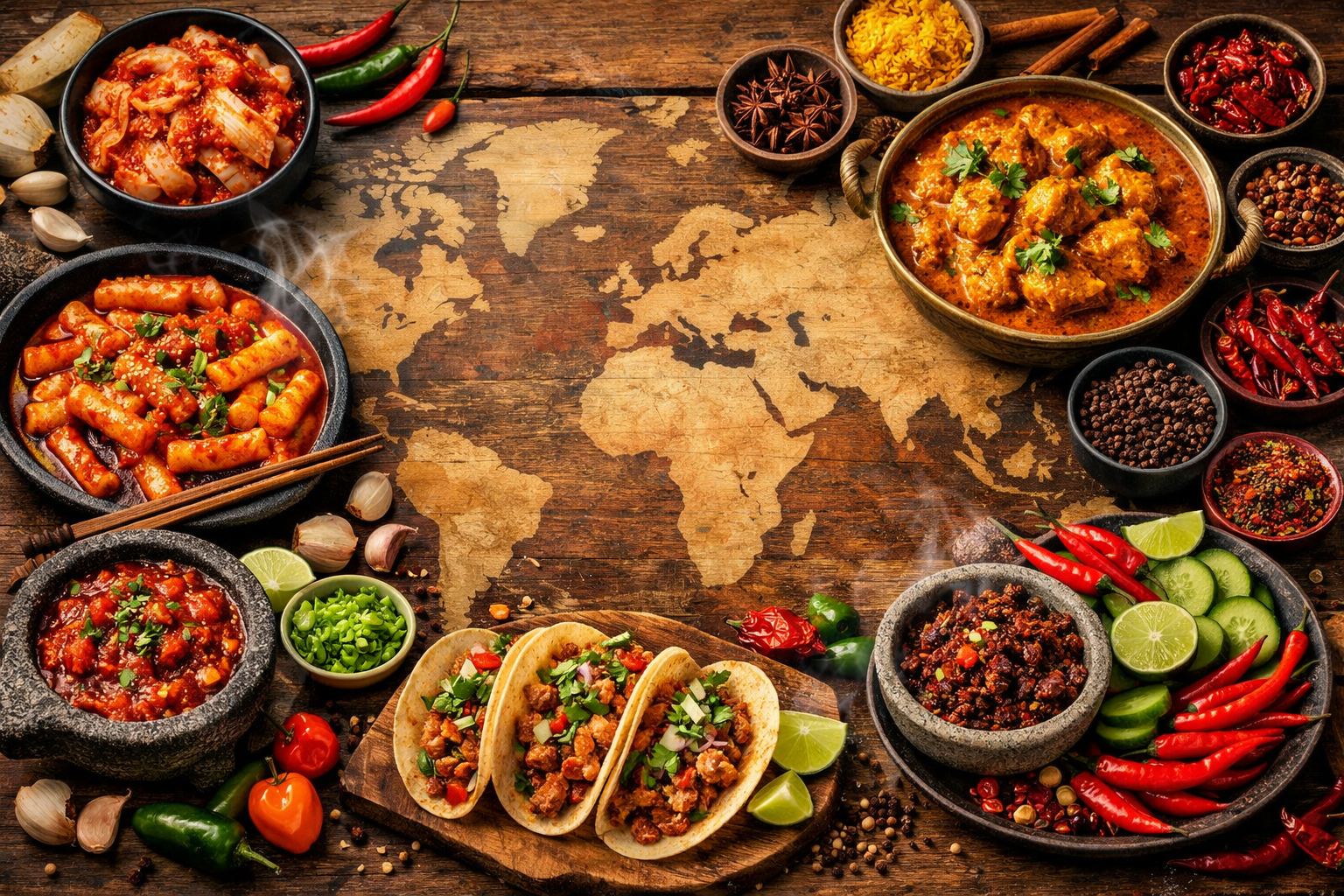
Spicy food is not one thing — it’s a collection of distinct culinary traditions, each with its own ingredients, techniques, and cultural meaning. January 16 International Hot & Spicy Food Day is an ideal prompt to explore beyond the familiar.
Notable spicy food cultures:
- 🇲🇽 Mexico: Mole, salsa verde, chile de árbol sauces. Chili use dates back thousands of years to Mesoamerican civilizations.
- 🇮🇳 India: Vindaloo, chettinad curry, green chili chutneys. Regional variation is enormous — Rajasthani food differs dramatically from Goan.
- 🇰🇷 South Korea: Kimchi, gochujang (fermented chili paste), buldak. Fermentation adds depth beyond raw heat.
- 🇹🇭 Thailand: Bird’s eye chilies in curries and stir-fries, nam prik (chili dipping sauces). Balances heat with sour, sweet, and salty.
- 🇨🇳 China (Sichuan region): Mapo tofu, hot pot, dan dan noodles. Sichuan peppercorns add a numbing quality distinct from capsaicin heat.
- 🇪🇹 Ethiopia: Berbere spice blend, doro wat. Layered, complex heat built from multiple spices.
FAQ: January 16 International Hot & Spicy Food Day
Q: Is January 16 International Hot & Spicy Food Day an official holiday? A: No. It is an informal food observance with no government or international body designation. It is widely recognized in food communities and media but carries no official status.
Q: Who created International Hot & Spicy Food Day? A: The precise originator is not documented. Like many food holidays, it grew organically through food media and online communities over time.
Q: Is spicy food safe for everyone? A: Most healthy adults can enjoy spicy food in moderate amounts. People with conditions like acid reflux, irritable bowel syndrome (IBS), or gastritis should consult a doctor before significantly increasing spicy food intake, as capsaicin can aggravate these conditions in some individuals.
Q: What’s the best way to cool down after eating something too spicy? A: Drink cold milk or eat plain yogurt, bread, or rice. Avoid water — it spreads capsaicin rather than neutralizing it.
Q: Can children participate in spicy food day? A: Yes, with age-appropriate heat levels. Many children enjoy mildly spiced foods. Avoid forcing participation, and start with very mild options like a small amount of sweet paprika or mild salsa.
Q: What is the hottest chili pepper in the world? A: As of 2026, the Pepper X, developed by Ed Curlin, holds the Guinness World Record for hottest chili pepper, reportedly averaging over 2.6 million SHU (Guinness World Records, 2023).
Q: Does spicy food boost metabolism? A: Research suggests capsaicin may cause a small, temporary increase in metabolic rate. However, the effect is modest and not a reliable weight-loss strategy on its own (Ludy et al., Chemical Senses, 2012).
Q: How do I find spicy food events near me on January 16? A: Search local event platforms like Eventbrite or Meetup for “chili cook-off,” “hot sauce festival,” or “spicy food event” filtered to your city and date. Restaurants often run special menus on the day.
Conclusion
January 16 International Hot & Spicy Food Day is more than an excuse to eat something fiery — it’s a genuine celebration of global culinary tradition, food science, and the human love of bold flavor. Whether someone marks the day by trying a new hot sauce or cooking a full Sichuan feast, the point is engagement with food culture in a deliberate and curious way.
Actionable next steps for 2026:
- Mark January 16 on your calendar now and plan one specific spicy meal or activity.
- Pick one spicy culinary tradition you’ve never explored and research a beginner-friendly recipe.
- Share your experience on social media using hashtags like #SpicyFoodDay or #HotAndSpicyFoodDay to connect with the global community.
- If you’re a restaurant owner or food brand, plan a January 16 promotion — the day generates real search and social interest.
Spicy food has been central to human cuisine for thousands of years. One day a year, it gets its own spotlight. Use it well. 🌶️
References
- Ludy, M.J., Moore, G.E., & Mattes, R.D. (2012). The effects of capsaicin and capsiate on energy balance: Critical review and meta-analyses of studies in humans. Chemical Senses, 37(2), 103–121.
- IBISWorld. (2023). Hot Sauce Production in the US — Industry Report. IBISWorld.
- Guinness World Records. (2023). Hottest chili pepper. https://www.guinnessworldrecords.com
- Tewksbury, J.J., & Nabhan, G.P. (2001). Seed dispersal: Directed deterrence by capsaicin in chilies. Nature, 412, 403–404.