
Last updated: March 28, 2026
Quick Answer: January 17 National Hot Heads Chili Day is an annual food holiday celebrated every January 17 that honors chili — one of America’s most beloved comfort foods. It encourages home cooks, chili enthusiasts, and restaurants to make, share, and enjoy chili in all its forms, from mild and meaty to fiery and complex. The day has no single founding organization but is widely recognized across food holiday calendars and social media communities.
Key Takeaways
- January 17 National Hot Heads Chili Day falls every year on January 17.
- “Hot Heads” in the name refers to chili lovers who enjoy bold, spicy flavors — not just extreme heat.
- Chili has deep roots in American and Tex-Mex culinary history, with origins traced to the American Southwest.
- The day is perfect for hosting cook-offs, trying new chili recipes, or visiting local chili-focused restaurants.
- Chili is a budget-friendly, protein-rich meal that works for a wide range of diets (with the right recipe).
- Common chili styles include Texas-style (no beans), Cincinnati-style (served over spaghetti), and vegetarian versions.
- Social media hashtags like #HotHeadsChiliDay and #NationalChiliDay help connect enthusiasts online.
- No special equipment is needed — a large pot or slow cooker is all it takes to participate.
What Is January 17 National Hot Heads Chili Day?
January 17 National Hot Heads Chili Day is an informal food holiday dedicated to celebrating chili in all its regional and personal variations. It sits on January 17 each year and is distinct from the broader National Chili Day, which falls in February.
The “Hot Heads” label is a nod to passionate chili fans — people who take their recipes seriously and aren’t afraid of bold spice. The day encourages everyone, from beginners to seasoned cooks, to get a pot going and share the results.
A Brief History of Chili in America
Chili’s roots go back to the American Southwest, particularly Texas, in the 19th century. The dish is widely associated with San Antonio, where “Chili Queens” sold spiced meat stews in the city’s plazas as far back as the 1860s (according to culinary historians at the Smithsonian Institution).
Key milestones in chili history:
- 1860s–1880s: San Antonio street vendors popularize chili con carne.
- 1893: Chili is introduced to a national audience at the Chicago World’s Fair via the San Antonio Chili Stand.
- 1977: Texas officially designates chili con carne as the state dish.
- 1980s–present: Chili cook-offs become a competitive tradition across the U.S., with the International Chili Society hosting sanctioned events.
“Chili con carne is not just a recipe — it’s a regional identity, a competitive sport, and a comfort food all at once.”
How to Celebrate January 17 National Hot Heads Chili Day
Celebrating January 17 National Hot Heads Chili Day doesn’t require a big budget or a professional kitchen. The goal is simple: make or enjoy chili.
Five practical ways to celebrate:
- Cook a pot from scratch. Pick a style (Texas, Cincinnati, verde, or vegetarian) and follow a trusted recipe.
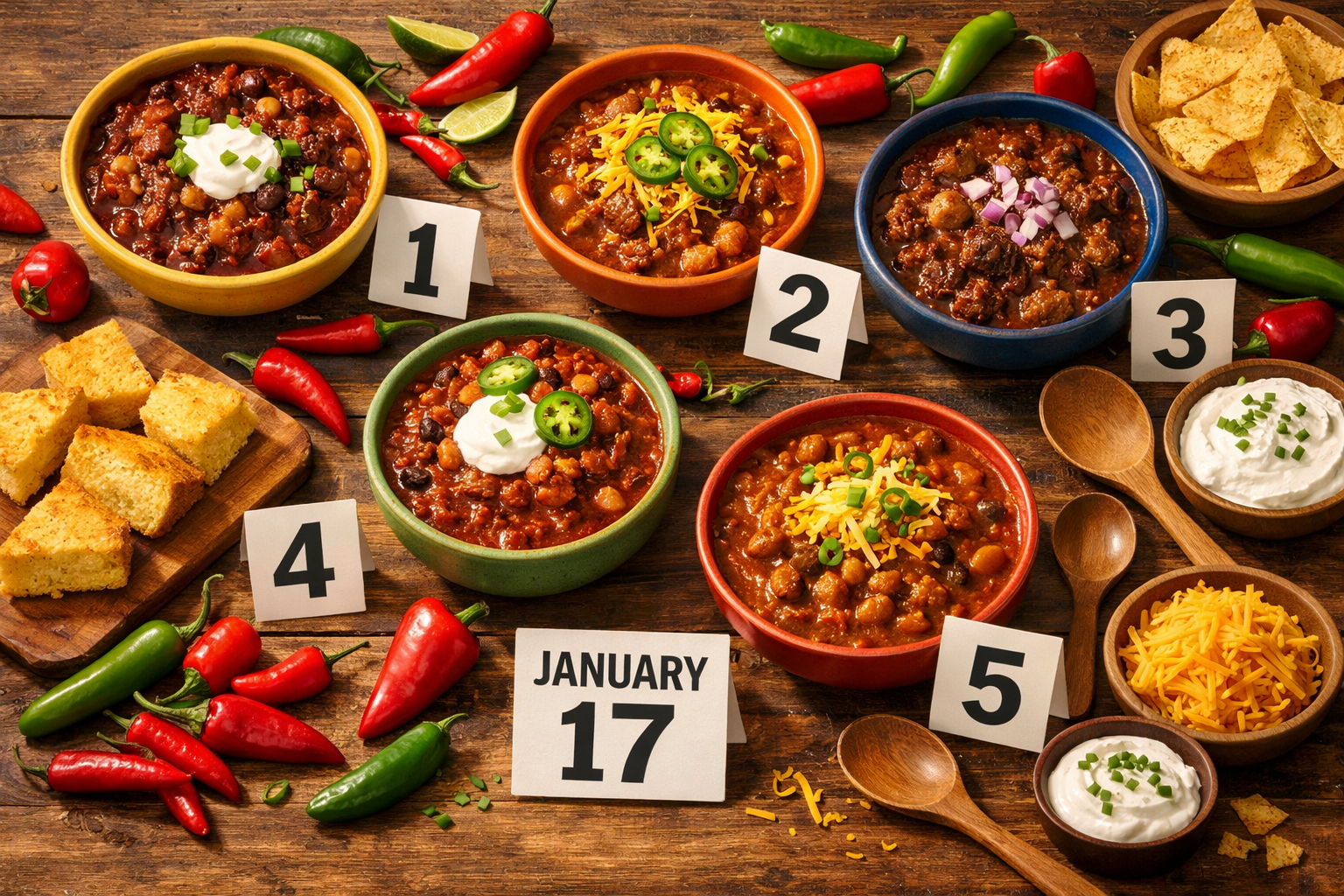
- Host a mini cook-off. Invite friends or family to each bring a version and vote on a winner.
- Order from a local restaurant. Support a neighborhood spot that specializes in chili or Tex-Mex.
- Try a new chili style. If you always make beef chili, experiment with white chicken chili or a smoky black bean version.
- Share on social media. Post your bowl with #HotHeadsChiliDay or #NationalHotHeadsChiliDay to connect with other enthusiasts.
Choose this approach if…
- You’re new to cooking: Start with a slow cooker recipe — it’s nearly impossible to overcook chili in a slow cooker.
- You’re feeding a crowd: A large batch of chili scales easily and costs less per serving than most other crowd meals.
- You’re short on time: Canned chili dressed up with fresh toppings (cheese, jalapeños, onions) still counts as celebrating.
Popular Chili Styles Worth Knowing
Not all chili is the same. The style you choose shapes the flavor, texture, and even the debate you’ll start at the table.
| Style | Key Traits | Beans? | Typical Toppings |
|---|---|---|---|
| Texas Red | Beef, dried chiles, no tomatoes | No | Cheese, onion, crackers |
| Cincinnati | Sweet spices, served over spaghetti | Optional | Cheese, onion, oyster crackers |
| Green Chile (Verde) | Pork or chicken, green chiles | Rarely | Sour cream, cilantro |
| White Chicken Chili | Chicken, white beans, cumin | Yes (white) | Avocado, lime, cheese |
| Vegetarian/Vegan | Beans, vegetables, smoked paprika | Yes | Any of the above |
Common mistake: Adding beans to Texas-style chili is considered a serious error among purists. If you’re entering a sanctioned cook-off, check the rules — many Texas-style competitions disqualify bean-based entries.
What Makes a Great Chili Recipe?
A great chili recipe balances heat, depth, and texture. The best versions layer flavors rather than dumping everything in at once.
Core building blocks of a strong chili:
- Fat and aromatics first: Brown the meat and cook onions and garlic in oil before adding liquids.
- Dried chiles or quality chili powder: Whole dried chiles (like ancho or guajillo) add complexity that pre-made powder alone can’t match.
- Acid: A splash of apple cider vinegar or a squeeze of lime at the end brightens the whole dish.
- Time: Chili improves with at least 45 minutes of simmering. Overnight in the fridge makes it even better.
- Salt in stages: Season at the beginning, middle, and end — not just once.
Edge case: If chili tastes flat despite correct seasoning, it usually needs more acid or a small amount of sugar to balance the tomatoes. A teaspoon of brown sugar or a tablespoon of vinegar often fixes it.
Is January 17 National Hot Heads Chili Day the Same as National Chili Day?
No. These are two separate food holidays. January 17 National Hot Heads Chili Day falls on January 17 each year. National Chili Day is observed on the fourth Thursday of February. Both celebrate chili, but they have different origins and communities around them.
The “Hot Heads” name gives January 17’s holiday a more specific identity — it leans into the culture of passionate, spice-forward chili fans rather than a general appreciation of the dish.
FAQ
Q: When is January 17 National Hot Heads Chili Day celebrated? A: Every year on January 17. In 2026, it falls on a Saturday, making it a great day for a cook-off or gathering.
Q: Who created National Hot Heads Chili Day? A: The holiday does not have a single documented founder. It appears on multiple food holiday calendars and has grown organically through social media and food communities.
Q: Do I have to use spicy ingredients to celebrate? A: No. “Hot Heads” refers to enthusiastic chili fans, not a requirement for extreme heat. Mild chili is a perfectly valid way to participate.
Q: What’s the easiest chili recipe for beginners? A: A slow cooker beef and bean chili using ground beef, canned tomatoes, kidney beans, chili powder, cumin, and garlic is a reliable starting point. Brown the beef first, then add everything to the slow cooker on low for 6–8 hours.
Q: Can chili be made vegetarian or vegan? A: Yes. Replace meat with extra beans, lentils, or diced vegetables like zucchini and bell pepper. Use vegetable broth instead of beef broth. Smoked paprika adds depth that compensates for the missing meat flavor.
Q: How long does homemade chili keep? A: Stored in an airtight container, chili keeps in the refrigerator for up to 4 days and in the freezer for up to 3 months (per USDA food safety guidelines).
Q: What are the best toppings for chili? A: Shredded cheddar cheese, sour cream, diced white onion, sliced jalapeños, fresh cilantro, and a squeeze of lime are the most popular choices. Cornbread or oyster crackers on the side are classic additions.
Q: Is chili a healthy meal? A: It can be. Bean-based chili is high in fiber and plant protein. Beef chili provides iron and protein. Watch sodium levels in canned ingredients and go easy on high-fat toppings if nutrition is a priority.
Q: Are there organized events for this holiday? A: Some local restaurants, community centers, and food festivals organize chili cook-offs around January 17. Check local event listings or community boards closer to the date.
Conclusion
January 17 National Hot Heads Chili Day is a straightforward, enjoyable food holiday with real culinary depth behind it. Whether someone is a first-time cook or a seasoned chili competitor, the day offers a clear reason to get in the kitchen and experiment.
Actionable next steps for 2026:
- Mark January 17 on the calendar now and plan a recipe or outing.
- Pick one unfamiliar chili style from the table above and try it this year.
- Invite at least one other person — a cook-off, even with just two entries, makes the day more fun.
- Share the results online with #HotHeadsChiliDay to connect with the broader chili community.
Chili is one of the most forgiving, adaptable dishes in American cooking. January 17 is simply a good excuse to remember that.
References
- Smithsonian Magazine. (2016). The Complicated History of Chili. https://www.smithsonianmag.com
- International Chili Society. (n.d.). Official Rules and History. https://www.chilicookoff.com
- USDA Food Safety and Inspection Service. (2023). Food Safety Basics: Leftovers and Food Safety. https://www.fsis.usda.gov
- Texas Legislature Online. (1977). Texas State Symbols: State Dish. https://www.tlo.texas.gov