
Last updated: March 28, 2026
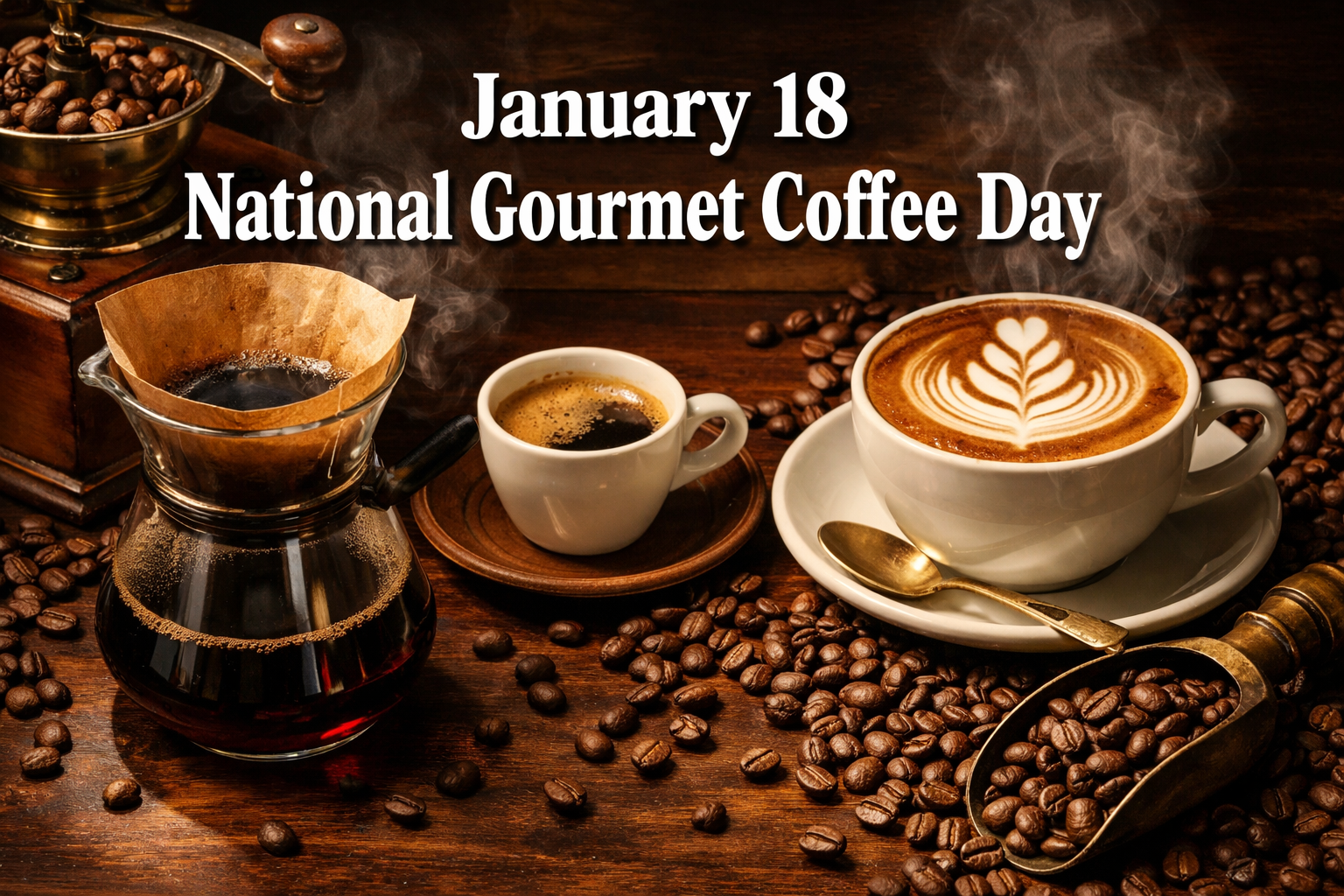
Quick Answer: January 18 National Gourmet Coffee Day is an annual food holiday celebrated every January 18 in the United States. It honors high-quality, specialty-grade coffee and encourages coffee lovers to explore premium brewing methods, single-origin beans, and artisan roasts beyond everyday commercial blends.
Key Takeaways
- January 18 is officially recognized as National Gourmet Coffee Day in the U.S. each year.
- “Gourmet coffee” refers to specialty-grade beans, typically scoring 80 or above on the Specialty Coffee Association (SCA) 100-point scale.
- The holiday is a great opportunity to try new brewing methods, visit local roasters, or gift premium coffee to someone who appreciates it.
- Single-origin coffees, cold brews, pour-overs, and espresso-based drinks all qualify as gourmet experiences worth exploring on this day.
- Retailers and cafes often run promotions on January 18, making it an ideal day to sample premium products at a lower cost.
- Gourmet coffee is not just about taste — origin, processing method, roast level, and freshness all play a role in quality.
- Anyone can celebrate, from casual coffee drinkers to seasoned enthusiasts, by simply upgrading their daily cup.
What Is January 18 National Gourmet Coffee Day?
January 18 National Gourmet Coffee Day is an unofficial but widely observed U.S. food holiday dedicated to appreciating premium coffee. It falls every year on January 18 and serves as a reminder to step away from the standard drip coffee and explore what specialty coffee has to offer.
The day has no single founding organization on record, which is common for many food holidays. Its origins are informal, likely growing through food bloggers, coffee brands, and social media communities that embraced it as a reason to celebrate quality coffee during the slow winter month of January.
What Counts as “Gourmet Coffee”?
Gourmet coffee refers to beans that meet a higher standard of quality, sourcing, and preparation than mass-market commercial blends. The Specialty Coffee Association (SCA) defines specialty-grade coffee as beans that score 80 points or higher on a 100-point cupping scale, evaluated by certified Q Graders.
Key factors that define gourmet coffee include:
- Origin: Single-origin beans from specific regions (Ethiopia, Colombia, Guatemala, Kenya) carry distinct flavor profiles.
- Processing method: Natural, washed, or honey-processed beans each produce different taste characteristics.
- Roast level: Light roasts preserve origin flavors; dark roasts emphasize body and bitterness.
- Freshness: Specialty roasters typically recommend brewing within 2–4 weeks of the roast date.
- Brewing method: Pour-over, AeroPress, siphon, and espresso machines extract flavor differently from the same bean.
💡 Quick rule: If the bag lists a specific farm, altitude, processing method, and roast date, it’s almost certainly gourmet-grade coffee.
How Did National Gourmet Coffee Day on January 18 Get Started?
The exact origin of January 18 National Gourmet Coffee Day is not officially documented, which is true for many U.S. food holidays. Most food observances of this type gained traction through social media sharing, food bloggers, and brand marketing campaigns in the 2000s and 2010s.
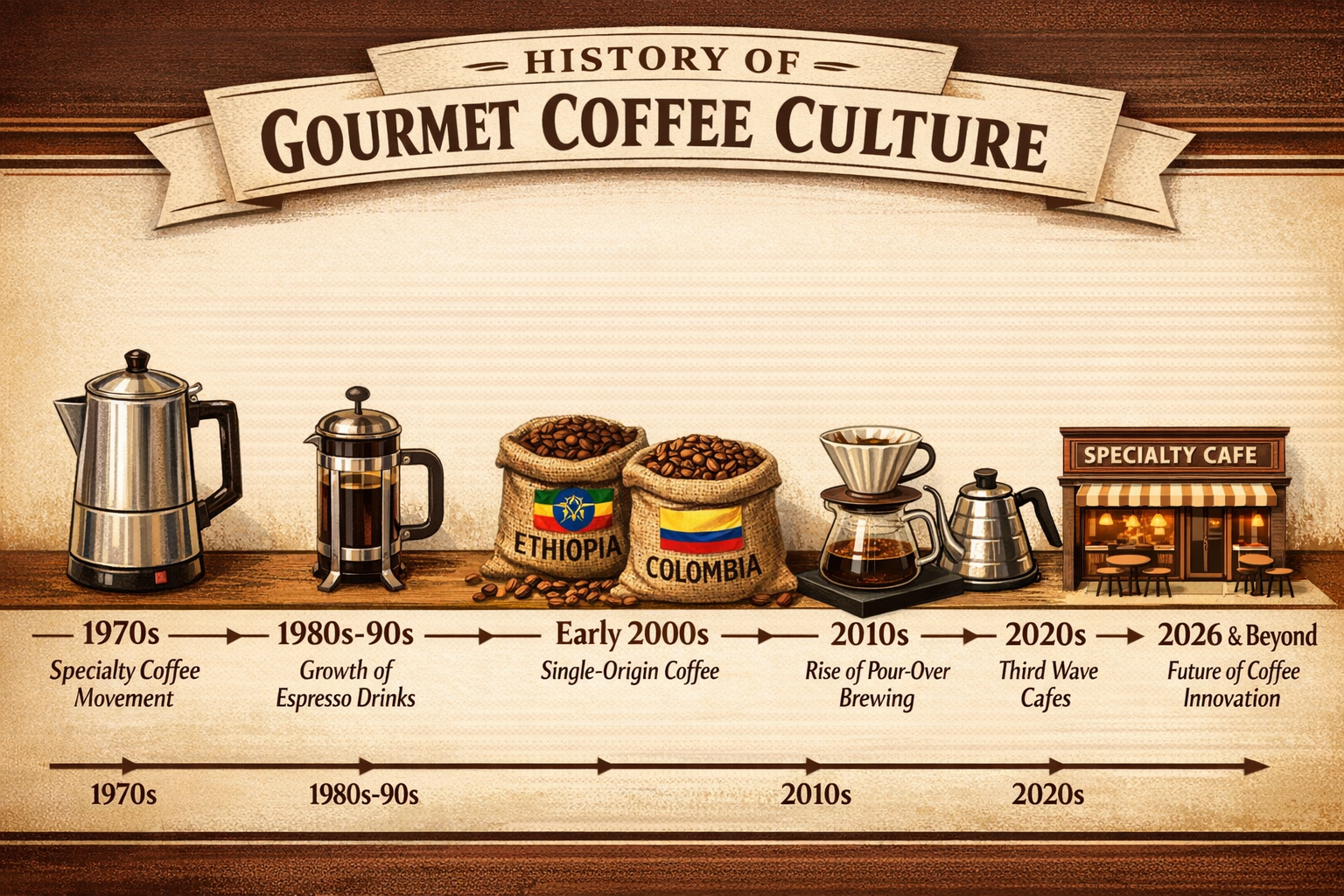
What’s clear is that the holiday aligns with the broader specialty coffee movement that began gaining mainstream momentum in the late 1990s and early 2000s. As consumer interest in third-wave coffee grew — emphasizing transparency, traceability, and craft — a dedicated day to celebrate gourmet coffee made cultural sense.
Common mistake: Many people assume food holidays like this one are officially declared by Congress or a government body. Most are not. They’re cultural observances that gain legitimacy through widespread participation.
How to Celebrate January 18 National Gourmet Coffee Day
Celebrating January 18 National Gourmet Coffee Day doesn’t require a big budget or professional barista skills. The goal is simply to drink better coffee and learn something new about it.
Simple ways to celebrate:
- Buy freshly roasted beans from a local roaster or a reputable online specialty roaster.
- Try a new brewing method — if you always use a drip machine, experiment with a French press or pour-over.
- Order a specialty drink at a local café and ask the barista about the bean’s origin.
- Host a coffee tasting with friends, comparing two or three single-origin coffees side by side.
- Gift a coffee subscription to someone who would appreciate premium beans delivered monthly.
- Watch a documentary about coffee farming and the supply chain (several are available on major streaming platforms).
Choose this approach if…
| Your Situation | Best Celebration Option |
|---|---|
| You’re a beginner | Visit a specialty café and ask for a recommendation |
| You already own brewing gear | Buy a new single-origin bean and do a home tasting |
| You want to gift something | Purchase a curated coffee gift set or subscription box |
| You’re on a budget | Brew a pour-over at home with freshly ground beans |
| You love learning | Attend a local coffee workshop or cupping event |
What Are the Best Gourmet Coffee Drinks to Try on January 18?
On January 18 National Gourmet Coffee Day, the best drinks to try are those that highlight the natural flavor of high-quality beans rather than masking them with sugar or artificial flavoring.
Top gourmet coffee drinks worth exploring:
- Pour-over (V60 or Chemex): Clean, bright, and ideal for showcasing light-roast single-origin beans.
- Espresso (straight or ristretto): Concentrated and complex — a true test of bean quality and roast precision.
- Flat white: A smaller, stronger milk-based drink that lets espresso flavor shine through.
- Cold brew: Slow-steeped for 12–24 hours, producing a smooth, low-acid concentrate.
- Siphon coffee: A theatrical brewing method that produces an exceptionally clean and nuanced cup.
- Cortado: Equal parts espresso and steamed milk — simple, balanced, and elegant.
Edge case: Flavored lattes and heavily sweetened drinks can use gourmet beans, but the added flavors often override the specialty characteristics. For the full gourmet experience, try the coffee black or with minimal additions first.
Why Does Gourmet Coffee Matter Beyond the Holiday?
Gourmet coffee connects to larger conversations about sustainability, fair trade, and economic equity in coffee-producing countries. Specialty coffee typically commands higher prices at the farm level, which can translate to better wages for farmers — though this depends heavily on the supply chain model.
According to the Specialty Coffee Association, the global specialty coffee market has grown consistently over the past decade, with consumers increasingly prioritizing quality and transparency over price alone. (SCA, 2023)
Why it matters:
- For farmers: Specialty pricing can support more sustainable farming practices and better livelihoods.
- For consumers: Higher quality coffee often means a more complex, enjoyable drinking experience.
- For the environment: Many specialty roasters prioritize shade-grown, organic, or regenerative farming methods.
FAQ: January 18 National Gourmet Coffee Day
Q: Is January 18 National Gourmet Coffee Day an official U.S. holiday? No. It is an unofficial food observance, not a federal or state holiday. No legislation created it, but it is widely recognized by coffee brands, bloggers, and enthusiasts.
Q: Who celebrates National Gourmet Coffee Day? Primarily coffee lovers in the United States, though the day is also acknowledged by specialty coffee communities internationally through social media.
Q: Do cafes offer discounts on January 18? Many specialty cafes and coffee brands run promotions on January 18. It’s worth checking local café social media pages or signing up for brand newsletters ahead of the date.
Q: What’s the difference between gourmet coffee and regular coffee? Gourmet (specialty-grade) coffee scores 80+ on the SCA cupping scale, uses traceable single-origin or carefully blended beans, and is roasted with precision. Regular commercial coffee typically uses lower-grade beans blended for consistency and low cost.
Q: Can I celebrate if I only drink decaf? Absolutely. Specialty decaf options exist and have improved significantly in quality. Swiss Water Process decaf, for example, preserves much of the original bean’s flavor profile.
Q: How much does gourmet coffee cost? Specialty-grade whole bean coffee typically ranges from $15 to $30+ per 12-ounce bag (U.S. retail, 2026 estimate), depending on origin, rarity, and roaster. Some micro-lot or competition-grade coffees can cost significantly more.
Q: What’s the best way to store gourmet coffee beans? Store beans in an airtight container away from light, heat, and moisture. Avoid the refrigerator. Most specialty roasters recommend using beans within 2–4 weeks of the roast date for peak flavor.
Q: Are there other coffee holidays throughout the year? Yes. International Coffee Day is October 1, and National Coffee Day in the U.S. falls on September 29. January 18 specifically focuses on the gourmet and specialty angle.
Conclusion
January 18 National Gourmet Coffee Day is more than a reason to drink an extra cup of coffee. It’s an invitation to slow down, pay attention to what’s in the cup, and appreciate the craft, science, and global supply chain behind great coffee.
Actionable next steps for 2026:
- Mark January 18 on your calendar and plan one specific upgrade to your coffee routine.
- Find a local specialty roaster and ask about their current single-origin offerings.
- Try at least one new brewing method this year — even a simple pour-over kit costs under $30.
- Share the holiday on social media using #NationalGourmetCoffeeDay to connect with the broader coffee community.
- If you’re already a coffee enthusiast, use the day to introduce a friend or family member to specialty coffee for the first time.
Great coffee doesn’t require expertise to enjoy. It just requires a little curiosity and a willingness to try something better than what’s already in the cabinet.
References
- Specialty Coffee Association (SCA). What is Specialty Coffee? SCA, 2023. https://sca.coffee
- National Day Calendar. National Gourmet Coffee Day – January 18. https://nationaldaycalendar.com
- Perfect Daily Grind. Understanding the SCA Coffee Scoring System. 2022. https://perfectdailygrind.com