
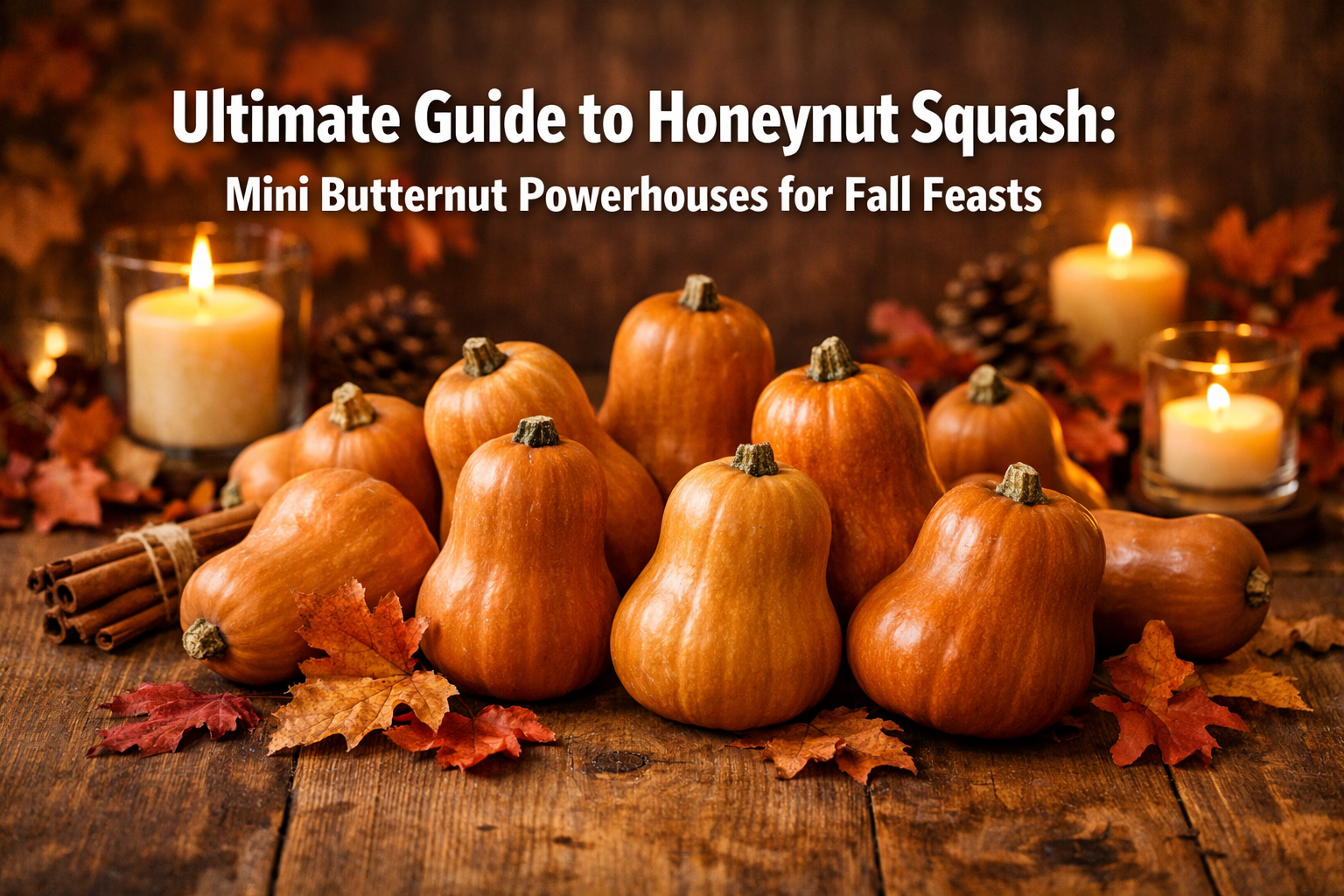
Quick Answer: Honeynut squash is a miniature hybrid of butternut squash, developed in 2009 through a collaboration between chef Dan Barber and Cornell University plant breeders. It’s roughly half the size of a standard butternut but delivers two to three times more beta-carotene and noticeably more concentrated sweetness. Peak availability runs from September through November, making it a standout ingredient for fall cooking.
Key Takeaways
- 🎃 Honeynut squash was bred specifically for flavor, not shelf life or shipping convenience, which is why it tastes so much better than most grocery-store butternuts.
- 🧡 It contains two to three times more beta-carotene than standard butternut squash, giving its flesh a deeper orange color. [3]
- 📏 Each squash weighs roughly 1–2 pounds, making it ideal for single-serve roasting without leftovers.
- 🌱 Seeds go in the ground in May and the squash is ready to harvest in 100–110 days, typically late September to early October. [3]
- 🛒 Farmers’ markets and specialty grocery stores are the most reliable places to find honeynut squash in fall 2026.
- 🔥 Roasting cut-side down first, then flipping to caramelize, brings out its natural sugars best.
- ❄️ Fresh honeynut squash stores 1–3 months in cool, dry conditions but only about one week in the refrigerator. [3]
- 🍲 It works in soups, stuffed dishes, fries, purees, and even desserts because of its intense sweetness.
What Exactly Is Honeynut Squash, and Why Does It Taste So Different?
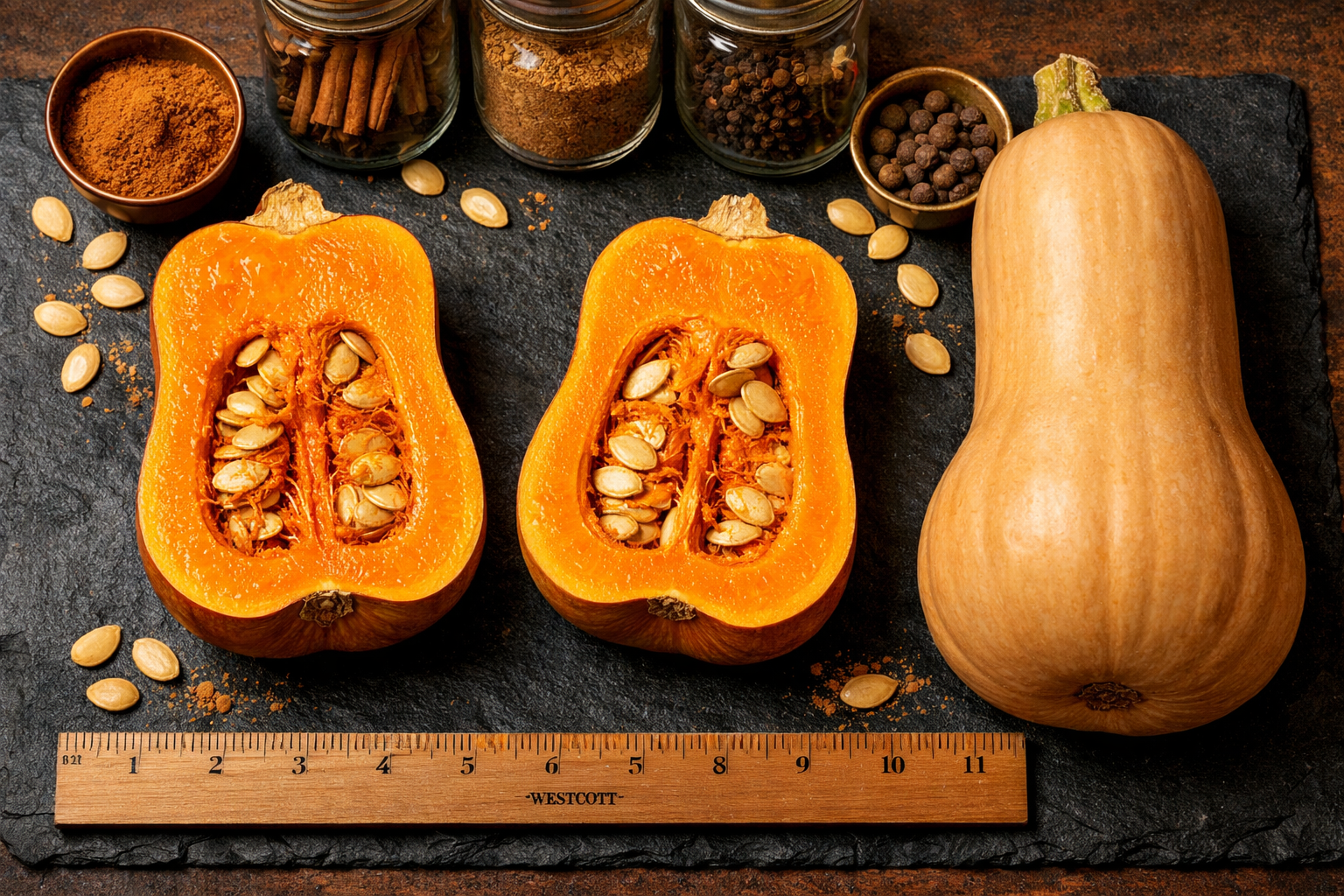
Honeynut squash (Cucurbita moschata) is a compact winter squash bred to maximize flavor in a smaller package. Unlike most commercial squash varieties that were developed for long shelf life and easy transport, honeynut was designed from the start to taste extraordinary.
The origin story is worth knowing. In 2009, chef Dan Barber of Blue Hill at Stone Barns in New York challenged Cornell University plant breeders to create a butternut squash that was smaller, sweeter, and more flavorful. The result was honeynut — a variety that looks like a miniature butternut but eats like a completely different vegetable. [2]
What makes it taste better:
- Higher sugar concentration: Less water content per squash means flavor is more concentrated.
- More beta-carotene: Two to three times the amount found in standard butternut, which also deepens the nutty, earthy flavor. [3]
- Thinner skin: The skin softens when roasted, so it’s edible — no peeling required.
- Smaller size: At roughly half the size of a butternut, each squash cooks faster and more evenly. [3]
“Honeynut squash was bred for the plate, not the pallet. That single decision changed everything about how it tastes.”
How Does Honeynut Squash Compare to Butternut Squash?
Honeynut and butternut squash are close relatives, but they perform differently in the kitchen. Honeynut is the better choice when flavor is the priority; butternut wins when you need more volume or longer storage.
| Feature | Honeynut Squash | Butternut Squash |
|---|---|---|
| Average weight | 1–2 lbs | 2–5 lbs |
| Beta-carotene | 2–3× higher [3] | Standard |
| Sweetness | Noticeably sweeter [2] | Mild-sweet |
| Skin | Edible when roasted | Usually peeled |
| Storage (cool/dry) | 1–3 months [3] | 2–3 months [3] |
| Availability | Seasonal (Sept–Nov) [1] | Year-round |
| Best use | Single-serve, roasting, desserts | Soups, large-batch cooking |
Choose honeynut if you’re cooking for one or two people, want maximum flavor from roasting, or need a squash that caramelizes beautifully. Choose butternut if you’re making a large pot of soup, need year-round availability, or want longer storage.
When and Where to Buy Honeynut Squash in 2026
Honeynut squash is a seasonal ingredient with a narrow window. Peak availability runs from September through November, with the best flavor found right after the first cool nights of fall. [1]
Where to find it:
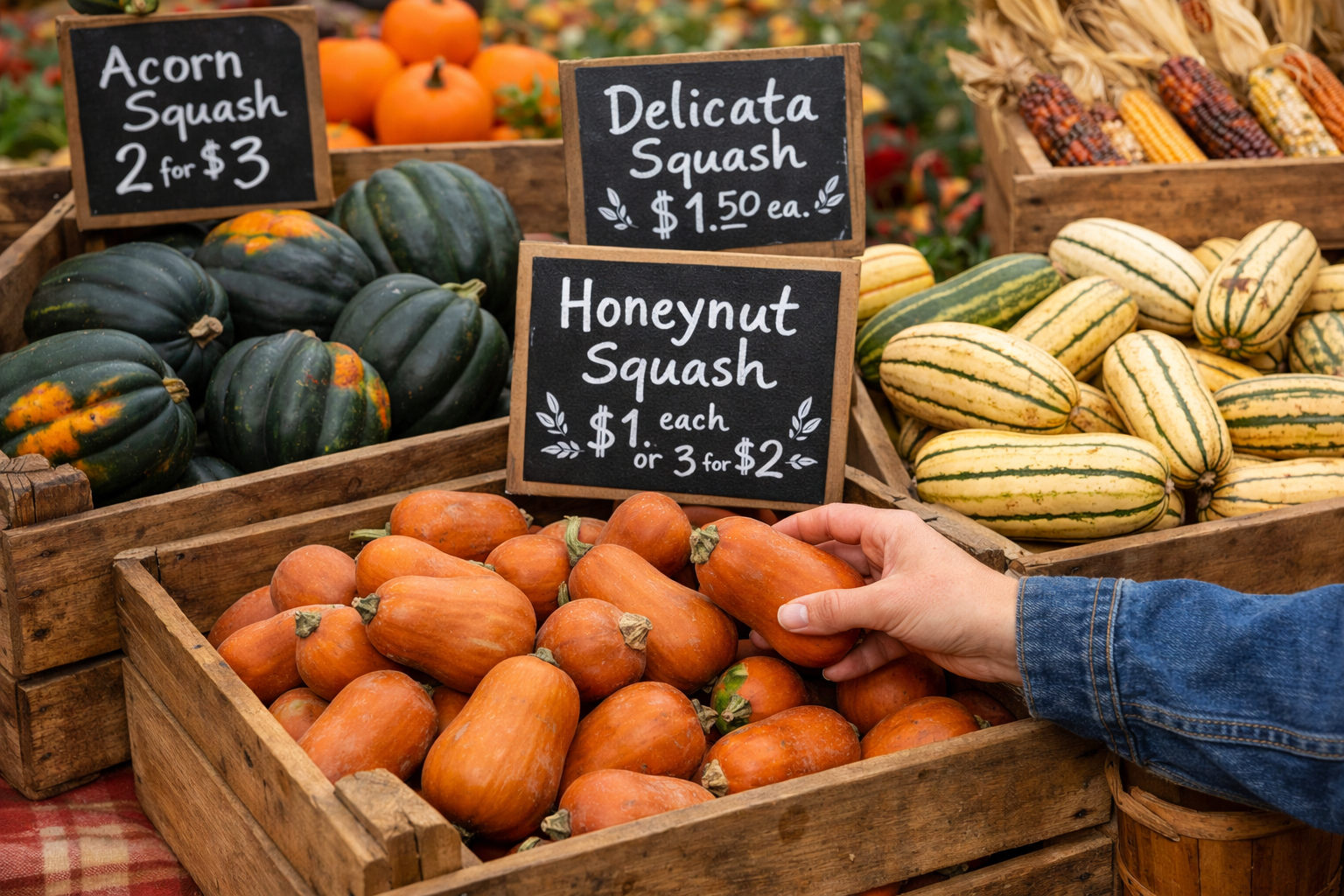
- Farmers’ markets — the most reliable source; look for local growers starting in late September.
- Specialty grocery stores — Whole Foods, co-ops, and farm-to-table retailers often carry it.
- CSA boxes — many community-supported agriculture programs include honeynut in their fall shares.
- Online seed suppliers — if you want to grow your own, sources like Baker Creek Heirloom Seeds carry the variety. [4]
What to look for when buying:
- Skin should be tan to dark beige with a slight orange blush — avoid any green tinge, which signals under-ripeness.
- The squash should feel heavy for its size.
- No soft spots, cracks, or mold near the stem.
- A dry, intact stem is a sign of proper curing.
Common mistake: Buying honeynut squash that still has a green skin. Green skin means it was harvested too early and won’t have the concentrated sweetness the variety is known for.
How to Grow Honeynut Squash at Home
Growing honeynut squash is straightforward for anyone with a sunny garden bed and patience for a 100–110 day growing season. [3]
Basic growing requirements:
- Sun: Full sun, at least 6–8 hours of direct sunlight daily. [4][5]
- Planting time: Start seeds indoors in April or direct-sow outdoors in May after the last frost. [3]
- Spacing: Give each plant 4–6 feet of space; vines spread wide.
- Watering: 1–2 inches per week, watering deeply at the base rather than overhead. [4]
- Harvest: Late September to early October when the skin turns tan and the stem dries out. [3]
One advantage over butternut: Honeynut is a higher-yielding variety, producing more fruit per plant than traditional butternut. [3] That makes it a smart choice for home gardeners with limited space who want a good return on their effort.
For those who love exploring seasonal ingredients in the garden and kitchen, the Complete Library of Cooking offers excellent reference material for working with fall harvests.

What Are the Best Ways to Cook Honeynut Squash?
Roasting is the single best method for honeynut squash because high heat caramelizes its natural sugars and deepens the flavor. But it’s versatile enough for soups, fries, stuffed preparations, and even desserts. [2]
Roasting (the go-to method):
- Preheat oven to 400°F (205°C).
- Cut the squash in half lengthwise and scoop out seeds.
- Brush cut sides with olive oil or butter; season with salt and pepper.
- Place cut-side down on a parchment-lined baking sheet.
- Roast 25–30 minutes, then flip and roast another 10 minutes to caramelize the top.
- Optional: add maple syrup, brown sugar, or fresh thyme in the last 10 minutes.
Other cooking methods:
- Soup: Roast first, then scoop flesh into a blender with broth, garlic, and cream. For inspiration, browse this delicious soups recipes cookbook.
- Squash fries: Cut into wedges, toss with oil and spices, roast at 425°F until edges crisp.
- Stuffed squash: Fill roasted halves with grains, cheese, sautéed mushrooms, or ground meat.
- Puree: Blend roasted flesh for use in pasta sauces, risotto, or baked goods.
- Slow cooker: Works well in fall stews alongside root vegetables — the 470 Crock Pot Recipes collection has useful starting points.
Edge case: Because the skin is edible, there’s no need to peel honeynut before roasting. However, if using it in a smooth soup or puree, peel it first for a silkier texture.
How to Store Honeynut Squash Properly
Proper storage extends the life of honeynut squash significantly. Whole, uncut honeynut squash keeps 1–3 months in cool, dry conditions — a basement, pantry, or garage that stays between 50–60°F works well. [3]
Storage rules:
- Keep whole squash in a single layer, not touching each other.
- Avoid refrigerating whole squash — cold temperatures below 50°F can cause the flesh to deteriorate.
- Once cut, wrap tightly in plastic wrap and refrigerate; use within one week. [3]
- For longer storage, cube the cooked flesh and freeze for up to three months. [3]
Note: Honeynut doesn’t store as long as standard butternut squash, which keeps 2–3 months under the same conditions. [3][4] Buy only what you’ll use within the season.
What Are the Nutritional Benefits of Honeynut Squash?
Honeynut squash is a nutrient-dense fall vegetable, particularly notable for its beta-carotene content. Beta-carotene is a precursor to vitamin A, which supports eye health, immune function, and skin health.
Key nutritional highlights:
- Beta-carotene: Two to three times higher than standard butternut squash. [3]
- Fiber: Supports digestive health; the edible skin adds extra fiber when left on.
- Vitamin C: Present in meaningful amounts, supporting immune function.
- Low in calories: Despite its sweetness, it’s relatively low in calories compared to starchy vegetables.
- Naturally gluten-free: Safe for those avoiding gluten. For more gluten-free cooking ideas, the gluten-free cookbook collection is a helpful resource.
The deep orange color of honeynut flesh is a visual cue for its beta-carotene density — the more saturated the color, the higher the concentration. [7]
FAQ: Honeynut Squash Questions Answered
Q: Can you eat honeynut squash skin? Yes. The skin softens when roasted and is fully edible, which saves prep time and adds fiber.
Q: Is honeynut squash sweeter than butternut? Yes, noticeably so. The smaller size concentrates sugars, and the variety was specifically bred for sweetness. [2]
Q: When is honeynut squash in season? Peak season runs September through November in most of North America. [1]
Q: How long does honeynut squash last? Whole squash keeps 1–3 months in cool, dry storage. Cut squash lasts about one week refrigerated, and cooked squash freezes well for up to three months. [3]
Q: Can honeynut squash be used in desserts? Yes. Its intense sweetness makes it an excellent substitute for pumpkin in pies, muffins, and puddings.
Q: Where does honeynut squash come from? It was developed in 2009 through a partnership between chef Dan Barber and Cornell University plant breeders. [2][3]
Q: How do you know when honeynut squash is ripe? The skin should be fully tan to beige with no green remaining, the stem should be dry, and the squash should feel firm and heavy.
Q: Is honeynut squash good for soups? Absolutely. Roast it first, then blend the flesh for a naturally sweet, creamy soup that needs very little added seasoning.
Q: How does honeynut squash grow compared to butternut? It’s actually a higher-yielding variety, producing more fruit per plant than standard butternut, which makes it efficient for home gardens. [3]
Q: Can you substitute honeynut squash for butternut in recipes? Yes, in a 1:1 ratio by weight. Expect a slightly sweeter, richer result and shorter cooking times due to the smaller size.
Conclusion: Make Honeynut Squash a Fall Kitchen Staple
This ultimate guide to honeynut squash covers everything from its origins to its best uses at the table. The key takeaway is simple: honeynut squash delivers more flavor, more nutrition, and more versatility than its size suggests. It’s the rare ingredient that makes cooking easier (no peeling, single-serve portions, fast roasting) while also making the final dish taste better.
Actionable next steps for fall 2026:
- Visit a farmers’ market in late September and pick up two or three honeynut squash to try roasting at home.
- Start with the basic roast method — halved, brushed with butter and maple syrup, 400°F for 35–40 minutes.
- Experiment with stuffed preparations using grains, cheese, or sautéed vegetables for a complete weeknight meal.
- If you garden, order seeds for the 2027 season now; they sell out quickly from specialty suppliers. [4][6]
- Freeze any extra cooked flesh in portions to extend the season well past November.
For more seasonal cooking ideas and recipe collections, explore the Quick and Easy Cooking guide and the Recipes from Around the World collection for inspiration year-round.
References
[1] Honeynut Squash History And Roasting Tips – https://www.forksoverknives.com/how-tos/honeynut-squash-history-and-roasting-tips/ [2] Your Winter Guide To Squash Honeynut Vs Butternut – https://cookingwithourcsa.com/your-winter-guide-to-squash-honeynut-vs-butternut/ [3] Honeynut Squash – https://en.wikipedia.org/wiki/Honeynut_squash [4] Squash Winter Honeynut Butternut – https://www.rareseeds.com/squash-winter-honeynut-butternut [5] Honeynut – https://www.gurneys.com/products/honeynut [6] Honeynut Squash – https://hudsonvalleyseed.com/products/honeynut-squash [7] Winter Squash Guide Delicata Honeynut And More – https://www.cspi.org/article/winter-squash-guide-delicata-honeynut-and-more