Last updated: November 22, 2026
Quick Answer
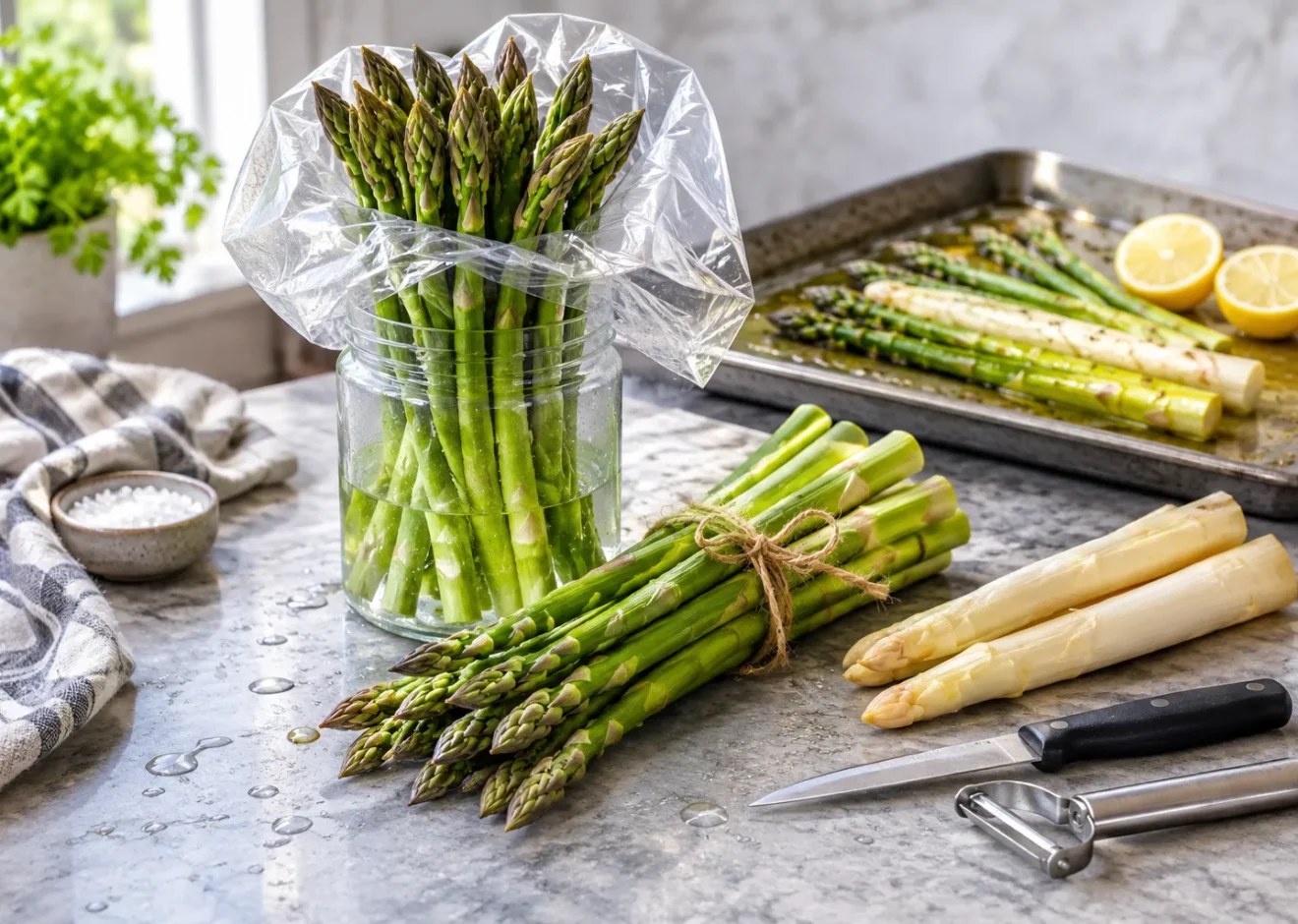
Buy asparagus with tight, closed tips and firm stalks that don’t bend limply, then store it upright in about an inch of water in the fridge with a loose bag over the tips, which keeps spears crisp for up to a week [1][2]. Cook it hot and fast: roast at 425°F for 10 to 15 minutes, or steam 3 to 5 minutes, and pull it while the spears still have snap. This complete guide to how to buy, store, and cook asparagus covers choosing spears, preventing bitterness, freezing, and what to substitute when asparagus is out of season.
Key Takeaways
- Fresh asparagus has tight tips, firm straight stalks, and a moist (not dried or split) cut end.
- Upright in water, loosely covered, is the best storage method; expect up to a week of good quality [1][2].
- Use asparagus within 2 to 3 days for peak flavor and nutrients; quality drops fast after that.
- Freeze only after blanching 2 to 4 minutes, then ice-bath and dry thoroughly.
- Slimy ends, a sour smell, or mushy flowering tips mean it’s done.
- Bitterness usually comes from old spears or tough woody ends; trim lower and add fat, salt, or acid.
- Roasting at 425°F for 10 to 15 minutes gives browned tips without mush.
- Plan on about 1/2 pound (8 ounces) of untrimmed asparagus per person as a side dish.
- One cup of cooked asparagus is roughly 40 calories with fiber, folate, and vitamin K [3].
- Raw asparagus is safe and good shaved thin into salads.
What does fresh asparagus look like, and how do you pick the best spears?
Fresh asparagus has tightly closed, compact tips, stalks that are firm enough to snap rather than bend, and cut ends that look moist instead of dried, split, or woody. Color should be deep green (or purple at the tip) with no yellowing or dark soft patches.
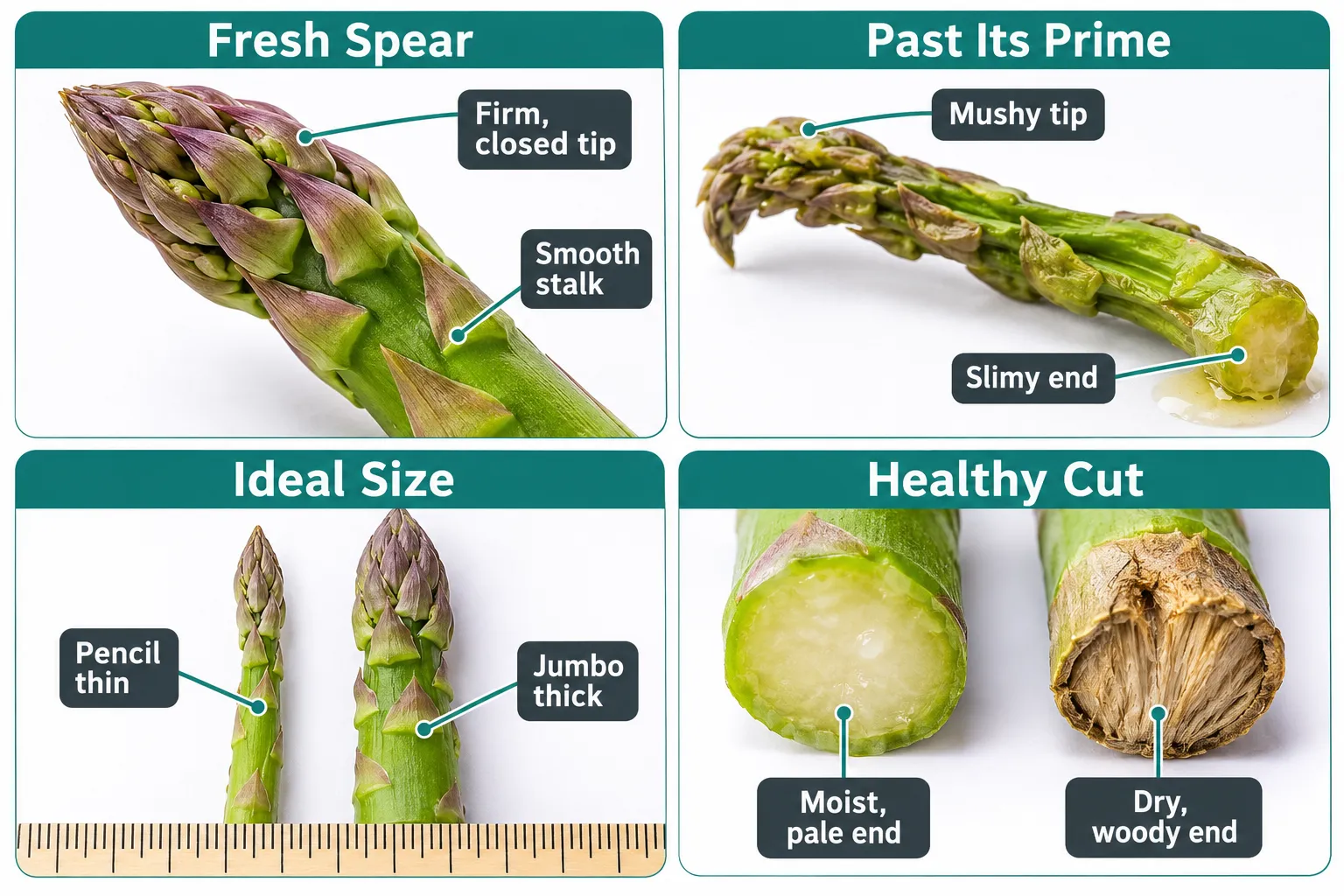
What to check at the store, in order:
- Tips. They should be tight and pointed. Tips that are opening up, feathery, or dark and damp are the first sign of age.
- Stalk feel. Squeeze the bundle. It should feel rigid. Rubbery spears are already dehydrated.
- Cut ends. Dry, hollow, or white-splitting ends mean the bunch has been sitting a while.
- Uniform thickness. Spears in the bundle should be similar in size so they cook evenly.
- Smell. Fresh asparagus smells faintly grassy and sweet. A sour or sulfurous note means skip it.
On thickness: thick and thin spears are both good, they just suit different jobs. Thin spears cook in a few minutes and work for sautés and raw salads. Thick spears hold up better to roasting and grilling and have a meatier texture, but they need peeling below the tip if the skin is fibrous.
Decision rule: buying for a grill or sheet pan? Choose thick spears. Buying for a quick sauté, pasta, or salad? Choose pencil-thin.
Common mistake: picking the bundle sitting dry on a refrigerated shelf over the one standing in water. Store displays that keep the butt ends wet preserve crispness, the same principle as home storage [2][4].
Green asparagus vs white asparagus: which should you buy?
Buy green asparagus for everyday cooking. It has a stronger, grassier flavor, needs no peeling if the spears are thin, and costs less in North America. White asparagus is the same plant grown covered with soil so it never develops chlorophyll, which gives it a milder, slightly bitter, more delicate taste.
| Green | White | |
|---|---|---|
| Flavor | Grassy, sweet, assertive | Mild, faintly bitter, delicate |
| Prep | Trim ends; peel only thick spears | Must peel the whole stalk below the tip |
| Best cooking | Roast, grill, sauté, raw | Gentle simmer or steam in salted water |
| Typical price | Lower | Higher, often imported |
| Season | Spring peak | Spring, mostly European supply |
Purple asparagus is a third option, sweeter and lower in fiber, and it turns green when cooked. Keep it raw or barely cooked if you want the color.
Edge case: white asparagus that isn’t fully peeled turns stringy no matter how you cook it. If you’re not willing to peel, don’t buy it.
How long can you keep asparagus in the fridge before it goes bad?
Properly stored upright in water and loosely covered, asparagus holds good quality for about five to seven days in the fridge [1][2]. Stored loose in a crisper drawer with no moisture, it starts going limp in two to three days.
The reliable method:
- Trim about 1/2 inch off the dry cut ends.
- Stand the bundle in a jar or glass with 1 inch of cold water.
- Drape a loose plastic bag or produce bag over the tips, not sealed tight.
- Refrigerate, ideally on a shelf rather than the door.
- Change the water when it clouds, roughly every two days.
For one or two days, a simpler option works: wrap the cut ends in a damp paper towel, slide the bundle into a bag, and keep it in the crisper [4][5]. Asparagus likes cold and humid conditions, near 32 to 36°F with high relative humidity, which is why the drawer plus moisture combination helps.
Flavor and nutrients decline as the spears keep respiring, so eat them within two or three days for the best result and treat the full week as the outer limit, not the goal [6]. Don’t wash until you’re ready to cook; surface water on the spears speeds up decay.
How do you know if asparagus has gone bad?
Asparagus is past it when the cut ends feel slimy, the tips are dark and mushy or have opened into little flowers, or the bundle gives off a sour, sulfurous smell. Limp but dry spears are tired, not spoiled, and can often be revived.
Throw it out if:
- There’s visible mold, white fuzz, or black spots on the tips.
- The stalk leaks liquid or feels slick when you touch it.
- The smell is sharp or sour rather than grassy.
Try reviving it if the spears are only bendy and dull. Trim 1/2 inch off the ends and stand them in ice water for 30 to 60 minutes. Rehydrated spears snap back close to normal. That trick works for a surprising amount of what would otherwise end up in the bin [6].
Can you freeze asparagus, and what’s the best way?
Yes, but blanch it first. Raw frozen asparagus turns limp and loses flavor, because the enzymes keep working at freezer temperatures. Blanching stops them.
- Wash and trim the spears; cut into 1 to 2 inch pieces or leave whole.
- Boil 2 minutes for thin spears, 3 for medium, 4 for thick.
- Transfer immediately to ice water for the same amount of time.
- Drain and pat completely dry.
- Freeze in a single layer on a tray, then bag with air pressed out.
Frozen blanched asparagus keeps well for about 8 to 12 months. Cook it from frozen: roast, sauté, or drop it into soup. Don’t thaw it on the counter first, that’s how it turns to mush. Frozen spears are best in cooked dishes like soups, frittatas, or a spring vegetable quiche, not as a standalone side.
Why does asparagus taste bitter, and how do you fix it?
Bitterness usually comes from three things: spears that are old, the tough lower stalk left on, or overcooking. Asparagus naturally contains bitter compounds that concentrate as the vegetable ages and dehydrates.
Fixes that work:
- Trim higher. Cut an extra inch off the base, not just the dried tip.
- Peel thick spears. The fibrous skin on the lower third carries much of the bitterness.
- Add fat and salt. Olive oil, butter, parmesan, or bacon mute bitterness directly.
- Add acid at the end. Lemon juice or a splash of vinegar after cooking brightens the flavor.
- Stop cooking sooner. Overcooked asparagus develops sulfurous bitter notes.
Quick example: a bitter batch roasted with olive oil, salt, and a squeeze of lemon plus shaved parmesan reads as pleasantly savory, not bitter. Nothing changed about the asparagus except what’s on it.
How to remove the woody end of asparagus
Line the bundle up on a cutting board and slice off the bottom 1 to 1.5 inches in one cut. That’s faster and wastes less than the popular snap method, which can remove up to half the spear.
The snap test is still useful once: bend a single spear and note where it breaks, then cut the rest of the bundle at that height. For thick spears, peel the lower two inches with a vegetable peeler instead of cutting more off. Don’t discard the trimmings if you’re making stock or soup, they have plenty of flavor even if the texture is fibrous.
What’s the best way to cook asparagus so it’s not mushy?
High heat, short time, and dry spears. The failure mode in almost every mushy batch is either a crowded pan or too long in water.
| Method | Time | Notes |
|---|---|---|
| Roast, 425°F | 10-15 min | Best browning; single layer only |
| Grill, medium-high | 5-8 min | Oil the spears; turn once |
| Steam | 3-5 min | Cleanest flavor; finish with butter |
| Sauté | 4-6 min | Hot pan, thin spears, don’t crowd |
| Boil | 2-4 min | Salted water; ice-bath immediately |
| Microwave | 2-4 min | 2 tbsp water, covered dish, stir once |
Three rules that matter more than method:
- Dry the spears after washing. Wet asparagus steams instead of browning.
- Give them space. One crowded sheet pan beats nothing; two uncrowded pans beat one.
- Account for carryover. Pull them a minute early, since they keep cooking off the heat.
Thin spears cook in roughly half the time of thick ones, so check early on the first batch of a new bunch. Asparagus pairs well with eggs, fish, and steak, which makes it a natural side for grilled steak recipes or a simple baked fish dinner.
How to roast asparagus in the oven
- Heat the oven to 425°F with the rack in the upper third.
- Trim the spears and dry them thoroughly.
- Toss with 1 tablespoon olive oil per pound, plus salt and pepper.
- Spread in a single layer on a rimmed sheet pan, tips facing the same way.
- Roast 10 minutes for thin spears, 12 to 15 for thick, until the tips brown slightly and a knife slides into the stalk with light resistance.
- Finish with lemon zest, parmesan, or toasted nuts off the heat.
Don’t add cheese before roasting; it burns before the stalks are done.
How much asparagus per person, and is it expensive?
Plan on 1/2 pound (about 8 ounces) of untrimmed asparagus per person as a side dish, which yields roughly 6 ounces cooked. For a main course or where asparagus is the star, go up to 3/4 pound.
A standard supermarket bunch is about 1 pound and serves two generously. For a dinner party of six, buy three bunches.
On price: asparagus costs more than carrots or cabbage year-round because it’s harvested by hand, spear by spear. The cheapest time to buy in North America is April and May, the domestic peak, when prices often fall by half compared with winter. Farmers markets during local season and warehouse clubs in 2 lb packs usually beat regular grocery prices. Off-season spears flown in from Peru or Mexico are the most expensive and the least fresh. If you want asparagus in January, frozen is cheaper and often better than a limp fresh bunch.
Is asparagus healthy, and can you eat it raw?
Asparagus is low in calories and a solid source of fiber, folate, and vitamin K. One cup of cooked asparagus has roughly 40 calories, and it contributes antioxidants plus prebiotic fiber that supports gut bacteria [3][7]. It also has a natural diuretic effect, which is why it’s often recommended in diets focused on reducing bloating.
Notable points:
- Folate content makes it useful during pregnancy [3].
- Vitamin K supports blood clotting and bone health; people on warfarin should keep intake consistent rather than variable.
- The sulfur compound asparagusic acid is what causes the distinctive urine smell in many people. It’s harmless.
- Shorter cooking preserves more water-soluble vitamins, so steaming and roasting beat long boiling [8][9].
Raw asparagus is safe to eat. Shave thin spears lengthwise with a peeler or slice them on a sharp diagonal, then dress with lemon, olive oil, salt, and parmesan. Raw thick spears are tough, so save those for cooking. Wash thoroughly under running water first, and keep raw produce separate from raw meat on your cutting boards. For more ways to use a bunch, see the asparagus recipe collection or browse plant-based recipe ideas.
What vegetables can you use instead of asparagus?
Green beans are the closest all-purpose substitute: similar shape, similar cooking time, works in the same roasted, grilled, and blanched applications. Choose your swap based on what role the asparagus plays.
- For roasting or grilling: green beans, broccolini, or thin leeks.
- For spring flavor in pasta or risotto: peas, fava beans, or snap peas.
- For a raw shaved salad: fennel, zucchini ribbons, or celery.
- For soups and purées: broccoli stalks or spinach-based dishes.
- For a tender, mild side: young zucchini or baby bok choy.
Broccolini is the best one-to-one visual match on a plate. Green beans need about 2 to 3 extra minutes of cooking than thin asparagus, so adjust timing rather than swapping blind.
FAQ
Should asparagus be washed before storing? No. Wash it right before cooking. Moisture on the stalks during storage accelerates spoilage.
Can you store asparagus at room temperature? Not for more than a few hours. Asparagus loses sugar and firmness quickly above 40°F and should be refrigerated promptly [8].
Do you need to peel asparagus? Only thick green spears with fibrous skin, and all white asparagus. Thin green spears never need peeling.
How long does cooked asparagus keep? Three to four days refrigerated in a sealed container. Reheat quickly in a hot pan rather than the microwave to avoid sogginess.
Is it safe to eat asparagus with open, flowering tips? Yes, if it isn’t slimy or smelly. Flowering tips mean it’s older and will taste stronger, but it’s still edible.
Can asparagus be cooked in an air fryer? Yes. Toss with oil and cook at 390°F for 6 to 8 minutes, shaking the basket halfway.
Why did my asparagus turn army green? It was cooked too long. Bright green signals the right doneness; dull olive means the chlorophyll broke down.
Does thicker asparagus mean it’s older? No. Thickness is determined by the plant and crown age, not the harvest date. Thick spears can be just as fresh and tender.
Conclusion
The practical version of how to buy, store, and cook asparagus comes down to three habits: pick bundles with tight tips and moist cut ends, store them standing in an inch of water under a loose bag, and cook them hotter and for less time than feels right.
Next steps:
- Keep a clean glass jar in the fridge dedicated to upright produce storage.
- On your next bunch, time your roast at 425°F and note the exact minute the tips browned, then use that as your baseline.
- Buy double during April and May, blanch half for 2 to 4 minutes, and freeze it flat.
- If a bunch has gone limp, try the ice-water revival before you throw anything away.
References
- How to Store Asparagus 11937917. marthastewart.com.
- 5974 Storing Asparagus. americastestkitchen.com.
- Asparagus Health Benefits. health.com.
- How to Store Asparagus Expert 11916758. simplyrecipes.com.
- How to Store Asparagus 12037191. southernliving.com.
- Asparagus. lovefoodhatewaste.ca.
- Asparagus a Fresh and Nutritious Vegetable. blogs.ifas.ufl.edu.
- Food. extension.purdue.edu.
- Asparagusffs. montana.edu.