Last updated: November 22, 2026
Quick Answer
Learning how to buy, seed, store, and use pomegranates in recipes comes down to four habits: pick fruit that feels heavy and has slightly flat, angular sides; cut the crown off and score the skin rather than slicing the fruit in half; separate the arils underwater so juice doesn’t spray; and keep whole fruit in the refrigerator, where it holds for weeks, with loose arils in an airtight container for roughly 3 to 7 days [1][2]. Arils freeze well for about 6 months when frozen flat on a tray first [1][3].
Key Takeaways
- A ripe pomegranate feels heavy for its size, has a firm leathery skin, and often looks a bit squared-off instead of perfectly round.
- Shine is not a ripeness sign. Slight scuffs and matte skin are fine; soft spots and cracks are not.
- Expect roughly $2 to $4 per fruit in U.S. supermarkets during peak season (October through January), with prices climbing outside that window.
- The underwater method is the cleanest way to remove seeds: the arils sink, the bitter white pith floats.
- Whole pomegranates last about a month in the fridge; arils keep 3 to 7 days refrigerated and around 6 months frozen [1][3].
- The whole aril is edible, including the crunchy inner seed, which supplies most of its fiber [2].
- Fresh arils beat most bottled juice on fiber and sugar load, though 100% juice keeps many of the polyphenols [4][5].
- Bitterness usually means pith contamination or an underripe fruit, not a bad one.
How to Pick a Good Pomegranate When Shopping
Choose the heaviest fruit on the pile with firm, taut skin and flattened sides. Weight signals juice; a light pomegranate has dried out inside.
What to check, in order:
- Weight. Hold two fruits of the same size and keep the heavier one.
- Shape. Ripe pomegranates swell until the arils press the skin outward, which gives the fruit flat planes and blunt edges. A perfect sphere is often underripe.
- Skin feel. Firm and leathery, almost like a thin shell. It should not give under thumb pressure.
- Crown. The blossom end should be dry and closed. Mold inside the crown is a hard pass.
- Sound. Tap it. A good one gives a faint metallic knock.
Color is the least reliable cue. Varieties range from pale pink-blush to near-black burgundy, so a lighter fruit isn’t automatically unripe [6].
Decision rule: if two fruits weigh the same, take the one with scuffed, matte skin and angular sides over the glossy round one.
What a ripe pomegranate looks like inside
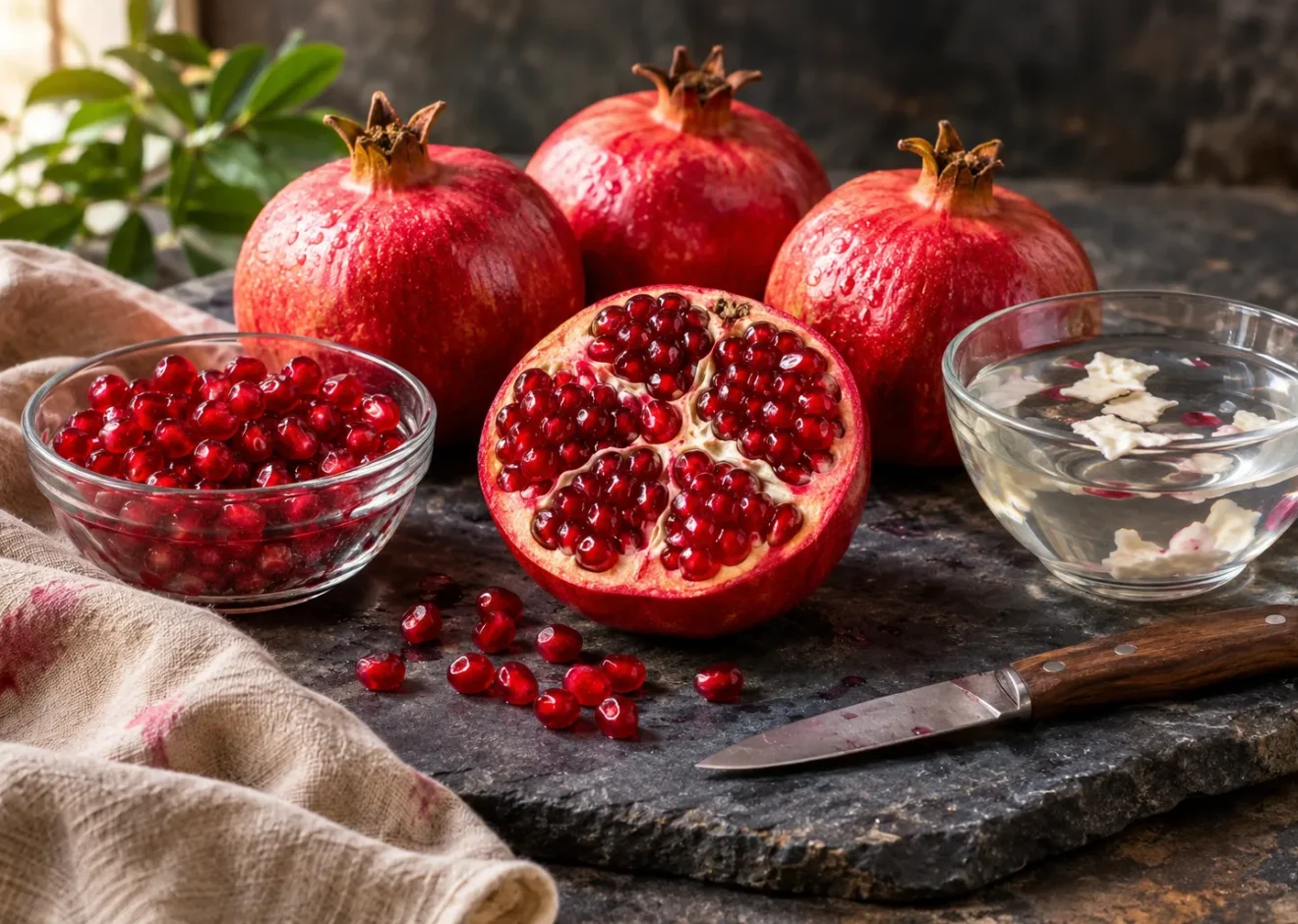
Cut one open and you should see tightly packed, glossy arils that fill the chambers with little gap, and membrane that peels away cleanly. Pale, shrunken arils with lots of empty space mean the fruit was picked early or stored too long. Pomegranates don’t ripen further after harvest, so what you buy is what you get [6].
How Much Do Pomegranates Cost at the Store
In most U.S. grocery stores, a single whole pomegranate runs about $2 to $4 during the fall and winter season, and pre-packed containers of arils typically cost $4 to $7 for 4 to 8 ounces. Prices rise sharply in spring and summer when domestic supply ends.
| Form | Typical range | Best for |
|---|---|---|
| Whole fruit, in season | $2,$4 each | Everyday use, best value |
| Whole fruit, off season | $4,$7 each | Imported, lower quality odds |
| Fresh arils, packaged | $4,$7 per cup | Convenience, same-day use |
| Frozen arils | $4,$6 per bag | Smoothies, baking |
| 100% juice | $6,$10 per quart | Dressings, glazes, drinks |
These are observed retail ranges, not survey data, so treat them as a planning estimate. One medium fruit yields roughly 3/4 cup to 1 cup of arils, which makes whole fruit cheaper per ounce than any packaged option.
How to Seed a Pomegranate Without Staining Your Hands
Score the skin instead of cutting through it, then break the fruit apart under water. The arils sink to the bottom, the white membrane floats, and the juice stays in the bowl instead of on your shirt [3][5].
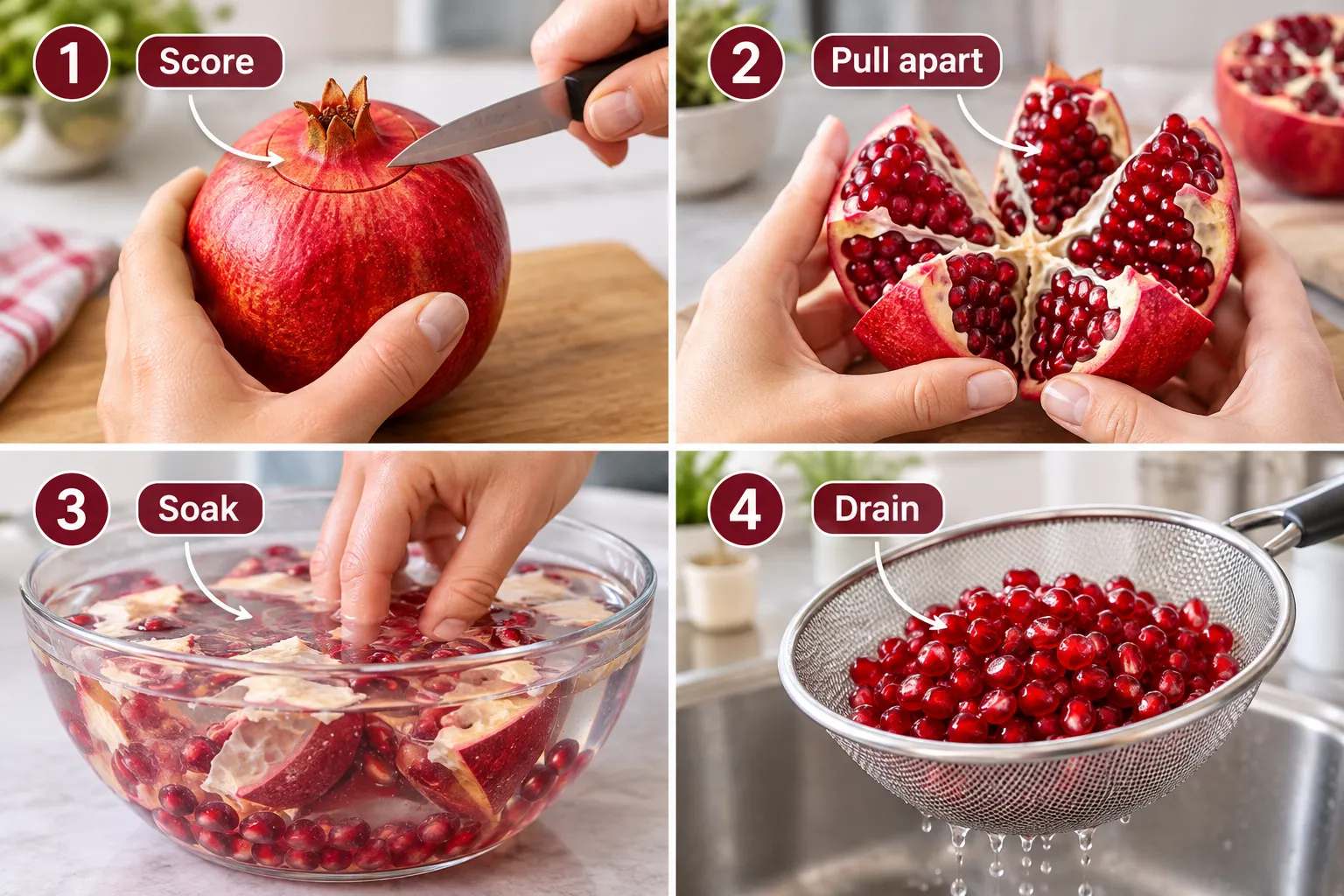
The underwater method, step by step:
- Slice off the crown end about half an inch deep, just through the skin.
- Look at the exposed top. You’ll see pale ridges marking the internal chambers, usually five or six.
- Score the skin from crown to base along each ridge, cutting only through the leathery peel.
- Fill a large bowl with cool water and submerge the fruit.
- Pull the sections apart with your thumbs, then run your fingers over the arils to release them.
- Skim off the floating pith, pour through a fine mesh strainer, and pat the arils dry with a towel.
Why it works: pomegranate juice contains anthocyanins that stain fabric and porous countertops fast. Water catches the spray.
Common mistake: halving the fruit through the middle with a chef’s knife. That slices open a full row of arils and loses juice before you start.
The spoon-whack shortcut (cut in half, hold cut-side down over a bowl, hit the back with a wooden spoon) is faster but splatters. If you use it, wear an apron and line the counter. Save the drained juice for vinaigrette or add it to a batch of fruit smoothie recipes.
How Long Do Pomegranates Last in the Fridge
Whole pomegranates keep for about a month in the refrigerator crisper, and sometimes longer, while loose arils in an airtight container last roughly 3 to 7 days [1][2][7]. On the counter at room temperature, whole fruit holds about a week before the skin starts to dry and shrink.
- Counter: 5 to 7 days, fine if you’ll use it soon.
- Refrigerator, whole: 3 to 4 weeks or more; commercial cold storage pushes this to several months under controlled conditions [1][7].
- Refrigerator, arils: 3 days by some commodity board guidance, up to 5 to 7 days in home-cooking sources [1][2].
- Freezer, arils: about 6 months with good quality, up to a year in some home-storage guides [1][3][8].
Leathery, slightly wrinkled skin on a whole fruit isn’t spoilage. The peel dehydrates before the arils do, so a tough-looking pomegranate can still be excellent inside.
Can you freeze pomegranate seeds
Yes, and it’s the best way to stretch a seasonal haul. Spread drained arils in a single layer on a parchment-lined sheet pan, freeze until firm (about two hours), then transfer to a freezer bag with the air pressed out [1][3][8]. Freezing them loose first keeps them from fusing into one block.
Thawed arils soften and lose their snap, so use them in smoothies, baked goods, sauces, or homemade jam recipes rather than as a fresh garnish. Frozen arils also work straight from the bag scattered over yogurt, where they thaw as you eat.
How to Tell if a Pomegranate Is Bad
Discard a whole pomegranate if it has soft mushy patches, visible mold around the crown or splits, or a sour fermented smell. Dry skin alone is not spoilage.
Signs of a bad fruit:
- Deep cracks with wet or darkened flesh showing through
- Mold, usually fuzzy grey or white, at the crown
- Flesh that yields like a ripe tomato under light pressure
- Arils that are brown, slimy, or taste fizzy and alcoholic
A few brown arils in an otherwise good fruit are normal oxidation. Pick them out and move on.
Can You Eat Pomegranate Seeds, and Are They Good for Weight Loss
The entire aril is edible, including the hard inner seed, and that seed carries most of the fiber [2]. Spitting out the seeds is a personal preference, not a safety rule.
A cup of arils delivers around 7 grams of fiber and about 144 calories, along with vitamin C, vitamin K, potassium, and polyphenols such as punicalagins [4][9]. For weight management, pomegranates help in a mundane way: fiber plus water plus the chewing required all slow eating and add fullness for a moderate calorie cost. No fruit burns fat on its own, and the sugar content means portions still count.
Edge case: if you’re on blood thinners, the vitamin K and potential drug interactions are worth raising with your doctor before you start eating pomegranate daily.
Pomegranate Juice vs Fresh Seeds: Which Is Healthier
Fresh arils win for most people because they include fiber and are harder to overconsume. Juice concentrates the sugar and strips the fiber, though 100% pomegranate juice does retain a large share of the antioxidant polyphenols [4][5].
| Fresh arils | 100% juice | |
|---|---|---|
| Fiber | About 7 g per cup | Near zero |
| Satiety | High, requires chewing | Low |
| Polyphenols | Present | Present, often concentrated |
| Added sugar risk | None | Common in blends and cocktails |
| Best use | Snacking, salads, garnish | Glazes, dressings, braises |
Choose juice if you want a cooking ingredient. Choose arils if you want food. Watch for “pomegranate blend” labels, which are often mostly apple or grape juice.
Why pomegranate seeds taste bitter
Bitterness almost always comes from the white membrane clinging to arils, not the arils themselves. The pith and inner walls hold tannins. Rinse your arils well and skim the floating membrane off the water, and the bitterness disappears. Underripe fruit tastes sharply tart rather than bitter, and that one can’t be fixed.
Easy Pomegranate Recipes for Beginners
Start with uncooked applications, where the arils’ pop does the work. Heat destroys the texture, so add them at the end.
- Yogurt bowl: arils, honey, chopped pistachios. Two minutes.
- Winter salad: arugula, thinly sliced pear, feta, arils, lemon-olive oil dressing. Pairs with the fruit combinations in our pear recipe collection.
- Pomegranate molasses glaze: simmer 2 cups juice with 2 tablespoons sugar and a squeeze of lemon until syrupy, about 30 minutes. Brush on roast chicken or lamb.
- Mediterranean spread: arils over hummus, muhammara, or labneh with olive oil, a staple move in Greek-style recipes.
- Roast salmon topper: arils with herbs and citrus over a fillet, which works with most preparations in our salmon recipe collection.
- Drinks: muddle arils into sparkling water, or use the juice in a whiskey sour variation from our whiskey recipe collection.
Arils also go into holiday stuffing recipes alongside nuts and dried fruit, where the tartness offsets rich bread and sausage.
What Can I Use Instead of Pomegranate Seeds
For the pop and tartness, fresh cranberries, dried cranberries, red currants, or tart cherries work best. Match the function you need, not just the color.
| If you need | Use instead |
|---|---|
| Crunchy tart garnish | Fresh cranberries, chopped |
| Jewel-like color | Diced red grapes, dried cranberries |
| Tart burst in salads | Red currants, sour cherries |
| Pomegranate molasses | Balsamic reduction, or tamarind paste thinned with sugar syrup |
| Juice for glazes | Cranberry juice plus a splash of lemon |
For dessert swaps, the texture of cherry recipes comes closest. No substitute matches the specific snap of a fresh aril, so when the recipe depends on texture, consider buying frozen arils instead.
FAQ
Do pomegranates ripen after you buy them? No. Pomegranates stop ripening once picked, so choose carefully at the store [6].
Should pomegranates be refrigerated? Yes, if you won’t eat them within a week. The refrigerator extends whole fruit from about a week to a month or more [1][7].
How many arils does one pomegranate yield? Roughly 3/4 to 1 cup from a medium fruit, or about 2/3 cup of juice.
Does pomegranate juice stain permanently? It can. Rinse fabric with cold water immediately; the anthocyanin pigments set once dried or heated.
Can you eat the white membrane? It’s edible but bitter and papery. Most people discard it.
Are packaged arils as good as fresh? They’re convenient but have a short shelf life and cost two to three times more per ounce. Buy them when you need under a cup.
What’s pomegranate season in the U.S.? October through January, with California supplying most domestic fruit [9].
Can you microwave or cook pomegranate arils? You can, but they collapse and lose their crunch. Use juice or molasses for cooked dishes and save whole arils for finishing.
Conclusion
Buy heavy, flat-sided fruit between October and January, score and seed it under water, refrigerate whole fruit for the month and arils for the week, and freeze the surplus flat on a tray.
Next steps for this week:
- Buy two pomegranates and compare them by weight before choosing at the shelf.
- Seed one with the underwater method and time it. Most people get under five minutes by the second fruit.
- Freeze half the arils on a sheet pan and label the bag with the date.
- Use the fresh half within five days on yogurt or a salad.
References
- How to Store a Pomegranate. pomegranates.org.
- Can You Eat Pomegranate Seeds. southernliving.com.
- Pomegranates. simplyrecipes.com.
- Dirt Report Pomegranates. sharonpalmer.com.
- Are Pomegranates Healthy Plus How Remove Seeds. cspi.org.
- Pomegranates. chhs.colostate.edu.
- Where to Store Pomegranates Keep Fresh. chowhound.com.
- Storing Pomegranates. soilborn.org.
- Pomegranates. snaped.fna.usda.gov.