
Last updated: March 23, 2026
Quick Answer: March 23 National Tamale Day is an annual food holiday celebrated in the United States on March 23 each year. The day honors the tamale, one of the oldest prepared foods in the Americas, with roots stretching back more than 8,000 years to Mesoamerican civilizations. People celebrate by making tamales from scratch, visiting Mexican restaurants, and sharing the dish with family and friends.
Key Takeaways
- March 23 is recognized as National Tamale Day in the United States, dedicated to celebrating the tamale’s deep cultural heritage.
- Tamales date back to ancient Mesoamerican cultures, including the Aztec and Maya, making them one of the oldest foods in the Western Hemisphere.
- The dish is made from masa (corn dough) wrapped around a filling, then steamed inside a corn husk or banana leaf.
- Common fillings include pork with red chile, chicken with green salsa, cheese and peppers, and sweet varieties with raisins or cinnamon.
- Tamales differ from enchiladas primarily in preparation: tamales are steamed in a husk, while enchiladas are tortillas rolled around a filling and baked or simmered in sauce.
- Store-bought tamales typically cost between $2 and $5 each, while restaurant prices vary by region.
- Tamales freeze exceptionally well for up to six months, making them ideal for batch cooking.
- The holiday is primarily observed in the U.S., but tamale culture is celebrated across Mexico, Central America, and parts of South America year-round.
What Is National Tamale Day?
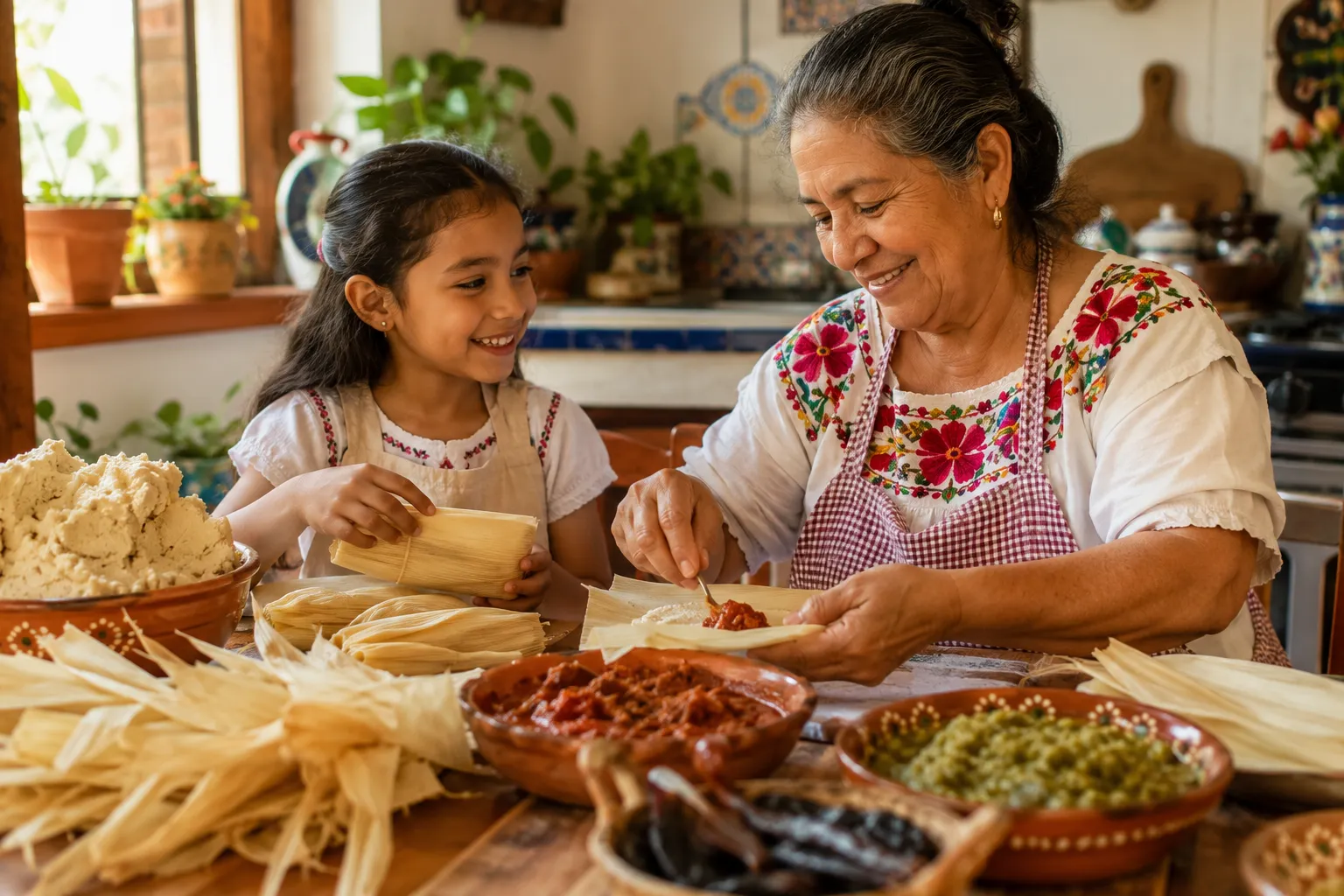
National Tamale Day is an informal food holiday that celebrates the tamale, a traditional Mesoamerican dish made from seasoned masa dough wrapped around a savory or sweet filling and steamed inside a corn husk or banana leaf. The day encourages people to cook, share, and appreciate a food that carries centuries of cultural meaning.
The holiday is not a federal observance, but it has gained steady traction on social media and among food enthusiasts, restaurants, and Mexican-American communities across the United States. It sits alongside dozens of other beloved food days, much like National Fish Taco Day on January 25 or National Corn Chip Day on January 29, as a way to spotlight a specific food’s history and flavor.
When Is National Tamale Day Celebrated?
National Tamale Day is celebrated on March 23 every year. The date is fixed, so in 2026, March 23 National Tamale Day falls on a Monday.
Some food calendars also reference a separate “National Tamale Day” in late November, but March 23 is the most widely recognized and cited date across food holiday databases and culinary communities. If you’re planning an event or promotion around the holiday, March 23 is the date to use.
Why Is March 23 National Tamale Day? The History Behind the Date
The exact origin of why March 23 was chosen as National Tamale Day is not formally documented by a government body or a single founding organization, which is common for informal food holidays in the United States. Many such observances were popularized through food blogs, national day calendars, and social media campaigns starting in the early 2010s.
What is well-documented, however, is the history of the tamale itself. Archaeologists and food historians trace tamale preparation to at least 8,000 to 10,000 BCE in Mesoamerica, based on evidence from ancient grinding stones and corn cultivation records. The Aztec, Maya, Olmec, and Toltec civilizations all prepared versions of tamales as portable food for warriors, travelers, and ceremonial offerings.
Spanish colonizers encountered tamales in the 16th century and documented them extensively. The dish spread through Central America, South America, and eventually into the American Southwest and Texas, where it became deeply embedded in regional cuisine.
March 23 National Tamale Day, then, is less about a single founding moment and more about a modern effort to formalize appreciation for one of the oldest foods in the Americas.
How to Celebrate March 23 National Tamale Day
Celebrating March 23 National Tamale Day is straightforward, whether you’re an experienced cook or a first-timer. Here are the most popular ways people mark the day:
- Make tamales from scratch with family or friends. The process is labor-intensive but deeply rewarding, and it’s traditionally done as a group activity called a “tamalada.”
- Order from a local Mexican restaurant or a dedicated tamale shop. Many restaurants offer specials on March 23.
- Host a tamale tasting by sourcing different regional varieties: red chile pork, green chile chicken, sweet tamales, and vegan options.
- Share on social media using hashtags like #NationalTamaleDay and #March23TamaleDay to connect with the broader community.
- Gift tamales to neighbors, coworkers, or family members as a nod to the food’s communal roots.
If you enjoy exploring food holidays, you might also want to check out guides like National Southern Food Day on January 22 for more ideas on celebrating regional American food traditions.
Traditional Tamale Fillings and Best Tamale Recipes for National Tamale Day
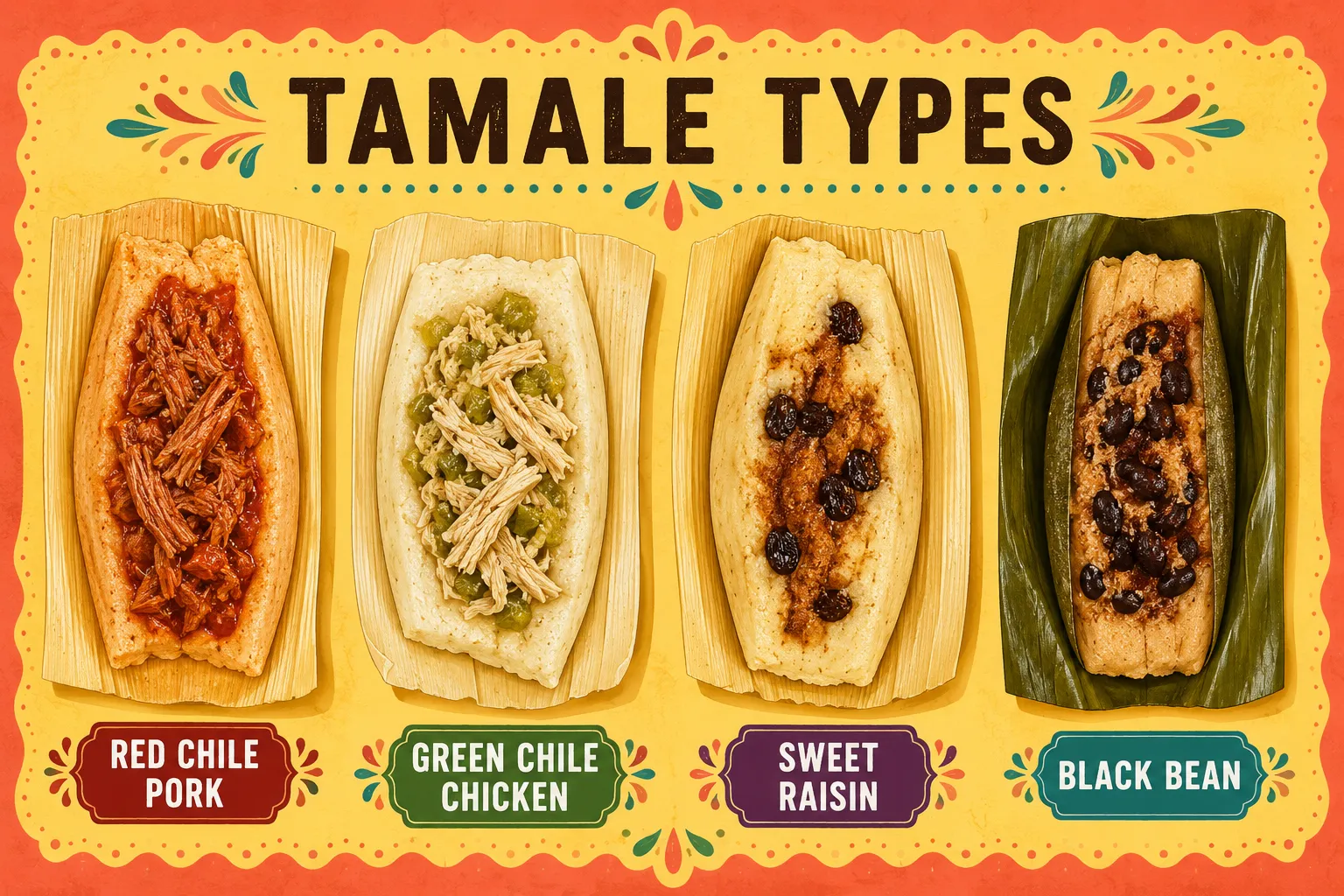
Tamale fillings vary widely by region and family tradition. The most common traditional fillings include:
| Filling | Region/Style | Notes |
|---|---|---|
| Pork with red chile | Central Mexico, Southwest U.S. | Most classic; rich and savory |
| Chicken with green salsa | Oaxaca, California | Lighter; tangy from tomatillo |
| Cheese and roasted peppers | Vegetarian-friendly | Popular in Texas and Colorado |
| Black beans and chile | Vegan option | Hearty and widely available |
| Sweet raisin and cinnamon | Dessert tamale | Often made with pink-tinted masa |
| Rajas (poblano strips) | Central Mexico | Creamy with queso or crema |
For a reliable recipe on March 23 National Tamale Day, a classic red chile pork tamale follows these core steps:
- Soak dried corn husks in warm water for at least one hour until pliable.
- Prepare the masa by mixing masa harina with lard or vegetable shortening, warm broth, salt, and baking powder until the dough floats in water (the standard test for proper texture).
- Cook the filling by braising pork shoulder with dried guajillo and ancho chiles, garlic, cumin, and oregano until tender, then shredding.
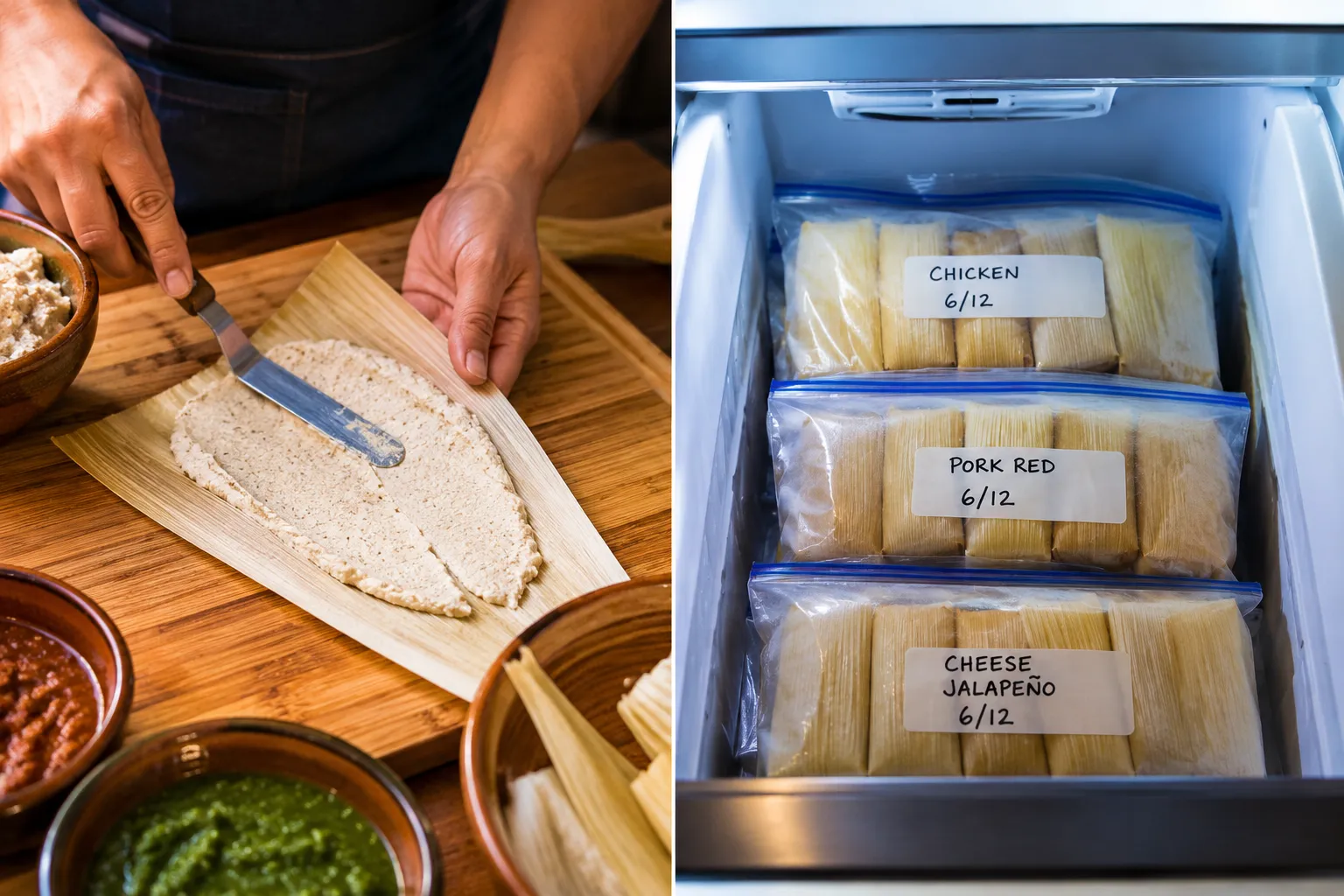
- Spread masa onto each husk in a thin, even layer, leaving a border at the top and sides.
- Add filling, fold the husk around the tamale, and fold the bottom up.
- Steam upright in a large pot or tamale steamer for 60 to 90 minutes until the masa pulls cleanly from the husk.
For those who love spicy cooking, the 496 Spicy Cookbook collection offers additional inspiration for bold chile-based recipes that pair well with tamale-making traditions.
How to Make Tamales from Scratch: Step-by-Step
Making tamales from scratch requires patience but no advanced cooking skills. The process breaks into three parallel tasks: preparing the masa, cooking the filling, and assembling.
What you need:
- Masa harina (corn flour treated with lime, such as Maseca brand)
- Lard or vegetable shortening
- Chicken or pork broth
- Dried corn husks
- Your chosen filling
- A large steamer pot
The float test: Drop a small ball of prepared masa into a glass of cold water. If it floats, the dough has enough fat and air. If it sinks, beat in more shortening and continue testing.
Common mistake: Spreading masa too thick. A layer about 3mm (roughly 1/8 inch) is ideal. Too thick and the tamale becomes dense; too thin and the filling breaks through.
Edge case: For banana leaf tamales (common in Oaxaca and southern Mexico), briefly pass the leaves over an open flame to make them flexible before wrapping. The flavor imparted is noticeably different from corn husk tamales.
Tamale vs. Enchilada: What Is the Difference?
A tamale and an enchilada are both classic Mexican dishes, but they are prepared and served very differently. A tamale is masa dough wrapped around a filling and steamed inside a corn husk or banana leaf. An enchilada is a corn tortilla rolled around a filling, placed in a baking dish, and covered with chile sauce before being baked or simmered.
Key differences at a glance:
- Wrapper: Tamale uses masa dough; enchilada uses a corn tortilla.
- Cooking method: Tamale is steamed; enchilada is baked or simmered in sauce.
- Texture: Tamale has a soft, doughy exterior; enchilada has a saucy, slightly softened tortilla.
- Portability: Tamales are self-contained and portable; enchiladas are plated dishes.
- Preparation time: Tamales take significantly longer to prepare.
Where to Buy Tamales and How Much Do They Cost?
Fresh tamales are available at Mexican restaurants, Latin grocery stores, specialty tamale shops, and farmers markets. In cities with large Mexican-American populations such as Los Angeles, San Antonio, Chicago, and Phoenix, dedicated tamale vendors and home-based businesses are common, especially around holidays.
Typical price ranges (2026 estimates):
- Homemade or market tamales: $2 to $5 per tamale
- Restaurant tamales (plated): $12 to $20 for a two- or three-tamale plate
- Frozen store-bought tamales: $8 to $15 for a pack of 6 to 12
To find tamales near you, search “tamales near me” on Google Maps or Yelp, filter by Mexican or Latin American cuisine, and check for menu mentions of tamales. Many home cooks also sell tamales through community Facebook groups and local apps, particularly around March 23 National Tamale Day.
Can You Freeze Tamales?
Yes, tamales freeze exceptionally well. Cooked tamales stored in airtight freezer bags will keep their quality for up to six months. This makes batch cooking on March 23 National Tamale Day a practical strategy: make a large batch, eat some fresh, and freeze the rest.
How to freeze tamales:
- Allow cooked tamales to cool completely at room temperature (about 30 minutes).
- Wrap each tamale individually in plastic wrap or foil.
- Place wrapped tamales in a zip-lock freezer bag, removing as much air as possible.
- Label with the date and filling type.
- Freeze flat, then stack once solid.
To reheat: Steam frozen tamales directly from the freezer for 20 to 30 minutes, or microwave wrapped in a damp paper towel for 2 to 3 minutes per tamale.
What Countries Celebrate Tamale Day?
March 23 National Tamale Day is primarily a United States observance. However, tamales themselves are celebrated and consumed year-round across a wide range of countries, particularly during religious and seasonal holidays.
- Mexico: Tamales are central to Dia de la Candelaria (February 2), Christmas, and Day of the Dead celebrations. Mexico is the country most closely associated with tamale culture.
- Guatemala: Tamales colorados (red tamales) and tamales negros (black tamales with chocolate and prunes) are traditional Christmas foods.
- El Salvador: Tamales de elote (sweet corn tamales) are a staple, especially during the Christmas season.
- Honduras and Nicaragua: Nacatamales, a larger tamale wrapped in banana leaves and filled with rice, pork, and vegetables, are a Sunday and holiday tradition.
- Colombia and Venezuela: Hallacas, a close relative of the tamale made with corn dough and wrapped in banana leaves, are central to Christmas celebrations.
- United States: Beyond March 23 National Tamale Day, tamales are a year-round staple in Mexican-American communities, particularly in Texas, California, New Mexico, and Arizona.
Best Tamale Restaurants in the United States
Several restaurants have built strong reputations specifically around tamales. While individual rankings shift, these cities and establishments consistently appear in food media coverage:
- Los Angeles, CA: Lena’s Tamales and Tamales Elena are longtime community favorites.
- San Antonio, TX: The city’s deep Tex-Mex roots make tamales a menu staple at dozens of local spots.
- Chicago, IL: Chicago has a distinct tamale street food culture, with “Chicago-style” tamales sold from carts and corner stores.
- Albuquerque, NM: New Mexico-style tamales use Hatch green or red chile, giving them a distinct regional flavor.
- Houston, TX: A large Mexican-American population supports numerous tamale shops and home vendors.
When searching for the best tamale restaurants, look for spots that make tamales in-house daily rather than reheating pre-made products. Freshness is the single biggest quality indicator.
FAQ: March 23 National Tamale Day
Q: Is March 23 National Tamale Day an official U.S. holiday? No. It is an informal food holiday with no federal or state recognition. It is observed voluntarily by food enthusiasts, restaurants, and communities.
Q: Who invented the tamale? No single person invented the tamale. The dish evolved across multiple Mesoamerican civilizations, including the Aztec and Maya, at least 8,000 years ago.
Q: How long does it take to make tamales from scratch? A full batch of 24 tamales typically takes 3 to 5 hours, including soaking husks, preparing filling, making masa, assembling, and steaming. Working with a group (a tamalada) cuts the time significantly.
Q: Are tamales gluten-free? Traditional tamales made with masa harina and corn husks are naturally gluten-free. However, cross-contamination can occur in commercial kitchens, so those with celiac disease should confirm preparation methods with the restaurant or vendor.
Q: What is the difference between a tamal and a tamale? “Tamal” is the correct singular form in Spanish; “tamale” is the anglicized singular used in the United States. “Tamales” is the plural in both languages.
Q: Can tamales be made vegan? Yes. Replace lard with vegetable shortening or coconut oil in the masa, and use bean, vegetable, or mushroom fillings. The result is fully vegan and widely enjoyed.
Q: How do you know when tamales are done steaming? A tamale is done when the masa pulls cleanly away from the corn husk without sticking. If it sticks, steam for another 10 to 15 minutes and test again.
Q: What is a tamalada? A tamalada is a communal tamale-making gathering, typically involving family or friends who divide the tasks of preparing masa, filling, and assembling. It is a deeply rooted social tradition in Mexican and Mexican-American culture.
Q: Are sweet tamales common? Yes. Sweet tamales (tamales dulces) are made with sugar, cinnamon, raisins, or fresh fruit mixed into the masa. They are pink or pastel-colored and often served as a dessert or breakfast item.
Q: What broth should I use for tamale masa? Pork broth produces the richest flavor for savory tamales. Chicken broth is a lighter, more neutral option. Vegetable broth works well for vegan versions.
Conclusion
March 23 National Tamale Day is more than a social media trend. It is an annual opportunity to connect with one of the most historically significant foods in the Americas, a dish that has fed civilizations, marked celebrations, and traveled across continents for thousands of years.
Actionable next steps for 2026:
- Plan your tamalada now. Gather two or three friends or family members and divide the tasks. The process is far more manageable and enjoyable as a group.
- Source quality ingredients. Buy masa harina from a Latin grocery store for better flavor than generic supermarket brands. Look for dried guajillo and ancho chiles for authentic red chile sauce.
- Make a double batch and freeze half. Tamales are time-intensive, so maximize your effort by freezing a portion for later meals.
- Support a local tamale vendor. If cooking is not an option, find a local Mexican restaurant or home vendor and order ahead for March 23.
- Explore related food traditions. If you enjoy celebrating food holidays, browse the full national food holidays calendar for more dates worth marking throughout the year.
Whether you make them from scratch or pick them up from a neighborhood shop, celebrating March 23 National Tamale Day is a genuine act of cultural appreciation and delicious eating.